Told my daughter-in-law i had an early flight and turned in. at 1 am, my door lock clicked. she dug through my suitcase, zipped something inside, then whispered on her phone: “the target took the bait. alert airport security at 6am.” i lay still, breathing steadily as if fast asleep. the next morning…
My name is Daniel. I’m thirty-one years old, and I’ve spent most of my adult life learning how to laugh off insults that feel more like paper cuts. Small, sharp, and slow to heal. I come from a family that loves parties, but not people. At least, not people like me. You know the type. Families that measure your worth in Instagram likes and compare your life milestones as if they’re keeping score. I was never winning.
My sister Brooke, on the other hand, was the reigning MVP of our family highlight reel. Blonde, loud, and perfectly curated, she got engaged at twenty-three, married at twenty-five in a three-day affair at a vineyard, and has been throwing themed baby showers for her kids like she’s auditioning for a lifestyle magazine. Me? I was the late bloomer, the quiet one, the guy everyone assumed just wasn’t interested in commitment. Every time I brought a girlfriend home, it turned into a round of subtle interrogations disguised as casual conversation. “So, you’re okay with his job?” “You know he still rents, right?” “Oh, you met on an app? That’s cute.”
Still, I showed up for every birthday, every holiday, every christening. I sat at the folding tables and smiled when they forgot to include my name in the group photos. I brought gifts they didn’t bother opening in front of me and made polite conversation while being reminded, yet again, that I was the last single one left. I told myself it was simply how families were. Nobody was perfect. People said things they didn’t mean. And if I could just keep smiling, keep showing up, and keep being agreeable, maybe one day I’d finally feel like I belonged.
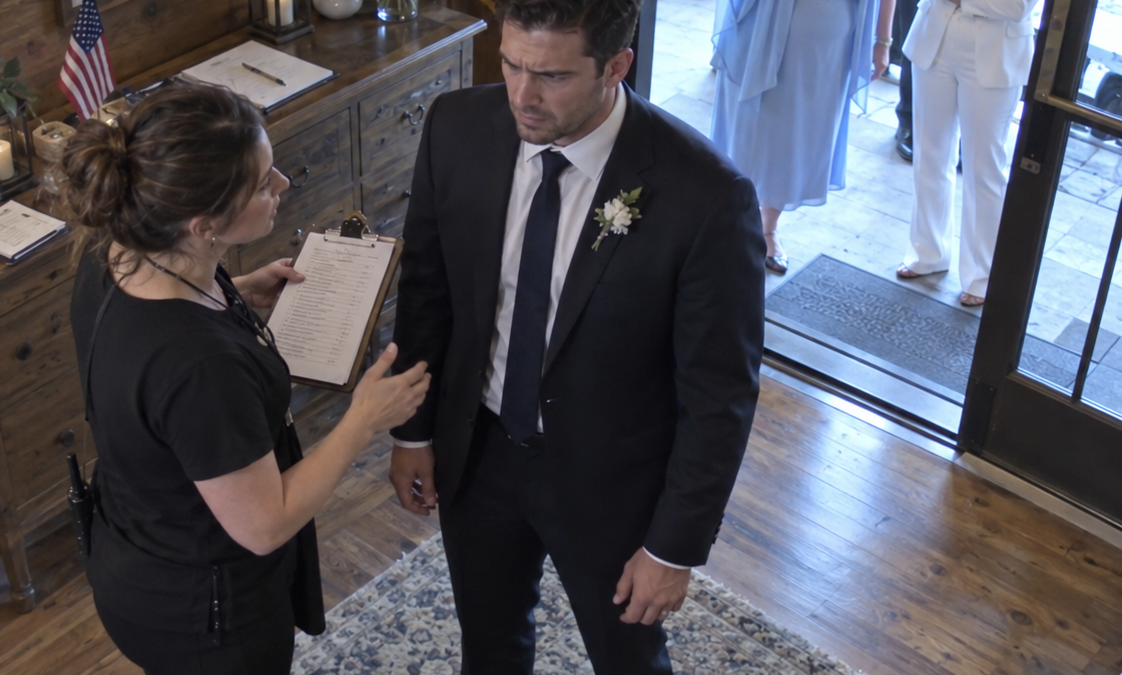
But the worst of it happened at Brooke’s wedding. I remember arriving early in a decent suit, nothing flashy, just something neat and appropriate for the occasion. Before I could even make it inside, one of the wedding planners stopped me at the door. She was carrying a clipboard, scanning names with the distracted urgency of someone trying to solve a dozen problems at once. She looked up and asked whether I was Daniel, the plus-one.
I wasn’t even listed properly on the seating chart. When they finally found somewhere to put me, it was at the overflow table with the groom’s distant cousins and a few college roommates. Apparently, nobody had known where to place me. During her speech, Brooke actually said, “To everyone who made today beautiful, you know who you are, and you’re sitting right here in front of me.” I wasn’t. I was three tables back, right next to the bathroom line, watching everyone raise their glasses while I wondered whether my own sister had even noticed where I’d been seated.
Later that night, while people were drunkenly dancing and the cake was being sliced, Brooke pulled me aside. She was tipsy, glowing, and practically dripping with self-satisfaction. “You know, Danny,” she said, holding her wineglass like it was a scepter, “some people just aren’t wedding material. But it’s okay. Not everyone needs the spotlight.” She laughed, then kissed my cheek as though she’d given me a compliment instead of a gut punch. I smiled. I always smiled. But that night, I went home and didn’t speak to her for six months.
Fast-forward five years, and I met someone. Her name is Laya. She’s calm where I’m anxious, firm where I hesitate, and she looks at me like I’m enough, not someone who needs to be polished, corrected, or explained away. We dated for three years before I proposed. Quietly. No fanfare, no elaborate production, just the two of us on a trail overlooking a lake. She cried, said yes, and then asked the question I’d been dreading. “Will your family be there?”
I hesitated, not because I didn’t want her to meet them. She already had. I hesitated because I knew exactly what inviting them would mean. The same little jabs, the same backhanded compliments, the same performative hugs that always seemed to come with an invisible price tag. I told her we’d think about it. When we started planning the wedding, though, I kept stalling whenever we reached the guest list. Laya noticed, of course. She noticed everything, especially the things I tried not to say.
“Is it really that complicated?” she asked one night while highlighting vendors in a wedding magazine. So I told her the truth. I told her about Brooke’s wedding, about the comment she’d made, about the way my family had always managed to make me feel like a side character in a play they were all starring in. Laya listened without interrupting. She didn’t judge, didn’t tell me to get over it, and didn’t offer excuses for people she barely knew. She simply held my hand and said, “Then maybe it’s time you write your own story.”
Something shifted inside me when she said that. It wasn’t anger. Not yet. It was clarity. I realized I’d spent years being hurt by people who didn’t even notice the damage they caused. They didn’t hate me. They just didn’t value me. Somehow, that distinction made everything worse. And I was finally done buying my ticket to a table where I had never truly been welcome.
We booked a venue upstate. Nothing flashy, but absolutely stunning. There were rustic cabins tucked among the trees, fairy lights strung between branches, and a clearing for the ceremony overlooking a stretch of rolling hills. It felt like us. Quiet, beautiful, uncomplicated. We kept the guest list small: Laya’s friends, a few of mine, her parents, a couple of mentors, and coworkers who had become more like family than the people I shared blood with.
I debated adding Brooke. I really did. I even sat there staring at the blinking cursor beside her name on the spreadsheet. But then I remembered her smirk, the overflow table beside the bathroom, and those words about how I wasn’t wedding material. I deleted her name. Not in anger, but in peace. And then I deleted the rest of them, too. My mother, who always seemed to forget I existed whenever she shared family updates. My father, who called once a year, usually to remind me how proud he was of my sister’s success. My brother-in-law, who made passive-aggressive jokes about how I’d finally caught up.
We sent out the invitations. All of them. Not a single one went to my family. The backlash didn’t come immediately. I suppose they assumed I’d do what I always did: stay quiet, show up late, and remain grateful for whatever seat I was offered. Any seat at the table would do, as far as they were concerned. They had spent so many years treating my presence as something they could take for granted that it apparently never occurred to them I might finally choose not to participate.
Then Laya posted our save-the-date photo. Her hand rested against my chest, and beneath the picture was the caption, “Can’t wait to say ‘I do’ in the hills with the people who truly matter.” That was when all hell broke loose.
Brooke was the first to text. “Wait, you’re getting married?” A second message followed almost immediately. “No invite?” Then a third, consisting of a single word: “Well.” I didn’t respond. The next morning, my mother called three times and left one voicemail. “Daniel, this isn’t how families do things. Please call me.” My father sent an email. An actual email. Who even does that? The subject line read, “A Disappointment.” I didn’t open it.
And then Brooke sent the big one. “You’re really excluding your whole family after everything we’ve done for you? Fine. But don’t come crying when you need something later. Have fun playing husband to your little boho girlfriend. Must be nice to finally feel important.”
I stared at that message for a long time. I read it once, then again, searching for something underneath the anger. Some hint of concern. A question about whether I was happy. Even a simple acknowledgment that I was getting married would have been something. But there was nothing. Just accusations and the familiar insistence that my choices were somehow an offense against everyone else. I didn’t reply. I didn’t need to. For the first time in my life, I had nothing to explain.
A few days after the storm of messages, I got a call from my uncle Ray, the only relative I’d ever halfway trusted. He was my mother’s older brother, a retired electrician with a sharp tongue and a heart that only revealed itself when you least expected it. We hadn’t spoken in a while, but I answered mostly out of curiosity.
“Hey, Danny,” he said, his voice gravelly, like he was still clearing sleep from his throat even though it was the middle of the afternoon. “Listen, I know I probably shouldn’t get involved, but your mom’s been going around telling people you’re having some kind of mental breakdown. Says Laya’s got you isolated or something. You okay?”
I laughed. I actually laughed. “Uncle Ray, I’m fine. I’m more than fine. I just didn’t want the people who spent years making me feel invisible sitting in the front row of my wedding like they’d earned the right to be there.”
There was a pause. A long one. Then he said, “Good. About damn time.”
I blinked. “Wait, what?”
“Kid,” he said, “you think I didn’t see it? Every Christmas, you’d show up with gifts for their kids, and they’d act like you were the mailman. Every time you brought a girl home, they made her feel like a charity case. And don’t even get me started on what Brooke said at her wedding. I told your mother that was out of line. You know what she said? ‘Daniel’s not the sensitive type.’ That’s when I knew she’d stopped seeing you as a person and started seeing you as an ATM.”
It hit me harder than I expected. Not the insult itself, but the fact that someone, anyone, had noticed. All those years, I’d assumed the things happening to me were somehow invisible to everyone else. I’d convinced myself I was being too sensitive, that maybe I really was making something out of nothing. Hearing Uncle Ray describe those same moments so plainly was like discovering that someone had been watching the same terrible movie I’d been trapped inside.
“I just wanted a peaceful wedding,” I said quietly.
“And you’re going to have one,” he replied. “You earned it. I’m not calling to guilt you, Danny. I’m calling to say thank you for finally standing up. They’re losing it, not because you hurt them, but because you stopped letting them hurt you.”
That night, I told Laya what he’d said. She wrapped her arms around me and whispered, “I’m so proud of you.” For a little while, sitting there with her, I believed the worst of it might finally be over. We’d made our decision, and there was nothing left to discuss. Unfortunately, my family had other ideas.
The messages kept coming. They came from cousins I barely knew, from Brooke’s husband, and even from one of my mother’s church friends, a woman who’d once asked whether I was “the artistic one,” because apparently being single and quiet automatically meant I spent my evenings painting portraits in an attic. Every message had a slightly different flavor. Some were veiled guilt trips. Others were flat-out rants. But they all boiled down to the same toxic stew: how dare I remove myself from their narrative?
Then came the group message. Yes, an actual full-on nuclear-family group text. A chat I hadn’t seen activity in for years suddenly lit up like a Christmas tree. Brooke started it with, “Just wanted everyone to know Danny’s getting married and didn’t invite his family.” She attached a screenshot of Laya’s save-the-date post. My mother chimed in almost immediately. “We’re all just heartbroken. It’s like we don’t even know who he is anymore.” Then my father, displaying his usual emotional finesse, added, “He’s always been selfish. We just didn’t want to admit it.”
I stared at the thread for a solid ten minutes. Not because I didn’t know what to say, but because I knew exactly what not to say. I knew how the argument would unfold. Every explanation would become an accusation. Every memory I brought up would be dismissed or rewritten. Every attempt to defend myself would somehow become further evidence that I was the problem. So instead of typing a response, I simply left the group chat without a word.
That’s when things got serious. Brooke, apparently unable to let go of the spotlight she believed I’d stolen from her, took the whole thing online. She didn’t mention us by name, but she posted a cryptic caption over a photograph of herself wearing a bridesmaid dress. “When your little brother throws a wedding but forgets who helped raise him. #FakeFamily #NoClass.”
That post got traction. Her friends filled the comments with things like, “Ugh, families can be the worst,” and “You’re such a saint, Brooke.” A few even tagged me directly, as though I needed to be summoned to witness the public trial of my own character. I didn’t respond to any of them. But then Laya’s mother, bless that woman, entered the conversation.
She commented, “Interesting take, especially since I’ve watched Laya and Daniel pay for everything themselves, plan everything themselves, and support each other without asking a soul for a dime. Seems like they know exactly who their real family is.”
Her comment received more likes than Brooke’s original post. I could only imagine how my sister reacted to that. Brooke had always been accustomed to controlling the conversation, and now someone had publicly challenged the version of events she was trying to sell. I didn’t add anything. Laya didn’t either. Her mother had said everything that needed to be said.
Now, here’s where things started getting weird. A week before the wedding, I received a card in the mail. There was no return address, but I recognized the handwriting immediately. It was my mother’s. Inside was a three-paragraph letter scribbled in blue ink, each paragraph somehow more revealing than the last.
The first paragraph was an emotional guilt trip. She reminded me how she’d carried me for nine months, how she’d stayed awake with me during childhood fevers, and how she’d always tried her best. The second paragraph shifted into veiled scolding. Family wasn’t something you could simply opt out of, she wrote. I was embarrassing myself in front of our extended relatives, and I needed to think carefully about the image I was projecting. Then came the final paragraph. That one was the real kicker.
“If you marry this girl without inviting your family, don’t bother coming back. Don’t call when you need help. Don’t expect us to welcome you at Christmas. Actions have consequences, Daniel.”
I folded the letter carefully, placed it back inside the envelope, and slid it into a drawer beside the old RSVP cards. I didn’t show Laya right away. Not because I wanted to protect her from the truth, but because I didn’t want her carrying the weight I’d already spent years learning how to bear. We were days away from our wedding, and for once, I wanted the days leading up to something important in my life to belong to us.
The morning of the wedding, I woke earlier than expected. The air was cool, and the sky was overcast in that perfect, soft, photographic kind of way. Laya was getting ready in another cabin, and for a little while, I had the morning to myself. There was no noise, no buzzing phone, no one asking me to explain myself. Just the wind moving through the pine trees and the scent of something fresh beginning.
Then my phone lit up. An unfamiliar number appeared on the screen. I almost ignored it, but something told me to answer. It was Brooke.
“I just want to know why,” she said immediately, without so much as a greeting. “Why would you do this to us? To me? After everything?”
I sat down on the edge of the porch. “You really don’t know?”
“No, I don’t. This is the most vindictive thing you’ve ever done. Not inviting your own family. You’ve humiliated us. People are asking questions. They’re wondering if something’s wrong with you.”
I let the silence stretch between us before answering. “Brooke, you told me I wasn’t wedding material. You said I didn’t belong in the spotlight. You made me feel small for years. And now that I’m finally happy, you’re upset because I didn’t hand you a front-row seat to it.”
“You’re overreacting,” she snapped. “It was a joke. God, you’re so sensitive.”
There it was. The phrase I’d heard my whole life, delivered with the same dismissive certainty as always. It was strange how a handful of words could bring back so many years of being told my feelings were inconvenient. But this time, they didn’t have the same power over me.
“I’m not sensitive,” I said quietly. “I’m just done.”
She started to speak again, but I hung up. Then I turned off my phone.
By the time the guests began arriving, I felt lighter than I had in years. Soft music played through the clearing, and laughter drifted between the cabins. One by one, people who had chosen to be part of my life appeared, looking like joy incarnate. They weren’t there because of obligation, family politics, or some invisible debt. They were there because they loved us, and they wanted to celebrate with us.
Just as I stepped behind the trees, waiting for my cue to walk down the aisle, the wedding coordinator hurried toward me. She was wide-eyed and breathless, carrying the unmistakable expression of someone who had just encountered a problem she hadn’t expected.
“There’s someone at the gate,” she said.
I raised an eyebrow. “Who?”
She hesitated. “Your mom and your sister. And I think your dad’s parked across the road. They’re not on the list, but they’re saying it’s a family emergency.”
I stared at her for a moment. My heartbeat was steady. There was no sudden rush of panic, no familiar instinct to run over and smooth things out. I had spent so many years anticipating their reactions that I’d almost forgotten what it felt like to make a decision without asking whether they’d approve.
Then I smiled. “Tell them the guest list is final.”
And then I walked down the aisle.
The ceremony itself was everything I hadn’t known I needed. No towering flower walls, no drone footage, no six-piece string quartet. Just close friends, warm glances, and the kind of vows that come from weathering storms together. When I saw Laya walking toward me, her hair braided with tiny wildflowers and that calm, radiant smile lighting up her face, it struck me just how far I’d come. Not only from the awkward kid sitting at the back table, but from the man who used to bend over backward just to be tolerated.
I didn’t think about my family at all during the vows. Not once. My hands weren’t shaking, and my voice didn’t falter. The weight of their absence didn’t feel like a loss. It felt like space. Room to breathe, to stand up straight, to finally take center stage in my own life without someone rolling their eyes in the background. For years, I’d imagined that getting married would somehow prove something to them. Standing there with Laya, I realized there was nothing left to prove. The only person whose opinion mattered was looking directly into my eyes, promising to spend her life with me.
The ceremony ended with cheers and laughter, followed by the kind of hugs that linger a little longer because the people giving them actually mean it. Everyone gradually made their way toward the reception area, a beautifully lit outdoor space with long wooden tables, hanging lights, and soft music drifting through the evening air. It looked like something out of a quiet dream. Elegant without being pretentious, intimate without feeling small. Everything had been chosen because it meant something to us, not because it would impress anyone watching.
Then the photographer pulled me aside with a puzzled expression. “Hey,” she said gently, “there’s a group of people kind of lingering near the trees at the edge of the venue. They haven’t come in, but they’re watching. Do you want me to do anything?”
My jaw tightened before I even turned to look. I already knew. Sure enough, across the narrow gravel road, half concealed behind the treeline, stood three familiar figures. My mother was wearing a pale blue dress I’d seen her wear to a gallery years earlier. She stood stiffly with her arms crossed, looking like someone who had arrived expecting an argument and was irritated nobody had come to provide one. My father had his hands shoved into his pockets and was pretending to study a brochure from the nearby lodge, as though he weren’t glaring at the wedding tent every few seconds.
And then there was Brooke. Of course there was Brooke. She was wearing a white pantsuit. White. At someone else’s wedding. Even from that distance, I could make out her expression. Her lips were pursed, her nostrils slightly flared, and her eyes kept scanning the tables as though she were calculating who might recognize her and, more importantly, who might notice she hadn’t been included.
I turned back to the photographer and smiled. “You don’t need to do anything. Just crop wide if they’re in the background.”
She laughed a little, visibly relieved, and returned to her camera. I stayed where I was for another moment, watching the three of them standing there like uninvited spirits haunting the perimeter of my happiness. And as I watched, something inside me shifted. Not anger. Not fear. Not even satisfaction. Just clarity.
These people hadn’t shown up out of love. They hadn’t come because they missed me or because they regretted anything they’d done. They had come to witness something they believed they were entitled to, only to discover they weren’t. They wanted to stand at the edge of my happiness and decide how much of it I was allowed to have. Now that they had no say in the matter, they didn’t seem to know what to do with themselves. So they stood there, watching a celebration that continued perfectly well without them.
The speeches began as the sun was setting, painting everything in that golden hue photographers chase like treasure. Laya’s father gave a heartfelt toast that had everyone laughing and tearing up in equal measure. He spoke about his daughter, about the woman she’d become, and about how grateful he was to see her starting this new chapter with someone who loved her. Then my best friend Oliver stood, raised his glass, and said something that silenced the entire tent.
“To Daniel,” he began, “the most loyal friend I’ve ever had. A man who spent years giving love to people who didn’t see it for what it was. A man who finally found someone who saw him and chose him. This guy has taken more punches from life than most people twice his age, and he still showed up for everyone. But today, he showed up for himself. And man, it’s about time.”
People clapped. Some even stood. I didn’t cry, but I could have. Because in that moment, listening to someone describe me with a kind of pride I’d spent my whole life wanting to hear, I realized that the version of myself who had once begged to be seen was gone. The person sitting at that table wasn’t trying to prove anything to anyone. I had already won. Not through revenge or by humiliating the people who had hurt me, but by reclaiming the life they’d always made me believe I wasn’t meant to have.
Just as dessert was being served, little apple tarts and squares of tiramisu arranged neatly on trays, my phone buzzed. There was one new message from Brooke. It read, “You are seriously going to regret this.”
No context. No explanation. Just venom distilled into one sentence. I stared at it briefly, then turned the screen toward Oliver. He read the message, let out a low whistle, and shook his head. “Wow. She really thought this was about her.”
I smiled, then hit block without another word. I had spent enough of my life trying to interpret Brooke’s anger, searching for ways to make it smaller or more manageable. I wasn’t going to spend my wedding reception doing the same thing. I slipped the phone away and returned to the conversation, determined not to give her another minute of a day that had nothing to do with her.
Later that night, as the sky filled with stars and people swayed to music beneath the string lights, I walked back toward the cabins to retrieve something from the lodge. The path was dimly lit, and the sounds of the reception gradually softened behind me. As I rounded a bend near the edge of the property, I heard voices. Sharp, hushed, angry voices, carrying through the trees with the unmistakable tension of people who had been arguing for hours.
“He should have just let us in,” someone said. “I don’t care what he thinks he’s doing. That’s our family.”
It was my mother. She was still there, and she was still furious. Then Brooke spoke, her voice cutting through the darkness with that familiar bitterness. “I hope he chokes on his perfect little moment. Let’s see how long it lasts once real life kicks in.”
I stood there for a second, just outside their view. I should have walked away. I should have let it go and returned to the music, the laughter, and the people who actually wanted me there. But something inside me refused. Maybe it was the years of silence, the swallowed pride, or the countless times I’d accepted being treated like an afterthought. Whatever it was, it told me to step forward.
So I did.
I stepped through the trees and into their view, startling all three of them. My mother gasped. Brooke’s eyes narrowed immediately, as though she’d been waiting all evening for an opportunity to confront me. My father simply stared. For a moment, nobody spoke. I could see the surprise on their faces, and I understood that they had never imagined I might be the one to approach them without looking frightened or apologetic.
“I know you’re upset,” I said calmly, keeping my voice steady. “But you weren’t uninvited. You were never invited. Because this day wasn’t about correcting your version of me. It was about celebrating the person I’ve become without you.”
They remained silent, so I continued. “And the fact that you’re standing out here hiding behind trees instead of being surrounded by love tells me I made the right choice.”
Brooke’s jaw clenched. “You think you’re better than us now?”
“No,” I said. “I think I’m finally free of you.”
Then I turned around and walked away, back toward the laughter, the lights, and the people who had actually shown up for me. I didn’t look back. I didn’t need to see my mother’s expression or hear what Brooke might have said once I was out of earshot. For the first time, their reactions weren’t my responsibility.
As I walked away from the shadows of my past, each step felt like an exhale I’d been holding in for years. The wedding was still alive ahead of me, with music drifting through the trees and fairy lights glowing like soft stars. I could hear Laya’s laughter somewhere in the distance, warm and unmistakable, carrying the kind of happiness no family gathering had ever given me.
I didn’t need to see their faces to know what I’d left behind. I could almost feel it: three people standing in stunned silence, realizing that the one person they’d always believed would come crawling back had finally learned how to walk away. They had spent years counting on my willingness to forgive without being asked, to apologize when I’d done nothing wrong, and to return whenever they decided it was time. That version of me no longer existed.
When I returned to the reception, Laya caught my eye from across the dance floor. She was barefoot now, her shoes abandoned beneath a table, her dress flowing around her as she twirled in a slow circle with her niece balanced on her hip. She smiled at me like nothing in the world was missing. And for the first time in my life, I agreed.
We danced. We laughed. We cut the cake without a single passive-aggressive comment or forced photograph. Our friends gave awkward, funny toasts that made everyone laugh harder than the jokes probably deserved. Someone spilled red wine and blamed it on the ghosts of exes past. People stayed late, long after the music should have stopped. Nobody was checking their watch or pretending to care about conversations they wanted to escape. They were simply there, enjoying themselves. And so was I.
When the night finally wound down and the last lanterns were dimmed, I sat with Laya on the cabin porch. We were wrapped together in a blanket, surrounded by the kind of comfortable silence that only comes when there’s nothing left to perform. The night air had turned cool, and somewhere beyond the cabins, the last sounds of our guests settling in for the evening faded into the trees.
Laya leaned her head against my shoulder. “I saw them,” she said quietly.
“I know.”
“I wanted to say something, but I didn’t want to ruin it.”
“You didn’t,” I whispered. “They couldn’t ruin it even if they tried.”
She was quiet for a moment, then reached into her pocket and pulled out a small white envelope. “This came while you were getting ready,” she said. “I didn’t want to hand it to you before the ceremony.”
I took it slowly. My name was written across the front in my mother’s handwriting. Again. I recognized the familiar loops and sharp strokes immediately. For a brief moment, I wondered whether it might be an apology. Something sincere, perhaps. A last-minute acknowledgment that she’d gone too far. Then I opened it.
Inside was a check for ten thousand dollars and a short note. “For the wedding expenses. We know things are probably tight. Don’t let your pride ruin your marriage before it starts. Think about your future.”
There was no real warmth in those words, no genuine congratulations, no acknowledgment that Laya and I had planned and paid for the entire wedding ourselves. Just another assumption that I was struggling, that I needed rescuing, and that my mother could still purchase a place in my life if she wrote a large enough number on a check. It wasn’t a gift. It was another reminder that, in her mind, I was still for sale.
I chuckled softly and slid the check into the fire pit beside us. The flames caught quickly, curling the paper into black wisps that lifted into the night sky. Laya didn’t say anything. She simply pulled the blanket tighter around us, resting against me as we watched the fire. We stayed there until the flames died down, the last ember glowing like the final word in a conversation I no longer needed to have.
A week later, we were back home. Married. Peacefully married. The venue had been cleaned up, the deposit had cleared, and the photographs were being edited. Our bags were unpacked, the wedding clothes put away, and the ordinary routines of daily life were beginning again. But everything felt different. There was an unfamiliar calm in the apartment, the quiet satisfaction of knowing we’d done exactly what we wanted without allowing anyone else to turn it into something ugly.
And the silence from my family was deafening.
At first, I thought perhaps they’d finally accepted it. Maybe they’d understood that I’d made my choice, that the cord they’d spent my entire life yanking had finally been cut. I didn’t expect an apology, but I hoped the silence meant they’d decided to leave us alone. For a few days, it almost felt possible. Then the fallout began, not directly from them, but from the people around them.
It started with a voicemail from my cousin Rachel. “Hey, I don’t want to be weird,” she said, sounding genuinely uncomfortable, “but your mom’s been telling people you had a mental breakdown at the wedding. She said you kicked them out and banned the family because Laya doesn’t like them. But I saw the photos. You guys looked happy, so I just wanted to check. Are you okay?”
I played the message twice. The first time, I was too surprised to absorb it properly. The second time, I listened closely to the way Rachel hesitated before repeating what she’d been told. She wasn’t calling to accuse me. She was calling because the story didn’t sound right to her, and she wanted to know what had actually happened.
Then I checked Facebook.
Sure enough, my mother had posted a vague status the day after the wedding. “When you raise someone with love and they repay you with exile, you have to let go and pray they find their way back before it’s too late. #Heartbroken #FamilyFirst.”
The comments were overflowing with sympathy. “Praying for you.” “Kids can be so selfish these days.” “You’re such a strong woman.” And, of course, there was a comment from Brooke’s best friend. “Ugh. I still can’t believe he didn’t even let you stay. Disgusting.”
It would have been laughable if it hadn’t been so calculated. They were spinning the story, trying to regain control of a narrative they’d lost. In their version, I was unstable, dramatic, and controlled by a manipulative wife. I had apparently experienced some kind of breakdown and lashed out at the innocent people who had only ever wanted the best for me. I had become their cautionary tale, the ungrateful son and brother who abandoned his loving family for reasons nobody could understand.
The truth was far less convenient for them. I’d planned my own wedding, paid for it, invited the people I loved, and refused to allow uninvited guests to disrupt it. That was all. There had been no breakdown, no screaming confrontation in front of the guests, no dramatic scene at the ceremony. But the truth didn’t give them the sympathy they wanted. It didn’t explain why they’d been excluded without forcing them to consider their own behavior.
So I did something I hadn’t planned on doing. I responded. Not with a Facebook post, and not with another endless text thread. I wrote a letter. A real one. I typed it carefully, printed it out, sealed it in an envelope, and mailed copies to my parents, Brooke, and a few relatives who had reached out in genuine concern. There was no drama and no attempt to humiliate anyone. Just the facts, written plainly enough that nobody could claim they misunderstood.
“Dear Family,
“You’ve made it clear that your version of my life makes more sense to you than the truth ever did. So let me tell it once, plainly. I did not have a breakdown. I did not exclude you out of spite or manipulation. I chose to begin a new chapter of my life surrounded by people who love me for who I am, not who they expect me to be.
“Brooke, you once told me I wasn’t wedding material, that I didn’t belong in the spotlight. You laughed as you said it, but the damage was real. For years, I internalized every offhand comment, every backhanded compliment, every time I was made to feel like an afterthought. I stayed quiet because I was taught that family forgives. But forgiveness requires remorse, and you have never once acknowledged your words or actions.
“Mom, your check didn’t come from love. It came with strings attached. It was a leash disguised as a gift. I don’t need it. We never did. You weren’t uninvited from my wedding. You were simply never included in a moment you had no hand in building.
“I’ve spent my life trying to be accepted by people who see me as the family wallet, the emotional punching bag, the one who doesn’t fit the aesthetic. Well, I’m done fitting into a mold you built from resentment and entitlement. I didn’t cut you out of my life to punish you. I let you go because carrying you was breaking me, and I won’t carry that anymore.
“Daniel.”
I sent the letter, and then I moved on. There was no reply. No apology. Not even a text acknowledging that they’d received it. Part of me had expected that. Another part, the old part that still remembered what it felt like to hope my parents might finally understand, had wondered whether seeing everything in writing would make a difference. But I wasn’t waiting for their response. The letter had never been a request for permission or an invitation to argue. It was the truth, and I’d finally said it.
Slowly, over the next few months, something surprising started happening. A cousin I hadn’t seen in years sent me a message saying she’d always thought I was treated unfairly. An old family friend reached out to say she was proud of the way I’d stood up for myself. These weren’t grand gestures or dramatic declarations of loyalty. They were small messages from people who had apparently noticed more than I’d realized.
Even Uncle Ray called again. This time, there was something softer in his voice. He didn’t ask me to reconsider or offer to mediate. He simply wanted to know how married life was treating us. We talked about ordinary things for a while, and then, before hanging up, he brought up my family.
“They won’t say it,” he told me, “but they know. Deep down, they know.”
And that was enough.
I didn’t need a public confession. I didn’t need Brooke to admit she’d been cruel or my mother to explain why she’d always treated my happiness like a problem she needed to manage. I didn’t need my father to suddenly become the kind of parent who knew how to express pride in his son. Maybe they understood what they’d done. Maybe they never would. Either way, their acknowledgment was no longer the condition upon which I was willing to build my life.
Three months after the wedding, Laya and I moved into a new apartment. It wasn’t big, but it had a balcony, beautiful morning light, and just enough space for a piano she’d found at a thrift store. The piano had a few scratches and looked as though it had lived several lives before finding its way into ours. Laya loved it immediately. She arranged it near the window, where the sunlight would catch the keys in the morning.
She plays while I cook. Sometimes I stop what I’m doing just to watch her hands glide across the keys, as though she’s rewriting the soundtrack of my life. There’s something almost unbelievable about those ordinary evenings. The sound of music drifting through our home, the smell of dinner coming together, and the quiet comfort of knowing nobody is about to turn a pleasant moment into an opportunity to remind me of my shortcomings.
Every now and then, when the music drifts through the open window and the world grows almost too quiet, I remember that folding chair at Brooke’s wedding. I remember the smirk on her face, the little comments that followed me from one family gathering to another, and the way everyone acted as though love was something I had to earn. I remember the years I spent trying to become someone they might finally approve of, believing that if I were patient enough, successful enough, or agreeable enough, they would eventually make room for me.
And I smile, because I finally understand something I should have known all along. Love isn’t earned through suffering. It isn’t a reward for enduring humiliation, and it isn’t something you have to purchase with endless forgiveness. Love is chosen. It’s found in the people who show up because they want to, who celebrate your happiness without needing to control it, and who make you feel welcome without expecting you to prove that you deserve a place beside them.
And I chose a life without them.
No more waiting for approval. No more shrinking myself to fit someone else’s expectations. No more setting a place at a table where I was never truly welcome. I had spent so many years believing that being accepted by my family was the one thing missing from my life. But the moment I stopped trying to earn that acceptance, I discovered how much room there was for everything else.
This life, imperfect, joyful, and entirely mine, is the one I built when I stopped asking for permission.
And I wouldn’t trade it for a seat at anyone’s table.
Not even theirs.








