The day i turned 18, my parents told me, ‘you’re an adult now – figure it out,’ and kicked me out with one bag. Years later, they showed up saying my house should go to my brother because ‘family comes first.’ They weren’t ready for what i said next.
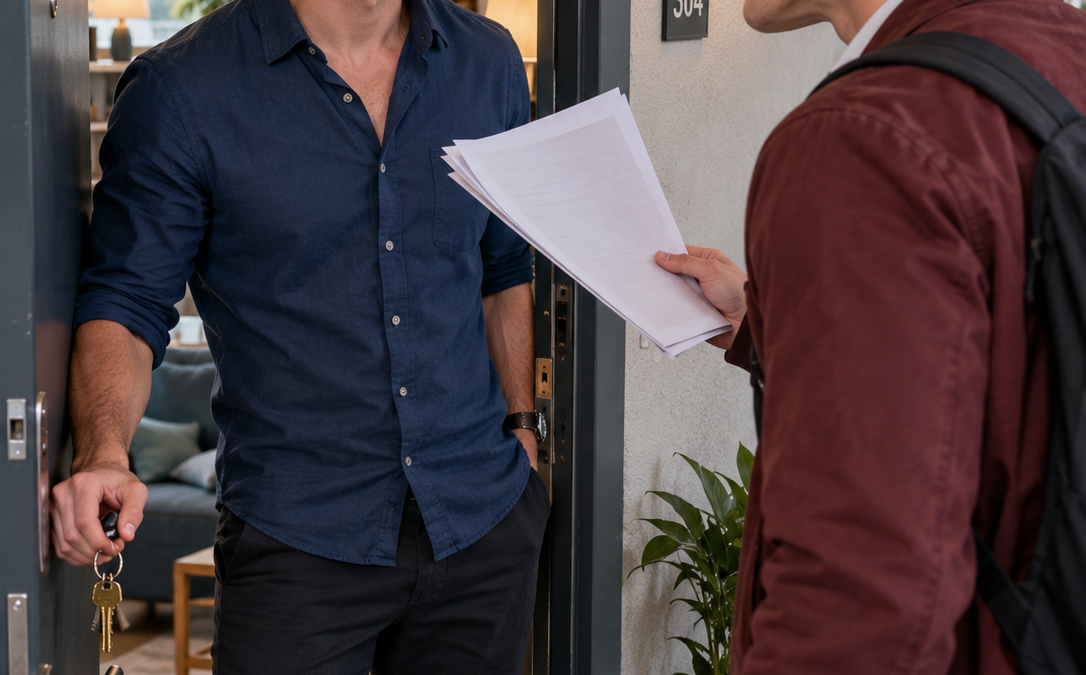
The day I turned eighteen, I was met with a duffel bag and a cold stare from my father instead of a birthday cake. No candles, no dinner, not even a card. Just him standing by the front door, arms crossed, saying, “You’re an adult now. Figure it out,” like he was quoting a line from a movie.
My mom stood behind him, silent, her eyes fixed on the floor. I remember asking if this was some kind of joke, my voice cracking like I was still fourteen instead of technically a legal adult. But my father didn’t blink. He simply pointed to the bag he’d already packed and told me I had ten minutes before he changed the locks.
That was how I left home. Not with a celebration, but with a cheap gym bag, sixty bucks in my pocket, and absolutely no idea where I would sleep that night.
My name is Alex, and at the time, I had graduated from high school just three days earlier. I wasn’t some rebellious teenager. I wasn’t getting into trouble. No drugs, no skipping classes, no fighting. I had a part-time job at the local gas station, a 3.7 GPA, and a dream of maybe getting into community college if I could somehow afford it. But none of that seemed to matter.
The truth was, I had always known I was the spare child. My younger brother, Nathan, was the golden boy. Even when we were kids, I used to joke that he must have had a halo tucked away somewhere in his closet. Straight A’s? Sure, he got them. But so did I. When Nathan brought home good grades, it was brilliant. When I did the same, it was expected. He could crash my bike and get a replacement the next day. I could break a shoelace and get blamed for not taking care of my things.
Nathan was two years younger than me, but our parents treated him like the heir to a throne I hadn’t even known existed. He got braces and tennis lessons. I got used sneakers and silence. Whenever I asked why things were so different between us, my dad would give me the same answer.
“Don’t be dramatic, Alex. Life’s not fair.”
And that was the end of the conversation. Always.
I learned early not to push too hard. I kept my head down, worked my shifts, did my homework, and told myself that once I turned eighteen, I would leave on my own terms. I suppose my parents simply beat me to it.
The first week outside that house was brutal. I bounced between friends’ couches until one of their parents grew uncomfortable with having me around. One night, when the rain was coming down too hard for me to wander the streets, I slept in the break room at work. Eventually, I found a dingy room in a shared house with three strangers. One sold weed out of the living room, another blasted music at three in the morning, and the third barely spoke English but always smiled and offered me instant noodles.
That third roommate was a man named Chun. He turned out to be more of a family to me than my parents had ever been.
It took me four years to get on my feet. I worked every job I could find: cashier, delivery driver, late-night janitor at a mall where the air always smelled like expired popcorn. I studied during breaks, took online classes, and eventually earned a degree in IT. It wasn’t glamorous, but it was mine. There was no help from my parents, no trust fund, no secret savings account waiting to rescue me. Just me, a busted laptop, and sheer stubbornness.
By the time I turned twenty-six, I was living in a clean one-bedroom apartment in a decent neighborhood. I had a car that actually ran, a job that paid well, and, for the first time in my life, a sense of peace. Not happiness exactly. That came later. But peace.
I didn’t think about my family much anymore. I didn’t visit, and I didn’t call. I wasn’t bitter, at least not consciously. I just figured that if I hadn’t been good enough for them back then, I sure as hell wasn’t going to beg for their approval now.
And then, one Sunday morning, everything shifted again.
It started with a knock. I was wearing sweats and getting ready to do some laundry when I heard three sharp knocks at my front door, too firm and deliberate to feel friendly. I walked over, peeked through the peephole, and froze.
My mother was standing outside. Behind her, slightly out of view, was my father, his arms crossed in exactly the same posture I remembered from the day they kicked me out.
My first thought wasn’t, Why are they here? It was, How do they even know where I live?
I opened the door but didn’t step aside.
“Alex,” my mom began, sounding breathless and wide-eyed, as though this were some long-awaited family reunion. “You look grown.”
“I am grown,” I replied flatly. “What do you want?”
My father cut in without bothering with small talk. “We need to talk. Can we come in?”
I stared at them for a long moment. I didn’t say yes. I simply stepped aside.
They settled into my living room as though the place belonged to them. My mother sat on the couch and glanced around, almost as if she were inspecting the apartment for dust. My father remained standing, his hands planted on his hips. The silence stretched until it became uncomfortable.
“We’ve had a rough few years,” my mom finally said, clasping her hands in her lap. “And your brother… well, he’s in a bit of a bind.”
Something cold twisted in my stomach. Of course. This was about Nathan.
“What kind of bind?” I asked, making an effort to keep my voice even.
“He got laid off,” she explained gently, as though I was supposed to feel sorry for him. “And his fiancée left him. She took the car. He’s struggling.”
I waited, because I knew there had to be more.
“We thought,” my father began, “that since you’re doing well now, and since you have this place, maybe it’s time to come together as a family.”
I raised an eyebrow. “Come together how?”
My mother glanced at him before answering. “We think it would make sense for Nathan to move in here. Just temporarily, until he gets back on his feet.”
For a moment, I could only stare at them. I almost laughed. Almost.
“You’re joking,” I said.
“No,” my father replied firmly. “You’ve got space. It’s the least you can do. Family comes first.”
Those three words made something snap inside me.
Family comes first.
The same family that had tossed me out like garbage. The same family that had let me go hungry while they remodeled Nathan’s room into a study space after I left.
“Let me get this straight,” I said slowly, struggling not to raise my voice. “You threw me out on my eighteenth birthday with no warning and no support. And now you’re asking me to house Nathan because family comes first?”
My mother shifted uncomfortably. “We made mistakes.”
“Mistakes?” I interrupted. “That wasn’t a mistake. That was a choice.”
“Alex,” my father said, stepping forward as though he still controlled the situation. “He’s your brother. He needs you. You don’t turn your back on family.”
I stood up and looked him directly in the eyes.
“You did.”
The room went quiet again.
“Look,” my mom said, trying to soften her tone. “He’s been through a lot. He’s not like you. He doesn’t handle hardship well. He’s always been sensitive.”
“And I wasn’t?” I asked, genuinely incredulous. “I just didn’t have the luxury of falling apart.”
It was obvious they weren’t getting it, or perhaps they simply didn’t want to. My father kept pressing, throwing out arguments, comparisons, and guilt trips. At one point, he even suggested that I had built my life because of their tough love.
I almost choked.
That hadn’t been tough love. It had been abandonment, plain and simple.
They left that afternoon without an answer, but I knew it wasn’t over. I could feel it in my gut. They weren’t going to let this go, not with Nathan involved. What I didn’t know was just how far they were willing to go to get what they wanted.
But I was no longer the frightened eighteen-year-old they had left behind. This time, I had something to lose and something worth protecting. I didn’t know it yet, but the storm was only beginning.
They didn’t call for a few days after that visit. I thought maybe, just maybe, they had taken the hint and decided to back off. I even started letting the whole thing go, convincing myself that their ridiculous request had been a one-time attempt at manipulation.
By the following weekend, however, I knew I had underestimated them.
It began with a voicemail from Nathan. I hadn’t heard his voice in years, and at first, I barely recognized it. He sounded tired and scratchy, but there was something oddly rehearsed about his tone, almost as if he were deliberately trying to sound pitiful.
“Hey, Alex. Mom and Dad told me they came to see you. I know it’s a lot to ask, man, but I’m kind of out of options right now. I lost my job and my place, and I’ve been crashing at a friend’s, but it’s not working out. I just… I could use your help. Just until I get back on my feet. Please call me.”
I didn’t call him back.
That wasn’t me being coldhearted. That was self-preservation. I knew exactly how this would go because Nathan had always been able to coast on his charm. He had this disarming way of acting helpless, like a puppy that had somehow wandered into traffic. People, especially our parents, would immediately rush to save him.
But not me. Not this time.
I had scars they had never even noticed, and I wasn’t about to pretend those scars didn’t exist simply because Nathan was finally facing the consequences of his own life choices.
Still, the voicemail started gnawing at me. It wasn’t guilt so much as dread, because if Nathan was reaching out, it meant my parents had moved into the next phase of their plan.
I wasn’t wrong.
Three days later, I came home from work and found my father’s car parked outside my apartment building. My stomach sank. He was standing near the entrance with his arms crossed, wearing the same scowl I remembered from childhood.
When I approached, he didn’t move.
“We need to talk,” he said.
I didn’t bother inviting him upstairs.
“We’ve been patient,” he continued, speaking to me like I was a rebellious child refusing to eat my vegetables. “But you’re being selfish.”
I laughed. I actually laughed.
“Selfish? You think I’m being selfish?”
“You’ve got a stable life now. Nathan doesn’t. Don’t you think your brother deserves a chance, too?”
“What he deserves,” I said, “has nothing to do with me.”
He stepped closer. “You’re part of this family whether you like it or not.”
“No,” I replied, staring him down. “You made sure I wasn’t.”
He didn’t like that. His jaw tightened, and I saw a flash of anger in his eyes. Not rage, exactly, but something worse. Entitlement. It was as if he genuinely believed that everything I had somehow belonged to him to bargain with.
He didn’t shout. He simply looked at me and said, “You’ll regret this.”
Then he walked away.
Two days after that, the messages started arriving. Unexpected texts from extended family, cousins, and relatives I hadn’t heard from in years. There was even a random Facebook message from someone claiming to be a family friend. Every message delivered some version of the same argument.
It wasn’t right to turn your back on family. Nathan was struggling. He needed support. I was doing well, so surely I could help just a little.
One cousin went so far as to write, “Wow, didn’t realize success made you so heartless.”
It was coordinated. My parents had clearly spun a story, probably one in which I was living like royalty in a mansion while poor Nathan slept in the gutters.
The irony was that my apartment was modest at best. But that didn’t matter. The narrative had already been established, and somehow I had become the villain.
I could have fought back. I could have told everyone what had really happened when I turned eighteen, how I had been thrown out like trash with nowhere to go. But part of me refused to play their game. I had already spent too many years allowing their version of events to shape my life. I wasn’t going to start begging people to believe me now.
That was the beginning of the slow unraveling.
Nathan started showing up in person. The first time, he was waiting in the parking lot. Then I found him in the lobby. Eventually, one evening, he was standing right outside my apartment door. He always wore the same hangdog expression, looking so thoroughly beaten down that he could barely seem to speak above a whisper.
“I’m not here to fight,” he said that evening, his hands buried in his pockets. “I just need help.”
“I’m not the one you should be asking,” I replied, fighting the urge to slam the door in his face.
“But you’re the only one who can.”
That sentence stayed with me, not because it was true, but because Nathan actually believed it. Our parents had conditioned him to see me not as his brother, but as a safety net. And now that they had run out of rope, they were trying to throw him onto me like dead weight.
Then came the real breaking point.
I was at work, knee-deep in a network issue, when my landlord called. He almost never contacted me, so I answered immediately, worried that something had gone wrong with the building.
“Hi, Alex,” he said, sounding unusually cheerful. “Just wanted to confirm you’re moving out by the first, right?”
I blinked. “Wait, what?”
“Well, your brother stopped by this morning. Said you were moving out and transferring the lease to him. He had paperwork and everything.”
My heart dropped into my stomach.
“No,” I said slowly. “I never said that. I’m not moving out.”
There was a pause on the other end.
“Oh. He said you asked him to handle everything while you were at work.”
For a moment, I couldn’t speak. My fingers were shaking.
“Don’t worry,” my landlord added quickly. “Nothing’s changed yet. I figured I’d call to confirm, just in case.”
I hung up and rushed home.
Sure enough, Nathan was waiting outside my apartment door again. This time, however, he had a backpack slung over his shoulder and a smug little expression on his face.
“What the hell did you do?” I snapped.
He actually had the nerve to look confused.
“What do you mean?”
“You told my landlord I’m moving out? Are you insane?”
He shrugged. “I figured you’d come around eventually. I was just speeding things up.”
“By lying? By forging my name?”
“It’s not forgery if we’re family,” he said, as though that made any kind of sense. “I was just trying to help.”
I stared at him in disbelief. “Help who?”
“You, me, everyone. This back-and-forth is tearing the family apart. Once I’m settled in, we can fix all this.”
That was when I realized something truly disturbing. Nathan didn’t see anything wrong with what he was doing. He honestly believed he was the victim. He believed he was entitled to my apartment, my life, and the stability I had spent years building.
The scariest part was that he didn’t seem to see me as a person at all. I was simply the next stepping stone.
That night, I locked every window and door. I texted my landlord and made it absolutely clear that, under no circumstances, was anyone other than me authorized to make changes to my lease. The following morning, I changed the locks. I even bought a small security camera and installed it in my entryway.
I didn’t care if it seemed paranoid. If anything else happened, I wanted proof.
And something else did happen.
The next week, I came home to find scratches around my door lock. It wasn’t broken, but someone had clearly tampered with it. I checked the camera footage.
It was my father.
He had tried to break into my apartment.
That was it. That was the moment I stopped waiting for my family to behave like decent human beings. I finally accepted that they weren’t merely entitled. They were dangerous.
I wasn’t going to spend the rest of my life defending myself against them. I was going to prepare. And if they thought I would sit quietly while they dismantled my life piece by piece, they had no idea who they were dealing with.
Because this time, I wasn’t alone. I wasn’t playing defense anymore. I was planning something they would never see coming.
When I watched the footage of my father trying to pick my lock like some second-rate criminal, I didn’t feel fear. Not at first. I felt cold. Numb. There was a strange, delayed silence in my head, as though my mind needed time to process what my eyes had just seen.
He hadn’t even bothered wearing gloves. No mask, either. Just a baseball cap and a jacket I recognized from my childhood. He looked as though he had stopped at the grocery store and casually decided to commit a felony on his way home.
The only reason he hadn’t gotten inside was that I had changed the lock that very morning.
And in that moment, I realized something I hadn’t allowed myself to feel in years.
I was scared.
Not necessarily because I thought they would physically hurt me, although by then I wasn’t ruling anything out. I was scared because I had finally accepted the truth I had been denying since I was eighteen.
They didn’t love me. Not really.
Maybe they loved the idea of me. The version of me who disappeared quietly, never caused trouble, and never got in Nathan’s way. But the version who had survived without them, who had built something of his own and dared to say no?
That version was a threat.
An obstacle. And obstacles, in their world, were meant to be removed.
I sent the footage to my landlord immediately and told him I was considering filing a police report. He was sympathetic and a little stunned, but also nervous. He suggested that if I no longer felt safe, I might want to think about moving.
I knew he meant well, but I couldn’t shake the feeling that I was being punished for my father’s actions all over again.
The next few weeks became a blur. I barely slept. Every time I walked past a window, I checked for shadows. I stopped wearing headphones on my way home so I could hear if anyone was following me. I even started carrying pepper spray.
And I hated it. Hated what it meant.
I wasn’t safe. Not from strangers lurking in some dark alley, but from my own family.
That was what finally broke me.
It wasn’t the messages from extended relatives. It wasn’t Nathan’s fake lease paperwork. It wasn’t even the footage of my father trying to force his way into my home. It was the realization that if something had happened, if I hadn’t changed that lock, if I had come home ten minutes earlier, no one in my family would have stood up for me.
There would have been no justice, no support, and no one willing to believe my side of the story. In fact, they probably would have blamed me for overreacting again.
That was when I hit bottom.
I called in sick for the first time in years. For three straight days, I didn’t leave my apartment. I ignored texts, canceled plans, and let the dishes pile up in the sink. At night, I switched off my phone just so I could remember what silence felt like.
I sat on the couch replaying the security footage over and over until my battery died. My own father, his hands shaking, his eyes darting around like those of a complete stranger.
I remember crying once during those three days. Just once. It wasn’t loud or messy. I was sitting on the bathroom floor, clutching a towel, feeling every ounce of strength drain out of me like air escaping a punctured balloon.
I wasn’t sobbing. I wasn’t even angry anymore. I was simply tired.
Tired of fighting for space that should have been mine to begin with. Tired of pretending I was fine. Tired of building and rebuilding a life when no one had ever even bothered to acknowledge the foundation.
But somewhere inside that quiet, something began to shift.
I don’t know exactly what triggered it. Maybe it was seeing how far my family was willing to go. Maybe it was finally admitting how badly they had hurt me. Whatever the reason, for the first time in years, I stopped reacting and started planning.
First, I gathered all the security footage from the previous month. I archived everything, created backups, and uploaded the files to password-protected cloud storage. I documented every interaction: Nathan’s voicemail, the text messages, even screenshots of Facebook comments from distant relatives parroting the same guilt-tripping language.
I turned my apartment into a case file.
Then I started locking down the rest of my life. I changed every password and set up two-factor authentication on every account. I contacted my credit card companies, placed fraud alerts on my credit profile, and pulled my credit report just to make sure nothing suspicious had happened.
There was nothing unusual yet, but I wasn’t going to wait until there was.
Next, I told my boss what was happening. Not the entire sob story, but enough for him to understand that I was dealing with a serious family situation. I explained that certain people might try to contact me at work or even show up at the office.
To my surprise, he was incredibly supportive. He gave me a few days off to take care of what mattered and even offered to forward unknown callers directly to voicemail.
Funny how strangers can sometimes show more grace than family.
I used those days off to meet with a lawyer. I found her through a friend of a friend. Her name was Jordan, a quiet, serious woman who listened to everything I said without flinching.
I laid it all out for her: being kicked out at eighteen, my parents’ sudden reappearance, the manipulation, the attempted lease fraud, my father’s attempt to break in, the surveillance footage, and the growing paper trail.
She didn’t interrupt. She didn’t act shocked. When I finally finished, she leaned forward slightly and looked me in the eyes.
“You have grounds for a restraining order,” she said. “And maybe more, depending on how far this goes.”
For the first time in weeks, I exhaled.
That conversation stirred something inside me I hadn’t felt since I was a teenager.
Control.
Not revenge. Not yet. But power. The ability to decide what happened next instead of waiting helplessly for someone else to make that decision for me. And that was enough to begin healing.
Over the following months, I started shifting my focus inward. I enrolled in a certification course I had been putting off for years, something involving cloud infrastructure and data security. It probably sounded boring to most people, but to me, it was another rung on the ladder.
Every evening, I came home, made dinner, and studied. No distractions, no drama. Just progress.
I also started seeing a therapist, once a week at first and then twice. Her name was Elena, and she didn’t coddle me. She called me out on my avoidance and gently pointed out patterns I had never noticed in myself.
She helped me realize that I had spent so many years surviving on autopilot that I no longer knew how to feel safe, even when I actually was.
During one session, I told her I didn’t think I would ever fully trust anyone again.
“Maybe you don’t have to,” she said. “Maybe it’s not about trusting everyone. Maybe it’s about learning how to trust yourself, and knowing when not to let people get too close.”
That stayed with me.
Over time, I made new friends. Real friends, people who didn’t seem to want anything from me except my company. I joined a running group, which would have sounded hilarious to anyone who knew me growing up. But somehow, sweating alongside strangers and pushing myself through those early morning runs made me feel human again.
I even started dating casually. Nothing serious, but I found myself smiling more. Laughing, even. Sometimes I would catch myself walking around my apartment feeling perfectly content for no particular reason.
I hadn’t felt that way in a decade.
But peace brought clarity with it.
Even though I was rebuilding my life piece by piece, breath by breath, I hadn’t forgotten what my family had done. They were still out there, still lying, still twisting my story into something I barely recognized.
I didn’t want to spend my life living in the past, but I wasn’t about to let them rewrite it without a fight.
Especially after what happened next.
It started with a letter.
Not a text message. Not another knock at my door. An actual letter delivered to my apartment, with a handwritten return address and no stamp. Someone had slipped it directly into my mailbox.
It was from my mother.
I stared at the envelope for a full ten minutes before finally opening it.
The letter was three pages long, written in the same neat, looping cursive my mother used to put on birthday cards back when she still remembered to buy them.
It began with the usual things. They missed me. They had never meant to hurt me. Things had been difficult back then.
And then the tone shifted.
My mother wrote that Nathan was going through a deep depression and had started making serious plans to turn his life around. She explained that she and my father wanted to transfer the family home to him so he could have a fresh start.
But apparently, there was a complication.
Some old paperwork still listed my name as an heir because, years earlier, my grandfather had left a small inheritance jointly to Nathan and me.
My mother wanted me to sign a few documents.
It was just a formality, she assured me. Just paperwork. Nothing worth worrying about.
I folded the letter, set it on the table, and sat there for a very long time.
This wasn’t just about my apartment anymore. They were after something bigger. Something connected to family property, inheritance, land, and legal rights I hadn’t even known I possessed.
But they knew.
They had always known.
And they had kept quiet until they needed something. Until Nathan needed something.
That night, I didn’t cry. I didn’t shake. I didn’t feel broken. I felt focused, because this was no longer simply about survival.
This was about setting the record straight, legally, financially, and emotionally. For the first time in my life, I was going to write my own ending.
But before I could do that, I needed to gather every piece of the puzzle they thought I had forgotten. And when everything finally came together, they were going to understand what it felt like to be on the outside looking in.
By the time I finished reading my mother’s letter for the third time, I was no longer merely suspicious. I was certain they were trying to erase me.
Not metaphorically. Legally. Quietly. Permanently.
The wording of the letter wasn’t angry or threatening, and somehow that made it worse. Everything was sanitized, wrapped in the same artificial kindness my parents used when I was a child.
I could still remember asking why Nathan got dessert when I didn’t.
“It’s not about fairness, sweetie,” my mother would say. “It’s about what’s best for everyone.”
Only this time, we weren’t talking about dessert. We were talking about the family home, a house I hadn’t thought about in years.
I don’t know if you’ve ever had to dig through the legal graveyard of your own childhood, but it’s a strange experience. I started by emailing Jordan a copy of the letter. She replied within an hour.
“If they’re asking you to sign anything related to your grandfather’s will, don’t. Not yet. Let’s pull the documents first and see what they’re trying to override.”
That was the spark I needed.
The following morning, Jordan filed a request for the original estate documentation. While we waited, I did what I had learned to do best.
I documented everything.
I created a digital folder titled Operation Cleanup, partly because humor was the only thing keeping my anger from boiling over. I went through every piece of communication I had saved, including texts, voicemails, and letters, and arranged everything into a detailed timeline.
I also began writing a personal statement, mostly to organize my thoughts.
The process turned out to be unexpectedly cathartic.
As I wrote everything down, I started noticing patterns I had missed at the time. Every attempt my family had made to contact me had served a purpose. It was never about connection or reconciliation.
It was about extraction.
They only ever reached out when they needed something.
I remembered being fourteen and helping with groceries after my father forgot his wallet, only to have the situation turned into an argument about how I owed my parents for raising me by dinnertime.
I remembered giving Nathan my laptop when his broke in high school. He went around telling people how generous I was, while our parents acted as though the laptop had been a birthday present they had bought for him.
Even now, after nearly a decade of silence, my family hadn’t returned to apologize.
They had returned with a plan.
Well, now I had one, too.
Two days later, Jordan called.
“I’ve got something,” she said, her voice low even though I was alone in my apartment and had her on speakerphone.
“The inheritance?”
“Yep. Your grandfather left a joint trust, split fifty-fifty between you and Nathan. But here’s the thing. The house your parents live in? It was never theirs to keep. It was purchased under that trust, and your grandfather’s instructions were explicit.”
“What kind of instructions?” I asked, my heart hammering.
“If the property is sold, the proceeds must be split evenly. If it’s kept, both heirs must consent to any transfer of title. They cannot sign that house over to Nathan without your permission.”
I sat there in stunned silence.
My parents had been living in that house for more than a decade. They must have known, or at least suspected, what the trust said. Which meant they had spent all those years hoping I would either never discover the truth or be naive enough to sign away my rights without asking questions.
Jordan continued, “If you want, we can put a formal block on any attempts to transfer ownership. But doing that might alert them that you know.”
“No,” I said slowly. “Let them think I’m still considering it. I want them to get comfortable.”
She went quiet for a moment.
“Alex, are you planning something?”
“I’m planning to make sure they never try this again.”
The setup took weeks.
Step one was information. I requested property tax records, the deed history, and every document connected to the trust. Jordan handled most of the legal work, but I wanted to understand every detail myself.
The more I read, the angrier I became.
My parents had manipulated loopholes, skirted co-ownership clauses, and essentially lived off my inheritance while pretending that everything belonged to them by some God-given right. Even the permits for their renovations listed Nathan as the future beneficiary.
Step two was silence.
I didn’t respond to my mother’s letter. I didn’t call, and I didn’t push back. I simply let them wonder.
It drove them crazy.
A week later, another note arrived from my mother. This one was shorter, more emotional, and filled with underlined words like family, unity, and legacy.
There was even a sentence near the end that made me laugh out loud.
“We hope you’re not letting old wounds cloud your judgment.”
Cloud my judgment.
These people had made me homeless on my birthday, and now they were lecturing me about allowing old wounds to influence my decisions.
But I stayed quiet.
I wanted them to believe I was still the hesitant, soft-spoken kid they had pushed out the door at eighteen.
Meanwhile, step three was already in motion.
Allies.
I started by calling my cousin Rachel. We hadn’t been especially close growing up because she lived across the state, but we had always gotten along. She had messaged me months earlier during the family guilt campaign, though unlike the others, she hadn’t been aggressive.
She had sounded confused. Curious, even.
She picked up on the second ring.
“Alex?”
“Hey, Rach. Got a second?”
That one conversation opened a floodgate.
It turned out Rachel had her own issues with my parents, and especially with Nathan.
At a family reunion a few years earlier, Nathan had cornered her husband and tried to talk him into some shady cryptocurrency investment. He had gone on about investment opportunities and how much money they could make.
Rachel hadn’t trusted him since.
When I explained what was actually happening with the property, the trust, and my parents’ manipulation, she was furious.
“I knew something was off when Aunt Linda acted like they owned that house outright,” she said. “I remember Grandpa always saying it was for the boys, not just for Nathan.”
We talked for more than an hour.
Before hanging up, Rachel said, “Whatever you’re planning, I’m in.”
After that, I reached out to three more cousins. Two of them had also been iced out of the family for relatively minor offenses, like dating someone our relatives didn’t consider respectable or moving out of state without permission.
Same story. Different details.
Within a week, I had assembled a small network of family black sheep, all of whom were willing to back me publicly if things went sideways.
Some had old photographs, letters, and even voicemails that hinted at the trust arrangement. Those records could help establish that my parents had known the terms of the inheritance and had simply chosen to ignore them.
But the final piece of the setup arrived when Nathan called me himself.
I let the call go to voicemail.
His tone had changed again. He no longer sounded exhausted or pitiful. This time, he was confident, almost smug.
“Hey, Alex. Look, I know you’re taking your time with the paperwork, but just a heads-up. Mom and Dad are getting everything finalized with the lawyer. We’re hoping to wrap things up this month. It’d be easier if you just signed and sent it over, but I get it. Sometimes you’ve got to feel like you’re in control. Just don’t take too long. Family’s watching.”
I listened to the message twice.
That was the last piece I needed.
They were moving forward with a transfer they had no legal authority to complete, and Nathan had just left me a recorded trail of their intentions.
Perfect.
The following morning, I met Jordan at her office and explained my final plan. Together, we drafted a cease-and-desist letter addressed to my parents’ lawyer, citing the exact clauses of the trust they were violating.
But instead of sending it immediately, we waited.
I wanted the timing to be perfect.
Nathan’s birthday was approaching, and our parents had always made a huge production out of it. There would be a family dinner, expensive gifts, and emotional speeches about his potential and everything he was destined to accomplish.
If they were planning to make a formal announcement about the house, that would be the night.
Jordan agreed to remain on standby with the cease-and-desist letter and the injunction paperwork, just in case.
But I had one more card to play.
A week before the birthday dinner, I quietly contacted a local investigative journalist who had previously covered questionable real estate deals. I sent over the public trust documents, my mother’s letter, and a redacted version of Nathan’s voicemail.
Just enough to get the journalist interested.
And it worked.
Apparently, inheritance fraud involving older family estates was a subject attracting considerable attention, especially when the story involved one sibling who had been kicked out at eighteen and another who was now trying to force him out of his share years later.
I didn’t tell the journalist everything. Not yet.
The revenge wasn’t complete.
But the trap was set, and I was finished playing nice.
On the day of Nathan’s birthday dinner, I hadn’t slept. Not because I was nervous or afraid, but because my mind had been so focused on what was about to happen.
Everything was ready.
The documentation had been reviewed. The legal response was drafted. My phone was fully charged.
I had even set a reminder titled Drop the Hammer for exactly 7:30 p.m., right around the time I knew my father would be delivering his big family speech.
Jordan was standing by with the court injunction. The journalist had already emailed me twice, asking whether I had a statement to include in the final draft of the article, which was originally scheduled to go live that weekend.
This wasn’t revenge born out of anger. That would have been easy.
This was revenge born from survival, from nearly ten years of silence, from being treated as though I had never existed.
It wasn’t about punishing them.
It was about reminding them that I existed.
I put on a plain black button-up shirt. Not because I intended to attend the dinner in person, but because I wanted to look composed when I FaceTimed Rachel.
She was already at the birthday celebration, seated at the far end of the table like an outsider.
She had agreed to attend on one condition: she would record everything.
At 7:24 p.m., she sent me a text.
“He’s starting.”
Four minutes later, another message appeared.
“They’re bringing out a giant cake. Dad just stood up with a glass.”
I opened my laptop and clicked into a shared-drive folder I had named Inheritance Audit. I checked that everything was visible and properly timestamped: emails, voicemails, text messages, copies of the trust, my mother’s letter, Nathan’s smug voicemail.
All of it.
Then I waited.
Rachel called at 7:33 p.m.
I answered immediately. She was holding her phone low beneath the table, trying to keep the camera out of sight. The footage was shaky, but I could see enough of the setting to understand what was happening.
They were in the backyard, surrounded by strings of warm lights. Nathan sat at the head of a long outdoor table, wearing a polo shirt and a grin that looked painfully fake.
My parents stood on either side of him, beaming like politicians at a campaign event.
My father raised his glass.
“To Nathan,” he announced, loudly enough for Rachel’s phone to capture every word, “who has always been the rock of this family and who is finally ready to take on the responsibility of becoming the homeowner of our family house.”
A few people clapped politely.
My mother wiped away what looked like a carefully performed tear.
Rachel slowly tilted the camera upward.
I watched Nathan smile and raise his own glass.
“I’m honored,” he said. “It’s been a long journey, and I just want to thank Mom and Dad for trusting me with this legacy. We’ve already started the paperwork, so it’s official.”
I smiled and nodded to myself.
It was time.
I picked up my phone and sent Jordan a single word.
“Now.”
Within thirty seconds, the cease-and-desist letter landed in their lawyer’s inbox, marked with a high-importance flag. A copy went to my parents’ shared email account. Another was sent to the county recorder’s office as part of the effort to block any transfer of title under the trust.
But the final nail came from the journalist.
I opened the article draft one last time. The headline read:
“The Invisible Heir: Family Trust Dispute Reveals Ugly Battle Over Inheritance, Alleged Deception, and Legal Trickery.”
Then I submitted my statement.
“They erased me the day I turned eighteen. Now they’ll never forget who I am.”
Five minutes later, the article went live.
I knew my family had seen it within the hour because, by 8:45 p.m., my phone was exploding with notifications.
It started with a message from Rachel.
“Your mom just screamed. Your dad’s on the phone yelling at someone. Nathan’s face is white.”
Then an email arrived from Jordan.
“Just got word from the county. Title is frozen pending review. You’re secure.”
And then there was silence.
For two full days, nothing happened. No phone calls. No unexpected knocks at my door. No guilt-tripping letters.
Just silence.
Until the fallout began.
On Monday morning, Jordan called.
“They’re pushing back,” she said calmly. “Nathan’s lawyer responded, but it’s sloppy. They’re claiming implied transfer rights, but the trust is airtight. This is exactly what we expected.”
“What’s our next step?”
“We counter with evidence. Full documentation of your removal from the family home at eighteen, the inheritance clause, and their attempts to coerce you and misrepresent your position. This isn’t just civil court territory anymore. We may be talking about criminal fraud.”
Fraud.
That word felt like justice.
It wasn’t merely that my family had tried to take the house. It was the fact that they had planned everything so carefully, assuming I would never fight back. They had expected me to remain the weak one, the invisible one, the child who had learned to accept whatever scraps they offered.
But the truth was, they had never bothered to find out who I had become.
Over the next two weeks, the article began gaining traction. It didn’t go viral, but it attracted enough attention to stir conversation in our small town.
A few neighbors reached out to ask whether I was okay.
One even told me, “Your dad always talked about how proud he was of his two sons. Didn’t know they meant one.”
I didn’t respond.
I let the truth speak for itself.
Legally, the house was now locked in a holding pattern. No sale or transfer of title could move forward without my signature.
Their lawyer began backing off quickly, especially after Jordan filed a formal report with the state bar association alleging ethical violations connected to the attempted deed transfer without the consent of all heirs.
That got their attention.
But the real fallout happened inside the family.
Word began to spread.
Rachel told me that Aunt June had confronted my parents at church and asked whether the article was true. Apparently, she had always wondered why I never came around anymore. She suggested that perhaps my parents owed me something more meaningful than a phone call.
Then my cousin Will shared the article on Facebook with a caption of his own.
“Funny how some people forget who helped build the foundation when they’re decorating the living room.”
One by one, the cracks deepened.
My parents tried damage control.
My mother sent out a long email titled Our Side of the Story, claiming that I was twisting the facts and that she and my father had only been trying to do right by both their sons.
The message was filled with passive-aggressive digs and carefully worded apologies that weren’t really apologies at all.
“We’re sorry you feel wronged,” she wrote, before adding that I had always been too sensitive.
I forwarded the entire email to Jordan.
She laughed when she read it.
“This is gold,” she said. “Keep everything.”
Then Nathan finally called me.
I stared at his name on my screen for a long time before answering.
He didn’t even bother saying hello.
“Why are you doing this?”
I leaned back in my chair.
“You mean defending what’s mine?”
“You’re tearing the family apart.”
“No,” I said. “I’m just refusing to let you steal from me.”
“It was never about stealing.”
“You lied to my landlord. You tried to take my lease. You forged paperwork. You went behind my back with the trust. What exactly would you call it?”
He didn’t answer.
So I kept going.
“You let them throw me out when I was eighteen. You watched me disappear, and you never once asked whether I was okay. Now you want to pretend this was all some big misunderstanding?”
“I was a kid,” he snapped.
“So was I. The difference is, I didn’t have parents fighting for me.”
There was a long pause.
Then, in a much quieter voice, Nathan said, “They’re going to lose the house.”
I didn’t say anything.
“Do you even care?” he asked.
I thought about that question.
I thought about all the nights I had spent wondering why I hadn’t been enough. About all the imaginary family conversations I had rehearsed in my head just to convince myself I was still sane.
I thought about the empty birthdays, the lonely holidays, and the silence that had swallowed my twenties almost whole.
Finally, I answered.
“No. I care that they remember why.”
A month later, the final paperwork came through.
The house was to be sold.
Under the terms of the trust, I would receive half the proceeds, more than $180,000.
My parents would have ninety days to vacate the property.
Jordan handled the logistics. I never saw my parents in court, but I did receive one final envelope.
There was no return address.
Inside was a photograph of the house. I could see the backyard and the table where Nathan had delivered his little speech about being trusted with the family legacy.
Across the top of the photograph, someone had scribbled four words in black ink.
“Hope you’re happy.”
I stood there looking at it for a while.
Then I pinned it to my refrigerator.
Not as a trophy. Not because I wanted to celebrate what had happened to them. I kept it as a reminder that silence doesn’t mean weakness, that distance doesn’t mean defeat, and that sometimes the best way to have the last word is to build a life where the people who hurt you no longer get a say at all.
And that’s exactly what I did.








