“Stay out of my command,” my sister snapped before shoving me into the wall. I didn’t fight back. I didn’t tell her who I was. The next morning, she stood frozen as I walked into the room… as the new admiral.
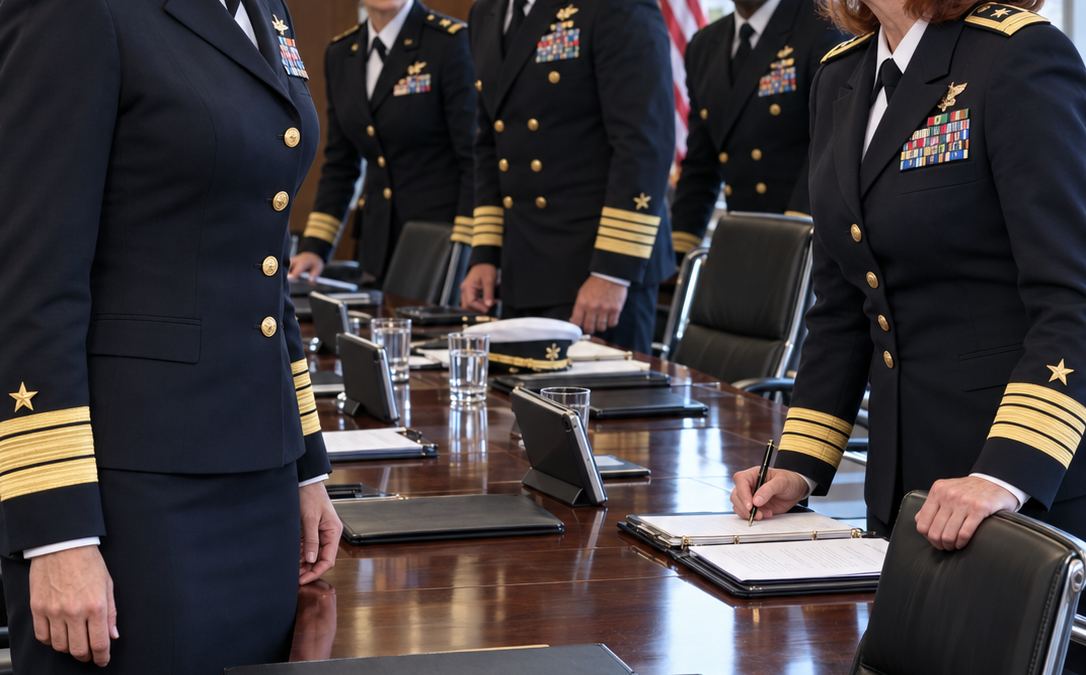
The first time my sister put her hands on me in eight years, she had no idea what would happen at the command briefing the next morning. At that moment, I was just Kate to her—her younger sister, the one she had stopped calling years ago.
I arrived at the Naval Aviation Training Facility a little after four in the afternoon. I had flown in that morning, changed airports, lost twenty minutes at a rental car desk, and decided I had already spent enough of my life waiting on people who worked behind counters. I was wearing civilian clothes: dark slacks, a plain jacket, and comfortable shoes. Nothing about me said admiral. That was fine. I wasn’t there for a ceremony.
Lieutenant Commander Scott Avery from the inspection staff met me outside the secure entrance. He had a tablet tucked under one arm and the expression of a man who had been warned that his afternoon might become complicated. He wasn’t wrong.
“Ma’am,” he said.
“Kate is fine until tomorrow.”
He blinked once. “Yes, ma’am.”
I looked at him.
He corrected himself. “Right. Kate.”
We went inside. The facility handled advanced simulator training for naval aviators moving through a demanding part of the qualification pipeline. It was clean, busy, and slightly too cold, which described about half the government buildings I had worked in over the last thirty years. We passed through security and entered the main simulator bay.
That was where I saw Meredith.
My sister was standing beside an instructor console with a folder in one hand. Captain Meredith Hail, fifty-three years old, still straight-backed, still sharp, still able to look across a room and make someone feel as if they had already disappointed her.
She saw me, and her face changed. Not much. Meredith had always been good at keeping her reactions small when other people were watching. She walked over.
“What are you doing here?”
No hello. No How have you been? Eight years apart, and we were right back on schedule.
“I’m reviewing some training data.”
Her eyes moved to Avery. “Higher headquarters?”
Avery looked at me.
“Yes,” I answered. “If someone needs records, my staff can send them. I wanted to see the system running.”
Meredith gave me a short smile. There was no warmth in it.
“You always did like showing up in person.”
I let that go. We had work in front of us.
Simulator 4 was preparing for an advanced handling event. Lieutenant Jordan Reyes was scheduled for the next run. I knew the name from the roster Avery had sent me that morning. Young pilot, good scores, no major deficiencies.
I stood behind the technical station and watched the system checks. Input channels looked normal. Hydraulic response model, normal. Flight control configuration matched the listed training package.
Then I noticed the timing.
It was small, small enough to ignore if you were only looking for a red warning box. The control response was arriving a little late during one section of the validation cycle. Not much. But aviation has never cared whether a problem looks dramatic. It only cares whether the numbers are wrong.
I leaned toward the screen.
“When was this configuration last validated against the current aircraft response model?”
The technician looked over. “Full validation?”
“Yes.”
He glanced at another monitor. “I’d have to pull the record.”
“Please do.”
Meredith had walked up behind me.
“What are you looking at?”
“Response timing.”
“Is there a fault?”
“I didn’t say there was.”
“Then what, exactly?”
“I’m checking.”
She exhaled through her nose. That was familiar, too. Meredith had always treated questions like delays. I treated them like insurance.
The technician scrolled through a configuration page.
“No active fault codes.”
“I can see that.”
Meredith folded her arms. “We have a qualification block starting in six minutes.”
“I know.”
“We’re already behind this week.”
“I know that, too.”
“So unless you’ve found something that grounds the system, I’d like to keep my schedule.”
I looked at the response values again. “I’d like five minutes to verify the timing.”
“You’d like?”
There it was. Not Captain Hail talking to another officer. Meredith talking to her little sister.
Avery noticed it. So did the technician. I kept my voice even.
“Five minutes.”
Meredith stepped closer. “No.”
The room stayed quiet for about two seconds. That was plenty.
“I’m not calling the system unsafe,” I said. “I’m saying I don’t like what I’m seeing.”
“And my technical staff cleared it.”
“I’m asking them to check one more thing.”
“You’re asking my staff to stop a scheduled evolution because something doesn’t look right to you.”
“Yes.”
She gave a dry laugh. “Of course you are.”
That had nothing to do with the simulator. I knew it. She knew it.
I turned away from the console. “Let’s not do this here.”
“Gladly.”
We stepped into the corridor. Avery stayed behind. Smart man.
The door shut behind us. Meredith waited until we were alone. Then she said, “You always do this.”
“Do what?”
“Walk into somebody else’s life, decide something isn’t being handled properly, and start asking questions.”
“I’m here for a readiness review.”
“You’re always here for something official.”
I looked at her. “Meredith—”
“No. You don’t get to use that tone with me.”
“What tone?”
“That calm little voice, like everyone else in the room has lost their mind.”
I almost smiled. Almost.
“You haven’t changed much.”
Her jaw tightened. “Neither have you.”
I started back toward the door. She moved in front of me.
“I’m not done.”
“I am.”
“You disappear for eight years, then walk into my facility and start questioning my program.”
“This isn’t about eight years.”
“It always is with you.”
I reached for the door handle.
She said, “Dad died waiting for you.”
My hand stopped.
There are sentences that still work even when you’ve heard them before. That was one of them.
I turned. “This is not the place.”
“That’s your answer?”
“No.”
“You weren’t there.”
“I know where I was.”
“So do I.”
She didn’t. But I had spent too many years explaining things to people who had already decided what they wanted the answer to be.
I turned back toward the simulator bay. Meredith grabbed my arm hard. I looked down at her hand, then at her.
“Don’t do that.”
She let go for half a second. Then she reached again.
I pulled my arm free.
Her face changed. Not into rage. Something smaller, older. The look she used to get when we were teenagers and I refused to back down.
She stepped into me.
“Stay out of my command.”
“I’m going back inside.”
She put one hand against my upper arm and shoved.
It happened fast. One hard push. My shoulder hit the wall behind me. The impact hurt, not badly, but enough to make the point.
Two sailors had just turned into the corridor about twenty feet away. Both stopped.
Meredith saw them. So did I.
For the first time since I arrived, she looked uncertain.
I straightened my jacket.
“You need to take your hands off me.”
Her hands dropped.
Nobody moved. One of the sailors looked at the floor. The other stared at a spot somewhere over Meredith’s shoulder.
They had both seen it. Meredith knew that.
I opened the simulator bay door.
Behind me, she said, “We’re running the evolution.”
I looked back. “You’re sure?”
“Yes.”
That answer mattered more than the shove.
I walked inside. Jordan Reyes was already climbing into Simulator 4. She looked young enough to still believe every instructor in the room had the same information.
I watched her settle into the seat. The technician began the startup sequence. Meredith came in behind me and took her place near the instructor console.
Nobody mentioned the corridor.
The canopy closed over Jordan. The displays came alive. Numbers started moving. I took a position behind the technical station and watched the response timing again as Jordan wrapped her hand around the controls.
Jordan’s first control input looked normal, but the response on my screen arrived just late enough to make me stop breathing for half a second.
Not because it was dramatic. Because it was familiar.
The kind of delay most people would miss if they were watching the pilot instead of the data.
Jordan moved through the first part of the evolution cleanly. Power setting steady, bank angle controlled, no unnecessary corrections. Meredith stood near the instructor console with her arms folded. I stayed behind the technical station.
Ortiz had taken over the maintenance display. He was watching more closely now.
That mattered.
Jordan entered the next maneuver. The control input appeared on the left side of the screen. The simulated aircraft response followed a fraction later.
Too late.
I leaned closer. “Mark that.”
Ortiz touched the screen. “Marked.”
Meredith looked over. “What?”
“Timing,” I said.
She shook her head. “Still with the timing?”
“Maybe.”
“That means yes.”
“No. It means maybe.”
She gave me a look that suggested I had personally invented the word.
Jordan rolled through twenty degrees, then thirty. The simulator lagged again. She corrected. The system answered late. Her second correction arrived before the first one had fully taken effect.
The aircraft model rolled farther than she expected.
Jordan corrected back.
The oscillation started. Small, then larger.
“Ease it,” Meredith said into the headset. “You’re chasing the roll.”
Jordan’s voice came back through the speaker.
“I’m not trying to, ma’am.”
“Then stop correcting ahead of the aircraft.”
Jordan centered the stick. The simulator kept rolling for another beat.
There it was.
I looked at Ortiz. He was already looking at me.
“Response is late,” he said.
Meredith heard him. “By how much?”
“Still measuring.”
Jordan made another input. The system delayed again. She reacted. The roll reversed too sharply.
Meredith stepped toward the console.
“Reyes, get back on the recovery profile.”
“I am, ma’am.”
“No, you’re behind it.”
Jordan’s voice tightened. “Controls aren’t matching.”
That changed the room.
Pilots complain about a lot of things. Weather, scheduling, coffee. Mostly coffee.
But when a pilot says the controls aren’t matching the input, you pay attention.
At least you should.
I looked at the telemetry.
“Freeze the evolution.”
Meredith turned. “No.”
I didn’t look away from the screen.
“Freeze it.”
“She can recover.”
“That’s not the point.”
“She needs to finish the event.”
“The event is giving us bad data.”
Meredith stepped closer. “You don’t know that.”
I pointed at the timing values. “I know enough to stop pretending this is a student problem.”
Jordan corrected again. The oscillation widened.
Ortiz leaned toward his station. “Ma’am, I’m seeing response lag outside the normal pattern.”
Meredith looked at him. “Outside limits?”
“Not confirmed yet.”
“Then keep running.”
I turned to Ortiz. “Preserve the event log before anybody resets the system.”
He nodded.
Meredith snapped, “Chief, stay on the evolution.”
Ortiz looked between us. He was careful, not afraid. Just professional.
“Captain, if we keep running and the system auto-resets after termination, I may lose the timing history.”
That was the first crack.
Not in the simulator.
In Meredith’s control of the room.
She stared at him. “How long?”
“Thirty seconds to capture.”
Jordan’s simulated aircraft rolled hard left. She corrected right. The response came late again.
I said, “Freeze it now.”
Ortiz hit the hold command.
The display stopped. The simulator locked the scenario.
Jordan’s voice came through.
“What happened?”
Nobody answered immediately.
Meredith looked furious.
Ortiz began saving the data. I watched the numbers stop updating.
Timestamp captured. Control input captured. Aircraft response captured.
That was what I wanted.
Not a victory.
A record.
Jordan climbed out three minutes later. She removed her helmet and walked toward us with the expression every young pilot gets after an event goes wrong. Half embarrassed, half angry, mostly wondering what everyone else thinks.
She looked at Meredith first.
“Ma’am, did I fail that?”
Meredith opened her mouth.
I spoke before she could.
“We don’t know yet.”
Jordan looked at me.
“You were correcting for what you saw.”
She nodded. “But I kept getting ahead of it.”
Maybe that bothered her. Good. Pilots who are too comfortable with easy answers make me nervous.
“So was it me?”
“I’m not going to tell you something I can’t prove.”
She waited.
“That’s why we kept the data.”
Jordan glanced at Simulator 4.
“Can I rerun it?”
“Not today.”
Meredith turned toward me. “You don’t make that call.”
I met her eyes.
“Not the way you think.”
Her expression changed for a second. She heard something in my voice. Not the answer. Just enough to know there was one.
Ortiz interrupted before Meredith could say anything else.
“Admiral—”
He caught himself.
Too late.
Meredith looked at him. Ortiz stopped. I gave him a very small shake of my head.
He corrected himself.
“Ma’am, I have the event package.”
Meredith stared at him another second, then at me. I could almost hear the question forming.
I didn’t help her.
Ortiz turned the monitor slightly.
“Response delay peaked at 684 milliseconds during the oscillation.”
Meredith looked at the number.
“That’s not enough to explain all of it.”
“I didn’t say it was,” Ortiz said.
I liked him more every minute.
He scrolled down.
“There’s something else.”
He opened the diagnostic history. Most of the entries were routine. Nothing dramatic. No bright red warning. No giant flashing box saying something was wrong.
Systems almost never have the courtesy.
Ortiz filtered the results. A few earlier timing entries appeared. One from twelve days before, another from twenty-one, a third from almost a month earlier. Each one showed smaller versions of the same delay.
Meredith leaned toward the screen.
“Those were flagged?”
“No, ma’am.”
“Why not?”
“Below automatic reporting threshold.”
She looked relieved for about two seconds.
Then Ortiz kept scrolling.
“There are more.”
The room got quiet.
I stepped closer. “How far back?”
“I don’t know yet.”
“Can you pull the raw history?”
“Yes.”
“How long?”
“Couple hours, if the archive is clean.”
“Do it.”
Meredith folded her arms again.
“We have another qualification event scheduled at 1900.”
“Cancel it.”
She looked straight at me.
“No.”
Ortiz stayed very still. Jordan had not left yet. Neither had the instructor.
Too many witnesses for family history.
Good.
I kept my voice level.
“Hold Simulator 4 overnight.”
“On whose authority?”
“Technical preservation.”
Meredith laughed once. Dry, sharp.
“That’s convenient.”
“It’s also documented.”
“You’re shutting down my simulator because of a delay you haven’t even confirmed as causal.”
“I’m holding one system long enough to find out whether it has been teaching pilots around a fault. That’s not the same thing.”
“No.”
I looked at the old entries on the screen.
“It could be worse.”
She didn’t answer.
Ortiz started the archive pull. Jordan stood beside the console with her helmet under one arm. I could see she was reading the room now, not the instruments.
Young officers learned fast when senior people stopped pretending everything was fine.
My phone vibrated.
One message.
Command leadership briefing. 0700.
I read it once and put the phone away.
Meredith noticed.
“What?”
“Nothing you need tonight.”
That irritated her more than it should have.
She picked up her folder.
“You’re enjoying this.”
I looked at her. “No.”
And I meant it.
If I had wanted to embarrass Meredith, I already had enough material from the hallway.
What I wanted was much simpler.
I wanted the machine to tell us what it had been doing.
Ortiz opened another file. His face changed. He leaned closer.
I stepped beside him as three more archived events loaded onto the screen.
Ortiz opened the first archived event, and the timing numbers told me I wasn’t going home early.
The delay was smaller. Not harmless. Just smaller.
He loaded the second event. Same maneuver family. Same pattern. Input first, response late, correction, then the system caught up.
Meredith stood behind us with her folder pressed against her side.
“What dates?”
Ortiz read them out.
“Twelve days ago. Twenty-one days ago. Twenty-eight days ago.”
I looked at the screen.
“Keep pulling.”
Meredith checked the time.
“It’s almost 1800.”
“I can read a clock.”
“I have people who have been here since before sunrise.”
“So rotate them.”
She gave me a flat look.
That was Meredith’s preferred response when someone solved a problem she was using as an argument.
Ortiz hid a smile. Barely.
I pretended not to notice.
By 1930, we had enough to justify the overnight hold. Not enough to explain the cause.
That distinction mattered.
I signed the technical preservation request under my inspection authority. Meredith read the signature line.
Her eyes stopped for a second.
Kay Lawson.
No rank. No title. Just the name.
She looked up at me.
“You’ve gotten very comfortable with higher headquarters.”
“I’ve had practice.”
“That’s supposed to mean something?”
“No.”
It did, but not what she thought.
I left the facility a little after eight.
The next morning, I was back before six thirty. This time I wasn’t wearing civilian clothes.
Navy service uniform. Ribbons. Nameplate.
And the rank Meredith had not seen coming.
I stood outside the briefing room while the staff finished seating.
Rear Admiral Katherine Lawson.
I had been selected months earlier. The assignment had been finalized weeks ago. The official introduction to this command had been scheduled before I ever walked into Simulator 4.
Meredith simply hadn’t known.
That wasn’t part of some clever plan. We had barely spoken in eight years. She knew more about our last family argument than my current job.
The door opened.
A staff officer nodded.
“Ready, Admiral?”
I walked in.
Everyone stood.
Meredith was three seats from the end of the table. She looked up. Her eyes went to my face first, then my shoulder boards, then back to my face.
She didn’t gasp. She didn’t drop anything.
Real life usually has better discipline than television.
She just stopped moving for about two seconds.
That was enough.
The command chief introduced me.
“Rear Admiral Katherine Lawson, incoming flag officer for aviation training readiness oversight.”
I watched the words land.
Training readiness oversight.
Meredith’s program.
Her face stayed professional. Her hands did not. The pen between her fingers tightened.
I took my seat.
“Good morning.”
The room answered.
“Good morning, Admiral.”
Meredith did, too. A little late.
I opened the briefing folder.
“Before we get into the scheduled agenda, Simulator 4 will remain out of the affected training syllabus pending preliminary technical review.”
A commander across the table looked surprised.
“Safety stand-down, ma’am?”
“Not command-wide,” I said, keeping it precise. “One simulator, one affected segment, until we know whether the response anomaly is isolated, configuration-related, or part of a larger pattern.”
Meredith spoke. Her voice was controlled.
“Admiral, the system has not been formally declared unsafe.”
“No.”
“So we’re suspending training before a causal finding?”
“We’re holding the affected evolution while we preserve evidence.”
I looked at her.
“Those are not the same things.”
She nodded once. “Understood.”
She hated saying it. I could tell.
I had grown up with her. Some skills survive estrangement.
The briefing moved on.
Scheduling, maintenance, availability, instructor manning, aircraft allocation. Normal problems. Expensive problems. Nothing anyone wanted before coffee.
For forty minutes, Meredith acted exactly like Captain Hail: competent, prepared, careful.
If I had only met her that morning, I would have understood why people trusted her.
That was part of what made the rest of it harder.
When the meeting ended, officers started filing out. Meredith stayed seated.
So did I.
Before she could speak, Vice Admiral Thomas Greer entered through the side door.
He was the senior flag authority responsible for personnel and command matters across the larger structure.
He closed the door.
“Kate, I need a minute.”
Meredith looked at him, then at me.
Greer continued.
“Two service members submitted statements last night regarding an incident in the simulator corridor.”
Meredith’s face changed again.
This time, there was no surprise.
She knew exactly which incident.
“I said they witnessed it,” I told him.
Greer looked at me.
“Did Captain Hail put her hands on you?”
“Yes.”
“Did she push you into the wall?”
“Yes.”
Meredith spoke.
“Sir, it was a family argument.”
Greer looked at her.
“You were both on a Navy installation during official activity.”
Silence.
He looked back at me.
“I’m going to handle this outside your chain.”
“Good.”
Meredith stared at me.
I added, “I’m recusing myself from any disciplinary or personnel disposition involving Captain Hail.”
Greer nodded.
“That’s appropriate.”
Meredith gave a small laugh. Not amused.
“Very clean.”
I looked at her.
“It should be.”
“You want no fingerprints on it.”
“I want no conflict of interest.”
Her jaw tightened.
Greer stepped in before the conversation got worse.
“Captain Hail, you’ll remain available for follow-up. You are not to discuss witness statements with the two sailors who reported the incident.”
“Yes, sir.”
He left.
Meredith waited until the door shut. Then she looked at my rank again.
“How long?”
I closed the folder.
“How long what?”
“How long have you been an admiral?”
“Not long.”
“You didn’t think that was worth mentioning?”
“We don’t talk.”
“That was your choice, too.”
“Yes.”
That answer stopped her.
I stood. She stayed where she was.
“Did you come here knowing you’d be over my program?”
“I came here because the readiness data required review.”
“That isn’t what I asked.”
“I know.”
She rose.
“Were you planning to tell me at the briefing?”
She paused, her mouth tightening.
“So last night, when I said you had no authority, you knew my position?”
“You could have asked.”
“You could have told me.”
“Yes.”
“Why didn’t you?”
I looked at her.
“Because my rank shouldn’t be the reason you listen when someone raises a safety concern.”
That landed harder than I expected.
Meredith looked away first.
I picked up my folder.
As I reached the door, she said, “You think this makes you right?”
I stopped.
“No.”
I looked back at her.
“The data might.”
I went downstairs to the simulator bay.
Ortiz was already there, coffee in one hand, diagnostic history on the screen.
He stood when I walked in.
“Admiral.”
“At ease.”
He sat. I put the folder down beside him.
“What did you find?”
He pulled up the raw response history.
The first event had shown a small delay. The next was larger, then larger again. The pattern stretched back farther than the three entries from the night before.
Ortiz zoomed out. A line of timestamps filled the display.
I leaned closer.
The response latency wasn’t random. It was growing slowly, consistently.
“What’s the oldest event?”
He scrolled. “Still checking.”
“Any common maneuver?”
“Looks like it.”
“Any common software build?”
He nodded.
“That’s what I’m testing now.”
He opened another set of records. Training dates, student IDs, instructor notes.
The first name appeared beside an abnormal response event.
Then a second.
Then another.
Ortiz looked at the list.
“Admiral, you need to see the previous events.”
I pulled a chair over and sat beside him as he opened the first training report.
Six pilots had been blamed.
The first training report opened on Ortiz’s screen, and the language looked ordinary enough to hide almost anything.
Student overcorrection during recovery. Instructor intervention required. No system fault noted.
I read it twice.
“Open the raw event.”
Ortiz pulled up the data. The response delay was there. Smaller than what Jordan had seen.
Still there.
“How was this graded?”
He checked.
“Unsatisfactory on that maneuver.”
“Reason?”
“Pilot timing.”
I leaned back.
“Next one.”
Different student. Different instructor. Same simulator.
The report said the pilot had reacted late, then made an aggressive correction.
Ortiz opened the telemetry.
The pilot had made the first correction on time.
The simulator had answered late.
By the time the aircraft model responded, the pilot had already made a second input.
I pointed at the screen.
“That’s not late reaction.”
“No, ma’am.”
“That’s late response.”
He nodded.
We opened another.
Poor recovery technique.
Another.
Excessive control input.
Another.
Failed to stabilize after instructor cue.
The language changed.
The pattern didn’t.
By nine o’clock, we had six names on a legal pad beside my coffee.
Six trainees. Six abnormal events. Six reports that blamed the person in the seat.
Nobody had lied in a dramatic way. That would have been easier.
Each instructor had seen one event, one student, one bad outcome. They wrote what made sense from where they were sitting.
The problem was that nobody had put the reports next to each other.
I looked at Ortiz.
“Who reviewed these as a group?”
He searched the system.
“No one that I can find.”
“Any trend review?”
“Not tied to this event type.”
“Monthly quality checks?”
“Yes, but they look at completion rates, failure rates, instructor interventions. Not raw control-response timing.”
I stared at the six names.
That was how organizations missed things. Not always because somebody buried the truth. Sometimes the truth lived in six different folders, and nobody had a reason to open them together until they did.
Jordan Reyes walked into the bay with a lieutenant commander from the training office.
She looked tired. Probably hadn’t slept much.
I understood. Nothing helps a pilot rest like wondering whether one bad simulator run just damaged her career.
She stopped a few feet away.
“Admiral.”
“Lieutenant.”
The training officer handed me a tablet.
“Her evaluation is still pending.”
“Good.”
Jordan looked at me.
“So I didn’t fail?”
“I didn’t say that.”
Her face fell slightly.
I continued.
“I said we’re not calling it pilot error until we know what happened.”
That brought her back. She nodded.
“Yes, ma’am.”
“Did you feel the controls lag before the oscillation started?”
She thought about it.
“Not at first.”
“Take your time.”
She looked toward Simulator 4.
“On the second correction, yes.”
“How did it feel?”
“Like I was waiting on the jet.”
She stopped.
“Except it wasn’t a jet.”
“Close enough for the question.”
A tiny smile.
“Good. Anything else?”
“I thought I was behind because the instructor told me I was. Partly that, and partly because every time I corrected, the response came after I expected it.”
That was useful.
Not proof.
Useful.
I looked at the training officer.
“Hold her assessment pending technical review.”
“Yes, Admiral.”
Jordan hesitated.
“Ma’am?”
“Yes?”
“If this happened to other people, are their grades being reviewed, too?”
Smart question.
“Yes.”
She looked relieved, then worried again.
That was also smart.
“How many?”
“Six so far.”
Her eyes moved to the screen.
She didn’t ask anything else.
We sent her back to normal duties.
Ortiz returned to the system timeline. He had found the software history.
“Configuration update ten weeks ago.”
“What changed?”
“Flight control response model package. Minor software revision. Updated aircraft behavior tables.”
“Approved?”
“Yes.”
“Validated?”
“According to the record.”
“Against what standard?”
He opened another page.
“That’s where it gets messy.”
Government system. I’d have been disappointed if it didn’t.
Ortiz smiled once.
“Validation was completed on the software package before installation. Local acceptance testing passed, but…”
He pointed to the dates.
“The first abnormal response event starts about two weeks later.”
I compared the timeline.
Software update. Acceptance test. Two quiet weeks.
Then the first anomaly.
Then another.
Then another.
“Any maintenance fault?”
“Nothing that triggered the automatic threshold.”
“So the system never raised its hand.”
“Not loudly.”
That was the problem.
Machines are bad at office politics. If nobody asks the right question, they keep sending numbers.
I asked him to pull the six training records into chronological order.
The first three were still assigned to the command. Two had transferred.
The sixth name sat at the bottom.
Lieutenant Caleb Warren.
Something about the status field caught my eye.
Inactive training profile.
I tapped the name.
“Why is Warren inactive?”
Ortiz opened the personnel note. His expression changed.
“Transferred out of syllabus.”
“Where?”
He kept reading.
“Temporary medical status.”
I looked at him.
“For what?”
He clicked into the administrative record.
The first entry was vague.
Rehabilitation assignment.
The second gave a location.
Naval Medical Rehabilitation Program.
The third had a reference number connected to an aviation mishap.
I felt the room narrow.
Ortiz read the date.
Six weeks ago.
That put it well inside the simulator anomaly window.
“What happened?”
He searched the non-privileged training status notes.
“Control departure during a training flight.”
My hand stopped on the desk.
“Aircraft recovered?”
Ortiz looked at me.
“No, ma’am. Warren ejected.”
Nobody spoke for a second.
I looked at the date again.
Six weeks.
“Condition?”
Ortiz searched carefully.
“Pelvic fracture. Spinal compression injury. Currently in rehab.”
I pushed my coffee away. It suddenly tasted exactly as bad as it had all morning.
“Do we have the mishap findings?”
Ortiz shook his head.
“Not through this system.”
“Don’t pull anything privileged.”
“Yes, ma’am.”
That distinction mattered.
Safety investigations existed to find causes and prevent another accident. They were not a convenient evidence drawer for whatever administrative case somebody wanted to build.
We would stay in our lane for now.
“Give me his normal training records.”
Ortiz opened Caleb’s qualification file.
Simulator 4.
Multiple sessions.
One abnormal event.
Instructor comments.
Overcorrection during departure recovery. Corrective training completed. Return to standard progression.
I read the dates, then the date of the real aircraft mishap.
The gap was short enough to make my stomach tighten.
The training officer beside me noticed.
“Admiral?”
“Who signed his simulator qualification?”
Ortiz scrolled.
The instructor signed first.
Training supervisor second.
Final command certification at the bottom.
Captain Meredith Hail.
I looked at her name for a long moment.
That signature did not prove she knew about the anomaly.
It proved only that Caleb had moved through her program.
Nothing more.
Evidence had rules.
So did I.
“Get me every ordinary simulator record tied to Warren’s qualification.”
Ortiz nodded.
“Control inputs, too. Everything we can access outside the protected safety file.”
He started building the request.
I added one more instruction.
“And pull the technical response data from every Simulator 4 session he flew.”
The training officer looked at me.
“You think the simulator caused his accident?”
“No.”
I looked back at Caleb Warren’s name.
“I think we have six people who were blamed for the same kind of problem, and one of them later had to leave a real airplane in the air.”
Ortiz opened Caleb’s first simulator session, and the control-response timeline began loading across the screen.
Caleb Warren’s first simulator session loaded slowly, and I watched the timing trace appear one line at a time.
At first, nothing looked unusual. Normal entry, normal correction, normal recovery. Then the response drift started. Small, consistent, easy to miss if you were only watching the final grade.
Ortiz moved through the session in order. Caleb had completed several runs on Simulator 4 before qualification. The early ones were clean. The later ones were not.
I pointed at one event. “Stop there.”
Ortiz froze the screen. Caleb had entered the departure recovery maneuver. His first correction was on time. The simulator response came late. He corrected again. The aircraft model finally caught up, then overshot.
Ortiz leaned closer. “Same pattern.”
“Yes.”
He opened the instructor notes.
Student tendency to overcorrect under delayed recovery conditions. Additional repetition recommended.
I read that twice.
“Additional repetition.”
Ortiz nodded. “They ran him through it again.”
“How many times?”
He searched. “Four more.”
That was the part that bothered me.
Training works because repetition turns thought into habit. You do something enough times, correctly enough, and eventually you stop needing to talk yourself through every step. That is the point. It is also why bad training can be so dangerous. A pilot can learn the wrong timing just as efficiently as the right timing.
“Show me the next run.”
Caleb’s inputs were different. Not random. Different.
He had started waiting longer between corrections. He had adapted to the simulator. The instructor comments praised him for it.
Improved patience. Better control discipline. Reduced tendency to chase response.
Ortiz looked at me.
“He learned around the delay.”
“Yes. Not the aircraft. The delay.”
I felt something cold settle in my stomach.
“Pull the later sessions.”
He did. By the final qualification run, Caleb was consistently waiting for the simulator to respond before making the next correction. His timing had changed.
The record called that improvement.
The problem was simple. A real aircraft did not share Simulator 4’s delay. At least it wasn’t supposed to.
I turned to the training officer.
“What aircraft type was Warren flying during the mishap?”
He gave me the designation.
“Same response model family?”
Ortiz checked. “Yes, ma’am.”
“Same recovery procedure, broadly?”
“Yes.”
I nodded. “Don’t say broadly.”
He corrected himself. “Same core procedure. Different real-world variables.”
“Good.”
That mattered. Nothing in aviation is ever identical once you leave the simulator. Wind, energy state, altitude, aircraft condition, pilot workload—a dozen things can change the outcome.
I was not going to build a conclusion out of convenience.
I looked back at Caleb’s training history.
“What can we say right now?”
Ortiz thought about it.
“We can say his simulator timing changed over repeated exposure.”
“Yes.”
“We can say the system was showing response delay during some of those sessions.”
“Yes.”
“We can say his instructors reinforced a slower correction rhythm.”
“Yes.”
He stopped there.
“Good. And we cannot say that caused the mishap.”
“No, ma’am.”
“Keep it that way.”
The training officer looked relieved. People get nervous when senior officers resist a dramatic conclusion. They usually expect the opposite.
I picked up the phone. I contacted the appropriate aviation safety office and gave them only what we had the authority to give: a simulator discrepancy, a training pattern, and a pilot later involved in a real mishap.
No accusation. No theory presented as fact. Just enough to justify independent review.
They took it seriously, as they should have.
The administrative side stayed separate. That meant technical logs, routine emails, maintenance records, training documentation—things we could access without touching privileged safety material.
Ortiz began pulling correspondence tied to the first anomaly date.
The volume was ugly. Government email systems are very good at preserving evidence and very bad at helping you enjoy your day.
We filtered by Simulator 4, then by contractor.
Axton Aerospace Services.
The first relevant message came from a civilian engineer named Daniel Mercer. No relation to anyone I knew, thank God. One family problem at a time was enough.
Ortiz opened the message.
Mercer had written that response timing during specific maneuver sets appeared inconsistent with the expected aircraft model. He recommended deeper validation. Not a shutdown order. Not an emergency notice. A technical recommendation.
The message was dated eight weeks earlier.
I checked the distribution: maintenance staff, training systems office, Meredith’s staff.
Then I saw the forwarding chain.
The message had gone to Meredith.
She had answered.
I read her reply carefully.
Continue scheduled training pending contractor correction. No formal safety grounding recommendation has been issued. Reassess at the next maintenance cycle.
Ortiz looked at me. “That’s bad.”
“Not necessarily.”
He frowned.
I tapped the screen. “At that point, she had a discrepancy. No formal safety classification. Contractor still assessing.”
“You would have kept training?”
“I didn’t say that.” I looked at him. “I said I can understand the decision.”
There was a difference.
Commanders make decisions with incomplete information every day. Sometimes they wait. Sometimes they stop. Sometimes they are wrong.
Being wrong is not automatically misconduct.
What matters is what they knew and when they knew it.
I checked the date again. The engineer’s warning came before Caleb’s accident.
“Was the contractor patch already promised?”
Ortiz searched the thread.
“Yes.”
“How soon?”
“Two weeks.”
“Did it arrive?”
He kept scrolling.
“No. Extension, another week.”
Then he found another message.
Still in validation.
I looked at the calendar.
The delay stretched across Caleb’s final simulator sessions, across his qualification, and across the date of his real flight.
That still did not prove causation, but the timeline was getting harder to ignore.
I asked Ortiz to pull Meredith’s communications from the day of Caleb’s ejection forward.
“Administrative records only.”
“Yes, ma’am.”
The training officer stood beside me.
“Admiral, if Captain Hail saw the engineering warning before the mishap, isn’t that enough?”
“No.”
He looked surprised.
“It tells me she knew about a technical concern,” I said, pointing at the screen. “It does not tell me she knew it was contributing to unsafe training.”
He nodded slowly.
“So what does?”
“What she did after the accident.”
That was where the line moved.
Before Caleb ejected, Meredith could still say she trusted the contractor. She could say there was no formal grounding recommendation. She could say the risk had not been established.
Maybe those answers would hold. Maybe they would not.
But after a pilot left a real aircraft under emergency conditions, any unresolved training system discrepancy connected to his recent qualification should have looked different.
I wanted to know whether it did.
Ortiz’s search returned the first batch of post-mishap emails. He opened the earliest one.
Accident project status. Patch not complete. Additional validation required.
The distribution list included Meredith. The timestamp was two days after Caleb’s ejection.
I leaned toward the screen.
“Open her reply.”
Ortiz clicked it.
Meredith’s response was short.
Continue current training schedule. Hold broader review until contractor provides final technical assessment.
I read the sentence once, then again.
The room stayed quiet while Ortiz pulled the next message.
The next message was worse because it removed the last excuse I was still willing to give her.
Axton had sent another update three days after Caleb Warren’s ejection.
Patch still incomplete. Validation still pending. No confirmed root cause.
Meredith had received it. She had read it.
And training had continued.
I sat back from the screen. Ortiz stayed quiet. So did the training officer.
Nobody needed me to explain what had changed.
Before the accident, Meredith could say the discrepancy looked limited. She could say the contractor had not classified it as safety-critical. She could say stopping the simulator would create a training backlog based on a problem nobody had fully understood.
I might not have agreed with that decision, but I could understand how a commander got there.
After Caleb ejected, that changed.
Now she knew two things. Simulator 4 still had an unresolved response problem, and a pilot who had recently trained on it had just left a real aircraft under emergency conditions.
That did not prove a connection.
It did create a duty to ask the question.
I looked at Ortiz.
“Was the simulator ever taken offline after Warren’s mishap?”
He searched. “No, ma’am.”
“Any temporary restriction on the affected maneuver?”
“No.”
“Any command-directed technical review?”
He checked again. “Not that I can find.”
“What about notification to the mishap team?”
The training officer answered carefully.
“Nothing in the ordinary administrative file.”
That answer mattered.
We were not inside the privileged safety record. We were looking only at what Meredith’s command had documented separately. And so far, nothing showed that she had pushed the simulator discrepancy forward after Caleb’s accident.
I pointed at the screen.
“Pull every message from Captain Hail involving Simulator 4 from that week.”
Ortiz started another search.
My phone rang before the first results came back.
My mother.
I stared at the name for a second.
That was fast. Too fast.
I stepped away from the console.
“Mom.”
“Catherine.”
Nobody in my family called me Catherine unless something had gone wrong.
“What happened?”
There was a pause.
“Your sister called me.”
Of course she did.
“What did she tell you?”
“That you’re investigating her.”
“I’m reviewing a training system.”
“She says you’re using your new position to go after her.”
I looked through the glass toward Simulator 4. The unit was dark now. Jordan’s event had bought us that much.
“That’s not what’s happening.”
“She says this started because you two argued.”
“No.”
“She said you embarrassed her in front of her staff.”
I almost laughed. Not because it was funny. Because Meredith had managed to leave out the wall.
Efficient.
I had to give her that.
“Did she mention she shoved me?”
Silence.
“No, she didn’t.”
“Two people saw it.”
My mother exhaled.
“Catherine, I don’t know what happened between you two, but this family has been through enough.”
There it was.
Not evidence. Not safety.
Family peace.
The old emergency procedure.
“Mom, a Navy pilot is in rehabilitation after ejecting from a training aircraft.”
“What does that have to do with Meredith?”
“We’re trying to find out.”
“She says the simulator problem is minor.”
“She doesn’t know that.”
“She says you don’t know it’s serious.”
“That’s true.”
My mother sounded confused.
“Then why are you doing this?”
“Because we don’t know.” I kept my voice level. “That is why you investigate.”
She went quiet.
Then she said, “Can the two of you stop doing this to each other?”
That one landed harder than I expected.
I looked back at Ortiz. He had found something. He was waiting.
I turned slightly away.
“A pilot is learning how to walk without pain again.”
My mother said nothing.
“This isn’t about what happened between Meredith and me.”
Another pause.
Then, quietly, she said, “She thinks it is.”
“I know.”
I ended the call a minute later.
No shouting. No dramatic goodbye.
Just two people hanging up with less certainty than they started with.
I stood there for another second. Then I went back to the console.
Ortiz had an email open.
“Found something?”
“Yes, Admiral.”
The message was from a senior Axton executive named Paul Ror, not the engineer who had flagged the original problem.
Higher.
Much higher.
The subject line looked routine.
Program Continuity.
The body was not.
Ror thanked Meredith for keeping the training schedule stable while Axton worked through the validation issue. He wrote that unnecessary interruption would create problems for both sides.
Both sides.
I disliked that phrase immediately.
“Any technical content?”
“Very little.”
“Follow-up?”
Ortiz opened another email.
Same sender.
Two weeks later, Ror asked whether Meredith would be available for dinner during an industry conference in San Diego.
The message mentioned retirement. Not directly. Just enough.
I read it again.
“Search his name outside the simulator thread.”
Ortiz did.
More messages appeared. Most were normal. Contract performance, scheduling, maintenance support.
Then a different one.
A personal email copied into the official archive because Meredith had replied from her government account.
Ror wrote:
When you finally decide you’ve had enough of uniform life, I still think you’d be a strong fit on our advisory side.
Meredith’s reply was short.
I may take you up on that sooner than you think.
Ortiz stopped moving.
The training officer looked at me.
I felt my face go still.
Not because I thought we had found a bribe. We had not.
Not because discussing future civilian work was automatically illegal. It was not.
The problem was what came next.
If Meredith was talking about future employment with Axton while making decisions that affected Axton, she should have disclosed it. She should have sought ethics guidance. She may have needed to recuse herself.
I looked at Ortiz.
“Do not characterize this.”
“Yes, ma’am.”
“Do not speculate.”
“No, ma’am.”
“Preserve it and route it to legal and ethics review.”
He nodded.
The training officer asked, “You think that explains why she kept the simulator running?”
“I don’t know.”
That was becoming the most important sentence in the room.
“I know she had pressure to protect the training schedule.”
I pointed at the email.
“I know Axton wanted the schedule protected.”
Then I pointed at the earlier thread.
“And I know she continued after Warren’s accident.”
I stepped back.
“Anything beyond that belongs to people who aren’t related to her.”
Ortiz began preparing the package.
My phone vibrated again.
This time it was a text from Meredith.
Call me.
I ignored it.
A second message came less than a minute later.
This is family.
I read that one twice.
Then Ortiz opened another search result from Ror.
The subject line filled the top of the screen.
Post-Service Opportunities.
The subject line sat there in plain English, which was almost rude in its efficiency.
Post-Service Opportunities.
Ortiz opened it.
The message was from Paul Ror at Axton Aerospace Services.
The first half was harmless. Conference schedule. Program review. A note about a dinner they had both attended with several industry people.
Then the tone shifted.
Ror wrote that Meredith’s experience running naval aviation training would make her valuable after retirement.
Not someday in the abstract.
Specifically valuable to Axton.
He mentioned advisory work, training strategy, government relations, program development. All civilian positions.
All well paid, if I knew that world.
Meredith had replied from her Navy account.
I’m open to talking when the timing is right.
I read it once. Then again.
Ortiz looked at me.
“Is that enough?”
“For what?”
“An ethics issue?”
“I’m not the ethics office.”
He nodded.
Good. Answer accepted.
I pointed to the screen.
“What date?”
He read it.
“Seven weeks before Caleb’s accident.”
That put the conversation squarely inside the same period Meredith was making decisions about Simulator 4.
I felt the situation tighten.
Not explode.
Tighten.
There was still no evidence Meredith had taken money. No contract. No promise. No secret account. No envelope passed under a restaurant table.
Real problems usually have worse lighting and better paperwork.
“Any later messages?”
Ortiz searched.
A second exchange appeared three weeks later.
Ror asked whether Meredith had thought more seriously about civilian work. He mentioned retirement timing. She responded that she had.
Then one line caught my attention.
I’d prefer to keep the conversation informal until I know where I land next year.
I leaned closer.
“Did she contact ethics?”
Ortiz shook his head.
“Nothing in this archive.”
“Search disclosures.”
He did.
No recusal memo. No ethics consultation attached to the contract file. No transfer of responsibility for Axton-related decisions.
That did not mean none existed anywhere.
It meant we had not found one.
I said, “Send this to legal and the ethics office exactly as it is. No summary. Facts only.”
The training officer beside us spoke.
“Admiral, if she was discussing employment with Axton while deciding whether to stop training, that looks bad.”
“It looks like something they need to review.”
“You don’t think it explains the decision?”
“I think explanations get people in trouble when they arrive before evidence.”
He nodded. I could tell he wanted a cleaner answer.
Everyone does.
Clean answers are comforting.
They are also how six pilots get blamed separately for the same problem.
Ortiz pulled up the contractor patch schedule.
Axton had promised the first correction two weeks after the original engineering warning.
Missed.
Then another estimate.
Missed.
Then a limited validation date.
Missed again.
The project notes were full of words like refinement, additional testing, and compatibility checks.
Corporate language has a gift for making delay sound productive.
I asked what happened to the training schedule during all this.
The training officer opened the readiness dashboard.
Green.
Completion rate, green.
Simulator availability, green.
Qualification throughput, green.
Schedule adherence, green.
It looked fantastic.
I almost admired it.
“Of course,” I said.
Ortiz glanced over. “Ma’am?”
“Everything’s green.”
“Yes.”
“Except the machine.”
He did not smile.
Probably smart.
I pointed at the dashboard.
“Green doesn’t mean safe if the data feeding it is wrong.”
The training officer scrolled through monthly performance reports. Meredith’s directorate had exceeded its throughput target twice during the same period Axton was missing patch deadlines.
That was not proof of misconduct, but it showed the pressure.
Meredith had built her reputation on keeping the pipeline moving. She had taken a program that used to miss training targets and made it one of the best performers in the region.
People noticed. Senior leadership noticed. Promotion boards noticed.
Future employers noticed, too.
I understood why she protected those numbers.
That was what made it dangerous.
Bad decisions are easier to recognize when they come from greed.
Harder when they come from pride wrapped in responsibility.
My phone rang.
Meredith.
This time I answered.
“Kate, where are you?”
“Working.”
“Don’t do that.”
“Do what?”
“Talk to me like I’m one of your staff officers.”
“You called my work phone.”
“I need to see you.”
“That depends.”
“On what?”
“Whether you’re calling as my sister or as Captain Hail.”
Silence.
Then, “Does it matter?”
“Yes.”
She exhaled. “As your sister.”
“Then not here.”
“Fine. Tonight.”
“No.”
Another silence.
“You’re refusing to speak to me?”
“I’m refusing to have an undocumented conversation about an active matter.”
Her voice sharpened.
“This is exactly what you always do.”
I looked at the employment email on Ortiz’s screen.
“No. This is what I do when records are involved.”
“What records?”
That told me legal had not contacted her yet.
I did not answer.
She said my name again.
“Kate.”
“If you want to discuss anything connected to the review, there will be a legal officer present.”
“You’re bringing a lawyer into a conversation with your own sister?”
“I’m keeping both of us from saying something we’ll regret.”
“That’s very thoughtful.”
There was the Meredith I remembered.
Sarcasm meant she was scared. It always had.
“I’ll have someone coordinate.”
She lowered her voice.
“You really think I’m corrupt?”
“I didn’t say that.”
“You don’t have to.”
“I think you made decisions that need review.”
“You think I took a job from Axton?”
That surprised me.
So she knew which emails had been found. Either someone had warned her, or she had guessed.
“I think you discussed one.”
“And that’s illegal now?”
“I didn’t say that, either.”
“You always hide behind words.”
I almost laughed.
“That’s an impressive accusation from someone calling because of an email archive.”
She went quiet.
A small piece of humor. Very small.
Enough to remind both of us that we had once been sisters before we became positions on an organizational chart.
Then her voice changed. Serious again.
“You have no idea what it takes to keep this program running.”
“I have a pretty good idea.”
“No. You come in after the decisions are made.”
“Not anymore.”
She stopped.
I let the silence sit.
Then I said, “Have your staff coordinate the meeting.”
I ended the call.
Ortiz was pretending not to have heard any of it.
Poorly.
I looked at him.
“You can breathe.”
He did.
“Thank you, Admiral.”
The training officer brought up another performance report. Meredith’s name sat at the bottom.
Approved.
Above it was the same green readiness dashboard.
Beside it, another window showed Axton’s missed patch dates.
Two different versions of the same program.
One looked successful.
The other looked increasingly difficult to defend.
A legal officer called ten minutes later. They had reviewed the employment emails. No conclusion yet, but they wanted the full communication chain and every official decision Meredith made that affected Axton after the first post-service discussion.
Ortiz started building the file set.
I watched the list grow.
Contract actions. Maintenance decisions. Training continuation approvals. Performance reviews. Email traffic.
Each item had a date.
Each date had a signature.
And almost every line led back to Meredith.
My phone buzzed one last time.
A message from her.
Tomorrow, 0800. I’ll be there.
I put the phone down as Ortiz opened the first decision memo signed after her employment discussion with Ror.
The first memo carried Meredith’s signature, and the date sat three days after her second employment email with Ror.
That was enough for legal to want the meeting recorded.
At 0755 the next morning, I was already in the conference room.
One table. Three chairs.
A legal officer named Commander Daniel Price sat to my right with a folder open in front of him.
No cameras. No audience. No family theater.
At 0800 exactly, Meredith walked in.
She was in uniform, perfectly put together.
Of course she was.
She looked at Price first, then at me.
“You really brought a lawyer.”
Price said, “I’m here as command legal support, Captain.”
Meredith kept looking at me.
“You can’t even talk to me alone.”
I folded my hands on the table.
“The moment an injured pilot became part of this, it stopped being only about us.”
Her expression hardened.
“Convenient.”
“No.” I nodded toward the empty chair. “Sit down.”
She sat.
Price explained the purpose of the meeting. No disciplinary decision was being made there. No promises. No negotiation. Meredith could answer questions or request counsel before continuing.
She said she understood.
Then she looked at me.
“Ask.”
I started with the first warning.
“Eight weeks before Warren’s mishap, Axton reported a response discrepancy in Simulator 4. I know you approved continued training.”
“Yes.”
“Why?”
“Because there was no grounding recommendation.”
“What else?”
She leaned back.
“The contractor said the issue was limited.”
“What else?”
“We had a backlog.”
There it was.
Meredith looked at Price, then back at me.
“We had six qualification blocks stacked into a compressed schedule. Two simulators were already losing hours to maintenance. Instructor availability was bad. Aircraft allocation downstream was worse.”
Her voice got firmer.
“If I shut down every system because an engineer wrote the word discrepancy in an email, the pipeline stops.”
I nodded.
“You’re right.”
That surprised her.
Even Price looked at me.
Meredith frowned.
“What?”
“I said you’re right.”
She stared.
“Commanders make decisions with incomplete information. Sometimes you keep operating while technical staff assesses risk.”
Her shoulders relaxed slightly.
Too soon.
I continued.
“I’m not asking about that decision.”
Her face changed.
“I’m asking about the decisions after the evidence changed.”
The room went still.
I opened the timeline.
“Engineering warning.” I tapped the first date. “Continued training.”
I tapped the second.
“Warren completed qualification.”
The third.
“Warren ejected.”
The fourth.
“Axton reported the patch was still incomplete.”
The fifth.
“You continued the affected training.”
Then the sixth.
“Meanwhile, you were discussing future employment with Axton.”
Meredith looked at the paper, then at me.
“You make it sound like I was trading pilots for a job.”
“I didn’t say that.”
“You didn’t have to.”
“Then don’t put words in my mouth.”
She gave a short laugh.
“There she is.”
“Who?”
“The real Kate.”
I waited.
“The one who sits back while everyone else makes decisions, then shows up later and explains what they should have done.”
Price shifted slightly.
I kept my eyes on Meredith.
“You think that’s what happened?”
“I know that’s what happened.”
She leaned forward.
“You review systems. You inspect outcomes. You ask questions after everybody else has already had to choose.”
“I’ve commanded, too.”
“Not this program.”
“No.”
“Exactly.”
She tapped the timeline with one finger.
“You know what happens if I stop that training block?”
“I know the schedule slips.”
“You know the words. You don’t know the consequences.”
“Then tell me.”
She did.
Instructor rotations would have shifted. Aircraft utilization downstream would have changed. Students would have missed windows. Some might have waited weeks for the next available event.
Readiness reporting would have dropped. Senior headquarters would have demanded recovery plans.
Meredith’s evaluation would reflect that.
She said the last part more quietly.
I noticed.
“So you kept it running.”
“I managed the risk.”
“You waited for Axton.”
“Yes.”
“After Warren ejected?”
Her jaw tightened.
“We had no confirmed link.”
“You also had no confirmed explanation.”
“That is not the same thing.”
“No.”
I leaned forward.
“That’s why you should have elevated the discrepancy.”
“I had a contractor assessment in progress.”
“You had an injured pilot.”
“We did not know those things were connected.”
“You knew they could be.”
Meredith looked away just for a second.
That was the first honest answer she had given without speaking.
I tapped the employment email.
“Why didn’t you disclose this?”
She looked back at me.
“Because it wasn’t a job offer.”
“That wasn’t my question. It was a conversation with a contractor you were making official decisions about.”
“I never took money.”
“I didn’t accuse you of taking money.”
“I never promised them anything.”
“I didn’t say you did.”
“You’re building a case out of normal professional networking.”
“Then ethics will say that.”
Her face flushed.
“You already decided.”
“No.”
“I know you.”
“You knew me eight years ago.”
“That’s still more than anyone else in this room.”
Price looked down at his notes.
Smart man.
Meredith’s voice dropped.
“You’ve always liked being the one with clean hands.”
That was personal.
I let it be personal.
“For years, you’ve told yourself I walked away from Dad because work mattered more.”
“You did.”
“I was in a mishap investigation.”
“I know that excuse.”
“No. You know one sentence.”
Her eyes narrowed.
I kept going.
“Two aviators had been killed. I was assigned to the investigation team. We were in the middle of witness interviews and evidence review.”
Meredith said nothing.
“I couldn’t just leave because I wanted to.”
“You could have tried harder.”
“I called you.”
Her face changed.
“What?”
“I called you that morning.”
“No, you didn’t.”
“Yes.”
“I would remember.”
“You didn’t answer.”
“That’s a lie.”
“It isn’t.”
She looked at Price as if he could somehow referee eight years of family history.
He wisely did not volunteer.
I said, “I called again that afternoon. You sent it to voicemail.”
Meredith’s expression went blank.
I knew that look.
She was searching her memory and not liking what she found.
I did not press. I didn’t need to.
After a moment, she said, “Why didn’t you tell me later?”
That was the question I deserved.
I looked at the timeline.
Not the simulator timeline.
The other one.
The one we never wrote down.
“Because after the funeral, every conversation turned into a trial.”
She stayed quiet.
“And eventually I stopped defending myself.”
“That was your choice.”
“Yes.”
The answer came easily.
“Yeah. It was.”
She looked surprised again.
“I should have tried again.” I took a breath. “I should have said more. I should not have let eight years of silence do the talking for me.”
Meredith looked down.
For the first time since she walked into the room, she looked tired instead of angry.
But I was not there to trade one truth for another.
“Being wrong about me doesn’t excuse what happened to Warren.”
Her eyes came back up.
“I know.”
It was quiet. Small. Almost lost.
But she said it.
Price did not react.
Neither did I.
Meredith looked at the timeline again.
“What happens now?”
“That isn’t my decision.”
She laughed once.
Of course she did.
“You expect me to believe you don’t know?”
“I know the process.”
“Same thing.”
“No.”
I closed the folder.
“I recused myself for a reason.”
She looked at me for a long time, then asked, “Do you want me relieved?”
There were a hundred bad answers available.
I chose none of them.
“I want the record to be accurate.”
“That’s not an answer.”
“It’s the only one I’m giving.”
Price ended the meeting a few minutes later.
Meredith stood. She reached the door, then stopped with her hand on the handle.
Without turning around, she said, “I did think the patch would come.”
I believed her.
That was the worst part.
“I know.”
She left.
Price closed his folder.
“You okay?”
“Yes.”
He gave me a look that said he had heard that answer from senior officers before.
Probably too many times.
My phone buzzed on the table.
A secure message from the independent review authority.
Technical findings were complete enough for disposition planning.
A second message followed.
They wanted me upstairs for the readiness portion of the briefing.
Nothing involving Meredith’s personnel outcome.
Exactly as it should be.
I stood, picked up my folder, and followed Price into the corridor as the first findings began arriving on my tablet.
The first finding confirmed the configuration discrepancy before I even reached the elevator.
Not theory.
Not suspicion.
Confirmed.
Simulator 4 had been running a control-response model that did not consistently match the intended aircraft behavior during a narrow set of maneuvers.
The problem was small at first.
Then it grew.
Exactly what Ortiz had been showing me.
The technical team recommended keeping that portion of the syllabus suspended until the software validation process and instructor procedures were corrected.
I read the sentence twice.
Then I kept walking.
Upstairs, the readiness briefing was already underway.
Ortiz was there. So was the training officer.
Jordan Reyes sat near the back wall.
She looked nervous.
I took my seat.
The lead reviewer started with the simulator.
Configuration discrepancy confirmed. Multiple prior training events affected.
Instructor reports had been too quick to classify the events as student performance problems because nobody had connected the technical data across different sessions.
That mattered.
Six trainees were now under record review.
Jordan was one of them.
The reviewer looked toward her.
“Lieutenant Reyes’s qualification event will not be recorded as a failed maneuver pending final retraining and system validation.”
Jordan let out a breath.
Small. Controlled.
But I saw it.
She did not smile.
Good.
This was not something to celebrate.
It was something that should have been caught earlier.
The reviewer moved to Caleb Warren.
His mishap stayed under the separate safety process.
That line was repeated twice.
Rightly so.
But the ordinary training records had now established enough to justify formal reconsideration of how his pre-mishap preparation was described.
The initial administrative language had leaned heavily toward pilot error.
The updated review recognized that the training system mismatch may have contributed to the timing habits he carried into the aircraft.
No one said the simulator caused the accident.
No one could honestly say that.
But the record would no longer pretend the pilot was the only thing worth examining.
That was progress.
Not enough.
Progress rarely is.
Axton Aerospace Services came next.
Contract performance review. Missed correction dates. Failure to resolve a known discrepancy within the expected timeline. Additional scrutiny of technical reporting.
Again, no dramatic speech.
No one slammed a folder down and announced the company was finished.
Real accountability tends to arrive in paragraphs.
The ethics matter involving Meredith’s post-service employment discussions had been referred separately.
I was not briefed on conclusions.
I did not ask.
That boundary had become important to me.
Maybe because Meredith was my sister.
Maybe because I wanted nobody to ever say I had reached across it.
The meeting ended shortly before noon.
Jordan waited near the door.
“Admiral.”
“Yes?”
“So what happens to the others?”
“Their records get reviewed.”
“All six?”
“Yes.”
She nodded.
“And Warren? That process is separate?”
“Yes.”
“I know.”
She hesitated.
“Do you think they’ll fix his record?”
“I think they’ll look at it honestly.”
She looked disappointed.
People always want certainty from senior officers. Sometimes all you can offer is a process that is finally doing its job.
“That’s all I can promise.”
She nodded.
“Understood.”
I went back downstairs.
Ortiz had already started planning the corrective work.
New validation steps. Updated instructor guidance. Restricted use of the affected maneuver set.
He looked more tired than I felt.
“Long week,” I said.
“It’s Wednesday.”
I checked my watch.
“That’s rude.”
He smiled.
First real laugh I had heard from him.
We needed it.
At 1300, Vice Admiral Greer asked me to come to his office.
I knew why before I walked in.
He closed the door.
No Meredith. No staff.
Just the two of us.
“Her disposition has been decided.”
I sat.
Greer kept his voice neutral.
“Captain Hail is being relieved from the training director position for loss of confidence.”
I said nothing.
He continued.
“She’ll be reassigned while the ethics and administrative matters proceed.”
“The hallway incident?”
“Separate.”
I nodded.
That was exactly how it should be.
Greer watched me.
“You want details?”
“No.”
He raised an eyebrow.
“You sure?”
“Yes.”
I stood.
He said, “Kate.”
I stopped.
“This didn’t happen because she shoved you.”
“I know.”
“It happened because of the record.”
“I know that, too.”
That mattered more than I expected.
I left his office and walked back through the building.
Nobody saluted me differently.
Nobody whispered, at least not where I could hear.
Meredith’s door was closed.
I did not knock.
I had nothing useful to say.
And for once, silence was not avoidance.
It was restraint.
Three days later, I flew to California to see Caleb Warren.
No press. No entourage. No dress uniform.
Just me.
He was walking with a brace when I entered the rehabilitation room.
Slowly.
Carefully.
He recognized my name before my face.
“Admiral Lawson.”
“Kate is fine.”
He gave me a tired smile.
“Probably not allowed.”
“Probably not.”
He sat.
I took the chair across from him.
“I wanted to tell you directly that your training record is being corrected.”
His expression did not change much.
“What does corrected mean?”
“It means the event will no longer be described as if your actions happened in isolation.”
He watched me.
“The simulator training system mismatch is being included where the evidence supports it.”
He looked down at his hands for a few seconds.
He said nothing.
Then he asked, “Does that give me my airplane back?”
“No.”
“Does it give me my back the way it was?”
“No.”
His eyes met mine.
“Then what does it give me?”
I took a second before answering.
“The truth.”
He stayed quiet.
“Later than you deserved it.”
His jaw tightened.
He nodded once.
That was enough.
I left his room twenty minutes later.
My mother called that evening.
She did not ask me to help Meredith.
That was new.
She just said, “I didn’t know.”
I sat on the edge of the hotel bed.
“Neither did I.”
“That she knew about the simulator?”
“That, too.”
My mother went quiet.
Then she said, “I mean about your father.”
I looked at the floor.
“I know.”
“I wish you had told me.”
“So do I.”
No argument.
No defense.
Just two people finally saying what should have been said years earlier.
A week after I returned, my phone buzzed while I was reviewing a new set of readiness reports.
Meredith.
One message.
I opened it.
I should have stopped the training.
No excuse.
No contractor.
No complaint about me.
Nothing but that.
I read it once.
Then again.
My thumb hovered over the screen.
I did not answer.
Not because I wanted her to suffer.
Because for the first time in years, Meredith had said something without trying to control what came after it.
And I wanted to understand why that mattered before I said anything back.
I left Meredith’s message unanswered for the rest of the day because some truths deserve a little space before you decide what they mean.
She had written six words.
I should have stopped the training.
That was the sentence I had wanted from her for days.
Maybe for years.
Not because I needed to win. Not because I wanted my sister humiliated.
I wanted her to stop defending a bad decision just because admitting the truth would hurt.
That was the real lesson in all of this.
One bad decision does not define a person.
We all make them.
Leaders make them. Pilots make them. Parents make them. Sisters make them.
The danger starts when pride turns one bad choice into five more.
Meredith’s first decision was understandable. She had incomplete information. A contractor said the problem could be fixed. Her training schedule was already under pressure. She believed she could manage the risk.
I might have chosen differently, but I could understand how she got there.
What I could not excuse was everything that came after the facts changed.
Caleb ejected.
The patch was still incomplete.
The simulator problem was still unresolved.
At that point, the right answer was no longer complicated.
Stop.
Ask harder questions.
Bring the problem forward.
Accept the consequences.
That applies far beyond the military.
If you run a business and the numbers stop making sense, do not protect the report.
Check the truth.
If you lead a team and someone below you says something is wrong, do not dismiss them because they have less experience.
Listen.
If you are in a family argument and the same story has been repeated for years, ask yourself whether you actually know the whole story.
Sometimes confidence helps us move.
Certainty can make us dangerous.
Meredith had spent years being rewarded for keeping things moving. Her readiness numbers were strong. Her schedules looked good. Her program appeared successful.
But a green dashboard does not mean much if the system underneath it is wrong.
That matters in military leadership.
It matters in business.
It matters at home.
People protect appearances all the time.
A good marriage. A successful career. A strong family. A perfect record.
Sometimes we work so hard to protect the image that we stop asking whether the image is still true.
I learned something about myself, too.
I had spent years believing silence was discipline.
Sometimes it was.
In the Navy, restraint had helped me more than anger ever could.
But silence is not always strength.
I should have explained more after my father died. I should have tried again.
Meredith was wrong about me, but I gave that misunderstanding room to grow because I got tired of fighting it.
That was my part.
Owning your part does not mean accepting blame for everything.
It means being honest about what was yours.
I could not control what Meredith believed.
I could control whether I kept trying to tell the truth.
And there was one more lesson I did not expect.
Loyalty does not mean saving someone from consequences.
If I had tried to protect Meredith because she was my sister, I would have failed everyone else.
If I had tried to destroy her because she hurt me, I would have failed, too.
My job was not to make the outcome easier or harder.
My job was to make sure the facts were not buried.
That is the difference between revenge and accountability.
A lot of revenge stories end with someone losing everything. A lot of family revenge stories end with one person standing over another and calling it justice.
Real life is usually messier.
Family drama does not disappear because the truth comes out.
Military justice does not erase injuries.
A corrected record did not give Caleb his old body back.
Relieving Meredith did not give us eight lost years.
The truth cannot undo everything, but it can stop the next wrong decision from being built on the last one.
Meredith thought my new rank was the biggest surprise in the story.
It was not.
Becoming an admiral did not make me right, and her shoving me into a wall did not automatically make her wrong about everything.
Rank is not proof.
Anger is not proof.
Family history is not proof.
Evidence is.
What mattered was what each of us did when the evidence became impossible to ignore.
That is where character shows.
Not when things are easy.
Not when everyone agrees with you.
It shows when the truth costs you something.
So if there is one thing I hope you take from this story, it is this: when new facts show you that you were wrong, change course.
Do it early.
Do it before pride makes the decision for you.
And if someone you love is making a serious mistake, do not confuse loyalty with helping them hide from the consequences.
You can care about someone and still refuse to protect what they did.
Sometimes that is the most honest kind of love you can offer.
And if you enjoy military stories built around family betrayal, revenge stories, family revenge stories, family drama, accountability, and military justice, subscribe to the channel.
Not because every story has a perfect ending.
Most real ones do not.
But the choices people make under pressure can teach us something useful.
And sometimes that lesson is worth staying for.








