Reddit drama tales, full story: the moment i walked into the courtroom, my mother laughed under her breath and my dad shook his head. the judge went pale, his hand trembled, and he whispered: “dear god… is that really him?” everyone turned to stare — they had no idea who i was until…
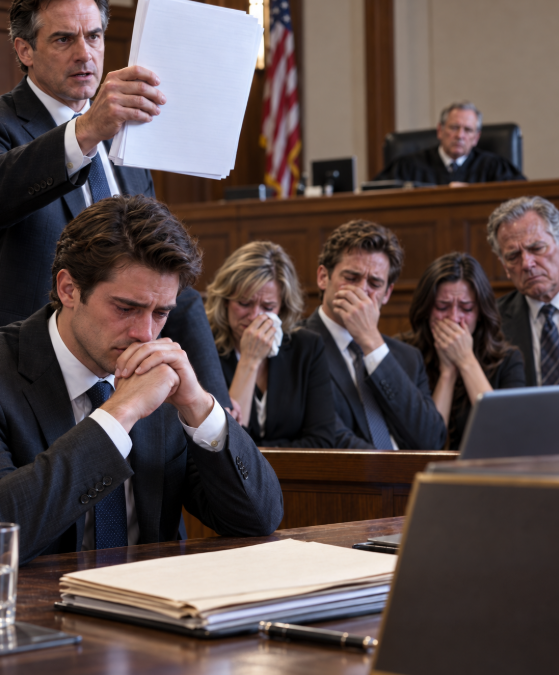
The moment I walked into the courtroom, my mother laughed under her breath, and my father shook his head as though he were embarrassed to even see me there. I hadn’t even sat down before the judge, an old man with a face that had witnessed too many stories, went pale. His hand trembled as he lifted his glasses, and he whispered, almost to himself, “Dear God, is that really him?”
Everyone turned to stare, but they didn’t know who I was. At least, not really. Not yet. And that was exactly how I wanted it.
But before I explain what led to that moment, I should back up. My name is Lucas. I’m 28 years old, and if there’s one thing you need to understand about me, it’s that my family has always underestimated me. Not just a little, and not in those casual ways families sometimes dismiss the quiet kid. I mean they went out of their way to make sure I felt like nothing.
My older brother, Matthew, was the golden boy. Perfect grades, a varsity athlete, always introduced at family gatherings as “our pride and joy.” My younger sister, Clare, was the princess, adored by my parents, spoiled with gifts, and protected as though she were made of fragile porcelain. And me? I was the middle child who became invisible unless someone needed a target to mock.
Growing up, I got used to sitting at the dinner table, listening to my dad praise Matthew’s basketball scores or my mom fuss over Clare’s grades while I silently pushed food around my plate. If I tried to speak, someone would cut me off.
“Not now, Lucas.”
Or worse, my father’s favorite dismissal: “You just wouldn’t understand.”
My thoughts were nothing more than background noise in my parents’ carefully constructed picture of a perfect family. Even at Christmas, the gifts told the story. Matthew would get a brand-new iPhone, Clare would receive a designer handbag, and I’d unwrap a clearance sweater, usually in the wrong size.
My mother once said, “Well, you never care about this stuff anyway,” as though that somehow justified her neglect.
But here’s the thing about spending years being treated like a shadow: you learn to observe. I watched everything. I noticed patterns. I saw how my brother loved to brag but rarely followed through on anything. I noticed that my sister’s sweetness was far more calculated than anyone wanted to admit. Most importantly, I learned to recognize my parents’ blind spots.
They assumed I was stupid, and that assumption gave me a kind of freedom they never understood. I had room to think, to plan, and to work on my own life without them hovering over me. Being ignored hurt more than I could explain, but in a strange way, their indifference gave me the silence I needed to build something they never expected.
The disrespect didn’t end when I became an adult. If anything, it got worse. When I was 22, I started my own small business. Nothing flashy at first, just an online consulting operation combining IT troubleshooting and security work, something that had grown out of side jobs I’d taken during college.
I poured everything I had into it. Late nights, endless research, cold calls, rejection after rejection, until eventually the work began to pay off. Within three years, I was earning six figures. By the time I turned 26, I’d expanded enough to hire a team. Suddenly, I wasn’t merely surviving. I was thriving.
But nobody in my family knew that because nobody ever bothered to ask. They didn’t even seem curious about how I paid my rent. My mother still described me as being “between jobs,” and my father once laughed and said, “Lucas probably fixes printers for a living.”
I never corrected him. Why should I? If they wanted to believe I was nothing, I was content to let them.
The first major crack in the family’s carefully maintained façade came two years ago at Thanksgiving. Everyone had gathered at my parents’ house, just as we always did, and my mother had raised a toast to Matthew’s latest “promotion.”
I put that word in quotation marks because, as I later discovered, the promotion didn’t exist. Matthew had quietly been let go, but my parents had helped manufacture a different story so nobody would question their precious golden boy’s image.
After the toast, Clare excitedly announced her new internship, and naturally, my mother practically swooned with pride. Then, almost as an afterthought, she glanced in my direction.
“And Lucas is, well, still figuring things out. Aren’t you, honey?”
The entire table laughed. Matthew smirked, and I felt heat rise into my ears. But I managed a polite smile and answered, “Something like that.”
What none of them knew was that earlier that same week, I’d signed a contract that doubled my company’s revenue. I could have told them. I could have laid the facts on the table and watched their expressions change. But why ruin their fun?
I let them laugh. I let them believe I was still standing in the same place they’d abandoned me years earlier. That was their first mistake.
Over the following year, the insults became increasingly personal. Clare approached me asking to borrow money, promising she only needed it until payday. When I refused, she called me selfish and complained to our parents that I was hoarding cash. Matthew tried to persuade me to co-sign a loan, insisting it would somehow benefit the whole family. I turned him down immediately, and suddenly I was the villain.
My father even called one evening to lecture me.
“You’re abandoning your siblings. We’re a family, Lucas. Family helps family.”
I nearly laughed at the hypocrisy. Where had that sense of family obligation been when I was struggling? Where was their support when I was working myself to exhaustion, trying to build a life from nothing?
Instead of arguing, I stayed quiet and told him I’d think about it.
That was their second mistake: confusing my silence with weakness.
The breaking point came this past summer when my grandmother passed away. With her death, the family estate suddenly became everyone’s primary concern. There was a sprawling house, land worth millions, and, perhaps most importantly, the trust she’d established.
My grandmother loved me, perhaps more than anyone else in our family ever had. She’d witnessed the way my parents treated me, and although she rarely confronted them directly, she made it clear during our private conversations that she believed in me.
We used to spend hours in her garden, drinking tea while she told me stories about resilience, about finding the strength to build a life when everyone around you doubted you. I never forgot those afternoons or the quiet confidence she placed in me.
So when she died, I wasn’t particularly surprised to discover she’d left me something. What shocked me was just how much.
I’ll never forget the reading of her will. My parents sat there wearing smug expressions, clearly expecting the majority of the estate to pass to Matthew and Clare, perhaps with some token amount left for me.
Then the attorney announced that the bulk of the estate, including the financial assets and property, had been entrusted to me.
The room went completely silent.
My father’s jaw tightened so violently that I thought he might crack a tooth. My mother’s face lost its color. Clare immediately burst into tears, and Matthew practically shouted, “This has to be a mistake!”
The attorney calmly explained that it wasn’t a mistake. My grandmother had clearly documented her wishes, and I was the primary beneficiary.
For the first time in my life, I held the upper hand, and my family absolutely hated it.
Of course, they refused to accept her decision. Not even close. The following weeks became a relentless storm of phone calls, guilt trips, accusations, and emotional manipulation.
My mother left tearful voicemails asking, “How could you do this to your brother and sister?”
As though I’d somehow written the will myself.
My father accused me of deceiving my grandmother during her final days. Matthew called in the middle of the night, demanding his “fair share.” Clare even showed up at my apartment without warning, pounding on the door and screaming that I’d ruined her life.
I didn’t open the door. I couldn’t bring myself to face her.
Their entitlement was staggering, but deep down, I knew they weren’t finished. People like my family didn’t simply accept disappointment and move on. They fought, contested, manipulated, and dragged everyone around them into their bitterness.
And that’s how I ended up standing in that courtroom, facing my own parents and siblings in a legal battle over my grandmother’s final wishes.
When I walked inside and heard my mother laughing while my father looked at me with open contempt, I felt something I hadn’t experienced in years. Power. Real power.
Because I knew something they didn’t. Something that seemed to make the judge himself tremble when he recognized me.
That was when everything began to change.
The air inside the courtroom was thick with tension, the kind that seems to settle beneath your skin and sharpen every sound, every movement, every breath. When the judge looked at me with that startled expression, my parents didn’t notice at first. They were too busy whispering to Matthew, their voices full of smug confidence, as though the entire proceeding were nothing more than a formality.
I could hear my mother’s familiar little laugh, the one she always used when she believed victory was already hers. I didn’t move or speak. I simply sat at my table and watched.
Let them believe this would be easy.
The attorney representing my family was a slick man in his fifties, wearing an expensive suit with his hair combed back so precisely that he looked almost artificial. He was the sort of man who seemed to believe a smirk could substitute for an argument.
He stood, introduced himself, and immediately launched into a carefully rehearsed speech about undue influence and manipulation. Every word was designed to portray me as the villain, the invisible son who had supposedly wormed his way into my grandmother’s confidence to exploit her.
He even suggested that I’d isolated her during her final years, speaking as though I’d kept her locked away from the rest of the family.
My mother dabbed at her eyes with a tissue, pretending to wipe away tears while nodding along with his accusations. Clare sniffled delicately beside her, performing the role of a wounded younger sister as though she’d spent weeks rehearsing.
I should have been furious. Instead, I felt strangely detached, almost as though I were watching actors perform a particularly cruel play.
Maybe that’s what years of being dismissed will do to a person. Eventually, you stop expecting people to treat you fairly.
Still, with every new accusation, I felt a slow fire building in my chest. They weren’t merely attacking me. They were trying to erase everything good and genuine about my relationship with my grandmother.
Every peaceful afternoon in her garden, every conversation about resilience, every moment when she’d made me feel seen and valued. Those memories were real, and they mattered to me.
Now, inside that sterile courtroom, my family was trying to transform them into something sinister.
Matthew was called to testify first. He strutted toward the witness stand with the confidence of a man preparing to deliver a motivational speech. Looking directly at the judge, he declared, “My grandmother always loved us equally. She never would have singled Lucas out like this unless he pressured her.”
He paused dramatically, apparently expecting the courtroom to gasp, before leaning forward.
“He’s always been resentful, always jealous. This is just his way of finally getting back at us.”
I almost laughed.
Jealous of what? His imaginary promotion? The years he’d spent receiving praise while accomplishing so little on his own?
But I kept my mouth shut. If Matthew wanted to expose himself, I wasn’t going to stop him.
Then Clare took the stand. Her voice trembled with carefully controlled fragility, completing the image of a devastated younger sister who couldn’t understand why she’d been treated so unfairly.
“Grandma promised me she’d help me with school,” she said. “She told me she wanted me to have a good life. And then suddenly, suddenly everything went to Lucas. It doesn’t make sense.”
She sniffled, glanced toward our parents for reassurance, and added, “He never even cared about family until there was money involved.”
That accusation hurt, not because it contained any truth, but because it was the exact opposite of everything I’d experienced.
I’d cared far too much. I’d spent years trying to become part of my own family, trying to be noticed, included, and loved. They were the ones who shut me out, laughed at me, and minimized everything I accomplished.
Now they had the audacity to stand in front of strangers and call me heartless.
By the time my mother took the stand, I understood exactly how their performance was going to unfold. She released a dramatic sigh, clutched her tissue, and began speaking in a trembling voice.
“Your Honor, Lucas is… he’s always been troubled. He doesn’t like to admit it, but he’s had difficulties since he was young. We tried to help him. We really did, but he pushed us away. And my mother, God rest her soul, she was vulnerable at the end. He must have convinced her. There’s no other explanation.”
When my father spoke, he didn’t even bother pretending to be overcome by grief. He leaned forward, his voice hard and cutting.
“This is about fairness. Lucas has never carried his weight in this family. He’s never sacrificed, never supported anyone else. And now he wants to take everything for himself. That isn’t right. That isn’t what my mother-in-law wanted.”
The irony was almost unbearable.
The same man who had never supported me, who’d spent years ridiculing and dismissing me, was now lecturing a courtroom about sacrifice.
I wanted to stand up and shout. I wanted to describe every humiliating family dinner, every Christmas when I’d been treated like an afterthought, every time they’d made it painfully clear that I mattered less than Matthew and Clare.
But I stayed seated, my hands folded neatly, waiting for my turn.
Because I knew something they didn’t, something connected to that strange moment when the judge had gone pale after recognizing me. I wasn’t about to waste that advantage on an emotional outburst.
As the testimony continued, I began noticing little things. My mother avoided meeting my eyes, almost as though she feared what she might see there. Matthew’s voice shook slightly when he was questioned about his supposed promotion. Clare held my mother’s hand like a frightened child, despite being a grown woman.
Their stories sounded polished and rehearsed, but beneath the surface, they were brittle. Look closely enough, and the cracks were visible. I was more than ready to push against those cracks until their entire narrative shattered.
Even in court, my parents’ favoritism was unmistakable. Matthew and Clare were treated as helpless victims, delicate people who needed constant protection. I was the villain, the shadowy figure they insisted had corrupted everything.
During a recess, my father leaned across the aisle and muttered just loudly enough for me to hear.
“You think you’ve won? You’re nothing, Lucas. Always have been, always will be.”
My mother smirked beside him, whispering something to Clare that made her giggle.
They wanted me to break. They wanted me to lash out, lose control, and prove that everything they’d said about me was true. I refused to give them that satisfaction.
Instead, I smiled. I could feel the situation beginning to shift, even though they couldn’t see it yet.
That night, back at my apartment, I couldn’t sleep. My mind replayed every accusation, every insult, every lie they’d told under oath. I thought about all the years I’d spent wondering why I wasn’t good enough, about the countless family gatherings I’d left with a hollow feeling in my stomach.
Then I remembered a Christmas years earlier when my grandmother had quietly slipped me an envelope. Inside was a handwritten note.
“One day they’ll see who you really are. Be patient.”
I’d tucked that note into a drawer, uncertain whether her words would ever come true. Now, surrounded by the chaos of the lawsuit, I began to understand what she’d meant.
But patience, no matter how deeply rooted, has its limits.
By the second day in court, my family’s tactics had become even more aggressive. Their lawyer accused me outright of forging documents. Matthew swore he’d witnessed me coaching my grandmother about what to say during her final weeks. Clare cried so hysterically that she had to be escorted outside for a break.
My parents sat proudly through the entire spectacle, convinced that everything was unfolding exactly as they’d planned.
The judge, however, continued stealing glances at me. His expression was difficult to read, but occasionally I caught the same flicker of recognition and unease I’d noticed when I first entered the courtroom.
He knew. He remembered something. And my family had absolutely no idea.
At one point, during a particularly heated exchange, Matthew turned toward me with an ugly sneer.
“You don’t belong here, Lucas. You never have. You’re just the spare, the mistake. And soon everyone will see that.”
His words struck harder than I wanted to admit, but I refused to flinch. I leaned back in my chair and smiled again.
Because soon, very soon, it wouldn’t be me whose actions were under scrutiny.
It would be them.
When the judge finally cleared his throat and announced that the next session would begin with my testimony, the atmosphere in the room changed. My parents sat straighter, ready to seize on anything I might say. Matthew smirked, while Clare dramatically wiped away another round of tears.
They thought they’d cornered me. They believed I was about to crumble beneath the weight of their carefully constructed lies.
What they didn’t understand was that I’d spent years preparing for moments like this. Years of watching, planning, and learning to remain silent when everyone around me expected a reaction.
Now the entire courtroom was waiting, and I was finally ready to speak.
When the judge called my name, the room became quiet. I heard my chair scrape across the polished floor as I stood, followed by the soft rustling of papers and the creak of a bench as the bailiff adjusted his stance.
I walked deliberately toward the witness stand, aware of every pair of eyes following me. My mother’s sharp stare, Matthew’s arrogant grin, Clare’s theatrical sadness. They were watching hungrily, waiting for me to falter.
The oath was straightforward.
“Do you swear to tell the truth, the whole truth, and nothing but the truth?”
“I do.”
After taking my seat, I allowed the silence to linger for a moment before speaking.
“I loved my grandmother,” I began, keeping my voice steady. “She was the one person in my family who treated me as if I mattered. We spent years together, afternoons in her garden, evenings drinking tea. She confided in me. She trusted me, and she made her wishes clear.”
My family’s attorney interrupted almost immediately.
“Wishes you convinced her of. Isn’t that right?”
“No,” I replied firmly, meeting his gaze. “Wishes she had long before any of this. She chose me because she knew I would honor them.”
The questioning continued, each inquiry carefully worded to trip me up. Accusations were woven into questions, and ordinary moments with my grandmother were presented as evidence of something suspicious.
Had I visited her alone? Yes, frequently.
Had we discussed her finances? Once or twice, at her request.
Had I known the contents of her will before she died? No. I’d learned about them at the same time as everyone else.
I answered calmly and deliberately, but with every question, I could feel the weight of my family’s hatred pressing down on me.
Then something happened that changed the nature of the entire case.
During the lunch recess, my attorney approached me with an unusually grim expression.
“Lucas,” he said quietly, “they’ve submitted new evidence. You need to see this.”
I frowned and followed him into a side room, where he placed a thick folder on the table. Inside were hundreds of printed emails.
At first glance, they appeared to be messages I’d supposedly sent my grandmother, pleading with her, manipulating her, and eventually threatening her.
As I read, my chest tightened and a sick feeling rose in my throat.
“I never wrote these,” I whispered.
“I know,” my attorney replied. “They’re forgeries, but they’re claiming they came from your account. They’ve already submitted testimony from an expert who’s willing to swear they’re authentic.”
For a moment, it felt as though the floor shifted beneath me.
My own family had fabricated evidence, weaponized technology, and stabbed me in the back without the slightest hesitation. This wasn’t simply a matter of telling lies in court anymore.
It was deliberate sabotage, carefully designed to destroy my credibility, my reputation, and everything I’d built.
When we returned to the courtroom, my parents were sitting straighter than before, smug satisfaction practically radiating from them. Matthew couldn’t stop grinning. Clare leaned against our mother, whispering something that made her smile.
They were convinced this new evidence would finish me.
Their attorney strode toward the center of the courtroom, holding the stack of papers as though it were a trophy.
“Your Honor, we have here documented proof of undue influence. A string of emails written by Lucas to his grandmother in her final months, urging her to disinherit the rest of her family. The language is clear, coercive, and manipulative.”
He handed the documents to the judge, who adjusted his glasses and began reading.
My heart pounded, not from fear, but from a fury I could barely contain. Watching the same judge who’d trembled when he first saw me now examine pages of fabricated lies was almost unbearable.
The attorney continued, his voice thick with satisfaction.
“You’ll see he even goes so far as to threaten withholding care unless she complies. This, ladies and gentlemen, is not love. This is exploitation.”
My mother gasped and pressed a hand to her chest in an exaggerated display of shock. Clare started crying again. Matthew folded his arms, looking more pleased with himself than ever.
It was a perfectly orchestrated performance.
For a moment, I noticed spectators in the gallery shifting uncomfortably. Some exchanged uncertain looks. Others whispered. I could almost see the possibility taking root in their minds that perhaps the accusations were true.
That was when the betrayal finally sank its teeth into me.
Not merely because my family had lied, but because their actions confirmed something I’d feared for years. They didn’t simply dislike me or underestimate my abilities. They despised me enough to destroy me, to smear my name, and to twist the truth until it became unrecognizable.
When money was involved, blood meant absolutely nothing to them.
My attorney stood to object, pointing out inconsistencies in the documents, but the judge silenced him with a raised hand.
“We will review these documents carefully,” he said.
His voice remained neutral, but his eyes flickered toward me again, and I caught that familiar trace of unease. He knew something, remembered something, yet the papers in his hands carried legal weight, and my family understood that.
As the hearing dragged on, I sat silently while they presented their supposed evidence. Their expert, a man I’d never met, took the stand and rattled off technical terminology about metadata and server logs.
He spoke confidently enough, but whenever the questioning became specific, his answers turned vague. Even so, his testimony was sufficient to plant seeds of doubt.
By the end of the day, the whispers in the gallery had grown louder. Strangers murmured about greed and manipulation, and I could feel their judgments settling over me.
My parents walked out arm in arm, glowing with what they clearly believed was victory. Clare clung to Matthew and whispered, “We’ve got him now.”
I remained behind, staring into the nearly empty courtroom, my fists clenched so tightly that my knuckles ached.
The betrayal cut deeper than any insult my family had ever thrown at me.
This wasn’t about the inheritance anymore. It wasn’t even about my grandmother’s will. It was about erasing me completely, painting me as a monster so they could take what they wanted and walk away with their reputations intact.
That night, alone in my apartment, I sat in the darkness and thought about every moment that had brought me there. The family dinners when everyone laughed at my expense. The Christmas gifts that reminded me how little I mattered. The holidays when I might as well have been invisible.
And now this. A deliberate attempt to frame me, discredit me, and destroy my future.
My grandmother’s words echoed in my mind.
“One day they’ll see who you really are.”
I realized then that the patience she’d encouraged me to maintain had reached its limit. My family had crossed a line that could never be uncrossed.
The following morning, as I walked past them in court, Matthew leaned close enough that nobody else could hear him.
“It’s over, Lucas. Nobody believes you. You’re finished.”
His grin was wide, cruel, and absolutely certain. I didn’t respond. I didn’t even turn to look at him. I simply continued toward my seat, outwardly calm, while something inside me shifted permanently.
Because I wasn’t finished. Not even close.
When the judge announced that the next session would allow me to submit my own evidence, I felt the faintest smile touch my lips. My family believed their betrayal marked the end of my story.
They had no idea it was only the beginning.
When I got home that night, after everything surrounding the forged emails, I didn’t bother turning on the lights. My apartment felt colder than usual, its silence pressing against my chest. I sat on the edge of my bed, still wearing my courtroom clothes, staring at the floor as though it might somehow provide an answer.
My phone kept buzzing on the nightstand. Messages arrived from friends who’d heard rumors about the trial, former classmates who’d seen something online, and even distant relatives who were clearly fishing for gossip.
I didn’t answer any of them.
What was I supposed to say? That my own family was attempting to bury me alive beneath a mountain of lies?
For the first time in years, I felt small again. Powerless. It was the same helplessness I’d experienced as a child, sitting at the dinner table while my voice disappeared beneath endless praise for Matthew and Clare.
The courtroom kept replaying in my mind. The judge’s pale expression. The whispered reactions when those forged emails were presented. The way my parents had looked at me with such obvious satisfaction.
Every detail repeated itself like a cruel, endless loop.
I tried to sleep, but whenever I closed my eyes, I pictured my grandmother’s handwriting on that old Christmas note.
“One day they’ll see who you really are.”
And for the first time, I wondered if she’d been wrong. What if my family succeeded? What if they twisted the story so completely that even people who’d never met me believed I was the monster they described?
The following morning, I practically dragged myself to court. My suit felt stiff, my tie seemed too tight, and the fluorescent lights overhead only made the pounding in my skull worse.
My family, by contrast, looked refreshed, almost celebratory. My mother wore pearls and a faint smile, the one she reserved for occasions when she believed she’d already won. Matthew leaned back with his arms crossed, radiating smug confidence. Clare occasionally dabbed at her eyes, although even her grief looked rehearsed.
When proceedings began, the judge announced that the new evidence would officially be admitted for consideration.
My stomach tightened.
My attorney objected, pointing to inconsistencies in the metadata and serious questions surrounding the documents’ chain of custody. The judge listened, nodded, and finally said, “We’ll allow it for now.”
The gavel struck the wood, and I felt as though the entire case had slipped a little farther from my grasp.
The rest of the day was brutal. Every argument my attorney presented was met with another carefully polished accusation. Whenever I thought we’d exposed a weakness in their claims, the opposing side shifted attention somewhere else.
At one point, my father stood and declared, “This isn’t about money. It’s about principle. My son has betrayed us all.”
Something deep inside me broke when I heard those words.
He’d called me a traitor without hesitation. He hadn’t even flinched.
By the time court adjourned, my legs felt unsteady as I walked toward the exit. Outside, reporters crowded around me, thrusting microphones toward my face while camera flashes burst in front of my eyes.
“Lucas, did you manipulate your grandmother?”
“Lucas, what about the emails?”
“How do you respond to claims that you isolated her?”
I didn’t answer. I pushed through the crowd like a ghost and made my way home, my mind almost completely numb.
That week became the lowest period of my life that I can remember. I stopped answering phone calls and ignored text messages. Dirty dishes accumulated in the sink, and clean laundry remained untouched.
My business partners began sending emails. At first, their messages expressed concern. Then concern turned to frustration, and eventually frustration became panic.
Still, I couldn’t bring myself to respond.
I was watching everything I’d spent years building teeter on the edge of collapse because of accusations I couldn’t yet disprove.
One evening, I sat at my desk staring at my company’s balance sheets, the numbers blurring together as I wondered whether I might lose everything.
And during those long, silent nights, when the pressure felt almost unbearable, my family’s voices replayed inside my head.
Matthew’s sneer: “You’re the mistake.”
My mother’s whisper: “He’s troubled.”
My father’s cold declaration: “He betrayed us all.”
Those words cut deeper than knives because they weren’t merely accusations made for a judge. They revealed how my family had always seen me.
But somewhere inside that darkness, something began to stir.
I couldn’t tell whether it was anger, survival instinct, or the last remaining spark of my grandmother’s faith in me. Whatever it was, it began as a small, steady thought.
They might have cornered me, but they hadn’t won yet.
I started going through my old files. At first, the process felt almost mechanical. I opened folders, scrolled through documents, and revisited emails my grandmother had sent over the years. I didn’t even know exactly what I was searching for.
But gradually, as hours stretched into days, I realized I wasn’t simply searching at random. I was retracing our history, collecting fragments of truth that might still be powerful enough to break through my family’s lies.
One night, blurry-eyed at three in the morning, I discovered an old email from my grandmother.
It was brief, nothing more than a note about a book she wanted me to read. But the date caught my attention.
The message had been sent weeks after the point when my family’s forged emails claimed I’d already coerced her into changing her will.
Yet there was nothing in her message suggesting fear, pressure, or confusion. She sounded cheerful, clearheaded, and entirely herself.
I stared at the email for a long time as my pulse quickened.
It wasn’t enough to dismantle their case by itself. I knew that. But it was something. A loose thread in the wall of lies they’d constructed around me.
The next day in court, however, things became worse before they improved.
Matthew took the witness stand again, this time abandoning even the appearance of restraint. Leaning toward the microphone, he declared, “Lucas always hated us. He resented every good thing we had. This is his revenge. He’s not honoring Grandma. He’s punishing us.”
My mother nodded enthusiastically, dabbing at her eyes for effect. Clare broke into tears again and buried her face against our mother’s shoulder.
I remained motionless, listening as whispers rippled through the gallery.
To strangers, perhaps I really did look like the villain. The quiet son, the family’s black sheep, suddenly inheriting nearly everything while the beloved golden boy and the pampered princess received far less than they’d expected.
It was the kind of story people could easily believe, particularly when the people telling it spoke with such confidence.
Sitting there, I understood just how far my family was prepared to go to make sure that version of events became the accepted truth.
That night, back in my darkened apartment, the pressure returned with even greater force.
For the first time, I seriously considered giving up.
Maybe I should simply walk away. Let them have the money, the property, the trust. Surely none of it was worth the misery of facing my own family every day and listening as they dismantled my character piece by piece.
I sat with that thought for a long time, wondering whether surrender might be easier than continuing to fight.
Then I remembered the last time I’d seen my grandmother. Her eyes had been clear and steady, almost defiant. She’d leaned toward me and whispered, “Don’t let them define you.”
Something inside me strengthened at the memory.
No. I wasn’t going to walk away. Not yet.
I began making plans, quietly and deliberately. No dramatic announcements, no sweeping gestures, just small steps toward finding the truth.
I contacted an old college friend who worked in cybersecurity. At first, I asked careful, general questions about digital forgery and the methods experts could use to detect manipulated records.
I went through my grandmother’s letters again, examining documents, dates, and details that only the two of us would recognize. I didn’t tell my lawyer everything I was doing, not yet. I wanted to be certain I had something meaningful before making promises.
Outwardly, I allowed my family to believe they were winning.
In court, I sat with lowered eyes and heavy shoulders, presenting the image of a defeated man. And it worked.
I watched their confidence grow. During breaks, I caught fragments of conversations about dividing the estate, about what they intended to do once I was out of the way.
They genuinely believed they’d broken me.
And in a way, they had. But what they didn’t understand was that rock bottom isn’t merely the lowest point a person can reach. It can also become a foundation.
And from a foundation, you can build.
When the judge announced that closing arguments would begin within the week, my parents smiled. Matthew nodded with obvious satisfaction, and Clare squeezed our mother’s hand.
As far as they were concerned, the fight was practically finished.
But when I walked out of the courthouse that afternoon, sunlight striking my eyes, I felt something beginning to change.
The suffering was still there. The betrayal remained raw. Yet beneath that pain, the first outlines of a plan were taking shape.
They believed they’d buried me. What they didn’t realize was that I was beginning to put down roots.
The following morning, I woke with a strange sense of clarity. The heaviness hadn’t disappeared, but it had faded into the background. Something inside me had hardened during those sleepless nights.
It wasn’t exactly hope. It was resolve.
My family wanted to bury me beneath lies. Fine. But if they believed I’d remain buried, they hadn’t understood me at all.
I started by returning to the cybersecurity specialist I’d known in college. This time, I told him everything.
I explained the forged emails, the expert testimony, and the way my family’s attorney had presented the documents as though their authenticity were beyond question.
My friend listened without interrupting. When I finished, he considered the situation carefully.
“Lucas, I can tell you already, if those emails were faked, there’ll be holes. Metadata can be forged, yes, but real digital fingerprints are almost impossible to mimic perfectly. Give me access, and I’ll dig.”
For the first time in weeks, I felt something approaching relief.
Not victory. Not yet. But the first genuine crack had appeared in the wall of lies surrounding me.
Meanwhile, I forced myself to return to the ordinary responsibilities of running my business. I logged into meetings, answered questions from my team, and reassured concerned clients.
Initially, it all felt mechanical, as though my body were moving through familiar routines while my mind remained trapped inside the courtroom.
But as the days passed, I realized just how completely I’d allowed the trial to consume me.
My company was still thriving. My partners were still committed, and my employees continued to believe in what we were building.
The world outside my toxic family hadn’t collapsed while I was struggling. In some ways, it had continued growing stronger.
One afternoon, I walked into the office without warning. Several members of my team looked up in surprise, then broke into genuine smiles.
“Good to see you, boss,” one of them said.
Standing there, surrounded by people who respected my work and appreciated my presence, I felt the sharp contrast between that environment and the contempt I’d experienced growing up.
Here, I wasn’t invisible. I wasn’t the mistake or the disappointing middle child.
Here, I mattered.
That realization gave me strength I hadn’t known I still possessed.
The shame my family had tried to drown me in began losing its hold. I wasn’t nothing. I’d created something real through years of persistence and sacrifice, and no smear campaign could completely erase that.
Back in court, I began noticing subtle changes.
The judge continued to glance toward me with that same faint unease. I didn’t believe it was pity. It was recognition. He knew something, although I still couldn’t explain precisely what had caused his reaction.
Each time my family’s attorney became more arrogant, each time Matthew sneered at me from across the aisle, each time Clare carefully pressed a tissue to her eyes, I sensed the momentum beginning to shift.
One particularly important moment came when my attorney cross-examined the supposed expert who’d authenticated the incriminating emails.
Calmly and methodically, he asked about the server logs, timestamps, and IP addresses that supposedly supported the documents’ authenticity.
The expert answered, but his explanations sounded vague, overly practiced, and increasingly uncertain.
When my lawyer asked whether he’d personally verified the original email headers, the man stammered.
People in the gallery noticed. So did I.
The judge leaned forward slightly, his pen hovering above his notepad.
It wasn’t enough to destroy their case, but it was the first visible dent in their armor.
That night, my cybersecurity friend sent me a message.
“I found something. Call me.”
My heart pounded as I dialed his number.
He explained that although the emails looked convincing on the surface, their underlying technical data told a very different story.
There were formatting errors, inconsistencies in character encoding, and irregularities in the server paths. Each one raised questions about when and how the messages had actually been created.
“These weren’t written by you,” he told me. “They weren’t even written during the time they claim. Whoever forged these didn’t account for how your provider stamps outbound mail.”
I closed my eyes and let his words sink in.
Proof. Actual proof.
It wasn’t enough yet. I understood that we needed a meticulous, thoroughly documented presentation that could withstand serious legal scrutiny.
But for the first time, we had something solid.
From that moment, the pressure on my chest began to ease.
I entered court the following morning with my shoulders a little straighter. My family noticed immediately.
My mother’s smile faltered when she saw me. Matthew’s familiar smirk wavered, while Clare, always the actress, seemed to work even harder to produce her tears.
They could sense the change, even if they didn’t understand it.
My silence was no longer a sign of defeat. It had become part of my preparation.
Outside the courtroom, I began reclaiming the other parts of my life that the lawsuit had consumed.
I started running in the mornings again, pounding the pavement until sweat burned my eyes. I cleaned my apartment, washed the dishes, and folded the neglected laundry.
They were small things, but every completed task reminded me that I still controlled my own space and my own choices.
The fog of despair gradually lifted, replaced by a sharper, steadier focus.
I finally responded to friends who’d reached out earlier. I met an old colleague for coffee, and during our conversation, he looked at me with quiet certainty.
“I’ve seen the news, but I know you, Lucas. You don’t need to explain.”
That kind of loyalty and belief was something my family had never offered me, and it only strengthened my determination to keep fighting.
In court, the momentum continued to shift slowly but unmistakably.
My attorney called character witnesses, including former professors, business partners, and even a neighbor from my grandmother’s street.
Together, they described a man very different from the manipulator my family had invented. They spoke about someone quiet, dependable, hardworking, and genuinely devoted to the people he cared about.
One witness in particular made an impression.
She was an elderly neighbor who’d often shared tea with my grandmother. She testified that she’d heard my grandmother praise me repeatedly.
According to her, my grandmother had said Lucas was the only one who visited without expecting anything in return, the only one who came simply to listen.
Her testimony carried more weight than I could have imagined.
I saw it in the expressions of the spectators. I saw it in the way the judge began writing more notes.
And for the first time, I watched my mother’s carefully maintained composure begin to crack. She pressed her lips together so tightly they turned almost white.
By the end of that week, the story unfolding inside the courtroom had begun to change.
My family continued repeating their accusations and relying on the forged emails, but doubt had taken root. The absolute confidence they’d carried into the trial was beginning to fray.
Through it all, I remained increasingly calm.
My silence wasn’t the silence of someone who’d given up. It was the silence of someone waiting for the right moment.
Behind the scenes, I continued working with my cybersecurity friend, compiling a detailed report documenting every inconsistency we’d identified: timestamp errors, impossible character encodings, questionable server information, and discrepancies in the supposed email records.
The draft was painstakingly detailed.
When I gave it to my attorney, he read through the findings slowly. Then he looked up with an expression that was almost admiration.
“Lucas,” he said, “this could change everything.”
Even then, I kept quiet in court.
I let my family believe they still had me cornered. I endured their whispers, mocking smiles, and smug glances without reacting.
They were convinced the forged emails represented the final nail in my coffin.
What they didn’t know was that their entire strategy was approaching collapse.
Beyond the legal battle, something else was changing inside me. I was beginning to feel a confidence I hadn’t experienced in years.
I wasn’t merely surviving anymore. I was rebuilding.
Every morning run, every business meeting, every late-night conversation with someone who believed in me served as another reminder that my family’s lies didn’t define who I was.
I was defined by what I’d built, by the choices I’d made, and by the truth my grandmother had always recognized.
As the week drew to a close and closing arguments approached, I walked out of the courthouse into the sunlight and felt something I hadn’t felt in months.
Power.
Not the loud, theatrical kind my father had always tried to wield. This was quieter, steadier, and far more difficult to shake.
It was strength I’d developed myself.
My family believed they’d stripped me down to nothing. Instead, they’d forced me to recognize what I was capable of becoming.
And when the time came, I intended to show them exactly what that meant.
The closer we came to closing arguments, the more electric the courtroom atmosphere became. The tension felt almost tangible, like the pressure in the air just before a thunderstorm.
My family continued presenting themselves with the same smug arrogance, but I could see the cracks widening.
Matthew’s jokes during breaks sounded forced, and his laughter was slightly too loud. Clare’s tears came more quickly and with less control, as though her performance was finally beginning to unravel.
My mother constantly adjusted her pearl necklace, her composure fraying with every passing day.
Even my father, the stern family patriarch who’d always treated Matthew as untouchable, snapped at him under his breath during one recess. There was an edge to his voice I’d never heard him direct toward the golden boy before.
They still believed they were ahead. But their confidence had become something fragile, a mask rather than an unshakable certainty.
I’d spent a lifetime learning to see through masks.
Meanwhile, my plan was taking shape.
My cybersecurity friend, whose name was Raj, had been working day and night examining every byte of the forged emails.
What he discovered was more significant than either of us had expected.
One evening, during a video call, he looked at me with an expression that combined excitement and disbelief.
“Lucas, whoever made these didn’t just forge your words. They were sloppy. I found copy-and-paste artifacts in the source code.”
He leaned closer to his camera.
“And here’s the kicker. The machine they came from left behind an internal identifier. That identifier traces back to a device registered under your brother’s name.”
For a moment, I couldn’t speak.
I stared at the lines of code Raj had shared on my screen, struggling to comprehend what he was telling me.
“You’re saying—”
“I’m saying Matthew was either directly involved or reckless enough to let his own machine be used for this,” Raj interrupted. “Either way, we can prove the forgery, and we can trace it back to him.”
The words struck me like a tidal wave.
We weren’t merely finding proof that I hadn’t written the emails. We were uncovering evidence that connected the fabrication to my own brother, the golden boy my parents had spent their lives protecting.
My hands tightened around the edge of my desk until my knuckles turned white.
After years of mockery, dismissal, and betrayal, my family had finally handed me the very evidence I needed to begin unraveling their entire story.
But I didn’t rush.
I knew better than to reveal everything too early.
I asked Raj to prepare a formal technical report, documenting every finding line by line, timestamp by timestamp, and explaining the chain of evidence thoroughly enough that it couldn’t be dismissed as guesswork.
At the same time, I reached out to another unlikely ally: my grandmother’s estate-planning attorney, the man who had originally drafted her will.
I arranged a private meeting at his office, well away from my family’s watchful eyes.
He greeted me with a solemn nod. His office was lined with thick legal volumes, and his desk was as neat and orderly as the man himself.
“Lucas,” he said, “I was wondering when you’d come.”
We spoke at length about my grandmother’s intentions and the conversations she’d had with him while making her estate plans.
He shared stories I hadn’t known before, including the way she’d defended me during their private discussions and how she’d repeatedly insisted that I was the only family member who visited without expecting anything.
“She was very clear, Lucas,” he told me firmly. “Her decision was deliberate, not coerced. If she were here, she would be devastated by what they’re doing.”
When I left his office, I carried more than reassurance.
I had copies of documents and handwritten notes my grandmother had prepared during the estate-planning process.
There was nothing dramatic about them. They were simple, practical observations, but they preserved her reasoning, her intentions, and her unmistakable voice.
And in a case centered on whether her wishes had been manipulated, evidence of her true intentions was invaluable.
The more information I gathered, the more I understood that I wasn’t merely defending myself anymore.
I was constructing a fortress of truth while my family continued hiding behind a wall of lies.
In court, I maintained the appearance of defeat a little longer. My quietness and stillness continued feeding their illusion that I had nothing left.
During one recess, I overheard Clare whispering to our mother.
“He looks so beaten down. It’s almost over.”
My mother patted her hand affectionately.
“I told you. He was never strong enough.”
I walked past them without saying a word, but the anger inside me burned brighter.
They genuinely believed I was finished, even as I prepared to turn the very weapon they’d created against them.
Then, three days before closing arguments, Raj called again.
This time, he was grinning with the kind of excitement I hadn’t seen on his face since college.
“Lucas, I’ve got the final report ready. It’s bulletproof. Not only can we prove the emails were forged, but the digital trail traces back to an IP address registered at your parents’ house.”
He paused before delivering the next detail.
“And the timestamps? They line up perfectly with the nights Matthew claimed he was working late.”
My chest tightened, but this time it wasn’t fear.
It was exhilaration.
My family had built their entire case around those emails. Their attorney had marched into court waving the documents like banners of undeniable truth.
Now I possessed evidence showing not only that the emails were fake, but that their creation could be traced directly back to people in my own family.
I leaned back in my chair, feeling weeks of crushing pressure begin to lift all at once.
For the first time, I allowed myself to imagine what would happen when the truth finally came out.
I pictured my mother’s smug expression disappearing, Matthew’s confidence collapsing, Clare’s carefully rehearsed tears giving way to genuine panic, and the judge furiously writing notes as the entire courtroom realized what my family had done.
I imagined the silence that would follow when they understood that the weapon they’d forged to destroy me had become the very thing that exposed them.
But I didn’t allow myself to celebrate.
Not yet.
There was still work to do. My lawyer needed to incorporate Raj’s findings into a formal motion, ensuring that every technical detail was properly documented and every possible challenge anticipated.
While that process moved forward, I began preparing myself in other ways.
I started dressing more carefully for court. Nothing flashy, just precisely pressed suits, thoughtfully chosen ties, and a straighter posture.
I wanted the contrast to be unmistakable. My family’s arrogance was beginning to unravel, while the strength they’d spent years convincing me I didn’t possess was finally becoming visible.
Outside the courtroom, I worked deliberately to rebuild my professional relationships. I met with my business partners, explained the truth behind the headlines, and reassured them about the situation. Their continued trust mattered enormously.
I even contacted a journalist I’d known for years, someone who’d covered one of my company’s earliest projects. I didn’t reveal everything, but I shared enough to encourage him to begin investigating.
My family had spent weeks trying to manipulate the story from the shadows. Fine. But I wasn’t going to remain hidden in the darkness anymore.
Every evening, I took long walks through the city, thinking about my grandmother and the quiet wisdom she’d shared with me.
I wondered whether she’d anticipated something like this, whether she’d somehow understood how viciously my family would react when they discovered her decision.
She’d told me to be patient. For years, I’d interpreted that as an instruction to remain quiet and endure whatever people threw at me.
Now I finally understood.
Patience didn’t mean passivity. It meant recognizing the right moment to act and refusing to move before that moment arrived.
And mine was almost here.
The afternoon before closing arguments, I stood outside the courthouse as the setting sun painted the sky in streaks of gold and crimson.
My parents walked past me arm in arm, with Matthew and Clare trailing behind them. None of them bothered to look in my direction.
To them, I was already defeated, nothing more than the shadow of the son they’d dismissed years earlier.
I watched them pass, my hands folded calmly behind my back.
Because what they didn’t know, what they couldn’t possibly imagine, was that I finally had everything I needed.
Proof. Documents. Allies. And a quiet confidence they had never seen in me before.
The following day, everything would change.
On the morning of closing arguments, I woke before dawn.
The city outside my apartment was still wrapped in silence, the streets mostly dark except for the occasional glow of a streetlamp. I stood beside the window with a cup of coffee and watched the world slowly begin to stir.
For the first time since the nightmare began, I felt still.
Not entirely calm. There was a steady current of anticipation running through my chest, but it wasn’t the wild panic that had haunted me for weeks.
It felt more like the final pieces of something complicated had at last fallen into place.
When I arrived at the courthouse, my family was already there.
My mother wore a pale suit, her pearls gleaming beneath the fluorescent lights. My father stood rigidly beside her, his jaw set, projecting the same stern authority he’d always used to intimidate everyone around him.
Matthew leaned against the wall with his arms crossed, that familiar smirk still fixed on his face. Clare clung to our mother’s arm, pressing a tissue against her eyes even before the proceedings had begun.
To a casual observer, they probably looked composed and united.
But I’d spent my entire life watching them.
I noticed the uncertainty flickering behind Matthew’s eyes, the slight tremor in Clare’s hand, and the way my father’s mouth tightened whenever he believed nobody was paying attention.
They were unraveling, even if they hadn’t fully realized it yet.
When the judge entered, the courtroom fell silent. His black robe moved behind him as he approached the bench, and he settled into his chair with a deliberate expression.
“We’ll hear closing arguments today,” he announced. “The petitioners may proceed.”
My family’s attorney stood first, exactly as I’d expected.
He launched into another speech filled with carefully manufactured sincerity, portraying my parents and siblings as grieving victims who had been exploited by my supposed dishonesty.
Once again, he lifted the stack of forged emails, waving them as though their existence alone proved everything he’d claimed.
His voice rose with practiced indignation.
“This is not the action of a loving grandson,” he declared. “This is the calculated exploitation of a vulnerable woman. Lucas does not deserve this estate. He deserves our pity, if not our condemnation.”
My mother sniffled loudly. Clare’s tears began flowing again, while Matthew leaned back with his arms folded and my father nodded approvingly.
Every movement seemed rehearsed.
The attorney continued, building toward what he clearly believed would be a devastating conclusion.
“We ask that the court overturn this will, restore fairness, and protect this family from the destructive greed of one misguided son.”
He sat down with a flourish, his words still echoing through the quiet courtroom.
My family seemed to release a collective breath, as though victory had already been declared.
My mother reached across the table and squeezed Matthew’s hand. Clare leaned toward my father and whispered something into his ear.
Their attorney settled into his chair, looking entirely satisfied with himself.
Then it was our turn.
My lawyer stood slowly. He didn’t rush toward the center of the room or raise his voice to compete with the opposing counsel’s theatrical delivery.
He simply looked at the judge and began speaking.
“Your Honor, we’ve heard a great deal of testimony, much of it emotional, much of it rehearsed. But what this case comes down to is one question: What did Lucas’s grandmother want?”
He paused, allowing the question to settle over the room.
“She wanted her estate to go to the person who truly cared for her, the person who visited, who listened, who asked for nothing. That person was Lucas.”
My lawyer turned slightly toward the opposing table.
“And while the petitioners have tried to distract this court with accusations, with performances, and with manufactured evidence, today we will show the truth.”
He gestured toward me.
I stood, my hands steady, and walked toward the front of the courtroom.
My lawyer handed me a folder containing the documents Raj had prepared, including the technical analysis that traced the forged emails back to Matthew’s device and my parents’ house.
For a moment, I held the folder without opening it.
I knew what was inside. I’d read every page, examined every finding, and thought about what those documents meant more times than I could count.
But standing there, with my family watching and the entire courtroom waiting, I realized that this was no longer merely about defending my reputation.
It was about giving my grandmother’s wishes the respect they deserved.
“Your Honor,” I began, keeping my voice steady, “my family has accused me of manipulation. They’ve submitted emails they claim I wrote. I want to show you something.”
The judge adjusted his glasses and watched me closely.
I opened the folder, removed the first document, and handed it to the bailiff, who carried it to the bench.
“This is a technical analysis conducted by a certified cybersecurity specialist. It examines the metadata of the emails submitted against me.”
I paused, making sure my next words were clearly understood.
“What it shows is simple. These emails were not written by me. They weren’t even written at the time claimed. The timestamps don’t align. The server paths are inconsistent. And most importantly, the device used to create them is traceable.”
I glanced toward Matthew.
“Traceable to a machine registered under my brother’s name.”
Whispers erupted throughout the courtroom.
My mother’s hand froze halfway to her face. Clare’s tissue slipped from her fingers and fell onto the floor.
Matthew’s smirk vanished. His jaw tightened, and for the first time since the trial began, he looked genuinely uncertain.
My father shifted in his seat, gripping the edge of the table with both hands.
The judge began examining the report, turning through the pages with a deepening frown. After several moments, he looked toward Matthew, then back at me.
“You’re saying these were forged?”
“I’m not just saying it, Your Honor,” I replied. “We can prove it. And we can prove where they came from.”
My attorney stepped forward and began explaining Raj’s findings in detail.
He walked the court through the formatting irregularities that revealed copy-and-paste manipulation, the character-encoding inconsistencies that showed the messages had been altered, and the digital information that contradicted their supposed creation dates.
Then he addressed the most damaging discovery.
The IP addresses associated with the fabricated messages could be traced directly to my family’s residence.
He presented the evidence methodically, one finding at a time, allowing the technical details to build on each other.
The murmuring in the gallery grew louder with every revelation.
By the time he finished, the atmosphere in the courtroom had changed completely.
The smug confidence my family had carried for so long was gone.
In its place was something I’d never seen directed at them before.
Panic.
But I wasn’t finished.
“Your Honor,” I said quietly, “these emails were not just lies. They were attempts to erase my relationship with my grandmother, to turn years of love and trust into something ugly.”
I took another set of documents from the folder.
“But she left behind her own words. Words that show what she really wanted.”
I handed forward the copies I’d received from my grandmother’s estate-planning attorney.
They included notes she’d written in her own handwriting while discussing how she wanted her property and assets distributed.
The words weren’t dramatic. They weren’t carefully crafted to impress anyone.
They were simple, sincere observations.
“Lucas visits me often. He listens. He cares. He doesn’t ask for anything.”
The judge read them aloud.
Hearing my grandmother’s words spoken in that courtroom affected me more deeply than I expected.
For months, my family had tried to transform our relationship into something dishonest and calculating. They’d used every opportunity to suggest that my visits, our conversations, and the time we shared had all been part of some elaborate scheme.
Now her own handwriting was telling the truth.
For the first time since the ordeal began, I felt her presence beside me, not as something supernatural, but as the quiet strength of someone who had believed in me when almost nobody else did.
The silence that followed seemed almost deafening.
My mother’s face had gone pale, her lips pressed tightly together.
Clare stared at her lap with wide eyes, no longer bothering to reach for another tissue.
My father’s jaw twitched, the mask of authority he’d worn for so many years slipping.
And Matthew was shaking his head, muttering something under his breath, his usual composure completely shattered.
The judge finally looked up.
His expression was grave.
“This evidence is significant,” he said. “The court will take it under consideration.”
The ruling hadn’t yet been delivered, but the damage to my family’s case was already unmistakable.
When the court recessed, the gallery erupted into hushed conversations. Strangers turned to look at my parents and siblings, no longer with sympathy but with suspicion.
Reporters hurriedly filled their notebooks.
I walked past my family without speaking, my steps calm and deliberate, while they remained seated amid the ruins of the story they’d worked so hard to construct.
For the first time in my life, they looked small.
That night, lying in bed, I felt the enormous weight that had been pressing on me for months begin to lift.
I realized that what I’d wanted wasn’t really revenge in the ordinary sense.
I didn’t need to humiliate them or celebrate their suffering. I needed the truth to be heard.
They had attempted to destroy me with lies, but those same lies had exposed them.
Still, I knew the ordeal wasn’t quite over.
The following day would bring the verdict, the consequences, and the moment when everyone would finally see what had been happening behind my family’s polished appearance.
For the moment, I allowed myself one small, quiet victory.
I remembered their stunned expressions as the evidence unfolded, their faces pale as the foundation of their case collapsed around them.
The morning of the verdict, the courthouse was more crowded than I’d ever seen it.
Word had spread about the forged emails and the serious inconsistencies in my family’s accusations.
Reporters gathered outside the entrance, microphones ready, cameras flashing whenever someone approached the doors.
What had begun as a private dispute over my grandmother’s estate had become a public spectacle, a story people were eager to see resolved.
I entered with my head held high.
My family was already seated, and their appearances revealed more about their state of mind than any newspaper headline could have.
My mother’s face was ashen. She clutched her pearl necklace tightly, as though it were the only thing holding her together.
My father looked older. Deep lines marked his forehead, and his eyes were still hard, but there was something hollow behind them.
Clare sat stiffly, a crumpled tissue resting in her lap as her gaze moved nervously around the room.
And Matthew looked like a man on the verge of breaking.
His usual swagger had disappeared. His foot tapped uncontrollably beneath the table, his jaw remained clenched, and he kept fidgeting with a pen, clicking it over and over until my mother sharply told him to stop.
When the judge entered, the courtroom fell silent.
He cleared his throat, adjusted his glasses, and began delivering his decision.
“This court has reviewed the testimonies, the documents, and the new evidence submitted. The petitioners allege undue influence, coercion, and manipulation.”
He paused briefly before continuing.
“However, the evidence provided by the respondent has cast serious doubt on these claims. The digital analysis submitted shows clear inconsistencies in the supposed emails, including alterations and metadata linking their origin not to the respondent, but to the petitioners’ own residence.”
A murmur moved through the gallery.
My family shifted uncomfortably in their seats.
The judge’s voice grew firmer.
“Furthermore, the handwritten notes from the decedent herself support the respondent’s account. Her intent was clear. She chose to entrust her estate to Lucas, not out of coercion, but out of love and confidence.”
For a moment, I barely dared to breathe.
Then he delivered the words that changed everything.
“Therefore, this court rules that the will shall stand as written. The estate is to remain in Lucas’s possession.”
The gavel struck once, sharp and final.
For a heartbeat, the room was completely silent.
Then everything erupted.
Reporters scribbled furiously. Whispers flew from one end of the gallery to the other, and people turned toward one another in shock.
I didn’t move.
I sat perfectly still, allowing the judge’s words to settle inside me.
I’d won.
Not simply because I’d prevailed in court, but because I’d defended my grandmother’s trust, preserved her wishes, and exposed my family’s accusations for what they truly were.
Across the aisle, the consequences began immediately.
My mother’s face twisted as her composure finally shattered.
“No,” she hissed. “This can’t be. This isn’t fair!”
She grabbed my father’s arm, her voice rising until the bailiff approached and warned her to calm down.
My father remained rigid, his lips pressed into a thin, bloodless line. His eyes burned into me, but there was no triumph left in them.
Only rage.
Quiet, simmering rage, the kind that comes from someone who has spent a lifetime controlling others and suddenly discovers that control is gone.
Clare buried her face in her hands and sobbed loudly.
This time, her tears didn’t look rehearsed. They looked real.
“What about me?” she cried, her voice breaking. “What am I supposed to do?”
But Matthew’s reaction was the most dramatic.
He suddenly jumped to his feet, knocking his chair backward.
“This is a lie!” he shouted, his voice cracking. “All of it! He manipulated everything! He… he must have hacked something!”
The words stumbled out of him, panicked and incoherent.
The golden boy, the son who’d always been praised as the family’s pride and joy, was unraveling in front of everyone.
The judge struck his gavel again.
“Order in the court! Sit down, Mr. Hayes, or you will be held in contempt.”
Matthew froze, his chest rising and falling heavily. Then he slowly lowered himself into his chair, his face pale and his hands trembling.
As for me, I didn’t say a word.
I didn’t need to.
The truth had already spoken for me.
When we left the courtroom, reporters swarmed around us.
Microphones were thrust toward my face, and questions came from every direction.
“Lucas, how does it feel to win?”
“Lucas, what do you have to say about the forged emails?”
“Do you plan to press charges against your family?”
I didn’t answer.
I simply walked through the crowd, the sunlight spilling over me while cameras flashed.
Behind me, I could hear the chaos surrounding my family’s exit. There were angry shouts, sobs, and desperate attempts to explain away their public humiliation.
But their voices were swallowed by the noise of the crowd and the truth that had finally taken hold.
In the weeks that followed, the consequences came quickly and mercilessly.
The forged emails weren’t merely an embarrassing courtroom revelation. Their fabrication raised serious questions of criminal wrongdoing.
Raj’s report was handed over to investigators, and before long, Matthew found himself under official scrutiny.
The golden boy’s name began appearing in headlines, not because of impressive promotions or professional accomplishments, but because of allegations involving fraud and forgery.
People began revisiting the rumors about the promotion he’d supposedly received years earlier, the promotion that had never actually existed.
Now they started connecting the dots.
His carefully polished reputation collapsed almost overnight.
My parents tried to retreat quietly from the public attention, but the damage to their social standing had already been done.
People in their social circles began talking about the courtroom performances, the fabricated accusations, and the apparent attempt to frame their own son.
Invitations became less frequent. Friends who’d once admired them began keeping their distance.
The respect they’d worked so hard to maintain for decades slowly evaporated.
As for Clare, she discovered that tears, no matter how convincingly performed, couldn’t pay the bills.
She’d been counting on the estate to finance her plans, maintain her lifestyle, and provide the safety net she’d always assumed would be available.
Now that future had disappeared.
Without the inheritance she’d expected, she was left struggling to figure out what came next.
I didn’t celebrate their misfortune.
I didn’t call to remind them of what they’d done or send messages designed to make them feel worse.
I had no interest in rubbing salt into wounds they’d created themselves.
I simply moved forward.
I expanded my business, invested in maintaining the estate, and eventually opened my grandmother’s old house to the community, just as she’d always dreamed.
The gardens began flourishing again.
Flowers filled the spaces where we’d once spent long afternoons together, drinking tea and talking about life.
The property became something more meaningful than an inheritance. It became a living reminder of the woman who’d believed in me when everyone else had chosen to look away.
Sometimes I’d sit in her garden with a cup of tea, watching the flowers move gently in the breeze.
I’d think about everything that had happened: the accusations, the forged emails, the courtroom battles, the betrayal, and the moments when I’d come dangerously close to giving up.
Then I’d remember her voice, as clearly as though she were sitting beside me.
“One day they’ll see who you really are.”
She’d been right.
The last time I saw my parents happened entirely by chance.
I was leaving a meeting downtown when I spotted them across the street.
They noticed me at almost the same moment.
For a few seconds, none of us moved.
My mother’s eyes narrowed. My father’s jaw tightened.
But neither of them spoke.
They simply turned and walked away, their shoulders hunched, their steps slower than I remembered.
I remained where I was for a moment, watching them disappear into the crowd.
And to my surprise, I felt nothing.
No anger. No bitterness. No desperate longing for an apology that would probably never come.
Just release.
For most of my life, my parents had tried to convince me that I was worthless. They’d ignored my accomplishments, dismissed my feelings, and treated my existence as though it were an inconvenience.
And when my grandmother finally recognized my worth in a way they couldn’t ignore, they’d tried to destroy me rather than accept that they had been wrong.
In the end, though, they destroyed themselves trying to prove I was nothing.
I turned and continued walking as sunlight broke through the clouds overhead.
And quietly, almost without thinking, I whispered the words that had carried me through every moment of darkness.
“Don’t let them define you.”
And I never did.








