On thanksgiving day, my daughter said to me, “the best gift would be for you to be gone.” so that’s what i did. i paid off their mortgage and took… i flew to hawaii – what i left on her desk destroyed them!
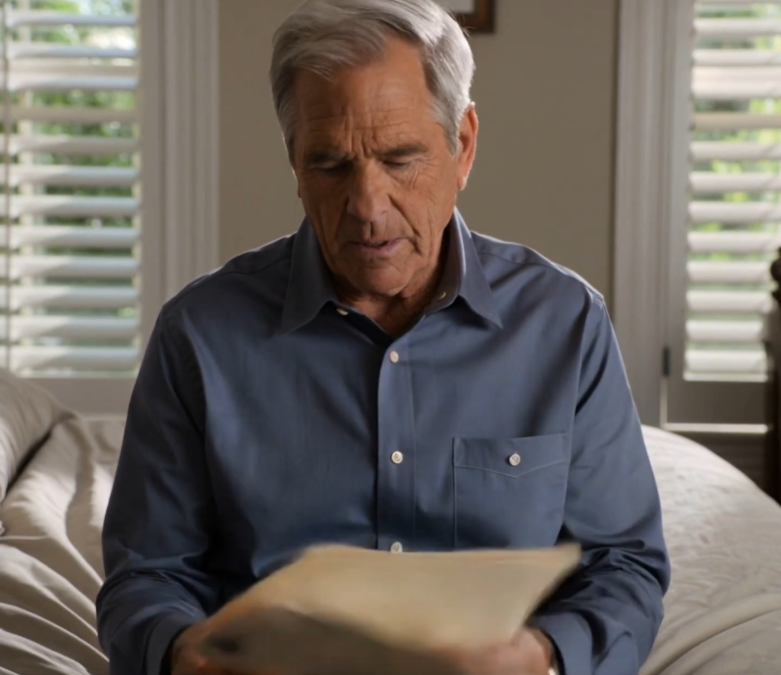
Five thousand dollars. The check was generous, I thought. Enough to clear most of her credit card debt, the one she’d mentioned last month during that panicked call at two in the morning.
Fern’s eyes scanned the numbers. Her expression didn’t change. Not a smile, not even surprise. Just nothing.
“Five thousand.” The words came out flat, as though I’d handed her a grocery receipt. “That’s it?”
My chest tightened. “Well, I figured it’d help with that credit card situation. You—”
“You know what, Dad?”
She looked up then, and her eyes were cold. Colder than the snow outside. Colder than anything I’d seen in forty-two years of being her father.
“The best gift would be when you’re no longer around.”
Time did something strange. The fire’s crackling faded into a dull roar in my ears. Vernon’s knife stopped in midcut. Sophie’s fork hung in the air. Alex’s thumbs froze over his screen.
But Fern’s face stayed perfectly still, as though she’d just commented on the weather.
I tried to speak. My mouth opened, but no sound came. My hands started trembling, so I gripped the back of my chair. The leather felt cold and distant beneath my palms, like everything else suddenly felt distant.
The room tilted slightly. Or maybe that was just me.
Had I heard her right?
“What?” The word barely made it past my lips.
“You heard me.” Fern set the check down on the table. Not in her purse, not in her pocket. Just down, like it was trash. “You’re always here, always hovering, always controlling everything with your money. We can’t breathe with you around.”
The fire popped. A log shifted, sending up sparks.
“Fern, maybe—” Vernon started, but his voice died the moment she turned her head.
“Shut up, Vernon.” She didn’t even look at him. Her eyes stayed locked on me. “Dad needs to hear this. He needs to understand that we have our own lives, our own plans, and he’s always in the way.”
“Grandpa?”
Sophie’s small voice barely registered.
Fifteen years of mortgage payments. Fifteen years of showing up whenever they called, fixing what broke, covering what they couldn’t afford. The numbers started adding up in my head even as I stood there watching my daughter explain why the world would be better without me in it.
“I just wanted to help,” I said quietly.
The words sounded weak even to me.
“Help?” Fern laughed, but there was no humor in it. “You wanted to keep us dependent, to make sure we’d always need you. Always have to come crawling back for money. Well, congratulations, Dad. It worked. We’re stuck.”
Vernon cut another piece of turkey, his eyes fixed on his plate. Sophie’s face crumpled, but she stayed silent. Alex scrolled through his phone as though nothing was happening.
The check lay on the table between the serving dishes. Five thousand dollars nobody wanted.
My hands wouldn’t stop shaking. I looked around the table at Vernon’s avoidance, at Sophie’s worry, at Alex’s indifference, and at Fern’s cold certainty.
They’d all been thinking this. Maybe not all of them, but enough. Long enough for Fern to say it out loud on Thanksgiving, with the turkey still warm and my dead wife’s photograph watching from across the room.
“What did you just say?” My voice seemed to come from somewhere far away. “About me being gone?”
“I said what I said.” Fern crossed her arms. “And you know I’m right. When you’re gone, we’ll finally be free. The house will be ours. Our money will be ours. Our lives will be ours.”
The fire crackled. Snow pressed against the windows. The chandelier’s light felt harsh now, exposing every crack in the facade I’d built, every illusion I’d maintained about what my family actually thought of me.
I pushed back from the table slowly, feeling every one of my sixty-five years in my knees, my back, and my chest, where something tight and painful had taken root.
“I think I need some air.”
The words came out steady, which surprised me. Everything else was shaking—my hands, my vision, my understanding of who my daughter was—but my voice held.
I turned toward the kitchen, away from the table, away from Fern’s cold eyes and Vernon’s cowardice, and away from the check that represented fifteen years of my life rendered worthless.
The kitchen door was only ten feet away, but it felt like miles.
Behind me, Fern said something else, but her words blurred into the fire’s crackling and the pounding of my heart. I kept walking, each step deliberate, leaving my family at the table with their turkey and their truth.
The kitchen door swung shut behind me, muffling the dining room.
Fluorescent lights hummed overhead, harsh and clinical after the warm glow of the chandelier. I went straight to the sink, gripping the counter’s edge with both hands. The laminate dug into my palms. Outside the window, snow piled up on the back fence, each flake adding to the weight.
My reflection stared back from the dark glass. An old man with gray hair and confused eyes.
I turned on the cold water and splashed my face. The shock helped. Not much, but enough to pull me back from wherever I’d been drifting.
She’d said it. My daughter had actually said the world would be better with me dead.
I splashed more water onto my face, letting it drip from my chin into the sink full of dirty preparation bowls and spatulas. The smell of turkey mixed with dish soap, sweet and chemical. My hands found a towel, and I dried my face mechanically.
The door slammed open.
“Don’t you walk away from me!”
Fern’s voice ricocheted off the tiled walls. She crossed the small space in three strides, grabbed the sponge from the sink, and started attacking the dishes with sharp, angry movements.
Plates clattered. Water splashed. The sound was aggressive, deliberate.
I turned slowly. “I needed a moment, Fern. What you said—that was hurtful.”
“Hurtful?” She laughed without humor, scrubbing harder. “You want to talk about hurt? Try living under your shadow for forty years. Try having a father who thinks every dollar spent is a chain around your neck.”
“That’s not—”
“I’ve spent my entire adult life hearing about your sacrifices,” she interrupted. “The house, the bills, the kids’ school supplies, the car repairs. Everything you’ve done for us, over and over, like we asked for it.”
“You did ask.” My voice came out quiet and steady. “Every time you called at two in the morning because the furnace broke. Every time Vernon lost another job and you needed help with rent. Every time—”
“We needed help because you made sure we’d need help!”
The sponge flew back into the sink with a wet slap.
She turned to face me fully, water dripping from her hands.
“You bought the house in your name. You pay the mortgage so you can hold it over us. You set it up perfectly, didn’t you? Keep us dependent. Keep us grateful. Keep us trapped.”
The refrigerator hummed in the sudden silence. Outside, a car passed, its headlights sweeping across the snowy yard.
“I bought the house because you couldn’t afford it,” I said. “You and Vernon were three months behind on rent. You had a six-month-old baby. What was I supposed to do?”
“Let us figure it out ourselves!” Her voice rose. “Maybe we would’ve been fine. Maybe we didn’t need you swooping in to save us. But you couldn’t stand that, could you? You needed to be the hero. You needed us to owe you.”
She moved closer, and I saw something in her face I’d never seen before. Not anger. Not frustration. Something harder, something that had been building for years while I’d been too busy paying bills to notice.
Her finger jabbed into my chest. Once. Twice. Each poke punctuated her words.
“You wanted us dependent.”
I stepped back against the counter.
“Fern, that’s not true. I wanted to help my daughter raise my grandchildren in a safe place.”
“Or you wanted to make sure we could never leave.” Another jab. “Make sure we’d always be right here under your thumb, needing you. Because what would you be without us needing you, Dad? Just a lonely old man in an empty house.”
The words hit harder than her finger.
I raised my hands, not in defense, but in surrender.
“Is that really what you think, after everything?”
“I think…” She paused, breathing hard.
The anger in her face shifted into something else. Something that looked almost like pain, but harder.
“I think you need to hear this. Mom would’ve wanted you to hear it.”
“Don’t.” My voice came out sharp. “Don’t bring your mother into this.”
“Why not? She knew. She knew you were like this. Controlling. Always needing to be the center of everything. Always making it about your sacrifices.”
“Your mother…” I stopped and swallowed hard. “Your mother would be ashamed to hear you talk like this.”
Fern’s face went red.
“Don’t you dare bring Mom into this! She’s gone because of the stress you caused. Always working, always absent, always—”
“That’s a lie.”
My voice stayed quiet, but something in it made her pause.
“That’s a lie, and you know it. Your mother had a heart condition. The doctors explained it. You were there.”
“Convenient diagnosis.” Fern crossed her arms. “Very convenient way to avoid responsibility.”
The kitchen felt smaller. The fluorescent lights buzzed louder. I could hear my heartbeat in my ears and feel the counter’s edge digging into my back.
“Why are you doing this?” I asked. “What did I do that was so terrible? Love you? Provide for you? Try to give my grandchildren the stability you never—”
“We want to move.”
The words came out fast, as though she’d been holding them in.
“Vernon and I, we want to sell the house and move to Arizona. Start fresh. But we can’t because it’s in your name. Because you’d find a way to stop us. You always do.”
There it was.
The real reason. Not philosophy or feelings or ancient hurts.
They wanted the house. They wanted to cash out fifteen years of my mortgage payments and disappear to Arizona.
“I see.”
The words came out flat and empty.
“Do you? Do you really see?” Fern’s voice had shifted from anger into something almost pleading. “We’re suffocating here, Dad. Vernon can’t find work. I’m stuck in retail management. The kids are growing up in your shadow. We need a fresh start, but you won’t let us have it.”
I looked at her. Really looked at her.
When had my little girl, the one who used to hand me tools in my workshop and call herself my helper, become this stranger? When had help become control in her mind? When had love become manipulation?
“I’ll leave you alone now.”
I pushed away from the counter and moved toward the doorway that led to the bedroom hallway.
“Yeah, that’s right.” Her voice followed me, sharp and cutting. “Run away like you always do. Can’t handle the truth, so you hide. Just like with Mom.”
I stopped at the doorway but didn’t turn around.
My hand rested on the frame. The house—my house, the one I’d poured fifteen years into—suddenly felt like a cage. But I couldn’t tell anymore who was trapped in it.
I walked into the hallway, leaving Fern alone in the kitchen with the dirty dishes and the cold fluorescent light.
I closed the bedroom door behind me and sat in the dark for a long time before turning on the lamp.
The rocking chair by the window held me like it always did when sleep wouldn’t come. Outside, Chicago wore its winter coat. Snow fell past streetlamps, occasional headlights cut through the darkness, and the distant wail of a siren rose somewhere in the city.
My reflection ghosted in the window glass. An old man alone with his thoughts.
Time moved strangely. I watched the clock on the nightstand crawl from ten to eleven to midnight. My body ached for sleep, but my mind wouldn’t stop replaying everything.
The kitchen. The dining room. Fern’s cold eyes saying she wanted me gone.
Gone. Dead.
Really? Was that what she meant?
When you’re no longer around.
Not retired in Florida. Not moved to a smaller place. Dead and buried, so she could finally have her house, her freedom, her Arizona dream.
Near one in the morning, I stood. My knees protested. Everything protested these days.
I crossed to the bookshelf where I kept the things that mattered. Maria’s books, my old engineering manuals, and underneath them all, the leather-bound photo album.
The leather creaked when I opened it, as though it remembered every time I’d sought comfort in those pages.
The first photograph showed Maria in her wedding dress in 1982, her smile so bright it seemed to light up the faded colors. My younger self stood beside her, twenty-three years old and stupidly optimistic about everything ahead.
On the next pages, there was baby Fern, her tiny fist wrapped around my finger. Toddler Fern at the playground, her face full of joy as I pushed her on the swings. Five-year-old Fern in my workshop, wearing one of my old hard hats that swallowed her whole head, handing me a wrench with such seriousness.
I stopped on one particular photograph.
Maria was holding Fern, maybe three years old. Both of them were laughing at something off camera. Maria wore a yellow sundress.
That dress. She wore it to everything important. Fern’s kindergarten graduation, school plays, parent-teacher conferences.
In the photograph, Fern looked at the camera with pure, uncomplicated love.
When did it change?
I traced my finger over Maria’s face, careful not to smudge the old print.
“Maria,” I whispered to the empty room.
Her face in that photograph was smiling, holding little Fern. Back then, Fern had looked at me like I was a hero.
The question haunted me.
When had Daddy become Dad, and then become burden?
Was it after Maria died eight years ago, leaving me to navigate Fern’s grief alone? Was it when she married Vernon, when financial problems became the language of our relationship? Or had it happened gradually, death by a thousand small betrayals I’d been too busy to notice?
I closed the album slowly, feeling its weight.
My hands caught the lamplight, scarred, calloused, marked by decades of construction work. The burn scar on my right thumb from the welding torch incident in 1998. The permanent calluses from gripping tools. The white line across my left palm where a piece of sheet metal had sliced deep during the Henderson building project.
Every mark told a story of providing. Every scar was a payment made.
Fifteen years.
Fifteen years of mortgage payments.
I did the math that night, sitting in my rocking chair while Chicago slept. Approximately sixteen hundred dollars a month over fifteen years. Two hundred eighty-seven thousand dollars total, not counting the credit card bailouts, three of them totaling another eighteen thousand.
Not counting the car repairs, the emergency loans, the kids’ school supplies, or the medical bills when Vernon’s insurance lapsed.
None of it repaid. None of it even acknowledged, apparently.
Just expected. Worse than expected, resented.
I thought about Maria’s words, ones she’d said so often I could still hear her voice.
“Lem, don’t let people mistake your kindness for weakness.”
She’d say it when contractors tried to underbid me, when neighbors asked for favors they never returned, and when Fern started calling more often as an adult, but only when she needed something.
I finally understood what she meant.
Standing, I walked to the window and pressed my forehead against the cold glass. The city stretched out below, thousands of lights representing thousands of lives.
People who probably also struggled with knowing when to help and when to stop helping. When sacrifice became enabling. When love became a weapon used against you.
“I thought I was building a legacy,” I told my reflection. “Turns out I was building a prison for myself.”
But here’s what Fern didn’t understand. What Vernon couldn’t see. What maybe even I hadn’t fully grasped until tonight.
I hadn’t created their dependency to trap them. I’d created it because I loved them.
Because when your child calls crying at two in the morning, you help. When your grandchildren need winter coats, you buy them. When the furnace breaks in January, you fix it.
I’d done what fathers do. What I thought fathers were supposed to do.
They’d taken it and twisted it into something ugly, something selfish on my part, when the selfishness had been theirs all along.
They wanted the house. My equity. My investment. My fifteen years wrapped up in a neat Arizona package.
And I was the obstacle.
That night, sitting alone in my bedroom while my family slept, or pretended to sleep, or hid from me, I decided something.
I was done being invisible in my own life.
I didn’t know how yet. Didn’t know what shape my response would take. But standing there with the cold glass against my forehead and Maria’s photograph watching from the nightstand, I felt something shift inside me.
Something that had been bending for years finally snapped clean.
I turned from the window and looked at my bedroom, my sanctuary, the one space that was truly mine. Then I looked at Maria’s photograph on the nightstand.
I picked up the silver frame, its weight familiar in my scarred hands.
“I’m sorry, Maria,” I whispered to her frozen smile. “I tried. I really tried with her.”
Setting the photograph down carefully, I moved to the bed and sat on its edge.
Exhaustion pulled at me now, but it was different from before. Not the exhaustion of defeat. Something else. Something that felt almost like relief.
I couldn’t change the past. Couldn’t undo Fern’s words or take back my years of sacrifice.
But I could control what happened next.
The decision was made, even if the plan wasn’t.
Outside, snow continued falling on Chicago, covering everything in white. Fresh start. Clean slate.
Maybe that’s what I needed, too.
Not Arizona. Something else. Something that would show my daughter exactly what life looked like when I finally, truly stepped aside.
I didn’t sleep.
When gray morning light finally crept through the window, I was still in the chair, watching the city wake beneath its blanket of snow.
Seven o’clock came without ceremony. My body ached from hours in the rocking chair, but my mind felt sharp, focused in a way it hadn’t been in years.
Standing took effort. My knees protested, my back was stiff, but I managed.
The hallway stretched quiet and empty before me. No sounds came from the other bedrooms. Fern and her family were either sleeping late or avoiding me.
Both suited me fine.
The kitchen held yesterday’s ghosts. Dirty plates still sat in the sink, and the faint smell of cold turkey lingered in the air.
I ignored it all and went straight to the coffee maker, dumping in grounds without measuring.
Strong coffee. The kind that strips paint and keeps construction workers functional through fourteen-hour shifts.
While it brewed, my eyes caught on the cabinet above the refrigerator, the one where I kept important papers.
Home Documents.
The words were written on the folder’s tab in Maria’s careful handwriting, back when she managed our filing system.
I reached up and pulled it down.
The folder felt heavier than it should.
I set it on the kitchen table, poured coffee so strong it looked like crude oil, and sat down.
Inside were insurance papers, warranty booklets, old utility bills, and underneath everything, the contract.
Cream-colored paper, gone slightly yellow at the edges. My signature in blue ink.
Date: March 15, 2010.
The numbers swam into focus.
Property address: 342 Oak Street, Oak Park.
Purchase price: $320,000.
Primary owner: Lem Gomez.
Fern’s voice from the kitchen echoed in my head.
It’s your house. Your name.
She was right about that.
I stared at the signature, and memory pulled me backward fourteen years. Fourteen years since that signature, since the day I believed I was helping my daughter build a life.
I remembered that day clearly.
Spring 2010.
Fern had shown up at my old house, the smaller one Maria and I had bought when we first married. Different neighborhood. Different life.
I’d been fifty then, still working construction full-time, still believing retirement was something distant and manageable.
The doorbell had rung just after breakfast.
Through the peephole, I saw Fern, tears streaking her face, baby Sophie bundled in her arms against the March cold.
“Dad,” her voice broke when I opened the door. “Dad, we got rejected.”
She thrust a letter at me. Chase Bank letterhead. Application Denied in bold across the top.
I’d read it while standing in my doorway as she cried into Sophie’s blanket.
Credit score insufficient. Debt-to-income ratio unfavorable. Employment history unstable.
“What about Vernon’s job?” I’d asked, already knowing the answer.
Fern’s face crumpled further.
“He’s between positions right now. The shop laid him off three months ago.”
Between positions.
That phrase would become Vernon’s permanent state.
“Please, Dad. The kids need a stable home. We found this perfect place in Oak Park. Good schools, safe neighborhood. We just need help with the down payment. Maybe co-signing.”
Sophie had chosen that moment to grab my finger with her tiny fist. Six months old, all innocence and trust.
I’d looked at that baby, then at my daughter’s desperate face, and felt my resolve crumbling.
“How much do you need?”
“Just co-sign. I promise we’ll pay you back once Vernon finds something steady.”
We’d driven to Chase Bank together that afternoon.
The loan officer, a professional woman in her forties with a no-nonsense haircut, had reviewed our situation with clinical efficiency. Papers spread across her desk, computer screens glowing, numbers that seemed enormous then and routine now.
“Mr. Gomez.” She’d looked at me over her reading glasses. “Since you’re the primary income source with established credit, we’ll list you as the primary owner. Your daughter will be a co-resident.”
I’d hesitated.
Primary owner, not co-owner.
The distinction felt important, but Fern had been bouncing Sophie on her knee, making the baby giggle, and I’d thought, What does it matter? Family takes care of family.
“That’s fine.”
I’d signed where she pointed.
Family takes care of family.
Fern had hugged me tightly when we left the bank, Sophie sandwiched between us.
“Thank you, Daddy. You’re the best. I promise we’ll make you proud.”
Daddy.
That was the last time she’d called me that.
The coffee had gone cold in my hand. I was back in 2024, sitting at the kitchen table, staring at that signature from a different life.
The contract’s fine print suddenly seemed larger, clearer than it ever had before.
Primary owner: Lem Gomez.
Property address: 342 Oak Street, Oak Park, Illinois.
Co-resident: Fern Gomez Vernon.
Mortgage term: thirty years.
Monthly payment: approximately $1,600.
I pulled out my calculator, the old one with the big buttons that I’d used for construction estimates.
Fifteen years of payments. Twelve months per year. Sixteen hundred dollars average monthly payment.
The numbers added up cold and clear.
$287,000.
Not counting interest rate fluctuations. Not counting the times I’d paid extra when they’d fallen behind on utilities. Not counting the three credit card bailouts totaling another $18,000. Not counting Vernon’s emergency car repairs that somehow always happened right before Christmas.
I took a fresh piece of paper from the drawer and listed it all out in neat columns, the way I used to calculate material costs for building projects.
Mortgage payments: $287,000.
Credit cards: $18,000.
Car repairs: $12,000.
School supplies and clothes: $8,000.
Emergency loans: $15,000.
Miscellaneous bailouts: $9,000.
Total: $349,000.
Three hundred forty-nine thousand dollars over fifteen years.
Not a single dollar repaid. Not even acknowledged.
Just expected, then resented, then finally weaponized against me.
Vernon’s between positions had become permanent unemployment. Fern’s promises to pay me back had become accusations of control. My help had somehow become their prison.
I wrote on the notepad in capital letters.
HOUSE. TITLE. MINE.
Legally. Completely.
The words stared back at me.
Fern had meant it as an accusation when she’d said, “Your house.” But she’d accidentally told the truth.
It was my house. My name on the deed. My money in every nail and shingle.
Mine.
Footsteps creaked overhead. Someone was awake.
I gathered the papers quickly, slid them back into the folder, and stood.
My legs felt steadier now. Purpose had a way of strengthening old bones.
I walked back to my bedroom, the folder clutched like a weapon. Passing the hallway mirror, I saw myself—a sixty-five-year-old man with gray hair and tired eyes, but standing straighter than I had in days.
Behind me, the house stretched out. My house, every inch of it earned.
Ahead lay a course of action I hadn’t fully formed yet, but I could feel it crystallizing with each step.
The bedroom door closed behind me with a soft click.
I put the folder on my nightstand beside Maria’s photograph. Her smile seemed knowing, almost approving.
I had proof now. Legal proof. Financial proof. Moral proof, if such a thing existed.
What came next was just logistics.
I needed professional confirmation of what I already suspected.
The phone call from my bedroom felt clandestine, which was ridiculous.
This was my house. My decision. My right.
But I kept my voice low anyway.
Mark Rivera’s number was on a business card tucked into my wallet, slightly worn from years of carrying it.
We’d worked together two decades ago when his firm handled contract law for the construction company. He’d gone solo since then, building a practice that let him keep Saturday hours for friends who needed them.
“Mark Rivera.”
“Mark, it’s Lem Gomez. I need legal advice.” I paused, choosing my words carefully. “Can you see me today?”
A brief silence followed.
“Lem? Sure, buddy. What’s going on? You sound—”
“I’ll explain in person.”
“Come by at ten tomorrow. Saturday work for you?”
“Perfect.”
I hung up before he could ask more questions.
That gave me Friday to avoid my family and prepare what I’d say.
How do you explain to your lawyer that your daughter wished you dead and you’re planning to take everything back?
The words didn’t exist yet, but I had twenty-four hours to find them.
Friday crawled by like an injured animal.
I stayed in my bedroom mostly, making excuses about not feeling well when Sophie knocked to ask if I wanted lunch.
The kid’s voice sounded worried, which bothered me more than Fern’s continued silence, but I couldn’t explain. Not yet. Not to anyone.
I spent the afternoon on my laptop researching Illinois property law, studying terms I’d never needed to know before.
Tenancy at will. Month-to-month occupancy. Primary ownership rights. Eviction procedures.
The legal language was dry as dust, but underneath it all was a simple truth.
The person whose name was on the deed had power.
Period.
Friday night, I lay awake again, not from grief this time, but from planning and calculating.
By dawn Saturday, I had my approach mapped out.
At seven thirty in the morning, I showered for the first time in two days and put on good clothes—the charcoal slacks and blue button-down shirt I’d worn to Maria’s funeral.
Respect for Mark’s time, and maybe respect for the seriousness of what I was about to do.
I grabbed the folder and my wallet.
The house was quiet as I left. If anyone heard me go, they didn’t emerge to ask questions.
Oak Park to downtown Chicago via the Blue Line took thirty minutes.
I boarded at Harlem Station, found a seat by the window, and watched the city transform as we traveled east.
Residential blocks gave way to industrial zones, then to the dense urban core where buildings scraped the sky and Lake Michigan spread like a steel mirror.
Other passengers ignored me. Standard Chicago train etiquette.
A mother with two kids. A teenager with headphones. A man in a suit reviewing documents.
All of us cocooned in our separate purposes, hurtling underground toward whatever needed handling.
The Washington stop put me two blocks from Mark’s building.
I climbed to street level and was hit with November wind coming off the lake, sharp enough to make my eyes water.
I walked fast, the folder tucked under my arm like classified material.
The building was all glass and steel, the kind that screamed success. A marble lobby, a security desk with a bored guard who waved me toward the elevators after I signed in.
Twenty-eighth floor.
My ears popped during the ascent.
The elevator opened to brass letters.
Rivera & Associates.
Small practice, but quality.
A receptionist who looked fresh out of college smiled professionally.
“Mr. Gomez? Mark’s expecting you. Go on back. Second door on the right.”
Mark’s office had the view I’d expected. Floor-to-ceiling windows overlooking downtown, Lake Michigan visible in the distance with ice forming along its edges.
The man himself stood when I entered.
Fifty years old, fit from regular gym time, his hair going distinguished gray at the temples.
We shook hands. His grip was firm, concerned.
“Lem, sit.” He gestured toward the leather chair across from his desk. “Want coffee? You look like you could use it.”
“I’m past coffee, Mark.”
I sat and pushed the folder across the polished wood surface.
“I need answers.”
He settled into his chair, pulled the folder closer, and opened it.
His expression shifted from casual to professional as he scanned the first page. He put on his reading glasses and read in silence, except for the occasional rustle of paper and a low hum that could have meant anything.
Minutes passed.
Outside, a helicopter crossed the skyline. Inside, I watched Mark work, checking details against something on his computer screen, probably the Illinois property database.
Knowing him, he made notes on a legal pad in handwriting that looked like controlled chaos.
Finally, he leaned back, removed his glasses, and rubbed the bridge of his nose.
“Lem.”
His voice carried weight.
“Legally speaking, this property is entirely yours.”
Something in my chest loosened.
Validation.
“Explain that.”
Mark tapped the contract.
“Primary owner. Your name, your credit, your financial responsibility. Your daughter is listed as a co-resident, which is essentially a tenant designation. She has no ownership stake. You’ve been making every payment for…” He checked his notes. “Fifteen years.”
“Can I take it back?”
He blinked.
“Take it back? Lem, you never gave it away. They’re essentially tenants living in your property. What exactly are you asking?”
“What if I want them out?”
Mark whistled softly and set down his pen.
“That’s heavy. They’re family.”
“Family that told me…” I stopped, reconsidering.
But if I couldn’t tell my lawyer, who could I tell?
“Family that told me the best gift would be when I’m no longer around. My daughter said that to my face on Thanksgiving.”
The office went very quiet.
Even the city noise from twenty-eight floors below seemed to pause.
Mark stared at me, his professional mask slipping to reveal genuine shock.
“She said that? Word for word?”
I nodded.
He picked up his pen again and clicked it twice, a thinking habit I remembered from years ago.
“Okay. You have every legal right to do this. Illinois law requires notice for eviction. Standard is thirty days without cause.”
“Can I do it faster?”
“They’re month-to-month residents without a formal lease, correct?”
I nodded.
“Then technically, you can give them as little as fourteen days. Two weeks.” He leaned forward. “But, Lem, are you absolutely sure? This is permanent. Family doesn’t come back from something like this.”
I thought about Fern’s cold eyes. Vernon’s passive enabling. Fifteen years of being their safety net, then their scapegoat, then their wished-for corpse.
“More sure than I’ve been about anything in a long time.”
Mark studied me for a long moment, then nodded once.
“All right. I’ll draft the notice. Needs to be formal, in writing. Specify the date they must vacate. Where will you be during all this?”
“Somewhere warm.”
I hadn’t thought it through completely, but the words felt right.
Away from all this cold. Away from everything.
“Hawaii, Florida, somewhere like that.”
He turned to his computer, his fingers flying across the keyboard.
The printer hummed to life behind him.
“I’m drafting this now. You’ll need to serve them personally or have it delivered by certified mail. Make sure you document everything—dates, times, witnesses if possible.”
I watched the printer spit out pages of legal language that would sever fifteen years of obligation.
Two weeks’ notice that would free me from three decades of being the family bank.
Mark signed the bottom and slid it across the desk.
“I’ll hold this until you’re ready to serve it. Once you hand this over, there’s no taking it back. They’ll have fourteen days from receipt to vacate the premises.”
I took the envelope and felt its weight.
Light as paper. Heavy as consequences.
“Thank you, Mark.”
“Don’t thank me yet.”
He stood, came around the desk, and placed a hand on my shoulder.
“Just make sure you’re ready for whatever comes next. Family wars get ugly fast.”
“It’s already ugly.”
We shook hands again.
His grip conveyed something beyond professional courtesy. Respect, maybe. Solidarity between men who understood that sometimes walking away was the only move left.
I walked toward his office door, envelope in hand, my future secured in writing.
Behind me, Mark called out.
“Lem?”
“Yeah?”
“For what it’s worth, I think you’re doing the right thing.”
I turned and met his eyes.
“That makes one of us.”
But I was lying.
Standing there in that twenty-eighth-floor office, with the city sprawled below and legal power clutched in my hand, I felt more certain than I had since Maria died.
Maybe more certain than I’d ever felt.
The door closed behind me with a soft, final click.
The train ride back felt different.
I had legal certainty now, and an envelope in my coat pocket that would change everything.
By the time I reached Oak Park, it was nearly noon.
I grabbed lunch at a small diner near the station, coffee and a sandwich I barely tasted, trying to plan my next steps.
The envelope from Mark sat in my inside pocket like a concealed weapon, loaded and ready.
But one more thing needed handling first.
I was home by two o’clock.
The house greeted me with a silence that felt intentional. No sounds from upstairs, no television noise.
The kitchen counter held a note in Fern’s handwriting.
Went to Outlet Mall. Back tonight. F.
Perfect.
Hours alone.
I took off my coat, hung it carefully, and walked to my bedroom. I tucked Mark’s envelope into my nightstand drawer beneath Maria’s photograph, then returned to the living room, to the desk where my old computer sat gathering dust.
The machine took forever to boot up. Five years old, whirring like it resented being disturbed.
While it loaded, I made tea. A ritual of calm.
I sat in the desk chair and looked around the room.
This house. My house.
Every mortgage payment represented another brick in walls they’d taken for granted.
My online banking loaded slowly. I had to enter my password twice before it accepted me.
Then the account summary appeared.
Pension account: $197,349.
Enough. More than enough.
I picked up my phone, found the bank’s customer service number on a billing statement from the home documents folder, and dialed.
An automated system greeted me.
“Thank you for calling Chase Bank. For account information, press one. For credit card services, press two.”
I pressed through the menu and waited.
Hold music. Some generic jazz that was supposed to be soothing but just grated on my nerves.
The clock on the wall ticked. My tea cooled.
Outside, shadows lengthened as the afternoon progressed.
Eight minutes later, a voice answered.
“Chase Bank. This is Patricia. How may I help you today?”
Professional. Friendly. Completely unaware she was about to facilitate my escape.
“I need information about my mortgage account.”
I rattled off the account number from memory. Fifteen years of payments had burned it into my brain.
“Certainly, sir. Let me pull that up. Can I have your Social Security number and the answer to your security question?”
I provided both.
She verified my identity with practiced efficiency, keys clicking on her end.
Then she said, “All right, Mr. Gomez, I have your account here. What can I help you with?”
“What’s my remaining balance?”
“Your current mortgage balance is $43,127.89.”
The number hung in the air.
Forty-three thousand dollars.
Fifteen years of payments, and that’s what remained between me and total freedom.
“I want to pay it off.”
The words came out steady, decisive.
“Today. In full.”
A pause.
“Oh, wonderful! May I ask the reason for early payoff?”
Standard script question. She probably asked everyone.
“Personal.”
“Of course. The process is straightforward. Once we receive the funds, it’ll take twenty-four to forty-eight hours to process completely. You’ll receive a satisfaction of mortgage document.”
More typing.
“How would you like to make the payment?”
“Online transfer from my pension account.”
She walked me through it.
I opened a second browser window, logged into online banking, navigated to transfers, and set it up from the pension account to the mortgage account.
Amount: $43,127.89.
My finger hovered over Confirm.
This was real money.
Nearly a quarter of my retirement savings.
Once I clicked, there’d be no undoing it.
But what was I saving for?
To keep paying for a family that wanted me dead? To preserve resources for people who saw me as an obstacle rather than a father?
I clicked Confirm.
Authentication screens. Security questions. Final confirmation.
Transfer initiated. Funds will be withdrawn immediately and applied to your mortgage account.
“I’ve completed the transfer,” I told Patricia.
“Excellent. I can see it processing now. Mr. Gomez, just to confirm, the property at 342 Oak Street, Oak Park, will be fully under your name with no co-owners once this processes.”
“That’s correct. Just me.”
“Congratulations on paying off your mortgage, sir. It’s quite an achievement.”
“Thanks.”
We exchanged pleasantries, and she disconnected.
I sat staring at the computer screen.
The transfer confirmation showed Pending.
Twenty-four to forty-eight hours for completion.
A ping sounded from my email.
I opened it.
Your mortgage payment of $43,127.89 has been received and is processing. You will receive final documentation within two business days.
I hit Print.
The printer wheezed to life and spat out the confirmation.
I held it, reading and rereading.
The words were simple but carried a weight that physical objects shouldn’t possess.
Paid in full. Pending final processing.
Walking to the filing cabinet felt ceremonial.
I opened the home documents folder, slid the confirmation in with the original contract, closed the drawer, then returned to the couch and just sat there holding the printed page, letting it sink in.
Fifteen years of payments. Two hundred eighty-seven thousand dollars total with interest.
And in one afternoon, one phone call, one button click, I’d taken back what had always been mine.
The house was mine.
The control was mine.
The power was mine.
For the first time in years, maybe decades, I felt like I was holding the cards instead of being played.
Afternoon sun streamed through the windows, turning dust motes into floating gold.
The house settled around me with creaks and sighs, familiar sounds I’d heard a thousand times but never really listened to.
These were my walls. My floors. My decision.
I looked at the printout again.
Property address: 342 Oak Street.
Owner: Lem Gomez.
Mortgage: Paid in full.
When Fern had said, “Your house,” like it was an accusation, she’d handed me the solution without realizing it.
She was right.
It was my house. Legally, financially, completely.
She just never understood what that meant.
A car door slammed outside, distant, probably a neighbor. But it pulled me back to reality.
The family would return eventually.
I needed to hide the evidence, act normal, and wait for the right moment.
I stood, folded the printout, tucked it back into the filing cabinet, closed and locked the drawer, and pocketed the key.
When I turned around, the room looked exactly as it had an hour ago.
Nothing visible had changed.
But everything had changed.
I walked to the window and looked out at Oak Park in the late-afternoon light.
Snow melted slowly on the sidewalks. A kid rode a bike down the street.
Normal life continued while mine transformed completely.
Another car door slammed, closer this time.
Voices. Fern’s sharp tone carried even through the glass.
They were back.
I smoothed my face into neutrality and checked my reflection in the window.
The man looking back appeared calm, composed.
They’d never guess what I’d done while they were buying things they didn’t need with money they didn’t have.
The front door opened.
Footsteps. Shopping bags rustling. Sophie’s voice asking Vernon something about dinner.
I remained at the window, just another old man watching the world go by, waiting for night to fall.
Saturday night, I stayed in my room while the family watched television downstairs.
Their voices drifted up through the vents. Laughter at some show. Vernon’s occasional comment. Sophie asking for popcorn.
Normal family sounds from a family that had stopped being mine somewhere along the way.
I sat in my chair by the window, the idea of tickets to Hawaii still tucked away in my thoughts, and waited for Sunday.
Morning came cold and gray.
I woke at six thirty to silence. They were sleeping late after their shopping expedition.
Perfect.
I dressed in layers: thermal shirt, sweater, heavy coat.
I left a note on the kitchen counter.
Going out. L.
Nothing more.
They didn’t deserve explanations anymore.
The Red Line train from Oak Park to downtown took forty minutes.
I sat near the back, watching Chicago wake up through dirty windows.
Sunday morning riders. A nurse in scrubs heading to a hospital shift. A young couple dressed for brunch. A man my age carrying a grocery bag.
All of us moving through the city with separate purposes, invisible to each other.
Michigan Avenue greeted me with December’s particular brand of misery.
Wind off Lake Michigan cut through my coat like it had a personal grudge.
The Magnificent Mile lived up to its name, even in winter.
Massive stores with elaborate window displays. Holiday lights strung between buildings. Tourists bundled against the cold, taking selfies with shopping bags.
I walked with no destination, my hands deep in my pockets, just needing to be somewhere that wasn’t home.
Past Macy’s with its animated holiday windows. Past Tiffany’s, where engagement rings sparkled under spotlights. Past families emerging from brunch, kids hopped up on pancakes, parents looking exhausted but content.
The crowd made me invisible, which felt right.
Nobody looked twice at an old man in a gray coat walking alone on a Sunday morning.
I could have been anyone.
I could have been nobody.
Then I stopped.
The travel agency storefront wasn’t particularly large, wedged between a luggage store and a Starbucks.
Pacific Dreams Travel was written in blue letters above the door.
But the window display hit me like a physical force.
An enormous poster, maybe six feet wide.
Escape to Paradise. Hawaii. $799.
Bold yellow letters stretched across the top.
Below them was Waikiki Beach at sunset, turquoise water so clear you could see the sandy bottom, golden sand stretching toward impossible palm trees.
The sky was painted in oranges and pinks that didn’t exist in Chicago’s gray December palette.
A woman walked into the surf, her back to the camera, arms outstretched as though embracing the ocean itself.
I stood there on Michigan Avenue, wind whipping around me, staring at that poster like it was showing me a different planet.
My reflection ghosted in the window glass.
An old man. Tired eyes. Gray hair.
Superimposed over tropical paradise.
The contrast was almost funny.
Almost.
When was the last time I’d done something just for myself?
The thought arrived fully formed. No preamble.
I couldn’t remember.
Years. Decades.
Everything had been about Fern, about the grandkids, about paying for their lives while mine remained on hold.
Even Maria’s death hadn’t freed me. I’d just channeled grief into more giving, more sacrifice, more believing that eventually they’d appreciate it.
The poster’s price tag glowed.
$799.
I had $143,000 in my pension account.
Simple math.
A tiny percentage of my remaining savings for two weeks in paradise. Less than one mortgage payment from the fifteen years I’d already spent.
But something held me back.
Was this running away?
Was this cowardice?
Then I remembered Maria’s voice, not from a vague memory, but from a conversation we’d had twenty years ago, sitting on the back porch of our old house, drinking lemonade on a hot summer evening.
“Lem,” she’d said, “someday when we retire, let’s go to Hawaii. Just us. No obligations, no schedule. Just sun and ocean.”
We never went.
There was always something.
Fern needed help. Money was tight. Maria got sick.
Always something.
“This isn’t escape,” I said aloud, surprising myself.
A passing woman glanced at me—an old man talking to himself—and hurried on.
“This is what you earn when you finally stop letting people take.”
The decision crystallized.
I pushed open the door.
A bell chimed.
Inside was warm enough to make my glasses fog.
Tropical posters covered every wall. Maui waterfalls. Big Island volcanoes. Quiet cliffs.
Steel drum music played softly from hidden speakers.
Then the smell hit me.
Coconut air freshener.
Aggressive but not unpleasant, like the room was trying to convince you that you’d already left winter behind.
Behind a desk cluttered with brochures sat a woman in her thirties, her dark hair pulled back. Her professional smile warmed when she saw me.
“Good morning. Looking to escape the cold?”
“You could say that.”
I approached the desk, unzipping my coat.
“Tell me about Hawaii.”
Her eyes lit up. Commission radar, probably, but genuine enthusiasm, too.
“Our most popular package is two weeks on Oahu, beachfront hotel in Waikiki. Round-trip flights included, activities, car rental options, everything you need.”
She pulled out laminated brochures, spreading them like cards.
“When were you thinking?”
“How soon can I leave?”
She blinked, her fingers pausing over her keyboard.
“Oh. Let me check availability.”
She typed, her eyes scanning the screen.
“We have seats available December third. That’s Tuesday. Two days.”
Two days.
Two days from making the decision to being on a plane.
The speed felt reckless and perfect.
“Perfect. Book it.”
“Wonderful!”
Her professional mask slipped to reveal genuine surprise.
People usually needed to think. Consult spouses. Check calendars.
“Solo traveler?”
“Yes. Just me.”
“Okay, let me pull up our Oahu packages.”
More typing. More brochures.
She walked me through the options.
Basic hotel room: $799 package.
Upgraded beachfront room: add $400.
Ocean-view suite: add $800.
Flight times, early morning or afternoon. Rental car, yes or no. Activity packages: snorkeling, helicopter tours, dinner cruises.
I chose without hesitation.
Upgraded room.
Morning flight.
No rental car. I’d walk or use rideshares.
No activity packages. I’d figure it out as I went.
She calculated, fingers flying across the calculator keys.
“Total comes to $1,947, including all taxes and fees.”
“That includes round-trip flights and fourteen nights at the Hilton Hawaiian Village?”
“That’s right on Waikiki Beach. Incredible views and airport transfers.”
I handed her my credit card, not the pension account.
Keeping that separate. Pristine.
The card disappeared into the machine.
She made small talk while it processed.
Weather in Hawaii. Perfect, always.
Best restaurants. Endless options.
Things to do.
“Beach,” I said. “Mostly beach.”
“Really, beach is the point.”
The receipt printer churned.
She handed me papers: boarding passes, hotel confirmation, a glossy folder labeled Your Hawaiian Adventure.
Tickets for Tuesday morning. Nine o’clock departure from O’Hare. Arriving in Honolulu at twelve thirty local time.
“Celebrating something special?” she asked, stapling the documents together.
I looked at her.
Young. Optimistic. Probably went to Hawaii herself once and never stopped talking about it.
How could I explain that I’d spent fifteen years paying someone else’s mortgage? That my daughter wished me dead? That I’d finally decided to stop being a doormat and start being a person?
“You could say that.”
I smiled.
My first genuine smile in days.
“A new beginning.”
Her answering smile was warm, uncomplicated.
“Well, congratulations. You’re going to love it. The ocean is like nothing else.”
I left the agency holding my papers like they were sacred documents.
The bell chimed behind me.
Outside, the December wind tried to rip the folder from my hands, but I held tight.
Two weeks. Waikiki Beach. Sun and ocean.
No responsibilities.
No Fern. No Vernon. No guilt.
I stood on Michigan Avenue, Christmas lights twinkling overhead, shoppers flowing around me like water around a stone.
And I felt something I hadn’t felt since before Maria died.
Anticipation.
Not dread. Not obligation. Not weary resignation.
Actual anticipation for something good coming toward me.
The tickets confirmed it.
December third. Seven o’clock check-in.
Forty-eight hours from now, I’d be on a plane heading west, leaving everything behind.
I started walking back toward the Red Line, the folder tucked inside my coat against the wind.
Chicago’s cold couldn’t touch me anymore.
I was already somewhere warmer.
Sunday evening, I avoided dinner.
I stayed in my room with my tickets spread across the bed like treasure maps.
Monday morning, Fern left for work at eight. I heard her car start and listened until the sound faded.
Vernon’s voice drifted from downstairs.
“Taking the kids to Sky Zone. Back by six.”
By four o’clock that afternoon, I had the house to myself.
The kitchen felt different in the late-afternoon light. Golden December sun slanted through the windows, making everything look warmer than it was.
I sat at the table where we’d eaten Thanksgiving dinner barely a week ago, where Fern had handed me my death wish wrapped in casual cruelty.
Blank paper. Blue pen. Deep breath.
Dear Fern.
I crossed it out.
Too soft. Too familiar.
This wasn’t a letter from a father. This was a legal notification from a property owner.
Fern and Vernon.
Better. Formal. Both names. Both responsible.
By the time you read this, I’ll be gone. Not gone the way you…
I stopped.
Too emotional. Too much explanation.
They didn’t deserve my reasoning. Just facts.
I crumpled the paper and started again.
The second attempt was worse. Too angry, too detailed about every betrayal. The third was too cold, almost cruel.
I wasn’t trying to hurt them. I was trying to establish boundaries they should have recognized years ago.
On the fourth attempt, I wrote slowly, weighing each word as though it were evidence in court.
Because, in a way, it was.
This note would be read, reread, probably shown to lawyers or friends, or posted online in some desperate bid for sympathy.
Every word needed to be defensible.
When I finished, I read it aloud to the empty kitchen.
“Fern and Vernon,
“By the time you read this, I’ll be gone. Not gone the way you wished on Thanksgiving, but gone from your lives in a different way.
“I’ve paid off the mortgage. The house at 342 Oak Street, Oak Park, is now entirely in my name. You’ll find the proof attached.
“You have fourteen days from today, December 2, 2024, to vacate the property. I’ll return on December 17. If you’re still here, I’ll proceed with legal eviction.
“This isn’t cruelty. This is consequences.
“You wanted me gone. Now you’re gone. But on my terms, not yours.
“I’ve spent fifteen years sacrificing for you. $287,000 in payments, countless hours of worry, and what did I get? A wish for my death.
“I’m going to live my life now. The life I put on hold for you.
“Don’t try to reach me. I won’t answer.
“Lem Gomez.”
I read it three times.
Every word felt right.
Cold, maybe, but fair.
The hardest part had been getting the tone right. Not angry. Not sad.
Just done.
Complete. Final.
I thought about adding something softer. A line about hoping they’d learn from this. A mention of Sophie and Alex, how I’d miss them.
But why?
They wouldn’t appreciate it.
Fern would twist any softness into leverage for manipulation.
This was perfect. Surgical. Clean.
I went to the filing cabinet in the living room and unlocked it with the key I kept on my keychain.
Inside, I found the mortgage satisfaction document.
PAID IN FULL was stamped in red across the top.
I folded it carefully, returned to the kitchen, and folded the note around the document.
Both fit perfectly into a large manila envelope from the drawer.
I sealed it and wrote on the outside in black marker:
FERN AND VERNON — READ IMMEDIATELY.
Now for placement.
The counter? Too easy to overlook.
The refrigerator? They might not see it until morning.
I needed somewhere central, unavoidable, where they’d encounter it the moment they entered.
My eyes landed on the crystal vase in the center of the table.
A wedding gift from Maria’s family.
Heavy cut glass that caught the light and threw rainbow prisms across the walls.
Maria had loved that vase.
She’d placed it there twenty years ago and kept it filled with fresh flowers every week until she became too sick.
I lifted the vase carefully, placed the envelope underneath, and lowered the vase back down.
Its weight pinned the envelope perfectly.
They’d have to move Maria’s legacy to see their consequences.
The symbolism wasn’t lost on me.
I stood back and checked from the doorway.
Impossible to miss.
The envelope’s corner stuck out from beneath the vase like a flag.
Anyone entering the kitchen would see it immediately.
Perfect.
My bedroom felt like a departure lounge.
I pulled the old blue Samsonite suitcase from the closet. Scarred from decades of use, but still serviceable.
I laid it open on the bed.
Packing felt ceremonial.
Each item was chosen deliberately.
Swim trunks bought three years ago for a pool party I never attended. Three Hawaiian shirts still in their packaging, bought on impulse and never worn. Too casual for an engineer’s life.
Shorts. Sandals. Sunscreen, SPF 50. Sunglasses.
A paperback copy of Lonesome Dove.
Eight hundred pages I’d always meant to read but never had time for.
Everything folded precisely. Corners aligned. No wasted space.
Old construction habit.
Efficient packing. Maximum utility. Minimum bulk.
The suitcase zipped closed with a satisfying sound.
Finality.
I set it beside the bedroom door, ready for tomorrow’s five o’clock departure.
The phone came next.
I changed my voicemail message.
“I’m away. Don’t call. I’ll contact you when I’m ready.”
I practiced it twice before recording.
Not if I’m ready.
When.
Keeping control.
The decision to reconnect would be mine, on my timeline.
I set the alarm for five in the morning.
Checked the Uber app.
Ride to O’Hare, scheduled for 5:45 a.m.
Confirmed.
Checked the tickets.
United Flight 1204. O’Hare to Honolulu.
Departure: 9:00 a.m.
Gate C24.
Check-in opens at seven.
Two hours was plenty.
Everything was ready.
I sat on the edge of the bed, looking at my packed suitcase and thinking about the envelope waiting in the kitchen.
Tomorrow morning, Fern would come downstairs to make coffee.
She’d see the crystal vase, see the envelope, and lift the vase with irritation at something blocking the table’s center.
Then she’d read it.
I tried to imagine her face.
The shock. The disbelief. The rage. The panic when she realized this wasn’t negotiable.
Wasn’t fixable with tears or promises or manipulation.
I’d spent so long being afraid of her disappointment, her anger, her judgment.
Now I felt nothing.
Not satisfaction. Not revenge. Not even sadness.
Just a clean, clear sense of boundaries finally drawn.
The window showed darkness falling.
Five thirty in the evening.
Vernon and the kids would be home soon.
I heard his car in the driveway. A door slammed. The kids’ voices rose as they entered through the front door.
Sophie called something about dinner. Vernon’s response was lost in the general noise.
I stayed in my room.
Didn’t go downstairs.
Let them wonder where I was, whether I was even home.
Tomorrow morning, they’d have their answer.
Tomorrow morning, everything would change.
I looked at Maria’s photograph on my nightstand, her smile captured three decades ago.
Forever young. Forever knowing.
“I hope you understand,” I whispered. “I tried. I really tried with her.”
But trying had limits, even for a father. Even for family.
I turned off the lamp and lay on top of the covers, fully dressed except for my shoes.
Tomorrow required an early start.
But sleep felt impossible.
Too much adrenaline. Too much anticipation. Too much of everything I’d bottled up for fifteen years finally finding release.
The house settled into its evening routine around me.
Television sounds from downstairs. The kids arguing about something. Vernon’s ineffective attempts to mediate.
Normal family sounds from a family I was about to leave behind.
In twelve hours, I’d be gone.
In fourteen hours, they’d know.
In sixteen hours, I’d be thirty-five thousand feet over America, heading toward an ocean that had waited decades for me to finally arrive.
The alarm pierced the darkness at five in the morning.
I silenced it immediately.
Old construction habit. Waking on the first ring to avoid disturbing others.
Ironic now, given that disturbing them was exactly my intention.
I dressed in the dark.
Jeans. T-shirt. Jacket.
Comfortable clothes for a long flight.
My hands found each item by memory.
The house breathed around me. Old wood settling. The furnace clicking on. That particular silence of predawn when everyone sleeps.
I took my suitcase from where it waited beside the door and paused at the threshold, listening.
Down the hall, Vernon’s snoring was thick and rhythmic, the sound of a man who’d never lost sleep over anything important.
Beyond that, nothing.
Sophie and Alex were dead to the world on a school morning they wouldn’t be attending.
Fern was silent in whatever dream she was having.
The stairs creaked despite my care.
Third step. Seventh step. Tenth.
I knew exactly which ones sang and avoided them anyway.
Old habit.
Sneaking out for early work shifts without waking Maria.
Now sneaking out for freedom.
At the kitchen doorway, I stopped.
The crystal vase caught ambient light from the street, throwing faint prisms across the table.
The envelope underneath remained undiscovered, waiting like a landmine.
One more sleep cycle separated Fern from detonation.
I could have left it somewhere else.
Could have texted her after landing.
Could have done this a thousand gentler ways.
But gentle had gotten me nowhere for fifteen years.
I turned away and walked to the front door, opening it carefully.
Cold December air hit my face.
Sharp. Clarifying. Real.
I closed the door behind me with a soft click that sounded like punctuation.
A final sentence.
A paragraph break.
The end of a chapter.
The Uber waited outside.
A white Toyota Camry.
The driver was named Ahmed, according to the app. In his thirties, maybe, with tired eyes visible in the rearview mirror.
He helped with my suitcase without comment.
Another early airport run.
Nothing special about me.
“Terminal Three, United?” he asked.
“Yes.”
We pulled away from 342 Oak Street.
I looked back once.
The house sat dark except for a single porch light I’d forgotten to turn off.
Black windows. Secrets sleeping inside.
One family’s comfortable lies about to become uncomfortable truth.
Then we turned the corner, and it disappeared.
Interstate 90 at 5:45 a.m. on a Tuesday was eerily empty.
An occasional semitruck hauling goods somewhere. Early-shift workers. Other airport runs.
We flew east, headlights cutting through the darkness.
Downtown Chicago’s skyline was visible in the distance, illuminated towers against a lightening sky, indifferent to the individual human dramas playing out in its shadow.
Ahmed didn’t talk, which I appreciated.
The radio played soft jazz.
I watched Chicago pass. Industrial zones. Suburbs. Airport hotels.
Finally, the massive terminals of O’Hare rose like spacecraft about to launch.
At Terminal Three, Ahmed helped with my bag, accepted the tip I’d added through the app, and drove off.
I stood for a moment on the curb, watching other travelers flow into the terminal.
Families. Businesspeople. That particular energy of six-thirty morning departures.
Inside, chaos disguised itself as order.
Check-in kiosks beeped. Screens directed people through electronic steps.
I touched the screen, entered my confirmation number, and watched my boarding pass appear.
Seat 17A.
Window.
Perfect.
The baggage drop swallowed my suitcase on a conveyor belt, tagged for Honolulu.
Watching it disappear felt symbolic.
My old life traveling ahead of me, waiting to be unpacked in paradise.
The security line moved quickly this early.
Shoes off. Belt off. Laptop out.
Except I didn’t have a laptop.
Just a carry-on with my book, sunscreen, wallet, and phone.
I walked through the metal detector.
No beep. No secondary screening.
Just another traveler among thousands.
Gate C24.
I arrived at 7:15, ridiculously early for a nine o’clock flight.
I bought overpriced coffee—$6.50 for burnt airport brew—and sat in an uncomfortable chair designed to prevent sleeping.
I watched the other passengers gather.
A young couple, probably on their honeymoon. A family with three kids already wired at seven in the morning. Business travelers in suits pecking at laptops.
Solo travelers like me, though most looked purposeful.
And I felt…
What?
Liberated? Escaped? Reborn?
All of the above.
My phone sat silent in my pocket.
Eight o’clock came.
Then 8:15.
8:25.
At 8:32, it started.
The first vibration.
Fern Mobile appeared on the screen.
I watched it buzz and let it go to voicemail.
8:33.
Again.
Ignored.
8:34. 8:35. 8:37.
Continuous. Relentless. Desperate.
I placed the phone facedown on my thigh.
I couldn’t see the screen, but I felt each vibration like a heartbeat.
Other passengers glanced at the insistent buzzing.
Annoying. That guy who doesn’t answer his phone.
By 8:40, I had twelve missed calls.
I sipped my coffee.
It was terrible.
I sipped again.
8:45.
Voicemail notifications stacked up.
I didn’t listen.
Didn’t need to.
I could imagine it perfectly.
Shock giving way to anger, giving way to panic.
The whole cycle Fern ran whenever life refused to bend to her will.
At 8:50, another call came.
I stared at the phone, watching Fern Mobile flash with each ring.
I debated.
Letting it ring made a point, but so did answering once.
Showing her that I was calm while she was chaos. Showing her that her distress didn’t move me anymore.
At 8:55, she called again.
I answered.
“What is this, Dad?”
Her voice came through so loudly that I had to hold the phone away from my ear.
Nearby passengers looked over.
That guy causing a scene.
I lowered the volume and pressed the phone back to my ear.
“You found the note. Good.”
“You can’t do this! This is our home!”
Calm. Stay calm.
“No, it’s my home. Check the documents.”
“You’re kicking us out?” Hysteria crept into her voice. “Where are we supposed to go?”
“Not my problem. You have fourteen days.”
“This is insane! You’re being cruel!”
“I’m being fair. You wanted me gone. Now you’re gone.”
“Dad, please.”
Her tone shifted, tears entering the manipulation playbook.
Page one.
Rage doesn’t work. Try pleading.
“Please, we can talk about this.”
“We talked on Thanksgiving. You said the best gift was my death. I’m giving you a different gift. A lesson.”
Background noise filled the line.
Vernon’s voice, muffled.
“Let me talk to him.”
I spoke before he could get the phone.
“Vernon, find a job. You’ve had fifteen years.”
“Where are you going?”
Fern was back on the line, her voice breaking.
“Come back. We need to talk about this somewhere.”
“You’ll never find me.”
A pause.
In that pause, I heard everything.
Her realization that this was real. That I wasn’t negotiating. That her usual tactics wouldn’t work.
That for the first time in her adult life, Daddy wasn’t going to fix it.
“Goodbye, Fern.”
I ended the call and powered off the phone completely.
Not just silent.
Off.
The screen went black.
Dead. Silent. Perfect.
I set it on the chair beside me and picked up my coffee.
Cold now, but I drank it anyway.
The public-address system crackled.
“United Flight 1204 to Honolulu will begin boarding in approximately five minutes. Zone One passengers may line up at this time.”
I stood and stretched.
My sixty-five-year-old joints protested the uncomfortable chair, but nothing hurt that sunshine wouldn’t fix.
I took my carry-on and moved toward the boarding area.
Around me, families gathered their children. Couples checked tickets. Business travelers finished last-minute emails.
The gate agent appeared behind the counter, professional smile in place, ready to facilitate three hundred people’s journeys west.
“Thank you for your patience. We’ll now begin boarding United Flight 1204 to Honolulu. Zone One passengers, welcome aboard.”
I was Zone Two, so I waited.
I watched Zone One file through.
First class. Premium economy. Those who’d paid extra or traveled enough to earn privileges.
They disappeared down the jet bridge toward the plane.
“Zone Two passengers, welcome aboard.”
I scanned my boarding pass.
Beep.
Approved.
I walked down the jet bridge, that familiar industrial tunnel connecting terminal to aircraft.
The plane appeared ahead.
A Boeing 777, big enough for the long Pacific crossing.
I entered through door 2L.
A flight attendant smiled.
“Welcome aboard. Seventeen A is on your left, about halfway back.”
I found it.
Window seat. Emergency-exit row.
Extra legroom.
Perfect.
I stowed my carry-on overhead, sat down, and buckled in.
A couple claimed seats 17B and 17C.
Older, maybe in their sixties, dressed in matching Hawaiian shirts.
Honeymooners at sixty-five.
The woman caught me looking and smiled.
“First time to Hawaii?”
“In a way, yes.”
“Oh, you’ll love it. We’re celebrating our fortieth anniversary. Hawaii is magical.”
I smiled politely and turned toward the window.
I didn’t want conversation.
Didn’t want to explain that I was celebrating, too.
Just a different kind of anniversary.
The death of obligation.
The birth of boundaries.
The plane filled.
Families, couples, solo travelers. Everyone pursuing their own version of paradise.
Overhead bins slammed shut.
Flight attendants walked the aisle, checking seat belts, stowing bags, delivering safety instructions nobody listened to.
Then came the sound I’d been waiting for.
The cabin door closing.
Heavy. Mechanical. Final.
That sound meant commitment.
No more boarding. No more getting off.
We were sealed inside this metal tube until Hawaii.
The public-address system crackled again.
“Flight attendants, prepare for departure.”
The plane lurched backward, pushed by a tug we couldn’t see, then began the slow taxi toward the runway.
I watched through the window.
Terminals sliding past. Other planes queuing. Ground crew in reflective vests directing traffic.
The captain’s voice came over the speakers.
“Ladies and gentlemen, we’re number three for takeoff. Flight time to Honolulu is approximately nine hours. We’ll be cruising at thirty-nine thousand feet. Weather in Honolulu is eighty-two degrees and sunny.”
Eighty-two degrees.
Sunny.
The opposite of everything I was leaving behind.
The plane turned onto the runway and stopped.
The engines spooled up, that rising whine that meant power building, physics preparing to defy gravity.
Then acceleration.
I was pushed back into my seat by forces I could feel but not fight.
The runway lights blurred past faster and faster.
That moment of uncertainty when the plane was committed but not yet airborne.
Then lift.
Smooth and sure.
The wheels left the pavement.
Chicago began falling away below.
We banked left, climbing.
The city spread out beneath us, a grid of streets, frozen Lake Michigan catching the morning sun, tiny cars on highways, the dense downtown core where I’d made my escape plan real.
All of it shrinking.
Becoming abstract.
Becoming the past.
At thirty-five thousand feet, the plane leveled off and the seat belt sign dinged off.
Around me, passengers relaxed, reclined their seats, pulled out books or tablets, or closed their eyes for sleep.
I opened Lonesome Dove, ran my fingers across the first page, and started reading.
The prose was dense. A Western, nothing like my life.
Perfect.
A flight attendant appeared.
“Something to drink?”
It was 9:45 in the morning.
Early for alcohol, but vacation rules applied.
“Tomato juice, please.”
She poured it over ice and handed it across.
I’d never liked tomato juice before.
Never really tried it, actually.
But today felt like a day for new experiences.
I sipped.
Tangy. Salty. Strange.
But not unpleasant.
Below us, Chicago had disappeared into the clouds.
Somewhere down there, Fern was panicking. Vernon was useless. Sophie and Alex were confused.
Mark was probably fielding a desperate call, someone asking if there was some legal way to stop this.
And I was here, thirty-five thousand feet up, reading a book, drinking tomato juice, heading toward an ocean that had waited sixty-five years for me to finally arrive.
I turned the page and kept reading.
The plane began its descent three hours later.
Through the window, Hawaii emerged from the endless blue.
Volcanic mountains draped in green. White beaches tracing dark rock. Water so turquoise it looked artificial.
Landing felt like entering a different atmosphere.
The cabin door opened, and tropical air rushed in, warm and humid, heavy with the scent of flowers I couldn’t name.
After Chicago’s December bite, it felt like breathing for the first time.
Baggage claim moved slowly.
I didn’t care.
A hotel representative waited at arrivals, holding a sign that read Hilton Hawaiian Village.
She placed a lei around my neck.
Plumeria.
Sweet enough to make me dizzy.
“Aloha. Welcome to paradise.”
“Aloha.”
The word felt strange in my mouth.
“It’s good to be here.”
The shuttle driver loaded my suitcase, chattering about weather and beaches and luaus.
I nodded, only half listening, watching Waikiki unfold through the windows.
Palm trees lined the streets.
The ocean appeared between buildings, glimpses of impossible blue.
Tourists in bright shirts walked slowly, with none of Chicago’s urgency visible anywhere.
Check-in took twenty minutes.
The lobby had no walls, just pillars supporting a roof, open to gardens and the ocean beyond.
Koi swam in ponds. Children laughed somewhere.
Everything moved slower, softer, as though time itself had relaxed.
Room 1247. Twelfth floor.
I rode the elevator with a honeymooning couple who couldn’t stop touching each other.
They got off on the eleventh floor.
I continued upward alone, with my thoughts, my suitcase, and this strange lightness in my chest.
The room was simple.
Bed. Desk. Balcony.
I dropped my bag and went straight to the sliding glass door.
I opened it and stepped outside.
The ocean spread before me.
Waikiki Beach curved golden in both directions.
Waves rolled in, steady as breathing. Surfers dotted the water like punctuation marks.
Diamond Head rose to my right, volcanic and ancient and indifferent to human drama.
I stood there breathing.
Just breathing in and out.
Salt air. Plumeria from my lei. Sunscreen drifting up from somewhere below.
The sound of waves doing what they’d done for millions of years before I arrived and would continue doing long after I left.
Nobody knew where I was.
Nobody needed me.
Nobody could take from me.
The first day, I did nothing.
Literally nothing.
I changed into shorts.
My legs were pale, shockingly white after years of Chicago winters and construction sites that required long pants.
I walked to the beach barefoot, the hot sand burning my feet until I reached the water’s edge, where it turned cool and firm.
I rented a chair and umbrella from a cheerful kid who called me Uncle.
Then I lay down and closed my eyes.
The ocean provided its own soundtrack.
Waves breaking in a rhythm older than humanity. Children’s laughter. Distant music from a hotel bar. A jet ski buzzing somewhere. Birds I couldn’t identify making calls I’d never heard.
I dozed.
Woke.
Dozed again.
Lost track of time completely.
My phone stayed in the room, still powered off.
No one could reach me.
The freedom of that felt physical, like removing a heavy backpack after a long hike.
When the sun started setting, I walked back to my room, showered, ordered room service, and ate on my balcony while watching the ocean turn from blue to gold to gray.
I slept for ten hours straight.
The next morning, I tried surfing.
The instructor’s name was Jake. Twenty-five, maybe, tan like he’d been born that way, enthusiasm radiating off him like heat.
A small group gathered on the beach.
Me. Two college girls. A family with a teenage son.
“First time surfing, bro?” Jake asked.
“First time doing anything just for fun in fifteen years.”
Jake paused, his board tucked under his arm, studying my face.
“Whoa. Heavy.” Then he grinned. “Well, let’s get you on that board.”
On the sand, it looked easy.
Paddle. Pop up. Balance.
Jake demonstrated with the grace of someone who’d done it ten thousand times.
The college girls giggled. The teenager looked bored.
I focused, trying to remember the movements.
In the water, everything changed.
The board wobbled.
Waves I’d thought were gentle became powerful forces.
I paddled.
Jake shouted, “Pop up!”
And I tried.
My feet slipped.
I fell face-first into salt water.
I came up sputtering, my nose burning.
Jake laughed, not meanly, just delighted.
“Again?”
I tried.
Fell.
Tried.
Fell.
My arms ached. Water went up my nose three more times.
The college girls were already standing on their boards, squealing with success.
The teenager managed two seconds before wiping out spectacularly.
Then somehow, I got it.
I popped up.
My feet found their balance.
The board glided forward.
Three seconds. Maybe four.
And I was surfing.
Actually surfing.
Then I fell.
But I was laughing.
“I’m too old for this!”
Jake paddled over, grinning.
“Nah, man. You’re never too old to try.”
I tried eight more times.
Managed to stand twice.
Laughed every single time I fell.
When the lesson ended, my arms felt like jelly, my face hurt from smiling, and I couldn’t remember the last time I’d laughed that hard at my own failure.
That afternoon, sore muscles forced me to take a nap.
I didn’t fight it.
On day three, I hiked Diamond Head.
I woke early to beat the heat and took an Uber to the trailhead.
The path climbed steeply, through switchbacks, stairs, and tunnels carved into volcanic rock.
Sweat poured down my back. My legs burned.
Other hikers passed me. Young couples. Families with energetic kids.
I kept going.
Slower, but steady.
The summit opened up like a revelation.
A full three-hundred-sixty-degree view.
Ocean stretching to infinity. Waikiki tiny below. Mountains marching into distant haze.
Wind whipped up from the crater, cool and clean.
I stood at the railing, breathing hard, feeling my heart pound.
And I felt more alive than I had in years.
Tourists took selfies.
A family asked me to photograph them.
I obliged and handed back their phone.
Nobody knew my story.
To them, I was just another old guy hiking a mountain.
Perfect.
The descent was easier.
At the bottom, I bought shave ice from a truck.
Rainbow flavored. Artificially sweet. Freezing cold on my tongue.
The best thing I’d ever tasted.
The days blurred into a rhythm.
Farmers markets. Fresh pineapple, juice running down my chin, sticky and sweet.
Poke bowls for lunch. Raw ahi tuna with soy and sesame, tasting like the ocean itself.
Afternoons spent in a beach chair with a book, drifting in and out of sleep.
Evenings with a mai tai at sunset, rum strong enough to warm my chest while I watched the sky turn impossible colors.
One evening, I attended a luau.
Fire dancers spun flames. Hula dancers told stories with their hands. Ukulele music floated over the audience.
I sat beside a retired couple, Tom and Linda from California, both in their seventies, holding hands like teenagers.
“Are you here with family?” Linda asked during intermission.
“No. Just me. First solo trip.”
Tom nodded approvingly.
“Good for you. We’ve been coming here for twenty years. Best decision we ever made.”
“I should’ve done this sooner.”
Linda patted my arm.
“Better late than never, honey.”
Another day, I did nothing again.
I found a palm tree near my hotel and spread a towel beneath it.
Opened Lonesome Dove.
Read fifty pages.
Dozed.
When I woke, a hermit crab was investigating my book.
I laughed.
The crab scuttled away, offended.
No one needed me.
No one called.
No one took from me.
On day seven, I rented a kayak.
A single-person kayak, bright yellow.
I paddled out past the reef, where the water deepened from turquoise to navy.
The bottom disappeared beneath me.
Fish darted below, silver flashes in crystalline water.
My arms ached, but it was a good ache, earned through choice rather than obligation.
I stopped paddling and let the current carry me.
I floated and stared at the sky.
A pelican landed nearby, regarding me with one yellow eye before diving for fish.
I laughed.
This bird had no idea who I was.
Didn’t know about mortgages or ungrateful daughters or fifteen years of sacrifice.
Didn’t care.
Just wanted fish.
That evening, back at the hotel, I showered sand off for what felt like the dozenth time and smiled.
I found myself smiling more.
I ordered ono fish for dinner.
Local catch. Perfectly grilled.
The waiter was friendly without being intrusive.
The beer was cold.
The sunset was free.
Halfway through my meal, I realized I’d been there a week.
Seven days.
Only seven more until I had to return.
I didn’t want to go back.
Not yet.
At the hotel business center, I found a brochure.
Big Island Volcano Tours.
Day trip available.
Pictures showed red lava, volcanic craters, steam vents—something wild and raw and completely unlike anything in Chicago.
I picked up the brochure and looked at my laptop.
I could book a flight for tomorrow.
Interisland flights ran constantly.
Just a quick hop over, see the volcano, come back the same day.
Why not?
I opened the laptop, pulled up the booking site, and started typing.
I woke early the next morning, packed a small backpack, and caught the seven o’clock interisland flight to Kona.
The plane was tiny, propeller-driven, maybe thirty seats.
It rose quickly over Oahu, banking west toward the Big Island, visible in the morning haze.
Forty-five minutes later, we descended over black lava fields that looked like the moon had fallen into the Pacific.
At the rental car desk, a young woman handed me the keys to a white sedan.
“Volcanoes National Park is about two hours northeast. Roads are good, but watch for rain up at elevation.”
The drive revealed Hawaii’s strange geography.
Coastal desert giving way to rainforest, giving way to volcanic wasteland.
I climbed from sea level to four thousand feet.
The temperature dropped.
Mist appeared.
Then real rain, heavy enough to need the windshield wipers.
Hawaii Volcanoes National Park.
I paid the entrance fee and took a map.
Then I followed the signs toward Kīlauea Crater.
I parked in a half-empty lot and grabbed my jacket.
It was actually cold up there.
December rain and elevation conspiring against tropical paradise.
The crater viewpoint took my breath away.
A massive caldera, maybe a mile across, dropping into the earth like a wound.
Steam vents hissed along the edges.
Deep in the center, a red glow was visible even in daylight, an active lava lake churning and molten.
A park ranger was giving a talk to a group of gathered tourists.
A young guy, early twenties, enthusiastic about geology.
“The volcano is both creator and destroyer,” he explained, gesturing toward the crater. “It gives life to these islands, but demands respect. Everything you see here was built by fire and violence.”
“Sounds familiar,” I muttered.
The ranger turned and caught my eye.
“Personal experience?”
“You could say I’m rebuilding after an eruption.”
He nodded as though that made perfect sense.
Maybe it did.
I walked the rim trail, feeling heat radiating from the earth.
The sulfur smell was sharp, like rotten eggs, mixed with rain and volcanic rock.
The ground felt warm beneath my feet.
Almost alive.
This mountain had destroyed towns, created new land, killed and birthed simultaneously for millennia.
Standing there, I understood something.
Destruction wasn’t always bad.
Sometimes it cleared the way for new growth.
Sometimes you had to burn down the old structure before building something better.
I took photographs, not for social media, just for memory.
Proof that I’d stood at the edge of creation.
The drive back was quiet.
I returned the car, caught the evening flight to Oahu, and landed in Honolulu as the sun set.
Exhausted, but exhilarated.
The next day, I rented a car again.
Exploring had gotten under my skin.
I drove north, taking H-1 to H-2, roads I’d memorized from tourist maps.
The North Shore waited at the end.
Famous surf beaches. Small towns. Life moving at an island pace.
Haleiwa town was all surf shops and shrimp trucks.
I bought garlic shrimp from a painted food truck and ate standing in a parking lot, grease dripping onto the pavement.
The best meal of my life in that moment.
Sunset Beach lived up to its name.
December brought big winter swells, twenty-foot waves thundering against the shore.
Professional surfers rode them like they were playing with death.
I sat on volcanic rocks for an hour watching.
Those surfers smiled the whole time, riding waves that could kill them.
That was living.
I bought another shave ice, a different flavor this time.
Orange.
I drove back south and stopped at a roadside fruit stand.
An old Filipino man who didn’t speak much English sold me a papaya.
I paid, smiled, and drove on.
A week ago, I couldn’t have enjoyed any of this.
Too raw. Too angry.
The beauty would have felt like mockery, paradise existing while my life crumbled.
But now\…
Now I could appreciate it.
The anger had burned out somewhere between surfing failures and volcano heat.
What remained was simpler.
Freedom.
A visit to Pearl Harbor came next.
An early-morning booked tour.
A solemn place.
The USS Arizona Memorial sat above the sunken battleship.
Oil still leaked after more than eighty years.
The tears of the ship, the guides called it.
I walked through the white memorial, reading the names etched in marble.
Boys. Eighteen, nineteen, twenty-two years old.
Dead doing their duty.
Real sacrifice.
Not the kind that gets taken for granted.
At Pearl Harbor, I thought about sacrifice.
Real sacrifice, not the kind that’s expected and exploited.
These sailors never had a choice about their fate.
I’d had choices all along.
It took me sixty-five years to make the right ones.
I observed a moment of silence.
Not prayer. Just respect.
A quiet acknowledgment that some things matter.
I left feeling reflective and bought a small history book from the gift shop.
Something to remember.
My last full day arrived faster than I wanted.
I didn’t book any tours.
Instead, I walked to an ABC Store, one of those ubiquitous Hawaiian convenience stores, and bought a small notebook.
I found my palm tree again, the one where the hermit crab had visited.
I sat beneath it with pen and paper and started writing.
Not a diary.
Just thoughts.
I came here to escape. I’m leaving with a plan.
I listed possibilities.
Sell the house.
Or keep it and rent it out.
A smaller apartment.
Return to Hawaii. Longer stays, maybe monthly.
Part-time consulting.
Engineering, but my choice of projects.
Volunteer somewhere.
Dating.
That thought felt strange, but not impossible.
For the first time in years, I was thinking about wants instead of obligations.
What did I want to do with the rest of my life?
I collected shells while thinking.
Small ones, worn smooth by the waves.
Sophie used to love shells.
A brief pain passed through me.
I missed my grandkids, but I didn’t linger on it.
They’d still be there when I was ready to reconnect.
If I was ready.
Packing day came with mixed feelings.
I left the lei on the bed.
Couldn’t take fresh flowers through customs.
I folded clothes that smelled like sunscreen and salt.
Checked out of the room.
Took one last walk on the beach.
That evening, I went to the hotel bar and ordered a local beer.
Kona Brewing.
Something light and tropical.
The bartender wiped glasses and gave me a friendly smile.
“Heading home?”
“Yeah, but it’ll be different now.”
He nodded like he’d heard similar statements from every tourist.
“Always is. Hawaii changes people.”
For my last night’s splurge, I chose an oceanfront restaurant outside the hotel.
Tablecloths. Real silverware. A menu with no prices visible.
I ordered lobster tail.
Celebrated myself.
The waiter brought it with drawn butter and a lemon garnish that looked too pretty to eat.
“Last night in paradise?” he asked, setting down the plate.
“Yeah. Heading back to reality tomorrow.”
He studied my face.
“You look different than when you arrived. More relaxed.”
“I feel different. Thank you.”
“Come back soon.”
“Yeah, I will.”
I meant it.
I promised myself that.
The sunset that night was bloodred, violent and beautiful.
Orange bled into red, which bled into purple.
Tourists took photographs everywhere, trying to capture something that couldn’t be captured.
I just watched.
Didn’t check the time.
Let the sky perform.
Tomorrow, I’d go back to Chicago.
But I wouldn’t go back to the old life.
Two weeks.
That’s all it took to remember who I was before I became just Fern’s dad.
I was Lem.
Sixty-five years old.
An engineer who built things.
A man who deserved respect.
Back in my room, I set the alarm for four in the morning.
Early flight.
I packed everything except tomorrow’s clothes and lay on the bed with the windows open, the sound of the ocean drifting in.
I couldn’t sleep.
Not from anxiety.
From anticipation.
Tomorrow would answer the question that had been lurking since I left.
Had they actually moved out?
Or would I return to confrontation and complications?
Part of me didn’t care.
I’d handle whatever I found.
The house was mine legally, emotionally, every way that mattered.
If they hadn’t left, Mark had the paperwork ready.
If they had left, I’d figure out the next steps.
But lying there in the dark, listening to waves that had carried me through two weeks of healing, I felt ready.
More than ready.
Excited, even.
The old Lem would have been terrified. He would have called ahead to check, to apologize, to smooth things over.
He would have found a way to make it his fault.
The new Lem, the one who’d surfed and hiked and floated alone in the Pacific, could handle anything.
An hour before the alarm, I gave up on sleep.
I just lay there listening to the ocean, watching the sky lighten from black to gray to pink.
One more Hawaiian sunrise.
Then home.
But home was different now.
Home was possibility, not prison.
Home was mine.
The alarm went off at four.
I’d been awake for an hour already, watching dawn creep across the Pacific one last time.
I showered and dressed.
Jeans and a jacket.
Had to prepare for Chicago’s December.
The clothes felt heavy after two weeks in shorts.
My suitcase zipped closed around Hawaiian shirts that still smelled like coconut sunscreen and possibility.
Hotel checkout at five.
The front desk clerk looked half asleep but smiled.
“Mahalo for staying with us.”
“Mahalo for everything.”
The airport shuttle traveled through darkness, Honolulu waking up around me.
Delivery trucks. Early workers. The city’s quiet hours before tourists filled the streets.
At the airport, I took in one last breath of plumeria-scented air before entering the terminal’s recycled atmosphere.
The flight left at eight.
Nine hours later, after reading, sleeping, and thinking, we descended into O’Hare.
Six in the evening, Chicago time.
But my body thought it was noon.
Through the window, the city spread out beneath us in winter darkness.
Gray. Cold. Familiar.
Culture shock hit me at baggage claim.
Everyone was bundled in heavy coats, moving fast, their faces set in that particular Chicago grimace against the cold.
Nobody smiled.
The urgency felt aggressive after Hawaii’s languid pace.
I took a taxi instead of an Uber.
I wanted the anonymity, the time to think.
The driver was mercifully quiet. He just drove while I watched the city pass.
Interstate 90 to Interstate 290.
Highway lights blurred orange in the darkness.
Oak Park appeared, streetlights making the snow look golden.
“Where exactly?” the driver asked.
“342 Oak Street.”
My hands started trembling.
The first time in days I’d felt nervous.
What if they hadn’t left?
What if the house was trashed?
What if…
We turned onto my street.
I leaned forward, squinting through the windshield toward my driveway.
Empty.
No cars.
Relief flooded through me so strongly I almost laughed.
“This is it.”
I paid, tipped generously because I was feeling generous, and stood on the sidewalk with my suitcase.
The house looked dark.
Blank windows. The driveway empty of Vernon’s old sedan.
I walked to the front door with my key in hand.
It turned smoothly.
The door opened.
I reached for the light switch.
The living room was empty.
Her couch was gone. Her side tables were gone. The big flat-screen television she’d insisted they needed was gone.
Only my recliner remained.
The one Maria had bought me for my fiftieth birthday.
It sat alone in the middle of the empty room like an island.
I walked through slowly, turning on lights.
The kitchen.
Her table was gone.
My small two-person table remained against the wall.
The refrigerator hummed.
On its door, held in place by a magnet, was a note.
I pulled it off and read it aloud to the empty kitchen.
“Dad,
“You won. We’re gone. I hope you’re happy, but don’t expect us to ever forgive you. You chose money over family.
“Fern.”
I stood there holding it, then read it again.
And laughed.
A short, bitter sound that echoed through the empty room.
“Money over family,” I said to nobody.
“No, Fern. I chose myself over being used.”
I ripped the note in half and dropped both pieces into the trash can.
They landed with a satisfying flutter.
I continued my tour.
The master bedroom.
My bed, my dresser, untouched.
The guest room, where they’d slept, was completely empty.
The carpet showed rectangular marks where furniture had pressed into it for years.
The kids’ rooms had bare walls and empty closets, nothing left but dust bunnies in the corners.
In the bathroom, their toiletries were gone.
My shaving kit sat exactly where I’d left it.
I sat on the stairs between the floors, taking it all in.
The house echoed whenever I moved.
It felt bigger now.
Emptier.
Cleaner, somehow.
Like a weight had been lifted from the walls themselves.
I stood and walked around, opening windows.
All of them.
December cold rushed inside, biting and fierce.
Cleansing.
I let it blow through the rooms, clearing out fifteen years of resentment.
My phone, powered off since the plane, sat in my pocket.
I took it out and turned it on for the first time in two weeks.
Messages flooded in.
Fourteen voicemails.
Eight text messages.
All from Fern and Vernon.
I didn’t listen.
Didn’t read.
I deleted everything and blocked both numbers.
The phone went silent again.
I sat in my chair, Maria’s chair, and called Mark.
He answered on the second ring.
“Lem, you’re back?”
“They’re gone.”
A pause.
“How do you feel?”
“Lighter. Like I can breathe again.”
“What’s next?”
I looked around the empty room, at the windows showing Chicago’s December night, at the space that was finally, truly mine.
“I’m thinking maybe I’ll sell this place. Get something smaller. Or spend more time in Hawaii. I don’t know yet, but I have options.”
“You deserve it, buddy. You really do.”
“Thanks, Mark. For everything.”
We talked for a few more minutes.
Logistics. Legal questions. Next steps.
But mostly, we were just two friends checking in with each other.
When I hung up, the silence felt good.
Peaceful.
Mine.
I made coffee for the first time in weeks.
I stood at the kitchen window while it brewed, watching lights across Oak Park, cars passing, lives being lived.
The city was indifferent to my small victory.
The coffee tasted like home.
I took it to the living room, sat in my chair, and looked at the space around me.
The house was empty, but for the first time in years, it felt like mine.
I walked through each room again, slower this time.
No Vernon’s mess.
No Fern’s complaints.
No tension humming beneath every interaction.
Just silence.
I pulled up photographs on my phone.
Hawaii.
My surfing wipeout.
I was laughing in the shot, halfway off the board.
Diamond Head summit selfie.
Sweaty and grinning.
The sunset from my farewell dinner.
A sky impossibly red.
Two weeks.
That’s all it had taken to remember that I was more than a bank account.
More than a doormat.
They thought I’d crumble.
That I was too old, too soft, too dependent on them for purpose.
They were wrong.
The sunset in that photograph was just the beginning.
I opened Maria’s photo drawer, a small chest in the bedroom where I kept things I couldn’t throw away.
I found her picture, the one from our fortieth anniversary.
Her smile captured forever at sixty-one, before the illness took her.
“I did it, Maria.”
My voice sounded strange in the empty house.
“I chose myself.”
I finally set the photograph down gently.
It felt like she’d approve.
Like maybe she’d been waiting for me to find this strength all along.
Sixty-five years old.
A house in my name.
A tan from Hawaii.
And a plan for the rest of my life.
Fern wanted me gone.
She got her wish, but not the way she expected.
I won.
Not because I was cruel.
But because I finally chose me.
Chicago stretched outside my window, gray and beautiful and full of possibility.
Tomorrow, I’d start planning.
Maybe call a realtor.
Maybe book another trip to Hawaii.
Maybe both.
But tonight, I just stood there and breathed.
The house was empty.
My life was full.
Tomorrow, I’d start planning.
Tonight, I just stood there and breathed.
If you like this story, please like this video, subscribe to the channel, and share your impressions of this story in the comments. To listen to the next story, click on the box on the left.
Thank you for watching.








