My wife was dying in the hospital, and our daughter flew to hawaii, saying, “the old woman doesn’t have much time left, i don’t want to waste all my time on her,” when she returned and entered her room, she saw something that made her lose consciousness…
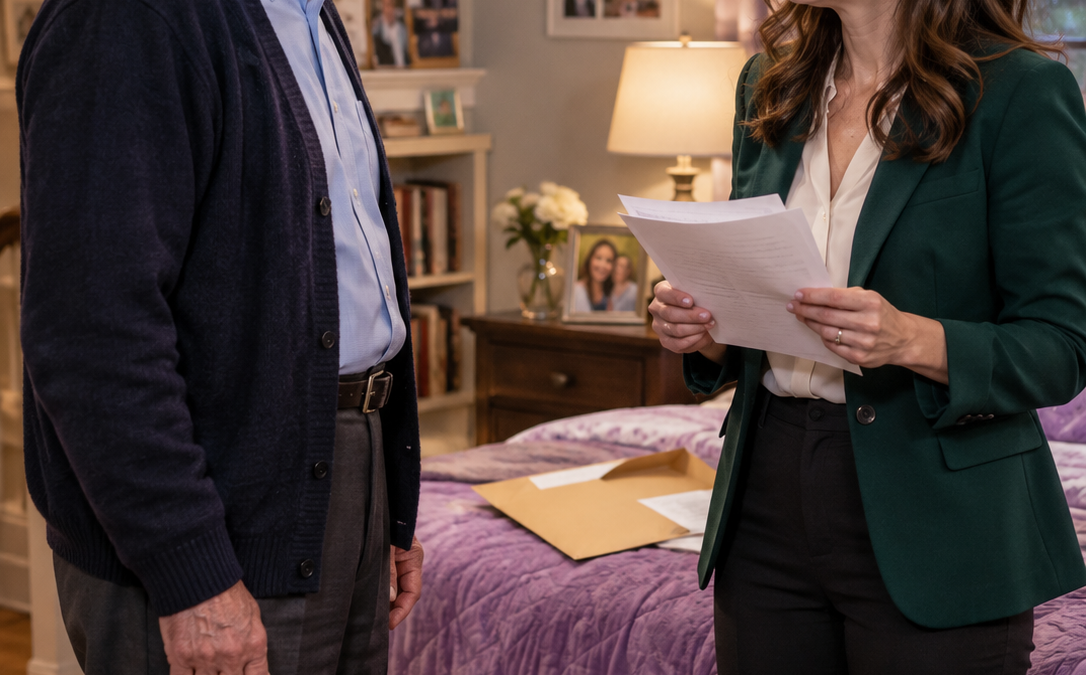
My wife was dying in the hospital, and our daughter flew to Hawaii, saying, “The old woman doesn’t have much time left. I don’t want to waste all my time on her.”
She chose beaches and cocktails instead of a final farewell, betraying everything we had given her. But when she returned and walked into her room, she fainted from the shocking truth that would change her life forever.
Before we continue, please subscribe to the channel and let us know where you’re listening from in the comments.
My thumb hovered over her contact photo. Stella was smiling at some corporate event three years ago, her expression polished and confident. The screen’s glow lit up the dim living room like an accusation. I’d been sitting in my father’s leather chair for twenty minutes, the cold coffee beside me growing a skin. Outside, March rain tapped against the windows. Inside, there was nothing but the grandfather clock marking time.
Tick. Tick. Tick.
The notebook lay open on my lap. I’d written the same words that morning: Day 11. No visit from S.
I wiped my palms on my pants, took a breath, and pressed dial. Seven rings. I counted every one.
“Dad.” Her voice came through with background noise. Music. Laughter. “What’s up?”
Not hello. Not how are you. Just what’s up.
“Stella, I’m calling about your mother.”
“Yeah, I know. Listen, it’s kind of loud here.”
“She’s asking for you every day.”
A burst of laughter erupted behind her. Someone had told a joke. She didn’t even move away from the noise.
“Dad, I told you work is insane right now. Monday’s presentation is—”
“It’s not about work.” My knuckles whitened around the phone. “It’s about your mother lying in a hospital bed.”
“Don’t start with the guilt trip.”
“Guilt trip?” I stood up. I couldn’t sit anymore. “Eleven days, Stella. Eleven days she’s been there.”
“I’m aware of the timeline. Thanks.”
“Are you? Because she keeps watching the door, thinking maybe today.”
“That place is depressing.” Her words slurred slightly. How many drinks had she had? “I can’t handle hospitals. You know that.”
“Your mother handled them just fine when you had pneumonia at fifteen.”
Silence followed.
“That was different.”
“How?”
“I was a kid. I needed—” She stopped herself.
“Needed what? Care? Love? Things she doesn’t need now?”
“I’m thirty-eight years old, Dad. Stop trying to control every move I make.”
The music swelled behind her. Someone called out a name. Trisha, maybe.
“Your mother is dying.”
“I know that.” Irritation sharpened her voice. “You don’t think I know that?”
“Then act like it.”
“You know what? I don’t need this right now. I’m having one night, one single night to relax, and you’re calling me with—”
“With what? The truth?”
The word cut through the noise, and then came the dial tone.
Call ended. 3:47.
I stared at the phone until the screen went black. My reflection stared back, distorted in the dark glass. I threw it onto the couch, where it landed on the floral cushion Minnie had embroidered twenty years ago. Yellow roses. She’d been so proud of those roses.
Eight steps took me to the fireplace. The wooden floor creaked beneath my feet, that same board that had been loose since 1987. Minnie always said we should fix it. We never did.
The mantel held our history in silver frames, arranged chronologically from left to right. Stella at five, gap-toothed and covered in chocolate. Stella at eight, dressed as a sunflower for the school play. Stella at fifteen, wearing a hospital gown while recovering from pneumonia, Minnie asleep in the chair beside her bed at three in the morning.
Then Stella at twenty-three, wearing her college graduation cap and gown, her diploma raised high. Minnie was crying happy tears, mascara running down her cheeks. Stella had her arms around both of us, squeezing us tight.
I picked up that frame. The silver felt cold against my fingers. Fingerprints smudged the glass where Minnie had dusted it last month, back when she could still stand long enough to clean.
The girl in the photograph looked like she loved us.
I studied her face. That smile. Those eyes.
Where did she go?
Slowly, I turned the frame face down on the mantel. My hand stayed there, pressing it flat against the wood. The clock chimed once. Eight o’clock. Outside, the rain had turned to sleet, harder now, tapping like fingernails against the windows.
My phone buzzed from the couch. I didn’t move to check it. Instead, I picked up another frame, the one of Stella at five, and stared at that gap-toothed smile.
The next morning, the elevator lurched to the fourth floor. I’d counted each button lighting up. One. Two. Three. Four. The same number of hours I’d slept the night before.
Four.
The doors opened, and the smell of antiseptic hit me first. It always did. Then came the sounds: machines beeping, nurses talking in low voices, someone’s television playing through a half-open door.
The tulips felt heavy in my hand. Eighteen dollars at the gift shop, yellow and pink, Minnie’s favorites.
Room 412.
The door squeaked when I pushed it open. I forced my face into something that might pass for a smile before Minnie could see me.
“Morning, honey.”
I crossed to her bedside, six steps from the door to the chair. I’d counted them so many times I didn’t need to look anymore.
Her forehead felt paper-thin when I kissed it. Too warm.
“Dewey.” Her voice was soft and weak. “You’re early.”
“Wanted to beat the traffic.”
I found the plastic vase on the windowsill and filled it at the bathroom sink. My hands shook as I arranged the stems. I studied the flowers, trying to hide the trembling, but she noticed everything.
The chair scraped against the linoleum when I pulled it close. I took her hand. Her wedding ring hung loose on her skeletal finger.
“Is Stella coming today?”
The question I’d been dreading since I woke up.
“She sent her love.” My answer came too brightly, too quickly. “Big presentation Monday. Important client.”
Minnie studied my face. Those eyes were still sharp, even in that wasted body.
“Monday’s two days away.”
“You know how she is. Perfectionist. Gets it from you.”
A pause followed. Minnie’s breathing was labored despite the oxygen cannula.
She knew I was lying, but she let it go.
“She works too hard.”
Relief mixed with shame inside my chest.
“Just like her mother.”
The machines continued their steady rhythm. Heart monitor. IV pump. Beyond the window, the sky was gray over the parking lot, bare trees reaching upward like bones.
The purple shawl draped over Minnie’s shoulders was the one Stella had given her five years ago. Minnie wore it every day now. Seven get-well cards lined the side table.
None were from Stella.
“Tell me about yesterday,” Minnie said, shifting slightly. “What did you do after you left?”
“Read a bit. Had soup for dinner. Watched the news.”
“You need to eat better. Real food.”
“I’m fine, honey.”
“You’re getting thin.”
Before I could answer, the door opened. Margaret came in carrying her clipboard, dressed in navy scrubs, moving with the calm confidence she always seemed to possess.
“Morning, Minnie. How’s the pain today?”
“Manageable.”
Margaret checked the monitors, made notes, and adjusted Minnie’s pillows with practiced efficiency.
“That’s good. Pain level, one to ten?”
“Four.”
Margaret glanced at me, then back at Minnie. She made small talk about the weather, the hospital food, and tomorrow’s schedule. Then she caught my eye and tilted her head slightly toward the door.
“I need to stretch my legs,” I told Minnie, squeezing her hand. “Be right back.”
Margaret led me into the corridor, fifteen feet down near the supply closet. She leaned against the wall and crossed her arms.
“Mr. Harvey,” she said quietly. “Can I be frank?”
My defenses went up automatically.
“Of course.”
“I’ve been a nurse fifteen years. Seen a lot of families.” She hesitated. “Your daughter hasn’t called the nurses’ station once.”
She held my gaze.
“Not once in two weeks. Hasn’t asked about medication, prognosis, visiting hours, nothing.”
“She’s very busy. Director-level position. Lots of responsibility.”
“Mr. Harvey.” Margaret’s voice stayed gentle. “Responsibility starts at home.”
“You don’t understand the pressure she’s under.”
“I understand a mother who asks about her daughter every single day and a daughter who doesn’t call.”
The words hung between us. I couldn’t respond. Nothing I could say would make them less true.
“I’m not judging,” Margaret continued, her expression softening. “I just… your wife needs her, and you shouldn’t have to lie.”
I sagged slightly against the wall, caught and exposed. My eyes dropped to the floor tiles, white with gray speckles. One was cracked near my left foot.
“I know.”
The whisper barely made it out.
Margaret squeezed my shoulder once, then walked away. I stood there while nurses and visitors passed, including a man pushing his wife in a wheelchair.
Nobody looked at me.
“Mr. Harvey.”
Dr. Patel approached with a clipboard under his arm, walking with the exhaustion of someone finishing a twelve-hour shift. I straightened and braced myself.
“Do you have a moment?”
“Is it the latest scans?”
“Yes.” He glanced around and moved closer. “I’m afraid the cancer has spread to her liver.”
Metastasis.
The word landed like a stone in my chest.
“What does that mean? For time?”
“We’re looking at three to four weeks. Maybe two months if she responds well to palliative care.”
I repeated the only word I could manage.
“Weeks.”
“I’m very sorry. We’re focused on keeping her comfortable now, managing pain.”
“She doesn’t know yet.”
“She knows it’s progressed. I’ll speak with her this afternoon if you’d like to be present.”
“Yes. I’ll be here.”
His hand rested briefly on my shoulder.
“You should tell your family. Spend time while she’s still lucid.”
“I will.”
He walked away, his white coat disappearing around the corner. I leaned back against the wall. The cold seeped through my shirt. Then I slid down until I was sitting on the hospital floor, my knees drawn up.
Three weeks.
Twenty-one days.
Fifty-four hours.
A tear escaped. I wiped it roughly away with my sleeve. My phone buzzed in my pocket, but I ignored it.
Finally, I stood on shaky legs and returned to room 412. Minnie was dozing. I sat quietly without waking her, her hand resting in mine. Her fingers felt as fragile as bird bones.
I watched her breathe. Eighteen breaths per minute. Each one labored.
Her eyes fluttered open.
“You okay, honey?”
I lied.
“I’m fine. You rest.”
“Tell Stella…” Her voice faded. “Tell her I love her.”
My throat tightened.
“I will.”
She drifted back to sleep.
Three weeks.
And Stella was drinking cocktails.
Gravel crunched beneath my tires when I pulled into the driveway that afternoon. I turned off the engine, and the silence that followed felt as heavy as wet concrete. I sat staring at our house, watching the porch light click on at 3:45, right on schedule. Minnie had set that timer five years ago.
The keys felt cold when I finally pulled them from the ignition, the metal biting into my palm. Inside, the house swallowed me in silence. No radio playing NPR in the kitchen. No Minnie humming off-key while she cooked. Just the furnace clicking on somewhere in the basement.
I stood in the foyer, still wearing my coat, and looked at the stairs stretching to the second floor. Fourteen steps, with a worn path in the carpet runner where thousands of trips had flattened the fibers. My hand found the banister, the one Minnie had refinished ten years ago, sanding and staining it for three weekends straight.
I climbed. At the landing, I turned right and opened the study door. It creaked, that familiar sound welcoming me into a room that smelled of old books, leather, and the lavender sachets Minnie tucked into the corners.
Dust motes floated in the late-afternoon light coming through the window.
Minnie’s touch was everywhere.
I closed the door behind me and turned the lock for the first time in months. I needed privacy for this.
The built-in bookshelf covered the far wall, oak from floor to ceiling. We’d installed it in 1998. The bottom shelf held three dark-brown leather albums, their covers embossed with years: 1987–2000, 2001–2010, and 2011–2020.
I pulled out the middle one. 2001–2010. Stella, ages fourteen to twenty-three.
My father’s desk sat in the corner, its surface scratched from decades of use. The chair springs squeaked when I sat down, a familiar sound that felt like coming home.
I opened the album. Tissue paper protected each page, exactly as Minnie had arranged it.
The first page showed Stella’s eighth-grade graduation in 2003. Braces. A hopeful smile. Her arms wrapped around both of us.
I turned the pages slowly, stopping at an older photograph of Stella at five, sitting on Minnie’s lap at her birthday party. Chocolate cake was smeared across both their faces. Minnie had her arms wrapped around her, and they were laughing. Stella was missing her front tooth. Minnie wore that yellow sundress she loved so much.
Then Stella at eight, standing onstage in the school play. Some production where she’d played a sunflower. Minnie had sewn every petal of that handmade costume. Stella was beaming at the camera, clutching the flowers we’d given her afterward.
At fifteen, there was the hospital photograph from her recovery after pneumonia. Minnie sat asleep in the chair beside her bed. The date stamp showed three in the morning. I must have taken the picture, though I couldn’t even remember doing it.
At twenty, Stella stood on Northwestern’s campus with her arms around both of us. All three of us were squinting into the October sun. Parents’ Weekend. She’d been so excited to show us her dorm.
Then came graduation at twenty-three. Cap and gown. Diploma in hand. Minnie crying those happy tears. Stella’s expression was pure pride and love.
I traced my finger over my daughter’s younger face in one photograph. Carefully, I lifted the corner from its mount and held it close to the desk lamp.
Minnie’s handwriting curved across the bottom.
Our sweet girl, age five.
One photograph slipped from my grip and fluttered to the floor. I bent to retrieve it, the movement feeling like lifting boulders.
In the back of the album, I found a manila envelope tucked into a pocket. Its edges were worn, and Minnie had written a label across the front.
Stella, college letters.
I opened it. Eight letters were inside, bearing various dates from 1997 to 2004. I spread them across the desk chronologically by postmark and picked up the earliest.
September 1997. Freshman year. Her handwriting was still rounded and careful.
I read it aloud to the empty room.
“Mom and Dad, I miss you so much. Classes are hard but exciting. Thank you for everything you sacrificed to send me here. I won’t let you down. Love, your Stella. P.S. Mom, I’m eating vegetables like you made me promise.”
The paper trembled in my hands.
I picked up the next letter.
March 1999. Sophomore year.
“Thanks for the birthday check. Used it for textbooks. Boring, I know. Love you both. XOXO, Stella.”
Shorter, but still warm.
November 2000. Junior year.
“Hi. Sorry I missed Thanksgiving. Got an internship opportunity. We’ll make it up at Christmas. S.”
Even shorter.
April 2004. Postgraduate. This one was just an email printout Minnie had saved.
“Got the promotion. Director track. Moving to bigger apartment. Busy with onboarding. Talk soon.”
I set the letters down in a row and studied their progression. It was like watching someone walk away, growing smaller and more distant until she disappeared.
“The more successful she got, the less she needed us,” I said to the empty room. “And the less she cared.”
The desk drawer stuck when I reached for it. I had to pull twice before it opened. Inside sat a small maroon velvet jewelry box.
I opened it.
A gold locket, heart-shaped and engraved.
D&M, 2000.
Our twenty-fifth anniversary. I’d given it to Minnie. She wore it for years until the chain broke in 2018.
The hinge was stiff when I opened it, tiny and reluctant. Inside was a photograph of baby Stella at three months old, taken in 1988. On the opposite side was a lock of her baby hair, brown and soft as down.
I held the locket in my palm, feeling the gold slowly warm against my skin.
That baby had needed everything from us. We’d fed her, changed her, rocked her through colicky nights. Minnie had barely slept for months.
The contrast struck like lightning.
A baby who needed everything. An adult who wanted nothing from us.
I closed the locket. The small click sounded louder than it should have. Then I set it on the desk beside the letters and photographs, evidence of a transformation I’d been too close to recognize while it was happening.
Where did she go? That little girl who used to run to us after school, bursting with stories?
Minnie had given her everything.
Thirty-eight years of sacrifices I’d watched add up. She’d sold her grandmother’s jewelry to pay for summer camp in 2002. Worked extra tutoring hours to build the college fund. Stayed awake at night sewing costumes for every school play.
We’d paid $200,000 for Northwestern. Bought Stella her first car in 2008, a used but reliable Honda Civic that cost $12,000, money we’d spent two years saving.
She used to write thank you in every letter.
Until she didn’t.
And now Minnie was dying.
Three weeks.
And Stella couldn’t leave a bar.
My voice cracked even though I was alone. I put my head down on the desk, my arms cradling the albums as my shoulders shook.
How long I stayed like that, I couldn’t say. Outside, the sky darkened, and streetlights came on one by one.
Finally, I lifted my head and wiped my eyes roughly. Everything was still spread out before me. Photographs. Letters. The locket.
The archaeology of love lost.
Something hardened in my chest. Not yet solid, but forming.
I stood, leaving everything on the desk except one item: that first letter, the one where Stella had thanked us and promised not to let us down.
I held it up toward the window, studying her teenage handwriting and those promises.
“She made her choice.”
The words hung in the air.
Silence answered.
Sunday crawled by. Three calls to Stella. Three voicemails. No response.
By Monday morning, I was back at Minnie’s bedside before nine. The machines beeped their familiar rhythm. She slept most of the time, waking in fragments to ask questions I couldn’t answer.
At 2:15, Dr. Patel entered, checked the monitors, and made notes. His face told me everything before he spoke.
He motioned me into the hallway.
“The latest labs aren’t good,” he said quietly. “Her liver function is declining rapidly.”
I leaned against the wall, needing its support.
“What does that mean? For time?”
“Two weeks. Maybe three.” He paused. “I’m very sorry.”
The hallway tilted slightly. I steadied myself.
“I need to call my daughter.”
“Yes.” He touched my shoulder briefly. “Don’t wait.”
He walked away, his white coat disappearing around the corner.
My phone showed fifteen percent battery. Critical.
I looked down the corridor and saw the pay phone near the nurses’ station. It was the old-fashioned kind, barely used anymore, mounted on the wall like a relic.
I walked toward it. Thirty feet felt like miles.
Fumbling in my pocket, I found three quarters. Enough for a local call. The receiver was heavy, and the cold metal cord was tangled. I had to untwist it before I could bring the receiver to my ear.
The quarters clinked into the slot, the mechanical sound oddly loud.
I dialed Stella’s number. I knew it by heart.
Five rings. I counted.
“Dad.” Irritation was immediate in her voice. Behind her, I heard voices and shuffling papers. “I’m literally in a meeting. Can this wait?”
My voice shook. I couldn’t control it.
“No, it can’t. Dr. Patel just told me your mother has two weeks. Maybe three.”
Silence.
Then, flatly, “Okay.”
“Okay? Stella, did you hear me? Weeks.”
“Dad, I hear you. But what do you want me to do? Quit my job? Cancel everything?”
“I want you to come see her. Today. Tonight. Please.”
“I have Hawaii on Wednesday.”
Her tone shifted, becoming defensive.
“Two weeks. I’ve been planning this for months.”
At first, I didn’t understand.
“What? Hawaii?”
“Yes.”
“Vacation?”
“Maui. Two weeks. I told you about this. You never—”
“Stella, your mother is dying.”
Her voice went cold, calculated, each word precise.
“Dad, listen. The old woman doesn’t have much time left. That’s a fact. But I’m not going to waste my entire life sitting in that depressing hospital.”
I couldn’t speak. I couldn’t breathe.
She continued.
“I haven’t had a vacation in two years. Two years. I need this for my mental health.”
Finally, I found my voice. It came out as a whisper.
“Old woman. You called your mother an old woman.”
“I’ve been in therapy for three years learning to set boundaries, and I’m setting them. I’m not canceling my trip.”
“When do you leave?”
“Wednesday morning. I’ll visit when I get back. If she’s still— Look, I have to go. Client’s waiting.”
“Stella—”
“We’ll talk when I’m back. Bye.”
Click.
Dial tone.
I stood frozen with the receiver still pressed against my ear, listening to that monotonous buzzing. Thirty seconds passed. Maybe more. I couldn’t move.
“Mr. Harvey?”
Margaret’s voice reached me. Her hand touched my shoulder gently, but I didn’t respond. I couldn’t.
“Mr. Harvey.”
Softer this time.
Slowly, I lowered the receiver. I missed the cradle and had to try again. My hands weren’t working properly.
When I turned to face Margaret, whatever she saw in my expression made her step back.
“What happened? Is it Minnie?”
My voice came out empty and hollow.
“My daughter called her mother the old woman.”
Margaret tried to process what I’d said.
“I’m sorry. What?”
“She said, ‘The old woman doesn’t have much time left,’ and she’s going to Hawaii on Wednesday.”
Margaret’s expression changed from shock to anger.
“She’s what?”
“For two weeks. While her mother dies.”
I slid down the wall in a slow collapse, my back dragging against the cold tile until I was sitting on the hospital corridor floor. I covered my face with both hands, my shoulders shaking with silent crying I couldn’t stop.
Margaret knelt beside me. She kept a respectful distance and didn’t touch me. Other staff passed, glanced over, and kept walking.
Hospitals see grief every day.
“I don’t…” Margaret started, then stopped. “I don’t know what to say.”
I threw out my hands.
“There’s nothing to say.”
“You need to get up. Let me help you to the waiting room.”
“Give me a minute.”
“Take all the time you need.”
Five minutes later, I stood with Margaret’s help.
“I need air.”
“Are you okay to drive?”
I didn’t answer.
I walked to the elevator. Alone inside, I watched the floor numbers illuminate as I descended.
Four. Three. Two. One.
Ground.
My reflection in the steel doors looked like a stranger.
The main entrance doors opened automatically, and the March wind hit me. Cold and sharp. I didn’t feel it.
I stood on the sidewalk outside the hospital, watching people come and go. Visitors. Patients. Staff. Life continued around me like water flowing around a stone.
The parking lot was half full. Gray clouds threatened rain, and the wind lifted newspapers and trash, sending them skittering across the asphalt.
I checked my watch.
2:43.
Twenty-three minutes since Dr. Patel had spoken to me.
Everything had changed in twenty-three minutes.
Something hardened in my chest. It wasn’t grief anymore. It was something colder.
I looked up at the hospital windows on the fourth floor. Minnie was up there dying, and Stella was planning cocktails on a beach.
This could not stand.
I walked to my car, got in, and sat behind the wheel without starting the engine. My phone battery was down to nine percent. I took it out and stared at the screen.
Wednesday. She’d be gone Wednesday.
Two weeks.
I had two weeks.
When I got home at 6:30 that evening, I sat in the dark kitchen for hours. I didn’t turn on the lights. Didn’t eat. Didn’t move. I simply sat there replaying her words.
The old woman.
At nine o’clock, I finally reached for my laptop.
The house was dark except for the streetlight filtering through the window. The kitchen table was cluttered with mail and the empty coffee mug I’d left there that morning. The refrigerator hummed, the only sound in the house.
My face turned blue in the laptop’s glow when the screen came on.
For a long moment, I sat motionless, looking around the kitchen.
Our kitchen.
Minnie’s domain.
Forty years of meals cooked here. Forty years of family dinners, birthday cakes, and morning coffee.
A photograph of Stella caught my eye on the refrigerator. Corporate party. Fake smile. It was held in place by a magnet shaped like a strawberry.
I stood, scraping my chair against the floor.
Four steps to the refrigerator.
I removed the photograph. The magnet clattered to the floor, but I didn’t pick it up. Instead, I opened the junk drawer beside the stove, the one filled with batteries, rubber bands, and twist ties.
I placed the photograph face down inside and closed the drawer.
Then I returned to the table and sat down.
This wasn’t revenge.
This was consequences.
Stella had chosen Hawaii over her dying mother. She’d made that choice herself.
And if money was her language, I would speak that language.
My fingers moved across the keyboard. Two-finger typing, slow but determined.
How to change will Illinois.
The Illinois Legal Aid website came up. Clear, straightforward information.
Disinherit adult child Illinois.
A law firm’s article explained the requirements in detail. Illinois inheritance law. Two witnesses. Both had to be present. They couldn’t be family members. Parents could disinherit adult children if the intention was explicitly stated. An intentional disinheritance clause was recommended.
Best estate attorney Chicago.
Samuel Green’s firm appeared as the third result.
I stopped and stared at the screen.
Samuel Green.
I already knew him. We’d known each other for twenty-five years. Our wives were friends. He’d handled our first will back in 2000.
I could call him tomorrow.
I took notes on an old envelope, my pen scratching against the paper.
Green. Tomorrow. 9:00 a.m. Two witnesses, not family. $620,000. Where?
That last number stared back at me.
Over half a million dollars.
I opened our financial files and found the spreadsheet Minnie had maintained for years. Everything was organized, categorized, and color-coded.
So like her.
Joint savings: $340,000.
House value: $280,000, appraised two years ago.
Life insurance: $15,000, set aside for funeral costs.
Total estate: $620,000.
Stella expected all of it.
She’d probably calculated it herself, planned her future around inheriting the money. Her apartment, her lifestyle, her retirement plan—all of it depended on money she hadn’t earned, money she didn’t deserve.
I picked up my pen and wrote two more words on the envelope.
Educational fund.
Then beneath them:
Minnie’s name.
I sat back and studied the words.
Minnie had been a teacher for forty years. She’d helped thousands of children, changed lives, made differences she never got to see fully.
A fund in her name could help children who appreciated education. Children who valued the opportunities they were given.
Children unlike Stella.
Perfect.
I stood. The wooden floor creaked beneath my feet as I walked to the cabinet above the refrigerator. Its hinge squeaked when I opened it.
Inside was a dusty bottle of Jim Beam, about two-thirds full. It hadn’t been opened since Christmas Day.
I pulled it down and took a short glass from the cupboard. Heavy. Solid. I poured two fingers of whiskey, the amber liquid carrying a harsh smell.
I carried it back to the kitchen table and set it down.
For a while, I didn’t drink. I simply looked at the glass, the laptop, and the envelope covered with my notes.
This was it.
The moment.
The decision.
Minnie would object. She’d preach forgiveness until her last breath. She’d say that family heals, love conquers, and second chances matter.
I picked up the glass and drank the whiskey in one swallow.
I grimaced. I wasn’t a drinker.
The burn spread through my chest, but I felt something else beneath it.
Resolve.
Clarity.
Certainty.
I set the empty glass down, picked up the envelope, and wrote a list.
Tomorrow, Tuesday:
1\. Call Samuel Green. 8:00 a.m.
2\. Emergency appointment.
3\. Bring financial documents.
4\. New will executed same day.
5\. Return to hospital.
Afterward, I went upstairs to the office, returning a few minutes later with a folder. I spread the bank statements, property deed, and existing will across the kitchen table.
The current will was dated 2020.
Standard language. Everything to Stella upon our deaths.
Simple. Expected. Normal.
I took a photograph of it with my phone, evidence of what had existed before I changed what would come next.
Then I placed the documents in a folder and labeled it GREEN with a marker.
I checked the time.
11:15 p.m.
I’d been sitting at that table for more than two hours. I felt no fatigue, only clarity.
Stella was leaving in thirty-six hours. Wednesday morning, 6:30 flight.
I had thirty-six hours to act.
I closed the laptop. The kitchen went dark again, leaving only the streetlight through the window and the hum of the refrigerator.
I gathered the documents and left the whiskey glass on the table.
Minnie would have washed it, cleaned everything up immediately, and put the room back in order. I didn’t.
I picked up the folder, turned toward the stairs, and climbed slowly, my back straight, purpose in every step.
Tomorrow at eight, I’d call Green.
Tomorrow, everything would change.
Wednesday, March 19, began with Stella’s post appearing while I made coffee.
It was an airport selfie, the gate visible behind her, a bright, excited smile on her face.
The caption read:
Off to paradise! Hawaii. Vacation mode. Living my best life.
I took a screenshot and saved it in a folder on my computer labeled Evidence.
Then I drank my coffee cold, collected my documents, and drove to the hospital.
At two that afternoon in Chicago, nine in the morning Hawaii time, another photograph appeared.
Stella had arrived in Maui. A lei hung around her neck. Behind her were palm trees and a brilliant blue sky.
Aloha! Made it!
I was sitting in Minnie’s hospital room when my phone buzzed. I used a colleague’s phone to view Instagram because Stella had blocked me months earlier.
Seeing that, I realized how completely she’d cut me out of her life.
Minnie slept beside me. I held her hand and watched her breathe. Eighteen breaths per minute, each one labored.
Margaret walked past the door, saw my face, and said nothing.
She understood.
Thursday, March 20.
At ten in the morning Hawaii time, nine that evening in Chicago, another photograph appeared.
Stella on Waikiki Beach, wearing a bikini and holding a cocktail with a tiny umbrella.
Living my best life.
I printed it at home that evening and added it to the folder.
The stack was growing.
On Friday, March 24, at three in the afternoon Chicago time, my phone rang while I sat reading to Minnie. Pride and Prejudice, her favorite.
It was Aunt Doris.
“Dewey.” Her voice was sharp with anger. “Janet showed me that internet thing. The Instagram. Stella’s on a beach drinking cocktails.”
I opened my mouth, but nothing came out.
“Don’t you dare defend her. I have eyes.”
“Doris, she had this trip planned.”
“Planned? Planned? You told her Minnie was dying.”
“I did.”
“And she went anyway? What kind of daughter—”
She couldn’t finish. She was too angry.
“I know.”
“You know? Then why are you protecting her? The whole family is talking.”
She hung up.
I stood in the corridor, the phone dead in my hand. The first confrontation. The first shame.
Margaret watched from the nurses’ station. Her expression said everything.
Saturday, March 22.
At eleven in the morning in Hawaii, another series of photographs appeared. Stella snorkeling, holding an underwater camera. Colorful fish surrounded her, and a sea turtle glided through the water.
The underwater world is magical. Sometimes you need to disconnect and just be.
At four that afternoon, Cousin Janet called. She sounded softer than Doris, but she was just as firm.
“Uncle Dewey, people are asking questions. Why isn’t Stella there?”
I attempted an excuse.
“She’s… it’s complicated.”
“It’s not complicated. It’s wrong. Everyone can see it.”
“I know, Janet. I know.”
“Aunt Minnie deserves better.”
The call ended.
Sunday, March 23, and Monday, March 24, blurred together.
I texted Stella twice.
Mom very bad. Not eating. Doctor says organs failing.
Three hours later, she replied.
Okay.
Just okay.
Not how bad. Not should I come home.
My second message went out Monday.
Please call hospital. Nurse Margaret can update you.
Four hours passed before another reply arrived.
Okay.
I took screenshots of both exchanges and added them to the evidence folder.
Minnie’s condition was deteriorating. On Sunday, she managed three spoonfuls of broth. Her pulse was ninety-two, and breathing had become difficult. By Monday, she refused food entirely and slept eighteen hours. The nurses had increased her oxygen.
Tuesday, March 25, at noon, Mrs. Olsen stopped me at the mailbox.
“I saw your Stella’s photos. She’s on vacation.”
There was no judgment in her voice.
Only pity.
Somehow, that was worse.
I nodded.
“Oh, Dewey.”
She touched my arm and walked away.
Pity felt like acid.
At five that evening in Chicago, noon in Hawaii, another photograph appeared. Stella on a sunset cruise. Ocean behind her. Pink sky. Wineglass in hand.
Grateful for this moment. Life is too short not to enjoy.
Life is too short.
I read those words while sitting beside Minnie.
Her life was literally too short now. Weeks. Maybe days.
The irony tasted like bile.
From Wednesday, March 26, through Friday, March 28, the posts kept coming. Twenty-seven in total over the two-week vacation.
Best mai tai ever.
Pearl Harbor Memorial. So moving.
Moving. She could visit a memorial but not her dying mother.
Dinner at Duke’s. Fresh ahi.
Sunrise yoga on the beach. Blessed.
Helicopter tour. Incredible views.
Sometimes you just need to prioritize yourself. Self-care.
My routine became mechanical.
Every morning, I checked Instagram through a borrowed account. Then I drove thirty-five minutes to the hospital and sat with Minnie for ten to twelve hours. I read to her when she was conscious and held her hand while she slept. When she asked about Stella, I lied.
Every evening, I returned home, printed any new photographs or captions, and added them to the folder.
Twenty-seven posts.
Zero calls to the hospital.
By Saturday, March 29, through Monday, March 31, Minnie’s decline was visible to anyone who entered the room.
Saturday, her blood pressure began dropping. Her skin had yellowed from liver failure.
Sunday, she was barely conscious. Once, she whispered a single word.
“Stella.”
I leaned close and lied again.
“Soon, honey. Soon.”
On Monday, Dr. Patel adjusted her pain medication and pulled me aside.
“Days now. Maybe a week.”
Days.
The shame accumulated like snow.
Aunt Doris called again, angrier this time, screaming about family duty. Janet sent another text.
Family asking me to ask you. Where is she?
Mrs. Patterson from church visited Minnie and asked about Stella. I mumbled something about work.
Everyone knew.
Everyone had seen Instagram.
Nobody believed my excuses.
At home, the evidence folder grew thicker. Twenty-seven printed Instagram posts. Two text-message exchanges showing nothing but okay in response. Notes about family calls, dates, times, and accusations. A daily log of Minnie’s condition.
Everything was organized chronologically, with labeled tabs.
Posts.
Messages.
Decline.
Tuesday, April 1.
At two in the afternoon in Hawaii, seven that evening in Chicago, Stella published her last post from paradise.
Last day in paradise. Back to reality tomorrow. But what a perfect two weeks. Blessed recharge. Thankful for this life.
Perfect two weeks.
I sat at home and opened the evidence folder one more time.
Twenty-seven posts.
Zero hospital calls.
Two text messages.
Okay.
And okay.
I did the math. Her plane would land Wednesday around 7:45 p.m. Chicago time. She’d drive home from O’Hare, arrive around nine, go upstairs to her old bedroom, and find what I’d prepared.
I closed the folder and climbed the stairs to her room. I checked everything one more time. It was in place.
Back downstairs, I poured coffee and sat at the kitchen table.
Tomorrow, she’d understand consequences.
Twenty-seven posts. Zero calls. Perfect evidence.
I smiled for the first time in two weeks. It was a cold smile, without joy, just certainty.
Everything was ready.
One week earlier, on Tuesday, March 25, the elevator had climbed toward the eighty-seventh floor of a Chicago office building.
I’d called Samuel Green the day after Stella left for Hawaii.
“Emergency,” I’d told him. “Need to change my will. First available appointment today.”
The elevator doors opened onto the reception area of Green and Associates. Plush carpet. Photographs of the firm on the walls. Twenty years of awards displayed in glass cases.
Linda looked up from her desk and smiled professionally.
“Mr. Harvey. Mr. Green is expecting you.”
I followed her down the corridor to the corner office at the end. Floor-to-ceiling windows overlooked Lake Michigan, stretching gray-blue beneath the morning sun.
Samuel stood when I entered. His handshake was firm, concern warming his eyes.
“Dewey, it’s been, what, two years?”
He gestured toward the leather chair facing his desk.
“You said emergency. Is Minnie…?”
I sat down and placed the brown folder on his desk.
“She has weeks. Maybe days now. That’s part of why I’m here.”
He settled into his chair.
“I’m so sorry. What can I do?”
“I need to change my will completely.”
Samuel pulled a file from his drawer and opened it. Our existing will, dated 2020.
“Your current will leaves everything to Stella. That’s standard.”
“Unless I want her to get nothing.”
His pen stopped moving.
“Zero,” I added.
He looked up.
“Dewey, that’s… you understand that’s permanent?”
“I understand perfectly.”
“She’s your only child. This is a serious decision.” He leaned forward. “Can I ask why?”
I opened the folder and slid the first printout across his mahogany desk.
“Look at this.”
An Instagram post. Airport selfie. Date stamp: March 19, 6:17 a.m.
The caption read:
Off to paradise.
Samuel studied it and looked at me, confused.
“My wife was dying. My daughter went to Hawaii.”
“Maybe she didn’t know how serious—”
“I told her.” My voice stayed level. “Begged her to visit. She called her mother the old woman. Said she didn’t have much time left, so why waste her vacation?”
Silence.
Samuel’s face changed.
I slid more printouts across his desk. Eight posts. Beaches, cocktails, sunsets, smiling selfies.
Then the screenshots of our text messages.
Mom very bad. Organs failing.
Her response:
Okay.
The second message. The same response.
Okay.
Samuel read everything.
Thirty seconds of silence passed before he removed his glasses and pinched the bridge of his nose.
“Twenty-seven posts,” he said quietly.
“No calls to the hospital. Not one. And Minnie asks for her every day. I lie. Tell her Stella’s working. Minnie’s too weak to argue.”
Samuel placed the papers down carefully.
“I watched Stella grow up. I was at her graduation.”
“So did I.” I met his eyes. “I don’t know this person.”
He nodded slowly.
“What do you want to do?”
“Educational fund. Minnie’s name. For kids who deserve it.”
Samuel pulled his keyboard closer and began typing.
“Illinois law allows complete disinheritance if explicitly stated. An intentional disinheritance clause strengthens the will against a challenge.”
His fingers moved across the keys.
“Two non-family witnesses required. We can execute it today.”
“How long?”
“An hour to draft. Then signatures.”
He typed steadily, stopping occasionally to ask questions.
Total estate value?
“Six hundred and twenty thousand.”
House plus savings?
“Yes.”
Fund structure?
“Scholarships.”
On what basis?
“Annual scholarships for Chicago public school students. Low-income families. Kids who want to become teachers.”
Samuel’s typing paused.
“Like Minnie?”
“Exactly like Minnie.”
Thirty minutes passed, filled mostly with the sound of keyboard keys and Samuel’s occasional questions, followed by my short answers.
Finally, he hit print. Pages emerged from the laser printer.
He reviewed them carefully, reading sections aloud.
“I, Dewey Harvey, being of sound mind and body, intentionally make no provision for my daughter, Stella Harvey. My entire estate shall establish the Minnie Harvey Educational Fund. This disinheritance is intentional and deliberate, not due to oversight or omission.”
He looked up.
“This is ironclad. Once signed, it’s binding.”
“Good.”
Samuel pressed the intercom.
“Linda, could you and Ben come in? Need witnesses for a will execution.”
They entered within a minute, both carrying themselves with the professional restraint of people who sensed the occasion’s weight without needing an explanation.
Samuel handed me a pen.
The black ink pen felt heavy in my hand.
“Once you sign, this is binding. Are you certain?”
I positioned the pen over the signature line.
“Never been more certain of anything.”
I signed. A firm signature. No hesitation.
Linda witnessed and signed below my name. Ben witnessed and signed as well.
Samuel notarized the document with his official seal, pressing down hard. The embosser crunched through the paper.
“Done.”
He looked directly at me.
“Stella will receive nothing upon your and Minnie’s deaths.”
I sat back.
Something released inside my chest. Not relief, exactly.
Completion.
“One more thing,” I said, leaning forward. “I want Stella to know why.”
“An executor’s letter. A formal explanation, with a personal letter from you to be given when the will is read. I can arrange that.”
I dictated the points while Samuel took notes on his pad.
“Your mother passed while you were on vacation. You called her the old woman. Twenty-seven posts. Zero calls to her hospital bedside. This is justice, not revenge. You didn’t earn this inheritance through your actions.”
“I’ll draft the formal version and seal it. Attach it to the will.”
Samuel placed everything inside a manila envelope, sealed it, and handed it to me.
I took it. Heavy. Final.
I stood and shook his hand.
“Dewey.” He held the handshake for a moment. “I support this, for what it’s worth.”
“It’s worth everything.”
I walked to the elevator with the folder under my arm and the sealed copy tucked inside my jacket. I could feel its weight against my chest.
I pressed the down button and didn’t look back.
The elevator doors closed. Eighty-seven floors down, and with each floor, I felt lighter.
The weight I’d been carrying was on paper now.
The envelope sat in my desk drawer for six days. Every morning, I’d open the drawer, see it waiting there, and close it again.
On Monday, March 31, Stella’s last Instagram post appeared.
Last day in paradise.
My phone buzzed with a text from her.
Dad, landing tomorrow, 7:45 p.m. Coming straight home. Exhausted.
I studied the message.
Matter-of-fact. No apology. No How’s Mom?
Just logistics.
I typed a reply.
Okay, I’ll be home.
I considered adding more, then deleted the extra words and sent the short version.
Using the colleague’s phone, I looked at Stella’s final post again. Sunset photograph. Wineglass. Perfect two weeks.
The comments underneath were full of encouragement.
So jealous.
Come back refreshed.
You deserve this.
She had no idea.
No clue what waited in her old room.
I’d make sure of it.
That evening, at six, I left for the hospital. I drove the familiar thirty-five-minute route, parked, and went up to the fourth floor.
Room 412.
Minnie was sleeping when I arrived. An oxygen mask covered her face now, upgraded from the cannula. Her breathing was shallow, and the heart monitor beeped slowly.
Her skin had turned yellow. Her liver was failing.
Dr. Patel had warned me on Friday.
I sat beside her bed and took her hand. It was so thin, so cold despite the heated blankets. For ten minutes, I simply held it.
Then she stirred. Her eyes fluttered open. She saw me and tried to smile, but she couldn’t speak through the mask.
I lifted it gently, just for a moment.
“Dewey,” she whispered, barely audible.
“I’m here, honey. I’m always here.”
“Stella?”
The same question.
Every day, always the same question.
I paused.
“She’s coming home tomorrow.”
Relief crossed her face.
“Good.”
“Minnie, I need to tell you something.”
My thumb traced circles over her hand.
“I did something. Changed our will.”
Confusion clouded her eyes.
“What?”
“Stella won’t inherit. It’s going to an education fund. Your name. For kids who need it.”
She processed the words slowly, weakened by pain and medication.
“Stella…”
“She chose Hawaii over you. I can’t forgive that. Maybe you could, but I can’t.”
A tear escaped and slid down her temple.
“My baby.”
I kissed her hand.
“I’m sorry. I had to. She needs to learn consequences.”
Minnie was too weak to argue. She simply closed her eyes, tears still wet on her face.
“I love you,” I whispered. “This is for you. To honor you.”
She didn’t respond. She drifted back to sleep.
I replaced the oxygen mask and sat beside her for another hour, watching her breathe.
Tuesday morning, ten o’clock. Home alone.
I went to the study and opened the desk drawer. The manila envelope Samuel Green had given me was still there. I picked it up and felt its weight.
The moment of truth.
I opened it carefully. Inside was a copy of the will, three pages stapled together, and a single-page letter.
I read the letter one final time.
“Stella,
“If you are reading this, your mother has passed away. You were not there. You were on vacation when she needed you most. You called her the old woman and said her remaining time wasn’t worth interrupting yours.
“I have changed our will. You will inherit nothing. The entire estate, $620,000, has been directed to establish the Minnie Harvey Educational Fund for students who want to become teachers.
“This is not revenge. This is consequence. You did not earn this inheritance through your actions.
“Your father, Dewey Harvey.”
I set the letter down and found a new manila envelope, a large one. With a black marker, I wrote across the front:
OPEN IMMEDIATELY.
I placed the will copy and letter inside, sealed it, and held it in my hands.
The final moment.
The point of no return.
This was it.
At three in the afternoon, sunlight slanted through the windows as I climbed the stairs to Stella’s room. The door was closed. I hadn’t been inside for months.
I pushed it open.
Everything was frozen in time.
The twin bed still had the purple comforter she’d picked out when she was sixteen. Her desk held old college textbooks. Posters covered the walls, bands from the 2000s and movies she’d loved.
Photographs were everywhere. High school friends. Family vacations. Debate team pictures.
The trophy shelf displayed her volleyball achievements and academic awards. Everything she’d once been proud of, everything she’d been before.
Dust covered the surfaces. I didn’t clean in there often. I couldn’t bring myself to change anything.
This was the room of a loving daughter.
That person didn’t exist anymore.
I walked to the bed and placed the envelope in the center of the purple pillow. I smoothed it flat, the white paper standing out against the fabric.
Impossible to miss.
I stepped back and looked at it.
Done.
I left the door half-open so she’d see the light from the hallway and go inside. Then I went downstairs.
Evening came.
At six o’clock, I made coffee but didn’t drink it. I sat in the living room in the same armchair where I’d made that first phone call three weeks earlier.
It felt like three years.
I checked the clock.
6:15.
Stella’s plane would land at 7:45. She’d be home by 8:30, maybe nine.
I turned on the television but didn’t watch it.
At seven, she was still in the air somewhere over the Pacific or the Midwest, heading home.
At 7:45, my phone buzzed.
Landed. Getting Uber.
I typed back:
Okay.
At 8:15, I was still waiting. The house was quiet except for the murmur of the television and the ticking clock.
Rain began falling outside, drops tapping against the windows. My breathing stayed steady. I wasn’t nervous.
I was ready.
I’d been ready for two weeks.
Then headlights swept across the living room wall.
A car door slammed.
Her key entered the lock.
I didn’t move from my chair.
The key turned, metal scraping against metal. The front door pushed open, its hinges creaking.
Stella entered, pulling her suitcase behind her. The wheels bumped over the threshold. She dropped her backpack with a heavy thud and kicked the door closed with her foot.
The suitcase caught on the entry rug. She struggled with it, muttering something under her breath.
Finally, she looked toward the living room.
She saw me sitting there and barely acknowledged me.
“Hi, Dad.”
She didn’t look directly at me.
“Where’s Mom?”
I didn’t stand.
“Hospital.”
“Where she’s been?”
“Dad, don’t start.” Annoyance sharpened her voice. “I’m exhausted. Nine-hour flight.”
“I’m sure.”
She caught my tone and immediately became defensive.
“Look, I’ll visit tomorrow, okay? I need sleep.”
I said nothing.
I just watched her.
She shifted uncomfortably.
“Whatever. I’m going to bed.”
No hug. No question about Minnie’s condition. Just dismissal.
She left her suitcase in the entryway and took only her backpack. Then she started climbing the stairs.
Fourteen steps.
I heard every one.
Her hand slid along the banister. Her footsteps reached the landing, then turned right toward her room.
The door was half-open, hallway light spilling through the gap.
She pushed it fully open.
I sat downstairs and listened.
Five seconds of silence.
Then her backpack hit the floor.
The light switch clicked, flooding the room with brightness.
More silence.
Footsteps.
Three steps toward the bed.
Paper rustled.
The envelope.
A tearing sound as she ripped it open.
Pages rustled again.
Then silence.
Ten seconds.
Twenty.
“What?”
Her voice came from upstairs.
Louder this time.
“YOU WILL INHERIT NOTHING?”
A pause.
“This is a joke!”
I could hear her reading aloud now, her voice rising with every word.
“Educational fund? Six hundred and twenty thousand dollars?”
Then she was shouting.
“What is this? This can’t be real! This can’t be—”
A sudden, heavy thud interrupted her.
The sound of a body hitting the floor.
I set my coffee cup down and stood slowly.
Then I walked to the stairs.
One step at a time, I climbed all fourteen. At the landing, I turned right and walked to her doorway.
Stella was on the floor, lying on her side. Papers were scattered around her, and one hand still clutched the letter.
Her eyes were closed. She wasn’t moving, but she was breathing. Shallow, yet steady.
I entered and knelt beside her, lowering one knee to the floor. I checked the pulse at her neck.
Steady.
She’d fainted.
“Stella. Stella.”
I patted her cheeks lightly, but she didn’t respond. I went to the bathroom, filled a glass with cold water, returned, and sprinkled some onto her face.
She stirred. Her eyelids fluttered. A confused groan escaped her throat.
Her eyes opened, unfocused at first, then found me above her.
Disorientation crossed her face.
“Where am I?”
Then the memory came flooding back.
Her eyes widened, and she scrambled to sit up too quickly. Dizziness overtook her. I steadied her with a hand on her shoulder, mechanically, without warmth.
“What?” she whispered. “What happened?”
“You fainted. Twenty seconds, maybe.”
Her gaze fell to the papers.
The will.
She grabbed my arm, wild-eyed.
“Dad, that letter, that will. Tell me it’s not real.”
I looked directly at her.
“It’s real.”
“You can’t. You can’t do this!”
“I already did. March twenty-fifth. It’s legal. It’s done.”
Her voice cracked.
“No. No, this is fake. You’re trying to scare me.”
“It’s not fake.”
“Dad, I’m sorry, okay?” She was bargaining now. “I’ll visit Mom tomorrow. I promise.”
“Tomorrow’s too late.”
“You can’t just cut me out. I’m your daughter.”
“Are you?”
The question stopped her cold.
She stared at me, her mouth opening without a sound. She was still sitting on the floor, so I helped her slide backward until she could lean against the bed.
She was shaking.
She picked up the will copy and read it again.
$620,000.
Educational fund.
Intentional disinheritance.
She looked at me with disbelief.
“You’re serious.”
“Completely.”
She clutched the will until her knuckles turned white. Her eyes filled with something I couldn’t identify yet.
Tears or rage.
I stood.
She sat on the floor surrounded by the papers that had just destroyed the future she’d imagined.
Silence stretched between us like a chasm.
Her mouth opened again.
She struggled to her feet, grabbed the will, and waved it in front of me.
“This isn’t legal!”
I crossed my arms and remained in the doorway.
“It’s completely legal.”
“You can’t just cut me out.”
“I can. I did.”
“I’ll contest it. Any lawyer will tell you—”
“Samuel Green drafted it. Best estate attorney in Chicago. Airtight.”
She shifted tactics.
“You’re doing this to punish me.”
“I’m doing this because you earned it.”
“I’ve been busy! You don’t understand my life.”
My voice stayed level.
“I understand perfectly.”
“I’m your daughter.” Desperation crept into her tone. “That has to mean something.”
“You were my daughter.”
Past tense.
The words hit her like a slap.
“How can you say that?”
“How could you call your mother the old woman?”
She froze.
“I didn’t mean it like that. You’re twisting my words.”
“March seventeenth, 2:23 p.m.,” I said, reciting it precisely. “You said, ‘The old woman doesn’t have much time left. I’m not wasting mine sitting in a hospital.’”
“I was stressed. Work pressure. You don’t know what it’s like.”
“You were at a business meeting, then went to Hawaii for two weeks.”
“I needed that vacation! Mental health. My therapist said—”
I cut her off with a raised hand.
“Stop.”
She changed tactics again, this time attacking.
“You’re not perfect either! You worked all the time when I was growing up.”
“I worked overtime to pay your $200,000 Northwestern tuition.”
“You chose that!”
“I chose to give you opportunities.”
My voice hardened.
“You chose cocktails over your dying mother.”
The words struck directly. She staggered as though I’d physically hit her.
She paced the room, pulling at her hair. She picked up the papers and threw them down again. Then, with a sudden change in her expression, she dropped to her knees and grabbed my pant leg.
“Daddy, please. I’m sorry. I was wrong.”
I looked down at her, unmoved.
She tried to kiss my hand.
I pulled away.
“I’ll change,” she said desperately. “I’ll visit Mom every day.”
“Too late for that.”
“I’ll go to the hospital right now.”
“And say what?”
“Whatever you want. I’ll apologize.”
Tears were flowing now. Real ones this time.
“I’ll make it right. Just undo the will.”
I watched her.
“You’re not sorry you hurt her. You’re sorry you lost money.”
“That’s not true!”
“Every word you say proves I made the right choice.”
“I’ll take care of you both. I promise!”
“If you loved us, you’d have been there. You weren’t.”
She collapsed, not fainting this time, but defeated. She sat on the floor with the papers scattered around her.
“What do I do?” Her voice was small. “Tell me what to do.”
“Nothing. It’s done.”
I turned and walked toward the door.
“Where are you going?”
She scrambled to her feet and followed me desperately, refusing to let me leave.
I descended the stairs, all fourteen steps. She stumbled after me.
Back in the living room, I sat in my chair. Stella remained standing in the doorway, disheveled, the papers still clutched in her hands.
Rain drummed harder against the windows.
The clock showed 9:10.
I reached into the side table drawer and pulled out the manila folder.
She saw it but didn’t understand.
Not yet.
I opened the folder and took out the first printout, placing it faceup on the coffee table so she could see it.
Then another.
And another.
I arranged them in neat rows.
At first, she watched in confusion. Then she recognized the photographs.
Her own posts.
The color drained from her face.
“March nineteenth. Six in the morning. O’Hare Airport.”
I pointed to the first photograph.
“Off to paradise.”
She said nothing.
“Your mother couldn’t swallow water that morning.”
I placed the next post beside it.
“March twentieth. Waikiki Beach. You in a bikini with a cocktail.”
The caption stared up from the coffee table.
Living my best life.
“That day, they put a catheter in your mother. She couldn’t walk to the bathroom anymore.”
I placed another photograph on the table.
The snorkeling picture.
A sea turtle.
“March twenty-second. Underwater world is magical. That’s what you wrote.”
My finger tapped the date.
“That day, your mother said to me, ‘Dewey, I want to see Stella one last time.’”
I kept going, methodical and relentless.
Beach.
Sunset.
Restaurant meal.
Helicopter tour.
Yoga pose.
Cocktails with strangers.
Each beautiful moment paired with another step in her mother’s deterioration.
“March twenty-fifth. You’re parasailing. She stopped eating solid food.”
Another photograph.
“March twenty-eighth. You’re at a luau. She couldn’t stay conscious more than four hours.”
I picked up the final printout.
“April first. Your last post.”
Perfect two weeks.
“Her liver was failing.”
Stella picked up one of the photographs. Her hands trembled.
“Dad, stop.”
I didn’t stop.
She sat on the edge of the couch, unable to look away. She covered her face with her hands, then peeked through her fingers at the coffee table, now covered with evidence.
I pulled out my phone and showed her our text exchange.
“March twenty-third. I texted, ‘Mom very bad. Organs failing. Doctor says days.’”
I scrolled down.
“Your reply. Okay.”
Another exchange.
“March twenty-sixth. I texted, ‘Please call hospital. Nurse Margaret can update you.’”
I scrolled again.
“Your reply. Okay.”
I set the phone down.
“Twenty-seven posts. Thirty-eight comments on other people’s photos. Zero calls to the hospital. Zero questions about medication, prognosis, pain levels. Zero.”
“I thought…” Her voice shook. “I thought I had time.”
“You had time for helicopter tours.”
“I was going to visit when I got back.”
“When was that?”
I looked directly at her.
“When she was already gone?”
Silence.
I stood and walked to the window, looking out at the dark, rainy street.
Ten seconds passed.
She watched my back.
Then I spoke without turning.
“Your mother died today.”
I paused to let the words settle.
“6:30 this evening.”
“What?”
Confusion filled her voice.
“What did you say?”
I turned to face her.
“Minnie died while you were on the plane from Hawaii.”
“No.”
She shook her head.
“No, you’re lying. You’re trying to punish me more. She can’t be. I just talked to you yesterday.”
“The hospital called at 6:15. I got there by 6:25.”
The details made it real. I needed her to understand that this wasn’t another argument or a punishment I could take back.
“She was conscious for the last five minutes. On morphine, but aware. Margaret was there. The nurse you never called.”
Stella stared at me.
“Aunt Doris made it in time. Drove from Springfield. Mrs. Olsen came to say goodbye.”
I swallowed.
“Everyone who mattered was there.”
A pause.
“Except you.”
Her voice cracked.
“What? What did she say? The last thing she said?”
I let the silence hold.
Then I told her.
“Where’s Stella?”
Ten seconds passed.
Twenty.
“Those were her last words. A question, not a statement.”
Stella’s face crumpled.
“I held her hand and lied,” I continued. “I told her, ‘She’s coming, honey. She’s on her way.’”
My own voice had grown quieter.
“Minnie closed her eyes. Waited. You didn’t come.”
I looked at the daughter who had once been our whole world.
“She stopped breathing at 6:31.”
Stella slid from the couch to the floor.
Not manipulation this time.
Real.
A terrible, keening sound escaped her throat.
“No.”
She rocked back and forth.
“No. No. No.”
“I didn’t know,” she sobbed. “I didn’t know.”
“You didn’t ask.”
She collapsed into the prison of her own vacation, twenty-seven printed posts scattered across the floor around her.
Her mother’s last word had been her name.
A question she’d never answer.
I stood there, looking down at her.
She’d lost more than money that night.
At seven the following morning, I descended the stairs and found Stella still on the couch where I’d left her. She was wearing yesterday’s clothes, her eyes red and swollen.
She’d been awake all night.
I walked past her into the kitchen and made coffee.
One cup.
She appeared in the doorway and opened her mouth to speak.
I raised my hand.
“Stop.”
She closed her mouth.
“The funeral is Saturday, April fifth. Eleven in the morning. Morrison Funeral Home on Maple Street.”
I paused.
“You can come or not. Your choice.”
She stood motionless.
“After the funeral, you have two days to remove your belongings from this house. Sunday and Monday. Then I’m changing the locks.”
“Dad, can we talk about—”
“No.”
“Everything’s been said about Mom. About us? About—”
“There is no us anymore, Stella.”
I met her eyes.
“There’s a father notifying a daughter about a funeral. That’s all.”
“Don’t say that.”
“April fifth. Eleven in the morning. That’s all you need to know.”
I walked past her and went upstairs, leaving her standing in the kitchen.
Saturday, April 5.
Eleven in the morning.
Morrison Funeral Home.
Sixty people came.
There were tulips everywhere, Minnie’s favorites. Yellow and pink arrangements surrounded the simple oak casket, which remained closed.
Photographs of Minnie stood on easels around the room. Minnie as a young teacher. Minnie with me on our wedding day. Minnie holding baby Stella in her arms.
A lifetime displayed in frames.
Stella arrived alone, wearing a black dress. She sat in the back row, not with the family.
People noticed. They whispered.
Aunt Doris walked past her without acknowledgment. Cousin Janet gave her a sad look but kept her distance.
I stood at the podium, composed.
“Minnie Harvey was the best person I ever knew.”
I looked over the room filled with people who’d come to remember her.
“Forty-two years of marriage, and every day I thanked fate for her. She was a teacher, not just in school, but in life. She taught love, patience, forgiveness. She believed in people even when they didn’t deserve it.”
Some people glanced toward Stella.
“Minnie made the world better than she found it. Now her name will live on in the hearts of children she helps through the educational fund we created. She always said, ‘Children are our future.’ Now her legacy will help that future.”
I returned to my seat.
I made no mention of Stella.
After the service, people embraced me and offered condolences. Former colleagues, old friends, neighbors, and family members spoke about Minnie’s kindness and the differences she’d made in their lives.
Stella stood apart.
Isolated.
Eventually, she approached me tentatively. I accepted her hug, but it was brief and mechanical, without warmth. I said nothing to her and turned to speak with someone else.
She was excluded from every conversation.
At the cemetery, she stayed at a distance during the graveside service. She didn’t approach the grave until everyone else had left.
I watched her from my car.
Then I drove away.
Sunday afternoon, April 6.
Stella was in her old room packing when I appeared in the doorway. I stood with my arms crossed and watched.
I didn’t help.
I didn’t speak unless she spoke to me.
“You have until Monday, six o’clock.”
She nodded and continued packing.
On Monday at 5:30, she carried her last two suitcases downstairs. She stopped at the front door and turned to face me.
“Dad, I know you’re angry, but I’m still your daughter. That has to mean something.”
“You were my daughter.”
Past tense.
“People make mistakes.”
“A mistake is forgetting a birthday. Missing a meeting.”
I kept my voice level.
“What you did wasn’t a mistake. It was a choice.”
“I chose wrong. I know that now.”
“You chose cocktails over your mother. Live with that choice.”
She stood there for a moment, searching my face.
Then came one final attempt.
“I’ll contest the will in court.”
A cold smile touched my face.
“Try it.”
She stared at me.
“Samuel Green drafted it. I have evidence. Your posts. Your text messages. Witness statements from nurses and family.”
I paused.
“The court will see exactly who you are. But if you want public humiliation, go ahead.”
Defeat settled over her expression.
“I… I regret everything.”
“I regret what you became.”
She lowered her eyes.
“Goodbye, Stella.”
She opened the door and paused, hoping for something.
A different word. An embrace. Some sign that I might change my mind.
I said nothing.
She stepped outside.
I closed the door behind her and locked it.
A moment later, I heard her car start and drive away.
Friday, April 11.
One week later.
I was checking the mail when I found an envelope from Green and Associates.
I opened it in the garden.
Inside was a letter from Samuel.
“Dear Dewey,
“Pleased to inform you that the Minnie Harvey Educational Fund has been officially registered with the State of Illinois. Tax-exempt status approved.
“Fund value: $620,000.
“First scholarships to be awarded September 2025.
“Fifteen recipients, $5,000 each. Annual, renewable.
“First recipient pending: Maria Gonzalez, fifteen. Daughter of a cleaning service worker. Dreams of becoming an English teacher. 4.0 GPA. Volunteer tutor.
“Exactly who Minnie would have chosen.
“Your wife’s legacy begins.
“Samuel.”
I read the letter twice.
Then I sat on the garden bench where Minnie and I had shared coffee every morning for forty years.
Spring had finally arrived. Sunshine warmed the garden, birds sang in the trees, and the April air was soft against my face.
I took a photograph from my wallet.
It was forty years old.
Minnie at twenty-five. Before Stella. Before cancer. Before everything.
Just us.
I looked at the photograph and smiled.
The first genuine smile I’d managed in a month.
“I did it, honey.”
I spoke to her as though she were sitting beside me.
“I know you wanted forgiveness, but I’m not you. I couldn’t forgive someone who treated you that way.”
I looked down at Samuel’s letter again.
“Now your name helps children. Real children who appreciate opportunities. Stella lost an inheritance. They gain futures.”
I paused.
“That’s justice. That’s right.”
The photograph showed Minnie at twenty-five, her beautiful smile untouched by everything that would come later.
I smiled back at her.
Spring sunlight warmed my face, the first warmth I’d truly felt in weeks.
Minnie’s name would help fifteen children this year.
That was enough.
Justice wasn’t revenge.
It was consequences.
And consequences had arrived.
If you liked this story, please like this video, subscribe to the channel, and share your impressions in the comments. To listen to the next story, click on the box on the left. Thank you for watching.








