My stepdaughter called me a homewrecker and screamed that i “stole her mom” — so i moved out that night without a word. she finally got me out of their lives… but she’ll never forget the look on her mother’s face when she realized i was gone.
My name’s Owen, and I’m 39. I’ve never been one for drama. Never needed to be the center of attention. I’m more of a fix-it-with-my-hands kind of guy. I grew up with three brothers, a quiet mom, and a father who said little but meant every word. You could say I was raised to value peace over conflict, patience over pride.
So when I met Angela, it wasn’t some grand romantic whirlwind. It was a steady, slow burn. She was kind, warm, and grounded, a single mom with a daughter already in high school, still carrying the weight of a messy divorce that had left cracks in her family. But we clicked. Not just sparks and butterflies, but something solid. Something real.
I didn’t come into Angela’s life trying to replace anyone, least of all her daughter’s father. I knew better than that. Her daughter, Lacy, was 16 when I met her. She had her mom’s green eyes, but that was about where the similarities ended. Where Angela was calm and thoughtful, Lacy was fire and fury, all sharp edges and standoffish glares.
I told myself it made sense. Teenagers were rough. A new guy in the house? Of course she’d be suspicious. Her parents had divorced just a year earlier, and I knew I had to earn her trust. So I did what I always do. I tried quietly, consistently. I offered rides when Angela had late shifts. I remembered her favorite ice cream. I fixed the lock on her bedroom door without being asked. Nothing grand, just steady.
But with Lacy, nothing I did ever landed quite right. There was always this layer of coldness, like every time I entered a room, I was stepping into a silent standoff. I didn’t push it. I figured time would soften things. People grow up. Wounds heal. That’s what I kept telling myself.
Angela noticed the tension, of course. She’d talk to Lacy behind closed doors, come out with this worried look on her face, then brush it off with a soft smile.
“She just needs time,” she’d say. “It’s not you, Owen. She’s still holding on to a lot of anger from the divorce.”
And I believed her. I wanted to.
So I stayed patient for months, even when Lacy would make little jabs at dinner, muttering, “Must be nice to play house with someone else’s family.” Even when she refused to sit in the car if I was driving. Even when she “accidentally” let our dog out the side gate after I’d spent hours putting in a new latch.
I chalked it all up to grief, anger, and youth. I didn’t want to be the reason Angela had more stress.
But things shifted after I moved in.
Angela and I had been dating for nearly two years by then, and we decided it was time. The lease on my apartment was up, and the idea of building something real, something shared, felt right. Angela seemed happy. We painted the guest room together. We even talked about maybe getting a place of our own in a couple of years when Lacy went off to college.
Lacy, on the other hand, acted like I’d personally declared war on her life.
The day I moved in, she didn’t say a single word. She just watched me from the top of the stairs like I was hauling in boxes full of poison. I tried to joke, offered to let her have first dibs on the leftovers in the fridge. She didn’t even smirk. Just turned and walked off like I wasn’t there.
I should have taken that moment more seriously.
The first real blowup happened two weeks later. It was over something stupid: leftover Chinese food.
I’d written my name on a container of sesame chicken, not because I was being petty, but because I was planning to bring it for lunch the next day. But it was gone by morning. When I asked Angela, she said she hadn’t touched it.
Lacy, standing a few feet away scrolling on her phone, just smirked and said, “Oops. Must have been the home-wrecker ghost.”
Angela’s head snapped around toward Lacy, but Lacy just rolled her eyes and walked off.
I stood there holding an empty takeout container, more stunned than anything. It wasn’t the food. It wasn’t even the insult. It was the way she said it, like she’d been waiting to say it, like it was something she’d been chewing on for months. And now she finally felt bold enough to spit it out.
Angela apologized. Said she’d talked to her. Maybe she did, but things only got colder from there.
It wasn’t just the name-calling, though that certainly escalated. It was the quiet war. Doors slamming just a little too hard when I was on a call. My tools accidentally knocked off the shelf in the garage. Her blasting music when Angela and I tried to have a quiet night in.
One night, she unplugged the Wi-Fi in the middle of a movie we were watching, then claimed she was trying to vacuum. The plug was three rooms away from any carpet.
Every time I brought it up, Angela looked more and more tired.
“She’s a teenager,” she’d say. “She’s acting out. I’m doing my best, Owen.”
And I knew she was. She was stuck between the man she loved and the daughter she was trying not to lose. I never wanted to put her in that position, so I kept swallowing it, telling myself I was the adult here. I could take it.
But what I didn’t realize was that when someone keeps stomping on your patience, it stops looking like grace. It starts looking like weakness.
The tipping point came on a Sunday afternoon.
I was out back replacing a broken fence panel. Angela had run to the store, and Lacy came outside holding her phone in one hand and a half-empty iced coffee in the other. She watched me work for a minute, then said, “You know, she was happier before you showed up.”
I didn’t respond. I just kept drilling, but my heart skipped.
It wasn’t the first time she’d thrown something like that at me, but this time she wasn’t snarking. She was serious. Her voice had weight.
“My mom and dad weren’t perfect,” she continued, stepping onto the grass. “But they were our family. And then you came in smiling, fixing stuff, playing pretend, acting like you belong.”
I set the drill down and turned to her calmly.
“I’ve never tried to replace anyone, Lacy.”
She scoffed. “No, you just slid in like a parasite. Quiet, harmless, sucking everything out of what we had.”
That one hit differently.
“You’re calling me a home-wrecker?” I asked.
She didn’t blink. “Yeah, I am. You stole my mom. And you know what? I hope you rot alone when she finally wakes up and realizes what she gave up for you.”
I stood there in silence. Not because I was stunned. I wasn’t anymore. But because something inside me shifted, like a lightbulb finally clicking on after years of flickering.
She didn’t just dislike me. She despised me.
She wasn’t lashing out because she was hurt. She truly believed I didn’t belong. And for the first time, I realized maybe she was right.
I didn’t say another word. I didn’t defend myself. I didn’t wait for Angela to come home. I just walked inside, packed a bag, grabbed my keys, and left. Not in anger. Not in spite. Just done.
The last thing I heard before I closed the door behind me was Lacy calling out, “Finally.”
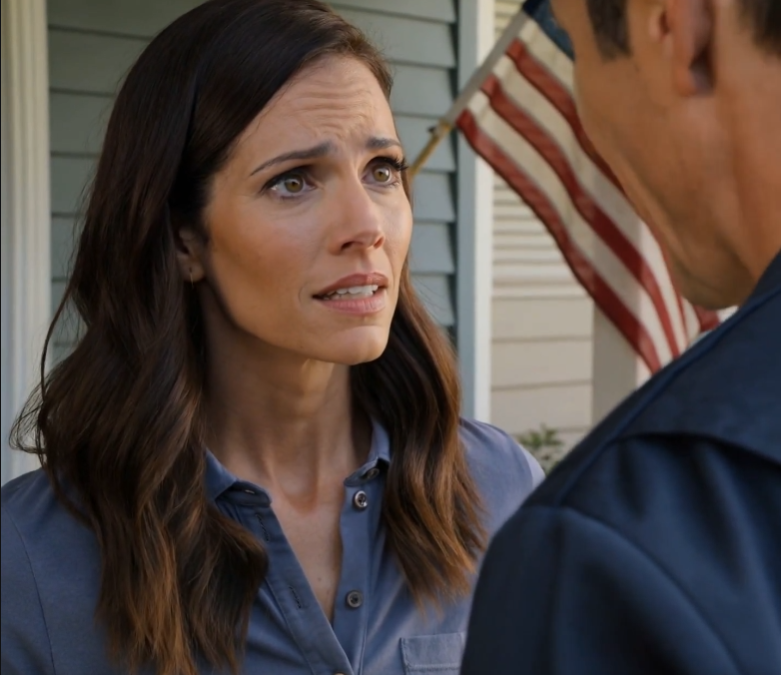
But what she didn’t see, what she couldn’t have predicted, was the look on her mother’s face when she returned home to find nothing but a single note on the kitchen counter and an empty house.
That was just the beginning.
Angela called me 17 times that night. I let every call go to voicemail. I wasn’t doing it to punish her. I wasn’t trying to make a statement. I just couldn’t.
I was sitting in my old truck in a grocery store parking lot, trying to make sense of everything. I’d driven without thinking, past the city limits, past anything familiar, until the sun dipped low and the ache in my chest grew louder than the hum of the engine.
I didn’t cry. I’m not really a crying kind of guy. But I stared at my hands gripping the wheel and felt more hollow than I ever had in my life.
Her first message was panicked. “Owen, where are you? Are you okay? Please call me.”
The second was confused. “Did something happen? You didn’t say anything. You just left.”
Then the third came, quieter. “Lacy said something, didn’t she? I’ll talk to her. Please come home. We can fix this.”
Home. The word felt wrong now, crooked like a door hanging off one hinge.
I checked into a cheap motel off the highway. Ate a vending machine granola bar for dinner. Tried to sleep. Couldn’t. Every time I closed my eyes, I saw Lacy’s face. Not angry. Victorious.
Angela showed up at my work the next morning. I wasn’t surprised. She knew my schedule better than anyone. She waited in the parking lot, arms crossed, eyes red. I almost turned back around, but something in me said I owed her a conversation. At least one.
She walked up slowly, like I was some wild animal she was afraid of scaring off.
“Can we talk?”
I nodded and followed her to her car. She sat behind the wheel for a full minute before speaking.
“She told me what she said. All of it.”
I didn’t respond.
“I’m not going to defend her,” she said softly. “I can’t. What she said was cruel.”
Another pause.
“But she’s my daughter.”
I finally looked at her. “I never asked you to choose.”
She turned to me, her voice breaking.
“But you did. Every time you swallowed your pride. Every time you let her treat you like that. You gave me the choice, and I chose not to make it because I didn’t want to lose either of you.”
I wanted to say I understood, but I didn’t. Not really. I couldn’t imagine watching someone you love be disrespected again and again and just letting it happen.
“She was hurting,” Angela said. “Still is.”
So was I.
We didn’t speak for a long time after that. She eventually drove away, and I went back to work.
The weeks that followed were quiet. I stayed in that motel longer than I should have. Spent most nights on job sites, driving back late with sore muscles and an empty stomach. I told no one, not even my brother, who I usually talked to every Sunday.
I didn’t want pity. I didn’t want advice. I just wanted to disappear for a while.
But Angela didn’t give up. She texted every few days. Updates. Apologies.
“We miss you.”
“She’s calmed down.”
“Can we meet for coffee?”
I didn’t answer most of them.
Then came the message that made my blood run cold.
“She’s been seeing her dad again.”
Lacy’s father, Ryan, hadn’t been around much in the two years I’d been with Angela. From what I knew, he was the charming kind of irresponsible, the type who made big promises, then vanished when real life got hard.
But Lacy adored him. Even when he bailed on her birthday, even when he forgot to pick her up from the airport that one time, she still lit up whenever he resurfaced.
Apparently, he’d resurfaced.
Angela told me Lacy had reached out to him, told him she wanted to reconnect, that she felt smothered at home, that things had been better before Owen.
I wasn’t surprised, but I was disappointed. Not just in her. In Angela. Because instead of setting boundaries, instead of reminding her daughter what disrespect looked like, she let him back in.
“She wants to spend the weekend at his place,” Angela said over the phone. “I’m not thrilled about it, but I can’t say no. Not now.”
I stayed silent.
“She’s blaming me, too, now,” she added. “She thinks I let you leave because I chose you over her. I didn’t. I just… I didn’t know how to fix it.”
And there it was. The thing I’d felt but never quite had the words for.
Angela didn’t choose anyone. She just stood still while everything fell apart around her.
A week later, I got an email. It was from Lacy.
You’re not the victim here. You knew what you were doing the whole time. You came into our lives and acted like you were doing us a favor, but all you did was tear things apart. You’re pathetic.
No greeting. No signature. Just those three sentences.
I sat with that message open for ten full minutes, reading it over and over, trying to decide if it was bait or a cry for help or just truth.
In the end, I didn’t reply. I didn’t even delete it. I saved it because something inside me had started to shift.
The anger that had been buried beneath all that patience was starting to grow teeth, and I wasn’t planning on biting back yet. Not yet.
But I was done playing the ghost.
It was the end of September when everything changed. I’d been gone just over six weeks, living out of that motel and slowly starting to put the pieces of my life back together.
I found a small rental on the edge of town, a fixer-upper, the kind of place I could lose myself in with a hammer and paintbrush. It wasn’t much, but it was mine. Quiet. Undisturbed. Safe.
Angela hadn’t reached out in a while. Her texts had gone from frequent to polite, then faded into silence. I figured it was for the best. Maybe she was letting go. Maybe Lacy had finally gotten what she wanted, a clean break.
But then came the voicemail. Not from Angela. From my bank.
“Hi, Mr. Mallister. This is Dan from First River. Just calling to confirm a transfer that was initiated this morning. It’s a bit unusual, flagged for review due to the amount and the linked external account. Wanted to make sure you authorized it. Give us a call back when you can.”
I frowned. I hadn’t touched that account in weeks.
It was the shared fund Angela and I had opened back when we were planning on buying a house together. Just a savings buffer, something we both contributed to monthly. We’d used it for the fence, some appliance repairs, and groceries now and then.
There was a little over $14,000 in it when I last checked.
I called the bank.
The transfer was for $10,000, sent to an account under the name Ryan Hayes.
Ryan. Lacy’s dad.
I felt my chest tighten.
“I didn’t authorize that.”
Dan cleared his throat awkwardly.
“Well, sir, it was initiated using your credentials. Your name. From a recognized device. Unless we can prove fraud, it may be difficult to reverse.”
I couldn’t breathe. I thanked him and hung up. My hands were shaking.
I drove straight to Angela’s.
I hadn’t been back to that house since the night I left. It felt surreal pulling into the driveway, my spot in front of the garage now taken by a rusted-out pickup I didn’t recognize.
I knocked, firm and fast.
Angela opened the door looking startled. She was wearing old sweatpants, her hair pulled back, eyes puffy like she’d just woken from a nap. But the second she saw me, her expression shifted.
“Owen,” she breathed. “You’re here.”
“Where’s Ryan?”
That stunned her. She blinked.
“What?”
“I know about the transfer,” I said. “Ten thousand dollars from our joint account to him.”
Her face went pale.
“I didn’t approve that,” I continued. “But it was sent using my information. So either you gave it to him or someone else did.”
Angela stepped back, biting her lip.
“I was going to tell you.”
“Then say it now.”
She looked down at the floor.
“Lacy needed help.”
I blinked. “What?”
“She wanted to go live with Ryan full-time. She said she couldn’t be in this house anymore. That it was too painful with you gone. And Ryan… he said he couldn’t take her unless he had money for a better place, a car that could make the school runs. He said he’d only do it if we could help.”
“We?” My voice cracked. “Angela, that was our house fund. Our future. You let him take ten grand to play dad for a weekend.”
“He promised.”
“He promised? You believed him?”
Angela’s eyes were wet now.
“I just wanted to make things right with her.”
My stomach turned.
“You let him in. After everything, and you let her use me to do it.”
“She’s my daughter.”
“I was your partner.”
The silence that followed was louder than shouting.
I saw it on her face. The guilt, the shame, but also the hesitation. The way she couldn’t quite look me in the eye, because the truth was, some part of her knew. She’d known what she was doing when she signed off on it.
Maybe she even convinced herself it was temporary, that I wouldn’t find out or that I’d understand.
But I didn’t. And I wouldn’t.
I turned to leave. She called after me, her voice breaking.
“Please don’t walk away like this again.”
I paused at the door, one hand on the frame.
“Lacy didn’t just get what she wanted,” I said without turning around. “She learned that all she has to do is break things to get her way. And you taught her that.”
Then I left.
But I wasn’t angry anymore.
I was calculating. And I already knew what I was going to do next.
I didn’t go home after that. I didn’t even go back to the rental. I just drove.
Miles blurred past in silence. No radio, no thoughts I could make sense of. Just the sound of tires on pavement and this tight, sour feeling in my gut, like I’d swallowed something sharp and it was slowly cutting its way through me.
I pulled off at some empty rest stop outside of town and parked beneath a flickering streetlight. Sat there until the sun started to rise behind a wall of trees, watching the sky turn from black to gray like a bruise healing in reverse.
That morning, I called out of work for the first time in two years. Told my boss I was sick, which was true in a way. I didn’t eat. Didn’t shower. Just lay on the motel bed and stared at the ceiling.
The kind of silence that doesn’t soothe you. The kind that presses down on your chest and makes you feel like you’re slowly disappearing.
I couldn’t even cry. I wasn’t angry anymore. I wasn’t heartbroken. I was numb.
Angela and I weren’t married. There was no legal bond to sever. No papers to file. But the weight of it felt heavier than any divorce could.
We’d spent years building something, slowly, carefully, like laying bricks one by one. I’d poured myself into that house, that life, into her daughter. And in the end, it was treated like a convenience store. Take what you want. Leave nothing behind.
The worst part was that I let it happen.
Every time I said nothing, every time I gave the benefit of the doubt, every time I swallowed my pride in the name of patience or love, I thought I was doing the right thing.
But love without boundaries isn’t kindness. It’s self-destruction.
It took a few days before I forced myself to get up. I shaved, took a long, hot shower, and changed the bedsheets. Then I drove to my new place and unlocked the front door for the first time in days.
The air inside was stale. The kitchen counter still had paint swatches laid out from when I was trying to decide on colors. There was dust on the floor, dishes in the sink.
It looked abandoned, like I’d left myself behind.
That night, I sat at the table and pulled out my old planner. I flipped to an empty page and drew a single box at the top.
October 1st.
Then I started listing everything I wanted back. Not just money. Not just peace. My sense of self. My direction. My spine.
I’d been walking around like a ghost, watching people cross my boundaries, take what they wanted, and walk away without consequence.
Not anymore.
The first thing I did was call the bank again. I opened a fraud investigation and asked for every detail of the transaction. Device ID, IP address, location. I wasn’t going to sit back and let it go. I didn’t care if the odds were low. I wanted a paper trail, something to point to.
Next, I closed the joint account permanently.
Then I called an old friend of mine, Eric.
Lawyer. Semi-retired. Used to be a shark before he burned out and started doing wills and business contracts instead.
I told him the story. Not just the money, but everything from the beginning. The silence on the other end of the line lasted longer than I expected.
“Do you want revenge?” he finally asked.
“No,” I said. “Not the petty kind. I just want to stop being the one who gets stepped on.”
He was quiet again, then said, “I think it’s time you stop playing defense.”
Eric helped me draft a formal letter. Nothing aggressive, just firm. I wanted Ryan to know I was aware that the transfer was being looked into, and that if the money wasn’t returned voluntarily, legal options would be pursued.
We didn’t send it right away. Just sat on it like bait.
The final piece came a few days later.
I got a text from Lacy. Just four words.
You ruined everything. Congrats.
I stared at that message for a long time, and I realized something.
Lacy didn’t see me as a man or a person. She saw me as a tool, a wedge in her narrative. The villain in a story she’d rewritten in her head, where her dad was the good guy, her mom was the victim, and I was the one who broke the family apart.
That’s when the switch flipped.
Because suddenly, I wasn’t sad anymore. I wasn’t confused. I wasn’t sitting in the ashes of some love story wondering what I could have done differently.
I was awake.
And I knew exactly what I was going to do next.
But first, I needed to see one more thing with my own eyes. A confirmation. A gut check.
So I drove one last time to the house I used to call home. Parked across the street and watched from behind tinted windows.
The porch light was on. There were two cars in the driveway. One was Angela’s. The other was Ryan’s.
And right there on the front steps, I saw her.
Lacy.
Laughing, smiling, looking more content than she had in all the time I’d known her.
That was all I needed.
I turned the ignition. And as I drove away, I wasn’t just leaving the house behind. I was leaving the version of myself they thought would never fight back.
By the second week of October, things started to shift. Not dramatically, not all at once, but in small, steady ways. The same way rain softens the ground before anything new can grow.
I spent less time lying in bed staring at the ceiling and more time on my feet. I took on more jobs, long ones, satisfying ones. I started getting calls from clients I hadn’t heard from in months.
Word had spread that I was working again, and apparently absence really does make the heart grow fonder. Or at least it makes people miss a reliable contractor.
There was something therapeutic about demolition. Breaking down old walls, tearing up cracked tiles, pulling out cabinets that had overstayed their welcome.
I didn’t say it out loud, but every swing of my sledgehammer felt like another thread snapping free from my past.
One day, I completely gutted a kitchen while listening to a podcast about stoicism. By the end of the job, I felt more whole than I had in years.
And then something unexpected happened.
Eric called me.
“I sent the letter,” he said without preamble. “Certified mail. Tracked. Delivered yesterday morning.”
I didn’t even have to ask who he meant.
“Ryan. And I got a response,” Eric said, a hint of amusement in his voice. “A voicemail from a very nervous man who claims this was all a misunderstanding.”
I couldn’t help but smile.
“He offered to pay back the full amount. In installments,” Eric continued. “Says he never intended to cause any issues and that he was told Owen was on board with everything.”
I scoffed.
“Told by who?”
There was a pause.
“You know who.”
Of course I did.
I told Eric to move forward. If Ryan wanted to play nice, let him. I didn’t need to drag things into court. I just wanted proof.
Proof that I wasn’t crazy. That what happened was real. And that I wasn’t going to roll over this time.
Meanwhile, I kept building. Not just homes, but myself.
I took that dusty rental of mine and started turning it into something worth keeping. New floors, new shelves. Repainted every room.
I didn’t go flashy. Didn’t try to make it look like the life I’d had before. This wasn’t about rebuilding what was lost. It was about building something better.
I made a home.
And one day, I came home from work and found a letter in the mailbox with no return address. Inside was a check for $2,000.
No note. No explanation. Just the check, written from an account under Ryan’s name.
The first installment.
I didn’t cash it. Not yet. I pinned it to the corkboard above my desk and left it there. A reminder. A trophy.
That week, I also got a call from a local contracting firm I’d done work for years ago.
The owner was retiring and looking to sell the business. Licenses, equipment, client list, and all. He offered me a deal so good I thought it was a scam at first.
But it wasn’t.
He knew my reputation. Said he wanted someone with a clean name to take over.
By November, I had my own company. Just a small crew, three guys I trusted and had worked with before.
But it was mine.
OM Renovations.
The initials were just coincidence, but it felt symbolic.
People started noticing. I wasn’t some guy living in a motel anymore. I was the man who came back from nothing, quietly, steadily. The type who didn’t complain, just built something better.
Even my brother, who’d sensed something was wrong months ago but respected my silence, finally dropped by one weekend to help me tile the kitchen.
We didn’t talk about what happened. Just worked side by side like we used to. It was one of the most healing days I’d had.
That night, over burgers and beers, he said, “I don’t know what they took from you, but they clearly didn’t take enough to stop you.”
I didn’t reply. Just raised my bottle, because he was right.
Angela texted again. Twice.
The first message was simple.
I heard about your company. Congratulations. You deserve it.
I didn’t reply.
The second came a few days later.
Lacy’s been asking about you. She says she didn’t mean everything she said. That she misses the calm you brought to the house.
That one stayed unread because I’d learned something in the months since I left that house.
You can miss someone and still know they’re not good for you.
And just because someone realizes what they lost doesn’t mean they’re entitled to get it back.
I wasn’t angry anymore. I wasn’t bitter.
I was free.
But the final piece, the closure I didn’t even know I wanted, was still coming.
And when it arrived, it didn’t knock.
It screamed.
It started with a whisper.
A friend of mine, Marcus, a no-nonsense guy I’d worked alongside for years, came by my office one afternoon with a funny look on his face.
He wasn’t the gossip type, so when he knocked twice on the frame of my open door and said, “You’re not going to believe what I heard,” I set my pen down immediately.
“Shoot.”
He stepped in, shut the door behind him, and leaned on the back of the chair across from me.
“You remember that guy who bought the Foreman house off Elm Street?”
I nodded. The old Victorian that had sat gutted for two years until a flipper finally took it.
“Ryan,” Marcus said with a smirk. “Turns out he’s running out of money. Badly. Word is he bit off more than he could chew. Tried to use his own labor to remodel the place, but didn’t pull any permits. Got hit with fines, delays. Two contractors walked off the job mid-project. Now he’s trying to sell it halfway finished.”
I leaned back, arms crossed, something simmering low in my gut.
“You sure it’s him?”
“Name’s on the filing. Hayes Remodeling LLC. He even tried to contract one of our subs. Carlos. Offered him exposure instead of a paycheck.”
I laughed bitterly.
“That sounds about right.”
But it wasn’t just schadenfreude. There was something else. A thought forming, half-formed and fragile, but growing.
I waited until Marcus left. Then I opened my laptop and pulled up public property records.
There it was.
The address. The permit history. The contractor’s name.
He was drowning.
And that’s when I realized something.
Ryan didn’t just take my money. He used it to fund a project he never had the skill or capital to finish. That $10,000 was supposed to go toward a better place for Lacy, but in reality, he’d thrown it into a pit of bad planning and worse execution.
And now he was bleeding.
That should have been enough.
But it wasn’t.
I didn’t want to hurt him. Not directly. I wanted something better.
I wanted him to watch me thrive in the space he thought he’d conquered.
The next day, I called Eric.
“Remember the letter we sent?” I asked.
“Which one?” he asked dryly. “We’ve sent a few.”
“The one to Ryan. Is there any clause or follow-up that gives us leverage if he misrepresented how the funds were being used?”
Eric was quiet for a moment.
Then, “Yes. Why?”
“Because I’ve got reason to believe he used that money not for his daughter, but to illegally fund a commercial renovation he wasn’t licensed for.”
Eric whistled.
“That’s a serious charge.”
“I don’t need a lawsuit,” I said. “Not unless I have to. But if word got out, say to the licensing board, the inspectors who flagged him, the potential buyer of that property, that he’s not just incompetent but dishonest, that could ruin him.”
“Exactly.”
I didn’t want to burn his house down. I just wanted to be the guy holding the extinguisher while he begged for water.
So I did my research. Quietly. Methodically.
I gathered everything I could. Scanned receipts, permit notices, contractor reviews, a few screenshots from construction forums where Ryan had posted under a username so close to his real name it might as well have been a billboard.
He bragged about finessing the system, joked about letting inspectors walk into a wall and figure it out later.
I packaged it all. Tied it with a bow.
Then came the opportunity I didn’t expect.
I was visiting a hardware supplier on the other side of town when I bumped into a realtor I vaguely knew from years ago.
Jenna.
We chatted for a bit, and she mentioned how the Foreman place was back on the market.
“Off-market listing,” she said. “Owner’s desperate. Needs someone to take it off his hands.”
I smiled.
“You don’t say.”
Two days later, I toured it. Just me and Jenna.
The place was worse than I expected. Mold in the basement. Unfinished electrical work. Flooring stacked in piles, never installed. And the attic? Oh, man. The attic was a code violation waiting to happen.
I kept my mouth shut, walking from room to room like I was impressed.
Then Jenna said something that made me pause.
“Seller’s claiming he had a silent partner,” she said. “Some guy who backed out after they started, left him in the lurch. I guess he was using the money to prep for his daughter moving in. Then the partner pulled the rug out from under him.”
I blinked.
“A partner?”
She shrugged. “That’s what he told me.”
He was rewriting the story again, painting himself as the victim.
That’s when I knew this wasn’t just some greedy, washed-up dad trying to flip a house.
This was personal.
He was still using me, still framing me in his version of events. And now I had a chance to flip the script.
I walked back to my truck, pulled out my phone, and texted Eric just two words.
Time’s up.
But first, I had one more visit to make.
Someone I hadn’t spoken to in months.
Angela.
Because what I was planning next, she needed to hear it from me before the whole truth finally came crashing down around them.
Angela opened the door slower than I’d ever seen her move. Her eyes were tired. Not the kind of tired from lack of sleep, but the kind you carry when you’ve been pretending everything’s fine for too long.
The porch behind her looked weathered, like no one had bothered to sweep it in weeks. Dead leaves clung to the corners. A small crack had formed in the banister I’d repaired myself two years ago.
“Owen,” she said, her voice unsure, almost wary. “This is unexpected.”
“I know,” I said calmly. “I won’t stay long.”
She hesitated, then stepped aside.
“You want to come in?”
I shook my head.
“I just want to tell you something. Then I’ll be gone.”
She pulled her cardigan tighter, crossing her arms.
“Okay.”
I met her eyes.
“You told me once you didn’t want to lose either of us. That you were just trying to keep things from falling apart.”
Her gaze dropped.
“I remember.”
“Well, they did,” I said. “And now that the dust has settled, I want you to know something important. I don’t hate you, Angela. I never did.”
She looked up again. I could see the storm behind her eyes.
“But I’m done being quiet,” I continued. “Your ex took money from me under false pretenses. And now he’s drowning in a house project he never had the skill or resources to finish. You probably knew that.”
Angela didn’t answer, but she didn’t deny it either.
“I gave him the chance to pay me back quietly. He’s been sending payments, small ones, pretending like that makes it right. But it’s not about the money anymore. It’s about the lies, the manipulation, and the fact that he used you and your daughter to do it.”
I pulled a small envelope from my coat pocket. Inside was a printed list of the public code violations and unpaid fines attached to Ryan’s project.
I handed it to her.
“I’m reporting all of it to the local licensing board, to the code enforcement office, and I’m also giving a full anonymous report to the buyer’s agent Jenna introduced me to. He’s been trying to dump the house with half-finished work and a doctored renovation record.”
Angela unfolded the paper with shaking hands. Her fingers went still halfway through.
“You’re serious,” she said, almost whispering.
“I gave him a way out,” I replied. “He chose to lie again.”
She looked up at me.
“And you came here to what? Gloat?”
“No,” I said gently. “I came to give you a warning. Because when this goes down, it’s going to get ugly, and Lacy’s going to be in the blast radius.”
Angela looked like she might cry.
“She’s not the same lately. She barely talks to me anymore. Ryan promised her a fresh start. He said he could give her something I never could.”
“Did he?”
She didn’t answer.
I nodded.
“Take care of yourself, Angela.”
And then I walked away. I didn’t look back.
Three weeks later, the dominoes fell.
Ryan’s half-flipped Victorian officially tanked. The city sent him a formal notice of violation for five separate permit failures, including exposed wiring, mold remediation delays, and misreported materials costs.
The licensing board opened an investigation into misappropriation of funds after receiving multiple anonymous tips, including notarized documentation of the original money transfer.
All tied back to Ryan’s personal statements about using it for family housing.
Turns out the phrase “I just needed it to finish a project” doesn’t go over well when it’s tied to a fraudulent business claim.
Then came the bombshell.
The potential buyer for the Foreman house, a high-profile real estate investor, pulled out of the deal the morning of the closing inspection.
Why?
Because an envelope full of documents had been left in their lawyer’s inbox, detailing every corner Ryan had cut, every permit missed, every laborer unpaid, every silent-partner lie.
That envelope didn’t have a return address, but it didn’t need one.
The buyer’s agent called Jenna, fuming.
She called Ryan.
Ryan called Angela.
And Angela? She called me.
I didn’t answer, but I saved the voicemail.
Her voice trembled.
“Owen, he’s losing it. He said you destroyed his reputation. That you poisoned everything. He’s blaming me now. And Lacy… he’s saying we set him up, that you tricked him into taking the money just so you could ruin him. He’s unraveling, and I don’t know what to do anymore.”
The house sat on the market for six more weeks. Price slashed again and again. The fines stacked up. Contractors who’d walked off the job came forward with invoices and grievances. The city red-tagged the entire structure.
Eventually, the house was seized by the bank.
Ryan disappeared.
Rumor was he packed up and left the state.
As for me, business boomed. People love a comeback story. Word spread fast about the man who was taken advantage of but rose up and started his own company. The contractor who did clean work, who didn’t cut corners, who didn’t hide behind charm or excuses.
I started hiring more crew members, picked up bigger contracts, and even got a feature in a local magazine about small business success.
And one crisp December morning, I found an envelope on my porch.
No stamp. Just my name on the front in familiar, slightly messy handwriting.
Inside was a note.
I didn’t know how far it would go. I didn’t know he was using you. I thought I was defending my family. I’m sorry.
Underneath it was the original check, the one Ryan had sent me, still uncashed.
And scrawled in the corner in blue ink were two words.
Keep it.
It wasn’t signed.
But I knew who it was from.
And for the first time in months, I smiled. Not out of victory. Not out of spite. But because the silence finally was mine.
The fallout came fast, like a storm nobody saw until the sky cracked open.
After the house was foreclosed, Ryan tried to file for bankruptcy, but the paperwork stalled when the licensing board issued a formal inquiry into his remodeling business.
Turns out he never should have been operating under that LLC to begin with. It was expired, unrenewed, and never insured.
That opened the door for an avalanche of legal consequences.
Three unpaid contractors banded together to file a civil claim. One of them had injuries from a fall due to an unfinished stair installation Ryan had never reported.
The court ordered a lien against anything Ryan still owned, which wasn’t much.
His truck was repossessed. His tools were auctioned off. His name was blacklisted from almost every reputable real estate and construction group in the county.
Last I heard, he was living out of a rented basement suite two states away, doing odd jobs for cash.
Still blaming everyone but himself.
Angela stayed quiet through it all.
After that last voicemail, she never reached out again. I suspect she knew that any apology now would be too little, too late. That letting it all happen—the lies, the manipulation, the transfer—had cost her more than just a relationship.
It had cost her my respect.
But it was Lacy who surprised me.
In mid-January, I was cleaning up my job site when a small envelope arrived at the office.
Inside was a photo. An old one I’d completely forgotten about.
It was taken during a camping trip we’d gone on the first summer I lived with them. Just the three of us by the lake.
I had my arm around Angela, and Lacy, begrudging but smiling, was holding up a marshmallow on a stick.
On the back of the photo, in small, neat handwriting, were five words.
I didn’t know. I’m sorry.
That was it.
No name. No request to talk. Just a memory and the weight of realization behind it.
I didn’t write back.
I didn’t need to, because this wasn’t about reopening old doors. It was about closing them with grace.
That spring, I bought my first investment property. A modest two-bedroom fixer-upper in a quiet neighborhood not far from where it all began.
I renovated it with my crew. Took my time. Gave it everything I’d learned about foundations, about boundaries, about how much you can carry before you finally say enough.
I flipped the house three months later.
The profit?
Exactly $10,000.
The same amount they took from me.
But this time, it didn’t feel like a recovery.
It felt like a clean slate. A second life earned the hard way.
And as I stood on the porch of that freshly painted house, the sold sign swinging gently in the breeze, I let the weight of the last year fall from my shoulders and said goodbye to the ghosts still haunting the house I never should have called home.
Because in the end, they didn’t ruin me.
They revealed me.
And I’ll never be quiet.








