My son-in-law shouted, “my parents are moving in with you, and that’s final,” i remained silent and pretended to agree, but when their car pulled into the driveway, they stopped in their tracks; what was in front of them made them freeze in their tracks!
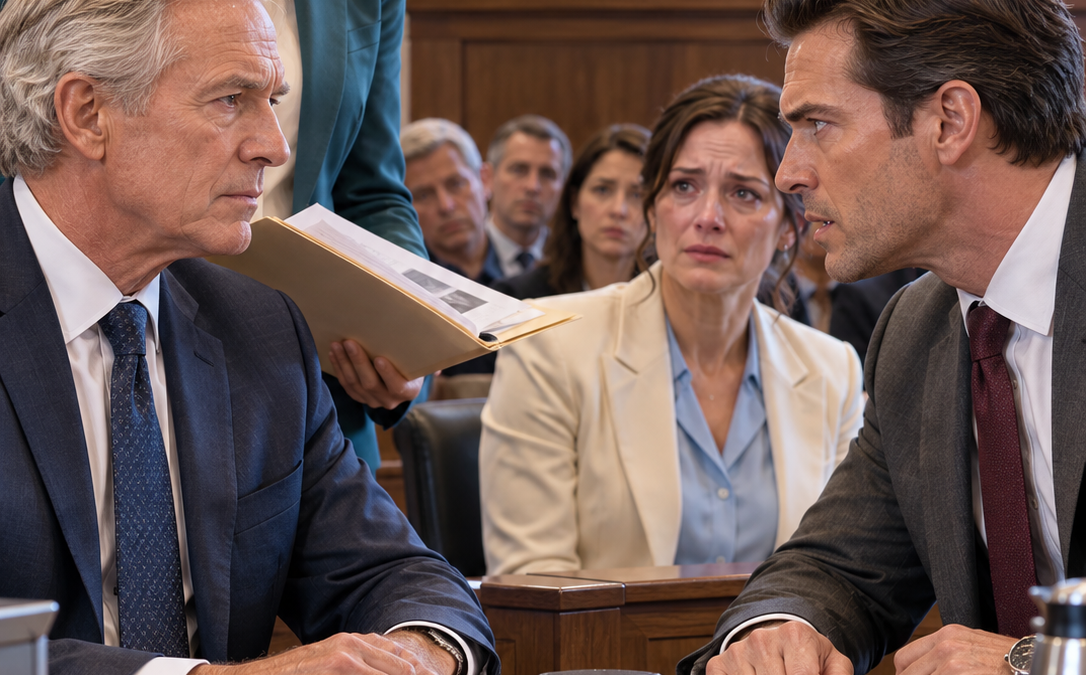
My son-in-law shouted, “My parents are moving in with you, and that’s final.”
I kept quiet, pretended to agree, and let them leave with a fake smile. But when their car pulled into the driveway, they stopped in their tracks. What stood before them made them freeze.
Before we continue, please subscribe to the channel and write in the comments what time it is where you are now.
The question hung in the air like smoke I couldn’t wave away.
“This place must have cost a fortune, Vic.”
Cornelius set down his wineglass and leaned back, his eyes traveling across the coffered ceiling.
“What? Four bedrooms? Five? That’s a lot of space for one person.”
I kept my fork moving through the food on my plate, buying time.
“It’s four bedrooms. I worked thirty-five years for this. I earned it.”
“Sure, sure.” He nodded, but his gaze had already moved to the bay windows, calculating. “Just seems like you could, I don’t know, share it. Help family. You know what they say about empty rooms.”
Wilma touched his arm, her voice light but tight.
“Cornelius. Dad just moved in. Let him enjoy it.”
I glanced at my daughter. She wore the smile she’d perfected in childhood, the one that smoothed over rough edges. Across from her, Cornelius had that expression I was beginning to recognize. Friendly on the surface, measuring underneath.
Just yesterday, I’d stood in the empty foyer with the realtor’s keys heavy in my palm, thinking about how the afternoon light would angle through those windows. I’d called Wilma immediately. Her happiness had poured through the phone, genuine and warm.
“Dad, that’s wonderful! We should celebrate. Can we come for dinner tomorrow?”
Now, sitting across from them, I watched Cornelius stand and walk toward those same windows. He touched the frame and ran his thumb along the wood grain.
“Beautiful craftsmanship.” He turned back. “Must be, what, 3,000 square feet?”
“3,200.”
The number came out sharper than I’d intended.
Wilma laughed, that nervous sound she made when tensions rose.
“Cornelius loves architecture. He’s just admiring your taste.”
But I’d designed buildings for three and a half decades. I knew the difference between admiration and assessment. Cornelius wasn’t appreciating the house. He was inventorying it.
“The thing is,” he continued, settling back into his chair, “it’s a shame to waste space when people need it. My parents, for instance, they’re having some financial difficulties. Nothing serious, but you know how it is with rent these days.”
There it was. Not hypothetical people. Specific people with present-tense needs.
I cut into my chicken, the knife scraping against porcelain.
“I’m sorry to hear that.”
“They’d love a place like this.” Cornelius reached for more bread, as casual as if he were discussing the weather. “Upstairs would be perfect for them. Two bedrooms up there, right? Their own bathroom. You wouldn’t even know they were around.”
My jaw tightened.
I’d designed enough multifamily units to know that nobody in a 3,200-square-foot house goes unnoticed.
“The upper floor is for my drafting studio and guest room.”
“Guests?” Cornelius smiled. “How often do you have guests, Vic?”
Wilma shifted in her seat.
“Dad has friends from the firm. They visit.”
“Do they?” Cornelius looked at me, eyebrows raised.
I met his stare. Thirty-five years of client meetings had taught me not to flinch under pressure.
“I value my privacy, Cornelius. I bought this house for peace. To have space that’s mine.”
“Of course, of course.” He spread his hands magnanimously. “I’m just saying it’s a lot of house for someone on their own. Seems lonely.”
“I prefer it.”
The words landed flat on the table.
Wilma’s fingers traced the stem of her wineglass. Cornelius studied me, his expression shifting into something harder, more calculated. Then he smiled again, bright and hollow.
“Well, it’s your place, your rules.” He raised his glass. “To new beginnings.”
I lifted mine. The crystal caught the light, fracturing it into small, sharp points.
We finished dinner with smaller talk: Wilma’s work at the marketing firm, Cornelius’s latest real estate deal, my retirement plans. But the earlier conversation pressed between us like a third guest.
When Cornelius excused himself to use the restroom, Wilma leaned forward.
“He didn’t mean anything by it, Dad. He’s just… he thinks out loud sometimes.”
I nodded, not trusting my voice. She wanted to believe her husband’s questions were innocent.
I’d spent enough years reading blueprints to recognize foundation cracks before walls showed damage.
Cornelius hadn’t been thinking out loud. He’d been testing load-bearing walls.
He returned, and we moved through the rituals of departure. Coats retrieved, compliments exchanged, promises to do this again soon.
At the door, Wilma kissed my cheek.
“Love the house, Dad. Really.”
Cornelius shook my hand, his grip firm and lingering.
“Think about what I said, Vic. Empty rooms. Family in need. Just think about it.”
I watched through the bay window as their taillights disappeared down the street. The house settled around me, floorboards creaking in the sudden quiet. My reflection stared back from the dark glass: a sixty-four-year-old man who’d built his career on understanding structures, support systems, and weight distribution.
Cornelius’s words echoed in the empty space.
Not a request. Not even a suggestion.
A survey of terrain before an assault.
I gripped the window frame, my knuckles whitening against the wood. Somewhere in my chest, something that had been warm and open began to cool and harden.
I’d spent decades designing buildings that could withstand pressure, calculating stress points and reinforcement. Now I recognized the signs in myself.
The house was silent except for my breathing. Outside, the streetlamps cast long shadows across freshly mowed lawns. Normal. Peaceful. Everything I’d wanted.
Everything Cornelius thought he could take.
I barely slept. At two in the morning, I stood at that same window, watching the empty street.
When headlights finally swept across my lawn just before ten, I wasn’t surprised.
Cornelius climbed out alone. Through the glass, I watched him straighten his jacket and roll his shoulders like a boxer before a match.
I opened the door before he knocked.
“Vic.”
He stepped inside without waiting for an invitation.
“We need to talk.”
“Where’s Wilma?”
“Getting coffee. She’ll be here soon.”
He moved into the living room, wearing the same assessing gaze as the night before, only sharper now. The pretense had thinned.
“I’ll be direct. My parents need a place to stay. You have this entire upper floor sitting empty. They’re moving in this weekend.”
I closed the door slowly, buying myself a few seconds.
“No.”
“No?” He turned, almost amused.
“I bought this house for myself. For my peace.” I kept my voice level. “I don’t want roommates, family or otherwise.”
“Wilma’s going to be really disappointed.”
Cornelius sat on my couch, spreading his arms across the back, claiming space.
“We always thought you were someone we could count on when family needed help.”
The manipulation was so obvious it almost made me laugh.
“I helped when you needed the down payment for your house. I paid for your wedding. I’m done being counted on to solve your problems.”
His jaw tightened.
“This isn’t about money, Vic. It’s about family taking care of family.”
“Then take care of them yourself. You have three bedrooms.”
“We need our space. Privacy. We’re trying for a baby.”
The rationalization was seamless. Practiced. I wondered how many times he’d rehearsed it.
“So you want me to give up mine?”
“You’re alone here. What do you need privacy from?”
The front door opened.
Wilma stepped inside with a coffee carrier in her hand and stopped when she saw us. The tension must have been visible, mapped across the room like architectural stress lines.
“Dad? Cornelius?” Her voice was careful. “What’s going on?”
“Your father’s being difficult.”
Cornelius didn’t look at her. His eyes stayed locked on mine.
Wilma set down the coffees and pulled off her coat.
“Difficult about what?”
“About helping family.” Cornelius leaned forward, elbows on his knees. “About doing the right thing.”
She looked between us, confusion creasing her forehead. Then understanding dawned, and with it came something that made my chest tighten.
Not surprise.
She’d known this was coming.
“Dad.” Wilma sat in the armchair, her hands clasped. “Maybe it wouldn’t be so bad. You’d have company. You wouldn’t be alone.”
The words hit harder than Cornelius’s demands.
My daughter was siding with him, using the same script.
“Wilma, I want to be alone. I earned that right.”
“But if family needs help—”
“Your husband’s parents aren’t my family.”
The words came out harder than I’d intended.
Wilma flinched.
Cornelius smiled.
“There it is.”
He stood, and suddenly the room felt smaller.
“The real Victor Torres. Selfish. Isolated. Can’t be bothered with anyone else’s problems.”
“That’s not fair.”
But Wilma’s protest was weak.
“Isn’t it?” Cornelius walked toward me, and I held my ground. “He has four bedrooms. We’re asking for two, temporarily, until they get back on their feet. But he can’t spare the space. Won’t even consider it.”
“I have considered it. The answer is no.”
Cornelius stopped inches away. I could smell his expensive, overpowering cologne.
When he spoke, his voice dropped to something cold and flat.
“Listen, Vic. I’m not asking. My parents are moving in with you. Saturday, we’re bringing them. End of discussion.”
The silence stretched.
Wilma stared at the floor.
I looked at her, willing her to meet my eyes, to see what her husband was doing. She wouldn’t look up.
Something broke inside me then. Not loud or dramatic. Just a clean snap, like a cable under too much tension.
I’d raised Wilma alone after Sarah died. I’d paid for her education, walked her down the aisle, and welcomed Cornelius into our family.
And now she sat there with her head down, letting him dictate terms in my own house.
I looked back at Cornelius.
His expression was triumphant, confident. He thought he’d won. Thought the ultimatum would crumble whatever resistance I had left.
I nodded slowly.
“Okay, Cornelius.”
His eyebrows rose slightly.
“Okay?”
“Saturday.”
The word tasted like iron.
The smile that crossed his face was pure satisfaction.
“Good. Smart choice. You’ll see. It won’t be that bad. You’ll barely notice them.”
He moved toward the door, Wilma trailing behind him. She finally looked at me, and I saw uncertainty there. Maybe even guilt.
But not enough to change anything.
“Thanks, Dad.”
Her voice was small.
I didn’t respond. Couldn’t.
They left, and I listened to their car start, back out, and drive away.
Then I returned to the window, the same spot where I’d stood the night before.
But everything had shifted.
The reflection looking back at me wasn’t the same man. That warmth I’d felt moving into this house, that hope for a peaceful retirement, was gone, replaced by something colder, sharper, more focused.
Cornelius thought my nod meant surrender.
He’d misread the blueprint entirely.
I’d spent three and a half decades calculating stress points, understanding where structures failed and how to reinforce them against pressure.
Now I applied those same principles to a different kind of architecture.
Saturday. Four days away.
Not much time. But then, I’d built entire buildings in less.
The plan was already forming, precise and methodical.
First, boundaries. Legal, unbreakable boundaries.
I’d need documentation, witnesses, everything by the book.
Cornelius wanted to treat my house like his property. He’d learn the difference between ownership and entitlement.
I pulled out my phone and scrolled through my contacts until I found what I needed.
Mitchell Crane. Real estate attorney. An old friend from the firm, retired now but sharp as ever.
I sent a text.
Need legal advice. Urgent. Can you meet tomorrow morning?
The response came within minutes.
8:00 a.m. My office. Coffee’s on you.
I set the phone down and looked around the living room.
My house. My space.
Earned through decades of work, sacrifice, and careful planning.
Cornelius thought he could walk in and redesign it on his terms.
He was wrong.
Outside, the street was quiet, normal. But inside this house, in the space behind my eyes where plans took shape, something new was building.
Not hot anger or reckless revenge.
Something more architectural. Structural. A defense system designed to withstand assault and throw force back at its source.
Saturday was coming.
Let it come.
I was ready.
I woke at five-thirty Sunday morning, not because I couldn’t sleep, but because I had work to do.
The notebook sat on my kitchen table, already half-filled with documentation from the night before. Cornelius’s exact words, the times, Wilma’s presence.
An architect learns early that details matter. I applied that same precision to this legal problem.
My parents are moving in Saturday. We’re bringing them.
Six days.
Not much time, but enough.
By nine, I’d found Margaret Chen online, a property law specialist with thirty years of experience. I requested her earliest appointment.
The response came within an hour.
Monday. 8:30 a.m.
I drove downtown through light traffic. Margaret’s office occupied a renovated building near the courthouse, all clean lines and organized spaces.
She was younger than I’d expected, maybe fifty, sharp-eyed behind rimless glasses.
“Mr. Torres, tell me what’s happening.”
I slid my notes across her desk.
“My son-in-law informed me that his parents are moving into my house. When I refused, he said it wasn’t a request.”
“Saturday, he said?”
“We’re bringing them Saturday.”
She scanned my documentation.
“You’re the sole property owner? Purchased last month?”
“Title’s in my name.”
“Any prior agreement for them to stay?”
“None. I refused multiple times.”
She set down the notes.
“Mr. Torres, you’re the property owner. Nobody can force you to house anyone. But there’s something critical you need to understand.”
I waited.
“If they move in and stay thirty days, they establish residency. Even without a lease, the law protects them. Eviction requires court proceedings.”
“Months? Thousands in fees?”
My jaw tightened.
“So they move in uninvited, and I’m trapped?”
“If you let them in, yes. Once they cross your threshold, the law shifts. But if you prevent entry entirely…” She smiled slightly. “You can refuse access to anyone. It’s your property.”
“So I stop them at the gate.”
“Exactly. Don’t let them onto your property at all.”
She pulled a legal pad closer.
“I’ll prepare an official notice of no trespass. Have law enforcement present Saturday. If they attempt entry, they’re breaking the law.”
We spent an hour on details: notice language, sheriff arrangements, and exactly what to say.
When I left, I carried a folder of documents and a clear strategy.
Tuesday, I called a security company.
By Wednesday afternoon, four cameras covered my perimeter, feeding directly to my phone.
The installer showed me the system.
“Motion alerts here. Live feed here. You’ll know if anyone approaches your gate.”
He handed back my phone.
“Top of the line, Mr. Torres.”
I tested it twice.
Perfect clarity. Perfect coverage.
Wednesday evening, Wilma called.
“Dad, just confirming Saturday. We’re bringing Harold and Beverly around two. Thanks so much for understanding. Cornelius really appreciates this.”
Her voice was bright, cheerful, oblivious.
I kept mine neutral.
“See you Saturday, Wilma.”
“Great. They’re so excited. The moving truck’s already reserved. Maybe I could come by Sunday and help them settle in.”
My hand tightened around the phone.
She’d already planned the aftermath, assumed cooperation, built a future where I simply absorbed her husband’s demands.
“We’ll see how Saturday goes.”
“Perfect. Love you, Dad.”
She hung up.
I stood in my kitchen, the phone cooling in my palm, feeling that last thread of doubt snap.
She hadn’t asked if I was comfortable. Hadn’t questioned anything. She’d simply informed me of the details, assuming compliance.
Exactly like Cornelius.
Thursday and Friday, I confirmed the sheriff’s availability.
Two officers. Civil standby service. Saturday at 1:30.
I reviewed Margaret’s documents until I’d memorized the key phrases. I practiced my statements, stripping them down to facts and removing emotion.
This wasn’t about anger.
It was about boundaries.
Friday evening, I checked the security feed. Four camera angles, crystal clear. The new gate stood solid across my driveway.
The professionally printed no-trespassing sign was mounted beside it.
Everything was ready.
I’d spent thirty-five years calculating load-bearing walls, understanding pressure points, knowing exactly how much force structures could withstand.
Now I’d built something different.
Not a building, but a boundary.
Saturday morning arrived cold and clear.
I woke at six, showered, and dressed carefully in dark slacks and a button-down shirt.
This was a formal occasion.
Coffee. Toast.
I ate methodically, fueling up.
The folder sat on my table, documents and notices arranged in perfect order.
At 1:15, the sheriff’s cruiser pulled up.
Two officers, as arranged.
The older one, Deputy Morrison, shook my hand.
“Mr. Torres, we’ll position ourselves behind you. You do the talking. We’re here to keep things legal and peaceful.”
“Understood.”
At 1:30, we walked outside together.
I took my position at the gate, the officers flanking me several feet back.
The afternoon sun highlighted the sign, the cameras, and the clear boundary between what was mine and what wasn’t.
My phone buzzed.
Motion alert.
Vehicles approaching from two blocks away.
I pocketed the phone and waited.
By 1:45, I was standing at the gate. At 1:50, I heard engines in the distance.
The SUV appeared first, Cornelius’s black Ford.
Behind it came a rented moving truck, its diesel engine loud in the quiet neighborhood.
I didn’t move. I simply watched them through the gate’s bars.
Cornelius was driving.
Through the windshield, I saw confusion cross his face, then recognition, then something darker.
He hit the brakes hard.
The moving truck lurched to a stop behind him.
For three seconds, nobody moved.
Then Cornelius’s door flew open.
“What the hell is this, Vic?”
Deputy Morrison stepped forward.
“Sir, stay calm.”
Cornelius’s eyes swept the scene.
Officers.
Gate.
Sign.
Me standing behind it all.
“What are you doing? We talked about this. You agreed!”
I kept my voice level.
“The deputy is handing you an official document. This is a notice of no trespass. You’re not entering my property.”
Morrison held out the paper.
Cornelius stared at it, then snatched it from his hand.
“This is insane! They have nowhere else to go!”
“I didn’t agree,” I said. “You demanded. You gave me an ultimatum. This is my response.”
The passenger door opened.
Wilma climbed out, her face already crumpling.
Behind the SUV, an elderly couple emerged. Harold, thin and gray. Beverly, shorter and rounder, her face pinched with confusion.
“What’s going on?”
Beverly’s voice carried that theatrical edge.
“Cornelius, what’s happening?”
“Victor’s throwing us out.”
“I’m not throwing you out, Beverly.”
I met her eyes.
“I never invited you in.”
“There’s a difference, Dad!”
Wilma’s voice broke.
“Why are you doing this? I don’t understand.”
This was the moment that cost something.
My daughter, confused and hurt, not understanding.
But I’d run the calculations.
Sometimes the ground itself needs defending.
“Wilma, listen carefully.”
I kept my voice steady.
“Cornelius didn’t ask permission. He told me his parents were moving in. When I said no multiple times, he said it wasn’t up to me. ‘My parents are moving in. Saturday, we’re bringing them. End of discussion.’ Those were his exact words.”
Wilma’s eyes shifted toward her husband.
“Cornelius—”
“Don’t!”
He cut her off.
“Your father’s being selfish and cruel.”
“This is my house.”
I didn’t raise my voice.
“I worked thirty-five years for it. I have the right to decide who lives here. That’s not selfish. That’s ownership.”
“Mr. Torres is the property owner,” Morrison confirmed. “He has every legal right to deny access. This notice makes it official. You need to leave.”
Cornelius rounded on him.
“We’ll sue! We’ll take him to court!”
“That’s your right,” Morrison said calmly. “But right now, you need to leave. What Mr. Torres is doing is completely legal.”
Beverly stepped forward, hands trembling, voice catching.
“You’re throwing old people out on the street! What kind of man does this to family?”
“You were never on my street, Beverly. You’re not homeless. You’re uninvited.”
“We needed help! Family helps family!”
“Family asks. Family accepts answers. Cornelius did neither.”
Harold stood silent beside the truck, his hands in his pockets.
Our eyes met briefly.
Something passed between us. Understanding, maybe, or just acknowledgment.
“Dad, please.”
Wilma had moved closer, tears streaming down her face.
“Can we just talk about this? Work something out?”
“There’s nothing to work out. I said no. I meant no. Your husband chose not to hear it.”
“But they’re family!”
“They’re Cornelius’s family. And even if they were mine, I’d still have the right to decide whether they live in my house. That right doesn’t disappear because someone needs something.”
Cornelius’s face had gone nearly purple.
“You’re going to regret this. This isn’t finished!”
“Maybe not, but today is.”
I held his stare.
“Deputy Morrison has explained your options. Leave peacefully or be escorted. Those are your only choices.”
The moving truck driver leaned out his window.
“What do you want me to do? I got other jobs today.”
Cornelius spun toward him, then back to me, then to the deputy.
The realization was settling in.
He had no leverage. No authority. No legal ground.
“Fine.”
The word came out like gravel.
“Come on.”
Beverly gasped.
“You’re just going to let him do this?”
“We don’t have a choice, Mom.”
For the first time, Cornelius’s voice held something other than anger.
Defeat.
He looked at Wilma.
“Get in the car.”
She didn’t move immediately.
Instead, she looked at me one more time, mascara streaking her cheeks, everything in her expression asking why.
I held her gaze. Didn’t soften, but didn’t look away either.
“I’m sorry you’re caught in this, Wilma. But I won’t be bullied in my own home.”
She climbed into the SUV without responding.
Harold guided Beverly back with a gentle hand. She was still protesting, but quieter now. The fight had left her voice.
Cornelius slammed his door.
The engine roared.
The moving truck executed an awkward three-point turn. Then Cornelius reversed, tires squealing, and followed the truck back down the street.
I stood at the gate until their taillights disappeared.
Morrison cleared his throat.
“That went smoothly, Mr. Torres. You handled it well.”
“Thanks for being here.”
“Just the job. You’ve got all the documentation you need. Your attorney did good work.”
He nodded to his partner.
“We’ll be going.”
They returned to their cruiser, backed out, and left me alone.
I turned and looked at my house.
The cameras watching. The gate standing. Everything I’d built holding exactly as designed.
The satisfaction wasn’t hot or gleeful. Just cold acknowledgment.
I’d identified a problem, calculated a solution, and executed a plan.
I walked back toward the house.
At the door, I paused and looked back once more.
The street was empty. Normal. A Saturday afternoon when nothing remarkable had happened, except everything had changed.
I’d defended my boundary. Refused manipulation.
But I’d also watched my daughter cry and drive away. I’d refused help to elderly people. I’d chosen principle over accommodation.
The cost was real.
The necessity was, too.
Inside, the house felt different.
Not empty. Defended.
Not lonely. Secure.
I set my folder on the table and checked the camera feeds.
Everything quiet.
Everything mine.
Cornelius’s words echoed.
This isn’t finished.
He was right.
He’d regroup, strategize, and come at this from another angle.
But I’d spent decades designing structures to withstand pressure. I understood load-bearing walls, stress points, and reinforcement techniques.
And now I understood something else.
Sometimes the foundation itself is worth defending, whatever it costs.
I sat at my kitchen table, opened my notebook, and began documenting the day’s events.
Because architects know you always prepare for the next phase.
The first call came that evening.
I didn’t answer.
The voicemail Cornelius left was three minutes of rage.
“You think you won something today? You humiliated my parents! You made my wife cry! This isn’t over, Vic. Not even close!”
I saved it and created a new folder on my phone.
Evidence. Timestamp. Duration. Transcript. Summary.
The architect’s precision I’d used for thirty-five years was now being applied to documentation.
By Sunday morning, there were four more messages, each angrier than the last, each carefully saved, cataloged, and preserved.
You’re going to regret this one way or another.
You’ll see what it’s like to lose everything you care about.
Wilma called, too.
Her messages were different. Tearful, broken, pleading.
“Dad, please pick up. I don’t understand why you’re doing this. They’re family. Can’t we just… please call me back. Please?”
I listened to each one.
Didn’t respond.
What could I say? That her husband had threatened me? That she’d chosen his version without asking for mine?
I documented her calls, too. Not because I wanted to use them against her, but because an architect documents everything.
The week that followed brought thirty-seven calls.
I counted.
Everyone was logged in my spreadsheet: date, time, caller, duration, content, summary.
Cornelius’s messages grew more threatening. Wilma’s grew more desperate.
I answered none of them.
Two weeks in, I learned what life looked like at their apartment.
Not from them, but from a storage unit bill I saw referenced in one of Cornelius’s texts, sent by accident to my number instead of someone else’s.
$180 monthly.
Their three-bedroom apartment now housed seven people, according to the situation he described. Cornelius, Wilma, their two sons, Harold, and Beverly were all crammed together, with the household described as five adults and two kids in a space designed for a family of four.
I didn’t feel satisfaction at this.
Just cold observation.
They’d created this situation by demanding what wasn’t theirs.
Consequences follow choices.
Beverly, from what I could infer from Cornelius’s increasingly frantic messages, complained constantly.
Too hot. Too cold. Too crowded. Food was wrong. Everything was wrong.
Harold stayed silent, probably wishing he were anywhere else.
The kids, eight and five, acted out, stressed by the tension.
The financial pressure mounted, too.
Cornelius referenced it in his texts, thinking he was making me feel guilty.
Storage costs. Grocery bills doubled. Utility spikes.
Every dollar spent added to his desperation.
By early April, the messages stopped.
Complete silence.
No calls. No texts. No voicemails.
I noticed immediately.
Cornelius wasn’t the type to give up or calm down.
Silence meant strategy.
Three days later, the certified mail arrived.
I signed for it, sliced open the envelope, and unfolded the papers.
Legal complaint.
Multnomah County Circuit Court.
Plaintiffs: Wilma Torres Drake and Cornelius Drake.
Defendant: Victor Torres.
Cause of action: filial support obligation.
My daughter was suing me.
I read it twice, standing in my foyer, afternoon light slanting through the windows I’d chosen specifically for that angle.
They were using an obscure Oregon statute about adult children supporting indigent parents, arguing that I had a legal duty to house Harold and Beverly because they were family by marriage.
The paper trembled slightly in my hand.
Not from fear.
From pain.
My daughter’s name was right there at the top.
Plaintiff.
Against me.
I called Margaret within the hour.
“It’s a filial support claim,” she said after I’d read her the complaint. “Oregon has an old law on the books, rarely used. They’re arguing you’re obligated to house your daughter’s in-laws because they’re family by marriage and they’re in need.”
“Can they actually win this?”
“Honestly, no.”
Her voice was steady, professional.
“The law requires proof of genuine need. Harold and Beverly receive Social Security. I’ll need to verify the amounts, but it’s income. Plus, Cornelius earns what?”
“$75,000 yearly.”
“He has means to support them. But we still need to defend it properly.”
“What do you need from me?”
“Everything you documented. Every message, every voicemail, every text. All of it.”
“I have it all.”
A pause.
“All of it?”
“Every word he said since the driveway. Times, dates, content. Thirty-seven calls in two weeks. I kept everything.”
“Mr. Torres, most clients don’t think to document that thoroughly.”
She sounded almost impressed.
“Bring it all to my office tomorrow. And there’s one more thing. All those threatening voicemails. Oregon’s a one-party-consent state for recordings. We’re filing a counterclaim for harassment.”
We met the next morning.
I laid out my evidence folder, organized chronologically, each item labeled and cross-referenced.
Margaret reviewed it piece by piece, nodding occasionally and making notes.
“This is remarkably thorough,” she said. “Their lawyer will try to paint you as heartless. We’ll show them exactly who initiated the aggression.”
“Will they call Wilma to testify?”
“Probably. Can you handle that?”
I thought of the last time I’d seen her.
Mascara streaking her face, choosing her husband’s anger over her father’s truth.
“I’ll handle it.”
“Good. Because this ends in court, Mr. Torres. And with this evidence, it ends in your favor.”
The hearing was set for May 7.
The weeks between crawled.
I reviewed Margaret’s preparation, answered her questions, and provided additional documentation whenever she requested it.
Once, late at night, I found myself looking at an old photograph of Wilma.
Maybe seven years old. Gap-toothed smile. Holding the trophy from her first soccer tournament.
I’d been there cheering from the sidelines.
Every game. Every tournament.
Now she was taking me to court.
I set the photograph facedown and returned to organizing evidence.
Sentiment wouldn’t win cases.
Facts would.
May 7 arrived.
I woke at five, showered, and dressed with the same care I’d use for a major client presentation.
Dark suit. Professional tie.
Margaret had advised treating this like any important business meeting. Show respect for the court. Demonstrate stability and competence.
By seven, I was drinking coffee and reviewing key points one final time.
By eight, I was driving downtown.
The Multnomah County Courthouse would be my battlefield.
Not with fists or anger, but with documents, recordings, and truth.
I’d spent thirty-five years building structures that could withstand pressure.
Today, I’d find out if the structure I’d built around my own boundaries could withstand a judge’s scrutiny.
The courthouse stood downtown, all concrete and glass.
I arrived forty minutes early, parked in the adjacent garage, and walked through morning air that smelled of rain.
Security checkpoint. Metal detector. Elevator to the fourth floor.
Margaret waited in the hallway outside Courtroom 4B, her briefcase organized, her expression focused.
“Ready?” she asked.
“As I’ll ever be.”
Twenty minutes later, Cornelius arrived with Wilma and their attorney, a man in his forties wearing an expensive suit and carrying a leather portfolio.
Cornelius’s eyes found mine.
Cold. Defiant.
Wilma wouldn’t look at me at all.
We were called in.
The courtroom was smaller than I’d expected. Wood paneling, fluorescent lights, maybe thirty seats.
We took our positions at separate tables.
The judge entered, a woman in her mid-fifties with gray hair pulled back and a neutral expression.
The formalities began.
Then their attorney stood.
“Your Honor, this is straightforward. Mr. Torres owns a large home. Four bedrooms. He lives alone. His daughter’s in-laws, both in their late sixties, need housing. He refused. Not for legitimate reasons, simply because he didn’t want to be inconvenienced.”
He gestured toward me.
“Mr. Torres worked as an architect. He understands the value of shelter, yet he denies it to elderly family members. Under Oregon’s filial support statutes, he may be legally obligated.”
He painted me as selfish and cold, a man refusing family in crisis.
Made it sound as though I’d turned away people begging on my doorstep.
Then Wilma testified.
She walked slowly to the witness stand and took the oath.
Her attorney asked careful questions.
She answered in a voice I barely recognized.
“Can you describe your relationship with your father?”
“We’ve never been especially close. After my mother left, he focused on his work. Maybe too independent.”
The words hit like a physical blow.
I’d raised her alone from the age of eight.
Every school play. Every parent-teacher conference. Every midnight fever.
Twenty-seven years of single parenthood, erased in one answer.
“And when you asked for his help?”
“He refused. Didn’t even want to discuss it.”
Lies.
But she delivered them while looking at her hands, not at me.
Some part of her knew.
Margaret stood.
“Your Honor, let’s examine what actually happened.”
Her voice was calm, methodical.
“Mr. Torres wasn’t asked. He was given an ultimatum. May I present evidence?”
She set up a speaker and pressed play.
Cornelius’s voice filled the courtroom.
“Listen, Vic. I’m not asking. My parents are moving in. Period. We’re bringing them Saturday.”
Margaret let the words settle.
“That’s not a request, Your Honor. That’s a demand. Mr. Torres is defending his boundaries, not refusing aid.”
She continued, relentless.
“Harold and Beverly Drake receive Social Security totaling approximately $48,000 annually. Mr. Drake earns $75,000 yearly. He has means to support his parents. This lawsuit is about convenience, not necessity.”
Then she played the voicemails.
Cornelius’s anger echoed through the courtroom.
“You old fool. You’ll regret this!”
Another recording followed.
“You’ll pay for what you did!”
I watched the judge’s expression change.
Neutral. Skeptical. Disapproving.
She leaned forward, frowning.
“Mr. Drake,” the judge said, “this court does not appreciate threatening language. Such communication is unacceptable.”
Cornelius’s face flushed.
Wilma had gone very still.
Margaret presented the sheriff’s report, the documentation, and the financial evidence.
She dismantled their case piece by methodical piece.
The judge reviewed the materials briefly.
“The filial support claim is dismissed. The evidence shows no genuine need. The dependents receive benefits. Mr. Drake has sufficient income. The plaintiffs appear to have brought this action out of anger, not necessity.”
She looked at Cornelius.
“Mr. Torres is awarded legal fees of $3,500. Court costs to the plaintiffs. This matter is closed.”
The gavel came down.
Outside, Margaret made notes.
Cornelius stormed past without a word.
I watched him go, feeling no triumph.
Just tired validation.
Then Wilma approached slowly, hesitantly.
“Dad.”
Her voice was barely audible.
“I heard what Cornelius said on those recordings. I didn’t know. He told me you just refused, that you were stubborn. I didn’t know he threatened you.”
I looked at her.
This woman who’d once been my little girl.
Who’d just lied about our history.
“You didn’t ask, Wilma. When Cornelius said I’d agreed, you didn’t call to check. When he said we were bringing his parents, you didn’t question if that’s what I wanted. You just assumed I’d surrendered.”
Tears spilled down her cheeks.
“I thought you understood that it was family.”
“Family doesn’t demand. Family doesn’t threaten.”
I kept my voice steady.
“You chose to believe his version without asking mine.”
“Dad, please.”
“I’m sorry you’re caught in this. But I won’t apologize for defending what’s mine.”
I turned toward the elevator.
Behind me, I heard her crying.
Something tore inside my chest, but I kept walking.
Margaret fell into step beside me.
“You did the right thing.”
“Did I?”
“Yes. She needed to hear that.”
We pushed through the doors into the May sunlight.
The air smelled clean, rain-washed.
First real victory.
Everything by the book.
But walking away from my daughter’s tears didn’t feel like winning.
I drove home through midday traffic.
Inside my house, defended, secured, mine, I set down my briefcase and stood in the quiet.
The court had ruled in my favor. The law had validated my position. Justice, supposedly, had been served.
So why did it feel like I’d lost something irreplaceable?
Cornelius wouldn’t stop here.
Men like him didn’t accept defeat.
They escalated.
This was just the first battle, and I had won it.
For now, that would have to be enough.
Three days after the hearing, my phone rang.
Wilma’s number.
I let it go to voicemail.
Her message was different this time. Not pleading or angry. Just tired.
“Dad, we need to talk. Not about moving anyone in. Just about us. Please call me back.”
I didn’t.
What was there to say that hadn’t already been said in that courthouse?
Through scattered messages over the next week, I pieced together what was happening at their apartment.
Cornelius blamed Wilma for the court loss.
If she’d testified better. If she’d been more convincing. If she’d made me understand.
Beverly complained constantly.
Too crowded. Too hot. Wrong food. Everything wrong.
Harold took up space silently, retreating to whatever corner he could find.
The boys acted out, stressed by the tension pressing down on everyone.
The court costs sat unpaid.
$3,500 Cornelius owed me.
Storage fees kept accumulating.
He’d taken out a personal loan just to manage basic expenses.
Then his email arrived.
Subject line: Reasonable Compromise.
I read it twice.
He proposed paying $400 monthly for his parents to occupy the upper floor.
Called it fair market value.
Framed it as a business arrangement that could work for everyone.
I deleted it.
But he sent another.
Then a text through Wilma’s phone.
Finally, I responded by email.
No amount of money changes my answer, Cornelius. You didn’t ask. You demanded. You threatened me. You sued me. The answer is no. It will remain no. Stop asking.
His reply came within minutes.
You’re being unreasonable. It’s just money. We’re family. Wilma is suffering because of your stubbornness.
I didn’t respond.
He still didn’t understand.
This wasn’t about money or space.
It was about boundaries. About respect. About not being seen as a resource to solve someone else’s problems.
The next morning, I called an estate attorney.
Not Margaret Chen, but someone who specialized in wills and trusts.
I made an appointment for that afternoon.
His office was quieter than Margaret’s, with more wood paneling and leather chairs.
He reviewed my existing will while I explained the situation.
Not the whole story.
Just enough.
“My daughter sided with her husband when he tried to force his parents into my own home. I’m not cutting her out entirely. She’ll still receive something. But the bulk of my estate should go to people who’ll value what I built.”
He nodded, taking notes.
“What percentage were you thinking?”
“Twenty-five percent to Wilma. The remaining seventy-five percent to the Architectural Education Fund at Portland State.”
“That’s still substantial for your daughter. The house alone…”
He checked the documents.
“West Hills area. Your square footage. She’d receive somewhere around $200,000.”
“I understand. But thirty-five years of work shouldn’t go to someone who sees it as something she’s owed.”
“This is your decision, Mr. Torres. Are you certain?”
“I’ve never been more certain about anything.”
The paperwork took an hour.
Signing. Initialing. Witnessing. Notarizing.
When I left his office, the new will was official and legally binding.
I arranged for registered mail notification to Wilma.
She had a right to know.
The letter arrived at her apartment three days later.
I wasn’t there, but I could imagine it.
The certified mail slip. Signing for it. Opening the envelope. Reading the attorney’s formal notification of the will change.
My phone rang that afternoon.
Wilma.
I didn’t answer.
By early evening, she was at my gate.
The intercom buzzed.
I checked the security camera.
Wilma stood there alone, looking exhausted and small.
She pressed the button again.
“Dad, please. I got the letter. Why would you do this?”
I stood in my living room looking at the screen.
My daughter at my gate.
The physical barrier between us representing everything that had broken.
I pressed the intercom response.
“Stay at the gate. I’ll come out.”
I walked outside slowly.
The June evening was warm, light slanting golden through the trees.
Wilma stood on the other side of the fence, her hands gripping the bars.
“The will change,” she said. “Why?”
“You sued me, Wilma. You stood beside your husband while he demanded my home. That showed me where I stand in your life.”
“I’m still your daughter.”
Her voice broke.
“I made a mistake. I was trying to keep peace in my marriage. Can’t you understand that?”
“I understand you chose him. You chose his parents over your own father. You chose his demands over my boundaries. That was your choice.”
“So you’re punishing me? Taking away my inheritance?”
I shook my head.
“I’m not punishing you. I’m ensuring my life’s work goes to people who will appreciate it, not to someone who sees me as a resource to solve her husband’s problems.”
“Dad, I love you. I know I made mistakes, but—”
“Then you’ll understand why I need to protect what’s mine. I worked thirty-five years for this. I won’t have it go to people who see it as something they’re owed. You’ll still receive twenty-five percent. That’s substantial. But the rest goes to students who will value what architecture means.”
Tears streamed down her face.
“You’re my father.”
“I am. And you’re my daughter. But that doesn’t mean you get to decide how I live or what happens to my estate. Those decisions are mine.”
“I didn’t mean—”
“Yes, you did. You meant for me to surrender, to accommodate, to give in because it was easier than standing up to your husband. I won’t do that, Wilma. Not for anyone.”
I turned toward the house.
“Dad, please.”
Her voice cracked.
“Don’t walk away, Dad.”
I kept walking.
Up the driveway. Up the steps. Through the door.
I closed it behind me and stood in the foyer, listening to her car start, back out, and drive away.
Inside, the house felt enormous and silent.
I walked to my study and found the old photograph of Wilma at seven.
Gap-toothed smile. Soccer trophy. My arm around her shoulders.
I looked at it for a long moment, then set it facedown on the desk.
The pain was real.
But so was the necessity.
My phone rang.
Unknown number.
I looked at the screen and let it go to voicemail.
Whatever was coming next, it would come.
I’d be ready.
The pounding started just after two in the morning.
Three heavy blows against my front door.
Then Cornelius’s voice.
“Vic! Open this door! We need to talk like men!”
I sat up in bed, my heart hammering.
More pounding.
Harder. Continuous.
“I know you’re in there! Stop hiding! Open up!”
I grabbed my phone and pulled up the security camera app.
The front door feed showed Cornelius pacing, agitated, then slamming his fist against the wood again.
His movements were jerky and uncontrolled.
Drunk, unhinged, or both.
I didn’t go downstairs.
Didn’t engage.
Instead, I dialed 911.
“I have an intruder on my property. He’s pounding on my door and shouting. Yes, I know him. My daughter’s husband. No, I don’t feel safe. There’s a history of threats.”
The operator kept me on the line.
I watched the camera feed.
Cornelius was kicking the door now, pulling at the handle and shouting incoherently.
Across the street, neighbors’ lights flicked on.
“We’re going to settle this! You can’t ignore me forever, Vic!”
Five minutes felt like twenty.
Then sirens.
Red and blue lights washed across the camera feed.
Two patrol cars pulled up, and officers approached cautiously.
“Sir, step away from the door.”
Cornelius spun toward them.
Even through the camera, I could see his face.
Rage and desperation.
“This is family business! He’s being unreasonable!”
“Sir, you’re on private property. The owner has asked you to leave. Step away from the door now.”
“My parents need a place to live! He’s got four empty bedrooms! Four! And he won’t—”
“Sir, final warning. Step away or you’ll be placed under arrest.”
Cornelius took a step toward the officers instead.
They moved fast, two officers working with practiced efficiency.
Cornelius tried to pull away, but they controlled him quickly.
Handcuffs.
Rights read.
His final shout toward my house carried through the night.
“This isn’t over, Vic! You hear me? This isn’t over!”
The patrol car pulled away.
One officer came to my door.
I went downstairs and opened it.
“Mr. Torres, you’re safe now. He’s being charged with criminal trespass and disturbing the peace. Resisting arrest, too.”
“I have everything on camera.”
“Good. That makes our case solid. You’ll probably hear from the DA’s office. Get some rest.”
They left.
I locked the door and stood in the quiet house, my hands shaking slightly as the adrenaline drained away.
I checked all the cameras and backed up the footage to three separate drives.
Cornelius had finally done what I couldn’t.
Shown everyone exactly who he was.
Seven hours later, the sun was rising.
I’d slept maybe two hours.
By nine, the intercom buzzed.
The security cameras showed Wilma standing at the gate alone.
She looked like she hadn’t slept at all.
I pressed the intercom.
“What do you want, Wilma?”
“Dad, I need to talk to you. Not about Cornelius. About me. Please.”
I hesitated.
Then I said, “Wait there.”
I went outside.
She stood at the fence, hands empty, shoulders slumped.
“I bailed him out this morning,” she said quietly. “Saw him in the holding cell.”
I waited.
“He wasn’t sorry. Just angry. Angry at you. Angry at the police. Angry at me for not backing him up enough.”
She gave a short, bitter laugh.
“Dad, he didn’t even realize what he’d done wrong. Coming here at two in the morning, pounding on your door, getting arrested. In his mind, you’re still the problem.”
“What did you expect?”
“I don’t know. I think I expected him to realize he’d gone too far. But he didn’t. He still thinks he’s right.”
Silence stretched between us.
A bird sang somewhere in the trees.
“I’ve been blind,” Wilma said finally. “I heard those recordings in court. I saw the will change. And still, some part of me thought maybe you were being too harsh, too unforgiving. But seeing him in that cell, listening to him blame everyone but himself…”
She looked up at me.
“I see it now. I don’t know what to do with what I see, but I see it.”
I studied my daughter.
Exhausted. Defeated.
Finally honest.
“I didn’t want this,” I said, softer than before. “I didn’t want you hurt. I wanted you to see.”
“What should I do?”
“That’s your decision. What you do about your marriage, your life, that’s yours. But Wilma, I’m still your father. I’ll always be your father. Just know that nobody gets to tell me how to live in my own home. Not him. Not anyone.”
“I know. I’m sorry. I didn’t see that before. I’m sorry I let him…”
She stopped and wiped her eyes.
“I’m just sorry.”
“I know you are. That’s a start.”
She nodded and turned toward her car.
Then she stopped.
“Dad, thank you for not giving up on me completely.”
I didn’t respond.
She walked to her car, got in, and drove away.
This time, the departure felt different.
Less final.
Less heavy.
Inside, I made coffee, pulled up the previous night’s footage on my computer, and watched it again.
Cornelius’s arrival. The pounding. The police. The arrest.
All of it timestamped, archived, documented.
By late afternoon, I received official notification.
A restraining order had been issued.
Cornelius Drake was required to maintain a minimum distance of one hundred yards from my property.
The order was filed in connection with his criminal record.
Margaret Chen called that evening.
“I heard about last night. You okay?”
“I’m fine. It’s all on camera.”
“Of course it is.”
She sounded almost amused.
“I also heard Harold and Beverly found a senior apartment in Gresham. One bedroom, $900 a month. Cornelius is financially responsible for helping them.”
That explained the desperation.
The midnight visit.
He’d been cornered financially, legally, publicly, and instead of accepting defeat, he’d charged straight at the wall.
I thanked Margaret, ended the call, and sat in my living room as the evening light faded to blue.
The house was quiet.
Secure.
Mine.
The cameras had recorded everything. Every threat. Every violation. Every boundary crossed.
I hadn’t trapped Cornelius.
I’d simply documented while he trapped himself.
Sometimes the best strategy is just holding your ground and letting others destroy themselves against it.
The text came on a Tuesday afternoon.
Wilma: Can we meet? Neutral ground. Just us. Downtown coffee shop tomorrow at 10:00.
I stared at the screen for a full minute before typing back.
Which one?
She named a place on Third Street.
I responded simply.
I’ll be there.
Three weeks had passed since the arrest.
Three weeks of quiet in my house.
Occasional updates through Margaret Chen about restraining order proceedings. Brief news through mutual acquaintances about Wilma’s situation.
But nothing direct until now.
I arrived first, claimed a corner table away from the windows, and ordered coffee I didn’t particularly want.
When Wilma walked in fifteen minutes later, I barely recognized her.
Thinner. Hair pulled back simply. No makeup hiding the exhaustion in her face.
She wore jeans and a plain shirt, practical and stripped down.
She looked like someone who’d stopped pretending.
She sat across from me and ordered tea.
Then she waited until the server left before speaking.
“Dad, I filed for divorce last week. Papers were served three days ago.”
I wrapped my hands around my coffee cup.
“That’s a big decision.”
“It’s the only decision.”
Her voice was steady.
No tears.
“After that arrest, I thought maybe he’d see what he’d become. Maybe hitting bottom would wake him up. But he got worse. Blames me for calling you. Blames you for ruining everything. Blames his own parents for needing help. Everyone’s fault but his.”
“What about the boys?”
“That’s exactly why I’m doing this.”
She met my eyes directly.
“They’re eight and five, Dad. They’re starting to think his behavior is normal. The yelling, the blame, the anger at everyone. I can’t let them grow up thinking that’s what a man is supposed to be.”
I nodded slowly.
“That takes courage.”
“Dad, I’m so sorry.”
The words came out quiet but firm.
“For all of it. You worked your whole life for that house, and I let him. I helped him try to take it from you. I chose him over you when you were right the whole time.”
“I didn’t want to be right, Wilma. I wanted you to see clearly.”
“I see now. I see what he is. What I let him become in my life. What I let him do.”
She paused.
“Can you forgive me?”
I looked at my daughter.
Really looked at her.
Saw something I hadn’t seen in months.
Honesty.
No performance. No defense. No excuse.
“I’m working on it,” I said carefully. “The hurt is real, but I see you’re changing. That’s a start.”
“The will…”
She stopped and took a breath.
“I understand why you changed it. I’m not asking you to change it back. I just want my dad back.”
“Trust has to be rebuilt, Wilma. Not with words. With time. With actions. We’ll take it slow and see how things go.”
“That’s fair. That’s more than fair.”
We talked for another hour.
Small things. Practical things.
She’d found a one-bedroom apartment in Southeast Portland.
Small. Affordable. Clean.
The boys shared the bedroom.
She took the couch.
Not ideal, but honest.
A real start.
When we stood to leave, she hugged me briefly.
I let her.
The first real physical contact between us in months.
“Same time next week?” she asked.
“I’d like that.”
Over the following weeks, the divorce proceedings unfolded exactly as expected.
Cornelius fought for custody, claiming Wilma was alienating the children from their family.
His lawyer painted her as controlled by her vindictive father.
But evidence doesn’t lie.
The arrest record from the midnight incident. My security footage showing his instability. Recordings of his threatening voicemails from the earlier case. The restraining order.
All of it stacked in neat, documented piles.
The judge’s decision at the preliminary custody hearing was swift.
Primary custody to Wilma.
Cornelius received limited visitation rights, supervised initially, and was ordered to pay child support based on his income.
His attorney fees kept mounting.
Wilma called me the evening after the hearing.
“His lawyer tried to say you poisoned me against him, but the judge looked at everything. The arrest. The restraining order. Your security footage. She said she saw a pattern of aggressive behavior and poor judgment.”
She paused.
“The evidence spoke for itself. Everything he did, you documented. You didn’t have to destroy him, Dad. You just had to show people who he really was.”
That was exactly right.
Through Wilma’s updates over the next few weeks, I learned the full accounting of Cornelius’s situation.
Court costs from the family support case, still unpaid.
Legal fees from the arrest.
Now divorce attorney charges.
Child support payments of $1,200 monthly.
Still helping his parents with their rent in Gresham.
The storage unit fee accumulating.
The personal loan he’d taken out to manage expenses, now compounding with interest.
What he’d tried to save by forcing his way into my house had cost him three times more in losses.
I didn’t celebrate this.
Didn’t gloat.
Just noted it as fact.
Cornelius had built his own trap, one bad decision at a time.
I’d simply refused to be caught in it with him.
Late one evening, my phone buzzed with a text from Wilma.
Thank you for everything. For not giving up on me, even when I gave up on you.
I looked at those words for a long moment, then typed back simply.
You’re my daughter. That never changed.
Three dots appeared.
Disappeared.
Appeared again.
Then her reply came.
I know. I’m sorry it took me so long to remember what that means.
I set down my phone and sat in the quiet of my house.
The security cameras showed an empty driveway, a dark street, a peaceful neighborhood.
Everything as it should be.
Not victory.
Not triumph.
Just the beginning of something resembling peace.
The evening sun turned Portland’s skyline copper and gold.
I stood on my deck, a glass of iced tea sweating in my hand, and watched my grandsons chase each other across the lawn.
August had arrived with warm, clear days.
Wilma and the boys had been visiting weekly since mid-July.
Not moving in.
She had her apartment, small but hers.
Just visiting.
Family dinners. Backyard time. Normal things.
Today, they’d arrived around four.
The boys, Marcus at eight and Leo at five, had burst from the car and headed straight for the yard.
Wilma settled into the chair beside mine with her own glass of tea.
We sat in comfortable silence, watching the kids play.
This was new.
The ease of simply being together without tension underlying every word.
“Cornelius lost his job last week,” Wilma said quietly.
I nodded and took a sip of tea.
“Too many missed days for court appearances. His boss finally had enough.”
She paused.
“He’s trying to blame everyone again, but some consequences are just consequences.”
“I never wanted to destroy him, Wilma. I just refused to let him destroy me.”
“I know that now.”
She watched Marcus help Leo onto the swing.
“I thought you were being stubborn, but you were being strong. There’s a difference.”
The boys’ laughter drifted across the yard.
Pure, uncomplicated joy.
They were different now.
Looser. Lighter.
Away from the constant tension of their parents’ deteriorating marriage, they’d started acting like kids again.
“They’re happier,” Wilma observed. “I see it in how they play. Children know when something’s wrong, even when adults pretend it’s fine.”
She nodded, then turned toward me.
“What about the will? I’m not asking you to change it back. I just want to know we’re okay.”
“We’re getting there. Trust rebuilds slowly, Wilma. Right now, I see you’re trying. You left an impossible situation. You’re building a life that’s honest. That matters.”
“That’s enough.”
“That’s more than enough.”
“Grandpa!”
Marcus called out from the swing.
“Look how high I can swing!”
“I’m watching!” I called back. “That’s impressive!”
I’d never been particularly demonstrative with my grandchildren before.
Cornelius had made visits awkward, tense, performed.
But now, with just Wilma and the boys, something had loosened in me.
Not softness.
I wasn’t soft.
Just room for this.
For them.
“I’m not making excuses for what I did,” Wilma said, returning to our conversation. “But thank you for showing me the truth. For not giving up on me when I’d given up on myself.”
“I didn’t do this for revenge,” I said. “I did it to protect what’s mine and to show you something important.”
“What’s that?”
“That love doesn’t mean submission. That family doesn’t mean surrender. You can love someone and still have boundaries. You can be someone’s father and still defend your own life.”
She was quiet for a moment, then nodded.
“I wish I’d learned that earlier. Before I let him…”
“You learned it when you were ready to learn it. That’s how these things work.”
The sun sank lower, painting everything in warm light.
In a few minutes, Wilma would gather the boys, pack them into her car, and drive to her small apartment across town.
They’d have dinner, baths, bedtime stories.
Normal life.
Honest life.
And I’d return to this house.
Mine.
Earned.
Defended.
And sit in the quiet I’d fought for.
I hadn’t changed the world, hadn’t destroyed an enemy, or won some grand battle.
I’d simply said no and held that line.
Defended what had taken thirty-five years to build.
Refused to let someone else’s desperation become my obligation.
Cornelius was somewhere in the city, trying to rebuild from ruins he’d created.
His job gone. Reputation damaged. Finances devastated.
His parents living in that small Gresham apartment, managing on fixed income and whatever help he could scrape together.
Everything he’d tried to force his way into taking had cost him more than he’d ever imagined.
But I didn’t gloat over this.
Didn’t celebrate his fall.
He’d destroyed himself one bad decision at a time.
I just refused to be collateral damage in his demolition.
“Time to go, boys!” Wilma called. “School night tomorrow!”
Protests.
Negotiations.
Finally, agreement.
They ran over for hugs.
Marcus’s arms wrapped around my neck.
Leo’s small body pressed against my side.
Quick, unselfconscious affection.
“Same time next week, Grandpa?”
“Absolutely.”
Wilma gathered them toward the car.
At the deck stairs, she turned back.
“Thank you, Dad. For this. For not shutting us out completely.”
“You’re my daughter. They’re my grandsons. That’s not something I shut out.”
She smiled.
Tired, but genuine.
Then she herded the boys to the car.
I watched them drive away, taillights disappearing down the street, the sound of the engine fading.
Then silence.
I returned to my chair on the deck.
The tea had gone warm, but I drank it anyway.
The sky deepened from gold to purple to blue.
The first stars emerged.
My house stood behind me.
Four bedrooms.
3,200 square feet.
Every inch earned.
Defended.
Mine.
The taste of justice wasn’t triumph over a fallen enemy.
It wasn’t watching someone suffer.
It was this.
Sitting on my own deck, in my own house, in peace I’d earned through every hard choice, every boundary defended, every stand taken.
I’d spent thirty-five years building structures that could withstand pressure.
In the end, I’d built something more important.
A life that could withstand pressure.
A space that was mine.
Peace that couldn’t be demanded, manipulated, or forced from me.
Cornelius had wanted what I’d earned without earning it himself.
He’d tried to take through threats what he couldn’t claim by right.
And in the end, he’d learned what I’d always known.
Some things can’t be taken.
They can only be defended.
The evening air smelled of cut grass and summer roses.
Somewhere down the street, a dog barked.
Normal sounds.
Peaceful sounds.
I’d won nothing except the right to sit here, to live in what I’d built, to have family on my terms.
With boundaries.
With honesty.
With something real.
That was enough.
More than enough.
The taste of justice, I’d learned, wasn’t triumph.
It was peace.
Simple, hard-earned, well-deserved peace.
If you liked this story, please like this video, subscribe to the channel, and share your impressions of this story in the comments. To listen to the next story, click on the box on the left.








