My mom screamed, “you’re just a leech living off us!” then threw my bags out and said, “go leech somewhere else!” so i left without a fight. three weeks later, my dad called panicking: “why did the bank freeze our account?!” i texted back: “ask the leech.” then everything exploded…
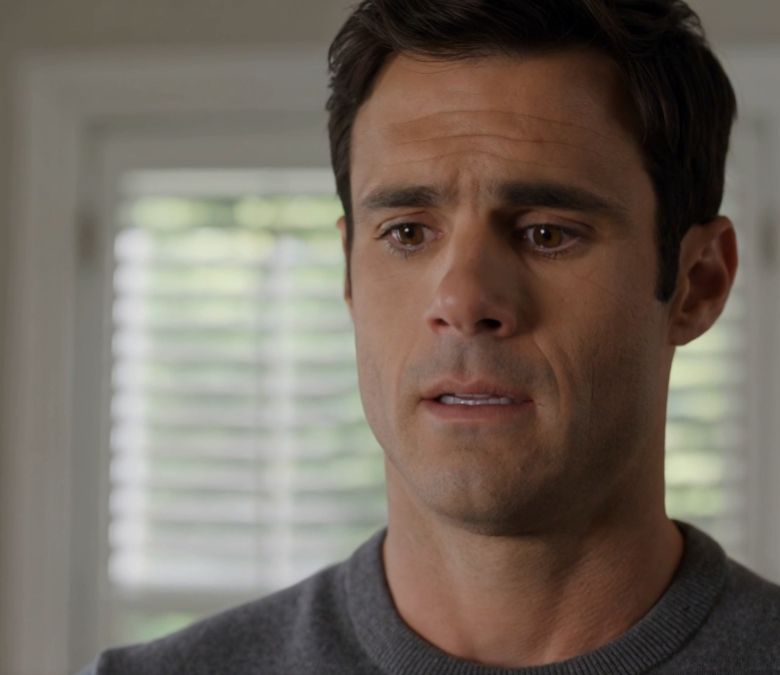
My name is Adam. I’m 28, and until about a month ago, I lived in the guest room of my parents’ house. Not by choice. Honestly, if I could have been anywhere else, I would have. But things don’t always go as planned.
After graduating with a degree in computer science, I landed a solid job at a midsize tech firm. Then the pandemic hit. The company downsized, and I was one of the first to be let go. Over the next year and a half, I applied to hundreds of jobs. Interviews came and went, but nothing stuck. Eventually, my savings ran dry, and the only option I had left was to move back home. I thought it would be temporary. My parents didn’t.
At first, it wasn’t awful. My dad, Mark, was always more reserved, a don’t-ask-don’t-tell kind of guy. My mom, Diane, though, made sure I felt the weight of every meal I ate and every light switch I flipped. “This isn’t a hotel,” she would say at least once a week. She’d sigh loud enough for the neighbors to hear if I dared leave a cup in the sink. At first, I chalked it up to stress. But the passive-aggressive comments soon turned into open criticism.
“You know, your cousin Rachel just bought a house, and she’s two years younger than you,” she’d say while wiping the already clean kitchen counter for the fifth time that morning. Or, “It’s really sad you’re still here. At your age, your father and I were raising you by the time we were 28.”
I tried to help. I offered to cook, clean, mow the lawn, and fix the router whenever it acted up. I freelanced where I could, built websites for local businesses, and helped a family friend set up an online store. I wasn’t just lying on the couch binge-watching TV. But in her eyes, it didn’t matter. I was still the leech.
It didn’t help that my younger brother, Jordan, was their golden child. He’s 24, works in finance, lives in a high-rise downtown, and makes sure everyone knows it. He rarely visits unless there’s a holiday or Mom begs him to come over for dinner. But when he walks in, it’s like Moses parting the Red Sea. Suddenly, my mom’s whole mood lifts. Her voice gets sweet and cheerful.
“There’s my baby! You look so fit. Are you working out?” she’ll say, while I’m standing in the corner holding a trash bag full of recycling, trying not to be noticed.
One evening, Jordan came by for dinner, and I could feel something brewing. I was setting the table, placing mismatched plates down with the usual carelessness I’d grown accustomed to, since they always treated me like I didn’t belong. Jordan barely acknowledged me. He made some comment about gas prices and how some people were lucky they didn’t have to commute. I didn’t take the bait, but then Mom poured him a drink and laughed a little too loudly at something he said.
She turned to me and asked, “Have you even tried applying for real jobs lately?”
My chest tightened. I’d already told her about the two interviews I’d had that week, but she didn’t care. Jordan chimed in, “You know, at some point, it stops being bad luck and starts being bad choices.” He wasn’t even looking at me when he said it.
That was the night something inside me snapped. I didn’t yell. I didn’t throw anything. I just picked up my plate, walked back to the kitchen, and ate standing up at the counter like I was 12 years old again. I could hear them laughing in the dining room. The words blurred together, but I caught snippets.
“Can’t coddle him forever.”
“Needs to grow up.”
“Embarrassing at this point.”
The next day, I was sitting in the den with my laptop open, trying to finish a freelance job redesigning a local bakery’s website, when Mom walked in. She didn’t knock. She never knocked. She stood in the doorway with her arms crossed, and I knew something was coming.
“You need to start paying rent,” she said flatly.
I nodded. I’d heard this before. “I already said I’d help out once I finish this site. They’re paying me.”
“I’m not talking about maybe someday. I’m talking now.”
“Today?” I stared at her, confused. “You want me to write you a check with money I don’t have?”
“No, Adam. I want you to grow up. This has gone on long enough. We’ve done more than our share. You’re just a leech living off us.”
The word slapped me harder than I expected. Leech. She said it with this look of disgust, like I was something stuck to the bottom of her shoe. Before I could even reply, she turned and started dragging a duffel bag from the closet. I barely had time to react before she stormed back into the room, threw the bag at my feet, and said, “Go leech somewhere else.”
I didn’t argue. I didn’t cry. I just zipped the bag up, packed my laptop, charger, and toothbrush, and left. Not a single word. Just the echo of that word, leech, chasing me down the driveway.
I couch-surfed for a while, first with my friend Lucas, then with my ex, who was kind enough to let me crash for a few days while I figured things out. But that time on my own, scary as it was, pushed me to go all in. I took on more freelance jobs and even helped a local artist build an e-commerce site to sell her prints.
One night, out of nowhere, I got a LinkedIn message from a recruiter who had seen my freelance portfolio. Within a week, I was interviewing for a remote position with a tech startup, and I got the job. It paid decently. Not Silicon Valley money, but enough to start reclaiming my life. The best part was that it came with full benefits and the option to work from anywhere.
So I did something that surprised even me. I used the money I’d been saving from freelancing and got a studio apartment. Tiny, but mine. No one could throw me out of it. No one could call me a burden.
About three weeks after I moved in, I was finishing up a project when I noticed a call from my dad. I hadn’t heard from him since I left. Not even a “How are you?” I let it go to voicemail. Then another call came in. Then a text.
“Why did the bank freeze our account?”
I blinked at the screen. What?
Then I remembered something. Something I hadn’t thought about in weeks.
Back when I was jobless, Dad had asked me to help him switch over their joint banking setup. He was tired of driving to the bank, and since I was good with tech stuff, he asked me to set up their online access, their mobile banking, and, crucially, link their account with their tax software.
I’d walked them through every step. We added my email and number as recovery contacts. I was even a secondary administrator on their joint account, not to spend anything, but to troubleshoot if something went wrong. And yes, that access was still there.
I didn’t reply right away. I sat there just staring at the message, imagining them sitting at the dining room table, my mom pacing, my dad fumbling with the bank app, maybe even calling the helpline, only to be told there was a verification lockout and they’d need secondary contact access to regain control.
That was when I typed out a reply.
“Ask the leech.”
No emojis. No explanation. Just those three words.
Less than an hour later, everything exploded.
I barely had time to make lunch before my phone started buzzing again. This time, it was my mom. Three missed calls in under five minutes. Then the texts started.
“Adam, this isn’t funny. Call your father back. We can’t pay the credit card bill. Are you really doing this to us after everything we’ve done for you? Fix this.”
I didn’t answer. For the first time in years, I had leverage, and I wasn’t going to waste it. I wasn’t interested in revenge for the sake of being cruel, but I wanted accountability. I wanted them to see the version of me they’d never bothered to acknowledge. Not the lazy burden they imagined, but the person who had quietly held their household together in the background.
I was the one paying their bills online, updating their antivirus software, reminding them to file their taxes on time, troubleshooting their Wi-Fi, and even flagging fraudulent charges on their credit card once before they noticed. But to them, I was just some ungrateful freeloader.
That evening, I got a call from a number I didn’t recognize. I answered it on instinct.
“Adam?”
It was my dad. He was trying to sound calm, but I could hear the strain in his voice.
“Look, we need to access our bank account. It’s locked. And they said… they said you’re listed as the secondary admin. I don’t know what you did, but—”
“I didn’t do anything,” I said evenly. “The security system locked it automatically after multiple failed logins.”
“Okay, fine. That’s fine. Just help us unlock it.”
There was a pause. I didn’t respond. He hesitated before finally saying, “Please.”
The word landed awkwardly, like a foreign language he hadn’t spoken in years.
“Sure,” I said. “But I’d like to talk about something first.”
Silence.
“Like why your wife screamed at me in front of Jordan, called me a leech, and threw my stuff out.”
Another pause.
“Adam, let’s not—”
“No, we are going to. You want me to clean up your mess again? Then you’re going to listen. Not talk. Not make excuses. Just listen.”
There was a quiet sigh on the other end, but he didn’t hang up.
“I didn’t ask to move back. I didn’t want to be in that house again. But I did everything I could to help. I cooked. I cleaned. I fixed things. I made money. Not much, but enough to pay for my own food and give you gas money when the car broke down. And for all that, I got treated like a stray dog at your dinner table.”
“Adam—”
“I’m not done.”
My voice cracked a little. I could feel the years of frustration pushing up from my throat, everything I’d swallowed back, every time they’d dismissed me.
“She called me a leech. She kicked me out like trash, and you just stood there. You let her.”
He didn’t respond.
“She humiliated me in front of Jordan like I was some pathetic loser. But the truth is, your bank account has been running smoothly because I’ve been the one keeping it that way. You didn’t even know how to reset your password without me.”
“Okay, okay,” he muttered. “You’ve made your point.”
“No, I haven’t.”
I stood up from my chair and started pacing my small apartment.
“You two acted like I was some failure who needed to be kicked while I was already down. And now you need me.”
Another long pause.
“Yes,” he finally admitted. “We do.”
The simplicity of those three words hit me harder than I expected. Not in a good way. More like a sudden gust of wind that knocks the breath out of you. Because I realized right then that they didn’t care why I was struggling. They only noticed me when I was useful.
Still, I wasn’t cruel. I wouldn’t let bills go unpaid out of spite, but I also wasn’t going to let this slide like I always did. So I offered terms.
I’d unlock the account, but first, I wanted an apology from both of them. A real one, in person. Not just a mumbled sorry while Dad fidgeted and Mom pretended none of it had happened. I wanted acknowledgment. And I wanted space. No requests for favors for at least six months. No guilt trips. No surprise visits. And I’d be removing myself as an administrator on every one of their financial tools forever.
“You can manage your own banking from now on,” I said. “Or get Jordan to help.”
My dad sighed again. “She’s not going to like this.”
“I didn’t like getting thrown out of the house I grew up in.”
There was a short silence before he finally answered, “I’ll talk to her.”
The call ended, and I realized my hands were trembling. Part anger, part adrenaline, part sadness. I’d never spoken to my dad like that before. Not once. But I didn’t feel bad. Not this time.
Two days passed before I heard back. This time, it was an email from my mom. Short and awkwardly formal. It started with, “I realize I said things I shouldn’t have,” and ended with, “We hope you’re doing well.” No signature. No “Love, Mom.” But I got what I asked for. I unlocked the account and removed myself from it immediately afterward. Then I blocked their numbers for a week. Not to punish them, just to breathe. To think.
And then the real fallout started.
Because the thing is, when you remove the person doing all the invisible labor, when the “leech” walks away, suddenly everyone sees just how much they relied on them.
I found out what happened next. Not through a phone call, not through a knock at my door, but through my cousin Lily’s Instagram story.
She had taken a quick Boomerang video during Sunday brunch at Grandma’s house. Mom was sitting stiffly at the far end of the table, her wineglass untouched, her lips pursed like she’d bitten into a lemon. My dad was beside her, rubbing his temples, looking like a man who had just learned how to use the internet and failed. Meanwhile, Jordan sat across from them, his smug grin replaced by a furrowed brow. That was new.
The caption read, “When the group project loses the only person who knew how to do anything. #FamilyDrama”
I DMed her with a simple question. “What happened?”
Her reply came fast.
“LOL, your mom’s been trying to figure out how to log into her online banking for a week. She locked the account again this morning. Jordan came over to fix it and somehow made it worse. Now she’s saying you sabotaged it on purpose.”
I stared at the screen, genuinely stunned at how quickly the blame had boomeranged back to me. But I couldn’t even feel angry. Just tired. The kind of tired that runs deeper than sleep.
Because there it was again. No matter how much I helped, no matter how quietly I worked behind the scenes, the moment something went wrong, I was the villain in their story.
And it didn’t stop there.
Apparently, after I removed myself from their tax-filing access, my dad realized he hadn’t saved the login credentials for the new system I’d set up for them the year before. When he called customer support, they asked him to verify his last filed return, which, of course, I had submitted for him through my email, with the password saved in a private Google Drive he no longer had access to.
That alone might have been recoverable, if not for the fact that Jordan, in his infinite wisdom, decided to start fresh and tried to create a new account using my dad’s Social Security number. The system flagged it as potential identity theft and locked everything. Tax software, online statements, even his HSA portal. They couldn’t access a dime.
Lily told me all this with the glee of someone watching a soap opera unfold in real life.
“Your mom told Grandma she thinks you hacked them out of revenge,” she texted, followed by a laughing emoji.
I just texted back, “I warned them.”
And I had. I’d warned them clearly and firmly, with boundaries, not threats. Not games. Boundaries. And they’d treated it like I was bluffing.
A week later, I got a knock on the door of my apartment. I knew it was them before I even looked through the peephole. My building had a specific kind of echo when someone stood in the hall. Slow, heavy footsteps with no urgency.
I opened the door slowly. There stood my parents, my mom holding her purse like a shield, my dad’s tie slightly crooked, as though he’d dressed in a rush. Neither of them spoke.
I stepped aside. “If you’re here to yell, save it.”
They walked in. The silence stretched for what felt like a full minute before my mom finally cleared her throat.
“We need your help.”
Three weeks earlier, she’d thrown my bags out and told me to go leech somewhere else. And now she stood in my tiny apartment, her eyes flicking over the modest IKEA furniture and the half-eaten takeout on the counter, asking for help.
It felt surreal.
My dad tried to explain what had happened, but I already knew. Jordan had tried to fix things, failed miserably, and then ghosted them. Probably too embarrassed to admit he didn’t know how to fix something that wasn’t in Excel.
“We can’t even access our joint savings,” my mom said quietly. “We missed our mortgage payment. We’re being charged late fees.”
“That sounds awful,” I replied. “You must feel really stuck.”
She looked up, and for once, the indignation was gone. Her voice trembled just slightly.
“I’m sorry,” she said.
I blinked. Not passive-aggressively. Not with caveats. Just, “I’m sorry.”
My dad added, “We didn’t realize how much you were doing. We thought… we thought we were being generous, letting you stay with us. But we didn’t see it.”
That was the moment the dam broke. Not for them. For me.
All the weight I’d been carrying, all the silent resentment and hurt and shame, spilled out. Not in yelling, not in tears, just truth.
I told them how it felt to be constantly compared to Jordan. To be treated like a failure even when I was trying so hard just to get by. How their approval always seemed tied to performance, never to effort. And how being kicked out wasn’t just humiliating. It made me realize how replaceable I was to them.
My mom sat still, absorbing every word as though it stung.
“I didn’t know,” she whispered.
I believed her. Sort of. I think she didn’t want to know. There’s a difference.
They asked me to come back to help get things running again. Said they’d pay me for my time. Said things would be different. But I shook my head.
“I’ll walk you through fixing everything. I’ll write up instructions. But I’m not coming back. I have a job. I have a lease. I have peace.”
They looked surprised, as if this little studio apartment was some kind of rebellion. But for me, it was a sanctuary.
I grabbed my laptop and sat them down. It took two hours to fix everything, resetting access, verifying IDs, and calling tech support. My mom was silent most of the time. My dad kept muttering, “This is ridiculous,” under his breath whenever he had to answer another security question.
Once we were done, I closed the laptop and stood up.
“I’ll send over that instruction document,” I said. “But after that, I’m done. No more admin access. No more being the silent tech support. You’re adults. You’ll figure it out.”
They stood, too. My dad nodded, almost respectfully. My mom looked like she wanted to say something more, but didn’t.
And as they walked out the door, I felt something I hadn’t felt in a long time.
Freedom.
I wish I could say that was the end. That they took my boundaries seriously. That they learned their lesson and we all moved forward with newfound respect.
But families, especially mine, don’t change overnight. They don’t just flip a switch and suddenly become self-aware or humble.
What really happened next? That’s where the real story begins.
Two weeks after they left my apartment, I started getting odd notifications. Not from my parents. No, they actually left me alone for a while, which surprised me. The messages were coming from people around them.
My aunt Cheryl messaged me on Facebook.
“Hey, sweetie. Heard you moved out on your own. That’s so great. Diane said you’ve been distant lately. Just wanted to check in. Everything okay?”
Then my cousin Trevor sent me a screenshot of a group chat in which my mom was going off.
“I think Adam’s being manipulated by his new job. He’s different. Cold, distant. I don’t even recognize him anymore. All I did was ask for help, and he acted like I’d betrayed him.”
And then there was Jordan. He sent me a long, self-important email.
“Hey, man. I know there’s been tension, but I think you need to take some accountability, too. Mom and Dad aren’t perfect, but they’re still our parents. Maybe instead of blaming them, you could just be more understanding. You had a rough patch. We all do. It doesn’t mean the world is out to get you. Let’s talk soon. Maybe coffee.”
I deleted it without replying.
See, what none of them understood, what still didn’t seem to click, was that this wasn’t about one fight, one insult, or one bad day.
It was years.
Years of being the default helper, the one who was supposedly so smart with tech stuff but was never invited to the adult table. Years of watching my accomplishments get minimized while Jordan’s every mediocre win was celebrated like he’d cured cancer.
It was the birthday cards with “Maybe next year will be better” written in them, while Jordan got expensive watches and family dinners. It was death by a thousand tiny cuts.
But I didn’t want revenge. Not the petty, dramatic kind where you ruin someone’s credit or hack into their social media. I wanted something far more permanent.
Distance. Dignity. And the satisfaction of building a life without them at the center of it.
That opportunity came sooner than expected.
About a month after our last interaction, my company announced they were expanding their remote division and opening a satellite office in Toronto. They offered relocation bonuses to a handful of us, and I jumped on it.
A fresh start. A new city. Zero family drop-ins.
I signed the lease on a small one-bedroom apartment downtown, with a skyline view and a corner desk that overlooked the city. It wasn’t flashy, but it was mine. Paid for by a job I’d earned. Not a penny of help from the people who’d called me a leech.
I sent one final email to my parents before I left. Not because I owed them anything, but because I wanted to be clear.
The subject line was simple: “Update.”
“Hi, Mom and Dad,
Just wanted to let you know I’ll be relocating to Toronto for work. I won’t be available to help with anything moving forward, tech issues, account access, or otherwise. I’ve removed myself from everything and ensured you have full control.
I hope this new chapter gives us all some peace.
Take care, Adam.”
No response. Not even a thumbs-up.
And that might have stung before, but not anymore.
Toronto was everything I hoped it would be. I joined a local coding meetup, made friends quickly, and started volunteering at a nonprofit that helped older adults learn digital literacy. Every time I sat down with someone’s grandmother to teach her how to set up two-factor authentication, I thought, This is what patience looks like. This is what respect feels like.
Meanwhile, back home, the cracks kept spreading.
I found out from Lily, my unofficial family reporter, that my mom had started trying to get Jordan to take over some of the tasks I used to do. He said he was too busy. That didn’t stop her from trying to guilt him.
“Adam used to handle all this without complaining,” she told him once.
He snapped back, “Then maybe you shouldn’t have treated him like garbage.”
Apparently, their golden boy had limits, too.
Then came the kicker.
My dad made a mistake on their taxes. A big one. He accidentally entered their mortgage interest in the wrong section of the form, and it triggered an audit. Not a scary federal investigation, just enough of a red flag that they had to go back, refile, and talk to the IRS about several years of discrepancies.
They tried calling the tax software company, but surprise, they no longer had access to the recovery email. It had been permanently deactivated because I’d closed it after cutting ties.
They had to hire an accountant. A real one, who charged $150 an hour and didn’t respond to texts at midnight.
The real pain wasn’t the money, though. It was the control.
They’d gotten used to having someone at their fingertips. Someone who would fix things immediately out of guilt or fear or some desperate need for approval.
That person no longer existed.
I didn’t even hear about the audit from them. I found out from—who else?—Lily.
“Your mom’s been in a bad mood for days. Dad messed up the taxes. She muttered something like, ‘If the leech was still around, this wouldn’t have happened.’ LOL.”
That was when it hit me.
Even after everything, she still called me the leech. Not in front of me, of course. But behind closed doors, in the safety of people she thought would agree with her.
And that should have hurt. It should have reopened the wound.
But it didn’t.
Because by then, I had proof. Proof that her version of me wasn’t real.
I had a job I loved. Friends who respected me. A landlord who trusted me. A team that relied on me. A name on a lease. A bank account. A digital life that no one else controlled.
And in the quiet of my apartment on a chilly Toronto evening, I sat down at my desk, opened my old Google Drive, and deleted the last shared folder I’d ever created for my parents.
It was titled “Banking for Mom and Dad. Do Not Delete.”
I deleted it with one click.
Then I smiled, because leeches don’t build lives. People do.
And I finally remembered who I was.








