My daughter’s text crushed me: “dad, you’re banned from our italian vacation. darian says family only!” after i’d spent $95,000 on their house! so i canceled all the payments and put the house up for sale. but that was just the beginning
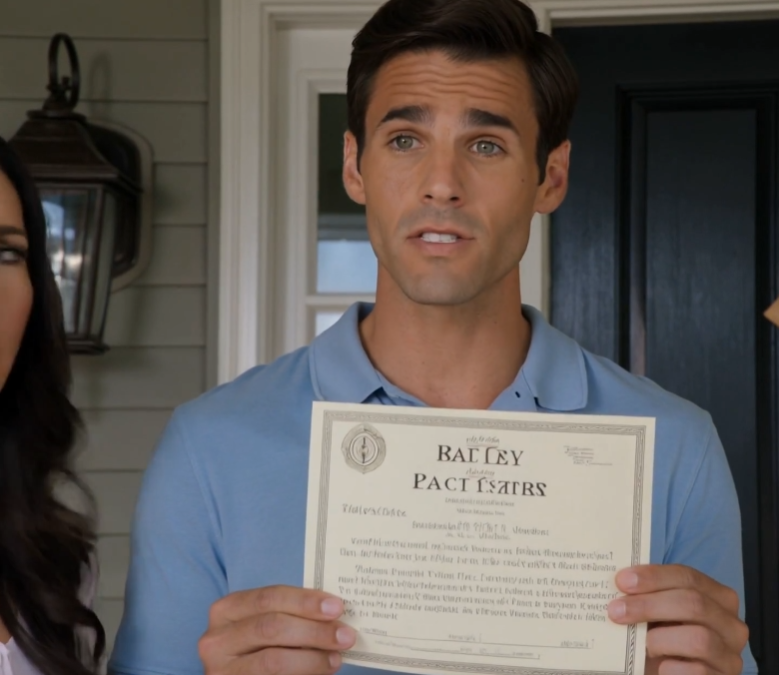
Then my phone buzzed again. Celeste’s name appeared on the screen, and I set the blue shirt aside before reaching for it. I assumed she was calling with some last-minute information about our flight, perhaps a reminder about where we were supposed to meet at the airport or a question about our luggage. Instead, the words on the screen made my blood run cold. Celeste was informing me that I would not be accompanying them to Italy. Her husband, Darien, had decided that it would be better if the vacation remained strictly for family members.
I read the message once, then again, and finally a third time. My thumb hovered motionless above the screen, as though staring at the words long enough might somehow change their meaning. The shirt I’d been folding was still lying beside me, and my mind struggled to make sense of what my daughter had written. Family members only. Those three words kept repeating themselves in my head, growing heavier every time I thought about them. I was her father. I was the person who had planned the entire trip, purchased the airline tickets, researched restaurants, and spent countless evenings at my kitchen table arranging our sightseeing schedule. How could a family-only vacation possibly exclude the father who had organized and paid for so much of it?
I lowered myself onto the edge of the bed, the open suitcase still waiting beside me. My hands trembled slightly as I typed the only response I could manage. “Okay.” That was all I said. Just one word, because I couldn’t trust myself to say anything more. Disappointment settled into my chest like a stone, heavy enough to make breathing uncomfortable. I looked around the bedroom at everything I’d prepared for a vacation that apparently no longer included me. Travel-sized bottles of shampoo and toothpaste stood in a neat row on the dresser. Guidebooks filled with yellow sticky notes marked the museums, restaurants, and historical sites we’d planned to visit together. A brand-new camera, purchased specifically to capture memories from this trip, remained unopened in its original box.
I closed the suitcase slowly, making each movement deliberate, almost ceremonial. The metallic clicks of the clasps sounded unnaturally loud in the quiet bedroom. Then I picked up my phone and called the airline to cancel my reservation. I sat listening to the irritating hold music until a customer service representative finally answered. She was kind and efficient, handling the cancellation without making the situation more difficult than it already was. “I’m really sorry to hear your plans changed, Mr. Brennan,” she told me. I wondered whether she could hear the disappointment in my voice, whether strangers could recognize something my own daughter apparently couldn’t.
After hanging up, I went into the living room and sat staring at the travel brochures spread across my coffee table. The house seemed emptier than usual, filled with a silence so complete that it almost made my ears ring. Outside, Mrs. Holloway’s dog barked at something in the distance, its sharp, insistent voice interrupting the stillness of our suburban neighborhood. I reached for a glossy brochure about Roman architecture and turned it over in my hands before setting it on the side table. It was a meaningless gesture, but I didn’t know what else to do. The realization was beginning to settle in that I hadn’t simply been forgotten. I had been deliberately excluded.
By evening, the same hollow silence had spread through every room. I’d drifted through the day almost mechanically, leaving dirty dinner dishes in the sink instead of washing them immediately, the way I always did. My packed suitcase remained beside the bedroom door, a constant reminder of the plans that would never happen. The television played an evening news program in the living room, but I barely heard a word of it. I kept picking up my phone, scrolling through random things without really seeing them, restless and unable to concentrate. Eventually, I opened Facebook, hoping that a few minutes of distraction might ease the ache in my chest.
I scrolled past Mrs. Fairbanks’s latest pictures of her cat, several recipes posted by women from my book club, and political arguments I had absolutely no interest in reading. The familiar blue glow of the screen illuminated my living room as darkness gathered outside. Then I saw something that made me stop breathing for a moment. Darien’s parents were standing in front of the Colosseum in Rome, smiling broadly at the camera with the delighted expressions of tourists who had found the perfect place for a souvenir photograph. Beneath their picture was a caption that read, “Beginning of the best family vacation ever.” According to the timestamp, the photograph had been posted just two hours earlier.
My thumb froze above the screen. For a moment, I tried to convince myself there must be another explanation. Perhaps Darien’s parents had planned a separate vacation, or maybe they were posting an old photograph from some previous trip. My heart began beating faster as I opened the profile and searched through the other pictures. Then I found another photograph, taken in the same city at approximately the same time. This one showed four people sitting together near a Roman café not far from the Trevi Fountain. Darien’s mother and father were there, smiling beside Darien and Celeste. Wine glasses rested on the table behind them, and everyone looked perfectly relaxed.
Celeste had written her own caption beneath that photograph. “So grateful for family time in the Eternal City.” I stared at those words until my stomach seemed to drop straight through the floor. I counted the faces in the picture, even though I already knew exactly how many people were there. One, two, three, four. Four happy people enjoying the vacation I had helped arrange. Four people included in the definition of family, while I sat alone thousands of miles away. That word seemed to burn itself into my mind.
I placed the phone on the coffee table, leaving their smiling faces illuminated on the screen, and walked toward the kitchen window. Across the street, warm lights glowed through the windows of my neighbors’ houses. Families were sitting down to dinner, watching television, and spending an ordinary evening together. The betrayal washed over me in waves, each one stronger than the last. I returned to the living room and picked up my phone again, almost desperate to prove that I had misunderstood. But the pictures hadn’t changed. The timestamps were still recent, and those same four faces were still smiling at the camera.
They were together in a city I’d dreamed of visiting for years, following the itinerary I’d spent so many evenings preparing, enjoying a vacation I’d helped make possible. I walked back to the kitchen window and caught sight of my reflection in the dark glass. My face looked pale, with shadows beneath my eyes that seemed deeper than they had that morning. Behind my reflection, their photograph still glowed from the phone on the coffee table. Their happiness and my loneliness seemed to occupy the same room, divided by nothing more than a few feet of empty space. It was a painful picture of exactly where I stood in their understanding of family.
I barely slept that night. Every time I closed my eyes, I saw their smiling faces in front of the Colosseum or sitting at that Roman café. I tossed and turned beneath the blankets until the first dull gray light of morning crept through the curtains. By then, I knew I couldn’t simply ignore what had happened. I needed an explanation, even if the truth was going to hurt more than the silence.
My coffee cup trembled slightly in my hands as I sat at the kitchen table, rehearsing what I intended to say to Celeste. With the time difference, it was already afternoon in Rome, which seemed like an appropriate time to call. I took a deep breath, dialed her number, and listened to the international ringtone. It rang three times, then four, before her familiar voice came through the speaker, bright and cheerful.
“Hey there, Dad.”
I could hear plenty of activity behind her. Darien was talking to someone, traffic moved along a busy street, and the sounds of people filled the background with the lively atmosphere of an Italian city. For a second, I could almost imagine standing there beside her, taking in the sights we’d planned to see together. Then I remembered why I was calling.
“I need to understand something,” I said, getting straight to the point.
“What’s that?” she asked. She sounded distracted, as though she were looking through a shop window or watching something happening nearby.
“I saw the pictures on Facebook. Darien’s mother and father are right there with you.”
Silence followed. It lasted long enough for me to hear the background noise more clearly, long enough for Celeste to decide how she wanted to answer. When she finally spoke, her cheerful tone had disappeared.
“Dad, we can talk about this and explain everything.”
“You told me the trip was for family members only. So what does that make me?”
Her voice grew colder. “Listen, Darien said you can be too much to handle. He didn’t want you messing up his vacation.”
Too much to handle. The words hit me like a punch to the stomach. I gripped the coffee cup more tightly, trying to understand how I had become an inconvenience to the very people I’d spent years helping.
“Messing it up?” I repeated. “I’m the one who planned this whole trip. I’m the one who bought all the tickets.”
“And Darien’s mother and father paid their own way,” she replied. “They don’t expect us to look after them all the time.”
All the time. The accusation hung between us, so unfair that I struggled to find the right words.
“I helped support you two,” I began.
“That was something you decided to do,” Celeste interrupted. “We never asked you to make us feel guilty about it.”
In the background, I heard Darien laughing at something unrelated to our conversation. His voice sounded relaxed and carefree, as though he had no idea that my relationship with his wife was coming apart over the telephone. That sound made my jaw tighten. I sat staring at the wall, trying to reconcile the daughter I remembered with the woman speaking to me now.
“To be honest with you, Dad,” Celeste continued, every word harder than the last, “Darien was right about this. You need too much attention.”
My phone suddenly felt impossibly heavy in my hand. There was nothing left to explain, no misunderstanding to clear up, and no reasonable excuse waiting to be offered.
“I get it now,” I said quietly.
“Good. We’ll have a conversation when we get back home.”
“I understand.”
I ended the call without saying goodbye and placed the phone carefully on the kitchen table. Her words continued repeating themselves in my head. You need too much attention. I had spent years trying to make her life easier, and somehow that had become proof that I was demanding too much. I stood up and walked toward my home office, drawn there by an uneasy feeling I couldn’t quite identify.
The walls of my office were covered with family photographs, reminders of a lifetime I had once believed was filled with love and closeness. There was a picture of me teaching Celeste how to ride her bicycle, her little hands gripping the handlebars while I ran beside her. Nearby hung her college graduation photograph, showing the proud smile I’d worn when she received her diploma. Another picture captured her wedding day, when I’d walked her down the aisle with tears of happiness running down my cheeks. I stopped in front of a framed photograph of myself holding Celeste when she was a baby. We were both smiling at the camera, and I remembered how certain I’d been that nothing in the world could ever weaken the bond between us.
My hands slowly tightened into fists as I studied those pictures. The glass reflected an older man now, someone whose face had become tougher over the years, someone with a new coldness beginning to form behind his eyes. I reached out and straightened the picture frame, adjusting it by a fraction of an inch. The small movement felt strangely important, as though I were attempting to correct something much larger than a crooked photograph.
I stayed in that office for a long time, surrounded by what I’d always believed were memories of love. But as I looked around, I began seeing those memories differently. Each photograph seemed to contain another part of a story I’d misunderstood for years. The wedding photograph reminded me of the $42,000 I’d spent making sure Celeste’s special day was perfect. I had never regretted it because all I wanted was to see my daughter happy. Her college graduation photograph brought back memories of paying her student loans, especially during the period when Darien couldn’t find work after completing his own education.
Spread across my desk were photographs from their house-hunting days. I remembered sitting beside them at the bank when they couldn’t qualify for a mortgage on their own. I’d stepped in, co-signed the paperwork, and made sure they could have the home they wanted. Christmas photographs showed expensive gifts beneath trees, many of them purchased with my money. Birthday pictures reminded me of gatherings where my presents were opened last, almost as though everyone had forgotten they were there. I began to recognize a pattern I had spent years making excuses for, and with every memory, the pressure in my chest grew harder to bear.
I opened a desk drawer and pulled out the bank statements and receipts I’d kept over the years. I had always been careful with paperwork, a habit left over from my working days. There it was in black and white: the $95,000 down payment for Celeste and Darien’s house, money I’d taken from my retirement savings. That was money I’d spent a lifetime putting aside for my own future. Other statements showed car payments I’d taken over when Darien lost his first job and credit card bills I’d covered when the two of them couldn’t manage their monthly expenses. Then there was the vacation savings account I’d been building for years, money that had eventually paid for their airline tickets to Italy.
But the more I thought about it, the more I realized that the financial sacrifices were only part of the story. I remembered the fishing trip with my old friends that I’d canceled because Celeste needed someone to watch the children. I remembered a woman from my book club who had invited me to dinner. I’d turned her down because Celeste needed help moving into the new house. There were dreams of traveling, places I’d wanted to explore, and experiences I’d postponed again and again because I believed my daughter and her husband needed me more than I needed those things.
I thought about Sunday dinners when Darien barely acknowledged my presence and holiday gatherings where I felt more like an outsider than a member of the family. There had been subtle remarks, dismissive looks, and countless small moments when he’d made it obvious that my company wasn’t welcome, even while accepting my financial assistance. I’d told myself he was tired, distracted, or simply not the affectionate type. I had found an excuse for every slight because the alternative was too painful to consider.
Now the pattern seemed impossible to ignore. My hands shook as I turned several family photographs facedown on the desk. Celeste’s accusation returned to me again: I needed too much attention. I had confused being useful with being loved, and the realization made me feel foolish in a way that no financial loss ever could. They hadn’t wanted the responsibilities of having me in their lives. They’d wanted the benefits of having me available whenever they needed something.
I stood so abruptly that my chair struck the wall behind me. Across the room, the mirror reflected a man who had worked hard, given generously, and trusted the people he loved, only to discover that his kindness had been treated as an unlimited resource. I had mistaken manipulation for need and obligation for affection. Looking at that reflection, I understood that if anything was going to change, I would have to be the one to change it.
I opened my laptop and logged into the bank account that Celeste and Darien had been allowed to access. My finger hovered over the trackpad. With one click, I could begin changing the arrangements that had governed our relationship for years. But I stopped myself and closed the laptop. Some decisions were too important to make while angry. They required thought, planning, and the certainty that I was acting for the right reasons rather than simply striking back.
I sat there in the heavy silence of my office, staring at the closed laptop and the overturned photographs. My house seemed to be holding its breath along with me. Years of sacrifice and disappointment weighed on my shoulders, but underneath the hurt, something else was beginning to take shape. Then my phone gave a sharp notification sound. I almost ignored it, assuming it was another routine message from my banking app, but something made me pick it up.
The notification showed that a transaction had just been processed. I opened the banking app, expecting to find a utility bill or some other ordinary expense. Instead, the details hit me like another punch. Eight hundred and ninety-two dollars had been charged at Il Convivio, a restaurant in Rome, Italy. The transaction had taken place three hours earlier, around lunchtime in Rome. Celeste had used the authorized-user card I’d given her years before, back when she was trying to establish her credit and I’d wanted her to have something available for emergencies.
The irony was almost unbearable. They had excluded me from their family vacation because Darien didn’t want me interfering, but apparently they had no problem using my money to pay for an expensive restaurant meal. I scrolled through the recent transactions, feeling my disbelief grow with each new charge. Hotels, boutiques, tourist attractions, and other vacation expenses had all appeared on my account, even while Celeste insisted that Darien’s parents were paying their own way and that my help wasn’t needed.
I got up and paced around the office, clutching the phone in my hand. The family pictures on the walls looked different now, less like treasured memories and more like evidence of a relationship that had become painfully one-sided. One thought began forming with absolute clarity. This was my chance to stop being treated as a resource instead of a person.
I opened the credit card management section and found Celeste’s name listed beneath the authorized users. Seeing it there brought back memories of the day I’d added her, trusting that the privilege would help protect her during difficult times. Another notification appeared while I was looking at the screen. A charge for $127 from an Elegant Style boutique in Rome had just been processed. She was shopping on my account while I sat in my office trying to come to terms with how she’d treated me.
That was enough. I selected the option to remove her as an authorized user. For a moment, my finger hovered above the confirmation button. Years of being a supportive father seemed to weigh on that single decision, but I finally understood that helping someone and allowing yourself to be exploited were not the same thing. A message appeared asking whether I was certain because the action could not be undone. I selected yes.
The confirmation appeared almost immediately. Celeste’s authorized-user access had been revoked. I set the phone down and stared at my reflection in the darkened screen. For the first time since receiving that message about Italy, I felt something other than humiliation and disappointment. It was a quiet sense of control, unfamiliar but deeply satisfying. I found myself smiling for the first time in days.
I went to the kitchen and made a fresh pot of coffee. The coffee maker gurgled as it brewed, and outside, a neighbor started mowing his lawn. Everything sounded ordinary, almost comfortingly so. The world was continuing as it always had, even though something fundamental had changed inside me. I wasn’t planning to spend the rest of my retirement pleading for the respect of people who seemed incapable of offering it.
The following morning, I was sitting at the kitchen table enjoying my coffee and reading the newspaper when my phone began ringing insistently. The display showed an international number. It was nine o’clock in the morning where I lived and four in the afternoon in Rome. I let the phone ring twice before answering. For once, I didn’t feel that familiar urgency to make everyone else’s problems my own.
“Good morning, Celeste,” I said calmly.
She took a sharp breath. “Dad, what did you do to the card?”
There was no greeting, no question about how I was feeling, and certainly no apology for the conversation we’d had the day before. She had called because something she depended on was no longer working.
“I removed your account access,” I replied.
“Don’t give me that. I tried paying for lunch, and the card was declined right in front of Darien’s parents. The waiter came back four times. It was humiliating.”
Her voice was sharp enough to cut glass. I took another sip of coffee before answering.
“That must have been embarrassing.”
“Embarrassing? It was mortifying! You can’t do that. I need that card.”
“For what?” I asked. “I thought you didn’t need me taking care of you constantly.”
“That’s completely different.”
“Is it?”
Her voice grew shriller with every exchange. Then there was a pause, followed by muffled conversation in the background. I couldn’t make out every word, but I had a fairly good idea who was speaking to her. When Celeste returned to the phone, there was something hard and threatening in her tone.
“You fix this immediately, or you’ll face consequences.”
“What consequences?”
“Darien and I have been discussing things. When we get back, we’re going to start researching care facilities.”
My coffee mug stopped halfway to my mouth. For a moment, I was so shocked that I wondered whether I’d heard her correctly.
“Care facilities?”
“You’re aging, Dad. You clearly can’t manage your money responsibly. We’ll sell your house to cover the costs. You don’t need all that room anyway.”
I sat perfectly still. Of all the cruel things Celeste had said to me, this was the one that finally revealed how far she was willing to go. Because I had stopped paying for her vacation, she was threatening to put me into a care facility and sell the home I’d spent decades building and maintaining.
Behind her, I heard Darien’s voice. “Tell him it’s for his benefit.”
“Darien says it’s for your benefit,” Celeste repeated.
I allowed the silence to stretch between us. My home was paid off, my finances were under control, and I was perfectly capable of managing my own affairs. Yet my daughter and son-in-law were discussing my future as though I were an inconvenience they could pack away and forget. Their sense of entitlement was so astonishing that I almost couldn’t find words for it.
“Dad, are you there?” Celeste demanded. “Restore my card access.”
“I heard everything.”
“Good. So you’ll handle it?”
“No.”
“What do you mean, no?”
“I mean no. Enjoy your family vacation.”
“Dad, don’t you dare—”
I ended the call before she could finish. Then I placed the phone facedown on the table and took a long drink of coffee. My hands were steady, and the anger that had kept me awake the previous night had settled into something much colder and more deliberate. I looked through the kitchen window at my well-maintained yard, thinking about the home I’d owned for twenty-eight years. It was completely paid off, and my name was the only one on the deed. Yet Celeste and Darien had somehow convinced themselves they could sell it and use the proceeds to put me somewhere convenient.
I left my unfinished coffee on the table and walked toward my office with a determination I hadn’t felt in years. There was business to take care of, and I no longer intended to delay it for the sake of keeping everyone else comfortable.
I opened the filing cabinet and pulled out the deed to my own house, laying it on the desk like a map before a battle. But it wasn’t that property I was interested in. I was looking for the second set of documents, the paperwork for Celeste and Darien’s house on Oak Avenue. When I found it, I spread the pages across the desk and examined them carefully. There it was, exactly as I remembered. My name, and only my name, appeared on the title. The house had legally remained my property ever since I’d purchased it for them three years earlier.
I remembered the conversation we’d had back then, when the banks were reluctant to approve their mortgage and I’d stepped forward to help. We’d agreed that the arrangement would be temporary, that the property would eventually be transferred into their names once all the financial details were settled. “Just for the mortgage approval, sweetie,” I’d assured Celeste. “We’ll switch it to your names once everything’s finalized.” But somehow the paperwork had never been completed. Every time the subject came up, there was another excuse. They were too busy with work, too occupied with their personal lives, or simply didn’t have time to deal with it. Next month became next season, and next season became next year.
For three years, they had lived in a house that belonged to me, enjoying the security I had provided while treating my presence in their lives as an inconvenience. Now, after threatening to sell my own home out from under me, they had reminded me of something important. I was still the legal owner of the property they called theirs.
I reached into my desk drawer and found a business card for Kai Nakamura, the real estate professional who had handled both of my property purchases. Kai was a reliable man, someone I’d known for years, and he understood the value of discretion. I picked up my keys, slipped the documents into a folder, and headed toward the front door. As I backed out of the driveway, Mrs. Patterson waved from her garden across the street. I returned her wave, struck by how perfectly ordinary the morning appeared. The sun was shining, neighbors were going about their routines, and nothing suggested that a decision capable of changing several lives was taking shape.
The drive to Kai’s office took me through the familiar streets of Cedar Falls. I’d lived in this Iowa town long enough to recognize almost every corner, every little business, and every intersection. Twenty minutes later, I pulled into the parking area outside Nakamura Properties, located in a beautifully restored Victorian house that Kai had renovated with obvious pride. He looked up from his computer when I entered, and his face brightened with surprise.
“Fletcher, great to see you,” he said, rising from his chair. “How’s retirement treating you?”
“I need to sell the Oak Avenue property,” I told him. “Fast.”
His expression changed. He studied me for a moment with the practiced attention of someone who’d spent years dealing with complicated family situations.
“The house you purchased for Celeste? Is everything okay?”
“Everything’s fine. I just need it sold. What’s the market doing?”
Kai turned toward his computer and began pulling up comparable properties. Within minutes, he was examining recent sales, neighborhood prices, and the condition of similar houses in the area. He explained that the market was strong and that properties like mine were attracting serious interest. Depending on the details, he thought the house might bring around $215,000. That pleased me. I’d purchased it for $148,000 three years earlier, and I knew the neighborhood had become increasingly desirable.
“How fast are we talking?” Kai asked.
“As soon as possible. Price it to sell.”
He pulled out listing forms, inspection schedules, and the other paperwork necessary to get the process moving. His movements were familiar and efficient, the kind of professional confidence I appreciated after so many days of emotional turmoil.
“We’ll need photographs,” he explained. “Possibly some staging. I can have my crew there tomorrow.”
“The house has current occupants,” I reminded him.
“Oh, will Celeste coordinate the showings?”
“Celeste’s in Italy. I have keys.”
Kai looked momentarily puzzled, but he didn’t press the matter. Instead, we discussed the listing price, his commission, possible closing dates, and the steps needed to prepare the property. I signed the listing agreement with a steady hand, then watched as he organized the documents in front of him.
“I’ll begin marketing right away,” he said. “In this market, we might have offers within days.”
We shook hands, and I thanked him for his professionalism. I appreciated that he hadn’t demanded an explanation or tried to turn my decision into a personal conversation. He had understood what I needed and helped me take the first step toward accomplishing it. When I walked outside and climbed into my car, I felt lighter than I had in days.
Classical music filled the quiet interior as I drove slowly through downtown Cedar Falls. At a red light, I watched a young family cross the street. The father held a toddler’s hand while the mother pushed a stroller, and the sight brought back memories of Celeste when she was that small. Once, everything between us had been simple. She’d needed me because I was her father, not because I could sign checks or solve financial problems. Somewhere along the way, our relationship had changed, and I had allowed it to happen without understanding the price I was paying.
When I pulled into my driveway, I sat behind the steering wheel for a moment, looking at the mailbox near the curb. BRENNAN was painted across its side in faded letters. It was a name I’d carried with pride all my life, but lately I had allowed other people to determine what it meant. Now, seeing those familiar letters, I felt something shift. I wasn’t merely someone’s father or someone’s source of financial support. I was Fletcher Brennan, a man who had worked hard and deserved to make his own decisions.
I climbed the front steps, my keys jingling in my hand, and went inside. When I opened my laptop, an email from the real estate service was already waiting. The property had been listed successfully. I leaned back in my chair and allowed myself a moment of satisfaction. But listing the house was only the beginning. There was still another practical problem to solve, and it involved everything Celeste and Darien had accumulated inside the property over the years.
I opened a new browser tab and searched for moving services in Cedar Falls, Iowa. The first results were large corporate moving companies, complete with polished websites and complicated booking systems. I scrolled past them, looking for something more personal and dependable. Eventually, I found Brent’s Reliable Moving, a small family-owned company that had been operating for twelve years. The reviews were solid, and the business sounded like the kind of operation where you could speak directly to the owner instead of waiting through endless automated menus.
I dialed the number, and a rough, straightforward voice answered almost immediately.
“Brent’s Moving. This is Brent.”
“I need help moving some things tomorrow,” I said. “It’s urgent.”
“What kind of schedule are we looking at?”
“Tomorrow morning, if possible. It’s a whole house full of belongings.”
“Where are we moving them from, and where are they going?”
I gave him Celeste and Darien’s address on Oak Avenue and explained that I needed everything placed into storage. Brent asked whether I had already arranged a storage unit, and I realized that I hadn’t. Fortunately, he had a recommendation ready.
“I can suggest Safekeep Storage on Pine Street,” he said. “We work with them regularly. Need their number?”
Within minutes, he had helped arrange a three-way call with Iris from Safekeep Storage. We discussed the amount of furniture involved, the size of the house, and the space necessary to keep everything organized and protected.
“For a whole house, you’ll need at least a ten-by-twenty unit,” Brent explained.
“First month upfront,” Iris added. “That’s $135.”
“I’ll take it,” I replied. “Can someone meet us there tomorrow?”
We finalized the rental arrangements, and I returned to my conversation with Brent. He confirmed that he could bring a truck and two crew members, with the work beginning at 8:15 the following morning. I repeated the Oak Avenue address and explained that the people living there were currently traveling.
“I’d like everything finished before they get back,” I told him.
“Got it. Family matter,” Brent said, in a tone that suggested he had encountered situations like this before.
“Something like that.”
“Been through it myself,” he replied. “We’ll be quick and respectful.”
After ending the calls, I paid for the storage unit online and organized the information in my office. For the first time in days, I felt hungry enough to cook a proper dinner. I moved around the kitchen with an energy I hadn’t experienced since before the text message from Celeste, preparing my meal and cleaning up afterward without that familiar heaviness pressing against my chest. There were still difficult things ahead, but at least I was no longer sitting helplessly waiting for someone else to decide what happened next.
Before going to bed, I set my alarm for 6:30 a.m., earlier than my usual retirement routine. I laid out an old pair of jeans and the sturdy work boots I’d worn during my years as a contractor, back when my days had been spent managing construction projects instead of financing other people’s dreams. The familiar clothes reminded me of the man I’d been before retirement, someone who knew how to solve problems and make difficult decisions without constantly second-guessing himself.
I spent the evening watching the news, paying more attention than I had in several days. The weather forecast promised clear skies, ideal conditions for moving furniture. Everything seemed to be falling into place with an almost surprising smoothness. Later, I plugged my phone into its charger and placed it on the nightstand beside a glass of water. As I brushed my teeth, I glanced at my reflection in the bathroom mirror. The face looking back at me seemed different from the one I’d seen after my daughter canceled my trip. I looked determined now, like a man who had finally stopped asking permission to take control of his own life.
I arrived at the Oak Avenue property at 7:45 the next morning, fifteen minutes earlier than necessary, as I had always preferred. The house looked exactly as I remembered, yet something about it had changed. For years, I’d thought of it as my daughter’s home, a place I’d helped provide so she could build a happy life. Now I saw it as a property that needed to be emptied before a sale. The emotional attachment was still there, but it no longer determined what I intended to do.
Brent’s moving truck was already parked outside with the engine idling, a faint cloud of exhaust visible in the cool morning air. Brent stepped down from the cab when he saw me arrive. He was a solidly built man in his fifties, with the practical, no-nonsense manner of someone who had spent years carrying furniture and dealing with people’s complicated lives. His two younger crew members, both wearing matching company shirts, were unloading equipment with practiced efficiency.
“Mr. Brennan,” Brent said, offering his calloused hand. “Ready to start?”
I shook his hand, took out my backup key, and unlocked the front door. The house was quiet and still, filled with the belongings of people who had no idea what was happening thousands of miles away. I stepped inside and looked around. There had been a time when walking through that doorway made me proud. I’d imagined family gatherings, holidays, and grandchildren playing in the rooms. That morning, the silence seemed strangely appropriate.
Brent followed me through the house, examining the furniture and estimating the amount of work involved. He studied the bedrooms, living room, dining room, and garage, making notes on a clipboard as we went.
“This will take about three hours,” he said. “Maybe four with the heavy stuff.”
I pointed out the belongings that needed to be packed and transported. Everything belonged to Celeste and Darien, from the expensive sectional sofa I’d bought them the previous Christmas to Darien’s elaborate home office setup with its gaming equipment. Celeste’s enormous wardrobe filled two walk-in closets, and the dining room contained the beautiful leather furniture set I’d purchased for their first anniversary. Every room seemed to contain another reminder of something I’d paid for.
The movers began in the bedrooms, packing smaller items into boxes and wrapping fragile belongings with careful precision. They labeled everything as they worked, organizing the contents so nothing would be misplaced. I insisted on helping, even though Brent expressed concern about insurance and the possibility of my injuring myself while lifting heavy objects.
“I’m not that old,” I told him.
One of the younger workers smiled, and before long I was carrying boxes marked with labels such as Celeste’s Books and Darien’s Sports Gear. There was a peculiar satisfaction in watching their belongings being packed away so systematically. I wasn’t smashing anything, throwing things into the street, or acting recklessly. Every object was being handled carefully and placed somewhere safe. I simply wasn’t willing to continue providing the home that contained it all.
While emptying a closet in the master bedroom, I discovered several photo albums from Celeste and Darien’s wedding. I opened one and began turning the pages, remembering how much planning and money I’d put into that day. But as I studied the photographs, I noticed something that made my chest tighten. Darien’s family appeared in nearly every picture. His parents were featured prominently, smiling beside the bride and groom, surrounded by relatives and friends. I searched for myself and found that I appeared in perhaps two photographs, usually standing near the edge of the group.
I closed the album and handed it to one of Brent’s crew members. There was nothing more I needed to see. The pictures told the same story as the photographs from Rome. I had been present when something needed to be paid for, but I was rarely treated as someone whose presence mattered.
We moved from room to room, packing belongings I’d forgotten purchasing. Designer handbags, expensive electronics, decorative furniture, and countless household items disappeared into carefully labeled boxes. My back began to ache as the hours passed, but I refused to stop. There was something satisfying about physical work, about being tired because I’d accomplished something rather than because I’d spent another night worrying about people who took me for granted.
In the room Celeste and Darien had apparently intended to turn into a nursery someday, I found pieces of baby furniture. For a moment, I stood looking at them, remembering the grandchildren I’d hoped to have and the family gatherings I’d imagined in that house. I felt a sudden flicker of doubt. Perhaps I was being too harsh. Perhaps this decision would destroy whatever relationship remained between my daughter and me.
Then I found several of Darien’s credit card statements among the papers in another room. They showed considerable spending on luxury purchases during periods when he and Celeste had insisted they were struggling financially. I remembered the worried phone calls, the requests for help, and the times I’d reached into my savings because I believed they couldn’t afford ordinary expenses. Seeing those statements made the last of my hesitation disappear.
“You all right, Mr. Brennan?” Brent asked, noticing that I’d stopped moving.
“Just remembering things,” I replied. “Let’s continue.”
By 11:45 that morning, we were conducting our final inspection of the empty house. Every room sounded different without furniture to absorb the echoes. Sunlight streamed through bare windows and spilled across floors that had been hidden beneath rugs and tables for years. I walked slowly through the living room, the kitchen, and the bedrooms, checking that everything had been collected. The house was nothing more than walls, windows, floors, and the memories I’d attached to them.
I stepped outside, locked the front door, and kept the keys. Then I followed Brent’s truck through Cedar Falls to Safekeep Storage on Pine Street. At the facility, I watched as the workers carried the boxes and furniture into unit 52C, arranging everything to make efficient use of the space. When the last item was inside, the storage door came down with a metallic rattle. All the possessions that had filled Celeste and Darien’s house were now safely stored behind that door.
I paid Brent in cash and added a generous tip. He looked at me with an expression that suggested he understood far more about the situation than I’d actually told him.
“Hope things work out for you, Mr. Brennan,” he said warmly.
“Thank you, Brent. I appreciate everything.”
I drove home alone, physically exhausted but mentally clearer than I’d felt in a long time. My phone flashed with a Facebook notification while I was driving, followed by several more. I ignored them until I pulled into my garage, where the device continued buzzing in the cup holder. I suspected that my peaceful morning was about to become considerably more complicated.
Inside the house, I finally checked the notifications. Celeste had begun posting angry status updates on Facebook, complaining about people who had no respect for family privacy. Her friends were asking what had happened, and she seemed perfectly comfortable presenting herself as the victim. I read the comments without responding. There had been a time when I would have rushed to explain myself, desperate to prevent people from thinking badly of me. Now, I simply closed the application. What strangers believed about my family was no longer something I intended to spend my life managing.
Instead, I called Kai Nakamura to ask whether there had been any interest in the property.
“Fletcher, excellent news,” he said as soon as he recognized my voice.
He sounded genuinely excited, which caught my attention immediately.
“We have a serious buyer. A cash offer, this fast. It’s a young couple who just moved here for work. They love the area.”
He paused for a moment before telling me that the offer was $228,000, higher than we’d expected. The news pleased me more than I cared to admit. I’d purchased the house for $148,000 three years earlier, and I hadn’t anticipated such a strong response so quickly.
“When do they want to close?” I asked.
“That’s the thing. They want to close right away. They could move in this weekend if we can manage it.”
I glanced at the calendar. It was Thursday. A weekend closing seemed almost impossibly fast, but Kai explained that the buyers were staying in a corporate apartment on a month-to-month arrangement. They were eager to settle into a permanent home and had the financial resources to move quickly.
“Can you handle a fast closing?” I asked.
“I can have the documents ready by tomorrow.”
“Make it happen.”
By Friday morning, I was sitting in the title office, signing the necessary documents with careful precision. Every signature felt like another step away from the years when I’d allowed my daughter’s demands to dictate my decisions. The process moved quickly, just as Kai had promised, and before long I was introduced to the buyers, Caspian and Nora Mercer.
They were in their early thirties, an optimistic young couple with the kind of easy excitement that reminded me of Celeste and Darien before disappointment and resentment had taken over our family. Their enthusiasm was impossible to miss. They spoke about the neighborhood, their plans for the property, and the future they hoped to build there. Watching them, I remembered how happy I’d been when I first imagined giving Celeste a home of her own.
During our final walk-through, Nora stood near the back window and looked out at the yard.
“We love what you did with the yard,” she told me.
I smiled, not bothering to explain that I hadn’t been the one maintaining the landscaping.
“It’s perfect,” Caspian added as he accepted the keys. “We can move in tomorrow morning.”
Their excitement was genuine, and I found myself feeling happy for them. The house that had become a source of so much pain for me was about to become the beginning of someone else’s happier story. Not long afterward, a bank transfer notification appeared on my phone, confirming the proceeds of the sale. After the necessary real estate fees and financial calculations, I regarded the transaction as a substantial financial gain, with $192,000 figuring into the final accounting. What had begun as a fatherly gesture had turned into a significant business decision.
Saturday morning, I decided to drive past the Oak Avenue property one final time. I told myself I only wanted to make sure everything was going smoothly for the new owners, but I knew there was more to it than that. I’d spent years believing the house represented my success as a father. I wanted to see it once more now that it no longer belonged to me.
When I arrived, a U-Haul truck was parked in the driveway. Caspian and Nora were directing movers, their voices filled with the eager energy of people beginning a new chapter. A baby crib was being carried through the front doorway, and other boxes were stacked neatly near the garage. The sight made me smile. They were preparing to make the house a home, just as I’d once hoped Celeste and Darien would.
I parked across the street and watched for a while. Nora was working in the garden, planting flowers, while Caspian had begun assembling a swing set in the backyard. Their happiness seemed contagious, and I found myself imagining children laughing in those rooms, the sound of small feet running across the floors, and the warmth that comes from people who genuinely appreciate what they have.
Then my phone rang. The number was international, and I recognized the country code immediately. I answered just as a taxi pulled up in front of the house. For a moment, I sat completely still, watching the coincidence unfold in front of me. The timing couldn’t have been more remarkable.
Celeste climbed out of the taxi first. She looked tired from the long journey, her hair slightly disheveled and her expression weary, but the exhaustion disappeared the moment she noticed the moving truck and the unfamiliar people in the driveway. Darien stayed beside the taxi long enough to pay the driver, then turned toward the house. I watched his face shift from confusion to alarm as he took in the U-Haul, the boxes, and the strangers walking through what he still believed was his home.
“Hey, excuse me!” Darien called out to Nora, who looked up from the garden with a friendly but puzzled expression.
“What exactly are you people doing in our house?”
Caspian appeared in the doorway holding several official-looking documents. He glanced from Darien to Celeste, clearly trying to understand what was happening.
“Your house?” he asked. “I think there might be some kind of misunderstanding here.”
I stepped out of my car and began walking toward them, reaching into my jacket pocket for an envelope I’d prepared. My movements were calm and deliberate. I had known a confrontation was possible, and I had no intention of allowing it to become an uncontrolled argument in front of the people who had just purchased the property.
Celeste saw me before I reached the driveway. Her expression changed so quickly that I could almost identify each emotion as it passed across her face. First came confusion, then a sudden flash of understanding, followed by absolute fury.
“Dad, what the hell is going on here?” she demanded. “Why are there complete strangers moving around in our house?”
Her voice had that familiar razor-sharp edge I’d endured for far too many years. Caspian and Nora exchanged worried glances, the kind people share when they realize they’ve accidentally become involved in someone else’s family conflict. Nora was still holding her gardening trowel, gripping it tightly as she stood near the flower bed.
Darien turned toward Caspian, growing more aggressive with every word.
“Sir, I don’t know who you think you are, but you need to pack up all your stuff and get out of here immediately.”
Caspian raised the paperwork in his hands so Darien could see it.
“I’ve got the deed right here,” he said. “We completed the closing yesterday.”
Darien stared at him in disbelief.
“That’s completely impossible. This house belongs to us.”
Nora stepped forward slightly. Her voice was quiet, but there was determination behind it.
“Maybe we should go ahead and call the police about this.”
That was when I decided to intervene. After decades managing construction projects and dealing with difficult situations, I’d learned that raising your voice was rarely the best way to establish authority. I stepped between the two groups and spoke firmly enough for everyone to hear.
“That’s not going to be necessary.”
Celeste immediately turned toward me, her tone becoming demanding in the familiar way it always did when she expected me to solve a problem for her.
“Dad, you need to fix this situation right now.”
I ignored her for a moment and addressed Caspian and Nora first. They had done nothing wrong, and I didn’t want their excitement about their new home ruined by a family argument they hadn’t asked to witness.
“I’m truly sorry for all this confusion,” I told them. “Please go ahead and continue moving into your new home.”
Then I turned to Celeste and Darien. I could see the fury building in their faces, but I kept my voice steady and matter-of-fact.
“The house was sold because it belonged to me, not to you.”
Darien’s face darkened into an angry shade of red.
“What do you mean it belonged to you? That doesn’t make any sense.”
“If you check the original deed documents,” I explained, “you’ll see the property was never transferred into your names the way you assumed it was.”
Celeste’s voice rose sharply.
“You can’t just sell our home out from under us like this!”
“I can sell my own property,” I replied evenly. “And that’s exactly what I did.”
Darien stepped closer, practically shouting now.
“This is theft, plain and simple! We’re going to sue you for everything you’re worth!”
I looked at him for a moment, remembering the way he’d laughed in the background while Celeste told me I was too much to handle. I remembered the restaurant bills in Rome, the shopping charges, and the way he’d encouraged my daughter to threaten me with a care facility.
“With what money are you planning to do that?” I asked. “I seem to remember your credit cards getting declined while you were living it up in Rome.”
Caspian leaned toward Nora and whispered something. She nodded, and they began moving back toward the front door. I could see that both of them were uncomfortable, caught in the middle of an argument they hadn’t expected on their first day in a new home.
“Please, go inside and don’t worry about this,” I told them calmly. “This whole situation doesn’t concern you.”
Celeste’s anger was beginning to give way to panic. Her voice took on the frantic quality I remembered from her childhood, when something hadn’t gone the way she wanted and she expected me to fix it immediately.
“Where are we supposed to live now?” she demanded. “Where did you put all of our things?”
I took the envelope from my jacket pocket and held it out. Darien lunged forward and snatched it from my hand, tearing it open with fingers that trembled from anger. He unfolded the paper inside and read the information aloud, his voice filled with disbelief.
“Safekeep Storage. Unit number 52C. Pine Street location.”
“Storage?” Celeste repeated, her voice cracking. “You took our entire life and put it in some storage unit?”
“I made sure everything was packed carefully and kept safe,” I replied. “The first month’s rent has already been paid in full.”
Darien crumpled the paper in his fist.
“This whole thing is completely insane. You can’t do something like this to your own family.”
For a moment, I looked at him without speaking. He was standing there beside the woman I’d raised, demanding loyalty from the very man he’d spent years treating with contempt. The hypocrisy was almost too obvious to believe.
“Real family doesn’t exclude their own fathers from family vacations and call them needy,” I said.
“That’s a completely different situation, and you know it!” Celeste snapped.
“Is it really?”
Darien took another step toward me, using his height and physical presence in an obvious attempt to intimidate me. I’d encountered men like him during my working years, people who believed that getting close enough and speaking loudly enough could make other people surrender.
“We’re going to fight this in court,” he threatened. “We’re going to challenge every single thing you’ve done.”
“The sale is completely legal and aboveboard,” I replied. “The property was mine from the beginning.”
Celeste changed her approach. The anger in her voice softened into something wounded and accusatory, a tone she had perfected over the years whenever she wanted something from me.
“How could you possibly do something this cruel to your own daughter?”
I looked at her for a long moment. Really looked at her. I studied the familiar features of the little girl I’d raised, the woman I’d supported through college, marriage, and every difficult period of her adult life. I thought about all the times I’d put her needs before my own, all the compromises I’d made, and all the disrespect I’d accepted because I believed a father was supposed to sacrifice without complaint.
“How could you do what you did to your own father?” I asked.
Before she could answer, Nora stepped back outside. Concern was written across her face as she glanced from Celeste to Darien and then toward me.
“Is everything going to be all right out here?”
“Everything is perfectly fine,” I assured her with a small smile. “I hope you and your husband enjoy your beautiful new home.”
Nora gave me a cautious nod and returned inside. I turned away from Celeste and Darien, who stood on the sidewalk gripping their expensive Italian luggage. They looked like bewildered tourists who had somehow arrived at the wrong destination. The irony wasn’t lost on me. They had traveled halfway around the world to celebrate family without me, and now they’d returned to discover that the security I’d provided was no longer waiting for them.
I walked toward my car at an unhurried pace. My old work boots made solid contact with the pavement, and I was strangely aware of how steady each step felt. I had spent too many years hurrying whenever Celeste called, dropping whatever I was doing because she needed something. This time, I wasn’t rushing to rescue anyone.
“This whole thing isn’t over, old man!” Darien shouted behind me.
I didn’t turn around. I climbed into the driver’s seat, closed the door, and turned the ignition. The classical music station came on exactly where it had left off when I’d parked. I settled behind the steering wheel, looking straight ahead as the familiar melody filled the car.
“Yes,” I said quietly to myself. “It absolutely is over.”
Three months later, I was sitting at my kitchen table with a fresh cup of coffee and the morning newspaper when the doorbell rang. I opened the front door to find a process server standing on my porch, holding a thick envelope of legal documents. As it turned out, Celeste and Darien had followed through on their threat to sue me. I signed for the papers without feeling even slightly surprised. After everything that had happened, I would have been more astonished if they’d simply accepted the situation and moved on with their lives.
By that same afternoon, I was back in my usual chair at the kitchen table, reviewing the official court decision that had resolved the dispute. The words were clear and straightforward. The lawsuit had been dismissed. As the legal owner of the property, I had possessed the full right to sell it. The judge had thoroughly reviewed the relevant documents and found no merit in Celeste and Darien’s claims. Their arguments had failed, and the ruling left no doubt about the outcome.
They were now responsible for paying their own attorney fees, which I imagined would be a considerable expense. For once, it was a financial problem I had no intention of solving for them. My attorney called within an hour of the ruling, sounding pleased with the result.
“Clean victory, Fletcher,” he told me. “They don’t have any grounds whatsoever for an appeal.”
I thanked him for his work and ended the call. There was no celebration, no desire to call Celeste and remind her that she’d lost, and no need to humiliate Darien any further. The legal outcome simply confirmed what I had understood from the beginning. I had finally exercised control over something that had always belonged to me.
The local newspaper even published a small article about the dispute under a headline describing a family property matter that had been officially resolved. I read it once, folded the paper, and placed it aside. Then I gathered the legal documents and put them into a new folder I’d labeled Legal Victory. I slid it into the filing cabinet, closed the drawer, and continued with my day. After years of allowing family conflict to occupy far too much of my time and energy, the ability to treat the matter as finished felt like a victory of its own.
Of course, Cedar Falls was a small enough town that news traveled quickly. The local gossip network had been working overtime for months, and everywhere I went, people seemed to have heard some version of what had happened. When I stopped at the coffee shop, I occasionally overheard conversations at nearby tables. Some people expressed sympathy, saying they’d always thought Darien seemed like an entitled young man who expected too much from others.
Others spoke about me with a kindness that was almost embarrassing. I heard one person remark that Fletcher Brennan had worked hard his entire life to build what he had and deserved much better treatment than he’d received from his daughter and son-in-law. There were also people who disapproved of my decision, insisting that families should always stick together, no matter what happened. Once, those opinions would have bothered me. I would have worried about what everyone thought and whether they considered me a bad father.
But something had changed. I had finally learned that other people’s judgments didn’t have to determine how I lived. Their comments could pass through my life like water rolling off a duck’s back. I knew what had happened, how long I’d endured it, and what it had cost me. I no longer needed strangers to agree with my decisions before I could feel at peace with them.
A few days later, I ran into Kai Nakamura at the hardware store. He was standing near an aisle of tools when he recognized me, and he came over with a friendly smile.
“Fletcher, how are you holding up with everything that’s happened?” he asked.
I considered the question for a moment before answering.
“I’m doing better than I ever expected I would.”
And I meant it. The sadness hadn’t disappeared entirely. There were still moments when I thought about Celeste as a little girl, when I remembered the sound of her laughter or the way she’d reached for my hand when she was frightened. But those memories no longer made me feel obligated to sacrifice the rest of my life for a relationship that had become so painfully one-sided.
That afternoon, I decided to stop at a pet store I’d noticed several months earlier. I’d been thinking about getting a dog, though until then I’d always found some reason to put the idea aside. I told myself that traveling would be difficult with an animal, that caring for one would interfere with family responsibilities, or that perhaps I was too old to take on something new. But for the first time in years, I was free to make that decision based on what I wanted.
That was where I met Ranger, a three-year-old golden retriever who needed a new home because his family was relocating overseas. The owner explained that Ranger had grown up with a family, loved being around people, and especially enjoyed riding in cars. He was affectionate, well-behaved, and accustomed to companionship. As I crouched down to greet him, Ranger walked directly toward me, his tail wagging enthusiastically and his eyes bright with curiosity.
I reached out and scratched behind his ears, and he leaned against my hand as though we’d known each other for years. There was something immediate and uncomplicated about the connection. Ranger seemed to recognize the loneliness I’d been carrying, and I understood what it meant to need someone who wasn’t going to leave you behind.
Within an hour, the arrangements were complete. Ranger was sitting in the passenger seat of my car, his head hanging happily out the open window as we drove through town. His golden fur fluttered in the breeze, and every so often he turned to look at me with an expression that seemed almost like a smile. I couldn’t help laughing at his enthusiasm. It had been a long time since I’d shared a moment of happiness that didn’t come with expectations or obligations attached.
That first evening, Ranger explored every room in my house, sniffing around the furniture and investigating corners that probably hadn’t interested another living creature in years. He followed me into the kitchen while I prepared dinner, settled nearby while I read the newspaper, and eventually curled up beside my bed. When I turned off the lamp that night, I could hear his steady breathing in the darkness. For the first time in months, the house didn’t feel empty.
Neither of us was alone anymore.
A few evenings later, with Ranger stretched comfortably at my feet, I opened my laptop and began searching for travel trailers. I’d always dreamed of seeing more of the country, visiting national parks, exploring small towns, and spending time in places I’d only read about. Retirement was supposed to have been my opportunity to do those things. Instead, I’d spent years postponing my dreams because Celeste or Darien always seemed to need something.
I typed “Best RVs for senior travel” into the search bar and spent hours reading articles about life on the road. The more I learned, the more excited I became. There were people my age traveling across America, meeting new friends, enjoying the outdoors, and discovering places they’d never had time to visit while working. They weren’t sitting at home waiting for someone to tell them what to do next. They were living.
Eventually, I visited a local RV dealership, where the salespeople were eager to show me several options. I explained that I wanted something comfortable enough for extended travel but manageable for one person and a dog. After looking at different models, I test-drove a twenty-eight-foot Airstream. It felt like the right size, with everything I needed and enough space for Ranger, who seemed to have decided that the front seat belonged to him before we’d even finished discussing the purchase.
I used the trade-in value of my second car, along with money from my savings, to pay for the Airstream in full. I didn’t want another monthly obligation hanging over my head. I wanted the freedom to go where I pleased without worrying about whether someone else approved. Ranger adapted to the idea of RV travel almost immediately. He inspected every inch of our new home on wheels, from the sleeping area to the little kitchen, before settling into his favorite spot as though he’d been traveling that way his entire life.
Together, we began planning our route. I spread maps across the dining table and marked national parks, scenic highways, and interesting towns I’d always wanted to explore. Some were places I’d read about in travel magazines years earlier. Others were destinations friends had recommended before I’d started putting my own dreams aside. For once, I didn’t have to coordinate schedules around Celeste and Darien or worry about whether someone might need me to cancel at the last minute.
When the morning finally came to leave Cedar Falls, my house was prepared for an extended absence. I’d arranged for my mail to be held and asked trusted neighbors to keep an eye on the property while I was gone. Everything was locked, organized, and taken care of. There were no unpaid bills waiting to surprise me, no last-minute demands from my daughter, and no urgent problems that I was expected to solve before leaving town.
I loaded the Airstream with camping equipment, clothes, food, and all of Ranger’s supplies. His leash, food bowls, favorite toys, and comfortable bedding had their own designated places. I even packed one family photo album, filled with pictures of Celeste when she was young, before disappointment and resentment had changed our relationship. I couldn’t pretend those happy years had never existed, nor did I want to. They were part of my life, and they had mattered. But I was learning that remembering the past didn’t mean I had to remain trapped inside it.
Ranger seemed to sense that something exciting was happening. He followed me eagerly as I checked the equipment, secured the storage compartments, and inspected the trailer hitch. When everything was ready, I climbed into the driver’s seat, started the engine, and looked over at my new companion. He was already sitting comfortably, watching me with bright, eager eyes.
“Ready to go, buddy?” I asked.
His tail thumped against the seat, which I decided was answer enough.
We drove through Cedar Falls one final time, passing familiar streets and businesses that suddenly seemed smaller than I remembered. I wasn’t leaving because I hated the town or wanted to erase my past. Cedar Falls had been my home for decades, and it would remain a place I loved. But I was beginning to understand just how large the world could be when I stopped limiting myself to the needs and expectations of other people.
As we passed Oak Avenue, I glanced toward the house I’d sold. Caspian and Nora’s children were playing in the yard, their laughter carrying through the open air. The swing set was standing in the backyard now, and the garden looked bright and welcoming. The place was filled with the kind of happiness I’d once hoped it would contain. Seeing that brought me an unexpected sense of peace. The house was no longer a symbol of disappointment or betrayal. It was simply a home again, belonging to people who were excited to build a future there.
I continued toward the highway, the familiar streets giving way to wider roads and open country. A sign along the route pointed toward Montana, 850 miles away. Ranger had his head near the open window, enjoying the breeze, while I kept my hands steady on the steering wheel. The road stretched out ahead of us, and for the first time in years, I wasn’t wondering when I would have to turn around and take care of someone else’s emergency.
There was no angry message waiting for an immediate response, no family member deciding whether I deserved to be included, and no need to prove my usefulness to people who had forgotten how to appreciate me. There was only the highway, the music playing softly from the radio, and the faithful dog beside me.
That evening, we pulled into a scenic overlook in Montana. The sun was beginning to sink behind the mountains, spreading shades of orange, purple, and soft pink across the sky. I parked the Airstream, stepped outside, and unfolded a camping chair where I could sit and enjoy the view. The air was cool and fresh, carrying the quiet scent of trees and open land. I settled into the chair and watched the colors deepen over the distant peaks.
Ranger came over and lay down beside me, resting his head near my boots. He didn’t care how much money I had in the bank, what property I owned, or whether I could pay for an expensive vacation. He didn’t expect me to prove my love by giving up the things that mattered to me. All he wanted was companionship, a little attention, and someone who would treat him kindly.
I reached down and ran my hand through his golden fur, watching the last sunlight disappear behind the mountains. I thought about everything that had happened since that morning when I’d stood in my bedroom packing for Italy. At the time, I’d believed losing that vacation was one of the worst things that could happen to me. I’d felt discarded, humiliated, and painfully alone.
Now I understood that the cancellation had forced me to see something I’d been avoiding for years. I had spent so much of my life trying to make other people happy that I’d forgotten I was allowed to be happy too. I’d confused sacrifice with love, financial support with family connection, and endless availability with being needed. It had taken a painful betrayal to remind me that my life still belonged to me.
The mountains grew darker as evening settled across the landscape. Ranger shifted closer, content simply to be beside me, and I leaned back in my chair with a quiet smile. There were still countless places to visit, roads to travel, and experiences waiting beyond the horizon. I didn’t know exactly where the journey would take us, and for once, that uncertainty felt exciting rather than frightening.
For the first time in years, I was exactly where I was meant to be.
To hear the next story, click the box on the left. And as always, thank you for watching.








