My daughter-in-law signed the 89-page prenup without reading it, then humiliated me at the wedding. i didn’t say a word… she activated clause 23.
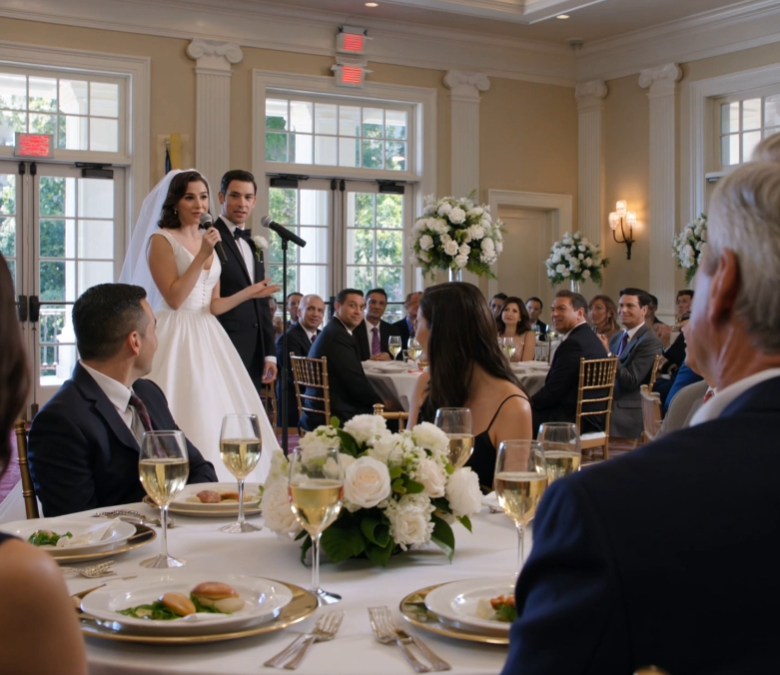
My daughter-in-law had me escorted out of my own son’s wedding by security.
I’m William Miller, and I’ve been building things for 30 years. Ashley thought she was marrying into money. She thought I was just some blue-collar embarrassment who didn’t belong in her perfect social circle.
She had no idea that every word of their prenuptial agreement had been written by the very same uneducated contractor she loved to mock.
And when she activated Clause 23 by humiliating me in front of 280 guests, her fairy tale ended in exactly 72 hours.
I didn’t argue. I didn’t shout. I just smiled and walked away.
If you’re watching this, please subscribe and let me know where you’re watching from, because what happened next proved that sometimes the quiet ones have the sharpest teeth.
And Ashley Sterling Miller was about to learn that respect isn’t inherited. It’s earned.
Let me go back to where this really started.
Two years ago, when David first brought Ashley home, I was wearing my work clothes. Carhartt flannel, steel-toed Red Wing boots, and a Timex watch older than Ashley herself. I’d just finished overseeing the foundation pour for a medical center in Mount Vernon. Twelve-hour day. Concrete dust still on my boots.
Ashley took one look at me and immediately started correcting my pronunciation.
“It’s nuclear, not nucular, Mr. Miller.”
I’d mentioned the nuclear power plant project we were bidding on. She said it like she was teaching a child.
David just stood there and said nothing.
That engagement dinner in Greenwich was worse.
Ashley’s parents came from hedge fund money, third-generation wealth, the kind of people who’d never had concrete under their fingernails.
Ashley introduced me as David’s father.
“He owns a small construction company.”
Small.
Miller Construction employs 260 people across three counties. We’ve built half the schools in Westchester. But Ashley made it sound like I fixed leaky faucets for a living.
Her mother, Katherine Sterling, gave me that perfect, polite smile rich people seem to practice from birth.
“How nice. Manual labor is so honest.”
Ashley laughed.
“Don’t worry, Mother. David’s different. Columbia MBA, investment banking. He won’t be swinging hammers.”
David actually blushed.
“Dad built his company from nothing. It’s actually quite successful.”
“Of course it is, sweetheart,” Ashley cut him off. “I’m sure your father works very hard.”
The way she said works made it sound dirty.
I watched my son shrink in his chair. This woman he claimed to love was making him ashamed of where he came from. Ashamed of me.
But I stayed quiet. I figured David was 32 years old, old enough to make his own choices, even bad ones.
The wedding planning only made things worse.
Ashley would call with updates, talking past me as though I weren’t there.
“David, I’ve booked Meadowbrook Country Club. It’s where the Astors had their daughter’s wedding. Very exclusive. Your father probably wouldn’t be familiar with it.”
I knew Meadowbrook.
Miller Construction had renovated their East Wing in 2019. A $2.3 million job.
But Ashley didn’t need to know that.
She continued her little education campaign, correcting my grammar, explaining proper etiquette whenever I picked up the wrong fork at dinner, and making jokes about my blue-collar vocabulary whenever I used construction terms she didn’t understand.
David never defended me.
Not once.
Then the money requests started.
At first, they were small.
“David, we need $12,000 for the florist. Can your father help?”
Then they got bigger.
“The photographer wants $28,000 upfront.”
Every request came through David, but the money came from me.
Eighty-five thousand dollars for a wedding.
My money was paying for my own humiliation.
Ashley would thank David publicly on social media.
“So grateful for my amazing fiancé making our dream wedding possible!”
No mention of where that money actually came from.
I kept receipts. Bank transfers. Every payment documented and filed, because I’ve learned something in my 68 years.
People will show you exactly who they are if you let them.
Ashley was showing me that she believed wealth made her superior and that my work clothes made me inferior.
She was wrong on both counts.
The final straw came three weeks before the wedding.
Ashley called a family meeting at their Greenwich house. The same house I’d put the down payment on.
Two-point-three million dollars. My signature on the transfer papers.
She wanted to discuss appropriate behavior for the wedding reception.
“Mr. Miller, we’ll be hosting some very prominent families. It would be best if you mingled appropriately. Perhaps with the other vendors.”
Vendors.
She wanted me to eat with the caterers while she paraded around spending my money.
That’s when I realized Ashley had made a critical error.
She’d mistaken my work clothes for my character and my quiet nature for weakness.
She had no idea who she was really dealing with.
Here’s what Ashley didn’t understand about Miller Construction.
We’re not just successful. We’re successful on an entirely different level.
Fifteen-point-two million dollars in annual revenue. Property holdings across three states. Government contracts worth eight figures. The medical center we’d just finished was a $32 million project.
But I drive a 2019 Ford F-250 with work tools in the back. I shop at Home Depot, not Bergdorf Goodman. I eat lunch from a cooler, not at four-star restaurants.
Ashley saw the truck and assumed poverty.
She never saw the portfolio.
And the money trail was getting ridiculous.
My accountant, Sarah Phillips, started asking questions during our quarterly review.
“Bill, you’ve transferred almost $300,000 to David’s accounts this year. The house down payment, wedding expenses, Ashley’s monthly allowance.”
“Allowance?”
“Forty-five thousand annually. David said it was for Ashley’s social obligations.”
I didn’t know about the allowance.
David had been quietly funding Ashley’s lifestyle—shopping, spa treatments, charity galas—with money from the family trust.
Money I’d put there.
Sarah pulled up the bank statements.
“Look at this. Hermès purse, $6,800. Weekly massage therapy, $1,200 monthly. Private Pilates instructor, $800 weekly.”
Ashley was spending my money faster than some people could make it, and she was doing it while insulting the man who’d earned it.
But the real kick in the teeth was the way she talked about me to her friends.
Tommy Johnson, my foreman for 20 years, has a daughter who works at the Greenwich Country Club.
Clare had overheard Ashley at a brunch meeting three months earlier.
“David’s father is sweet, but so embarrassing. He showed up to dinner with dirt under his fingernails. Can you imagine? I had to explain to Mother that David comes from humble beginnings.”
Humble beginnings.
I started Miller Construction with a pickup truck and $2,000 borrowed against my toolbox.
I built it into an operation that employs families across three counties, puts kids through college, pays for healthcare for retirees, and has donated millions to local charities.
But Ashley told her friends I was an embarrassment.
Clare heard more.
“I keep trying to educate him about proper society, but you can’t polish granite, you know. Thank God David turned out different.”
That’s when I realized what was really at stake here.
This wasn’t just about wedding humiliation.
Ashley was systematically erasing my family’s history, making David ashamed of his roots, ashamed of me.
And she was doing it with my money.
The deeper I dug, the worse it got.
Ashley had been feeding David a steady diet of social anxiety about his background. She’d convinced him that his Harvard MBA friends looked down on his contractor father.
David started declining family dinner invitations, saying he was busy with work.
But Tommy’s daughter saw him and Ashley at country club events on those same nights.
Events paid for with money from the Miller family trust.
The financial manipulation was surgical.
Ashley never asked me directly for money. She always went through David, making him feel like he was providing for her, making him feel sophisticated and generous.
Meanwhile, she was bleeding the family finances dry while insulting the source.
Three weeks before the wedding, I made a decision.
I called my attorney. Not the construction company lawyer. Someone else entirely.
And I asked a simple question.
“If someone takes money from a family trust while openly disrespecting the family patriarch, are there legal remedies?”
“Depends on how the trust is structured, Bill, and whether there’s documentation of the disrespect.”
I had documentation.
Bank records. Witness statements from Tommy’s daughter. Social media posts where Ashley thanked her “amazing David” for things I’d paid for.
But I needed more.
I needed Ashley to show her true character publicly, in front of witnesses who mattered.
“What would trigger a trust modification review?”
“Public behavior that violates the family’s stated values, breach of good faith, or violation of specific behavioral clauses.”
That’s when I remembered the prenuptial agreement.
The 89-page document Ashley had signed without reading carefully.
The document David assumed had been written by some generic family attorney.
It wasn’t.
I’d written every word. Every clause. Every subsection.
Including Section 23.
The public humiliation provision.
Ashley thought she was marrying up into money.
But she was actually marrying into a legal trap I’d spent months constructing.
A trap that required only one thing to activate.
Ashley showing her true character in public.
The wedding was 18 days away.
Ashley was planning the social event of her season, surrounded by Greenwich society’s finest families.
She had no idea she was walking into a courtroom.
And I was about to be both the prosecutor and the judge.
The first real confrontation happened at the final menu tasting.
Meadowbrook Country Club. Private dining room. Two weeks before the wedding.
Ashley invited me as an afterthought.
“David thinks you should be there, Mr. Miller, since you’re contributing.”
Contributing.
Like I was some distant uncle chipping in for flowers.
The executive chef, Marcus Bradley, knew me from the renovation project. He greeted me with professional respect and a firm handshake.
“Mr. Miller, good to see you again. How’s the new medical center coming along?”
Ashley’s eyes sharpened.
“You two know each other?”
“Bill’s company did our East Wing renovation,” Marcus explained. “Beautiful work. Came in ahead of schedule, under budget.”
I watched Ashley process this information.
Her perfect smile flickered for just a moment.
The tasting continued. Appetizers, entrées, wine pairings.
Ashley played hostess, explaining flavor profiles to David as though he’d never eaten at a restaurant before.
Then she turned to me.
“Mr. Miller, I hope the selections aren’t too sophisticated for your palate.”
Sophisticated.
The woman was serving chicken and vegetables at $1,850 per plate.
My money buying ingredients I could get at Stop & Shop for $30.
“It’s fine, Ashley.”
“Wonderful. I was worried the flavors might be too complex.”
David shifted uncomfortably.
“Dad has good taste, Ash.”
“Of course he does, sweetheart. Different taste. Working-class preferences.”
Working-class preferences.
Like my money had a flavor.
Marcus raised an eyebrow but stayed professional.
“The wine selection, Mr. Miller. What do you think of the Burgundy?”
“Nice complexity. Good structure. Reminds me of the 2009 Domaine de la Romanée-Conti I had in Napa last year.”
Silence.
Ashley blinked.
“You’ve been to Napa?”
“Business trip. Client entertainment.”
I didn’t mention that the client was a federal judge or that the trip had cost $14,000.
Let Ashley wonder.
The conversation moved to wedding logistics. Seating arrangements, photography timelines, music cues.
Ashley dominated every discussion, explaining decisions as though she were teaching a master class.
“The processional music will be Pachelbel’s Canon. You might know it as the wedding song, Mr. Miller.”
I knew it as Canon in D Major, written by Johann Pachelbel around 1680.
But I let her have her moment.
Then Ashley made her mistake.
“David, we need to discuss the guest list one more time. I’ve been thinking about the seating arrangements, and honestly, some of your father’s friends might not fit the venue’s atmosphere.”
“What friends?”
“Well, those construction workers you invited. Tommy, was it? And his wife? I’m sure they’re lovely people, but Meadowbrook has a certain standard.”
Tommy Johnson.
Twenty years building this company together. We’d worked through ice storms and heat waves. He’d missed his own daughter’s graduation to finish a hospital emergency room on time.
And Ashley wanted to uninvite him because he didn’t own a tuxedo.
“Tommy stays,” I said quietly.
Ashley’s hostess smile tightened.
“Mr. Miller, I understand loyalty, but this is a very exclusive venue. The other guests are federal judges, Fortune 500 executives, European diplomats. Your workers might feel out of place.”
“They built half the buildings those executives work in.”
“I’m sure they did, but there’s a difference between building something and belonging somewhere.”
David stared at his plate.
He said nothing.
That’s when I realized my son wasn’t embarrassed by Ashley’s behavior.
He agreed with it.
“The guest list is finalized,” Ashley continued. “I’ve worked very hard to curate the perfect group. People who understand proper etiquette, appropriate conversation topics, social expectations.”
“And Tommy doesn’t?”
“Let’s just say he might be more comfortable at a different type of celebration.”
A different type.
Like a backyard barbecue where the working class belonged.
Marcus cleared his throat.
“Should I give you folks some privacy?”
“No need,” Ashley said quickly. “We’re all family here.”
She paused.
“Well, mostly family.”
Mostly family.
I was paying for the wedding, but I was only mostly family.
“Ashley,” I said slowly, “Tommy Johnson saved three lives when the Martin Building collapsed in 2018. Pulled men from burning rubble with his bare hands. The governor gave him a medal.”
“I’m sure he’s very brave, Mr. Miller, but bravery doesn’t necessarily translate to social grace.”
Social grace.
She was questioning the social grace of a man who’d risked his life for strangers.
That’s when I made my decision.
Not about the wedding. That plan was already in motion.
About Ashley herself.
“You know what, Ashley? You’re absolutely right.”
She brightened, thinking she’d won.
“Tommy doesn’t belong at your wedding. Because your wedding isn’t about family. It’s about performance.”
Her smile faltered.
“And I don’t belong there either.”
“Mr. Miller, I didn’t mean—”
“Yes, you did. You meant exactly what you said. I’m an embarrassment. My friends are beneath your standards. My money is good enough, but my presence isn’t.”
David finally looked up.
“Dad, that’s not what she meant.”
“It’s exactly what she meant, son. And you know what? I’m okay with it.”
I stood up.
“Enjoy your perfect wedding, Ashley. All $300,000 of it.”
Ashley’s face went white.
She hadn’t known the exact amount.
“The checks will clear. The vendors will be paid. The Burgundy will flow. And you can tell all your sophisticated friends exactly what you think of the blue-collar grandfather who made it possible.”
I walked toward the door.
“But remember this, Ashley. Respect isn’t inherited. It’s earned. And you just lost mine.”
I left them sitting there.
Ashley speechless. David confused. Marcus pretending to clean imaginary spots off wineglasses.
The 72-hour countdown had begun.
Ashley just didn’t know it yet.
The next morning, Ashley called. It was the first time she’d ever dialed my number directly.
“Mr. Miller, I think we need to talk.”
“About what, Ashley?”
“Yesterday, I may have misspoken about the guest list.”
Misspoken. As though systematic humiliation were nothing more than a vocabulary error.
“Tommy can come to the wedding,” she continued. “I’ll adjust the seating chart.”
Too late. But I stayed quiet and let her talk.
“I’d like to meet. Clear the air. Maybe you could explain some of the contract details for the venue.”
Contract details.
Ashley wanted to understand what she was signing.
Smart girl. Wrong timing.
We met at a coffee shop in Mount Vernon, neutral territory. Ashley arrived in a Tesla Model S with white leather seats and temporary plates. David had just bought it for her. My money, of course.
She sat across from me, carrying a designer handbag worth more than most people’s monthly salary, trying to look humble.
“Mr. Miller, I want to apologize. I sometimes get overwhelmed with wedding planning. All the details, the pressure to make everything perfect.”
“I understand.”
“I never meant to make you feel unwelcome. You’re family. David’s father. That’s important to me.”
She was good. Sincere tone, appropriate eye contact, just enough vulnerability to seem genuine.
Then she got to what she’d really come to discuss.
“The prenuptial agreement,” she continued. “David says you helped with some of the language.”
“Some of it.”
“It’s very comprehensive. Eighty-nine pages. That’s unusual, isn’t it?”
“Depends on the assets involved.”
Ashley leaned forward.
“I have to admit, some of the legal terminology is confusing. Subsections, clauses, behavioral provisions. Where did you learn to write like that?”
Interesting question. Ashley was finally paying attention to details.
“I read a lot.”
“But this is sophisticated legal language. Whereas clauses, Latin terms, cross-references to state statutes. It reads like it was written by an attorney.”
She was fishing, trying to understand how a contractor knew constitutional law.
“I’ve dealt with a lot of contracts over the years, Ashley. Government bids, union negotiations, municipal agreements. You pick things up.”
“Section 23 is particularly detailed. Public behavior standards, witness requirements, verification procedures. It’s almost like…”
“Like what?”
“Like someone anticipated specific problems.”
Smart girl. She was starting to see the trap.
“Good contracts anticipate problems, Ashley. That’s why they’re comprehensive.”
“But some of these clauses seem very personal. Like someone knew exactly what behaviors to prohibit.”
I sipped my coffee.
“You signed it. Must have seemed reasonable at the time.”
“I trusted David. He said it was standard family protection language.”
“It is.”
She studied me for another moment.
“Mr. Miller, can I ask you something directly?”
“Sure.”
“Did you write this prenup yourself?”
A direct question. I respected that.
“Ashley, does it matter who wrote it? You read it. Your attorney reviewed it. You signed it voluntarily.”
“That’s not an answer.”
“It’s the only answer you need.”
She stared at me for a long moment. Behind those blue eyes, I could see her mind working, adding up the timeline, the sophisticated language, my calm confidence.
“There are law books in your garage,” she said quietly.
“What?”
“When I picked up David last month, I saw them behind your tool cabinet. Commercial law, contract theory, constitutional precedents. Old books, but well-maintained.”
Very observant. I’d underestimated Ashley’s attention to detail.
“I like to read.”
“Harvard Law Review, Volume 92, 1979. Your name is on the subscription label.”
Damn.
She’d been snooping more carefully than I realized.
“Ashley, what exactly are you asking me?”
“I’m asking if David’s contractor father is actually a lot more than he pretends to be.”
“And if I am?”
“Then I need to understand what I signed. Because a man who writes 89-page contracts doesn’t do it by accident.”
Smart girl. Finally asking the right questions.
“You should probably have your attorney review the document again, Ashley. Particularly Sections 20 through 31.”
“Why those sections specifically?”
“Because those are the ones that apply to our current situation.”
I stood up to leave.
“Mr. Miller, are you threatening me?”
“Ashley, threats are what weak people use. I deal in contracts.”
“What’s that supposed to mean?”
“It means you should read your prenup more carefully. All of it, not just the financial clauses.”
“And if I don’t like what I find?”
“Then you shouldn’t have signed it.”
Wedding day. May 18, 2024.
Meadowbrook Country Club looked perfect. Ashley had outdone herself. Two hundred and eighty guests, flowers from the most expensive florist in Greenwich, a five-tier French vanilla cake that cost more than most people’s cars, and professional photographers capturing every angle.
I arrived at 4:30 p.m., 30 minutes before the ceremony.
Pressed khakis, navy blazer, white shirt. Respectable but not fancy.
I looked like exactly what Ashley expected: the working-class father trying to fit in.
Tommy Johnson was there with his wife, Marie. Both dressed appropriately, both grateful to be included. They didn’t know Ashley had tried to uninvite them.
The guest list was impressive. Federal Judge Patricia Collins from the Southern District of New York. Goldman Sachs executives. Connecticut state senators. European diplomats, just as Ashley had mentioned. Old money, new money, political money. All of them there to witness what Ashley thought would be her triumph.
I found my assigned seat at Table 12, toward the back. It was a mixed group of distant relatives and family friends, the less important table where Ashley could park people she had to invite but didn’t want prominently displayed.
A perfect position to watch everything unfold.
David stood at the altar in his custom tuxedo, nervous but happy. He genuinely loved Ashley despite her flaws. I felt sorry for what was coming.
Ashley made her entrance at exactly 5:00 p.m.
Vera Wang wedding dress, $18,500. Custom veil, hand-sewn pearls, cathedral train. She looked stunning and completely confident that this was her moment of social triumph.
The ceremony was flawless. Traditional vows, classical music, photography that would look perfect in society magazines. Ashley had choreographed every detail.
During the reception cocktail hour, I mingled appropriately. I talked construction with some city councilmen, discussed municipal contracts with a few lawyers, and stayed quietly in my lane.
Ashley worked the room like a professional politician. Air kisses, champagne toasts, animated conversations about charity galas and summer homes. She was in her element, moving effortlessly from one group to another, making every guest feel as though their presence had been personally arranged for her benefit.
Then came dinner.
Prime rib, lobster tail, wine pairings that cost more per glass than most people spend on a bottle.
Ashley gave a perfect toast, thanking everyone for sharing their special day.
No mention of who paid for it.
That’s when Ashley made her fatal mistake.
The band had started playing, and couples were dancing when Ashley grabbed the microphone from the bandleader. She was glowing with champagne confidence.
“Ladies and gentlemen, can I have your attention?”
The crowd quieted. Ashley loved being the center of attention.
“I want to thank you all for being here tonight. David and I are so grateful to celebrate with such wonderful friends and family.”
Polite applause followed.
“You know, when David first brought me home to meet his family, I wasn’t sure what to expect. David comes from such humble beginnings.”
A few people shifted uncomfortably.
“His father, William, is here tonight. He owns a small construction company. Very sweet man. Works with his hands.”
She gestured toward my table.
Two hundred and eighty pairs of eyes turned to look at the blue-collar father.
“I have to admit, I was worried at first. How would someone from David’s background fit into our social circle? But I’ve learned that love transcends class differences.”
Class differences.
She was explaining to Greenwich society how she’d overcome the challenge of marrying beneath her social station.
“William has been so generous helping with wedding expenses. It means a lot to have family support, even from unexpected sources.”
Unexpected sources.
As though money from poor people were particularly surprising.
“I know William probably feels a little out of place tonight. This isn’t his usual environment. But I want him to know he’s welcome here, even if he doesn’t quite understand our traditions.”
The crowd was getting uncomfortable now.
A few people glanced at me sympathetically.
“So, let’s all give a warm round of applause to William Miller, the working man who helped make tonight possible.”
She started clapping enthusiastically.
The crowd joined in awkwardly, unsure whether they were witnessing gratitude or cruelty.
That’s when I saw Judge Patricia Collins at Table Three.
My Harvard Law School classmate from 1979.
Her face was stone serious as she watched the performance with obvious distaste.
Ashley continued, riding her champagne confidence.
“You know, David used to be embarrassed by his father’s profession. But I’ve taught him there’s no shame in honest work, even if it’s not particularly sophisticated work.”
As though construction required no intelligence, no skill, no education.
“William, would you stand up? Let everyone see the man who built his little company from nothing.”
Little company built from nothing.
Ashley was systematically reducing my life’s work to a heartwarming poverty story for her wealthy friends’ entertainment.
I stood up slowly.
Two hundred and eighty people stared at the working-class father being patronized by his son’s new wife.
“There he is! Isn’t he sweet? Still has concrete dust under his fingernails.”
A few people laughed uncomfortably. Others looked away.
“William probably doesn’t realize it, but tonight is costing more than his annual salary. But that’s okay. We believe in taking care of family, even the less fortunate ones.”
Less fortunate.
Ashley had just called me less fortunate at my own son’s wedding, using my own money.
She was livestreaming this on Instagram.
Twenty-three thousand viewers were watching her humiliate David’s father for social media content.
Judge Collins was whispering to her table companions. I could see recognition dawning on her face.
“So, thank you, William Miller, for working so hard to help us afford this beautiful celebration. We promise to remember the little people who made tonight possible.”
Little people.
She’d just called the man who paid for her wedding a little person in front of federal judges, Fortune 500 executives, and 23,000 Instagram followers.
That’s when Tommy Johnson started to stand up.
His face was red with anger. Marie grabbed his arm, trying to keep him seated, but I caught Tommy’s eye and shook my head slightly.
Not yet.
Ashley finally put the microphone down, beaming with satisfaction.
She’d just delivered what she thought was a gracious speech acknowledging the working-class father.
She had no idea she’d just triggered Section 23 of her prenuptial agreement.
Public humiliation? Check.
Witnesses from multiple social strata? Check.
Recorded evidence? Check.
Documentation of class-based disparagement? Check.
The 72-hour countdown was now officially active.
I sat back down and smiled calmly.
Several people at my table looked embarrassed for me. One older woman patted my hand sympathetically.
“You don’t deserve that treatment,” she whispered.
“It’s fine,” I replied quietly. “Ashley’s just being Ashley.”
But it wasn’t fine.
And Ashley wasn’t just being Ashley.
Ashley had just activated the most devastating legal document she’d ever signed.
She simply didn’t know it yet.
Judge Patricia Collins didn’t wait long.
Ten minutes after Ashley’s speech, I saw Patricia excuse herself from Table Three and walk directly toward me. She moved with the quiet authority that comes from 20 years on the federal bench.
“William Miller,” she said, extending her hand. “Patricia Collins, Southern District of New York.”
I stood and shook her hand.
“Patricia, good to see you. It’s been, what, 45 years? You look exactly the same.”
The conversation at my table stopped. Everyone was listening now.
“Hard work keeps you young,” I replied.
Patricia smiled.
“I imagine it does. Though I have to say, I’m surprised to find you here. Last I heard, you’d left law for business ventures.”
“Construction,” I said simply.
“Yes, I gathered that from the charming introduction we just witnessed.”
Her tone carried the edge that made federal prosecutors nervous.
“Patricia,” I said carefully, “would you mind if we spoke privately?”
“Actually, William, I think this conversation should be public.”
She turned to face the broader room, her voice carrying with the projection skills every judge develops.
“Ladies and gentlemen, I hate to interrupt the festivities, but I feel compelled to make an introduction.”
The band stopped playing. Conversations died.
Ashley looked over from the dance floor, annoyed by the disruption.
“I’ve just had the pleasure of reconnecting with an old friend, William Miller. We graduated from Harvard Law School together in 1979.”
Silence.
Complete silence.
Ashley’s face went white.
“William finished in the top ten percent of our class. Specialized in constitutional law and contract theory. He was particularly gifted at complex legal writing.”
Judge Collins was looking directly at Ashley now.
“After graduation, William worked for Morrison, Bradley, and Associates in high-end commercial litigation. He was being groomed for partnership when he made the unusual decision to leave law entirely.”
David’s mouth was hanging open.
His wife had just spent ten minutes patronizing a Harvard-trained attorney in front of federal judges.
“William, didn’t you handle the Consolidated Steel case in ’85? The one that set precedent for employment contract enforcement?”
“Among others,” I replied quietly.
“And the municipal bond litigation for New York City? That was brilliant work.”
Tommy Johnson was grinning now. Marie looked confused but pleased. The rest of my table was staring at me like I’d just revealed I was secretly Superman.
Judge Collins continued, her voice carrying across the room.
“I’m curious, William. What made you leave such a promising legal career?”
This was the question I’d dreaded for 25 years.
But tonight, in front of Ashley and her society friends, it felt like the right time to answer.
“My wife died in 1987. Cancer. David was five years old.”
The room was completely quiet now.
“I was working 80-hour weeks, billing clients, building cases, missing bedtime stories, missing school plays, missing life. When Sarah died, I realized I’d been missing what mattered.”
I looked at David.
“I wanted to build something I could share with my son. Something real, tangible, where we could work together.”
“So you started a construction company,” Judge Collins said.
“Started small. Pickup truck, basic tools, willingness to work. David used to come to job sites on weekends. Learned the business from the ground up.”
I let my eyes move toward my son again.
“And now Miller Construction employs 260 people. We’ve built schools, hospitals, and municipal buildings across three states. Fifteen-point-two million in annual revenue.”
Ashley looked like she was going to be sick.
“But you kept your legal skills sharp,” Judge Collins observed.
“Hard to turn off that kind of training. I still review all our contracts personally. Government bids, union negotiations, insurance policies, complex legal documents.”
“Such as prenuptial agreements?”
The question hung in the air like a sword.
“When necessary.”
Judge Collins smiled.
“Well, this certainly explains the quality of legal writing I’ve been hearing about.”
“What legal writing?” someone called out.
Patricia turned to the crowd.
“Earlier this week, I had occasion to review a prenuptial agreement. Eighty-nine pages of the most sophisticated contract language I’ve seen outside federal court. Whoever wrote it understood not just family law, but constitutional principles, evidence standards, and behavioral psychology.”
She paused dramatically.
“I wondered what attorney could draft something so comprehensive.”
Ashley was backing toward the exit.
David looked paralyzed.
“Now I know,” Patricia continued. “William Miller didn’t just review his son’s prenuptial agreement. He wrote it. Every clause, every subsection, every provision.”
The crowd was buzzing now.
Society people love gossip, and this was premium material.
“Including,” Patricia said, her judge’s voice cutting through the chatter, “Section 23. The public humiliation clause.”
Ashley stopped backing up.
She looked trapped.
“Which, if I understand correctly, was just activated approximately 15 minutes ago.”
Tommy Johnson started laughing.
Actually laughing out loud.
Other construction workers at surrounding tables joined in. They understood what was happening.
Ashley had just humiliated a Harvard lawyer who’d written her prenup to prevent exactly that behavior.
“William,” Judge Collins said formally, “as an officer of the court, I’m obligated to ask: Was tonight’s public disparagement recorded?”
“Instagram Live. Twenty-three thousand viewers.”
“And witnessed by how many people in this room? Two hundred and eighty, including federal judges, state officials, and business executives?”
“Yes.”
“Then I believe you have sufficient evidence to proceed with whatever remedies your contract provides.”
David finally found his voice.
“Dad, what is she talking about?”
I looked at my son with genuine sadness.
“I’m talking about the prenuptial agreement you thought was written by some generic family lawyer. The one Ashley just violated in the most public way possible.”
“Violated how?”
“Section 23 prohibits public humiliation or disparagement of family members. It requires basic respect and dignity in all social interactions.”
Ashley tried to interrupt.
“That was a nice speech. I was being grateful.”
Judge Collins raised an eyebrow.
“My dear, I’ve been interpreting intent and language for 20 years. What we just witnessed was systematic public humiliation designed to elevate your social status by diminishing your father-in-law’s dignity.”
“It wasn’t—”
“You called him ‘little people.’ You said he doesn’t understand your traditions. You explained to this room how you’d overcome the challenge of marrying into a working-class family.”
The judge’s voice was ice cold.
“Now, as legal analysis goes, that’s textbook disparagement with malicious intent.”
Ashley looked desperately at David.
“Honey, you know I didn’t mean—”
“Ashley,” I said quietly, “intent doesn’t matter. Impact does. And Section 23 is very clear about consequences.”
“What consequences?”
“Automatic review of all financial arrangements, immediate suspension of trust fund access, and complete restructuring of marital asset distribution.”
The room was dead silent.
“In simple terms, Ashley, you just lost access to the Miller family money. All of it.”
David grabbed my arm.
“Dad, you can’t be serious.”
“I didn’t write the contract for fun, son. I wrote it because I knew this day would come.”
Ashley was crying now.
Real tears, not performance tears.
“But the house, the car, the allowance…”
“All funded by the Miller Family Trust. All subject to the behavioral clauses you just violated.”
Judge Collins nodded approvingly.
“Elegant legal work, William. You created a character test disguised as a financial document.”
“I created protection for my family’s dignity. And Mrs. Sterling Miller failed the test spectacularly.”
Ashley sank into a chair, finally understanding the magnitude of her mistake.
She’d spent two years taking money while showing contempt for its source.
Tonight, she’d publicly humiliated the man who’d written her marriage contract, and every word of it had been planned, anticipated, and legally documented.
The Harvard lawyer had been quietly building his case for two years.
Ashley never stood a chance.
Monday morning, 9:00 a.m. sharp.
I was sitting in my attorney’s office in White Plains. Not the construction company lawyer. My personal attorney, Michael Rodriguez, who specializes in family trust litigation and contract enforcement.
“Bill, I’ve reviewed the weekend’s events. The Instagram recording, witness statements, social media responses. You have an airtight case.”
The video evidence was devastating. Ashley’s entire speech had been recorded in high definition, preserved for legal posterity. Twenty-three thousand viewers had watched her systematically humiliate her father-in-law while bragging about spending his money.
“Section 23 is crystal clear,” Michael continued. “Public disparagement triggers immediate trust fund suspension and asset review. The behavioral standards were violated in the most public way possible.”
“What’s the timeline?”
“Seventy-two hours from the triggering event. That gives us until Thursday morning to complete the legal notifications.”
I’d written the contract that way deliberately. Fast enough to prevent asset hiding, slow enough to seem reasonable to any reviewing court.
“Ashley’s attorney called this morning,” Michael said. “Wants to negotiate.”
“No negotiations. The contract is clear.”
“She’s claiming the speech was meant to be complimentary.”
“Then she should have read her prenup more carefully.”
Michael pulled out a thick folder.
“Let’s review the specific violations.”
The evidence was overwhelming.
Section 23, Subsection A: Public disparagement of family members. Ashley’s speech contained 12 separate instances of condescending language designed to diminish my professional reputation.
Section 23, Subsection B: Class-based discrimination. Ashley had explicitly contrasted her social circle with my background in terms designed to establish superiority.
Section 23, Subsection C: Financial manipulation acknowledgment. Ashley had publicly admitted spending family money while considering the source less fortunate.
Section 23, Subsection D: Recorded evidence standard. The Instagram livestream provided perfect documentation, complete with timestamps and view counts.
“The enforcement mechanisms kick in automatically,” Michael explained. “No court hearing required for the initial asset freeze.”
I’d designed it that way.
Contract law allows immediate enforcement of clearly defined behavioral clauses when the evidence is unambiguous.
“What about David?”
“Your son isn’t liable for Ashley’s violations, but as her husband, he’s affected by the trust restructuring.”
The phone rang.
Michael answered, listened briefly, then hung up.
“That was Ashley’s attorney again. She wants to meet. Apparently, she’s just discovered the full scope of Section 23’s enforcement provisions.”
“Too late for meetings.”
“Bill, she’s panicking. Her attorney says she never read the behavioral clauses carefully. She only focused on the financial sections.”
Classic mistake.
Ashley had been so focused on protecting her access to money that she’d ignored the character requirements for keeping it.
“She signed it voluntarily. Had legal representation. Can’t claim ignorance now.”
Michael reviewed the asset list.
“The house reverts to Miller Family Trust ownership immediately. Ashley’s name comes off the deed by Wednesday. The car, also a trust-funded purchase, reverts as well. Monthly allowance suspended as of this morning. Bank accounts frozen pending full asset review.”
The scope was devastating, but legal.
Every dollar Ashley had access to came from the Miller Family Trust, and the trust had specific behavioral requirements she’d just violated publicly.
“David’s calling,” Michael said, looking at his phone. “Should I answer?”
“Put him on speaker.”
“Dad, what the hell is happening? Ashley’s crying. Her lawyer’s freaking out, and she says we’re losing the house.”
“You’re not losing anything, David. Ashley is.”
“But we live together. We’re married.”
“Son, the prenup was very clear about individual versus marital assets. Ashley signed away her rights to family trust money if she violated the behavioral clauses.”
“What behavioral clauses?”
“The ones she spent two years ignoring while spending our money.”
Silence on the phone.
“David, your wife publicly humiliated me in front of federal judges while explaining how she’d overcome the burden of marrying into a working-class family. She livestreamed it to 23,000 people.”
“She was trying to be nice.”
“She was trying to be superior. And the contract I wrote prevents that.”
“You wrote the contract?”
“Every word. Including the parts designed to protect our family’s dignity from exactly this kind of behavior.”
Another pause.
Then David’s voice came back, quieter.
“Dad, what happens now?”
“That depends on Ashley. And on you.”
“What do you mean?”
“The trust restructuring affects your access too, son. Not permanently, but until we establish new behavioral standards for the family.”
“You’re cutting me off?”
“I’m requiring respect from both of you. The money comes with responsibilities.”
Michael was taking notes, documenting every conversation for the legal file.
“Ashley wants to apologize,” David said.
“Apologies don’t undo public humiliation. But changed behavior might.”
“Changed how?”
“Read Section 24, David. The redemption clauses. I didn’t write this contract to destroy your marriage. I wrote it to save our family’s dignity.”
“What do the redemption clauses say?”
“That’s between Ashley and her attorney. But I’ll give you a hint. They involve public acknowledgment, genuine contrition, and demonstrable behavior change over time.”
“How much time?”
“Minimum six months. Could be longer depending on how seriously Ashley takes the requirements.”
“And if she doesn’t?”
“Then she loses everything permanently. The house, the car, the allowance, access to family money. All of it.”
The line went quiet for a long moment.
“Dad, why didn’t you tell me who you really were?”
“I did tell you, son. I told you every day by how I lived. Ashley chose to see only what she wanted to see.”
“But the Harvard degree, the legal background…”
“Doesn’t make me better than Tommy Johnson or anyone else in this company. But it does make me smart enough to protect our family from people who think it does.”
David was silent again.
“What do you want from us?”
“Respect, David. The same respect I’ve shown you your entire life.”
“And if we give it?”
“Then we’re still family.”
The 72 hours were ticking down.
Ashley had 48 hours to decide what mattered more: her pride or her lifestyle.
I knew which one she’d choose.
The question was whether David would choose with her.
Wednesday morning, at the 48-hour mark, Ashley’s attorney called at 7:30 a.m.
She was ready to accept the redemption clause requirements.
The process was humbling by design.
I’d written Section 24 to be comprehensive but fair. Ashley had to rebuild trust the same way she’d destroyed it: publicly and systematically.
The first requirement was public acknowledgment.
Ashley had to post a video on the same Instagram account where she’d humiliated me. Twenty-three thousand followers would hear her admit she’d been wrong about my background, my intelligence, and my worth.
She recorded it Tuesday night.
Three takes.
Her social media following dropped by 67 percent within 24 hours.
Apparently, Greenwich society didn’t enjoy watching their golden girl eat crow.
The second requirement was making direct amends to the people she’d hurt.
Ashley had to personally apologize to Tommy Johnson and his wife, in person, at their home, with genuine contrition.
Tommy later told me she cried.
Real tears.
She said she was ashamed and wanted to learn how to be better.
Marie made her coffee, and they talked for two hours.
The third requirement was financial transparency.
Ashley had to acknowledge publicly how much family money she’d spent and where it came from. The $300,000 in wedding costs, house down payment, monthly allowances, and car payments were all detailed, all attributed to the Miller Family Trust.
Her Greenwich friends were shocked.
They’d assumed Ashley came from old money.
Learning that her lifestyle was funded by a contractor changed how they saw her.
Several country club invitations were quietly rescinded.
The fourth requirement was a behavioral modification program: six months of weekly family dinners at my house.
Ashley had to participate in conversations about the construction business, treat Tommy and my other employees with respect, and demonstrate genuine interest in the work that funded her lifestyle.
The first dinner was painful.
Ashley sat stiffly, clearly uncomfortable in my modest dining room after months of country club elegance.
But she listened when Tommy talked about the new hospital project. She asked intelligent questions and showed real curiosity about concrete foundation techniques.
The fifth requirement was charitable service.
Ashley had to volunteer for six months at Habitat for Humanity, working alongside construction workers she’d previously considered beneath her social circle.
She would get her hands dirty and learn what physical labor actually required.
She hated it the first week.
Complained about broken nails and sore muscles.
But something changed after she helped frame a house for a single mother.
She started understanding the dignity in building something solid with your own hands.
The social consequences were immediate and brutal.
Greenwich society operates on hierarchy and status. When Ashley publicly revealed her dependency on working-class money, her position in that hierarchy collapsed.
Her social media influence evaporated. Brand sponsorships disappeared. Charity gala invitations stopped coming.
The social world she’d worked so hard to dominate suddenly wanted nothing to do with her.
But something unexpected happened.
As Ashley lost her superficial social circle, she started building genuine relationships.
With Marie Johnson, who taught her about loyalty and family.
With the Habitat volunteers, who showed her what real accomplishment looked like.
David struggled initially.
His wife’s public humiliation reflected on him professionally. Investment banking colleagues asked awkward questions about his family background. Some distanced themselves from the social embarrassment.
But David also started changing.
He began coming to construction sites again for the first time in years.
He asked questions about the business and talked about maybe transitioning from finance to running Miller Construction’s expansion into commercial development.
The financial impact was precisely what I’d designed.
Ashley kept access to basic living expenses but lost access to luxury spending.
The monthly allowance dropped from $45,000 annually to $12,000.
Enough for necessities. Not enough for designer handbags.
The house stayed in Miller Family Trust ownership.
Ashley and David could live there, but only as long as they maintained the behavioral standards outlined in the contract.
One more public humiliation incident, and they’d be looking for apartments.
Judge Patricia Collins called me six weeks after the wedding.
“William, I wanted you to know your contract enforcement is being studied at Harvard Law School. Professor Martinez is using it as a case study in behavioral contract design.”
“Good or bad example?”
“Brilliant example. You created a legal framework for enforcing basic human decency. It’s innovative family law.”
The broader impact surprised me.
Word spread through legal circles about the Miller precedent, using contract law to protect family dignity.
Three other attorneys contacted me about drafting similar agreements for their clients.
Ashley’s transformation wasn’t instant or complete.
She had setbacks, moments when her old entitlement surfaced.
But the contract structure created accountability that forced genuine change.
The most satisfying moment came four months later.
Ashley was working at a Habitat site, installing drywall, when a federal judge’s wife showed up as a volunteer.
Instead of reverting to her old social-climbing behavior, Ashley simply introduced herself and got back to work.
She was learning that respect comes from character, not connections.
David noticed.
He started calling more often and brought Ashley to Sunday dinners without prompting.
They were becoming family again.
Real family, based on mutual respect instead of financial dependency.
The contract had worked exactly as I’d designed it.
Justice served. Dignity restored. Family preserved.
Six months later, Ashley finished her Habitat for Humanity service requirement.
Her final project was a three-bedroom house for a military veteran and his family.
Ashley had learned enough construction skills to frame walls, install insulation, and lay flooring.
Her hands were calloused now. Her manicure was perpetually chipped.
She looked more genuine than she had in years.
The family dinner that Sunday was different.
Ashley arrived in work clothes, bringing photos from the Habitat site.
She was excited to show me the electrical work she’d learned to do.
“Bill,” she said.
Not Mr. Miller anymore.
“Bill, I want to thank you.”
“For what?”
“For not letting me stay terrible.”
David smiled.
He’d been watching his wife’s transformation with amazement and pride.
“I was terrible,” Ashley continued. “Entitled, condescending, blind to my own privilege. I treated you like a servant while spending your money. I’m ashamed of who I was.”
“You were young. You learned.”
“I learned because you made consequences real. You could have just cut us off and walked away. Instead, you gave me a chance to become better.”
Ashley paused, choosing her words carefully.
“I understand now why you left law for construction. You wanted to build something real with David. Something that would last.”
“And did I?”
She looked around the table.
David was sketching building plans on napkins, explaining his ideas for Miller Construction’s new commercial division.
Tommy Johnson and his wife were sharing stories about their granddaughter’s college acceptance.
“Yes,” Ashley said. “You built a family.”
The redemption clause period was officially over, but the behavioral changes had become permanent.
Ashley volunteered at Habitat every Saturday now, by choice.
She’d started a blog about construction industry philanthropy that actually attracted meaningful readership.
Most importantly, she’d learned the difference between respect and submission.
She challenged my ideas when she disagreed, but with logic and evidence, not condescension.
“What happens now?” David asked. “With the trust, the contract restrictions?”
“Now we renegotiate. Equal partners, mutual respect, shared responsibilities.”
“And if Ashley slips back into old patterns?”
“Then the contract provisions remain in effect. But I don’t think that’s going to happen.”
Ashley shook her head firmly.
“Never again. I like who I’m becoming too much to go backward.”
I looked at my son and daughter-in-law.
Really looked at them.
They were building something solid together now, something based on character instead of status.
“Remember this,” I said. “Respect isn’t inherited. It’s earned every day through every choice you make.”
“We will,” David promised.
“Good. Because that’s the only wealth that actually matters.”
Ashley squeezed my hand.
“Thank you for teaching me that.”
“Thank you for learning it.”
Outside, Tommy was loading construction materials for Monday’s project. Real work. Building something that would last, just like family should be.
Have you ever been underestimated because of how you look or what you do? Let me know in the comments where you’re watching from and what happened when people realized they were wrong about you.
Because sometimes the quiet ones really do have the sharpest teeth.








