My daughter-in-law called me a failure at my son’s funeral in front of 50 people. i said nothing. 3 days later, she walked into the boardroom for her big promotion, smiled, and saw me… sitting in the ceo’s chair.
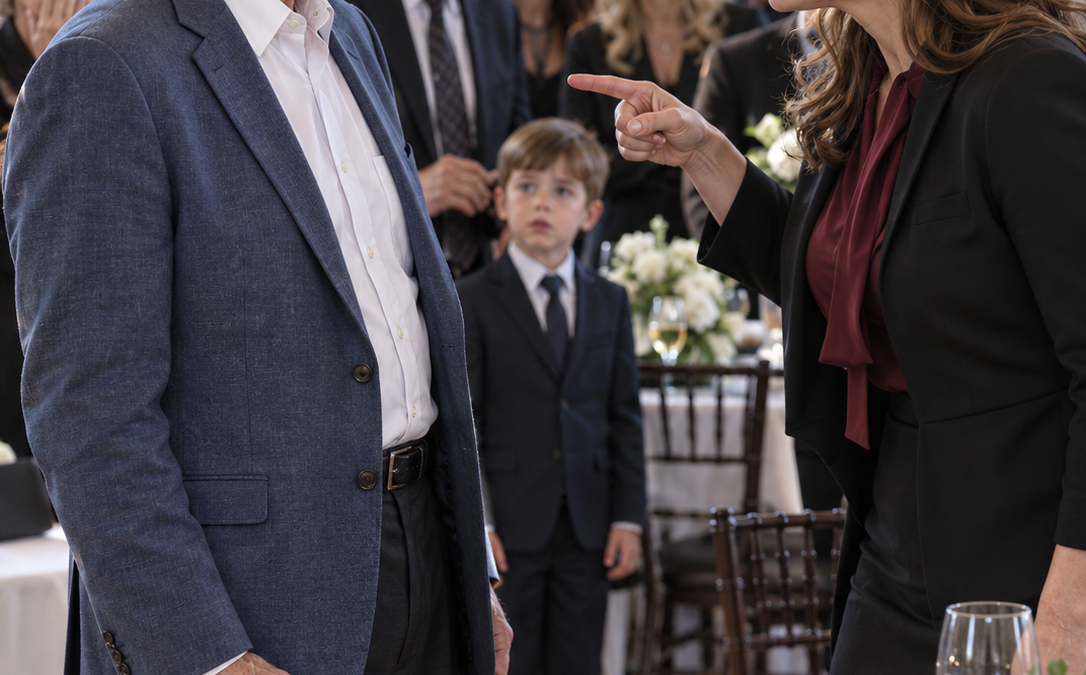
Three days after burying my son, my daughter-in-law told me I was dead to her, too.
My name is Tom Anderson, and I’m seventy-four years old. Amanda thought she knew exactly who I was: an embarrassing old man who had peaked as a factory worker. She had no idea she was about to lose everything she’d worked for, and that it would be because of me. What she didn’t know about my past would destroy her future.
She called me worthless in front of fifty relatives at Kevin’s funeral reception. She said I’d never built anything, never contributed anything meaningful to society. I didn’t argue. I didn’t raise my voice. I simply pulled out my phone and made one call.
If you’re watching this, please subscribe and let me know where you’re watching from. Here’s what really happened when someone finally pushed the wrong person too far, and why sometimes the quietest person in the room holds all the power.
For three years, Amanda Brown had been chipping away at my dignity. Small cuts. Death by a thousand paper cuts, as my late wife Martha would have called it. It started right after Amanda married my son Kevin in 2022.
I remember the first family dinner at their house. Kevin had invited me over for a meal prepared using Martha’s famous pot roast recipe. Amanda corrected my grammar three times during dinner.
“It’s Kevin and I, not me and Kevin,” she said, wearing that cold smile of hers. “I have a master’s degree in communications.”
Kevin just looked uncomfortable. He’d inherited his mother’s kindness, but not her backbone.
The pattern escalated. When Kevin got sick last year—stage-three cancer—Amanda excluded me from every medical decision. There were $87,000 in treatment costs, and I wasn’t allowed to know what was happening to my own son.
“This is between immediate family,” she told me outside the oncology office. “Kevin needs to focus on people who can actually help.”
I could have helped. I could have paid for everything. But she didn’t know that.
Amanda saw an old man in an eight-dollar Goodwill blazer who took the bus everywhere. She saw someone who lived in a $412-a-month studio apartment on Elm Street. She saw exactly what I wanted her to see.
At Kevin’s bedside during those final weeks, she made the rules clear. Visiting hours were from ten to eleven in the morning, Tuesdays and Thursdays.
“We can’t have too much disruption,” she said. “I’m managing his care.”
Managing. As if Kevin were a project instead of a dying man who needed his father.
The funeral was December 18 at Riverside Community Center. The rental cost $850. I paid for it, though Amanda never asked where the money came from. During the service, she sat in the front row with five-year-old Tyler, my grandson. I sat three rows back.
That should have been my first clue about what was coming.
The reception afterward was where she finally showed her true colors. Fifty relatives, Kevin’s friends from work, neighbors—people eating potato salad and trying to remember the good times.
Amanda stood beside the coffee table and tapped her fork against her wineglass as though she were about to make a wedding toast.
“I want to thank everyone for coming today,” she began, her voice carrying across the room. “Kevin would have been touched by this turnout.”
Then she looked directly at me.
“But now that the funeral’s over, I think it’s time we addressed something. Some people here seem to think they’re entitled to stay in our lives just because they share DNA with Kevin.”
The room went quiet. Even five-year-old Tyler stopped running around.
“Tom Anderson,” she said, pointing at me as though I were standing trial. “You’ve spent your whole life as a factory worker. You never built anything. You never contributed anything meaningful to society. Kevin felt sorry for you, but I won’t.”
My neighbor, Mrs. Peterson, gasped. Kevin’s college roommate Dave stepped forward as though he might say something, then stopped.
Amanda kept going.
“I don’t want Tyler growing up thinking that’s acceptable. That a man can coast through life and still deserve respect. Kevin would want his son to have better role models.”
She walked over to where I was sitting and stood directly in front of me.
“The funeral’s over, Tom. So are you. Get out, and don’t come back.”
Fifty people stared at me, waiting to see what the pathetic old man would do.
I folded my paper napkin, placed it on the table, and stood up slowly. My knees aren’t what they used to be. Then I pulled out my phone.
One call. Thirty seconds.
“Jennifer, it’s Tom. We need to talk about Amanda Brown. Yes, she’s the one. Schedule the board meeting for January 8. It’s time.”
Amanda frowned, probably wondering who Jennifer was and why I sounded so calm.
I walked to the door, then turned around one last time.
“You’re right about one thing, Amanda. Kevin would want Tyler to have better role models.”
Then I left.
Three days later, sitting in my studio apartment, I realized what I was really fighting for.
It wasn’t just about the disrespect. It was about Tyler, my five-year-old grandson, who barely knew me because Amanda controlled every interaction. It was about Kevin’s memory being rewritten by someone who had never understood his values.
Most of all, it was about a promise I’d made to Martha.
Martha died ten years ago this March. Lung cancer, the same disease that would eventually take Kevin. During her final weeks, she made me promise her something.
“Don’t let them erase us,” she whispered from that hospital bed. “Our family, our story. Promise me you won’t let anyone rewrite who we were.”
Martha knew I was already pulling back from the business world, stepping into the shadows. She worried that I’d disappear completely and that our legacy would disappear with me.
“Promise me, Tom.”
“I promise.”
Now Amanda was trying to do exactly what Martha had feared. She was rewriting history, turning Kevin into someone who had been embarrassed by his father, turning me into someone Kevin had tolerated out of pity.
That wasn’t true.
Kevin was proud of me. Not because of the money—he didn’t know about that either—but because I’d taught him to work with his hands, to fix things instead of throwing them away, and to treat people with respect regardless of their job titles.
Kevin fixed his own car until the day he died. He changed his own oil. He built Tyler a treehouse in the backyard with wood from the hardware store, not with the help of some expensive contractor.
“Dad taught me that knowing how to build something is more important than knowing how to buy something,” Kevin told Amanda once.
I heard him through the kitchen window.
Amanda’s response was simple.
“That’s very quaint.”
Now she was cutting me out of Tyler’s life completely. No more Saturday mornings teaching him to use basic tools. No more stories about his father’s childhood. No more connection to half of his family history.
If I stayed silent, Tyler would grow up thinking his grandfather was a failure. He’d grow up believing Amanda’s version of success—the degrees, the salary, the status symbols—was the only kind that mattered.
He’d never know about the other kind of success. The kind that builds something from nothing and doesn’t need applause.
But there was more at stake than our family legacy.
There was Amanda’s pattern of behavior. The way she treated service workers at restaurants. The way she talked about Kevin’s childhood friends, those people from his old neighborhood. The way she’d already started talking to Tyler about “our kind of people” versus everyone else.
Tyler was five, old enough to absorb those lessons. Old enough to start believing some people mattered more than others because of their education or income.
If I let Amanda win, Tyler would grow up to be just like her.
And that would be the real tragedy.
Kevin didn’t die so his son could become entitled. He died believing Tyler would carry forward the values we’d taught him: respect, humility, and the dignity of honest work.
But those values couldn’t survive if no one was there to defend them.
That’s what I was really fighting for. Not revenge. Not even justice for myself. I was fighting for the man Tyler could become if someone showed him there was another way to live.
Amanda didn’t waste time.
Four days after the funeral reception, she showed up at my apartment with legal papers.
I answered the door in my old flannel shirt and work pants. She stood there in a $3,000 charcoal suit, holding a manila folder like it was a weapon.
“We need to talk,” she said, pushing past me into the tiny living room.
She looked around at my furniture: a secondhand couch, a fifteen-year-old television, and Martha’s old photographs hanging on the walls. Her nose wrinkled as though she’d smelled something unpleasant.
“This is about Kevin’s life insurance,” she said, opening the folder. “$23,000. As his spouse, I’m the primary beneficiary, but he named you as contingent.”
I nodded. I knew about the policy. I’d helped Kevin buy it years ago.
“Here’s what’s going to happen,” Amanda continued. “You’re going to sign this document refusing your claim. Kevin’s money should go to his real family, to Tyler’s education fund.”
She slid the papers across my kitchen table. The language was dense and legal, but I understood it perfectly.
Too perfectly.
“Where did you get this drafted?” I asked.
“My attorney. Someone who understands how these things work.”
“Interesting. Most contingent beneficiaries don’t have claims to refuse. The primary beneficiary gets everything automatically unless they’re deceased or disclaim.”
Amanda’s pen stopped moving.
“What?”
“This document doesn’t make legal sense. Unless your attorney thinks I might have grounds to challenge your claim.”
“That’s ridiculous. I’m his wife.”
“Were you named in his original policy, or were you added later?”
Her face flushed.
“That’s none of your business.”
“Actually, it is. If Kevin added you after marriage without removing me as primary, there could be complications, especially if he was financially incapacitated during any policy changes.”
The room went silent.
Amanda stared at me as though I’d suddenly started speaking a foreign language.
“How do you know about beneficiary law?” she asked slowly.
“I read.”
“Factory workers don’t read insurance law.”
“Some do.”
She sat back in her chair, reassessing me. For the first time since I’d known her, Amanda looked uncertain.
“Sign the papers, Tom.”
“No.”
“Excuse me?”
“I said no. I’m not signing anything until I review the original policy documents and any amendments. You can email me copies for review.”
“Email you? You don’t even have a computer.”
I pulled out my phone. It wasn’t the old flip phone she expected, but a newer smartphone.
“[email protected],” I said. “Send them there.”
Amanda’s hands were shaking slightly as she packed up the papers.
“You’re making a mistake,” she said. “Kevin wouldn’t want you fighting his family.”
“Kevin wouldn’t want his family fighting at all.”
She headed for the door, then stopped.
“What’s your game here, Tom? You think you can squeeze more money out of this? $23,000 is more than you’ve probably seen in your entire life.”
I stood up slowly and looked her directly in the eye.
“You have no idea what I’ve seen.”
After she left, I sat at my kitchen table, thinking about that interaction and the fear that had crept into her voice when I demonstrated knowledge she hadn’t expected.
Amanda’s entire power structure depended on keeping me in a box labeled ignorant old man. The moment I stepped outside that box, even slightly, her confidence cracked.
She’d be back, probably with reinforcements. But now she’d be asking questions about me that she should have asked three years earlier.
Questions like why a retired factory worker knew insurance law. Why he had a Gmail account and a smartphone. Why he’d seemed so calm when she threatened him.
And, most importantly, what else she didn’t know about Tom Anderson.
I picked up my phone and called Jennifer Davis.
“How did she take it?” Jennifer asked.
“About as well as expected. She’s starting to ask questions.”
“Good. Let her wonder. The annual promotion ceremony is January 8. Think you can keep her guessing until then?”
I smiled.
“I’ve been keeping people guessing for forty-five years. One more month won’t hurt.”
Over the next two weeks, small cracks appeared in Amanda’s certainty.
It started with Tyler’s school, Cedar Hills Academy, which cost $18,600 a year. Amanda sent Tyler there to network with the right families.
I’d been picking Tyler up on Wednesdays since Kevin got sick. It was one of the few times Amanda couldn’t control our interaction. School pickup was chaotic, and she was usually stuck in meetings.
On December 22, I was waiting in the pickup line when Mrs. Harrison, the vice principal, walked over to my window.
“Mr. Anderson, could I speak with you for a moment?”
I parked and followed her into the office. Tyler was in aftercare, so we had time to talk.
“I wanted to personally thank you for the new computer lab,” she said. “The children are absolutely thriving with the new equipment.”
I nodded politely but said nothing.
“The anonymous donation was incredibly generous. $50,000 will make such a difference in their technology education.”
Behind us, Amanda’s voice cut through the conversation.
“I’m here for Tyler Brown’s pickup,” she announced to the receptionist.
Mrs. Harrison turned toward the sound, then back to me.
“Should I mention to Mrs. Brown that Tyler’s grandfather is here?”
“No need,” I said quietly. “I wouldn’t want to take credit for something anonymous.”
But Amanda had heard her own son’s name. She was walking toward us.
“Mr. Anderson,” Mrs. Harrison continued, not noticing Amanda approaching, “if you ever want to tour the new lab, just let me know. I think you’d be proud of what your contribution accomplished.”
Amanda stopped three feet away, close enough to hear every word.
“Contribution?” she asked. “What contribution?”
Mrs. Harrison looked confused.
“The computer lab donation. $50,000 for new equipment.”
“From who?”
Mrs. Harrison glanced at me. I gave the slightest shake of my head.
“Oh,” Mrs. Harrison said carefully. “I’m sorry. I thought there must be some confusion. Anonymous means anonymous, of course.”
Amanda stared at me.
“Tom, what is she talking about?”
“I have no idea,” I said truthfully. “I just came to pick up Tyler.”
But as we walked toward the parking lot, I could feel Amanda’s eyes boring into my back.
At the car, Tyler ran to hug me.
“Grandpa, Mom said you might not come anymore.”
“Why would she say that?”
Tyler shrugged.
“She said you weren’t real family.”
I knelt down to his level.
“Tyler, what makes someone real family?”
“I don’t know.”
“Love. That’s what makes someone real family.”
“Love?”
“That’s right. Love. Not money, not fancy clothes. Love.”
Amanda was close enough to hear every word.
When I stood up, she was holding an expensive business card. It must have fallen from my wallet when I’d pulled out my keys.
She read it slowly.
“Titan Manufacturing Industrial Solutions. Where did you get this?”
“Found it in a parking lot. Probably should throw it away.”
“You found a business card for a major manufacturing company?”
“People drop things.”
But Amanda wasn’t stupid. Her mind was working, connecting dots that didn’t quite fit.
Why was a retired factory worker at an expensive private school every Wednesday? Why did the vice principal seem to know him personally? Why did he carry business cards for companies that manufactured industrial equipment?
And why was he so calm about all of it?
“Tom,” she said slowly, “what did you do before you retired?”
“I worked.”
“Where?”
“Different places.”
“What kind of different places?”
Tyler was tugging on my hand, eager to leave. I looked down at him, then back at Amanda.
“The kind where you learn to fix things instead of just buying new ones.”
I walked Tyler to Amanda’s BMW and buckled him into his car seat.
“See you next week, buddy.”
As they drove away, I could see Amanda in the rearview mirror, still holding that business card, still trying to figure out how it had ended up in an old factory worker’s wallet.
She’d be doing research that night, making phone calls, asking questions.
Good.
Let her wonder.
The longer she spent trying to figure out who I really was, the less time she’d have to prepare for what was coming.
January 5, three days before Amanda’s promotion ceremony at Titan Manufacturing, was Tyler’s winter program at Cedar Hills Academy.
The program was called Dreams and Goals, and each child would present what they wanted to be when they grew up.
Amanda had insisted I not attend.
“These events are for immediate family only,” she’d texted me.
But Tyler had called my apartment directly.
“Grandpa, can you come see my presentation? I wrote it about you.”
How could I say no?
The school auditorium was packed. Two hundred parents in business suits, taking photographs with expensive cameras.
I sat in the back row, wearing my navy blazer and a clean white shirt, trying to blend in.
Tyler was seventh to present. He walked to the microphone in his little navy blazer. Amanda had insisted he dress to match the successful families.
“My name is Tyler Brown,” he said into the microphone. “When I grow up, I want to build things like my grandpa.”
Amanda shifted uncomfortably in the front row.
“My grandpa taught me that fixing things is better than throwing them away. He can fix cars and computers and even broken toys. He says the best builders are the ones who start with nothing and make something that lasts.”
Other parents were smiling, charmed by the presentation.
But Amanda’s face was stone.
Tyler continued.
“My grandpa says that respect isn’t about how much money you have. It’s about how you treat people and what you build for others.”
When Tyler finished, the audience applauded. He beamed, scanning the crowd until he found me in the back row.
He waved.
That was when Amanda turned around, her eyes locking onto mine across the auditorium.
Pure fury.
After the presentations, parents mingled in the lobby. I stayed near the exit, hoping to slip out quietly, but Amanda found me.
“How dare you?” she hissed, grabbing my arm. “I specifically told you not to come.”
Other parents were starting to notice the commotion.
“Tyler called me,” I said quietly. “I came for him.”
“You’re poisoning him against everything Kevin worked for. Against success, against ambition.”
“I’m teaching him values.”
“Your values?” Amanda’s voice rose, and nearby conversations began to stop. “What values could you possibly teach him? You spent forty years on a factory floor. You live in a studio apartment. You take the bus.”
More parents were gathering now. The Hendersons, whose daughter was in Tyler’s class. The Williamses, who lived in Amanda’s neighborhood. People she desperately wanted to impress.
“This is why I don’t let Tyler visit you anymore,” Amanda continued, her voice carrying across the lobby. “I won’t have him embarrassed by a grandfather who never amounted to anything.”
Mrs. Henderson looked uncomfortable. Mr. Williams checked his phone, pretending not to hear.
But then something interesting happened.
Dr. Patricia Davis, another parent, stepped forward. She was the CEO of something medical. I’d heard Amanda mention her before as someone worth knowing.
“Excuse me,” Dr. Davis said to Amanda. “Are you talking about Tom Anderson?”
Amanda blinked.
“You know him?”
“By reputation. Tom Anderson is something of a legend in Detroit manufacturing circles.”
The lobby went completely quiet.
“I’m sorry,” Amanda said slowly. “There must be some mistake. This is Tom Anderson, retired factory worker.”
Dr. Davis looked at me with new interest.
“Are you the Tom Anderson who founded Titan Manufacturing?”
Every parent in that lobby turned to stare at me.
Amanda’s face went white.
“Founded what?”
“Titan Manufacturing,” Dr. Davis repeated. “One of Detroit’s most successful industrial companies. Started in 1979, went public in 1995, worth about $126 million now.”
Amanda was staring at me as though I’d grown a second head.
“Tom,” Dr. Davis continued, “I had no idea you lived in this district. My company uses Titan components in our surgical equipment. Your quality standards are legendary.”
Other parents were murmuring now. Amanda could hear fragments of their conversations.
“Founder of Titan.”
“A hundred million.”
“Never would have guessed.”
“There’s some mistake,” Amanda said desperately. “He’s just… he’s a factory worker. He lives in a studio apartment.”
Dr. Davis smiled.
“Some of the most successful people I know live very simply. It’s often a sign of wisdom, not poverty.”
She turned back to me.
“Tom, I’d love to introduce you to my husband. He’s always wanted to meet the man behind Titan’s success story.”
I nodded politely.
“Perhaps another time. I should be going.”
As I walked toward the exit, I could hear Amanda behind me, frantically asking questions.
“Are you sure? Tom Anderson? The same Tom Anderson?”
“How many Tom Andersons could there be in Detroit manufacturing?”
“But that’s impossible. He takes the bus.”
“Warren Buffett drives a twelve-year-old car.”
I pushed through the lobby doors into the cold January air.
Behind me, Amanda’s world was collapsing in real time.
By tomorrow, half the parents at Cedar Hills Academy would know Tyler’s grandfather was Tom Anderson of Titan Manufacturing.
By the day after that, Amanda would be walking into her promotion ceremony, not knowing her fate was in the hands of the man she’d spent three years humiliating.
The man she’d called worthless in front of fifty people. The man whose grandson still loved him despite everything she’d done to poison that relationship.
As I waited for the bus—and yes, I really do take the bus; even billionaires can be environmentally conscious—I thought about Tyler’s presentation.
The best builders are the ones who start with nothing and make something that lasts.
Out of the mouths of babes.
January 8, 2025. Ten-thirty in the morning.
Titan Manufacturing headquarters, downtown Detroit.
Amanda walked into our main conference room for what she thought was her promotion ceremony.
She wore her most expensive suit, a $4,000 Armani purchased specifically for that day. Her future as vice president of strategic development was about to be announced.
She had no idea she was walking into my world.
The boardroom was exactly as I’d designed it back in 1995. A forty-eight-foot mahogany table with seating for twenty-four. Floor-to-ceiling windows overlooking the Detroit River. The company logo etched into the glass wall.
My signature was still embedded in the design.
Amanda took her seat at position twelve, where the guest of honor traditionally sat. She was radiant, confident.
This was her moment.
Around the table sat Jennifer Davis, our CEO; Michael Wilson, corporate counsel; Susan Miller, HR director; and Charles Taylor, my oldest friend and co-founder.
There were board members from across the Midwest, representing hundreds of millions in combined assets.
Amanda knew them all by title. She’d worked at every company event for three years. But she didn’t know the deeper relationships. She didn’t know the history.
She didn’t know every person in that room owed their position to decisions I’d made.
Jennifer called the meeting to order.
“Good morning, everyone. Before we proceed with today’s agenda, I’d like to introduce a special guest.”
Amanda smiled expectantly.
“Ladies and gentlemen,” Jennifer continued, “I’m honored to present Tom Anderson, founder and majority shareholder of Titan Manufacturing.”
The boardroom door opened.
I walked in wearing my best suit. Still not expensive, but clean and pressed. I’d even gotten a haircut for the occasion.
Amanda’s face went through five distinct emotions in three seconds.
Confusion. Recognition. Disbelief. Horror. Panic.
“Good morning,” I said to the room.
Then, making eye contact with Amanda, I added, “Hello, Amanda.”
She couldn’t speak. Literally couldn’t form words.
Jennifer gestured toward the head of the table. My seat. The founder’s chair I’d used for sixteen years before stepping back.
“Tom, thank you for joining us. As you know, we’re here to discuss the vice president of strategic development position.”
I sat down slowly.
The room was watching Amanda, whose face had drained of all color.
“Before we proceed,” I said calmly, “I’d like to address some concerns about the candidate.”
Michael Wilson opened his legal folder.
“The board has received documentation regarding Amanda Brown’s professional conduct.”
Susan Miller from HR consulted her tablet.
“We have witness statements from the December 18 incident.”
Amanda found her voice.
“What incident?”
“Your public statement that Mr. Anderson never built anything and never contributed anything meaningful to society,” Susan read from her notes. “Made in front of fifty witnesses at a funeral reception.”
“I… I didn’t know.”
“Didn’t know what?” I asked gently.
“I didn’t know you were…”
“Were what, Amanda?”
The room waited.
Board members who’d known me for decades watched Amanda struggle with the reality collapsing around her.
“I didn’t know you owned the company,” she whispered.
Charles Taylor, my co-founder, spoke up.
“Tom doesn’t just own it. He built it from nothing. Started with a $2,000 loan and a dream to manufacture better industrial components.”
Jennifer added, “When Tom stepped back from daily operations in 2009, he retained fifty-two percent ownership. Every major decision still requires his approval.”
Amanda was staring at the table now, unable to meet anyone’s eyes.
“The promotion you’re here to receive,” I said quietly, “requires unanimous board approval, including mine.”
Silence filled the room.
You could hear the heating system cycling, the traffic noise from the street below, and Amanda’s rapid breathing.
“However,” I continued, “before we vote, I think everyone should hear the full scope of your statements about my character.”
Michael Wilson read from his notes.
“December 18, 2024. Quote: ‘Tom Anderson spent his whole life as a factory worker. He never built anything. He never contributed anything meaningful to society.'”
More silence.
“January 5, 2025, at Cedar Hills Academy. Quote: ‘I won’t have Tyler embarrassed by a grandfather who never amounted to anything.'”
Amanda started crying.
Not graceful tears. Ugly, desperate sobs.
“The board should also know,” Susan Miller added, “that Mrs. Brown has been systematically excluding Mr. Anderson from family decisions regarding his own son’s medical care and his grandson’s upbringing.”
Jennifer looked around the table.
“All in favor of Amanda Brown’s promotion to vice president?”
No hands rose.
“All opposed?”
Every hand in the room went up, including mine.
“Motion denied unanimously.”
Amanda stood shakily.
“I can explain. I didn’t understand. If I had known…”
“Known what?” I asked. “That I deserved basic human respect? That my relationship with my grandson mattered? That Kevin loved me?”
“I made a mistake.”
“No, Amanda. You made a choice. Multiple choices over three years.”
Charles Taylor stood up.
“Tom, I think we should also address the family situation.”
I nodded.
“Amanda, effective immediately, you’re no longer employed by Titan Manufacturing. Michael will handle your severance package. Two weeks, standard termination.”
“You can’t fire me for something that happened outside work.”
Michael Wilson smiled grimly.
“Actually, we can. Your conduct reflects poorly on company values. More importantly, your employment contract includes a character clause. Publicly humiliating the company founder violates that clause.”
“What about Tyler?” Amanda asked desperately. “You can’t punish your grandson for my mistakes.”
“Tyler isn’t being punished. You are. I’ll be filing for grandparent visitation rights. Given your demonstrated pattern of excluding family members, I expect the court will be sympathetic.”
Security appeared at the boardroom door.
Professional, discreet, but unmistakably present.
“Your personal items will be boxed and delivered,” Susan Miller said. “Your company car keys, laptop, and access cards need to be surrendered to security.”
Amanda looked around the room one last time, searching for sympathy, for allies, for anyone who might speak up for her.
She found none.
“Tom,” she said as security escorted her toward the door. “I’m sorry. I really didn’t know.”
I stood up and looked her directly in the eye.
“That’s exactly the problem, Amanda. You never bothered to find out.”
The boardroom door closed behind her.
Jennifer broke the silence.
“Well, that was unpleasant but necessary.”
Charles laughed.
“Tom, you haven’t lost your touch for dramatic timing.”
“I prefer justice to drama,” I said. “But sometimes they overlap.”
Through the floor-to-ceiling windows, I watched Amanda walk across the parking lot toward her BMW. She moved slowly, like someone in shock.
Forty-five years of building this company. Twenty-six thousand employees worldwide. $126 million in annual revenue.
And Amanda thought I’d never built anything.
The consequences rolled out faster than Amanda could control them.
By noon that same day, news of her termination had spread throughout Detroit’s manufacturing network. It’s a smaller industry than people realize. Everyone knows everyone.
By two in the afternoon, her phone was ringing with calls from headhunters and competing companies, but they weren’t the calls she wanted.
“Amanda, this is Derek Walsh from Industrial Solutions Group. I’m calling to withdraw our job offer. We’ve heard about the situation at Titan Manufacturing.”
“What situation?”
“The incident with Tom Anderson. Amanda, Tom is legendary in this industry. Whatever happened between you two, it’s already common knowledge.”
“There’s been a misunderstanding, I’m sure.”
“But our company can’t risk the association. Tom’s reputation for integrity is impeccable. If there was a conflict serious enough for him to terminate someone publicly…”
Click.
That was the first of seven similar calls.
By Thursday, Amanda had discovered what real power looked like in a specialized industry.
Detroit manufacturing is built on relationships spanning decades, trust networks that take generations to establish.
And I’d been building those networks since 1979.
Amanda’s new reality became clear at her emergency meeting with her employment attorney, David Patterson.
“Amanda, I’ve looked at your case from every angle,” Patterson said across his desk. “Legally, Titan Manufacturing has ironclad grounds for termination.”
“Based on what? Personal disputes?”
“Based on the character clause in your employment contract. Look at paragraph seven.”
Amanda read the language she’d signed three years earlier.
Employee agrees to conduct themselves in a manner that reflects positively on company values and leadership.
“Publicly humiliating the company founder qualifies as a breach,” Patterson continued, “especially when there are fifty witnesses to your statements.”
“What about wrongful termination?”
“Discrimination against whom? You discriminated against Tom based on his age and perceived social status. There’s no protection for attacking senior citizens at their son’s funeral.”
Amanda slumped in her chair.
“What are my options?”
“Honestly? Accept the severance package and hope Tom doesn’t pursue further legal action.”
“Further legal action?”
“Grandparent rights. Given your pattern of excluding him from family decisions, a court might view that favorably, especially now that your financial stability is compromised.”
Amanda left Patterson’s office understanding she’d lost more than a job.
She’d lost credibility in her chosen industry.
But the most devastating consequence came Friday morning.
Tyler’s custody evaluation.
Amanda sat across from Dr. Rachel Moore, a court-appointed family psychologist, in a sterile office overlooking downtown Detroit.
“Mrs. Brown, I’ve reviewed the documentation regarding Tyler’s grandfather. Can you explain your reasoning for limiting their relationship?”
“Tom isn’t… he doesn’t have the resources to provide Tyler with appropriate guidance.”
“Appropriate how?”
“Educational, financial, social connections.”
Dr. Moore consulted her notes.
“According to my research, Mr. Anderson is the founder of a $126 million company. He’s donated over $50,000 to Tyler’s school. Educational resources don’t seem to be a concern.”
Amanda shifted uncomfortably.
“I didn’t know about his business background. For three years, he’s lived very simply. I assumed…”
“You assumed simple living equals poverty?”
“Not poverty. Just limited opportunities for Tyler.”
Dr. Moore leaned forward.
“Mrs. Brown, help me understand. What specific harm were you protecting Tyler from?”
Amanda couldn’t answer, because the truth was uncomfortable.
She’d been protecting Tyler from learning values that conflicted with her social ambitions.
“Tyler told me his grandfather taught him that fixing things is better than throwing them away,” Dr. Moore continued. “That respect comes from character, not money. Are these harmful lessons?”
“No, but… but Tyler needs to understand success. Real success. Achievement.”
“Like building a multimillion-dollar company from nothing?”
Silence.
Dr. Moore closed her folder.
“I’m recommending expanded visitation rights for Mr. Anderson. Two weekends per month, alternating holidays, and summer vacation time.”
“That’s not fair.”
“Mrs. Brown, you systematically excluded a loving grandfather from his grandson’s life based on incorrect assumptions about his social status. The court’s job is to protect Tyler’s interests, not your social anxiety.”
Amanda walked out of that appointment understanding her control over Tyler’s upbringing was ending.
That evening, she sat in her BMW outside my studio apartment building, trying to reconcile the man she’d dismissed with the man who had just dismantled her entire life with three phone calls and a board meeting.
She never came to the door. Never knocked.
Because what was there to say?
I’m sorry I judged you by your clothes instead of your character.
I’m sorry I thought money was more important than values.
I’m sorry I tried to erase you from your grandson’s life.
All true. All inadequate.
Some mistakes can’t be apologized away. Some bridges, once burned, don’t get rebuilt.
Six months later, the full scope of Amanda’s miscalculation had become clear.
Her new job paid $45,000 annually, exactly half her Titan Manufacturing salary. Second Tier Industrial, a small firm in Grand Rapids, was the only company willing to hire her after the Detroit manufacturing community learned what had happened.
“Reference checks were challenging,” her new boss admitted during orientation. “But everyone deserves a second chance.”
Amanda’s second chance meant managing inventory for a twelve-person operation.
No strategic development. No executive meetings. No company car.
She drove to Grand Rapids every day in her BMW, the last remnant of her previous life and one she couldn’t afford to maintain much longer.
The social consequences hit harder than the financial ones.
At Cedar Hills Academy’s Winter Gala on February 14, Amanda attended alone, hoping to maintain some semblance of her previous status among the parent community.
She approached Dr. Patricia Davis, who had recognized me at Tyler’s presentation.
“Patricia, how lovely to see you.”
Dr. Davis smiled politely.
“Amanda, how are you adjusting?”
“Adjusting?”
“To the new job. I heard about Titan Manufacturing.”
“Oh, that. Yes, it was time for a change.”
“I’m sure. Tom Anderson spoke very highly of you at the Christmas charity auction.”
Amanda’s stomach dropped.
“Tom was at the charity auction?”
“Of course. He’s been a major donor for years. Didn’t you know? He endowed the Children’s Scholarship Fund. $200,000 annually for underprivileged students.”
Another piece of Tom’s hidden life. Another reminder of how little she’d actually known about the man she’d dismissed.
“Patricia,” Amanda said carefully, “what else do you know about Tom’s contributions?”
“Where do I start? The community center renovation, the library expansion, the veterans’ housing project. Tom’s donated over $3 million to local causes in the past decade, always anonymously until recently.”
Amanda excused herself and spent the rest of the gala in the bathroom, crying.
The legal consequences arrived in March.
Tyler’s custody arrangement had been modified exactly as Dr. Moore recommended: two weekends per month with Tom, alternating holidays, and four weeks in summer.
But Amanda discovered that court orders only regulate the minimum. They don’t prevent grandfathers from being more involved when circumstances change.
When Tyler caught pneumonia in March, Tom took two weeks off from Titan Manufacturing to help with his care. When Amanda’s work schedule conflicted with Tyler’s spring break, Tom covered childcare.
When Amanda’s BMW finally broke down, requiring $1,200 in repairs she couldn’t afford, Tom helped Tyler understand why Grandpa’s values about fixing things instead of throwing them away actually mattered in real life.
“Grandpa,” Tyler asked during one of their weekend visits, “why does Mom seem so sad all the time now?”
I was teaching Tyler to change the oil in my Honda Civic, still my daily driver despite having enough money to buy a dealership.
“Sometimes people make choices that don’t work out the way they hoped,” I explained. “Your mom is learning some difficult lessons.”
“About what?”
“About what really matters in life.”
Tyler considered this while wiping his hands with an old shop rag.
“Do you think she’ll figure it out?”
“I hope so. For her sake and for yours.”
By April, Amanda’s isolation was complete.
Her former colleagues at Titan Manufacturing had moved on without her. The strategic development position had been filled by Michael Chen, an internal candidate with fifteen years of experience and my personal endorsement.
Amanda’s neighborhood social circle had shifted, too. Word travels fast in affluent suburbs about job losses and custody battles.
Invitations stopped coming.
School pickup conversations grew awkward.
Most painfully, Tyler was developing a different relationship with success and achievement.
During his spring parent-teacher conference, Mrs. Harrison mentioned Tyler’s evolving perspective.
“Tyler talks constantly about his grandfather’s workshop,” she told Amanda. “He’s become fascinated with how things work, how they’re built. His science projects have become remarkably sophisticated.”
“I see.”
“He told the class last week that the best success is the kind where you help other people. Very mature thinking for a six-year-old.”
Amanda nodded politely, but internally she was screaming.
Tom was reshaping Tyler’s values in real time, undoing years of careful messaging about achievement and status.
The final consequence emerged in May.
Amanda’s lease renewal notice arrived with a forty-percent rent increase. Her luxury apartment complex was pricing her out, though management phrased it diplomatically.
“Market conditions have shifted,” the leasing manager explained. “Your income qualification no longer meets our updated requirements.”
Amanda spent that weekend apartment hunting in considerably less prestigious neighborhoods.
Tyler would need to change schools again.
“Mom,” Tyler asked while they toured a modest two-bedroom apartment in a working-class neighborhood, “is this like where Grandpa lives?”
“Similar, yes.”
“I like it. It feels more real.”
More real.
Six-year-old Tyler was developing the ability to distinguish between authentic and artificial living, between substance and surface.
Everything Amanda had tried to teach him about success, Tom was quietly redefining through example and experience.
By June, Amanda understood the true scope of what she’d lost.
Not just a job. Not just social status. Not just financial security.
She’d lost the ability to shape her son’s understanding of what mattered in life.
Tom hadn’t taken Tyler away from her. The courts ensured they maintained a strong relationship. But he’d given Tyler an alternative framework for measuring worth and success, one that made Amanda’s previous priorities look shallow and temporary.
Tyler was learning that building something lasting mattered more than buying something expensive. That treating people with respect mattered more than networking with influential people. That contributing to your community mattered more than advancing your career.
All the lessons Amanda had dismissed as a blue-collar mentality were becoming Tyler’s moral foundation.
And there was nothing she could do about it, because Tom wasn’t trying to turn Tyler against her.
He was simply showing Tyler who he really was and letting the boy draw his own conclusions about character, integrity, and the different ways to live a meaningful life.
The quiet man Amanda had underestimated was raising Tyler to be everything she’d failed to become.
One year later, I received an unexpected visitor.
Amanda stood at my apartment door on a Tuesday evening in December. She looked different. Older, but somehow cleaner, less desperate.
Her clothes were simpler, her makeup minimal.
“Tom, could we talk?”
I invited her in and made coffee the way Martha used to, strong and black with real cream.
“I owe you an apology,” Amanda began. “A real one, not the panic-driven nonsense I said last year.”
I sat across from her at my small kitchen table and waited.
“I spent the last twelve months figuring out who I really am when I’m not trying to impress people,” she continued. “It wasn’t pretty.”
“And what did you discover?”
“That I was terrified. Terrified of not being good enough, smart enough, successful enough. I used Tyler as a prop to prove my worth. I used Kevin’s memory the same way.”
She took a breath.
“And I tried to erase you because you represented everything I was afraid of becoming. Invisible, overlooked, ordinary.”
“There’s dignity in ordinary, Amanda.”
“I know that now. Tyler’s been teaching me.”
I smiled.
“He’s a good teacher.”
“He told me about the workshop you’re building in your new garage, about the projects you’re planning together.”
After Titan Manufacturing’s record profits in 2025, I’d finally bought a small house. Nothing fancy. Three bedrooms, a two-car garage, perfect for teaching Tyler practical skills.
“He also told me you’ve been helping with his homework,” Amanda continued, “and that you never say anything negative about me.”
“Tyler loves you. That love shouldn’t be complicated by adult conflicts.”
Amanda’s eyes filled with tears.
“I don’t deserve that kindness.”
“Kindness isn’t about deserving. It’s about choosing who you want to be.”
We sat in comfortable silence.
Outside, Detroit was settling into winter darkness.
“Tom, I came here to ask something, and I’ll understand if you say no.”
I waited.
“Could you teach me? Not Tyler. Me. I want to learn to fix things instead of just throwing them away. I want to understand the values I tried so hard to dismiss.”
I studied her face.
No desperation now. No manipulation. Just genuine curiosity about a different way to live.
“Saturday mornings,” I said finally. “Ten o’clock. We’ll start with basic home maintenance. If you’re serious about learning, I’m serious about teaching.”
“Thank you.”
“One condition.”
“Name it.”
“This isn’t about earning your way back into Tyler’s good graces. He already loves you. This is about you discovering who you want to be going forward.”
Amanda nodded.
“I understand.”
Three months later, Amanda had learned to change her own oil, fix a leaky faucet, and rewire a broken lamp.
More importantly, she’d learned to listen before speaking and to ask questions before making assumptions.
She was becoming the kind of person Tyler could be proud of, not because of her achievements, but because of her character.
On a warm Saturday in March, the three of us worked together in my garage, rebuilding an old radio Tyler had found at a garage sale.
“Grandpa,” Tyler said, carefully soldering a connection, “Mom’s getting really good at this stuff.”
“Yes, she is.”
“Does that mean she’s becoming more like you?”
I looked at Amanda, who was concentrating on reading a circuit diagram.
“No, Tyler. It means she’s becoming more like herself.”
The best version of herself. The version that had been buried under years of anxiety about other people’s opinions.
The version that could teach Tyler that success isn’t about impressing strangers. It’s about building something meaningful with the people you love.
If you’re watching this, please subscribe and let me know where you’re watching from.
And remember, respect isn’t about where someone lives or what they drive. It’s about how they treat people when they think no one important is watching.
Because everyone is important.
Everyone.








