My daughter didn’t want me to meet her fiancé and said it was better if i didn’t come to the wedding, so i followed her one day to see what she was hiding. when i saw his face, my heart nearly stopped — it was
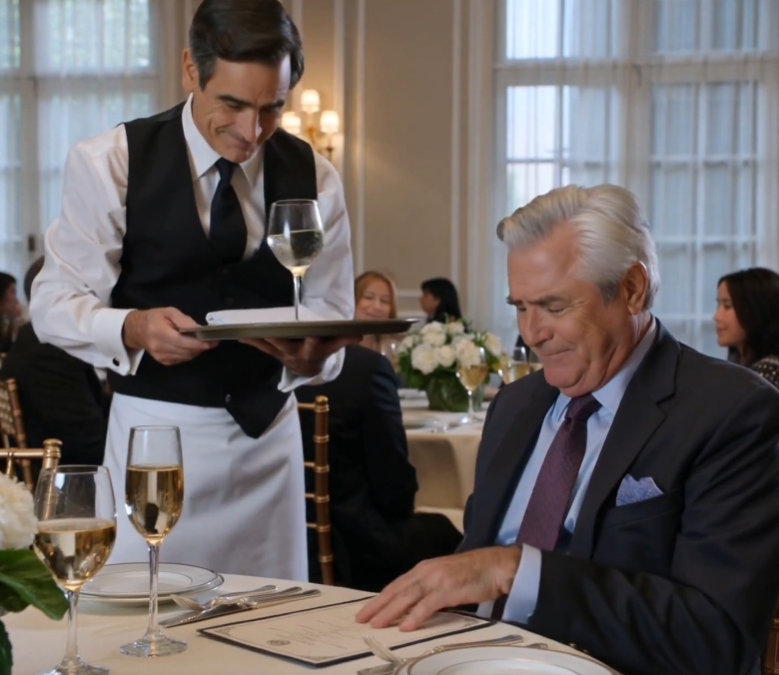
My daughter didn’t want me to meet her fiancé.
When I asked why, she said it would be better if I just didn’t come to the wedding at all. So I followed her. I had to know what secret was so important, so shameful, that she would rather erase her own father from the biggest day of her life.
When I finally saw his face, my heart didn’t just stop. It shattered.
Because standing there, smiling at my daughter, was a ghost from a past I had spent 20 years trying to bury. A nightmare that had already cost me everything once before.
Before I tell you what happened next, hit like and subscribe, and let me know in the comments where you’re watching from. I want to see how far this story of a promise broken and a reckoning long overdue can travel.
The scent of basswood and clean sawdust was my only companion. In my garage, my world was ordered, logical. Every miniature beam, every tiny pane of glass in the architectural model on my workbench fit perfectly into place. It was a world I could control.
I picked up a small brass protractor, its cool weight familiar in my palm, and measured the angle of a roofline. Precision was a comfort. It was the chaos of the human heart I could never quite blueprint.
My eyes drifted to the corner of the bench, to a small, worn photograph tucked into the frame of a lamp. It was Chloe, age six, missing her two front teeth, grinning like she’d just discovered the secret to the universe. Her hand was holding mine. I smiled, a quiet, bittersweet ache settling in my chest.
Back then, my hand was all she needed to feel safe. Now, I wasn’t even sure she remembered what it felt like.
The solitude of the garage didn’t usually bother me. It was a choice. But lately, the silence had started to feel less like peace and more like an absence, an empty space where a daughter’s laughter used to be.
I placed the protractor down, its metallic click the only sound, and ran a hand over my face. At 62, I knew life wasn’t about building perfect structures. It was about weathering the storms that tried to knock them down.
I just never imagined the storm would come from the one person I had built my entire world to protect.
The phone buzzed against the wood, startling me. I wiped my hands on a rag and answered, seeing her name on the screen.
“Chloebug,” I said, the old nickname slipping out.
“Hey, Dad.”
Her voice came through bright and a little too fast, like a song played at the wrong speed. There was a practiced cheerfulness to it that I’d come to recognize. It was the voice she used when she was about to manage me.
“I have news,” she said, drawing out the word. “Incredible news.”
I leaned against the workbench. “I’m all ears.”
There was a pause, a theatrical intake of breath.
“I’m engaged.”
The words landed, and for a moment, pure, unvarnished joy washed over me.
“Honey, that’s… that’s wonderful. Congratulations!”
I could picture her smile, the way it lit up her whole face.
“Tell me everything. Who is he? What’s his name?”
The answers came in a rush, a cascade of adjectives that sounded more like a press release than a description of a person.
“His name is Julian, and he’s just amazing, Dad. So smart, so driven. He works in real estate development, you know, big projects. He’s incredible.”
I smiled. “He sounds great. When do I get to meet this incredible Julian?”
The line went quiet.
Not for long, just a beat, but it was enough. The cheerful energy on her end flickered.
“Oh, soon, Dad. Definitely soon,” she said, the speed returning to her voice. “It’s just, things are a total whirlwind right now. You know how it is.”
I didn’t. I didn’t know how it was to be so swept up that you couldn’t find five minutes for your father to meet the man you were going to marry.
“Of course,” I said, keeping my own voice even. “Just let me know when. We’ll make it happen.”
The rest of the conversation was pleasant but hollow, filled with details about her marketing job and my consulting work. But when we hung up, the silence in the garage felt different. It was colder now, and it had a name.
Julian.
The weeks that followed turned into a masterclass in deflection. Each time I called, my suggestion of a simple dinner, or even just a quick coffee, was met with a new, perfectly plausible excuse.
The first time, it was about his family.
“They’re very private people, Dad. Very old money, you know. We’re just trying to navigate that carefully.”
It was the first time she’d ever mentioned class, and it felt like a small, sharp stone lodged in my throat.
I’d provided a good life for her, a comfortable suburban upbringing in a home I designed myself. But it wasn’t old money.
The next week, Julian was international. He had to fly to Singapore to close a massive deal. It was all very last minute. He sounded important, a man of the world, a man far removed from a father who spent his days building models in a garage.
The excuse that stung the most came a week later.
“Dad, honestly, we’re just completely swamped with wedding planning. The venue, the caterers, it’s a full-time job. There just isn’t a spare moment.”
Her voice was laced with an impatient sigh, as if I were a chore on her to-do list she kept forgetting to check off. I felt the distance between us stretching, becoming a vast, unbridgeable canyon.
She was building a new life, a grand structure of wealth and influence, and it was becoming painfully clear that there was no place in the design for her simple architect father.
I wasn’t angry. Anger is a hot, fast emotion. This was something different. It was a slow, creeping chill, a dawning realization that the foundation I thought we’d built together was cracking beneath my feet.
I just kept telling myself it was the stress of the wedding. I just needed to be more patient.
Patience finally ran out on a Tuesday afternoon.
The sun was streaming into my workshop, illuminating the dust motes dancing in the air. I had been staring at the photo of six-year-old Chloe for ten minutes, remembering the weight of her small hand in mine.
I picked up the phone, determined to cut through the excuses. When she answered, I didn’t ask about her day. I didn’t mention my work. I got straight to the point, my voice softer than I intended.
“Chloe, honey,” I began. “I don’t need a fancy dinner. We can meet him for ten minutes at a coffee shop. I just… I need to meet the man who’s going to be my son-in-law. It’s important to me.”
There was a long, heavy silence on the other end of the line.
When she finally spoke, the practiced cheerfulness was gone, replaced by a strained, brittle tone I’d never heard from her before. It was the sound of a cornered animal.
“Dad, look…” She stammered, the words catching in her throat. “I’ve been trying to find the right way to say this.”
My stomach tightened.
“Say what, Chloe?”
Another pause, and then the blade fell, swift and clean.
“Maybe… maybe it’s just better if you don’t come to the wedding.”
The words hung in the air between us, obscene and unbelievable. I couldn’t form a response. My mind was a white noise of shock and pain.
She took my silence as an invitation to explain, and every word she spoke was another twist of the knife.
“The Crofts, his family, they’re a big deal, Dad. They move in very different circles. They have a reputation to uphold.”
She finally said it out loud, the thing she’d been hiding behind all the excuses.
“Your… your situation,” she said, the hesitation dripping with shame. “Living so simply, your small business, it would just make things complicated. It would be awkward for everyone.”
Awkward.
That was the word she used to describe my presence in her life.
I, the man who taught her to ride a bike, who stayed up all night helping her build a model of the solar system, who sold his dream company to pay for her college education without her ever knowing. The sacrifice was now an awkward complication.
I didn’t say anything. There was nothing to say. The entire structure of my world had just been condemned.
“Dad, are you there?” she asked, her voice small now, uncertain.
I calmly reached out and ended the call, placing the phone back on the workbench with a steady hand.
The sun was still shining. The dust motes still danced, but a storm had just broken inside me. A silent, ice-cold hurricane of resolve.
The pain was real, but something else was clearer.
This wasn’t about shame. This was about fear.
My daughter was hiding something, and I was going to find out what it was.
I sat on the stool in my workshop, the phone resting silently on the workbench beside a perfectly mitered joint. The silence she left behind was louder and more violent than any argument could ever have been.
I didn’t move for a long time. I simply stared at the unfinished architectural model in front of me, a miniature world of clean lines and perfect angles that felt like a mockery.
Outside, a neighbor’s lawn mower droned on, a sound of mundane, ordinary life that no longer felt like it belonged to me.
There was no rage. I waited for it, for the hot rush of indignation, the roar of a father betrayed, but it never came.
Anger is a fire. This was not fire. This was ice. A deep, spreading cold that started in my chest and worked its way out to my fingertips.
The word echoed in the quiet of my mind.
Awkward.
A small, dull, insignificant word used to erase a lifetime of love. It was the word you’d use for a stain on a carpet, not a father.
And in that cold, clear space where the anger should have been, a different part of my mind began to work. It was the part that designed buildings, the part that understood stress points and load-bearing walls and the critical importance of a solid foundation.
I began to analyze.
I replayed her voice in my head, not the cruel words, but the sound beneath them. The brittleness, the slight tremor, the speed with which she delivered the excuses, as if reading from a script she hadn’t memorized properly.
It didn’t sound like my daughter’s shame. It sounded like fear.
A strong family, a wealthy family, doesn’t fear the quiet father of the woman their son loves. They absorb him, tolerate him, or ignore him. They do not meticulously and frantically build a wall to keep him out.
That kind of effort isn’t born from snobbery. It’s born from desperation.
They weren’t hiding Chloe from me. They were hiding something else. And my daughter was trapped in the middle, forced to be the gatekeeper.
She wasn’t the architect of this cruelty. She was just a piece of the design.
The cold in my veins solidified into something hard and sharp.
Resolve.
The time for phone calls was over. The time for being patient, for being the understanding father, was over. You don’t reason with a faulty design. You investigate its structural failures until you find the source of the rot.
I stood up, my joints protesting slightly. I looked at the photo of her, the little girl with the gap-toothed smile.
I was still that man, the one who would protect her from anything. And I would, even if it meant protecting her from the life she had chosen.
I walked out of the garage, leaving the perfect miniature house behind.
I had a real-world problem to solve.
My daughter was a creature of habit. It was one of the few things about her that hadn’t changed. Even as she was pushing me away, she would drop little breadcrumbs of her life into our strained conversations, details I would store away without even realizing it.
“Wednesdays are my big client lunch days,” she had mentioned a month ago. “Always downtown, always somewhere impressive.”
It was a small detail, given freely, but now it felt like a key.
On Wednesday morning, I put on a simple pair of dark slacks and a gray polo shirt, clothes that would make me invisible. I drove my ten-year-old Ford sedan, a car that had seen better days but never failed me, out of the quiet, tree-lined streets of my suburb and onto the Eisenhower Expressway.
The drive into the city felt different this time. Usually, I avoided the downtown hustle, the canyons of glass and steel that felt cold and impersonal. But today, I was a hunter, and this was the hunting ground.
I felt a strange sense of calm, the kind that comes when you finally stop agonizing and start doing.
I was no spy, no private investigator. I was just a father armed with a piece of a puzzle, heading into the heart of the city to find the rest.
I parked the car in a public garage several blocks from the upscale business district she’d mentioned, the River North neighborhood. The air here was different, thick with the scent of ambition and expensive perfume.
I walked, letting the lunchtime crowds of sharp-suited men and women swallow me up. I felt like a ghost, a relic from a different time, and that was exactly how I wanted it.
I found a spot across the street from a row of restaurants whose names were etched discreetly on polished brass plaques. I knew which one it would be before I even saw her.
It was the newest, the most ostentatious, a place called Eiffel Red, with dark wood doors and a valet stand where sleek black cars purred as they dropped off their passengers.
And then I saw her.
Chloe stepped out of a taxi, and for a moment, my breath caught. She looked stunning, dressed in a cream-colored business dress that probably cost more than my monthly mortgage payment. She looked powerful, confident.
But as she paused at the door, smoothing down her dress, I saw it. A flicker of something in her eyes. The same uncertainty she used to have on her first day of school.
She was playing a part.
She took a deep breath and walked inside, the heavy doors closing behind her.
I crossed the street and found a small independent coffee shop with a large window that gave me a perfect, unobstructed view of Eiffel Red’s entrance. I ordered a black coffee, the bitter taste a welcome shock to my system.
I sat at a small table by the window, the warm mug cupped in my hands, and I watched.
I was an architect. I spent my life studying how things were put together, and I knew with a certainty that settled deep in my bones that I was about to see the fatal flaw in my daughter’s new life.
Every person who entered or exited the restaurant drew my attention. I analyzed their clothes, their posture, the way they carried themselves. This was the world that considered me an inconvenience.
The minutes ticked by, stretching into a half hour. I nursed my coffee, my focus never wavering from that door. I was prepared to wait all day.
My daughter had built a wall around her life, but she had made a mistake. She had forgotten that I was the one who taught her that every wall has a weak point, and I was about to find it.
I just had to wait and see who came to meet her behind it.
I watched my daughter sit alone at a table for two, a single white rose in a slender vase between the empty place settings. The restaurant was the kind of place where the waiters moved like ghosts, and the ambient light was calibrated to make everyone look richer.
Chloe looked small in that grand room.
She checked her phone, then smoothed the napkin in her lap, her movements betraying a nervousness that was invisible to everyone but me.
I knew every one of her tells. The way she tucked a strand of hair behind her ear when she was feeling insecure, the slight purse of her lips when she was trying to project a confidence she didn’t feel.
She was doing both now.
I took a slow sip of my coffee. It had long since gone cold. A part of me, the father part, wanted to march across the street, pull her out of that chair, and take her home.
But the other part, the new, colder part of me, knew I had to stay put. I had to see this through.
After what felt like an eternity, a young man appeared at the entrance. He was tall, with dark hair swept back from his forehead and a smile that looked like it had been custom-made for magazine covers.
He wore a navy-blue suit that fit him like a glove, and on his wrist, a watch glinted under the soft lights, a subtle but unmistakable beacon of wealth.
This had to be Julian.
He scanned the room, and his eyes landed on Chloe. The perfect smile widened as he strode toward her table. I watched him lean down and kiss her cheek. I watched her look up at him, a wave of what looked like relief washing over her face.
I studied him, my mind working like I was analyzing a set of blueprints. I saw the easy confidence, the casual way he signaled a waiter, the entitled tilt of his head.
I felt a pang, not of jealousy, but of a deep, sorrowful understanding.
This was everything I wasn’t.
He was a vision of effortless success, of a world where doors opened without having to be pushed. I could see why Chloe was intoxicated. I could see why my simple, quiet life would feel like a lead weight tied to her ankle.
For a moment, I almost believed her.
Maybe this was just about snobbery. Maybe I was just a ghost from a past she wanted to escape.
And then another man approached their table.
He was older, in his mid-sixties, with silver hair and the same confident posture as the younger man. He moved with the predatory grace of a lion, a king surveying his domain.
I initially thought he was the maître d’ coming to greet his important guests. He placed a hand on the younger man’s shoulder, a gesture of paternal ownership. He leaned in and said something that made Chloe and Julian laugh, and then he turned his head slightly, catching the light from the window I was looking through.
My heart stopped.
It didn’t slow down. It didn’t skip a beat. It ceased to function.
The coffee cup in my hand began to tremble. The sounds of the café around me, the clatter of dishes, the low hum of conversation, faded into a dull roar.
There was only that face.
A face I had seen every night in my nightmares for ten years and then carried like a scar in my memory for ten more.
The eyes, a pale, cold blue. The thin, cruel line of his mouth. The arrogant smirk that had been burned into my mind as he watched my company, my life’s work, get torn apart by lawyers and auctioneers.
Julian Croft.
My breath left my body in a ragged gasp.
Time collapsed.
I was no longer in a coffee shop in 2025. I was in a sterile boardroom in 2005, watching him slide a fraudulent contract across the table.
I was standing in the empty shell of my architectural firm, the eviction notice taped to the glass door. I was listening to my wife, Eleanor, cry herself to sleep for months on end.
He had taken everything. My business, my reputation, my wife’s spirit.
He had buried me.
My eyes snapped back into focus.
I looked at the older man, Julian Croft Sr. I looked at the younger man, his son, Julian Croft Jr., and I looked at my daughter, Chloe, laughing at something this monster had said.
The name Julian.
It wasn’t a coincidence. It wasn’t a random man my daughter had met and fallen in love with.
This was targeted.
They knew. They had to have known who she was when they met her.
All of it, the secrecy, the frantic excuses, Chloe’s shame. It all clicked into place with the horrifying finality of a coffin lid shutting.
They weren’t trying to avoid an awkward social situation. They were preventing a key witness from identifying the criminals.
My daughter wasn’t just marrying into the family of the man who destroyed my life. She was the final piece of his victory, a trophy, a way to mock me from across the decades.
The wedding wasn’t a celebration. It was an execution, a final public declaration of his power over me.
He wasn’t just taking my daughter. He was absorbing my legacy, my bloodline, into his own, erasing me completely.
The coldness I had felt before was gone, burned away by a sudden white-hot surge of pure, undiluted rage.
This was not a wedding.
This was war.
And I had just identified the enemy.
I walked away from the coffee shop in a daze. The bustling sounds of downtown Chicago, the car horns, the chatter of pedestrians, were a distant, muffled roar, like listening to the world from underwater.
The rage was still there, a white-hot coal in the center of my chest. But my movements were steady, my path clear.
Confrontation was what Croft would expect. It was what the old Elias would have done. But the old Elias was buried under 20 years of quiet survival.
The new Elias was an architect of plans, and I was going to build a fortress around my daughter and a cage for my enemy.
I didn’t go home.
I drove to a modest office building on the west side of the Loop, a place of brick and practicality, far from the gleaming towers where men like Croft operated.
I had only one person in the world I could trust with this. A man who had stood with me when my first world collapsed.
I found his name on the directory.
David Rios, Forensic Accounting.
His office was on the third floor, a small, cluttered space that smelled of old books and strong coffee.
David looked up from a desk buried under stacks of files as I walked in. He was a small, wiry man with sharp eyes that missed nothing. He was my CFO back when I had a company to be the chief of.
He saw my face, and the professional warmth in his expression was instantly replaced by deep concern.
He stood up, gesturing to the chair opposite his desk.
“Elias,” he said, his voice low. “What happened?”
I didn’t waste time with pleasantries. I sat down, and the story poured out of me.
I told him about Chloe, the engagement, the strange secrecy, the cruel phone call. And then I told him who I saw in that restaurant.
As soon as I said the name Julian Croft, a flicker of something dark and ancient passed through David’s eyes. He leaned back in his chair, his gaze fixed on me.
“Croft,” he repeated, the name tasting like poison. “The Phoenix Project Croft? I thought he’d have disappeared by now.”
“He didn’t disappear, David,” I said, my voice barely a whisper. “He thrived. And my Chloe is engaged to his son.”
David was silent for a long moment, processing.
He wasn’t just a friend listening. He was an accountant, a man who saw the world in patterns and numbers and motives.
“That’s not a coincidence, Elias,” he finally said, his voice flat and hard. “A man like that doesn’t allow coincidences. This is a move on a chessboard. He’s playing a game.”
“He already won the game 20 years ago,” I said, the bitterness rising in my throat. “He walked away with my designs, my contracts, our company.”
“He won that battle,” David corrected me, leaning forward and tapping a finger on his desk. “Remember those falsified engineering reports he used to discredit us? The shell corporations that funneled our investment capital into his own accounts? That wasn’t just business, Elias. That was high-level fraud. We were outmaneuvered by a master criminal, not a competitor.”
He was right.
And now that same criminal was weaving my daughter into his next design.
“Why, David?” I asked. “Why her? Why now?”
“Because men like Croft don’t stop,” he said, his eyes narrowing. “They just find bigger cons. This level of secrecy around a wedding? It’s not about you being awkward, Elias. It’s about control. He’s controlling the narrative because he’s hiding something. Something big.”
“And this wedding, this alliance with a beautiful, smart young woman, is part of the façade.”
He stood up and walked over to a whiteboard covered in complex diagrams.
“He’s putting on a show, and we need to find out what’s happening backstage.”
A new energy filled the small office, the quiet hum of two old soldiers preparing for a battle they thought was long over.
The shock in my system was finally giving way to a cold, hard purpose.
“Can you find anything?” I asked.
David looked at me and smiled a thin, grim smile.
“Elias,” he said, picking up a marker, “men like Julian Croft always leave a paper trail. You just have to know how to read it. Let’s get to work.”
The next three days were a blur of stale coffee, takeout cartons, and the relentless glow of computer monitors.
David’s small office became our war room.
I watched, mesmerized, as my old friend transformed into a financial bloodhound, sniffing out the scent of decay hidden beneath layers of corporate perfume.
He moved with a feverish energy, his mind a finely tuned engine, processing vast amounts of data that to me looked like meaningless static. He pulled up public records, SEC filings, shareholder reports, and cross-referenced them with property deeds and tax assessments.
My role was different.
David was the master of the numbers, but I was the master of the physical world. I understood how buildings were made, how land was developed, how a project moved from a dream on paper to a reality of steel and concrete.
David slid a glossy prospectus across the desk for a new Croft development, a luxury condominium tower called the Alysian Spire.
It was filled with stunning architectural renderings and promises of unparalleled returns. To an investor, it looked like a gold mine.
To me, it looked like a lie.
I pointed to the construction timeline.
“David, this is impossible,” I said, my voice low. “They’re claiming a 40-story build in 18 months on a site with complex bedrock. Not even with an unlimited budget. The geological surveys alone would take six months.”
We found another project, a sprawling suburban commercial center.
The financial reports claimed it was 90% leased and already profitable. But when David pulled the satellite images and county zoning permits for the location, we saw nothing but an empty, undeveloped field.
The permits didn’t exist. The anchor tenants they listed had no public record of ever signing a lease.
“It’s a ghost,” I murmured, staring at the screen. “The whole thing is a ghost.”
David nodded grimly, his fingers flying across the keyboard.
“He’s not just building one ghost, Elias. His entire empire is a graveyard.”
That was the moment the true picture began to emerge from the fog.
It was a pattern repeated over and over. Lavish promises, beautiful brochures, and underneath, nothing.
It wasn’t just mismanagement. It was a deliberate, intricate, and monstrous deception.
David stood up and walked to the large whiteboard that dominated one wall of his office. He began to draw boxes and arrows, his marker squeaking in the quiet room.
“It’s a classic Ponzi scheme,” he explained, his back to me. “But on a scale I’ve rarely seen. Real estate is the perfect cover. It’s slow. It’s complicated. And it’s easy to fake progress for years.”
He drew a large box at the bottom of the board.
“Investor Group A gives him $100 million for the Alysian Spire.”
He drew an arrow to another box.
“A year later, he needs to show a profit to keep them happy, but the building doesn’t exist. So he gets $200 million from Investor Group B for a new, even bigger project.”
He drew another arrow, this time from Group B back to Group A.
“He takes $20 million from Group B and gives it to Group A as profits. Group A is thrilled. They tell everyone what a genius Croft is. Now everyone wants in.”
He continued to draw, the board filling with a complex web of arrows and boxes, a financial spider’s web.
“He’s just moving money around, Elias. Taking from Peter to pay Paul. The problem is, he’s running out of Peters.”
I looked at the names of the investors David had managed to uncover.
They weren’t all faceless corporations. There were pension funds for teachers and firefighters, university endowments, retirement accounts of ordinary people who had trusted a beautiful lie.
This was no longer just about me.
It was about all of them.
The final piece of the puzzle clicked into place late on the third night. David had hacked into the internal accounting servers of one of Croft’s many shell corporations.
He went pale.
“Look at this,” he whispered, pointing to a spreadsheet showing cash flow. “He’s hemorrhaging money. The outflow to old investors is now greater than the inflow from new ones. The pyramid is collapsing. He’s insolvent. He might have two, maybe three months before the whole thing implodes.”
I looked at the numbers, then back at David.
“So he’s desperate,” I said.
“Desperate?” David confirmed, his eyes wide. “He needs one last massive injection of cash to keep the game going, to give him enough time to disappear.”
Suddenly, the wedding, the obscene opulence, the frantic secrecy, it all made perfect sense.
It was the biggest piece of stagecraft in his entire production. It was a show designed to lure in the final, biggest investors of all, to convince them that he was so stable, so successful, that he could afford to throw the party of the century.
The wedding wasn’t just a trophy. It was his escape hatch.
And my daughter was the bait on the hook.
The whiteboard in front of us was no longer just a diagram. It was a ticking time bomb, and the wedding was the detonator.
The whiteboard was a constellation of fraud, a universe of lies held together by a single dark star, Julian Croft.
We had the what, and we had the how. But the why still bothered me, the timing of it all.
I looked at David, who was staring at the board with a look of grim satisfaction, like a doctor who had finally diagnosed a terminal disease.
“I don’t understand, David,” I said, my voice hoarse from exhaustion. “If he’s on the verge of collapse, why this? Why the wedding of the century? It’s like throwing gasoline on a fire. The expense, the attention, it’s reckless.”
David turned away from the board and looked at me.
“You’re thinking like an architect, Elias. You think about building things that last. A con man thinks differently. He thinks about the exit. He doesn’t see a fire. He sees a smokescreen.”
He picked up a red marker and circled a date on the corner of the board.
The wedding date.
“This wedding isn’t a celebration,” he said, his voice dropping low. “It’s a stage. It is the single most important business transaction of his entire life.”
He explained that for a man like Croft, perception was everything. His reputation, his air of invincibility, was his only real asset.
As long as people believed he was successful, the money would keep flowing. The moment doubt crept in, the entire house of cards would fall.
“He can’t afford to look weak right now,” David continued, pacing in front of the board. “He can’t scale back. He has to do the opposite. He has to put on the performance of his life. He needs to create an illusion of such overwhelming, obscene wealth and stability that no one would dare to question him.”
The pieces started to click into place in my mind, forming a picture of breathtaking evil.
“The guests,” I said, my blood running cold. “The guest list isn’t just friends and family.”
“Exactly,” David said, grabbing a folder from his desk and opening it.
He had somehow managed to get a partial list of the invited guests.
“This isn’t a wedding party, Elias. This is a hunting party. He’s not throwing a party for his son. He’s throwing it for them.”
He started reading names, each one a titan of the investment world.
“Marcus Harrison, the hedge fund billionaire, representatives from the Blackstone Group, the lead partners from the Carile Fund. These aren’t people you invite to watch your son cut a cake, Elias. These are the final marks, the big sharks. He’s gathering them all in one room to sell them his final, greatest lie.”
The wedding was the ultimate closing room.
In the midst of all that joy and champagne and music, with everyone celebrating the union of two powerful families, Croft would be walking the floor, securing his final round of funding.
A last massive injection of cash.
Hundreds of millions of dollars, enough to let him quietly transfer everything to an offshore account and disappear, leaving a crater in the financial world and hundreds of ruined investors behind.
He wasn’t trying to save his company. He was preparing to flee the country with a fortune.
And then the most painful realization of all washed over me.
“Chloe,” I whispered.
David’s face softened.
“She’s the star of the show, Elias. She’s the ultimate prop. She’s beautiful. She’s smart. She’s got a good reputation. By marrying her, Julian Jr. validates the family. It creates a story of legacy, of a dynasty continuing. It makes the Croft name look stable, legitimate. She is the human face he is putting on his crime.”
My daughter wasn’t getting married. She was being used as collateral in the biggest fraud in Chicago’s history.
Her love, her trust, her future. It was all just another fake asset on Julian Croft’s balance sheet.
The rage I felt before was nothing compared to the cold, lethal certainty that now filled me.
This was no longer about my stolen past.
It was about my daughter’s stolen future.
We weren’t just trying to expose a criminal anymore. We were staging a rescue mission, and the wedding was our only chance.
The air in David’s office was thick with the gravity of what we had uncovered.
My first instinct, the instinct of any law-abiding citizen, was to pick up the phone.
“We have to go to the FBI, David,” I said, my voice tight. “The SEC. We have enough evidence here to put him away for the rest of his life.”
David, however, didn’t move.
He stood looking at the whiteboard, at the sprawling map of Croft’s crimes. He shook his head slowly.
“And what do you think happens then, Elias?” he asked, his tone devoid of hope. “We walk into a federal building. We get passed off to a junior agent who takes our statement. Maybe in a week, a senior agent looks at it. They start the process of getting subpoenas. An investigation of this complexity, it takes months, Elias, sometimes years.”
He turned to face me, his eyes tired but sharp.
“The wedding is in five days. By the time the government even begins to understand what we’ve just uncovered, Julian Croft will be on a private jet to some country that doesn’t know what the word extradition means. He’ll be sipping a cocktail on a beach, and our evidence will be worthless.”
He was right.
We were moving in slow motion, and Croft was moving at the speed of light.
“And that’s the best-case scenario,” David added. “Worst case, a man with Croft’s resources has eyes and ears everywhere. The moment a federal file is opened with his name on it, an alarm bell will go off in his world. He’ll wipe the servers, shred the documents, and be gone by morning. We have one shot at this, Elias. We can’t afford to miss.”
A cold, hard reality settled over me.
The system we were taught to trust was too slow, too cumbersome to catch a predator like Croft.
We were on our own.
“So what do we do?” I asked. “We can’t just let it happen.”
“We don’t have to,” David said, a new intensity in his voice. “We’re not trying to bring down an empire in a courtroom. We’re trying to stop one final transaction in a ballroom. We have to fight him on his own territory, at the wedding.”
The thought made me recoil.
“David, my daughter is the bride. I can’t turn her wedding day into a circus.”
“It’s already a circus, Elias,” he shot back, his voice firm but not unkind. “It’s the most dishonest show in town. We’re not there to disrupt the ceremony. We’re there to disrupt the deal. We can’t stop him, but his investors can.”
That’s when the plan began to form, not as a frontal assault, but as a surgical strike.
Our weapon would not be a public accusation, which Croft could easily dismiss as the ramblings of a bitter old rival. Our weapon had to be silent, undeniable, and instantly effective.
It had to be the truth delivered like a poison pill.
We would create a dossier, a perfectly organized, easily digestible summary of our findings. It wouldn’t be a confusing pile of documents. It would be a story, a narrative of the fraud so clear and compelling that anyone could understand it in five minutes.
My architect’s mind took over.
This was a design problem. We needed to build a case that was as elegant as it was damning.
We spent the next 48 hours in a creative frenzy.
David printed the key financial documents, the smoking-gun bank transfers between shell corporations. I took those documents and laid them out, creating visual flowcharts that showed exactly how the money moved, a river of deceit flowing from new investors to old ones.
We included satellite images of the empty fields where billion-dollar resorts were supposed to stand, placing them right next to the fraudulent progress reports Croft had sent to his victims.
I annotated copies of the fake contracts, highlighting the impossible clauses and forged signatures, adding notes in a clear, concise hand.
We made the complex simple. We made the hidden visible.
The dossier was more than just evidence. It was a weaponized narrative.
As we assembled the final pages, a name for our desperate last-ditch effort came to me.
“Project Phoenix,” I said out loud.
David looked up from the printer.
“Phoenix?”
“He burned my world down to ashes 20 years ago,” I said, feeling a surge of strength I hadn’t felt in decades. “It’s time something rose from them.”
We printed three copies, binding them in simple, elegant black folders that looked like any other investment portfolio.
It was an anonymous-looking object, but inside it held the power to detonate an empire.
It was our weapon, and it was ready.
Now, all I had to do was figure out how to get it into the right hands in the middle of a fortress during the biggest party of the year.
Having the weapon was one thing. Getting it past the castle walls was another.
David and I sat in his office, the three black folders of Project Phoenix lying on the desk between us like sleeping bombs.
The wedding was in two days, at the Grand Ballroom of the Peninsula Hotel, one of the most exclusive and secure venues in Chicago.
I was not on the guest list.
“We can’t just mail it to them,” David said, stating the obvious. “Croft’s people will screen everything, and we can’t risk an email. It has to be a physical handoff. We need to place it directly into the hands of the right person.”
“And who is the right person?” I asked.
David slid the guest list across the desk and tapped one name, heavily underlined.
Marcus Harrison.
“Him,” David said with finality. “Harrison is the alpha predator in that tank of sharks. He’s 75 years old, a legend in the investment world. He’s notoriously cautious. He survived the dot-com bust, the 2008 crash, everything. He doesn’t make a move without triple-checking the foundation.”
He explained that Harrison was Croft’s primary target. His investment would be the seal of approval that would bring all the other, more hesitant investors on board.
If Harrison committed, Croft would walk away with nearly half a billion dollars.
“Harrison is our target for two reasons,” David continued. “First, if he pulls out, the whole deal dies on the spot. He’s the keystone. Second, because he’s so careful, he’s the only one who won’t dismiss a warning out of hand. If we can get this folder in front of him, he will read it. His paranoia is his greatest strength, and right now, it’s our only hope.”
The problem remained.
Marcus Harrison would be surrounded by security, seated at Croft’s own table. Getting to him would be like trying to have a quiet word with the president.
Sneaking in was out of the question. I would be spotted and thrown out in minutes, and the whole plan would be exposed.
I stared at the folder, my mind racing through blueprints and logistics, searching for a hidden entrance, a forgotten service corridor.
And then it hit me.
The best way to become invisible is to put on a uniform.
You don’t sneak past the guards. You walk past them carrying a tray.
The service staff. They are the ghosts in the machine, present in every room but truly seen by no one.
“I’m going in as one of the staff,” I said.
David looked at me, his eyebrows raised.
“Elias, they don’t just hire people off the street for these events. The staff are vetted.”
“I know,” I said, a plan rapidly forming in my mind, built from the rubble of my old life. “I know the man who owns the catering company. Or at least I used to.”
Twenty years ago, when my firm was at its peak, I had managed the construction of a downtown skyscraper. For the grand opening gala, we had hired the best catering company in the city, Prestige Events.
I remembered the owner, a young, ambitious man named Gary, who was obsessed with logistics and timing. I had spent hours with him coordinating the event.
I pulled out my old, worn-out Rolodex, a relic from a past life, and found his name.
I rehearsed the words in my head, crafting a new character for myself. I was no longer a vengeful father. I was a down-on-his-luck professional, looking for a day’s work.
I stepped into the other room and made the call.
“Gary,” I said, my voice steady and humble. “It’s Elias Thorne. I know it’s been a very long time.”
I could hear the surprise in his voice, but also the respect of a past professional relationship.
I gave him the performance of my life.
I told him a consulting project had fallen through, that I was in a temporary bind, and I needed some quick work. I mentioned I heard he was handling the Croft wedding.
I leveraged my past.
“I know it’s a massive undertaking, Gary. A logistical nightmare. I have decades of experience managing complex projects and coordinating large teams. If you’re short-staffed and need an extra shift supervisor, someone to just make sure things run smoothly behind the scenes, I’d be happy to help out for the night.”
I could hear him thinking.
A high-profile, high-pressure event. The offer of a seasoned, reliable manager for a single night’s pay was a godsend.
“You know what, Elias?” he said after a moment. “I think I can use you. Be at the hotel service entrance at 3 p.m. on Saturday. I’ll have a uniform for you.”
When I hung up the phone, my hands were shaking slightly, but it was not from fear. It was from the thrill of the plan clicking into place.
The next day, I picked up the uniform. A simple, well-tailored black jacket, black pants, a white shirt, and a black bow tie.
As I looked at myself in the mirror, I saw not a broken architect, but a ghost, an anonymous face in the crowd.
The perfect delivery system for a weapon that no one would see coming.
The fortress doors were about to open for me.
The Grand Ballroom of the Peninsula Hotel was not a room. It was a statement.
I had designed enough luxury spaces in my life to recognize the language of power, and this room was shouting it.
The chandeliers were not just lights. They were cascading waterfalls of crystal, each one the size of a small car.
The floral arrangements were not just bouquets. They were towering sculptures of white orchids and roses, so perfect and numerous that they had no scent, like beautiful plastic replicas.
An ice sculpture of two swans, their necks intertwined, was already beginning to weep under the heat of the lights.
A fitting metaphor for the entire evening.
I moved through the space with a tray of champagne flutes, my black uniform rendering me invisible.
I was a ghost in the machine, a silent observer in the heart of my own personal tragedy.
And from my vantage point, I could see everything.
Julian Croft Sr. was in his element.
He glided through the crowd, not like a host, but like a king surveying his court. His hand was always shaking another hand. His arm was always draped over someone’s shoulder. His laugh was always booming at just the right moment.
He was a master performer, and this was his opening night.
I watched him approach the table where Marcus Harrison sat, a silver-haired lion surrounded by other, younger predators.
Croft didn’t talk business. He talked about family, about legacy, about the joy of seeing his son so happy.
Every word was a lie, a carefully polished stone laid in the foundation of his final con.
His son, Julian Jr., played his own part to perfection.
He stood by Chloe’s side, a handsome and attentive prince. He held her hand. He refilled her glass. He laughed at her jokes.
But I watched his eyes.
When Chloe would turn to speak to a guest, his smile would vanish for a fraction of a second, replaced by a look of profound boredom before snapping back into place as she turned back to him.
He was an actor, and a good one, but he was just reading his father’s script.
And then there was Chloe, my daughter.
To everyone else in that glittering room, she was a vision of bridal perfection. Her dress was a cloud of white silk. Her hair was a marvel of intricate braids, and her smile was dazzling.
But I am her father.
I taught her how to smile. I know the difference between the one that lights up her eyes and the one she wears as a mask.
Tonight, she was wearing the mask.
I saw it in the way her fingers were clenched just a little too tightly around the stem of her champagne flute. I saw it in the slight, almost imperceptible tension in her shoulders.
And when she thought no one was watching, as Julian Sr. was captivating his audience of investors, her smile would fall away completely, and her eyes would look lost and unspeakably weary.
She looked like a prisoner on the most beautiful day of her life.
My heart ached for her, a deep, physical pain, but it didn’t shake my resolve. It hardened it into steel.
I refilled water glasses. I cleared away empty plates, my hands steady, my movements economical.
The guests looked past me, through me.
I was nothing, and therefore I could be everywhere.
I made my way near the main table, my eyes scanning the layout, mapping the distances, timing the waiters’ paths.
The band finished a song, and a man in a tuxedo walked to the microphone on the stage.
“Ladies and gentlemen,” he announced, “in a few moments, we will be honored to hear a toast from the father of the groom, Mr. Julian Croft.”
This was it.
The main performance was about to begin, and my own opening act was just moments away.
The storm was coming.
The lights in the ballroom dimmed. A warm, golden spotlight found the small stage, and a hush fell over the crowd of predators and prey.
The master of ceremonies stepped up to the microphone, his voice smooth as aged whiskey.
“And now,” he boomed, “it is my distinct honor and privilege to introduce the father of the groom, the visionary leader of Croft Enterprises, Mr. Julian Croft Sr.”
A wave of polite, powerful applause filled the room.
I stood near a service station at the edge of the ballroom, a silver pitcher of ice water in my hand. My heart was a frantic drum against my ribs, but my hand was rock steady.
This was the moment.
This was the window.
Croft walked onto the stage, beaming, soaking in the adoration. He looked out at the crowd, his eyes eventually landing on his son and my daughter.
He placed a hand over his heart.
“Family,” he began, his voice thick with manufactured emotion. “In the end, it is the only thing that truly matters. It is the foundation upon which we build everything else. A legacy is not built of steel and glass, but of trust, of honor, of a name you can pass down with pride.”
I could feel the acid of his hypocrisy rise in my throat.
He spoke of trust while running the biggest con in the city. He spoke of legacy while orchestrating its ruin.
As he continued to speak, weaving a grand narrative of his own success, I began to move.
My path was a carefully calculated line, weaving through the maze of tables, my steps measured and unhurried.
I was just another anonymous servant, a ghost in a black jacket, making my rounds.
But my destination was specific.
Table One.
The king’s table, where Marcus Harrison sat, listening to the speech with a look of polite interest.
My world narrowed to that single point.
The sound of Croft’s voice became a distant drone. The clinking of glasses, the murmur of the crowd, had all faded away.
There was only the table, the target, and the weapon tucked inside my jacket.
I was ten feet away, then five.
I could see the fine lines on Harrison’s face, the glint of his cufflinks. He was a man who radiated an aura of deep, unshakable calm, a man who had seen everything and was impressed by nothing.
Croft was now talking about the future, about the bold new projects his company was undertaking, a thinly veiled sales pitch to the men at that very table.
“It is a future of unparalleled growth,” Croft declared from the stage. “A future built on the solid bedrock of our family’s commitment to excellence.”
Bedrock.
The word spurred me into action.
I reached the table.
My movements had to be perfect, a seamless blend of accident and intention.
I leaned forward to refill a water glass near Harrison’s elbow.
As I poured, my hand gave a slight, believable tremor. A cascade of ice water splashed across the pristine white tablecloth, soaking a small area perilously close to Harrison’s Armani suit.
Gasps came from the table.
“Oh my goodness!” I exclaimed, my voice filled with practiced horror. “Sir, Mr. Harrison, I am so terribly sorry. How clumsy of me. Please allow me.”
I was a flurry of motion.
I placed the pitcher on the table and pulled a clean, folded napkin from my jacket pocket.
All eyes, including Harrison’s annoyed ones, were on the spill.
My left hand moved to dab at the water, creating a screen. My right hand, the one holding the napkin, also held the duplicate menu inside of which was Project Phoenix.
In one fluid, practiced motion that I had rehearsed in my mind a thousand times, my right hand swept over Harrison’s original menu, picking it up while simultaneously setting down the identical, weaponized replacement.
It took less than a second.
My apology continued, a stream of deferential words.
But as I leaned in, I lifted my head slightly, and my eyes met his.
For one single, heart-stopping moment, the mask of the bumbling waiter fell away.
My eyes held his, and I tried to pour every ounce of my conviction, my urgency, my 20 years of pain, and my four days of intense discovery into that one look.
I gave him a nod.
A motion so small it was almost imperceptible.
It wasn’t an apology.
It was a command.
Look inside.
A flicker of confusion, then sharp intelligence, crossed his features.
He knew.
A man like that doesn’t get to where he is without recognizing when something is happening beneath the surface.
He knew this was no accident.
I straightened up, offered one final profuse apology to the table, and then, with my heart hammering against my chest, I turned and walked away, collecting the original menu as I went.
I disappeared back into the shadows and the rhythm of the service staff.
My job was done.
The bomb had been planted.
I could still hear Croft on the stage, his voice reaching its crescendo.
“To the future,” he toasted.
But I knew, as I watched Marcus Harrison’s hand tentatively reach for the menu I had just placed before him, that the future he was talking about was already dead.
I faded back into the choreographed chaos of the service staff, my heart a wild bird in my chest.
I took an empty tray and began circling the room, a slow, deliberate orbit that kept Table One in my line of sight.
From the stage, Croft was finishing his speech to a new round of applause. He raised his glass, the very picture of a proud father and a triumphant businessman.
He had no idea that the ground beneath his feet was already beginning to crumble.
I saw Marcus Harrison look down at his place setting.
He picked up the menu, a slight frown on his face. He probably thought I had forgotten to take the old one.
He opened it.
I was too far away to see the words on the page, but I didn’t need to.
I had designed every page myself.
I watched his face.
The sequence of emotions that played out across his features was the most satisfying architectural achievement of my life.
First, there was confusion.
His brow furrowed. He glanced around the table, then back down.
He turned the first page.
The confusion sharpened into focused intrigue. He leaned closer, his posture shifting from relaxed to rigid.
The ambient noise of the party seemed to fade from his awareness.
He was no longer a guest at a wedding. He was a predator who had just caught a dangerous scent.
He turned another page.
That’s when the shock hit.
It wasn’t a loud, theatrical gasp. It was a sudden stillness, a freezing of his features.
The color drained from his face.
He put a hand to his mouth, his eyes locked on the documents in front of him.
He flipped through the rest of the pages quickly now, not reading every word, but absorbing the damning evidence, the flowcharts, the satellite photos, the impossible numbers.
Then the shock receded, and something far more terrifying took its place.
A cold, absolute fury.
His jaw tightened, and his eyes became glacial.
He slowly and deliberately closed the folder.
He didn’t cause a scene. He didn’t stand up and yell.
A man like Marcus Harrison never lost his composure.
He simply slid the folder an inch to his right, catching the eye of the investor sitting next to him.
Then he quietly pushed his chair back, stood up, and pulled out his phone.
He gave a polite nod to the others at the table and walked calmly, but with immense purpose, toward the ballroom exit.
He wasn’t leaving.
He was going to make a phone call that would move mountains of money and armies of lawyers.
The man next to him, intrigued by Harrison’s reaction, hesitated for a moment before picking up the folder.
The whole silent drama repeated itself.
Confusion, shock, and then a grim, tight-lipped anger.
He immediately pulled out his own phone. He didn’t get up. He just started typing a furious, urgent message.
A silent digital wave of panic began to ripple outward from that table.
A quiet word was whispered to another guest. A phone was discreetly passed under the table.
The most powerful people in the room were suddenly no longer interested in the champagne or the music.
They were absorbed in a silent, frantic exchange of information.
The dominoes were falling, one by one, in perfect, lethal silence, all while Julian Croft stood on stage, smiling and accepting congratulations, completely oblivious to the fact that his empire had just evaporated right in front of his eyes.
The music did not fade out.
It shattered.
One moment, the ballroom was filled with the smooth sounds of a jazz trio. The next, there was a deafening, absolute silence.
Every head in the room turned toward the entrance.
Four men stood there.
They were not dressed as guests.
They wore dark, simple suits and moved with an unnerving, coordinated calm. They were the kind of men who are used to entering rooms where they are not invited.
They ignored the stunned faces of the guests and walked directly toward the stage, their path unwavering.
They moved past my daughter, who stood frozen like a statue in her white dress, and approached Croft, senior and junior.
There was no shouting, no struggle.
One of the men simply spoke a few quiet words.
I saw the color drain from Croft’s face, his self-satisfied smirk melting into a mask of pure disbelief.
The show was over.
The entire glittering, fraudulent world he had built collapsed in on itself in that one silent moment.
I watched my daughter, Chloe, her eyes wide with a horror that was just beginning to dawn.
She looked at the men, then at Julian, then at her father-in-law, her fairy tale crumbling into a nightmare before her eyes.
I stepped out from the shadows of the service station.
I shrugged off the black server’s jacket and let it fall to the floor.
I was no longer an invisible man.
I walked directly to her, my path as straight and certain as the agents’ had been.
I didn’t say a word.
I simply reached her, took off my own suit coat, and draped it over her trembling shoulders.
She looked at me, her eyes filled with a million unspoken questions.
I met her gaze, and I hoped she saw only the love of a father.
“Let’s go home,” I said softly.
Back at my small house, in the quiet of the kitchen, I handed her a warm mug of tea.
The silence between us was no longer a canyon of distance and deceit.
It was the quiet space where healing could finally begin.
Justice hadn’t been a loud explosion. It had been a perfectly executed plan.
And this, this quiet moment, was the only victory that ever mattered.
This story teaches us that true strength is not measured by wealth or volume, but by quiet integrity and methodical action.
The father dismissed for his simple life demonstrated that a person’s real value lies in the skills and character they build over a lifetime.
He used his architectural precision not to build with steel, but to dismantle a fortress of lies with undeniable truth.
It’s a powerful reminder that love doesn’t always rescue with a shout.
Sometimes it saves with a perfectly executed silent plan, proving that the most underestimated person can be the most formidable force for justice.
If you believe that the most powerful moves are often the quietest ones, hit the like button, subscribe, and share your thoughts on this story in the comments below.








