My daughter brought her fiancé’s family to dinner at my house. his father, a navy captain, spent 3 hours lecturing me at my own table. then he told his son: “that family has nothing. you will regret this.” he had no idea who he was sitting across from. monday morning, he got the shock of his life…
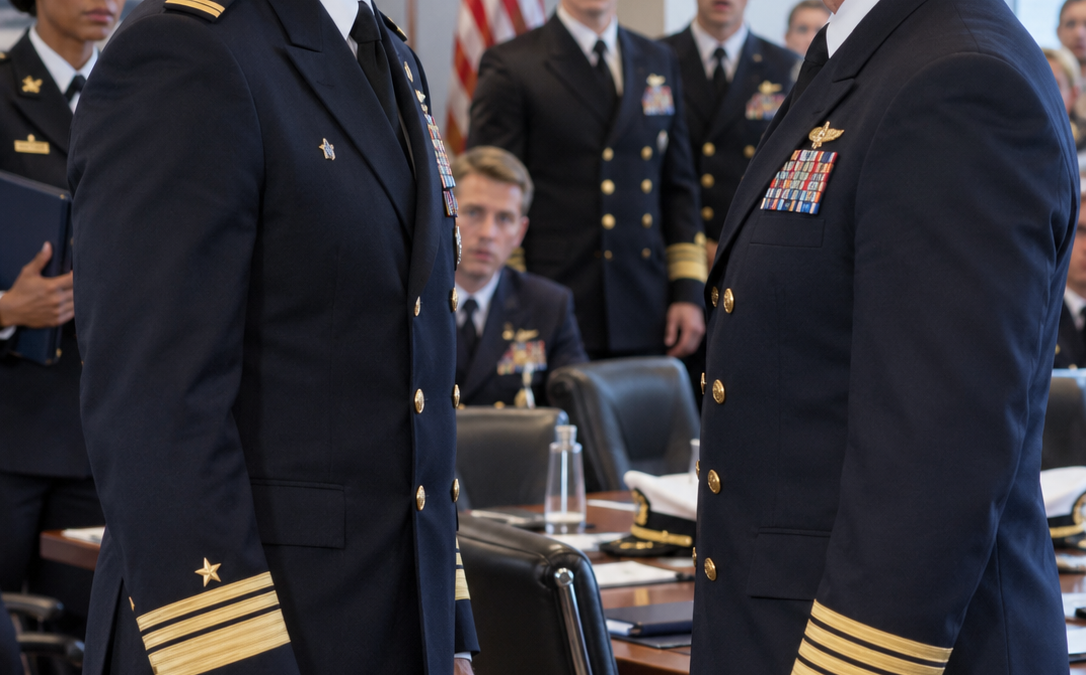
My daughter’s fiancé’s father spent nearly three hours at dinner that night lecturing me about the United States Navy. He talked about rank, about experience, about years of service. He even explained how a man in the military ought to judge the people around him. I sat there and listened, nodding now and then, letting him carry on. After thirty-one years in this line of work, I was more than accustomed to people trying to explain my own profession to me. I felt no need to argue or prove anything.
I thought it was simply going to be a long-winded dinner until about nine o’clock, when I walked into the kitchen for another serving platter and happened to overhear his voice from the other side of the room. He was telling his son that my daughter’s family amounted to nothing. No money, no status, nothing worth relying on. Once the two of them married, he said, his son would be carrying our family for the rest of his life.
I was standing less than four feet away. He had no idea I was there, and I said nothing. I simply stood in silence and listened to every word.
Sometimes the best way to answer a man is not to argue with him, but to let him keep believing exactly what he already believes.
If Foster Callaway had known who he’d just spent nearly three hours lecturing, he might have chosen his words more carefully. But I had no intention of telling him. Not that night, at least.
I decided to save the truth for Monday morning.
My daughter’s name is Sienna. She’s twenty-nine years old and works in hospital administration in Norfolk. She met Weston Callaway in 2023 at an event on base that she attended with a friend from work. Weston is thirty-one, a lieutenant, which is an O-3. A fine thing to be at thirty-one, though not a remarkable thing to be at thirty-one. They got engaged in June of this year. I’d met that young man four times before September, and he’d been perfectly pleasant on all four occasions. I hadn’t formed a single hard opinion about him.
Everything that followed happened quickly, and none of it was something I’d been waiting for.
His father is Captain Foster Callaway, United States Navy. Twenty-six years of service, currently assigned to a staff billet at Naval Station Norfolk. A captain is an O-6. That’s a serious rank, and it’s a serious career. A man who makes captain in twenty-six years has done a great many things right. His mother’s name is Adrienne, and she hasn’t worked since about 1998. There’s also a younger brother, Milo, twenty-six, a lieutenant junior grade, whom I’d never met until that Saturday.
So there were four of them coming to my house, and three of the four wore the same uniform I did.
None of them knew what I was.
I have to explain that properly, because people tend to find it difficult to believe. Yet it’s the most ordinary thing in the world if you know this community.
I’m a rear admiral, lower half. That’s an O-7, the first flag rank, and I’ve held it since 2021. Since 2023, I’ve been deputy commander of a special warfare command. Before that, I spent twenty-two years in the teams. I won’t give you a number for deployments, because that’s something men in my line of work do when they want something from a room, and I’m not going to do it here.
What I will tell you is that I enlisted in 1994, at nineteen years old, out of a town on the Alabama Panhandle. I went to the fleet as a boatswain’s mate. I didn’t become an officer until I was twenty-eight, through a program most people have never heard of.
My father worked at a paper mill for thirty-four years. My mother cleaned rooms at a motel along the highway, then ran its housekeeping department, then eventually owned about eleven percent of the place. Nobody in that town ever knew about her ownership because she never told them.
I’ve thought about my mother a great deal since September. She never told anybody anything. Whenever someone talked down to her at that motel, she had a saying: a person who is measuring you is telling you what they think a person is worth.
I didn’t understand that when I was fourteen.
I understood it at fifty-one, standing in a pantry doorway with a platter in my hands.
I did not go to Annapolis. I don’t have the ring. I came up the long way, and I came up late. There’s a certain group of men in this Navy who can tell that about a person within about four minutes. Foster Callaway is one of those men. He graduated from the Naval Academy in the class of 1999.
Now, here’s why my daughter didn’t know.
Sienna knows I’m in the Navy. She’s known that her entire life. But she hasn’t been on a base with me since she was about eleven years old. She doesn’t understand what a flag officer is, in much the same way most people don’t understand what a managing director at a bank does. She knows her father goes to work and comes home in the evening, and she remembers the years when he was gone.
I have never, in my life, come home and talked about work.
That started as a rule concerning something specific. Then it became a habit, and eventually it became who I am. By the time Sienna was old enough to ask questions, I’d already spent fifteen years answering that kind of question in approximately eleven words.
Her mother would have told her.
Renee would have made absolutely certain that girl understood exactly what her father was. She would have been unbearable about it at parties, and I would have been embarrassed and secretly glad at the same time.
Renee died in 2014. Sienna was eighteen. It was ovarian cancer, and it took fourteen months. I was on shore duty for eleven of those months, which I consider the single greatest piece of luck in my entire life. I’ve never called it anything else.
That woman knew what I was. She’d been to the ceremonies. She sat in a folding chair when I put on captain, and she cried. Then she made fun of me for an hour during the drive home.
She used to do this thing at parties. Somebody would ask what I did for a living, and I’d give my usual eleven-word answer. Renee would wait about four seconds, then say, “He’s being modest,” and proceed to tell them the real version while I stood there and hated every second of it.
I told her I hated it about forty times.
She always said, “Somebody in this house has to.”
I didn’t understand what she meant by that until September of this year, when I was standing in a pantry.
After Renee died, it was just the two of us, and I got worse rather than better about talking. I’ve thought about that a great deal these last four months.
I drive an old pickup truck. I live in a three-bedroom house I bought in 2009. It’s paid off, and there’s nothing impressive about it. I wear jeans and a work shirt at home. I mow my own yard.
None of that is humility. I’m not a modest man.
I’m a man who spent twenty-two years in a community where you don’t talk about yourself, then spent another ten years sitting in a chair where everybody in the room already knew who you were. Somewhere along the way, I simply lost the equipment for introducing myself.
That’s the whole explanation. There’s nothing noble about it.
Sienna called me in August and asked whether we could have dinner with Weston’s family before the wedding. I said yes immediately. I wanted that dinner. I have one child, and there was going to be a wedding, and I wanted those people in my house.
I was paying for the wedding, by the way. That’s going to matter.
The venue deposit was $31,000. I paid it in July. I paid the caterer’s retainer in August, and I told my daughter not to worry about the numbers. She asked me twice whether it was too much. Both times, I told her it wasn’t.
I cooked that Saturday.
The food matters because of what happened around it.
I’m not a particularly good cook. I know how to make about four things, and one of them is a rib roast my mother taught me to prepare in a kitchen in Alabama around 1988. I bought a seven-pound roast on Friday and made it the way she used to make it. I made her potatoes and a green-bean dish that takes about two hours to prepare, something nobody under sixty seems to have the patience for anymore.
I’d been in the kitchen since about eleven that morning.
There’s something I did that afternoon that I never told my daughter about.
Around four o’clock, I went into my bedroom and stood in front of the closet. Inside was a garment bag containing my service dress blues. On the wall of my office was a shadow box filled with things from my career. On a shelf sat a photograph from 2021 showing a woman pinning a star onto my shoulder.
I looked at all of it for about eleven minutes.
Then I closed the closet, put the photograph facedown in a drawer, and returned to the kitchen in my work shirt.
Not out of modesty.
I did it because my daughter had asked me once, back in 2019, whether I could please not be weird about work in front of people. I’d never quite worked out what she meant by that. Somewhere along the way, I decided the safest version of myself to bring to a dinner table was the version with nothing on display, everything tucked away facedown in a drawer.
That’s what I did to a photograph of myself four hours before four people came into my house.
They arrived at six.
Foster Callaway came through my front door, shook my hand, and looked past my shoulder at the house. That’s not a figure of speech. While his hand was in mine, his eyes were already examining the room behind me.
I’ve shaken approximately eleven thousand hands in thirty-one years. I know exactly what that is.
Adrienne complimented the entryway in a tone that made it clear she’d expected something else. Milo, the younger son, addressed me as “sir” and shook my hand properly. He was the only one of the four who did that all evening, and I noticed it.
Weston hugged my daughter, put his hand on the small of her back, and said something that made her laugh.
I watched them and thought, All right. That’s what I want.
The first hour was fine. That makes the rest of it worse, not better.
We had drinks in the front room. We talked about the wedding venue, Sienna’s job, something in the news. It was completely ordinary.
Things changed when we sat down to the rib roast.
Foster asked what I did for a living.
A perfectly normal question. I’ve been asked it about four thousand times, and I gave the same answer I’d been giving for eleven years.
“I work at a special warfare command down at the base.”
That answer is completely true. It’s also completely useless, because roughly eleven hundred people work at that command, and about nine hundred of them are in support positions. If you say it in that flat way, with no rank attached, a certain kind of officer will fill in the rest himself.
Foster Callaway filled it in himself.
“Admin side or operations?” he asked.
“A bit of both,” I said.
He made a small sound.
“Sure. There’s a lot of that over there.”
My daughter didn’t catch it. Weston didn’t catch it. Milo caught it, and I saw him catch it. He looked down at his plate.
I said nothing and passed the potatoes.
Around seven-ten, Foster corrected me about my own command.
I’d made a general observation about a manning problem. Nothing classified, nothing a person couldn’t have read in a trade publication. Foster put down his fork.
“That’s the perception,” he said. “The reality is more complicated.”
Then he spent approximately four minutes explaining my own organization to me.
He got two things wrong. Not opinions. Numbers.
He was off by about a thousand on a figure I’d personally briefed to a three-star admiral in July.
At the end of his explanation, he said, “No offense, Marcus, but you’re seeing the admin side of it. From where I sit, it looks different.”
From where he sat, he was an O-6 assigned to a staff billet.
I was the deputy commander of the organization he was describing.
“That’s fair,” I said.
Around seven-fifteen, Foster asked how long I’d been in the Navy.
“Thirty-one years,” I told him.
“And where does that put you? Senior chief?”
Senior chief. That’s an E-8. It’s a fine thing to be. It takes about eighteen years to reach that level, and the men who get there are a large part of the reason anything in the Navy works.
He didn’t ask it unkindly. He asked it the way you’d ask a man about his line of work at a barbecue.
But he asked it after I’d already told him I had a commission.
He’d heard me say 2003, and the information had simply passed through him because it didn’t fit what he’d decided about me when he looked past my shoulder at my house.
“I received my commission in 2003, sir,” I said.
Sir.
I called him sir at my own dining table, in my own house, even though he was an officer two grades below me. I did it without thinking, the way you say “excuse me” when somebody bumps into you.
“Right, right,” Foster said.
He didn’t correct me about the “sir.” He didn’t even notice.
My daughter noticed.
She told me in November, “Dad, you called him sir at your own table. I didn’t understand why, and I couldn’t stop thinking about it for a week.”
“Thirty-one years,” Foster continued. “That’s a long run.”
Adrienne looked over at me.
“And you never wanted to go the officer route?”
Just like that. At my own table, over my mother’s rib roast, from a woman who’d been inside my house for seventy minutes.
“I did, actually,” I said. “I got my commission in 2003.”
“Oh, well, that’s wonderful,” she replied, in the tone you use when somebody tells you their child made the honor roll.
Foster nodded.
“Mustang. Nothing wrong with that. Some of the best men I know came up that way.”
He said it to me in my kitchen, at a table I’d built for my daughter in 2011, with a fork in his hand.
“I’ve found the same thing,” I said.
Sienna was talking to Adrienne about flowers.
Now, here’s what I was actually doing during those three hours, and I’m going to be honest because it isn’t admirable.
I was letting it run.
Not out of restraint. Not because I was a big enough man to take it.
Because at about seven-twenty, I understood exactly what was sitting in front of me. I also understood that the following Monday morning, this man was going to be standing in a briefing room. I made a decision to say nothing and find out how far he would go.
That’s not dignity.
That’s a thirty-one-year habit of gathering information before acting. It works extremely well in my profession, but it’s a cold way to sit at a table with people who are about to become family.
I still haven’t worked out what I ought to have done instead.
There were two more remarks before the money came up, and those were directed at my daughter rather than me.
Around seven-twenty-five, Adrienne asked Sienna what she did.
“Hospital administration in Norfolk.”
My daughter runs scheduling and staffing for two surgical floors. She’s good at her job. She’s been promoted twice in four years.
“Oh, that’s nice,” Adrienne said. “And are you going to keep doing that?”
“Yes,” Sienna replied.
“Well, Weston’s schedule is going to be the difficult one. So it’s good that yours is flexible.”
The second remark came from Foster about ten minutes later. He was trying to be kind, which is part of what made it so revealing.
“Sienna, my son tells me you’ve been very patient about the moving. That’s not easy for a civilian.”
For a civilian.
Her father had been in the Navy for thirty-one years. She was born on a base. She’d moved four times before she turned nine.
“I grew up in it, sir,” she said.
Foster Callaway smiled.
“That’s not the same thing, but it helps.”
At about seven-forty, the conversation turned to money.
Adrienne asked about the wedding venue. Sienna told her the name of the place.
There was a small pause.
“That’s lovely,” Adrienne said. “That’s quite a place.”
Then she added, “And are you two comfortable with all that? These things can run away from people.”
“My dad is taking care of the venue,” Sienna said.
Adrienne placed a hand on my daughter’s arm.
“Well, that’s very generous, but you mustn’t let him overextend himself. Men that age don’t always say when it’s too much.”
Men that age.
I was fifty-one years old.
“We’re all right on it,” I said.
Then Foster said the thing I’ve replayed more than any of the others.
“Sienna, if the numbers get tight, you say something. There’s no shame in a smaller room.”
I had paid a $31,000 deposit eight weeks earlier out of an account that wouldn’t have noticed it.
“I appreciate that,” I said.
My daughter looked at me for about a second and a half.
That was the first time she’d really looked at me all evening, and that second and a half is the moment I keep returning to.
She knew something was wrong with the shape of the conversation. She just didn’t know what it was.
She looked to her father, and I gave her nothing at all because I’d already decided at seven-twenty to let things run.
I did that to her.
That’s on me, not on anybody else at that table.
If you’ve ever sat in a room while someone you love was quietly being told they didn’t measure up, and you had the exact words in your pocket that could have ended it with a single sentence but chose to keep them there, you know the particular kind of guilt I’m describing.
It isn’t the same as being wronged yourself. In its own quiet way, it’s worse, because you had a choice and somebody else didn’t.
Around eight o’clock, Milo asked me a real question.
“Sir, what do you actually do over there? Like, day to day?”
I looked at that young man and came closer to answering honestly than at any other point in the evening.
“I sit in a lot of meetings about people and money,” I said.
“Resourcing?”
“Something like that.”
“That’s the whole Navy, sir.”
I laughed. He laughed.
For about eleven seconds, it was a conversation between two men in the same service.
Then his father interrupted.
“Milo, let the man eat.”
That was the only time all night Foster Callaway deliberately stopped a conversation. And it happened to be the one conversation in which somebody had asked me what I did and actually waited for the answer.
Around eight-fifteen, Weston told a story about a flag officer visiting a command he’d been assigned to in 2022. It involved an admiral who’d asked a question that demonstrated he didn’t understand the work being done.
Weston told it well. Everybody laughed.
“And that’s the thing, right?” he said. “By the time they get that rank, they haven’t touched the actual job in fifteen years.”
“Twenty,” Foster corrected.
“Well, that’s why they need good staffs,” Adrienne added.
I sat at the head of my own table and drank water.
My daughter laughed at the story too, not unkindly. She had no idea what was sitting in that room with her.
There was another exchange before dessert. It’s one I’ve never been able to leave alone.
Weston was talking about his career, where he wanted to be in ten years. Ordinary young-officer talk. I liked listening to it.
His father turned toward me.
“And Marcus can tell you, the ones who get there early are the ones who never took a shore tour. They didn’t have to. Isn’t that right?”
“More or less,” I said.
“That’s why it matters who’s in your corner at O-4,” Foster continued. “Nobody makes it on their own. You need a flag officer who knows your name.”
He said that to his son across my dining table while a flag officer passed him the potatoes.
Then he added, “We’ll get you in front of the right people at some point. That’s what a father’s for.”
I’ve gone back to that exchange more often than the one in the kitchen.
The kitchen was about my daughter, and I understood it immediately.
That one was a man explaining fathers to me.
There was one more remark during dessert, and it’s the one I would take back if I could take back anything from that evening.
Adrienne asked whether I’d be giving a speech at the wedding.
“I suppose so,” I told her.
“Oh, good. Keep it short, though. Foster’s doing one, and he’s very good at them. He does them at the command all the time.”
I’ve spoken at approximately forty retirement ceremonies.
I gave the eulogy at my own wife’s funeral in front of two hundred people without a single note.
“I’ll keep it short,” I said.
My daughter was sitting four feet away from me.
She had heard that eulogy.
She was eighteen years old, sitting in the front row, and she’d listened to her father speak for eleven minutes about her mother without one piece of paper in his hands.
She didn’t say anything either.
That’s not a criticism of her. She was twenty-nine, she was outnumbered, and she’d been managing that family for a year.
But there were two of us at that table who knew, and neither of us said a word.
I’ve wondered since whether she was waiting for me, just as I was waiting to see how far they would go.
Then came dessert.
Then came the kitchen.
I want to slow this part down because it’s the longest scene in the whole story, and it deserves to be told carefully, exactly the way it happened.
My kitchen has a pantry off to one side, with no door. If you’re standing in that pantry doorway taking something down from a shelf, you’re about four feet from the counter. Someone standing at the sink can’t see you unless they turn around.
Around nine o’clock, I went into the pantry to get a serving platter for the cake.
Foster and Weston were standing at the sink.
They’d come into the kitchen carrying plates and were speaking quietly, the way men talk when they believe they’re alone in a house that doesn’t belong to them.
Weston said something about the wedding venue.
His father replied, “It’s a nice place. I’m not saying it isn’t a nice place.”
Then he said it.
“She’s a nice girl, but that family’s got nothing behind it, and you’re going to be carrying them for thirty years. Her father’s fifty-one years old, in a house he’ll die in. Think about what that looks like in fifteen years, when he can’t work and there’s no one else. That family’s got nothing behind it.”
The young man who was supposed to become my son-in-law, the same young man who’d asked for my daughter’s hand in May with his voice shaking, said nothing.
Not one word.
There was a pause of approximately four seconds.
Then he said, “Yeah.”
And turned on the tap.
Yeah.
I stood in that pantry doorway with the platter in my hands.
My daughter was standing in the other doorway, the one leading in from the dining room, holding a stack of plates.
She’d come in behind them.
She’d heard all of it.
She was standing about eleven feet from her fiancé, looking at the back of his head.
Neither man knew either of us was in that room.
I’ve been in a great many bad rooms in my life, and I want to tell you what my body did in that one, because it surprised me.
Nothing happened in my chest. I didn’t get hot. I didn’t feel the familiar rush of anger I might have expected.
Instead, I looked at my daughter’s face.
I can still see it.
She wasn’t angry.
It wasn’t shock, either.
It was recognition.
She was standing in a doorway hearing something she’d already half known.
I watched a twenty-nine-year-old woman realize she’d spent months managing something without ever allowing herself to say aloud what it was.
Then she turned and walked back into the dining room with the plates.
She didn’t speak. She didn’t put them down. She didn’t make a sound.
I’ve thought about the discipline in that. I don’t know where she got it, although I suspect she got it from me.
I came out of the pantry about eleven seconds later, still holding the platter.
Foster turned around and saw me.
For half a second, I watched him calculate how long I might have been standing there.
Then he decided I’d only just walked in, because a man like that tends to decide things in his own favor.
“Marcus, this is a great kitchen,” he said. “Really functional.”
“Thank you,” I replied. “Cake’s in the front.”
If you’re a father who has ever caught yourself weighing what to say against what it might cost you to say it, and then chosen silence because you told yourself it was strategy, I understand that calculation more than I’d like to admit.
It rarely feels like cowardice while you’re doing it.
It only starts to feel that way afterward, when you remember your child’s face.
They left around nine-forty.
There were handshakes at the door.
Adrienne told me the roast had been wonderful. She meant it, and it was the only completely honest thing that woman said in my house.
Milo shook my hand.
“Thank you for dinner, sir.”
He said it exactly the same way he’d said it when he arrived.
Weston hugged my daughter at the door.
Sienna didn’t put her arms around him.
She stood there and allowed it to happen, then stepped backward.
He didn’t notice.
His mother did.
Adrienne Callaway noticed, looked at my daughter, then looked at me. Something crossed her face that I couldn’t read.
Their cars pulled out of the driveway at about nine-forty-five.
My daughter stood outside and watched both cars disappear down the street. She didn’t come back inside for about four minutes.
I went into the front room and sat in a chair in the dark.
Not to think. There was nothing left to think about.
My hands were doing something I didn’t like, so I laid them flat on my knees and kept them there until it stopped.
That’s happened to me four times in thirty-one years. Two of those times were overseas.
Eventually, I got up, went into the kitchen, and turned on the water.
I did the dishes.
There was the rib-roast pan and about thirty other pieces to wash. I stood at the sink and cleaned every one of them by hand because that’s what my mother did after every meal she ever cooked.
Sienna came in around nine-fifty.
She stood in the kitchen doorway, the same doorway she’d stood in forty minutes earlier.
“Dad, I heard it.”
“I know,” I said.
“I saw you.”
That’s the entire exchange we’ve ever had about the pantry.
Neither of us has said another word about it since.
She sat down at the kitchen table, and I kept washing.
That wasn’t thoughtfulness on my part.
I couldn’t turn around.
I had a pan in my hands, and my daughter was about to tell me something. I understood that if I looked at her face while she said it, I might do something in that kitchen that a fifty-one-year-old man couldn’t undo.
So I kept my back to my own child for forty minutes.
I washed the rib-roast pan four times.
She told me it had been going on for a year.
Not that exact conversation. Not the big, ugly version we’d overheard in the kitchen. But pieces of it.
She said Foster had made remarks about our house in 2024.
She said Adrienne had asked her twice whether I’d be able to help with a down payment, using a voice that already contained the answer she expected.
She said Weston had never once spoken up.
Not one time in an entire year.
Not at a table.
Not afterward in a car.
Not in a kitchen at nine o’clock at night.
Then she said the thing that ended it, speaking to my back while I stood at the sink.
“Dad, tonight wasn’t the worst thing that’s ever been said in front of him. It’s just the first time I was standing where I could see his face while he did nothing.”
I kept my hands in the water.
Then she said, “I’m not marrying him.”
I turned around.
“Don’t decide that tonight.”
My daughter looked at me.
“I decided it in the doorway.”
What I did next is the only thing in all of this that I’m certain I got right.
I didn’t agree with her.
I stood in that kitchen holding a dish towel and told my twenty-nine-year-old daughter that she needed to sleep. I told her she should speak to Weston on Sunday, when she wasn’t standing in her father’s house at ten o’clock at night.
I told her that something decided in a doorway was something that ought to be examined again in daylight.
“You’re defending him,” she said.
“No,” I replied. “I’m making sure that when you do this, you do it twice.”
She did it twice.
She called him Sunday afternoon.
They talked for approximately ninety minutes, and she ended the engagement at the end of that call, not at the beginning.
She’s told me about eleven minutes of what was said during those ninety minutes. I haven’t asked for more.
What she did tell me was that she gave him one chance, and she was fair about it.
“Do you agree with what your father said in my dad’s kitchen?” she asked him.
“Of course not,” Weston said.
“Then why did you say yeah?”
There was a long silence on the telephone.
Finally, he answered.
“Because he’s my father.”
“And I’m supposed to be your wife.”
Then Weston said the sentence she repeated to me twice.
“Sienna, you’re making one night into a referendum.”
One night.
It had been a year.
And she had a list.
She went through that list for about forty minutes.
I was outside in the yard. I didn’t hear a word, and I didn’t ask.
She came out around four o’clock and sat on my back step.
“It’s done,” she said.
Then she cried for about eleven minutes.
I sat next to her and said nothing because there was nothing I could think to say that wasn’t going to become about me.
Now, Monday.
The briefing at the base had been on the calendar for eleven weeks.
A quarterly manning review. Nothing dramatic. Just a large, recurring briefing concerning personnel, billets, and readiness across the enterprise.
We hold it four times a year. There are usually about two hundred people in the room.
I’m the presiding flag officer at that briefing every quarter, and I have been since 2023.
Captain Foster Callaway was scheduled to attend because his staff billet had a section in the briefing, and he was responsible for presenting it.
He’d presented at that same briefing three times during the previous year.
He and I had never been in the same room.
That isn’t remarkable.
He’s one of approximately forty people who present. I’m seated at the front, and his eleven-minute portion goes through the chief of staff.
Weston was there to take notes for his command. Milo was there for the same reason.
Three members of the Callaway family were going to be in one room for a calendar event scheduled back in June.
I hadn’t arranged any of it.
I discovered it at about six-forty Monday morning when I opened the read-ahead in my office and saw the presenter names for the Norfolk portion.
F. Callaway, CAPT, USN.
I sat there with a cup of coffee, looking at that name on a piece of paper.
Then I did something that’s going to disappoint some people.
I called my chief of staff and asked whether there was any reason for me to recuse myself from a manning briefing on the grounds that one of the presenters had, until Saturday, been expected to become my daughter’s father-in-law.
Her name is Captain Deja Okonquo. She’s worked for me since 2022.
She thought about my question for roughly four seconds.
“Sir, is he aware of the relationship?”
“He’s aware there’s a relationship,” I said. “He’s not aware of what I am.”
“Then there’s nothing to recuse from. You’re not adjudicating anything about him. He’s presenting manning data.”
She paused.
“Sir, is this going to be a problem?”
“No,” I said.
“All right.”
Then Deja asked, “Sir, do you want me to give him a heads-up before you walk in?”
That question is the one I keep going back to.
She was offering me a decent way out.
She was offering to walk down the hall at six-fifty in the morning and quietly tell a captain that the flag officer about to preside over his briefing was the same man whose rib roast he’d eaten on Saturday night.
She was offering to let him arrange his face before two hundred people watched him do it.
“No,” I said.
I answered in about one second.
I didn’t think about it, and I’ve had four months to work out why.
It wasn’t strategy. There was nothing to gain.
I said no because at nine o’clock Saturday night, that man had stood in my kitchen and told his son that my daughter came from nothing.
My daughter heard him.
And I stood four feet away in a pantry doorway, holding a platter, and did nothing.
At six-fifty Monday morning, somebody offered me an opportunity to make things easier for him.
That’s all it was.
I wasn’t being clever, and I wasn’t delivering justice.
I was a father who had allowed something to happen on Saturday and wasn’t willing to do one thing to help the man responsible on Monday.
The briefing was scheduled for 0730.
The room fills first.
Everybody is usually seated by about 0725. Commanders, staff officers, presenters, junior officers at the back with their laptops.
The flag officer enters last.
When a flag officer walks into a space like that, the senior person standing nearest the door calls the room to attention.
Everybody stands and remains standing until the flag officer says, “Take your seats.”
That’s not ceremony for its own sake. That’s the way the Navy has done things for approximately two hundred and fifty years.
At 0729, the senior officer standing nearest the entrance happened to be Captain Foster Callaway.
He’d arrived late and hadn’t yet taken his seat.
I stood outside that door for about forty seconds.
Deja Okonquo stood beside me holding the folder. She didn’t say anything.
She’d stood outside that same door with me approximately eleven times before. She knew the routine.
At some point during those forty seconds, I understood something that hadn’t occurred to me at six-fifty.
He was going to have to call the room to attention.
I could have waited.
That’s the part I haven’t told anybody.
I could have stood in that passageway another ninety seconds.
Let him find a seat.
Let somebody else call the room.
Let him watch me walk in from a chair like everybody else.
Ninety seconds.
That’s all it would have cost me.
Deja opened the door.
I walked through it in my service dress blues, stars on my shoulder boards.
And Captain Foster Callaway, twenty-six years in the Navy, Annapolis class of 1999, looked at the man who’d cooked him a rib roast on Saturday night.
There was a pause.
Not a long one. Somewhere between one and two seconds.
About four people in the room noticed it.
Then his training took over, because that’s what twenty-six years of military service does.
“Attention on deck!”
Two hundred people stood.
He had said, You need a flag officer who knows your name.
He had said, Senior chief.
He had said, You’re seeing the admin side of it.
I walked toward the front of the room.
I passed a captain whose eyes were fixed on the far wall because a man standing at attention doesn’t turn his head.
I passed his younger son, Milo, who had gone completely white.
I passed Weston Callaway, standing at the end of the third row from the back with his mouth slightly open.
I reached the front, turned around, and said, “Take your seats.”
Three words.
The same three words I’d said at the front of that room every quarter for two years.
Two hundred people sat down.
I didn’t look at any of them.
I opened my folder, said good morning, and asked my chief of staff to begin with the enterprise manning summary.
I never mentioned what had happened.
Not that morning. Not at any point during the briefing. Not to anybody in that room.
Two things happened over the next ninety minutes that I hadn’t planned and couldn’t have planned.
Around seven-forty-five, during a slide change, a commander I’ve known since 2016 leaned toward me.
“Sir, everything all right?”
“Yes,” I said.
“All right.”
Then he added, “That was a strange one at the door.”
Four people had noticed the pause.
I said that earlier, and it wasn’t a guess.
Deja counted them for me afterward without being asked, because that’s what a good chief of staff does.
The second thing happened around eight-thirty.
I looked up during somebody else’s presentation and saw Weston Callaway watching me from the back of the room.
He wasn’t angry.
He didn’t look embarrassed.
He was doing arithmetic.
I watched a thirty-one-year-old man work backward through a dinner table, a kitchen sink, and a stack of plates until he reached the bottom of it.
He understood what his father had said.
And he understood who had been standing four feet away when it was said.
He looked at me for approximately six seconds, then lowered his eyes to his laptop.
I’m fairly certain Weston understood the full significance before his father did.
Foster spent that entire briefing trying to manage his own face. He didn’t have room to think about much else.
He presented at 0811.
Eleven minutes on manning shortfalls within his portion of the enterprise.
He got through it.
His voice wasn’t steady for the first thirty seconds. After that, it settled, and the material itself was good.
I asked him two questions.
One concerned a bullet-point figure that didn’t reconcile with a slide from the previous quarter. The other concerned whether his command had a plan to address the issue or needed to make a request.
They were the same questions I’d have asked any presenter.
I know that because I’d asked the man before him a nearly identical pair.
Foster answered both.
“Thank you, Captain,” I said.
“Thank you, Admiral,” Foster Callaway replied.
That’s the only thing that man ever called me in that room, and it was the first time he’d ever spoken my rank aloud.
Around eight-fifty-five, a commander from a West Coast team asked a question about training throughput.
I answered it the way I normally answer questions at those briefings.
I gave a number from 2007 off the top of my head and explained why the figure was different now.
That’s not a party trick.
I was there in 2007.
I ran the thing that number came out of.
And I watched Foster Callaway, sitting four rows back, understand that the man he’d lectured about resourcing on Saturday night had personally been on the ground for something everybody else in that room was now reading about on a slide.
His son had said that by the time admirals reached flag rank, they hadn’t touched the actual job in fifteen years.
Foster had corrected him.
Twenty.
The briefing ended at 0940.
I returned to my office, had a call at ten, and my morning proceeded the way mornings usually proceed.
Foster tried to speak to me twice before he made a proper request.
The first time was immediately after the briefing ended.
He came about eight feet toward the front of the room, but someone from my staff reached me first with a folder, and Foster stopped.
The second time was in the passageway around 0950.
“Admiral—”
“Captain,” I acknowledged.
I kept walking because there were four people with me, I was already speaking to one of them, and that’s what you do in a passageway.
At approximately eleven-twenty, my yeoman told me Captain Callaway had asked whether I had five minutes.
I said no.
It wasn’t cruelty, and it wasn’t a power play.
A captain requesting five minutes with a flag officer at eleven-twenty on a Monday morning to discuss a personal matter is something people notice.
There were about two hundred people in that building who’d witnessed something unusual at 0729 and didn’t understand what it meant.
The worst thing either of us could have done was give them a second act.
I told my yeoman I wasn’t available and that any correspondence could come through my chief of staff.
Foster wrote to me instead.
The letter arrived Wednesday.
Not an email.
A physical letter, on paper, inside an envelope, hand-delivered to Deja Okonquo’s desk.
Two pages.
Deja read it first because that’s part of her job.
Then she brought it into my office, placed it on my desk, and said, “Sir, you should read this one yourself.”
She left the room.
In three years of working together, she’s done that perhaps four times.
There were two paragraphs in that letter that mattered, and they’re the reason I’ve kept it in a drawer since September.
Foster did not apologize for what he’d thought about me.
He apologized for what he’d said about my daughter.
That’s the distinction.
And he made it himself, in his own handwriting.
In the second paragraph, he wrote that he’d spent two days trying to decide whether he was sorry because what he’d done was wrong or because he’d been caught.
He’d concluded it was both.
He wasn’t going to pretend to me that it was only the first one.
That sentence is why I kept the letter.
He wrote about the Naval Academy.
He wrote about arriving there in 1995 and being surrounded by men whose fathers were admirals. He wrote that he’d spent twenty-six years acutely conscious of where he’d come from, and that somewhere along the way he’d begun doing to other people the very thing that had been done to him when he was twenty.
He wrote that when I said thirty-one years and didn’t give a rank, he’d made a decision about me in approximately four seconds.
And he wrote that a man who’d spent twenty-six years in the Navy ought to know better, because the Navy is full of people who don’t tell you what they are.
Then he wrote this:
“I did not insult a rear admiral on Saturday night. I insulted a man in his own kitchen who had cooked for my family for six hours. The rank does not make it worse. It only made me find out.”
A fifty-three-year-old man wrote that about himself, by hand.
At the end of the letter, he asked me for nothing.
He didn’t ask me not to hold it against his sons.
He didn’t mention his own career or the selection board coming up in January.
Both of us knew about that board.
Neither of us has ever put it in writing.
He didn’t ask for anything at all.
He simply signed his name and rank.
That was the end of it.
I didn’t answer that letter for six days.
It sat in a drawer in my office.
I took it out approximately four times, read it, and put it back.
On Friday, Deja asked whether I wanted her to draft something.
I said no.
Then she said, “Sir, may I say one thing?”
In three years, she’s probably asked my permission to say something twice.
“Whatever you send that man,” she said, “he’s going to read it about a hundred times. So don’t send four lines just because four lines is easier than eight.”
I sent four lines.
I’ve thought about what she said, and she was right.
I did it anyway.
And the reason isn’t a good one.
Eight lines would have meant I’d really thought about it. Four lines allowed me to pretend it had cost me nothing.
In reality, it had cost me six days of opening and closing a drawer.
I answered him on September twenty-fourth.
Four lines on paper, delivered through the same channel.
I wrote that I’d received his letter, that the portion concerning my daughter was the only part that had ever mattered to me, and that I accepted his apology.
I wrote that his sons’ careers had never been in any danger from me and never would be. If he’d been worried about that, he should stop.
The fourth line said:
“My daughter is not going to hear from you or your wife. That is not a request.”
He understood it exactly as written.
There has been no contact since.
Now, what actually happened to those people?
It’s less than everybody wants, but it isn’t nothing.
Foster Callaway did not make O-7 that January.
People tend to assume otherwise, and the assumption isn’t true.
I didn’t sit on that selection board.
I’ve never sat on that board.
Flag-officer selection boards are convened by the Secretary of the Navy. Their membership is a matter of record. My name isn’t on the list, and anybody can check.
I did not speak to one person about that man.
Not once.
Not in any form.
I’ve thought a great deal about whether I would have if January had turned out differently, but that isn’t what happened.
He didn’t make it because roughly two hundred and fifty captains were eligible, and approximately eleven were selected.
That’s the arithmetic every year.
It has almost nothing to do with any single thing a man might have done in September.
He retired in May, with twenty-seven years of service.
There was a ceremony.
There’s always a ceremony, and they’re good.
I’ve attended approximately two hundred of them and spoken at perhaps forty.
A retirement is the only day in a man’s military career that’s entirely about him.
His family is there. Somebody reads his record aloud, and the whole room finds out what he did.
Twenty-seven years is a real career.
Two deployments as a department head. A command tour.
That man did the work.
I didn’t attend his retirement.
I wasn’t invited, and I wouldn’t have gone.
Deja asked me in April whether we ought to send something from the command, because there’s a standard retirement letter that goes out.
“Send the standard thing,” I told her.
“Sir—”
“Deja, send exactly what we send everybody. Do not send more, and do not send less.”
A letter went out bearing my signature block.
I didn’t write it.
I didn’t read it.
It was the same letter sent to every retiring O-6 in that enterprise.
And I’ve probably thought about that letter more than Foster Callaway has.
Weston Callaway transferred in November.
Not because anybody forced him.
He applied for a billet in San Diego in October and got it. A lieutenant who wants to be three thousand miles away can generally find a way to arrange it.
He wrote to my daughter twice.
The first letter arrived in September.
Four paragraphs explaining that his father didn’t speak for him.
Sienna didn’t answer, but she showed it to me.
There’s one sentence I keep returning to.
“I did not agree with what he said.”
Not, I should have said something.
Not, I was wrong to stand there.
I did not agree with him.
A man wrote to the woman he was going to marry and defended his opinions rather than his silence.
The second letter came in January.
One paragraph.
It was better.
She didn’t answer that one either.
Milo Callaway wrote to me.
That’s the one nobody expects.
He sent his letter in October through the official system. Four sentences, done correctly, with the appropriate formality, asking for nothing.
He wrote that he’d been in my dining room on Saturday and said nothing, and that he’d been in the briefing room on Monday and understood exactly what he was witnessing.
He said he was sorry.
Then he wrote, “I asked you what you did, and my father told me to let you eat. I have thought about that more than the rest of it.”
Twenty-six years old.
I wrote him back four sentences.
I told him, “A man who notices a thing in a room and can’t stop it at twenty-six will be able to stop it at forty.”
That’s roughly how it works for all of us.
I also told him he had nothing to apologize to me for.
He’s assigned to a command in Japan now, and he sends me a note at Christmas.
That’s all.
I don’t think we’ll ever speak about any of it again, and I don’t think we need to.
Now, the wedding money.
By the middle of September, I’d put approximately $81,000 into the wedding.
The $31,000 venue deposit was nonrefundable. There was another eleven thousand for the caterer, along with payments for a photographer, a deposit on a band, and a dress.
I recovered about nineteen thousand.
That left $62,000 gone on a wedding that never happened.
I have never once worried about that money.
My daughter worries about it.
That’s the problem.
She brought it up in October, and I told her to stop.
She brought it up again in December.
In February, she came to my house carrying an envelope and placed $4,000 on my kitchen table.
She’d been saving it since October, out of a salary that isn’t particularly large in a city that isn’t particularly cheap.
“That’s the first payment,” she said.
“Absolutely not.”
“Dad, you have to let me.”
We had the only real argument we’d had in about nine years.
It lasted approximately twenty minutes, right there at that same kitchen table.
In the middle of it, she said the thing that made me take the money.
“You paid for that wedding, and you never told me what you actually are. And both of those were you deciding what I could handle. So let me pay you four thousand dollars, because I’m thirty years old, and I don’t want to be somebody who gets handled.”
I took the envelope.
That is the single hardest thing I’ve done in the last year, and I’m including the pantry doorway in that assessment.
She’s paid me $4,000 three more times since.
The payments arrive on the first of the month by bank transfer.
There’s a little note field, and she writes something different in it every time.
The first one said, “Payment two.”
The second said, “Payment three. And tell me about your day sometime.”
The third came in June.
The note field said, “Payment four, Admiral.”
I was sitting in my truck in a parking lot outside a hardware store when I saw it.
I looked at those words for approximately eleven minutes.
Then I went inside and bought a hinge.
There’s an account with $16,000 in it that she doesn’t know about.
At some point, that money will find its way back to her in a manner she cannot refuse.
And I am fully aware that this is exactly the kind of thing she was talking about.
I’m doing it anyway.
Now, the part this is actually about.
My daughter did not know what her father was.
That’s what I’ve been sitting with since September.
It was never really about the Callaways.
A twenty-nine-year-old woman sat at a table in her own father’s house and watched four people talk down to him for three hours.
She had no information with which to defend him because I’d never given her any.
She didn’t know what a flag officer was.
She didn’t know that when her father said he worked at a command, roughly eleven hundred people worked for him.
When Adrienne Callaway said, “Men that age don’t always say when it’s too much,” my daughter had nothing to say in return.
Because as far as she knew, it might have been true.
I did that.
Thirty-one years of not talking about work.
It began as operational discipline, became a habit, and eventually hardened into a personality. By the time it mattered, I’d made my own child unable to speak for me.
There’s something my daughter did in October that I didn’t find out about until December, and I still haven’t fully recovered from it.
One evening, about three weeks after everything happened, she sat down in her apartment and typed her own father’s name into a search field.
The way you would look up a stranger.
There’s a great deal of information available.
An official biography with a photograph.
Ceremonies.
A citation containing language I’ve never spoken aloud to another living person.
She read all of it in one night.
She told me about it at Christmas, sitting at my kitchen table.
“Dad, I found out what you did from a website.”
I have a daughter who learned about the worst night of my life from a public-affairs page at eleven o’clock at night, alone in her apartment.
She said it kindly, which somehow made it worse.
“Dad, I wasn’t embarrassed of you. I want you to know that.”
Then she added, “But I didn’t have anything when his mother said that about the money. I didn’t have one fact in my hand.”
“I know,” I said.
“You could have just told me.”
There was one more thing.
It happened in June, and it’s the reason I finally sat down and told this entire story.
My daughter came to a ceremony.
There’s a change of command every summer, followed by a reception.
I asked Sienna whether she wanted to attend. I asked badly, stumbling through the invitation in the way I do when something matters more than I want to admit.
She said yes before I’d even finished the sentence.
She stood in that reception room wearing a blue dress.
About forty people came over to say something to her father, and she watched them.
At one point, a master chief who has known me since 1999 came over and told my daughter a story about her father in 2003.
It’s a story I would never have told her myself, and one I cannot now untell.
A commander’s wife told her that in 2022, I’d personally intervened to help a family with a medical transfer.
That was true.
It’s also the kind of thing that normally never leaves an office.
Then a nineteen-year-old seaman, who had no business approaching anybody at that reception, came over because somebody had dared him to.
He called me “sir” about eleven times.
My daughter laughed, put him at ease, and asked him where he was from.
She drove me home afterward.
I’d had two drinks, so she took the wheel, and we drove across the bridge.
After a while, she spoke.
“Dad, all that was just sitting there.”
I looked over at her.
“It’s been there a while,” she continued.
“I know,” I said.
She kept her eyes on the road.
“I could have had it the whole time.”
Here’s the thing I would leave you with.
If you’re a father listening to this story, everybody wants the briefing room.
I understand that.
Two hundred people standing at attention. A captain forced to call the room for a man he’d insulted over a rib roast forty hours earlier.
It’s a good thirty seconds.
I’m not going to pretend I didn’t feel it.
But that isn’t what any of this is actually about.
If that’s all somebody takes from the story, then I’ve told it badly.
Here’s what it’s about.
At seven-twenty on Saturday night, I made a decision to let things run.
I told myself it was patience.
I’d spent thirty-one years in an organization where you gather everything you can before you act.
I sat at the head of my own dining table and applied a professional instinct to my daughter’s engagement dinner.
And it cost her three hours.
Three hours of sitting in a chair, watching people speak to her father like that, with no way to stop them, waiting for him to say something.
And he never did.
I could have ended it at seven-twenty-two with eleven words.
I could have said, “I’m a rear admiral, and I run that command.”
That’s all it would have taken.
The entire evening would have changed in one second.
I didn’t say it because some part of me wanted to see how far that man would go.
And because thirty-one years had trained me to hold a card until it was worth the most.
I held a card, and I spent my daughter to do it.
She’d tell you that isn’t true.
She’s told me twice that it isn’t true.
She’d say she heard what she needed to hear in that kitchen and that she’s glad she heard it.
Maybe.
But she didn’t need to hear three hours of it first.
And she only did because her father was being tactical at his own dinner table.
So if there’s a father listening to this who does what I do, who takes it, who doesn’t correct people, who allows a room to be wrong about him because he doesn’t need the room to be right, understand what that costs the people sitting beside you.
They do not have your information.
They cannot see what you’re absorbing.
They only see you absorbing it.
And if it’s your child, they may spend years trying to work out whether you were being strong or whether you simply had nothing to say.
The one specific thing I’d ask any parent to do today is this.
Find the one piece of your own life your children might need in a room like that, and give it to them before they need it.
Not afterward.
Not to boast.
Just so they’re never sitting somewhere, outnumbered, with nothing in their hands to defend you with.
And here’s a question worth sitting with.
It’s the same question I’ve been sitting with since September.
Is there something about you that your own children would only ever learn from a stranger, a search engine, or a room full of people who already knew?
I never told my daughter what I was.
And a man stood in my kitchen and told his son that she came from nothing.
She stood in a doorway eleven feet away, holding a stack of plates, and she had no way in the world to know that he was wrong.
I’d genuinely love to hear what you think.
If you believe I should have stopped it at seven-twenty with eleven words, leave a 1 in the comments.
If you think I was right to let it run and allow the truth to arrive on its own Monday morning, leave a 2.
And if you think the letter from Foster Callaway deserved a real answer instead of four carefully chosen lines, leave a 3.
Tell me where you’re watching from tonight and what time it is where you are.
If you’ve ever sat quietly and allowed people to misjudge you in front of someone you loved, tell me what it cost you and whether you’d do it the same way again.
If any of this reached you, I’d be grateful if you subscribed and stayed close, because I have more stories like this to tell.
And if you’re a father who has spent years not talking about what you carry, do the people closest to you a kindness.
Give them one true fact about yourself before somebody else has to.
This is a fictional story inspired by real emotional experiences, fully rewritten and reimagined in Norfolk, Virginia, to create original content. Any resemblance to real people or events is purely coincidental.








