I sold my business for $60m and decided to celebrate with my daughter and her husband, we went to the most expensive restaurant in town, and when i stepped away to answer a phone call, a waiter approached me and said, “it seems your daughter has poured something into your glass,” so i went back and switched our glasses, and 15 minutes later…
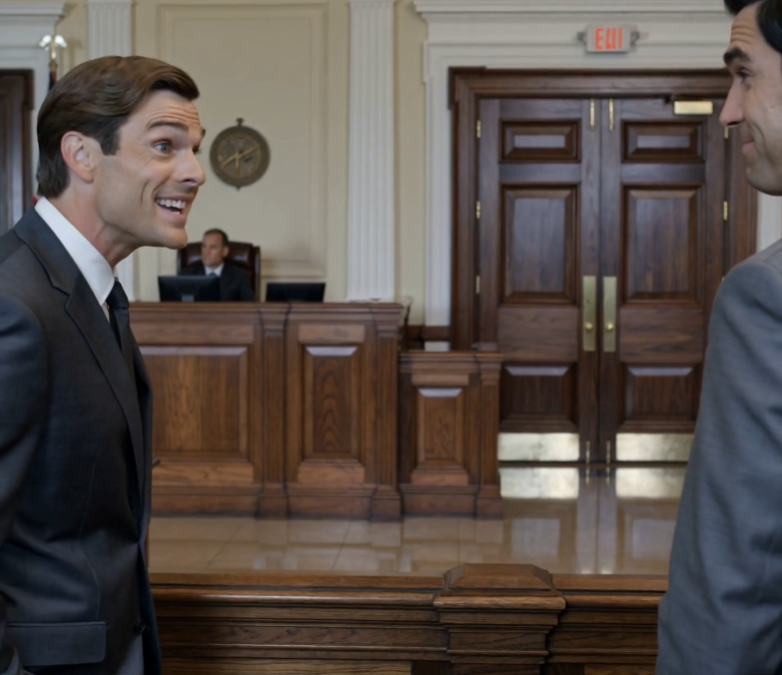
I had just sold my biotechnology company, Apex Biodine, for $60 million. To celebrate, I invited my only daughter, Emily, and her husband, Ryan Ford, to Laurangerie, the most expensive restaurant in the city.
I stepped away from our table to take a phone call confirming the wire transfer. When I turned to go back, a young waiter blocked my path. His face was pale, and his hands were trembling.
“Mr. Shaw,” he whispered, “I saw your daughter. When your son-in-law distracted you, she took a small vial from her purse and poured some powder into your wine.”
My blood ran cold, but I forced myself to remain calm. I returned to the table, deliberately knocked over a glass of water, and, in the confusion, switched my wineglass with Emily’s.
Fifteen minutes later, her eyes rolled back in her head, and she collapsed.
Before I tell you exactly what happened in that restaurant, let me know in the comments where you’re watching from, and hit that like and subscribe button if you believe that sometimes the people closest to you are the ones you know the least.
My name is Peter Shaw. I’m sixty-eight years old, and for the past three years, I’ve been a widower. That $60 million wasn’t just a number on a bank statement. It represented forty years of my life, beginning in a rented garage in Palo Alto with two employees, a handful of equipment, and a dream that most people thought was impossible.
Despite everything I achieved, I never changed much. I still live in the same three-bedroom ranch house I bought with my late wife, Laura. I still drive a seven-year-old sedan. I never saw the point of replacing perfectly good things simply because I could afford something newer.
Laura was the smart one. She understood people with a clarity I often lacked, and she never trusted Ryan. Not from the first day she met him.
“He only looks at your checkbook, Peter,” she warned me once, her voice gentle but firm. “He doesn’t see Emily. He sees a safety net.”
I laughed it off, the way foolish husbands sometimes do when their wives see something they don’t want to acknowledge.
“He loves her, Laura. He’s just ambitious.”
How wrong I was.
Laura has been gone for three years, and now her words echo in my head whenever I think about the man my daughter married.
Emily and Ryan live a life I simply don’t understand. They lease luxury cars that cost more per month than my mortgage ever did. They belong to exclusive clubs I’ve never heard of and vacation in places I’ve only seen in magazines. Ryan supposedly runs some kind of import-export business, although he’s always been suspiciously vague about what he actually imports or exports.
I’m a numbers man. I spent forty years building a company, negotiating contracts, reviewing financial statements, and making decisions involving millions of dollars. I know what healthy finances look like, and I know what desperation looks like.
Ryan was drowning in debt. I knew because I’d seen collection notices and overdue payment letters mistakenly delivered to my house.
My daughter had changed, too. My Emily, the little girl who used to run barefoot through our backyard and tell me everything about her day, became distant after Laura died. She grew defensive whenever I asked about her marriage, as though she were protecting Ryan from some terrible accusation I had never made.
Then, six months ago, everything shifted.
News of the impending Apex Biodine acquisition began appearing in financial publications, and suddenly my daughter and son-in-law were everywhere. They called constantly, visited unexpectedly, and offered to help with things I had managed perfectly well for decades.
“Dad, let us help you with your files,” Emily would say. “You shouldn’t be handling all this paperwork alone.”
Ryan was even more persistent.
“Peter, are you sure your investments are structured correctly for the transition? This is a complicated transaction. I know a lot about these things. I could take a look.”
I had been lonely for so long. Losing Laura had left an emptiness in my life that money could never fill, and I desperately wanted to believe my daughter was finding her way back to me.
So I welcomed their attention.
I mistook their greed for affection.
That night at Laurangerie, their affection had become almost suffocating. The restaurant was a palace of crystal chandeliers, polished silver, and immaculate white linens. Our table overlooked the glittering city skyline, and every dish seemed designed to remind its guests how much money they were spending.
“Dad, you’re a legend,” Ryan declared, lifting his absurdly expensive glass of water. “To you, the man who built it all from nothing.”
Emily raised her glass, too. Her smile was dazzling.
“We’re just so proud of you, Daddy.”
I wanted to believe her. God help me, I wanted it more than anything.
But something about their eyes bothered me. They didn’t look proud. They looked hungry. They watched me the way someone might watch a winning lottery ticket, waiting for the moment they could finally cash it.
“So, Dad,” Ryan said, leaning forward with that familiar oily charm, “now that the company is officially sold, what happens to all that infrastructure? The shipping routes, the climate-controlled containers, all that equipment?”
It was a strange question.
Apex Biodine was a biotechnology company. We transported sensitive, heavily regulated medical compounds, genetic samples, and experimental pharmaceuticals. Our shipping operations weren’t like moving furniture or sneakers around the country.
“It’s all included in the acquisition,” I told him. “The new corporation takes over the infrastructure and the assets. Why?”
He shrugged and took a sip of wine.
“Just curious. Seems like a waste of good logistics.”
I watched him for another moment, wondering why he cared so much about shipping containers.
Then my phone vibrated.
The caller ID showed my Swiss bank. It was the final confirmation I had been waiting for.
“Excuse me,” I said. “I have to take this.”
As I rose from the table, I caught Ryan and Emily exchanging a look. It lasted only a second, but something in it stayed with me.
It was a look of anticipation.
I walked into the restaurant’s grand marble-floored lobby and answered the call. The conversation was brief, professional, and life-changing.
“Mr. Shaw, we can confirm that the $60 million has cleared. Congratulations, sir.”
I thanked the banker and ended the call.
For the first time in forty years, I felt the weight of my business lifting from my shoulders. The company was sold. My obligations were fulfilled. I could finally retire without worrying about payroll, shareholders, regulatory inspections, or the thousands of decisions that had occupied my every waking moment.
I could travel. I could spend long afternoons reading in Laura’s favorite chair. I could finally enjoy the life we had worked so hard to build together.
I was still thinking about those possibilities when I turned around and saw the young waiter.
He couldn’t have been more than twenty-four. His uniform was immaculate, his hair neatly combed, and his empty serving tray clutched tightly in both hands. But his fingers were shaking so violently that the tray rattled.
“Mr. Shaw,” he whispered.
I stopped.
“My name is Evan. I’m sorry to bother you, sir. I’m new here, but I have to tell you something.”
I’ve spent most of my adult life reading people. I’ve faced hostile takeovers, corporate espionage, shareholder revolts, and competitors who smiled while trying to destroy everything I had built.
I know the difference between someone pretending to be frightened and someone who is genuinely terrified.
This young man wasn’t lying.
“What is it, Evan?” I asked quietly.
He glanced toward the dining room.
“Sir, I was refilling water at the service station behind your table. Your son-in-law pointed toward that big painting on the far wall and asked your daughter a loud question about the artist. It seemed strange, almost staged, like he wanted to make sure everyone was looking somewhere else.”
I felt something cold settle in my stomach.
“Go on.”
“The moment the attention shifted, your daughter moved very quickly. She took a small brown glass vial out of her purse, unscrewed the cap, and poured a fine white powder into your wineglass.”
I stared at him.
“She swirled the wine once, put the vial away, and acted like nothing had happened. It took maybe two or three seconds.”
My thoughts began racing.
A white powder. Something designed to dissolve in wine.
What could it be?
Poison? Were they planning to murder me in a crowded restaurant, surrounded by witnesses and security cameras? That seemed reckless, even for Ryan. A public death would attract investigations, autopsies, and questions neither of them could control.
No. Something about it felt more calculated than that.
I looked directly into Evan’s frightened eyes.
“Are you absolutely certain about what you saw?”
He swallowed hard.
“Yes, sir. One hundred percent. I saw the vial. She hid it in her napkin for a moment, and then I saw her put it back in her purse when you stood up to take your phone call. That’s why I had to stop you.”
For several seconds, I said nothing.
This young stranger had just given me the most important warning of my life.
I reached into my wallet, removed five hundred dollars in bills, and placed the money in his hand.
“Evan, listen carefully. You didn’t see anything. You’re going to finish your shift, go home, and never speak about this conversation to anyone.”
His eyes widened.
“Sir, I can’t—”
I handed him my personal business card, the one that didn’t have CEO printed beneath my name.
“You just saved my life. If you ever need a job, or if you’re ever in trouble, call this number.”
“But, sir—”
“Go,” I said firmly. Then I softened my voice. “And thank you.”
He disappeared into the dining room.
I remained in the lobby for ten seconds, staring at the expensive marble floor while a rage unlike anything I had ever experienced burned through me.
My own daughter.
My Emily.
The little girl whose first bicycle I had assembled on our garage floor. The child Laura and I had raised with so much love. The young woman I had walked down the aisle, believing I was giving her to a man who would cherish her.
She had poured something into my wine.
I wanted to storm back into the dining room, grab her by the shoulders, and demand to know what kind of monster she had become.
But rage wasn’t going to control me.
The CEO was.
I straightened my suit jacket, adjusted my tie, and arranged my face into an expression of mild distraction. Then I took a deep breath and returned to the table.
The smell of truffle oil, seared scallops, and expensive food suddenly made me nauseated.
“Everything okay, Dad?” Emily asked.
She was smiling so brightly that it almost hurt to look at her. It was the smile of someone who believed she had set a flawless trap.
“Just work,” I said, waving a dismissive hand. “The lawyers are already finding loose ends from the sale.”
I glanced at my wineglass.
Deep red Cabernet. Perfectly still. Beautiful beneath the restaurant lights.
I almost reached for it, then stopped.
Not yet.
I needed to be certain.
As I sat there looking at the glass, memories began connecting in my mind.
The week before, Emily had frowned at me during a visit.
“Dad, you’ve been so forgetful lately. You completely missed our dinner reservation on Tuesday.”
But I hadn’t missed it. They had canceled the reservation and then insisted I had remembered the date incorrectly.
Two days earlier, Ryan had made another comment.
“Peter, you seem confused. Are you sure you’re okay to manage all this money alone?”
At the time, I had dismissed it as another of his clumsy attempts to involve himself in my finances.
Now it made terrible sense.
They weren’t planning to kill me.
They were planning to incapacitate me.
Whatever Emily had poured into that glass, I suspected it was meant to create sudden confusion, slurred speech, and symptoms that could be mistaken for a stroke or a catastrophic neurological event.
They wanted me to look as though I had lost my mind immediately after securing $60 million.
Then they could argue that I was no longer competent to manage my own affairs.
The thought made my stomach turn.
Across the table, Ryan had launched into a long, tedious story about one of his import deals, something involving textiles from Turkey. Emily watched him with adoring eyes, laughing at his jokes and playing the part of the devoted wife.
They were so busy performing for me that they weren’t paying attention to what I was doing.
I waited.
I needed a distraction, something ordinary enough that neither of them would question it.
A different waiter approached our table to refill the water glasses.
As he reached toward Ryan’s glass, I moved my arm sharply and drove my elbow into Ryan’s full glass of ice water.
“Oh, goodness!” I exclaimed.
The glass tipped, sending freezing water across the white tablecloth and straight into Ryan’s lap.
“Peter, honestly!” he snapped, leaping backward as the water soaked his thousand-dollar trousers.
Emily gasped.
“Dad!”
Ryan cursed under his breath and grabbed his napkin. The waiter hurried forward with a handful of fresh napkins, apologizing repeatedly while trying to contain the spreading puddle.
For five seconds, our elegant dinner table became a scene of confusion.
That was all I needed.
My hands moved in one smooth motion, a movement I had rehearsed a dozen times in my mind while walking back from the lobby.
My right hand lifted my contaminated wineglass. My left hand lifted Emily’s clean one.
I moved both glasses away from the water, as though trying to save them from the spill.
When I set them down, their positions were reversed.
It was done.
“I am so sorry, Ryan,” I said, dabbing uselessly at the wet tablecloth. “I suppose I’m more tired than I realized. My old age must be catching up with me.”
Ryan forced himself to smile.
“It’s fine, Dad.”
He exchanged a quick, triumphant glance with Emily.
They thought my clumsiness was the first sign of the mental decline they had been working so hard to invent.
They had no idea.
Once the waiter finished cleaning up the mess and left, the atmosphere at our table settled again. Ryan and Emily looked almost relaxed, their smug anticipation returning.
I picked up my glass, which had originally belonged to Emily, and lifted it toward them.
“Well,” I said, “despite my clumsiness, I think we should make a toast.”
They raised their glasses.
Emily was holding my original wineglass, the one containing the powder that had been intended for me.
“To family,” I said, looking directly into her eyes, “and to getting everything you deserve.”
“To family,” she echoed, giving me that brilliant, false smile.
Then she took a long, confident sip.
The next fifteen minutes were the longest of my life.
I tried to eat my steak, although mostly I pushed pieces of meat around my plate. Ryan continued bragging about some European expansion he was planning, probably with my money, and Emily nodded enthusiastically as he spoke.
I barely heard a word.
I watched my daughter.
At first, nothing happened.
She laughed, smiled, and sipped her wine.
Then, without warning, she blinked hard, as though struggling to clear a fog from her vision.
“Ryan,” she murmured, interrupting him in the middle of a sentence. “Honey, the lights…”
He frowned.
“What about them?”
“They seem very bright.”
Ryan chuckled, irritated that she had interrupted his story.
“It’s Laurangerie, darling. Everything is bright. Anyway, as I was saying, the Berlin market—”
“No,” Emily said.
Her voice had changed. The word came out thick and slightly distorted.
She lifted one hand to her temple.
“I feel dizzy, Ryan. I don’t feel well.”
Ryan’s smile faltered.
For the first time that evening, genuine confusion appeared in his eyes. He looked at Emily, then at me, then back at his wife.
“Emily, stop playing. You’ve had one glass of wine.”
“I’m not playing.”
She tried to raise her voice, but the words came out as a slurred mumble.
She pushed her chair backward, the legs scraping against the polished floor.
“The room… it’s spinning. I…”
Her eyes rolled back.
She collapsed sideways into the plush velvet seat with a dull thud, her arms beginning to twitch in what looked like a small seizure.
Ryan sat frozen.
I dropped my napkin and shot to my feet.
“Oh, my God! Emily! Somebody call 911!”
For three long seconds, the entire restaurant went silent.
A room that had been filled with discreet conversations and the delicate clinking of crystal was suddenly motionless. Every face turned toward our table.
Ryan stared at his wife, his mouth hanging open.
He wasn’t rushing to help her. He wasn’t shouting for assistance. He wasn’t even reaching for her hand.
He seemed incapable of processing what had happened.
Or perhaps he understood perfectly well that the plan he had carefully constructed had just collapsed along with his wife.
I shoved my chair backward, its heavy legs screeching against the marble floor, and hurried to Emily’s side.
“My God, Emily!” I cried, grabbing her limp hand. “Help! Somebody help us! Call 911! My daughter isn’t breathing properly!”
Some of my fear was an act. Some of it was terribly real.
Whatever she had done, this was still my daughter lying unconscious in front of me.
I grabbed Ryan by the shoulder and shook him.
“Ryan, do something! Call an ambulance! Don’t just sit there!”
He looked at me, but the expression in his eyes wasn’t the terror of a husband afraid of losing his wife.
It was the panic of a man watching his carefully arranged future disintegrate.
Then he did something that told me even more about his involvement.
Instead of checking Emily’s pulse or helping her, he tried to control what everyone believed had happened.
“No,” Ryan said sharply.
He picked up his phone but didn’t dial.
A restaurant manager was hurrying toward us, his face filled with professional concern.
“No 911,” Ryan insisted. “She’s fine. She’s just had too much to drink.”
I stared at him.
“Drunk? Ryan, she’s convulsing! Look at her! She’s shaking!”
“She does this, Peter,” Ryan said quickly, glancing around at the surrounding diners. “She sometimes mixes her anxiety medication with wine. It happens all the time. It’s embarrassing.”
He actually bent down and tried to pull her upright by one arm.
“We just need to get her home. I’m sorry, everyone. We’ll take care of this.”
I watched him in disbelief.
He wanted to remove her from the restaurant before emergency medical technicians arrived. He wanted to keep her away from an emergency room where independent physicians would order tests and possibly discover exactly what was in her bloodstream.
He needed to get her to his own doctor, the man I would later learn was Dr. Reed.
I glanced toward the service station.
Evan was standing there, his face pale and his eyes fixed on mine.
He understood what was happening.
Ryan turned to the manager again.
“I’m terribly sorry about this. We’ll take her home. Just give us a minute to get her into the car.”
Then he leaned close to Emily’s ear.
“Emily,” he hissed, “get up. Get up right now. Stop this.”
She didn’t respond.
I turned toward the manager and raised my voice.
“He’s in shock. He doesn’t know what he’s saying. My daughter is not drunk. She barely touched her wine. She needs a doctor!”
Ryan was preparing to lift her from the chair when Evan stepped forward.
His cell phone was already pressed to his ear.
“It’s too late, sir,” he said, looking past Ryan toward the manager. “I’ve already called 911. They’re on their way. They told us not to move her under any circumstances.”
Ryan whipped around.
The panic in his expression transformed into something much darker.
“You did what?” he spat. “You little— I told you she was fine! You’re fired! You have no idea what you’ve just done!”
The manager, a tall, exhausted-looking man who clearly hadn’t expected anything like this during his shift, stepped between them.
“Mr. Ford, the waiter did the correct thing. If a guest collapses on our premises, we are legally required to call for medical assistance. Please step back.”
Ryan’s charming, successful-son-in-law persona had vanished.
He looked like a cornered animal.
Then he turned toward me.
I watched realization spread across his face.
The spilled water. The exchanged glasses. My sudden elderly clumsiness.
He knew.
He didn’t know how I had discovered the plan, but he knew I had interfered with it.
A rising wail of sirens cut through the night outside.
The sound grew louder until it filled the restaurant.
To me, it sounded like something between a terrible symphony and a promise of justice.
The paramedics rushed through the entrance with a gurney, moving quickly and efficiently. They brushed aside Ryan’s protests and surrounded Emily.
“Sir, we need you to step back,” one of them ordered.
Another leaned over my daughter.
“Ma’am, can you hear me?”
He shone a light into her eyes.
“What did she take?”
“I don’t know!” Ryan shouted. “It’s her medication. She mixes it with wine. It’s for anxiety.”
“Which medication, sir? We need a name.”
Ryan froze.
Of course he did.
He couldn’t name the antipsychotic drug without exposing how much he knew about it.
“I… I don’t know the name,” he stammered. “It’s just for anxiety. She keeps it in her purse.”
The paramedics lifted Emily onto the gurney. She was still unconscious, her face pale and slack, her body frighteningly still.
For one brief moment, genuine pity pierced through my anger.
She was still my Emily.
Still the child I had loved since the day she was born.
But she had made her choice the moment she opened that vial.
Every diner and employee in the restaurant was watching as the paramedics wheeled her toward the exit.
I followed them, shoulders hunched, my face arranged into the expression of a devastated, confused father.
“My baby,” I whispered. “Oh, God, is she going to be okay?”
We reached the ambulance outside.
Red and blue lights flashed across the sidewalk, reflecting off parked cars and the restaurant’s glass doors. The paramedics were preparing to load Emily into the vehicle.
That was when Ryan grabbed my arm.
His grip was painfully tight.
He pulled me a few feet away, positioning himself so the paramedics couldn’t see us clearly.
His voice was no longer panicked.
It was low and venomous.
It was the voice of the man Laura had warned me about for years.
“What did you do?” he hissed.
His face was inches from mine. I could smell expensive wine on his breath and see the fury burning in his eyes.
I let tears gather on my eyelashes. I allowed my shoulders to tremble and looked at him like a broken old man who couldn’t understand what was happening.
“Me?” I whispered.
My heart was hammering against my ribs.
“Son… what did she drink?”
The emergency room at St. Jude’s Hospital was a universe of controlled chaos.
The lights were too bright, almost painful after the soft elegance of Laurangerie. The air smelled of antiseptic, bleach, and burnt coffee, an unpleasant combination of panic and routine. Nurses moved briskly through the corridors, their voices calm and clipped, their expressions carefully controlled.
Emily was wheeled into Trauma Bay Three, and Ryan followed so closely that he nearly tripped over his expensive shoes.
“She’s allergic to shellfish!” he announced loudly to the intake nurse. “I think she ate something bad. It must have been the scallops. That’s all this is.”
He had already changed his story.
At the restaurant, he had insisted Emily was drunk and had mixed alcohol with anxiety medication. Now, surrounded by medical professionals, he was trying to establish an entirely different explanation.
I remained a few steps behind, playing the role I had chosen. I was the shocked elderly father, overwhelmed by the noise and confusion, standing with my hands clasped in front of me while my daughter’s husband took charge.
A young doctor pushed through the curtain.
He looked about thirty, with wrinkled scrubs and the permanent exhaustion of an emergency room resident. But his eyes were sharp, intelligent, and focused.
This wasn’t the physician Ryan wanted.
“Mr. Ford, I’m Dr. Chen. I need to know exactly what your wife took.”
Ryan immediately repeated his story.
“It’s an allergy. Shellfish. She’s terribly allergic. Just give her an EpiPen. She’ll be fine.”
Dr. Chen didn’t argue. He moved to Emily’s bedside, shone a small light into one eye and then the other, lifted her arm, and watched it drop limply onto the gurney. He pinched the skin on her hand.
There was no response.
“Mr. Ford,” Dr. Chen said, his voice flat and precise, “this is not anaphylaxis. Her airways are clear. There’s no facial or laryngeal swelling, and there’s no rash. Her pupils are pinpoint. This appears to be a severe overdose, and I need to run a full toxicology screen.”
Ryan’s manufactured panic became real.
He stepped directly between the doctor and Emily.
“No! I’m her husband, and I refuse those tests. It’s an allergy. You’re wasting time. She needs adrenaline!”
His voice had risen to an almost hysterical pitch. A nurse at the nearby station looked up, clearly alarmed.
I watched him carefully.
This was the performance of a guilty man, someone who knew exactly what was in his wife’s bloodstream and was terrified that an independent laboratory would identify it.
He wasn’t trying to save Emily.
He was trying to save his plan.
Dr. Chen didn’t flinch.
“Sir, your wife is presenting with severe neurological symptoms, including seizures and respiratory depression. If you continue to obstruct my ability to diagnose and treat her, I will have security remove you from this trauma bay. Am I clear?”
Ryan’s face darkened. For a moment, he looked as though he wanted to strike the doctor.
Then his eyes found me.
“Dad, tell him! Tell him she’s fine! It’s just an allergy!”
That was my opportunity.
I stepped forward, allowing my voice to tremble. I had rehearsed that tremor in the ambulance, but the tears filling my eyes were real.
They weren’t tears of grief anymore. They were tears of rage.
“Doctor,” I whispered, reaching for his arm, “please save her. My son-in-law is in shock. He doesn’t know what he’s saying. Please, do whatever you have to do. Just save my little girl.”
A flash of genuine pity crossed Dr. Chen’s face.
He nodded.
“Thank you, Mr. Shaw. We will.”
Then he turned to the nurse.
“Full tox screen, CBC, head CT. Push Narcan as a precaution and get her on a saline drip. Now.”
Ryan was defeated, at least temporarily.
He slammed his fist against the wall, making a dramatic show of his distress. To the nurses, he probably looked like a distraught husband overwhelmed by fear.
I knew better.
That was the rage of failure.
We were directed to a sterile gray waiting room furnished with hard plastic chairs bolted to the floor. The fluorescent lights buzzed overhead, and the coffee in the Styrofoam cup I held tasted like acid.
Ryan paced the length of the room with his phone pressed to his ear, whispering furiously.
Several times, I saw him mouth the same name.
Reed.
He was trying to reach the doctor who was supposed to handle the medical side of their plan. I suspected he wanted to intercept the results, influence the diagnosis, or somehow convince the hospital to release Emily into his care.
But the machinery of an independent medical investigation was already moving.
I sat quietly and allowed myself, for the first time that night, to think.
Laura’s voice returned to me as clearly as though she were sitting beside me.
“He only looks at your checkbook, Peter.”
I remembered another warning she had given me about Ryan.
“Men like that don’t build things. They just take.”
I had spent my entire life building. Ryan had spent his taking.
Then I thought about Emily.
My sweet, bright Emily.
How had she become involved in something like this? Had Ryan corrupted her completely? Had he convinced her that betraying her father was an act of self-preservation?
Or had the greed been inside her all along, waiting for the right opportunity?
The obvious answer was money.
Sixty million dollars.
But the more I considered the details, the more I realized there had to be something beyond ordinary greed.
The drug, the carefully rehearsed accusations of forgetfulness, the timing immediately after my company’s sale. It was all too specific.
Then I remembered something I had seen a week earlier.
I had been using Emily’s laptop to look for Laura’s lasagna recipe, which Emily had supposedly saved among her files. While searching, I had accidentally opened her email inbox.
A subject line had caught my attention.
The Shaw Contingency.
At the time, I had assumed it concerned some retirement surprise or family celebration. I had even smiled before closing the inbox, not wanting to spoil whatever they were planning.
Contingency.
The word felt poisonous now.
How could I have been so foolish?
I remembered Ryan repeatedly asking whether I felt well. Emily insisting I had forgotten appointments. The two of them correcting memories that had never been wrong in the first place.
They weren’t simply worried about me.
They had been building a record of supposed mental decline.
They were planting the idea that a sixty-eight-year-old widower, suddenly in possession of an enormous fortune, could no longer be trusted to make rational decisions.
Then, on the night the money arrived, they would give that story the dramatic medical event it needed.
A drug that could cause confusion, agitation, neurological symptoms, and behavior that resembled dementia or a stroke.
They intended to make me appear incompetent, obtain legal control of my affairs, and take over my fortune.
It was almost brilliant.
It was certainly monstrous.
Approximately an hour later, Dr. Chen returned.
His expression was grim, and when he entered the waiting room, he looked toward me rather than Ryan.
“Mr. Shaw, I’m afraid the news isn’t good. The toxicology report has come back.”
I stood slowly.
“What did you find?”
“Your daughter has an extremely high, nearly lethal concentration of olanzapine in her system.”
Ryan had been speaking on the phone, apparently with his lawyer. He stopped in the middle of a sentence.
“Olanz… what? I’ve never heard of it.”
“Olanzapine,” Dr. Chen repeated. “It’s a potent antipsychotic medication used to treat conditions such as schizophrenia and severe bipolar disorder. It is not anxiety medication, and it certainly should not be mixed with wine in these quantities.”
He paused.
“A dose this high raises serious concerns. I’m required to notify the police. We have to consider an attempted suicide or another possible explanation.”
Ryan began sputtering.
“Suicide? No! She wouldn’t do that. She’s happy. We were celebrating!”
Dr. Chen raised a hand.
“Mr. Ford, let me explain something about the symptoms. In a person without the underlying condition, an extreme dose can produce severe neurological and psychiatric effects. It can cause confusion, slurred speech, agitation, psychosis, seizures, and symptoms resembling acute dementia or a serious stroke.”
There it was.
The final, disgusting piece of the puzzle.
Whatever the precise medical mechanism, the clinical findings confirmed the effect my daughter and son-in-law had apparently been seeking.
They didn’t simply want to make me ill.
They wanted to make me appear insane.
They wanted to erase my credibility, my judgment, and ultimately my legal independence. They wanted the world to believe I was a confused old man incapable of handling my own money.
I could picture the future they had planned for me.
A psychiatric commitment. A nursing home. Someone else signing my documents and controlling my accounts. Ryan enjoying the fortune I had built while I was left helpless, perhaps forgotten in some institution.
My name would still be Peter Shaw, but every meaningful decision would belong to someone else.
Ryan stood motionless, his face ashen.
He was listening to Dr. Chen describe the very weapon he had helped choose.
His plan was in ruins.
“Is… is she going to be okay?” he finally asked.
His voice was hollow, and the concerned-husband performance had returned far too late to be convincing.
“We’re treating the overdose aggressively,” Dr. Chen replied. “We’ve been pumping her stomach and administering the necessary treatment. She’ll be very sick for several days, and she’ll remain under a seventy-two-hour psychiatric hold for evaluation. But physically, I expect her to recover.”
He looked at me with obvious sympathy.
“Mr. Shaw, I’m very sorry you had to experience this. I’ll give you two a moment.”
After he left, a heavy silence settled over the waiting room.
The only sound was Ryan’s ragged breathing.
He knew something had gone terribly wrong. More importantly, he had begun to understand that I knew it, too.
He looked at me, and the rage in his eyes slowly gave way to a new expression.
Fear.
Our war had only begun.
Ryan dropped into one of the uncomfortable plastic chairs, but he couldn’t remain still. His knee bounced, his fingers twitched, and his eyes kept moving toward the doors.
His composure was like a cheap suit coming apart at the seams.
I knew exactly what role I had to play.
I lowered myself into the chair opposite him and buried my face in my hands. I let my shoulders shake with what appeared to be helpless sobs.
And although the performance was deliberate, the tears were not entirely false.
I was mourning the daughter I had already lost. The daughter who had willingly participated in an attempt to destroy my mind and steal my independence.
“Dad?”
Ryan’s voice was sharp and suspicious.
“Are you okay?”
I looked up, allowing him to see the tears on my face.
“I just… I don’t understand, Ryan. Antipsychotics? Why would Emily have something like that? Does my daughter have schizophrenia? Have you been hiding this from me?”
It was a calculated question.
I had handed him an escape route, a lie he could use to explain everything.
He seized it immediately.
“I didn’t want to tell you like this, Dad,” he said, lowering his voice into a fake, compassionate whisper. “We’ve been struggling. She’s been seeing a doctor. Dr. Reed.”
He swallowed.
“She must have confused her medication bottles. Maybe she took the wrong dose.”
Dr. Reed.
The name was finally out in the open.
I stored it away.
“Oh, God,” I whispered. “My poor girl. But Dr. Chen said something about the police. Why would the police need to be involved, Ryan?”
“He’s an idiot!” Ryan snapped.
His mask slipped for just a moment.
“He doesn’t understand. He’s only a resident. He’s overreacting.”
Then his voice softened again.
“I’ll handle it. I’m calling Dr. Reed right now. He’ll come down here and straighten everything out. He’ll explain her medical history.”
“Yes,” I said weakly. “Please, son. Call him.”
I struggled to my feet and pressed a hand against my chest.
“I need some air. I think I’m going to be sick.”
I shuffled toward the double doors leading into the main hospital corridor.
But I didn’t go to the bathroom.
I didn’t go outside.
Instead, I slipped into a small alcove beside a bank of vending machines, hidden from the waiting room entrance but close enough to hear anyone speaking in the hallway.
Ryan must have assumed I was gone.
Less than a minute later, he burst through the doors with his phone already pressed to his ear.
“Reed, it’s me. The plan is a disaster.”
I held perfectly still.
“She drank it. Emily drank it!”
There was a pause while the person on the other end spoke.
“I don’t know how! The old man must have… I don’t know. It doesn’t matter!”
Ryan began pacing.
“He’s here acting all confused and broken, but he’s here, Reed. He’s not the one who took the drug.”
Another silence followed.
Ryan dragged his free hand through his hair.
“Yes, she’s stable, but they ran a tox screen. They know it’s olanzapine. They’re talking about a psychiatric hold and police reports. This whole thing is falling apart.”
His voice grew louder.
He struck the cinder-block wall with his fist.
“What do we do? The hearing is at eight o’clock! That’s in five hours! How are we supposed to get a conservatorship over him when he’s the picture of health and she’s the one in the psychiatric ward?”
Eight o’clock.
A hearing.
The second major piece of their plan had revealed itself.
Ryan suddenly shouted into the phone.
“No, you listen to me! You’re in this just as deep as I am. Your gambling debts aren’t my problem. You were paid to handle the medical side, so you handle it!”
My heart was pounding, but I remained absolutely still.
“You get down to this hospital. You tell them Dr. Chen is an idiot. You tell them you’re her primary physician. Tell them she’s unstable, that she’s a suicide risk, that she’s been stealing his medication. I don’t care what you say. Just fix this!”
He stopped, breathing heavily.
“And you’d better be ready to testify at eight o’clock.”
He ended the call.
For a moment, Ryan stood with his back toward me, trying to regain control of himself. He ran both hands through his hair, adjusted his suit jacket, and took a long, uneven breath.
Then he turned.
And saw me.
His face went completely white.
“Dad,” he stammered. “I… I was just…”
I didn’t let him finish.
I stumbled forward, clutching at my chest.
“Ryan, I heard you yelling. What’s happening? Who’s Reed? What did you mean when you said someone had to fix this?”
I watched his mind working.
He was searching for a lie that could explain the pieces of his conversation I might have overheard.
He moved toward me and draped an arm around my shoulders. His grip was too tight, but his face once again wore the expression of a comforting son-in-law.
“Dad, you misunderstood. Dr. Reed is Emily’s psychiatrist. I was angry with him because I feel like he failed her. He should have warned us she was this unstable.”
“Unstable?” I repeated softly.
Ryan lowered his eyes.
“He thinks… he thinks she may have done this on purpose.”
“On purpose? You mean…”
“A suicide attempt, Dad.”
There it was.
If he couldn’t frame me as a man suffering from dementia, he would frame his wife as a woman who had attempted to kill herself.
“But why?” I whispered.
“He doesn’t know. Maybe it’s my fault. Maybe the stress of all this new money has been too much for her. She might have felt inadequate.”
I almost admired the speed with which he constructed his lies.
Now my $60 million was becoming the destabilizing force that had supposedly driven Emily to attempt suicide.
He guided me back toward the waiting room.
“I need to go home, son,” I murmured. “This is too much. My heart… I just can’t be here anymore. Will you be okay?”
Relief passed across his face so quickly that he probably thought I hadn’t noticed.
The last thing Ryan wanted was for me to remain at a hospital, asking questions and speaking to independent doctors who weren’t on his payroll.
“Yes, Dad. Of course. You go home and get some rest. You look terrible.”
He patted my shoulder.
“I’ll stay here. I’ll handle everything with Dr. Reed when he gets here. I’ll call you as soon as I know more.”
He practically guided me toward the exit.
“Take a cab. I’ll pay for it.”
“Okay, son,” I whispered. “Okay.”
I walked out of St. Jude’s looking like a frail, devastated old man.
The act lasted until the automatic doors slid shut behind me.
The instant the cold night air touched my face, I straightened my back.
The trembling stopped.
The grief-stricken expression disappeared.
In its place came a cold, hard focus I hadn’t felt since the most difficult years of building my company.
It was three o’clock in the morning.
I climbed into a cab.
“Fifty-two Crooked Creek Lane,” I told the driver.
That was my home address.
But as he pulled away from the hospital, I leaned forward.
“Actually, could you take me to my daughter’s house first? Forty-seven Willow Crest Drive. I need to pick up a few things for her.”
The driver nodded and changed course.
Emily and Ryan lived in an enormous newly built mansion that their finances certainly didn’t justify. I knew the house well enough to know they kept a spare key beneath the pot of a dead fern near the back door.
Ryan thought he was clever.
I thought he was lazy.
The house was completely dark when we arrived.
I retrieved the key, unlocked the back door, and let myself inside. My heart was pounding, but not with fear.
With adrenaline.
I knew exactly where to go.
The home office.
Emily’s sleek white desk stood beneath a large window. Her laptop was exactly where she always left it.
I sat down and opened it.
No password.
Another example of their arrogance.
They had never imagined I might become a threat.
I opened her email account and typed a single name into the search bar.
Reed.
The results appeared almost instantly.
Dozens of messages.
Emails between Emily, Ryan, and a physician named Dr. A. Reed.
I began reading, and with every sentence, my blood grew colder.
One of the first messages was from Ryan Ford to Dr. A. Reed.
The subject line was unmistakable.
The Shaw Contingency.
“Reed, he’s becoming a problem. He’s questioning things. He’s asking about the shipping manifests. The sale of the company is a disaster for us. We need to accelerate the timeline.”
I stared at the words.
Shipping manifests.
The acquisition.
It was connected to something beyond my daughter’s inheritance.
I opened the doctor’s response.
“The risk is high. A forced psychiatric hold needs a precipitating event. You can’t simply say he’s confused. He needs to be confused. I’ve prescribed the olanzapine under a false name. The dosage I recommended will induce acute psychosis and symptoms mimicking a stroke within twenty minutes of ingestion.”
There was the medical component, described in writing.
The drug. The planned symptoms. The intention to convince medical professionals that I was suddenly mentally incompetent.
Then I found Emily’s message.
It had been sent to both Ryan and Dr. Reed.
“I’ll do it at the celebration dinner. He’ll be distracted. He trusts me. Once he’s at the hospital, Reed, you take over. You certify him. Ryan, you file the petition first thing in the morning. We have to get control of the assets before the federal audit begins.”
I read the final sentence again.
Before the federal audit begins.
My God.
Now I understood why Ryan had been so interested in Apex Biodine’s shipping infrastructure.
My son-in-law had apparently been using my company, my name, and my reputation for something criminal.
I continued through the messages until I reached an email sent the previous day.
The sender was a law firm, Jacobs and Hall PLC.
The recipients were Ryan Ford and Emily Shaw Ford.
Attached was a PDF titled Emergency Conservatorship Petition: Peter Shaw.
My hands began to shake.
I opened it.
There, on the computer screen, was my life reduced to a legal proceeding.
Ryan Ford, the petitioner, was seeking emergency conservatorship over his father-in-law, Peter Shaw.
The petition claimed that I had been exhibiting signs of rapidly progressing senile dementia, paranoia, confusion, and financial irresponsibility.
It characterized me as unable to make competent decisions about my own well-being or manage my assets safely.
Then I reached the sentence that made everything else fall into place.
The allegations would be supported by expert testimony from my supposed primary care physician, Dr. Albert Reed, who would attest to my inability to manage my own affairs.
Dr. Reed.
A man I had never consulted.
A physician who had helped arrange the drugging of a patient he had never even examined.
I scrolled to the hearing information.
November 4.
Eight o’clock in the morning.
Courtroom 3B.
That was today.
In less than five hours, Ryan intended to stand before a judge, produce his paid medical expert, and have me declared incompetent.
The entire scheme had been carefully orchestrated.
The dinner. The drug. The collapse. The medical diagnosis. The emergency legal petition.
By nine o’clock that morning, I was supposed to have lost control of my fortune and perhaps my freedom.
My son-in-law would hold the keys to everything I had spent forty years building.
I looked at the clock on the wall.
3:55 a.m.
I had found the conspiracy in their own words, and I knew where they intended to carry out the final stage.
I closed the laptop.
“Not today,” I whispered into the empty house. “Not ever.”
When I left Emily’s house at 3:55 a.m., the streets were almost deserted.
The cab ride from the hospital had been a blur of grief and disbelief. But now my thoughts were sharp, cold, and clear. By the time I was behind the wheel of my own sedan, the frail old man I had been pretending to be at St. Jude’s had disappeared.
I was Peter Shaw again.
The man who had built a $60 million biotechnology company from nothing.
The man who had survived hostile takeovers, corporate espionage, and competitors determined to destroy him.
And at four o’clock in the morning, I was officially at war.
I picked up my phone and dialed a number I knew by heart.
It rang twice.
“This had better be a matter of national security, Peter,” a deep, gravelly voice answered.
“Wright,” I said, “wake up. I need you at the office. Not later this morning. Now.”
There was half a second of silence.
“I’m on my way.”
He hung up.
Harrison Wright didn’t waste time asking unnecessary questions. He wasn’t a family attorney who handled divorces, wills, or routine disputes over inheritance.
He was a shark.
Wright had structured the Apex Biodine acquisition, negotiating the terms of the $60 million sale with a precision that bordered on ruthlessness. Two years earlier, he had dismantled a competitor’s frivolous patent lawsuit with a single devastating cross-examination.
When it came to protecting a business from people who intended to exploit it, there was nobody I trusted more.
And I was beginning to understand that this wasn’t simply a family dispute.
It was a hostile takeover.
At 4:30 a.m., I entered the underground parking garage beneath Wright’s downtown office tower. The city was nearly deserted, wrapped in a thin veil of fog. I took the private elevator to the penthouse floor.
The doors opened into a dark, silent lobby.
Only the lights in Wright’s corner office were illuminated, glowing like a beacon above the sleeping city.
He stood beside the floor-to-ceiling windows, already dressed in a crisp white shirt and tie. A fresh pot of coffee was brewing, and he looked as though he’d been awake for hours.
“Peter,” he said without turning around, “you look like you’ve seen a ghost.”
I walked into his office and lowered myself into one of the leather chairs across from his enormous desk.
“Worse, Wright. I’ve seen a monster.”
He turned.
“Two of them, actually,” I continued. “And one of them is my own daughter.”
For the next thirty minutes, I told him everything.
I didn’t cry, and I didn’t raise my voice. I gave him the kind of report I had delivered to investors and board members for four decades: precise, chronological, and stripped of unnecessary emotion.
I described the $60 million celebration dinner, Evan’s warning, the switched wineglasses, Emily’s collapse, Ryan’s panicked attempts to prevent emergency medical treatment, and Dr. Chen’s independent diagnosis.
I told Wright about the olanzapine, the antipsychotic medication that had nearly killed my daughter.
I explained how Ryan had first claimed Emily was drunk, then insisted she was suffering from a shellfish allergy, and finally tried to persuade everyone that she had attempted suicide.
Wright listened without interrupting.
His expression remained unreadable, his fingers steepled beneath his chin.
“And then Ryan made his first mistake,” I said.
Wright lifted an eyebrow.
“He named their doctor. Albert Reed. He thought I was a grieving, confused old man, so he talked about him right in front of me.”
I repeated the telephone conversation I had overheard in the hospital corridor.
“Reed, the plan is a disaster. She drank it. The hearing is at eight in the morning. You have to fix this.”
Wright’s eyes narrowed.
“A hearing? Eight o’clock? What hearing?”
“That’s the next part.”
I took a deep breath.
“While Ryan was arguing with the nurses, I went to Emily’s side to comfort her. Her purse was beside her on the gurney. She was unconscious.”
I reached into my suit jacket and removed a small object wrapped in a folded napkin.
I placed it carefully on Wright’s polished mahogany desk.
Inside was a small brown glass vial.
A few grains of fine white powder remained at the bottom.
“I found this in her purse.”
Wright stared at it.
Then he looked at me.
“And that’s not all,” I continued. “After I left the hospital, I went to their house.”
“You broke in?”
His tone held curiosity rather than judgment.
“I used the spare key they forgot I knew about.”
I told him about Emily’s unprotected laptop and the email chain labeled The Shaw Contingency.
“I searched for Reed’s name, and everything came up. Emails between him, Ryan, and Emily. The entire conspiracy was there.”
For the first time that morning, Wright’s expression changed.
A slow, cold smile spread across his face.
“Peter, you old fox.”
I nodded.
“Reed prescribed the drug. He instructed them on the dosage and described the symptoms it would produce. Emily agreed to administer it at the celebration dinner. Ryan was supposed to handle the legal side.”
“Legal side?” Wright repeated.
“The conservatorship petition.”
I leaned forward.
“Eight o’clock this morning. Courtroom 3B. I’ve forwarded you the email and attached document.”
Wright turned toward his computer.
The screen illuminated his face as he opened the forwarded message and downloaded the PDF.
He read the first page silently.
Then he let out a low whistle.
“My God.”
He continued reading.
“Rapid-onset senile dementia. Paranoia. Financial irresponsibility. Danger to himself and his assets.”
He looked up.
“Peter, they intended to drug you, have you declared incompetent, and put you under legal control in the space of twelve hours.”
I said nothing.
“And Ryan would gain control of the entire sixty million dollars before the markets even opened.”
Wright pushed his chair back and stood.
The shark was in the water.
“Peter, we are going to destroy them,” he said quietly.
He began pacing.
“This isn’t just family fraud. We’re talking about conspiracy to commit aggravated assault, medical malpractice, perjury, and potentially several other criminal offenses. It’s almost beautiful in the most disgusting possible way. They’ve documented their own crimes.”
He picked up his telephone and pressed a speed-dial button.
“Peterson,” he barked.
There was a brief pause.
“Wake up. I need a full background investigation on a physician named Albert Reed. Everything. Bank accounts, debts, medical board complaints, financial relationships, mistresses, parking tickets. I want to know what brand of toothpaste he uses.”
He glanced at his watch.
“And I don’t need it now. I needed it thirty minutes ago.”
He ended the call and turned back to me.
“They think they’re walking into a simple family court hearing. A confused old man, a concerned son-in-law, and a respectable physician who can confirm the old man’s declining mental health.”
Wright poured me a cup of coffee.
“We are not going there merely to defend you, Peter. We’re going to attack their entire case. Reed is the weak link. He’s the one connecting Ryan’s financial ambitions to an actual criminal act.”
He set the cup in front of me.
“And they have absolutely no idea that they’re walking into their own execution.”
By 5:15 a.m., the eastern sky beyond Wright’s office windows had begun to turn a pale gray.
The city was still mostly asleep, its towers rising through the mist like silent monuments. Inside the office, the only sounds were the soft hiss of the coffee machine and the rhythmic clicking of Wright’s gold pen against his legal pad.
The adrenaline that had carried me through the restaurant, the hospital, and Emily’s house was beginning to fade.
In its place came an exhaustion so deep that I could feel it in my bones.
It wasn’t simply the exhaustion of a sixty-eight-year-old man who hadn’t slept.
It was the exhaustion of someone preparing for a battle he had never imagined he would have to fight.
“He’s been planning this for months,” I said, my voice rough in the stillness. “Ryan has been playing me all this time.”
I stopped.
“My own daughter…”
The words caught in my throat.
Saying them aloud made everything real in a way the emails hadn’t.
The betrayal was a physical ache, a sharp and constant pressure behind my ribs.
Wright didn’t offer sympathy.
That wasn’t why I paid him.
He was a strategist, and right now I needed someone who could think clearly when I couldn’t.
He poured me another cup of coffee, black and strong enough to strip paint.
“Grief makes people blind, Peter,” he said. “They counted on you being the grieving husband who never recovered from Laura’s death.”
He set the pot down.
“They miscalculated. They didn’t count on you still being the CEO.”
He was right.
Ryan and Emily saw their father, an elderly widower living alone in a modest house, wearing old cardigans and driving the same sedan year after year.
They saw a lonely man who missed his wife.
They forgot that I had built the very fortune they were trying to steal.
They forgot how many ruthless businesspeople I had dealt with over the years and how many times I had survived attempts to manipulate me.
I hadn’t become successful by being naive.
I had simply been naive about my family.
“I should have listened,” I murmured, staring into my coffee. “God, I should have listened to Laura.”
Wright looked up from his notes.
“What did Laura know?”
“She saw him,” I said.
The memories came rushing back, vivid and painful.
“From the very beginning. From the first dinner Ryan ever had at our house.”
I remembered that evening clearly.
Ryan had been charming, almost excessively so. He complimented Laura’s cooking, laughed at my terrible jokes, and spoke enthusiastically about his plans for the future.
I was happy for Emily.
She seemed so deeply in love, and after watching her grow up, all I wanted was for her to find someone who would make her happy.
But Laura had a kind of X-ray vision when it came to people.
After Emily and Ryan left that night, my wife became unusually quiet.
I found her sitting in the old armchair beside our fireplace, a book open on her lap.
She wasn’t reading.
I asked her what was wrong.
“He doesn’t see her, Peter,” she said softly. “He sees her name. He sees Shaw. He sees Apex Biodine.”
I told her she was being cynical.
I insisted Emily was in love and that her happiness should be enough for both of us.
Laura didn’t argue.
But about a year later, Ryan lost a major investment.
Twenty thousand dollars, he claimed.
Emily came to me in tears, embarrassed and frightened about what they might lose. I wrote the check without hesitation.
I thought I was helping my daughter.
That night, Laura was furious.
Not at me.
At Ryan.
“He’s a taker, Peter,” she said. “He only looks at your checkbook. He’s a parasite, and he’s teaching our daughter how to become one, too.”
We had the worst argument of our forty-year marriage.
I accused Laura of being jealous of Emily’s happiness. I told her she was wrong about Ryan and that she needed to give him a chance.
Even now, remembering those words filled me with shame.
Laura never brought it up again.
She knew.
She had seen something coming, and I had been too proud to acknowledge it.
Three years ago, she died.
Two weeks after her funeral, once Ryan apparently considered a respectful amount of time had passed, he asked me to cosign a loan for a new car.
I did it.
For Emily’s sake.
“And now this,” I said quietly.
Wright nodded slowly, taking in what I had told him.
“So it began as simple greed. But this business with the drug and the emergency hearing is something different, Peter. This is desperation. A doctor willing to commit fraud for hundreds of thousands of dollars is a significant part of the scheme.”
He leaned back.
“Ryan must be in a deep financial hole. Much deeper than overdue credit cards.”
That was when another piece clicked into place.
Something had been bothering me for months, but I hadn’t understood why.
“The shipping manifests,” I said.
Wright looked up sharply.
“What about them?”
“Ryan. He’s been obsessed with my shipping operations.”
I leaned forward.
“Apex Biodine transports highly controlled biological compounds, genetic samples, and experimental pharmaceuticals. Everything moves through climate-controlled, GPS-tracked containers. The logistics are complicated and heavily monitored by agencies like the FDA and DEA.”
Wright listened closely.
“It’s the most secure and boring part of the company. We have specialized customs procedures, shipping records, tracking requirements, and compliance systems that most businesses never have to consider.”
“And Ryan was interested in all of this?”
“Obsessed,” I said.
I thought back over his questions during the previous six months.
“Dad, how secure are those routes?”
“Who handles customs clearance in Rotterdam?”
“Have you ever had a container simply go missing?”
I had assumed he was making conversation. Perhaps he wanted to sound knowledgeable or impress me by showing an interest in my work.
But what if he wasn’t just asking questions?
What if he had already found a way into the system?
“Apex has maintained a flawless logistics record for thirty years,” I said slowly. “Our shipments are trusted. They’re monitored, documented, and processed through established international routes.”
Wright’s expression changed.
“What are you thinking?”
“What if Ryan has been using those routes? What if he found a way to attach his own shipments to ours, using Apex’s reputation and established customs procedures to move his import goods?”
Wright went completely still.
Then his eyes sharpened with a terrifying clarity.
“My God, Peter.”
He stood up.
“If he’s been piggybacking on your company’s shipments, the acquisition wouldn’t be a windfall for him. It would be a catastrophe.”
I felt the temperature in the room drop.
“A sixty-million-dollar acquisition triggers extensive federal scrutiny,” Wright continued. “The buyers are going to examine every major asset and financial record, including the shipping manifests for the past five years.”
I stared at him.
“The audit.”
“Exactly.”
I remembered Emily’s email.
We have to get control of the assets before the federal audit begins.
Suddenly, I understood.
“He wasn’t just trying to get the sixty million,” I whispered. “He was trying to control the audit.”
Wright nodded grimly.
“If he’s been using your shipping network for something illegal, the new ownership structure and the required reviews could expose everything.”
“He needed power of attorney,” I said, thinking aloud. “He needed control over my records, my company, and my assets so he could bury the evidence of whatever he’s been doing.”
The implications were horrifying.
My son-in-law might have used the company I spent forty years building as cover for a criminal enterprise.
Then, when the acquisition threatened to expose him, he persuaded my daughter to help destroy my legal independence.
Before Wright could answer, the private telephone on his desk rang.
The harsh sound cut through the six o’clock stillness.
Wright snatched up the receiver.
“Peterson. Talk to me.”
He listened.
His expression darkened.
“Where? How much? Are you sure?”
He wrote something on his legal pad.
“Good. Send everything to my encrypted server immediately.”
He hung up and slowly turned toward me.
“It’s worse than we thought.”
I waited.
“Our investigator has already traced the financial connections involving Dr. Reed. He found more than ordinary debt.”
Wright glanced down at his notes.
“Reed owes approximately three hundred and ten thousand dollars in gambling debts to an offshore sportsbook.”
I stared at him.
“That’s enough to destroy a medical career,” Wright continued. “But here’s the interesting part. Guess who owns the parent company behind the operation?”
He allowed the silence to linger.
“A shell corporation registered in the Cayman Islands. RF Imports.”
I felt my stomach tighten.
“Ryan Ford Imports.”
Wright nodded.
“Ryan doesn’t simply owe Reed money, Peter. He controls the debt. Reed isn’t a willing business partner in the usual sense. He’s a puppet. Ryan owns him.”
I thought about the phone call I had overheard.
Your gambling debts aren’t my problem. You were paid to handle the medical side.
Now those words made perfect sense.
Ryan had financial leverage over a compromised physician, someone he could manipulate into writing false medical opinions and testifying in court.
Wright picked up his briefcase and checked his watch.
It was 6:15 a.m.
“Let’s go, Peter. We have a hearing to attend.”
Before we could leave, my phone rang.
The sudden digital tone seemed unnaturally loud in the quiet office.
I looked at the screen.
Ryan Ford.
His contact photograph showed him smiling at a family barbecue the previous summer, a moment from a life that now felt impossibly distant.
Wright saw the name and raised one finger.
“Speakerphone, Peter.”
I nodded.
“And remember your role. Right now you’re not the CEO of Apex Biodine. You’re a confused, terrified old man who watched his daughter collapse.”
I took a breath, answered the call, and deliberately made my voice tremble.
“Hello, Ryan?”
“Dad! Oh, thank God! Where are you?”
His voice overflowed with exaggerated concern.
“I’ve been calling your cell and the house. I was about to call the police. Are you okay?”
His performance was so convincing that, if I hadn’t heard the conversation with Dr. Reed, I might have believed every word.
Ryan was an artist of deceit.
“I… I don’t know,” I stammered.
I cupped my hand around the phone as though frightened someone might overhear me.
“I’m at a diner. A coffee shop. I couldn’t stay in the house, Ryan. Not after last night. All of Laura’s things… I just needed somewhere to think.”
I heard him release a long, slow sigh.
It wasn’t relief that I was safe.
It was the satisfaction of a predator who believed he had located his prey.
He imagined I was weak, frightened, confused, and wandering the city without knowing what to do next.
He believed he still had me.
“Dad, I understand. I really do,” he said gently. “But listen, I have some news. It’s about Emily.”
“Emily?” I repeated, letting my voice crack. “Is she worse?”
“No, no. She’s stable. She’s resting.”
He paused.
“But I just spoke to her real doctor. The specialist who’s been treating her.”
I looked at Wright.
“Dr. Reed?” I asked hesitantly. “The man you were calling from the hospital?”
“Yes, Dad. He’s been treating her condition for months. He came to the hospital as soon as I called him. He reviewed her chart and spoke with Dr. Chen.”
I leaned closer to the phone.
“What did he say?”
Here came the second trap.
“Dad, he’s worried.”
“About Emily?”
“No,” Ryan replied softly. “He’s worried about you.”
I allowed a long, confused silence.
“Me?” I finally whispered. “Why would he be worried about me?”
Ryan hesitated just enough to make his next statement sound reluctant.
“He says, based on everything I’ve told him, your forgetfulness lately, the outburst at the restaurant, and how confused you’ve been, he’s concerned about your neurological health.”
I almost smiled.
He was turning my deliberate performance at the restaurant and hospital into the evidence he needed for his petition.
“He says these neurological conditions can sometimes be genetic,” Ryan continued. “What happened to Emily might actually be a warning sign of something happening to you.”
It was a disgusting lie.
But it was clever.
He was connecting his wife’s supposed psychiatric crisis to my alleged mental decline, using the authority of the physician he controlled.
“I don’t understand,” I whispered. “I feel fine. I’m just upset, son. I’m tired. That’s all.”
“Dad, listen to me.”
His voice hardened slightly, taking on the authority of a responsible family member forced to make difficult decisions.
“Dr. Reed is a professional. He’s one of the best in his field, and he’s on his way to your house right now to check on you.”
I glanced at Wright.
Ryan continued.
“It’s for your own good. I’ll meet him there in thirty minutes.”
There it was.
The trap wasn’t simply a phone call.
It was a house call.
Ryan couldn’t get me into the hospital and place me under the care of his corrupt physician, so he was sending the doctor directly to my home.
Reed would supposedly find me agitated, frightened, and confused after the previous night’s events. He could perform an examination in my living room and then testify at eight o’clock that he had personally observed severe mental deterioration.
Ryan was moving the battlefield from the hospital, where he had lost control, to my house, where he assumed he still held every advantage.
I knew exactly what he wanted to hear.
“No!” I shouted into the phone.
My voice rose into a high, frightened wail.
“No doctors! I’m not sick! I don’t need a doctor, Ryan! I’m fine! I’m just tired! Why are you doing this to me?”
I gave him the erratic behavior his petition described.
I could almost hear him smiling.
“Dad, do you hear yourself? You’re yelling. You’re not making sense.”
He paused, allowing his false concern to settle over the conversation.
“This is exactly what Dr. Reed warned me about. This is the confusion.”
I began breathing rapidly into the phone.
“Please, Dad,” Ryan continued. “Just go home. I know you’re scared, but go home and let the doctor talk to you. Do it for Emily.”
Across the desk, Wright watched with an unreadable expression. His eyes, however, were alert and calculating.
I released a long, shuddering sob.
“Oh, God. Oh, God. A doctor at the house…”
I let my voice break.
“Laura, I don’t know what to do. I just don’t know.”
I was giving Ryan precisely the image of senile panic he wanted.
“It’s okay, Dad,” he soothed. “Everything is going to be okay. You just need help, and we’re going to get you that help. Go home. I’ll meet you and Dr. Reed there in thirty minutes. We’ll sort everything out.”
His tone grew softer.
“We’ll take care of you.”
“Okay,” I whispered.
I sounded small and defeated.
“Okay, son. Help. Yes. I need help. I’ll go home. I’m on my way.”
I ended the call.
The silence in Wright’s office felt like a heavy curtain dropping.
I looked across the desk at my attorney.
He hadn’t moved, but a thin smile had appeared on his face.
“He’s a good liar,” I said.
My voice was normal again, cold and steady.
“He’s a desperate liar,” Wright corrected, closing his briefcase with a heavy click.
He checked his watch.
6:45 a.m.
“He just confirmed the entire plan. He’s sending his star witness to your house to manufacture medical evidence for a hearing he doesn’t know we know about.”
Wright stood.
“He thinks you’re a frightened old man running home to hide. He thinks his physician is about to corner you in your own living room.”
I rose and straightened my tie.
The exhaustion had vanished.
The adrenaline was back, clean and sharp.
“So what’s our move?”
Wright picked up his briefcase and walked toward the office door.
“A good trap,” he said, “depends on knowing where your opponent thinks you’ll be.”
He held the door open for me.
“Let them go to your house. Let Dr. Reed stand there ringing the doorbell of an empty home. Let them wait, wonder, and panic.”
I walked into the marble-floored corridor beside him.
“And where will we be?”
Wright’s smile widened.
“We have a hearing to attend, Peter. Courtroom 3B, eight o’clock sharp.”
He pressed the elevator button.
“And we’re going to be early. Seven forty-five.”
The county courthouse looked nothing like the corporate offices and international boardrooms where I had spent most of my working life.
Its fluorescent hallway lights cast a sickly greenish glow over cheap linoleum floors. The air smelled of stale coffee, old floor wax, and paper that had spent too many years in storage.
I had negotiated billion-dollar contracts in rooms overlooking some of the world’s great cities.
Now I was standing in a county courthouse, preparing to defend my own sanity against the people I once trusted most.
Wright and I stopped near the end of the corridor.
Ahead of us stood the heavy oak doors of Courtroom 3B.
We were early.
But Ryan and his people were already inside.
Through the small wire-reinforced glass window, I could see the men who had come to dismantle my life.
Ryan was pacing.
He wore his best dark charcoal suit, an expensive piece of tailoring I had probably helped pay for. But the clothing couldn’t disguise his condition.
His eyes were bloodshot. His skin was pale and clammy. He looked as though he hadn’t slept in days.
The strain of the previous night’s failure was written across every inch of his face.
Beside him stood his attorney, a young, slick-looking man with too much hair gel and a suit that shone beneath the courtroom lights.
He had the self-satisfied expression of someone who thought winning a legal case was primarily a matter of looking confident.
I would later learn his name was Michael Jennings.
And then there was Dr. Reed.
Unlike Ryan, the doctor wasn’t pacing.
He sat on a wooden bench with his hands clasped so tightly that his knuckles had turned white.
A handkerchief kept appearing in his trembling fingers as he wiped sweat from his forehead. Every few seconds, he glanced toward the door.
He looked like a man trapped in a cage of his own making.
A $300,000 cage.
I almost pitied him.
Almost.
Ryan stopped pacing and leaned toward his lawyer.
I couldn’t hear their first words, but I could imagine the conversation. He was probably asking where I was, whether the doctor had located me, and how much longer they had before the judge arrived.
The attorney put a calming hand on his arm.
Then Ryan spoke loudly enough for his voice to carry through the small gap near the courtroom entrance.
“It’s perfect.”
His lawyer nodded.
“He’s not here,” Ryan continued. “Of course he’s not here.”
He let out a short, ugly laugh.
“Dr. Reed went to his house just like we planned. He rang the bell for twenty minutes. Nothing. The old man is gone.”
My hands tightened at my sides.
Ryan lowered his voice, but I could still make out his words.
“He’s probably wandering along the freeway in his bathrobe by now.”
He leaned closer to Jennings.
“This is even better than the original plan. He’s missing. He’s confused, scared, and a danger to himself. It proves everything we’ve been saying.”
His attorney listened.
“The judge will have to grant the emergency petition,” Ryan continued. “We’ll have guardianship before nine o’clock.”
A cold, hard rage settled in my chest.
I wanted to push through the door, grab Ryan by his expensive tie, and demand to know how he could do this to my daughter, my family, and everything Laura and I had built together.
I wanted to see his face the instant he realized I wasn’t helpless.
But Wright placed a firm hand on my shoulder.
“Not yet, Peter,” he whispered.
I looked at him.
“We wait for the judge. Let them commit to their story. Let them lie to an officer of the court. Let them build their own gallows, plank by plank.”
He was right.
This couldn’t be an emotional confrontation.
It had to be a carefully timed takedown.
And timing was everything.
From inside the courtroom, we heard the bailiff call for order.
“All rise. The Honorable Judge Anderson presiding.”
The hallway clock read 7:59 a.m.
Wright adjusted his tie and glanced at me.
His expression was no longer that of a lawyer preparing for an ordinary hearing.
It was the expression of a shark that had just detected blood in the water.
“Showtime,” he said.
We remained outside the heavy oak doors as the judge entered and settled behind the bench.
A sharp rap of the gavel echoed through the courtroom.
The clock reached eight.
Exactly on time.
Wright kept his hand lightly on my arm.
“Patience, Peter. Let him take the bait.”
Inside, papers rustled, chairs scraped, and the judge cleared his throat.
His voice was dry and impatient.
“We are here for the emergency hearing regarding the conservatorship of one Peter Shaw. Case number 774B.”
I stood perfectly still.
“Is the petitioner, Mr. Ryan Ford, present?”
There was the sound of a chair moving.
A young, confident voice answered.
“Yes, Your Honor. Michael Jennings, representing the petitioner, Mr. Ryan Ford, who is present.”
I could hear the practiced solemnity in his voice.
Ryan’s attorney was about to describe my life to a judge who had never met me, using lies carefully prepared by the very people who wanted to steal it.
And I was going to let him.
“Your Honor,” Jennings began, his voice filled with manufactured sorrow, “we are here today under the most tragic of circumstances.”
I closed my eyes and listened.
“My client, Mr. Ford, and his wife, Emily, who is Mr. Shaw’s daughter, have been desperately trying to manage what can only be described as a catastrophic and rapidly progressing mental decline in Mr. Shaw.”
Catastrophic.
Rapidly progressing.
The same language they had used in their emails.
“We had hoped to manage this situation privately,” Jennings continued. “But last night, a terrible incident occurred. Mr. Shaw, in a fit of severe paranoia and confusion, violently attacked his own daughter at a public restaurant.”
I felt my jaw tighten.
Someone inside the small courtroom gasped.
“He caused a massive disturbance,” Jennings said, increasing the volume of his voice, “and then he fled.”
“Fled, Mr. Jennings?” Judge Anderson interrupted.
“Yes, Your Honor. He fled the scene, and as of this moment, he is missing.”
I looked at Wright.
He remained absolutely still.
Jennings was painting the portrait Ryan had paid him to create: a violent, senile old man who had become a danger to himself and the people around him.
“My client is beside himself with worry,” the attorney continued. “Mr. Ford and his wife’s primary physician, Dr. Albert Reed, who is present and prepared to testify, rushed to Mr. Shaw’s home this morning to conduct a wellness check.”
There was a pause.
“They found the house empty. Mr. Shaw has disappeared. He is somewhere in the community with access to sixty million dollars that, in his present mental condition, he is completely incapable of managing responsibly.”
The courtroom remained quiet.
Jennings let the implication settle before continuing.
“We respectfully request that the court grant emergency guardianship to Mr. Ford so he can protect his father-in-law, secure the estate’s assets, and arrange the medical treatment Mr. Shaw so desperately needs.”
Another silence followed.
I imagined the judge studying the petition, perhaps wondering how best to handle what appeared to be a tragic family crisis.
From his perspective, a concerned son-in-law had come forward with allegations of severe dementia, supported by a physician and a carefully prepared legal filing.
The man at the center of the case was supposedly missing.
Judge Anderson cleared his throat.
“A very serious allegation, Mr. Jennings. Given the assets involved and the fact that Mr. Shaw is missing…”
Wright touched my arm.
That was our cue.
He didn’t knock.
He simply pushed the heavy oak courtroom door open.
The sound of its hinges and the thud of the door swinging inward echoed through the quiet room.
I would remember that sound for the rest of my life.
“I apologize for our tardiness, Your Honor,” Wright announced.
His voice was deep, calm, and authoritative. It filled the courtroom without the slightest effort.
“It seems my client and I were given slightly incorrect information regarding the timing of this hearing.”
We stepped inside.
I walked first, with Wright immediately beside me.
I wasn’t wearing a bathrobe. I wasn’t wandering the streets in confusion. I wasn’t slurring my words or struggling to remember my name.
I wore my five-thousand-dollar custom-tailored Zegna suit, the one I had bought for the Apex acquisition celebration.
My hair was neatly combed.
My shoes were polished.
My posture was straight.
And my mind was as sharp as it had ever been.
I looked directly at Ryan.
The color drained from his face.
Not merely pale, but an awful waxy white, as though the blood had vanished from beneath his skin.
His jaw fell open.
He stared at me like a man who had just seen a ghost.
Jennings spun around.
The attorney’s smug expression froze, then disintegrated into something resembling disbelief.
But the most satisfying reaction came from Dr. Reed.
He was seated in the front row.
The moment he saw me, a small involuntary sound escaped his throat, something between a gasp and a strangled hiccup.
He seemed to shrink inside his suit.
His eyes shot toward Ryan with an expression of pure terror.
I could almost hear what he was thinking.
You said he was confused. You said he was missing.
I walked calmly to the table reserved for the responding party and sat down.
Wright placed his briefcase beside him and took the chair next to mine.
Neither of us hurried.
We looked as though we belonged there.
Because we did.
“Mr. Jennings,” Judge Anderson said slowly, “you just informed this court that your client’s father-in-law was missing.”
Jennings opened his mouth.
Nothing came out.
He pointed a trembling finger toward me.
“That… that…”
“Your Honor,” Wright said, rising smoothly, “my name is Harrison Wright. I am legal counsel for Mr. Peter Shaw.”
He gestured toward me.
“My client is right here. He is not confused. He is not missing. And he most certainly did not attack his daughter.”
Wright paused.
“He is, however, the victim of a depraved criminal conspiracy, and we are here to address it.”
Ryan made a strange noise, like someone trying to breathe through a closed throat.
He lowered himself into his chair.
The triumph had vanished from his expression. So had the arrogance.
All that remained was the raw, instinctive fear of a man who knew his carefully calculated plan had been interrupted by someone he had profoundly underestimated.
Jennings looked from me to Ryan, then toward the judge.
His shiny suit suddenly seemed several sizes too large.
Judge Anderson leaned forward.
“Mr. Jennings, you told this court that your client’s father-in-law was missing. He appears to be very much present. Would you care to explain this discrepancy?”
Jennings ran a finger around his collar.
“Your Honor, this is… this is quite a shock. A pleasant one, of course. We’re overjoyed that Mr. Shaw is safe.”
He swallowed.
“But this actually reinforces our concerns. His erratic behavior, his unexplained disappearance, and now this sudden reappearance all demonstrate the urgency of the petition.”
I could barely believe what I was hearing.
Even with me sitting directly in front of him, calm, coherent, and accompanied by one of the city’s best attorneys, Jennings was trying to turn my arrival into another symptom of mental illness.
His audacity was breathtaking.
“We would like to call our first witness,” he continued quickly, shuffling through his papers. “A physician who can speak directly to Mr. Shaw’s deteriorating mental state.”
He glanced toward the front row.
“We call Dr. Albert Reed.”
The bailiff announced the witness’s name.
Dr. Reed flinched as though someone had struck him.
He rose slowly from the wooden bench, his face slick with perspiration. His eyes darted toward Ryan, pleading silently for reassurance.
Ryan stared back, his expression hard as stone.
The warning in his eyes was unmistakable.
Follow the plan.
Reed made his way to the witness stand looking like a condemned man walking toward his sentence.
When he was sworn in, his hand shook so badly that he could barely keep it steady against the Bible.
Jennings approached with renewed confidence.
“Dr. Reed, you are Mr. Peter Shaw’s primary care physician. Is that correct?”
Reed cleared his throat.
“I… yes. I’ve been consulting with him.”
“And in your professional medical opinion, what is Mr. Shaw’s current mental state?”
The courtroom became perfectly quiet.
Reed glanced at me for a fraction of a second, then looked away.
“Mr. Shaw… Peter… is experiencing severe cognitive decline,” he said, forcing his voice into a practiced professional monotone.
“He exhibits classic symptoms of rapidly progressing dementia, paranoia, significant memory loss, confusion, and agitation. His mental condition is deeply concerning.”
Jennings nodded gravely.
“In your opinion, Doctor, is Mr. Shaw capable of managing his own affairs?”
“Absolutely not.”
The second lie came more easily than the first.
“He is a danger to himself. He lacks the cognitive capacity to understand complex financial matters, including a transaction as significant as the sixty-million-dollar sale of a company.”
Reed continued, apparently gaining confidence.
“He would be highly susceptible to outside influence and exploitation.”
Jennings gave a satisfied nod.
“Thank you, Doctor. No further questions.”
He turned toward his chair.
“Just a moment.”
Wright’s voice cut through the courtroom like a steel blade.
He stood, not aggressively, but with an almost unnerving politeness.
“I have a few questions for the doctor, Your Honor.”
Judge Anderson nodded.
“Proceed, Counselor.”
Wright walked toward the witness stand.
He was smiling.
I had seen that smile only a handful of times in the years we’d worked together.
Every time, someone had been about to lose a great deal of money.
“Dr. Reed, good morning. Harrison Wright, counsel for Mr. Shaw.”
“Good morning,” Reed whispered.
“You’ve painted a rather grim picture of my client’s mental health. You’ve also testified that you’re his primary care physician.”
“Yes,” Reed replied. “I’ve been overseeing his case.”
“I see.”
Wright opened a slim folder.
“That’s fascinating, Doctor, because I have Mr. Shaw’s complete medical history right here, going back twenty years.”
He removed a document.
“According to these records, his actual primary care physician is Dr. Aris Patel, who has treated him continuously for approximately two decades.”
Reed’s expression tightened.
“Furthermore, at his most recent physical examination three months ago, Dr. Patel described Mr. Shaw as being in excellent health for a man his age.”
Wright looked directly at the witness.
“Your name, Dr. Reed, does not appear anywhere in these records. Not once.”
A ripple of murmuring passed through the courtroom.
“So let me rephrase the question. When exactly did you begin overseeing Mr. Shaw’s medical care?”
Reed shifted in his chair.
“It was… a private consultation. At his son-in-law’s request. Mr. Ford was concerned.”
“Ah. Mr. Ford was concerned.”
Wright nodded thoughtfully.
“And when did this consultation occur?”
“I visited Mr. Shaw at his home. Several times.”
“You visited him at home?”
“Yes.”
“House calls. How very old-fashioned.”
Wright glanced at the judge before turning back.
“And when was the most recent of these visits?”
Reed seemed to find an opening.
“This morning.”
Wright raised an eyebrow.
“This morning?”
“Yes. I went to his house at Mr. Ford’s request.”
“And what did you observe?”
Reed swallowed.
“He was deeply agitated. Confused. He became frightened and started yelling. He… he fled the house. It confirmed all my fears about his condition.”
Wright stood motionless for a moment.
“So, to be absolutely clear, Doctor, you’re testifying under oath that you personally saw Mr. Shaw at his home this morning.”
“Yes.”
“At approximately what time?”
“Around seven o’clock.”
Wright gave a small, appreciative nod.
“That’s remarkable.”
Reed blinked.
“Truly remarkable,” Wright continued, “because at seven o’clock this morning, Mr. Shaw was with me in my office, perfectly calm, drinking coffee and preparing for this very hearing.”
Reed’s face emptied of color.
Wright stepped closer.
“So I’ll ask you again, Doctor. Who exactly did you see at Mr. Shaw’s home this morning?”
The silence was absolute.
Reed opened and closed his mouth.
“I… I must have mistaken the time.”
“You mistaken the time?”
“Yes. It was… it was yesterday.”
Wright waved a dismissive hand.
“Let’s move on.”
He returned to his table and picked up another file.
“I’d like to talk about your finances, Doctor.”
Reed stared at him.
“My finances?”
“Yes. You’ve expressed considerable concern about Mr. Shaw’s financial responsibilities. I wonder if you’ve been equally concerned about your own.”
Jennings sprang to his feet.
“Objection, Your Honor. Relevance!”
Wright turned toward the bench.
“It goes directly to the witness’s motives, credibility, and possible financial relationship with the petitioner.”
Judge Anderson didn’t hesitate.
“Overruled. Answer the questions, Doctor.”
Reed swallowed.
“I don’t see what my personal finances have to do with—”
“Don’t you?”
Wright walked toward a presentation easel and placed a large document on it.
It was a bank statement.
“Do you recognize this account, Dr. Reed?”
Reed stared at the page.
“It’s an offshore account in the Cayman Islands,” Wright continued. “And it appears to be registered in your name.”
“That… that’s private information.”
“Not anymore.”
Wright turned the page.
“Let’s look at these transactions. A payment here. Another payment two weeks later. Another after that. Regular transfers originating from a shell corporation known as RF Imports.”
He looked toward the witness.
“Are you familiar with RF Imports?”
Reed said nothing.
Sweat rolled down the side of his face.
“Let me help you,” Wright continued. “RF Imports is a company owned by Mr. Ryan Ford.”
He paused.
“Your patient’s son-in-law.”
Reed’s eyes flicked toward Ryan.
Wright placed another document on the easel.
“For the past six months, Doctor, you’ve received repeated payments from Mr. Ford’s company into this offshore bank account.”
He pointed at the total.
“As of last week, those payments amounted to three hundred and ten thousand dollars.”
The courtroom went completely silent.
Ryan’s face took on a sickly green shade. He looked as though he might vomit.
Wright stepped away from the easel.
“Now, Doctor, I have two questions.”
He lowered his voice.
“First, is three hundred thousand dollars your standard fee for treating senile paranoia?”
Reed shook his head.
He couldn’t seem to speak.
“Second, my investigator discovered that this account is linked to several offshore online sports-betting operations.”
Wright moved closer to the stand.
“Is it true that you are more than three hundred thousand dollars in debt to an operation controlled by Mr. Ryan Ford?”
Reed stared at him.
“Is it true, Doctor, that the man asking you to testify against Peter Shaw effectively owns your gambling debts?”
Something inside Reed broke.
It didn’t happen gradually.
One moment he was sitting upright, struggling to maintain his professional appearance. The next, his face contorted, and a strangled sob burst from his throat.
“He owned me!” Reed cried.
His voice echoed through the courtroom.
“He owned my debt!”
Jennings began to rise, but Reed kept speaking.
“He said he’d ruin me! He said he’d report me to the medical board. I’d lose everything!”
Tears streamed down his face.
“He told me the old man was already confused. He said it would be easy!”
Wright didn’t interrupt.
Reed’s words came faster, tumbling over one another.
“He said he just needed a medical opinion to protect his family. That’s all. He told me what to say.”
He pointed toward Ryan.
“He gave me the vial! He made me part of it! He planned everything!”
Ryan sat frozen.
Reed’s voice cracked.
“He forced me!”
The doctor collapsed forward, burying his face in his hands. His shoulders shook with uncontrolled sobs.
The confession hung in the courtroom air like something poisonous.
Judge Anderson stared at him in disbelief.
The court reporter’s fingers moved rapidly across the stenographic keyboard.
Jennings lowered himself into his chair.
I watched his expression change as he realized his case had just collapsed, along with any confidence he had in the client sitting beside him.
And Ryan?
Ryan looked empty.
For one brief moment, I believed he understood that he had lost.
But he wasn’t finished.
He suddenly leaped from his chair, his face twisted with rage.
“He’s lying!” Ryan screamed.
Everyone turned.
“The doctor is lying! He’s in on it with him!”
He pointed directly at me.
“My father-in-law is the crazy one! He’s the one who poisoned Emily! That’s what happened!”
His voice cracked as he shouted.
“He attacked her at the restaurant! He’s senile! He’s violent! Arrest him!”
Jennings put his head in his hands.
The courtroom erupted.
The bailiff shouted for order while spectators began talking over one another. Judge Anderson slammed his gavel against the bench.
“Silence! Silence in this courtroom!”
The sharp crack cut through the noise.
Gradually, the room settled.
The judge studied the sobbing doctor, then the frantic, furious Ryan Ford.
Finally, his attention turned toward me.
I was still seated, my hands folded calmly on the table.
“Mr. Shaw,” Judge Anderson said, his voice low and serious, “you have sat here listening to some extraordinary accusations.”
I met his eyes.
“The petition before me claims you are incompetent. The medical witness has now admitted receiving money and being pressured into providing false testimony. Your son-in-law is accusing you of attempting to murder your own daughter.”
The judge leaned forward.
“Do you have anything you would like to say?”
Wright placed a reassuring hand on my arm.
I nodded.
Then I rose slowly and buttoned my suit jacket.
I turned toward the judge, aware of every face watching me.
“Yes, Your Honor. I do.”
My voice was calm.
It was the voice I had used in boardrooms for forty years.
Not the voice of a victim, and certainly not that of a confused old man.
“The truth,” I said, “is always simpler than the lies.”
I paused.
“And the truth is this.”
I looked directly at Ryan.
“My daughter Emily did try to drug me last night. That is true.”
A murmur ran through the courtroom.
“She poured a powder into my wineglass. The powder was an antipsychotic medication supplied through Dr. Reed, intended to make me appear confused, paranoid, and mentally incompetent.”
I glanced toward the sobbing physician.
Then I turned back toward the judge.
“But she made a mistake.”
I allowed the silence to deepen.
“She drank the wrong glass.”
A collective gasp rose from the small gallery.
Judge Anderson’s eyes widened.
“That,” I continued, “explains what happened. But the real question is why.”
I turned my full attention toward Ryan.
“And the answer has everything to do with my son-in-law.”
His eyes narrowed.
“Your Honor, Ryan Ford orchestrated this conspiracy. But until early this morning, even I misunderstood his true motive.”
I watched another flicker of fear cross his face.
This wasn’t the fear of a failed conservatorship petition.
This was something deeper.
The fear of a secret he thought nobody else had discovered.
“He didn’t do this simply to get his hands on my sixty million dollars,” I said. “He did it because he was desperate.”
I let the word settle.
“For the past year, Mr. Ford has been asking me strange questions about my company, Apex Biodine.”
I began walking slowly toward the center of the courtroom.
“Not about profits, stock options, or the acquisition price. He wanted to know about our logistics operations.”
Ryan was no longer looking at me.
He was staring at the floor.
“He asked about shipping routes, customs clearance, and the climate-controlled containers we use to transport highly regulated biological compounds around the world.”
I looked toward Judge Anderson.
“I thought he was simply curious about my business.”
Then I shook my head.
“But he wasn’t.”
I turned toward Ryan.
“He was using me.”
The silence deepened.
“He was using my company’s clean, federally approved international shipping network to smuggle illegal goods into the United States.”
Jennings, who had appeared completely defeated only moments earlier, suddenly raised his head.
The expression on his face told me he hadn’t known anything about that part of Ryan’s activities.
Even Ryan’s own attorney seemed horrified.
“My sixty-million-dollar acquisition wasn’t his goal, Your Honor. It was his problem.”
I looked at the judge, who was now leaning forward.
“The moment I signed that sale agreement, it triggered a mandatory review of the company’s operations. Every major asset, every relevant financial account, and every shipping manifest for the previous five years would be examined.”
I paused.
“The federal audit was scheduled to begin next week.”
Ryan slowly shook his head.
“No,” he whispered. “No, no, no.”
“He knew that audit would expose him,” I continued. “He knew federal investigators would eventually trace the smuggling operation back to him.”
I took a breath.
“So he put his contingency plan into action.”
I could hear the faint scratching of the court reporter’s keyboard.
“He would have his supposedly confused father-in-law drugged. His paid physician would declare me mentally incompetent. My daughter would support the story. Ryan would petition this court for emergency conservatorship.”
I looked straight at him.
“And once he had legal control of my sixty million dollars, he intended to disappear.”
Ryan’s breathing had become harsh and irregular.
“He would take my life’s work and flee the country, leaving my daughter behind to face the consequences of the crimes they had committed.”
The room seemed to stop breathing.
Then Ryan snapped.
It began as a guttural roar, a sound of pure, cornered rage.
“You old bastard!”
He lunged forward.
His suit jacket flew open as he vaulted over the table, his hands reaching toward my throat.
For a fraction of a second, I saw nothing but his enraged face.
But he wasn’t fast enough.
Two men seated in the back row stood simultaneously.
They weren’t bailiffs.
Both were tall, fit, and dressed in expensive dark suits. They moved with the speed and coordination of professionals accustomed to dealing with violent men.
Before Ryan could reach me, they intercepted him and dragged him to the floor.
He landed with a sickening thud, his arms flailing beneath their weight.
“Let me go!” he screamed. “I’ll kill him! I’ll kill you!”
One of the men forced Ryan’s arms behind his back.
The sound of handcuffs clicking shut echoed across the courtroom.
The other man straightened his jacket, reached into his pocket, and held up a badge.
“Special Agent Davies, FBI,” he announced calmly.
Judge Anderson stared at him.
“Mr. Wright contacted our office at six thirty this morning,” the agent explained. “We were asked to observe the testimony concerning the federal audit and associated allegations.”
I turned toward Wright.
He was already calmly arranging the documents in his briefcase.
Agent Davies nodded toward his partner, who had pulled Ryan to his feet.
“Ryan Ford,” he said clearly, “you are under arrest for conspiracy to commit fraud, interstate smuggling, and bribery of a medical official.”
Ryan struggled violently.
“You have the right to remain silent.”
I stood where I was, watching the scene unfold.
I looked at Dr. Reed, still sobbing on the witness stand.
I looked at Ryan, the man who had married my daughter and nearly destroyed my family, now a screaming, humiliated prisoner.
And I looked at Harrison Wright, who was closing his briefcase as though we had just finished an ordinary business meeting.
The war was over.
And I had won.
The courtroom dissolved into noise.
Judge Anderson pounded his gavel while the FBI agents restrained Ryan, and Reed continued wailing from the witness stand.
The bailiff finally announced that the conservatorship hearing was suspended indefinitely.
Ryan and Dr. Reed were both taken away in handcuffs.
I watched them leave.
Ryan’s eyes burned with a hatred so intense that he no longer bothered to conceal it. There was no charm, no false concern, no carefully rehearsed family devotion.
The monster Laura had seen years earlier was finally on full display.
Wright came to stand beside me and clapped a hand on my shoulder.
“It’s done, Peter.”
I watched the doors close behind the two prisoners.
“No,” I said quietly.
Wright looked at me.
“Not yet. There’s one last thing.”
I didn’t wait for Wright to ask another question.
I walked out of the courthouse, past a cluster of stunned reporters who were already shouting my name, and climbed into the back of my car.
“St. Jude’s Hospital,” I told my driver.
I had one more conversation to have.
The emergency room chaos from the previous night had subsided by the time I arrived. Emily had been transferred to a private room on the fourth floor, in the hospital’s psychiatric ward.
A bored-looking police officer sat outside her door.
He recognized me from the news, which was already playing on televisions throughout the hospital lobby, and nodded as I approached.
I pushed open the door.
Emily was sitting upright in bed, surrounded by the harsh light of the afternoon sun. An IV was still taped to her arm. Her face was pale and blotchy, and her hair hung in tangled strands around her shoulders.
She looked nothing like the bright, vibrant daughter I remembered.
She looked hollow.
A television played quietly in the corner of the room.
A local news anchor was delivering an urgent report.
“Ryan Ford, son-in-law of billionaire philanthropist Peter Shaw, has been arrested on federal smuggling and fraud charges…”
The screen showed footage from the courthouse.
Ryan lunging toward me.
The FBI agents tackling him.
His arms being forced behind his back as they placed him in handcuffs.
Emily watched with tears streaming down her face. Her body trembled, and dark patches of moisture spread across the front of her hospital gown.
When she noticed me standing in the doorway, she looked up.
Her eyes widened.
But I didn’t see guilt in them.
I saw the terror of someone who had finally been caught.
“Dad,” she whispered.
Her voice was a broken croak.
“Dad, what… what happened? I just woke up. I saw this on the news. Ryan… what did they do to him?”
Even now, after everything, her first instinct was to lie.
To play the victim.
To pretend she was an innocent bystander who had somehow become trapped in the wreckage of someone else’s crimes.
I didn’t raise my voice.
I didn’t shout.
The fury that had carried me through the previous night had burned itself out in that courtroom.
All that remained was a profound, bone-deep exhaustion.
I walked toward the window and stood looking down at the traffic moving through the city streets.
“They arrested him, Emily.”
“But… but why?” she sobbed, clutching the thin hospital blanket against her chest.
“Smuggling. Fraud. Bribery.”
She shook her head.
“I don’t understand. Dad, I didn’t know. I swear I didn’t know he was doing any of that. I just… I thought…”
I turned to face her.
Her beautiful face, so much like Laura’s, was twisted by tears and fear.
And for the first time, I saw her clearly.
Not as the little girl I had raised.
Not as the daughter I had spent my life trying to protect.
But as an accomplice.
“You knew, Emily.”
My voice was quiet.
She stopped crying.
“What?”
“You knew.”
I walked closer to her bed.
“You didn’t know about the smuggling. I’ll give you that. Ryan was probably clever enough to keep that part of his business hidden from you.”
She stared at me.
“But you knew about the rest.”
“No, Dad, I—”
“You knew you were going to drug me.”
Her mouth fell open.
“You knew there was a court hearing scheduled this morning to have me declared mentally incompetent. You knew Dr. Reed was a fraud. You knew you were helping your husband take control of sixty million dollars that belonged to your father.”
I paused.
“You knew all of that.”
Emily’s face went completely still.
There were no more lies she could offer that I hadn’t already disproved.
“You chose him, Emily,” I said.
The words came out more heavily than I expected.
“I spent forty years building a life for our family. For your mother. For you.”
I looked at her.
“Ryan spent six months whispering poison into your ear, and you chose him.”
My throat tightened.
“You chose the money.”
“It wasn’t like that!” she cried.
This time, her tears looked genuine.
“He convinced me! He said you were losing it. He said you were going to lose all the money. He told me it was the only way to protect you.”
“And you believed him?”
She looked down.
“You believed a man who couldn’t hold a steady job over the father who gave you everything he could?”
I waited, but she didn’t answer.
“You believed him so completely that you were the one who held the vial.”
Her shoulders began to tremble.
“You were the one who opened it, Emily. You were the one who poured that powder into my wineglass.”
She crumpled.
Her body folded forward, and her sobs became raw, ugly sounds that filled the quiet hospital room.
There was no practiced performance left.
Only despair.
I stood beside the bed for a long time, watching my daughter cry.
I had won.
I had protected my business, secured my fortune, exposed the criminals, and stopped the people who wanted to destroy my independence.
But I had also lost my little girl.
The truth was that I had probably lost her years earlier.
I simply hadn’t been willing to see it.
“He’s gone, Emily,” I finally said.
She looked up.
“And the woman who tried to drug me? She’s gone, too.”
I swallowed.
“I don’t know who you are anymore.”
Her breath caught.
Something changed in her expression.
The consequences of what she had done were finally beginning to reach her.
“Jail,” she whispered.
Her eyes widened.
“Oh, my God. Dad… Ryan, Dr. Reed, the conspiracy. I’ll go to jail.”
She clutched the blanket.
“I’ll lose everything!”
Then she began sobbing again, the desperate cries of someone watching the entire world she had constructed fall apart.
I watched her for a long, cold moment.
I felt no satisfaction.
No anger.
No triumph.
Only a terrible sense of finality.
“No,” I said.
The single word stopped her.
She looked up at me through tears and smudged mascara.
“What?”
“You’re not going to jail, Emily.”
I pulled the chair closer to her bed and sat down.
I wasn’t the confused, devastated old man Ryan had tried to create. I was the man who had just completed a $60 million acquisition and was preparing to structure the next chapter of his life.
“I am going to use my money to help you,” I said. “Whatever it takes.”
A flicker of hope appeared in her eyes.
“I’m going to hire the best legal team in the country. They’ll argue that you were coerced, manipulated by your husband, and suffering from a temporary mental breakdown when you participated in his plan.”
I leaned forward.
“They’re going to do everything possible to keep you out of prison.”
“Dad…”
Her voice trembled.
“I’m also going to pay for you to receive treatment at one of the best rehabilitation facilities in the country.”
She blinked.
“Treatment?”
“Not for drugs, Emily. For your character.”
Her expression changed.
“You’re going to spend months, perhaps years, in therapy. You’re going to learn about accountability, ethics, responsibility, and the consequences of your actions.”
I looked directly at her.
“You’re going to learn what it means to take responsibility for the harm you’ve caused instead of blaming someone else for your decisions.”
The hope in her face grew.
She thought she understood what I was offering.
A way out.
A return to safety.
Her father’s money rescuing her from the consequences of her husband’s recklessness, just as it had so many times before.
“Oh, Dad,” she whispered. “Thank you. Thank you so much. I’ll do anything.”
I nodded.
“But…”
That one word changed the atmosphere in the room.
Her small smile froze.
“But,” I repeated, “the sixty million dollars is now in a trust.”
She stared at me.
“My trust. I am the sole administrator.”
I let the words settle.
“You will never see a single cent of that money.”
Her expression went blank.
“You won’t receive an allowance. You won’t have a credit card. You won’t get a new car or an expensive apartment. Every payment for your attorneys, doctors, and treatment will go directly from me to the professionals providing those services.”
Her lips parted.
“But… what about…”
“You will not inherit anything, Emily. Not until you become a different person. Not until I decide that you have changed.”
I watched her struggle to understand.
“For the first time in your life, you are going to learn what it means to live without the safety net of your father’s fortune.”
She stared at me as if I were speaking another language.
“But how?” she whispered. “How will I live? How will I eat?”
I smiled.
It wasn’t a particularly kind smile.
“Oh, you’ll have a job.”
“A job?”
“Yes.”
I nodded.
“You’re going to work. You’re going to have a minimum-wage job, and you’re going to learn, perhaps for the first time, what it means to earn your own money.”
She looked stunned.
“A minimum-wage job?”
“That’s right.”
I stood up and straightened my jacket.
“And as for your new boss, I’ve already made the arrangements.”
She watched me in disbelief.
“He’ll be here to pick you up when you’re discharged.”
“Who?” she whispered.
Her voice was barely audible.
“Who is it?”
I looked at her for a long moment.
I didn’t need to answer.
Six months later, I was sitting in the same modest ranch house where Laura and I had spent most of our married life.
The afternoon sun streamed through the living room windows, illuminating tiny motes of dust drifting lazily through the air.
I sat in Laura’s old armchair beside the fireplace, reading a book.
For the first time in years, the house felt peaceful rather than empty.
Then the doorbell rang.
I set down my book and went to answer it.
Evan stood on the front porch.
The frightened young waiter who had stopped me in the lobby of Laurangerie was gone. In his place stood a confident young man wearing a beautifully tailored suit and carrying a leather briefcase.
He was my new personal finance manager.
And he was worth every penny of his six-figure salary.
“Mr. Shaw,” he greeted me.
He stepped inside with the professional confidence I had come to appreciate, although his eyes still held the same kindness I had noticed on the night he saved my life.
“Evan,” I said. “How are things?”
I headed toward the kitchen to make coffee.
“The markets are stable,” he replied, following me. “The foundation’s funding is secure, and I have the first report from the shelter.”
He opened his briefcase on my modest kitchen table.
The shelter.
It was one of the first projects I had undertaken after the acquisition, funded with the initial five million dollars I set aside for charitable work.
A place for people who had nowhere else to go.
People who needed safety, food, shelter, and an opportunity to rebuild their lives.
I poured two cups of coffee.
“And?” I asked.
Evan looked down at his report.
“Emily Shaw Ford completed her first full workweek.”
I nodded.
“She’s on the night shift. Her supervisor says she followed instructions, although she was a little slow.”
“Slow is fine,” I replied. “As long as she’s thorough.”
“Oh, she’s thorough.”
A small, grim smile appeared on Evan’s face.
“She’s been assigned to sanitation for her first month. According to her supervisor, she cleaned every toilet in all three wings perfectly.”
I took a sip of coffee.
Then I looked out the kitchen window.
In the backyard stood the old oak tree Laura and I had planted together forty years earlier.
The leaves were just beginning to turn gold.
I remembered how small that tree had once been, how we’d watched it survive storms, harsh winters, and summers so dry that we worried it might never recover.
But it had grown.
Year after year.
Its roots had spread deeper, and its branches had reached higher.
Now it stood strong and steady outside our home.
I thought about Laura.
About how clearly she had seen the man Ryan really was.
About all the years I had spent refusing to believe her warnings.
And about the daughter I had loved enough to protect, but not enough to excuse.
Emily was finally learning that a comfortable life and a meaningful life weren’t always the same thing.
For the first time, the work she performed had to stand on its own.
There would be no luxury cars, no expensive vacations, and no automatic rescue whenever she made a poor decision.
There would be only the consequences of her choices and the opportunity, if she was willing to take it, to become someone better.
I turned back toward Evan.
“Good,” I said quietly. “That’s good.”
I sat down at the kitchen table across from him.
“All right, son. Let’s talk about the quarterly projections.”
Evan opened his briefcase and spread his documents across the table.
And for the first time in a very long while, I felt truly at peace.
Looking back, I understood that greed and entitlement can blind people to the truth, even when that truth is standing directly in front of them.
Emily and Ryan had become so obsessed with the $60 million that they forgot to consider the man who had earned it.
They saw a frail, forgetful father, someone they could manipulate with a few rehearsed lies and a compromised physician.
They forgot that beneath the old clothes and ordinary lifestyle was the same determined man who had spent four decades building a successful biotechnology company.
They underestimated the quiet strength that comes from experience, discipline, and the refusal to surrender simply because someone believes you’re too old to fight back.
True strength isn’t measured by the luxury you display or the money you spend.
Sometimes it’s the silent, calculated resolve you possess when everything you love is threatened.
And sometimes the consequences of our actions are so severe that the only road toward redemption begins with losing everything we once took for granted.
What would you have done in Peter’s shoes? Was his final decision an act of justice?








