At my wife’s funeral, my son demanded i hand over his mother’s $55m fortune. i calmly nodded, left the room and let him think he’d won. then i made one call to my lawyer… , the plan starts now.
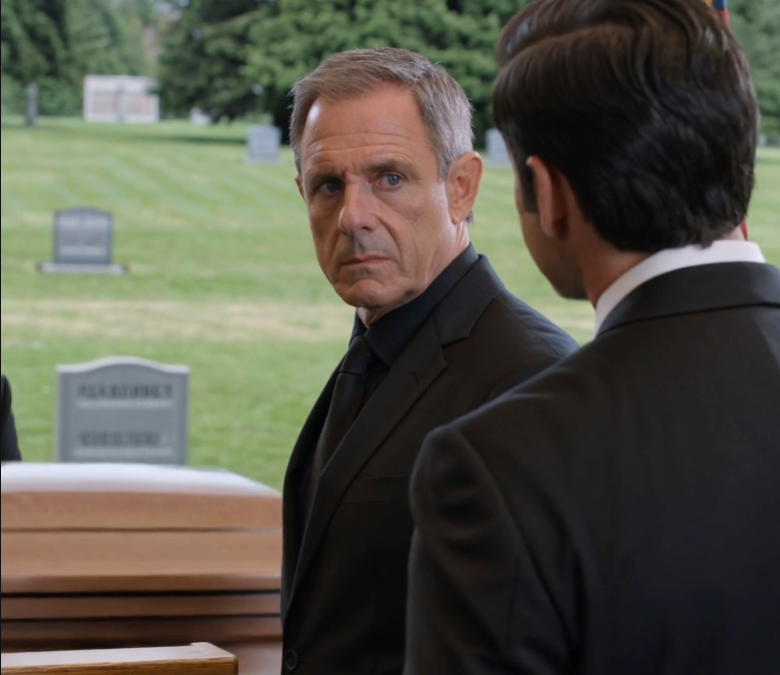
My son demanded my $55 million while his mother’s casket was still being lowered into the ground. I looked at Dylan, standing there with his $12,000 Rolex and $95,000 Tesla, and I simply smiled.
“No.”
The other mourners gasped. My brother Jack shifted uncomfortably. Kate’s sister, Jennifer, put her hand to her mouth. But Dylan’s eyes flashed with that same entitled rage I’d seen 15 years ago when he walked out on us.
“What do you mean, no?” he hissed, stepping closer to the grave. “That money is mine by right.”
I adjusted my tie, the same black tie I’d worn to every hospital visit he’d skipped, and kept my voice calm.
“Rights are earned, son.”
What Dylan didn’t know was that I’d been preparing for this moment since the day he abandoned his dying mother.
Let me take you back 15 years, to March 12th, 2009. Kate had just gotten her diagnosis. Stage 2 breast cancer, but treatable, the oncologist said. With treatment, her chances were good. I was scared, sure, but we were going to fight this together.
Dylan was 18 then, fresh out of high school and ready to start at the University of Washington. We called him into the living room that evening. Kate was holding my hand so tightly I could feel her wedding ring pressing into my fingers.
“Dylan, we need to talk to you about something,” I started.
He was already checking his phone. “Can this wait? I’m meeting friends.”
Kate’s voice was softer than usual. “Son, I’ve been diagnosed with breast cancer.”
I watched his face. No shock, no concern, just annoyance.
“Okay, so what does that mean for me?” he asked.
“It means your mother is going to need surgery, chemotherapy, radiation,” I explained. “It means we’re going to be spending a lot of time at hospitals. It means—”
Dylan stood up. “I’m not doing this.”
“What do you mean?” Kate asked.
“I mean I’m not going to watch my life get ruined by cancer drama. I’ve got college. I’ve got my own future to think about.”
Those were his exact words. Cancer drama.
Kate started crying. I stood up, but Dylan was already walking toward the door.
“Dylan, come back here!” I called.
He turned around, and I’ll never forget what he said next.
“You guys chose to have me. I didn’t choose this family, and I’m not choosing to stick around and watch it fall apart.”
He left that night, packed his things while we were at Kate’s first oncology appointment, and moved in with his girlfriend’s family. Just like that. No goodbye, no forwarding address, nothing.
The first year was the hardest. Kate kept asking me to call him.
“Maybe if you explain how scared I am,” she’d say during her chemo sessions. “Maybe if you tell him I might not make it.”
So I tried. God, how I tried.
I called every week, sometimes twice a week. I left voicemails describing her treatments, her progress, her setbacks. I sent him photos of her ringing the bell after her first round of chemo. I invited him to Christmas dinner, to her birthday, to the five-year survival celebration the doctor said we should have.
Nothing.
By year two, the calls became monthly. He’d picked up exactly twice. Both times, he’d said he was busy and would call back. He never did.
In year three, I tried a different approach. I started sending money. Two hundred dollars every month. Maybe if he saw we were thinking about him. Maybe if he knew we still cared.
The checks got cashed, every single one. But still no calls. Still no visits.
Kate never knew about the folder I started keeping. Every unreturned call, every unread text message, every refused invitation. I documented it all. At first, I thought maybe I was being paranoid. Maybe Dylan was just processing the diagnosis in his own way. Maybe he’d come around.
By year five, when Kate’s cancer came back and we had to start the whole nightmare over again, I realized the truth. Dylan wasn’t processing anything. He simply didn’t care.
The second cancer fight was harder. Kate was weaker. The treatments were more aggressive. And I was doing it all alone while sending our son $200 every month, like some kind of monthly guilt payment.
But Kate never gave up hope. Even during her worst days, when the chemo made her so sick she couldn’t keep water down, she’d ask about Dylan.
“Have you heard from him? Does he know about the recurrence?”
I’d lie. “He’s busy with work, honey. I’ll try calling again tomorrow.”
The truth was, I’d stopped calling by then. What was the point? I had 247 documented attempts to reach our son. Two hundred and forty-seven times he’d chosen not to answer.
Instead, I focused on Kate. I learned how to cook her favorite foods when her appetite disappeared. I drove her to every appointment, held her hand through every procedure, and slept in hospital chairs when she had to stay overnight. And every month, like clockwork, I sent Dylan his $200.
Kate saw the bank statements. She thought it was sweet that I was helping our boy get established in life. I never told her that our boy was posting pictures on Facebook of his luxury vacations while she was fighting for her life.
I never told her that he’d blocked me from seeing his posts, but Kate’s sister, Jennifer, kept me updated. Dylan graduated college, got a job at Microsoft as a tech consultant, bought a BMW, then a Tesla, and moved into a downtown Seattle apartment that cost more per month than most people’s mortgages.
All while his mother fought cancer twice, and his father sent him grocery money.
But that recording from year three was going to be the centerpiece of my presentation. Because on that day, I’d finally asked Dylan directly, “Your mother might not make it this time. Don’t you want to say goodbye?”
His response would haunt me for the rest of my life.
February 14th, 2024. Valentine’s Day.
Kate had been in hospice for three weeks. The doctor said it could be days, maybe hours. I was sitting next to her bed, holding her hand, watching her breathe.
My phone rang. Unknown number, but I recognized the area code. Seattle.
Maybe Dylan had finally heard.
“Hello?”
“Dad. It’s Dylan.”
My heart jumped. After all these years, he was calling. Maybe Jennifer had reached him. Maybe he was coming home.
“Dylan. Oh, God. Son, I’m so glad you called. Your mother—”
“Yeah. I heard she’s dying.”
The way he said it was so casual, like he was commenting on the weather.
“She’s in hospice, Dylan. She’s been asking for you. If you could just come home, just for a few days—”
“I can’t do that.”
“What do you mean, you can’t? She’s your mother.”
“Look, Dad, I’m calling because I wanted to be clear about something. When she dies, we need to talk about my inheritance.”
I couldn’t speak for a moment. Kate stirred in her bed, and I lowered my voice.
“Your inheritance?”
“Don’t play dumb. I know about the Biocore sale. Fifty-five million dollars. That’s mine when she goes.”
“Dylan, your mother is dying right now, as we speak. And you’re calling about money?”
“She made her choice to be sick. I made mine to be successful. This is just business.”
I started recording the call then. I don’t know why. Instinct, maybe. Or maybe I knew even then that someday I’d need proof of what my son really was.
“This isn’t business, Dylan. This is family.”
He laughed. Ashley laughed.
“Family? You call this family? I haven’t lived at home since I was 18. I don’t even know you people anymore.”
“We sent you money every month for 15 years.”
“Two hundred bucks. Dad, I spend more than that on lunch. You think $200 a month makes us family?”
Kate opened her eyes. Maybe she could hear my voice, maybe even Dylan’s voice through the phone. She mouthed, “Is that our boy?”
I smiled at her and nodded, not wanting her to hear what her son was really saying.
“Dylan, please, just come see her. She doesn’t have long.”
“I’m not going to watch some dying woman guilt-trip me into caring about her. I’ve got my own life now. I’ve got important things to do.”
“Important things? More important than your mother?”
“You’re just a failed programmer who got lucky once with some biotech startup. You don’t understand the real world. You don’t understand what success actually looks like.”
Kate was trying to sit up. She could hear the conversation getting heated.
“I understand enough to know that success doesn’t mean abandoning your family when they need you most.”
“Need me for what? To watch her die? To hold her hand while she rots away? That’s not my job, Dad. I didn’t sign up for that.”
I had to step outside the room. Kate was getting agitated, and the last thing I wanted was for her to hear this.
“Your job, Dylan? She gave birth to you. She raised you. She loved you unconditionally for 18 years.”
“And I moved out. Contract complete. Look, I’m trying to be practical here. When she dies, and let’s be honest, it’s going to be soon, I inherit everything as the only child. So let’s just agree on that now and save ourselves a lot of legal hassle later.”
“What makes you think you’re inheriting anything?”
“Because that’s how it works, Dad. I’m the son. You’re old and probably don’t have much time left either. The money comes to me. That’s just basic estate planning.”
I walked back into Kate’s room. She was looking at me with those big, hopeful eyes, thinking I was talking to our boy who was finally coming home.
“Dylan, I want you to listen to me very carefully. Your mother has been fighting cancer for 15 years. Fifteen years. During that time, you’ve visited exactly zero times. You’ve called exactly three times, including this call. You’ve sent exactly zero birthday cards, zero Christmas presents, zero flowers, zero anything.”
“So?”
“So I’ve paid $890,325 in medical bills alone while you’ve cashed $36,000 in checks from us like we’re some charity case you’re helping out.”
“I never asked for that money.”
“No, you just took it every month for 15 years.”
Kate was mouthing, “What’s wrong?”
I held up a finger, signaling I’d explain later.
“Look, Dad, I don’t care about ancient history. I care about my inheritance. Fifty-five million dollars is a lot of money, and I want to make sure there’s no confusion about where it’s going.”
“There won’t be any confusion.”
“Good. So when can we meet to discuss the transfer? I’m thinking after the funeral would be appropriate. Give it a few days, then we’ll sit down with lawyers and get this sorted.”
Kate reached for my hand. She was smiling, thinking Dylan was making plans to come home.
“Dylan, I want you to know something. You’re absolutely right about one thing.”
“What’s that?”
“There won’t be any confusion about your inheritance at all.”
“Great. So we’re on the same page.”
“Completely. Because your inheritance is going to be exactly what you gave your mother during her 15-year battle with cancer.”
“What do you mean?”
“I mean nothing, Dylan. You’re getting nothing.”
The line went quiet for almost 10 seconds.
Then, “You can’t do that. I’m your only child. I have legal rights.”
“You have the legal right to contest my will. You don’t have the legal right to inherit money from a father you abandoned.”
“I didn’t abandon anyone. I just chose not to participate in your drama.”
“Well, I’m choosing not to participate in your inheritance.”
I hung up.
Kate looked at me with questioning eyes. I sat down next to her bed and took her hand.
“Dylan sends his love,” I lied. “He wishes he could be here.”
She smiled and squeezed my hand.
“I know he does. I know our boy loves us.”
That recording, eight minutes and 23 seconds of my son explaining why his dying mother meant nothing to him, would become the centerpiece of my presentation.
Kate died three days later, February 17th, 2024, at 3:47 in the morning. I was holding her hand when she took her last breath. The hospice nurse said it was peaceful. I said it was the end of everything good in my life.
Dylan didn’t come to the hospital. He didn’t call. He didn’t send flowers. But he did show up to the funeral.
He walked in like he owned the place, wearing that Rolex and a designer suit that probably cost more than most people’s cars. He sat in the front row. The front row, like he’d been there through everything.
That’s when he made his demand, right there at the graveside, with Kate’s casket being lowered into the ground and 50 of our closest friends and family watching.
“I want my inheritance now,” he said quietly, leaning over to me while the pastor was giving the final blessing.
“Not now, Dylan.”
“Yes, now. Fifty-five million dollars. I know you have it. I want it transferred to my account by the end of the week.”
That’s when I looked at him, really looked at him, and smiled.
“No.”
And that’s when everything started to fall into place.
That night, I sat in my home office looking at the Biocore Systems sale contract. Fifty-five million dollars for the medical AI startup I’d built over 20 years. The deal had closed six months earlier. The money was sitting in my account, earning interest, waiting for me to decide what to do with it.
I pulled out my laptop and started typing.
Katherine Miller Cancer Foundation.
Kate’s full name was Katherine Elizabeth Miller.
I called my attorney, David Foster, at home. David had handled all my business deals, including the Biocore sale. He’d also witnessed Dylan’s absence throughout Kate’s illness.
“David, it’s William. I need to establish a charitable foundation tonight.”
“William, it’s almost midnight. And you just buried Kate today. Maybe we should—”
“David, I need this done tonight. How long does it take to set up a foundation and transfer $55 million into it?”
There was a pause.
“Are you sure about this? That’s your entire liquid net worth.”
“I’ve never been more sure of anything in my life.”
By 4:00 a.m., the Katherine Miller Cancer Foundation was a legal entity. By 6:00 a.m., I’d transferred the entire $55 million in Biocore sale proceeds into the foundation’s account.
By 8:00 a.m., I’d appointed a board of directors: Dr. Amanda Foster, Kate’s oncologist; Jennifer Walsh, the mayor of Seattle and Kate’s longtime friend; and myself as chairman.
The foundation’s mission statement was simple: to provide financial assistance to families battling cancer, especially those who face the fight alone.
I handwrote the first grant, $10,000 to the family in room 237 at Seattle Cancer Care Alliance. The husband had been sleeping in his car for two weeks because he couldn’t afford both gas money to visit his wife and a hotel room. Their insurance didn’t cover experimental treatments. They had three kids at home being raised by grandparents.
Exactly the kind of family Dylan would never understand. The kind of family that fights together instead of abandoning each other.
But the foundation was just the beginning.
Dylan wanted his inheritance. He was about to get exactly what he deserved.
I pulled out the evidence folder I’d been maintaining for 15 years. Two hundred and forty-seven unreturned calls, 89 refused visit requests, 15 years of monthly $200 payments, $890,325 in medical bills paid alone, and the recordings.
Oh, the recordings.
The Valentine’s Day call was the worst, but it wasn’t the only one. I had 12 separate conversations with Dylan over the years. Every single one documented his complete lack of concern for his dying mother.
“She made her choice to be sick.”
“I don’t care if she’s dying.”
“I’m not going to watch my life get ruined by cancer drama.”
“You’re just a failed programmer who got lucky once.”
I had it all. Every cruel word, every heartless dismissal, every time he chose his convenience over his mother’s life.
I made copies of everything. Digital copies, physical copies, backup copies stored in three different locations. Bank records showing the monthly payments, hospital bills showing the medical costs, phone logs showing the unreturned calls.
The gala was three weeks away, the annual Seattle Cancer Research Gala at the Fairmont Hotel. Five hundred of Seattle’s most influential people: tech executives, medical professionals, city officials, philanthropists.
Perfect timing.
I called the gala organizers and made a $55 million donation on behalf of the Katherine Miller Cancer Foundation. Suddenly, I wasn’t just attending the gala. I was the keynote speaker.
Dylan wanted his inheritance. He’d have to come and get it in front of 500 witnesses.
I started preparing my presentation. What Dylan didn’t know was that half of Seattle’s legal community would be at that gala. The other half would hear about it before the night was over.
My son had spent 15 years proving he didn’t deserve a penny of my money. Now I was going to spend one evening proving it to everyone else.
Three days after the funeral, I decided to test Dylan’s true motivations.
I called our family friend, Robert Wilson, who worked in tech journalism for the Seattle Times. Robert had covered my Biocore sale when it happened and knew about Dylan’s long absence from our family.
“Robert, I need a small favor. Could you mention to a few people that the Biocore sale is final and I’m considering my estate planning options? Nothing official, just casual conversation.”
“Of course, William. Are you doing okay? I know this must be a difficult time.”
“I’m doing exactly what needs to be done.”
The Seattle tech community is small. Everyone knows everyone else’s business. I knew the information would reach Dylan within 48 hours.
It took 36.
My phone rang on a Thursday evening. I was sitting in Kate’s chair, the recliner where she’d spent so many hours during her treatment, reading her medical journals. She’d kept detailed notes about every appointment, every treatment, every side effect.
I’d never read them before. They broke my heart and strengthened my resolve in equal measure.
“Dad.”
Dylan’s voice. The first time he’d called me Dad in 15 years.
“Hello, Dylan.”
“Hey, I was just… I was thinking about you. About how you’re handling everything. The loss of Mom, I mean.”
I reached over and pressed record on the small device I’d started keeping next to Kate’s chair. Sony ICD-UX570. Fits in a shirt pocket. Records for 48 hours straight.
“I’m managing.”
“That’s good. That’s really good. I was actually wondering if we could talk. Maybe I could come over. We haven’t really had a chance to, you know, connect since the funeral.”
Connect.
“Yeah, just family stuff, catching up. I feel like maybe I haven’t been as present as I should have been.”
Present. The word almost made me laugh.
“What would you like to talk about, Dylan?”
“Well, I was talking to a friend who knows about these things, and he mentioned that after a major life event like this, it’s important to make sure your financial planning is in order. You know, estate planning, investment strategies, that kind of thing.”
“Your friend mentioned this?”
“Yeah, he’s a financial adviser. Really smart guy. And he said that sometimes people make emotional decisions after losing a spouse, decisions they might regret later. Such as, well, like donating too much to charity or making investments that don’t make sense for someone your age. He said the smart thing is to keep wealth in the family where it belongs.”
I was taking notes now, writing down every word.
“Where wealth belongs.”
“Exactly. I mean, you worked hard for that money, Dad. The Biocore sale was huge. Fifty-five million dollars is serious wealth, and I just want to make sure it’s protected.”
“Protected from what?”
“From people who might try to take advantage of you during a vulnerable time. Financial advisers who charge huge fees, charities that waste donations on administrative costs, that kind of thing.”
“I see.”
“So I was thinking maybe I could come over this weekend. We could go through your finances together as a family. I could help you make sure everything is set up properly.”
As a family. The phrase made my skin crawl.
“Dylan, can I ask you something?”
“Of course.”
“Why are you concerned about my financial planning now? You haven’t asked about my finances in 15 years.”
“That’s not true, Dad. I’ve always cared about your well-being.”
“When Kate was in the hospital the first time, did you ask about medical costs?”
“I… That was different.”
“When she relapsed and needed experimental treatments, did you offer to help with expenses?”
“Dad, I was just starting my career then.”
“What about last year, when the treatments weren’t covered by insurance and I had to refinance the house?”
Silence.
“Dylan, I didn’t know about the house because you never asked. In 15 years, you never once asked if we needed financial help. But three days after your mother’s funeral, you’re suddenly concerned about my estate planning.”
“I’m worried about you, Dad. As your only heir, I have a responsibility to—”
There it was.
“As your only heir. Dylan, let me ask you something else. What do you think you’ve done to earn an inheritance?”
“What do you mean?”
“I mean specifically, what have you contributed to this family that would entitle you to my money?”
“I’m your son.”
“Biologically, yes. But what else?”
“I don’t understand the question.”
“Let me make it simpler. When your mother was dying, where were you?”
“Dad, we’ve been through this.”
“We have, but I don’t think you’ve really thought about it. So tell me, when Kate was in the hospital for her mastectomy, where were you?”
“I was living my life.”
“When she was going through chemotherapy and losing her hair, where were you?”
“Building my career.”
“When she was so sick from radiation that she couldn’t keep food down, where were you?”
“Dad, this isn’t fair.”
“Fair? You want to talk about fair? When your mother was dying, you said you didn’t care. You said she made her choice to be sick. You said you made your choice to be successful.”
“That’s not what I meant.”
“I recorded the call, Dylan.”
Dead silence.
“You recorded our call?”
“I recorded all of our calls. All three of them in 15 years.”
“That’s… that’s illegal.”
“Actually, it’s not. Washington is a one-party consent state. I can record any conversation I’m part of. And I’ve been recording every conversation we’ve had since 2012.”
“Why would you do that?”
“Because I wanted to remember exactly who my son really was. And now I do.”
He started talking faster, panic creeping into his voice.
“Dad, look. Maybe I said some things I didn’t mean. People say things when they’re stressed, but we’re family. Family forgives each other.”
“Family shows up for each other, Dylan. Family doesn’t abandon each other during the worst moments of their lives.”
“I’m trying to show up now.”
“No, you’re trying to collect your inheritance. There’s a difference.”
“What’s that supposed to mean?”
“It means you’ll find out soon enough.”
I hung up.
Twenty minutes later, I watched from my living room window as Dylan’s Tesla pulled into my driveway. He sat in the car for almost 10 minutes, probably trying to decide whether to knock on the door.
He finally got out, wearing jeans and a casual shirt, trying to look like the caring son coming to check on his grieving father. He even brought flowers, cheap grocery-store roses still in the plastic wrapper.
But what Dylan’s visit gave me was something more valuable than evidence.
It gave me confirmation.
Fifteen years of silence, then three phone calls in one week. All after learning about my $55 million sale.
My son wasn’t interested in reconciliation. He was interested in collection.
Dylan knocked on my door the next morning at exactly 9:00 a.m. When I opened it, he was standing there with Patricia Hamilton, a lawyer I recognized from downtown Seattle legal circles. She was carrying a leather briefcase and wearing the kind of serious expression that meant business.
“Dad, this is Patricia Hamilton. She’s an estate attorney.”
“I know who she is.” I stepped aside to let them in. “Would you like coffee?”
“That’s very kind,” Patricia said, “but we’re here on a time-sensitive matter.”
We sat in my living room, Dylan on the couch where he used to watch cartoons as a kid, Patricia in Kate’s chair. I remained standing.
“Mr. Miller,” Patricia began, “your son has asked me to help facilitate the transfer of your assets to avoid any unnecessary probate delays.”
“Transfer of my assets?”
“Dylan has explained the family situation. The recent loss of your wife, your advanced age, the substantial inheritance involved. We think it would be prudent to begin the estate planning process now, while you’re still mentally competent.”
While I’m still mentally competent.
The phrase hung in the air like smoke.
“Dylan told you I’m mentally incompetent?”
“Not at all,” Dylan jumped in. “I just explained that grief can affect decision-making. Patricia thinks we should get everything legally documented while you’re thinking clearly.”
“I’m thinking very clearly.”
Patricia opened her briefcase and pulled out a stack of documents.
“These are standard transfer papers. Nothing complicated. They just ensure that your assets will pass to your son without the expense and delay of probate court.”
She spread the papers across my coffee table.
“The $55 million from the Biocore sale, the house, your retirement accounts. Everything transfers directly to Dylan upon your death. Or, if you prefer, we can set up a trust that begins transferring assets immediately.”
“Immediately?”
“Well, you’re 55 years old,” Dylan said. “That money should be working for our family’s future. I could invest it, grow it, make sure it’s still there when you really need it.”
Our family.
The phrase made my jaw clench.
“Dylan, can I ask you something?”
“Sure.”
“What makes you think this money belongs to you?”
He looked confused. “I’m your only child.”
“That’s not what I asked. I asked, what makes you think you deserve it?”
Patricia cleared her throat.
“Mr. Miller, legally speaking, children don’t have to deserve inheritance. It’s a matter of natural succession.”
“Natural succession?” I sat down across from them. “Tell me, Patricia, in your professional experience, do children who abandon their dying parents typically receive full inheritance?”
“The circumstances of family relationships don’t affect legal inheritance rights,” she said carefully.
“But they affect moral inheritance rights, don’t they?”
Dylan shifted uncomfortably.
“Dad, we’ve been through this. I made some mistakes. I was young.”
“You made mistakes? Is that what we’re calling it?”
“Look, I should have been around more. I admit that. But people change. I want to be part of this family now.”
“Part of this family? Dylan, there is no family. Your mother is dead. It’s just me now.”
“That’s not true. We’re still family.”
“No, we’re not. We’re two people who share DNA. Family is something else entirely.”
Patricia was taking notes.
“Mr. Miller, are you saying you intend to disinherit your son?”
“I’m saying that Dylan will receive exactly what he gave his mother during her 15-year battle with cancer.”
“Which is what?” Dylan asked.
“Nothing.”
Dylan stood up.
“You can’t do that. I have legal rights.”
“You have the legal right to contest my will. You don’t have the legal right to inherit money from a father you abandoned.”
“I didn’t abandon anyone.”
“You walked out when your mother got cancer. You refused to visit her in the hospital. You hung up when I called to tell you she was dying.”
Patricia was writing furiously.
“Mr. Miller, these are serious allegations.”
“They’re not allegations. They’re documented facts. I have recordings.”
Dylan’s face went white.
“Dad, you can’t seriously be thinking of—”
“Of what? Giving my money to someone who actually deserves it? Someone who shows up when things get difficult instead of running away?”
“You’re making a mistake,” Patricia said. “A big mistake. Dylan could challenge this in court.”
“I’m counting on it.”
They both stared at me.
“You’re counting on a legal challenge?” Patricia asked.
“I’m counting on Dylan being exactly who he’s always been. Entitled, selfish, and completely predictable.”
I stood up and walked to the door.
“I think we’re done here.”
Dylan and Patricia gathered their papers and headed for the door.
“Dad, you’re going to regret this,” Dylan said.
“The only thing I regret is waiting 15 years to cut you off.”
After they left, I called David Foster.
“David, I need you to document today’s meeting. Dylan just brought a lawyer to my house trying to force an immediate inheritance transfer.”
“William, are you okay?”
“I’m perfect. And David, I want you to be ready for a legal challenge. Dylan’s going to contest my will.”
“Are you prepared for that?”
“I’ve been preparing for that for 15 years.”
What Dylan didn’t realize was that half of Seattle’s legal community would be at the gala next week, including Patricia Hamilton.
Dylan’s media campaign started three days later.
I was having coffee in my kitchen when my neighbor Helen knocked on my door, holding her phone.
“William, honey, have you seen Facebook today?”
She showed me Dylan’s post, a photo of Kate from her wedding day, beautiful and young, with the caption:
“Grieving the loss of my beloved mother, Katherine Miller. During this difficult time, my father has been influenced by outside parties to deny my rightful inheritance. Mom would never have wanted our family torn apart by greed and manipulation. Please keep us in your thoughts as we navigate this painful situation. #JusticeForMom #FamilyFirst”
The post had 67 likes and 23 comments. All sympathy for poor Dylan and suspicion about my mental state.
“That’s not even the worst part,” Helen said, scrolling down. “Look at this.”
Another post from Dylan.
“Some people are asking about my inheritance situation. The truth is, my father is 55 years old and just lost his wife of 30 years. Grief can affect judgment. I’m just trying to protect our family’s legacy from people who might take advantage of a vulnerable widower. #ElderCare #FamilySupport”
Elder care.
I was 55 years old.
“William, you know this isn’t true, right?” Helen asked. “You’re one of the smartest people I know.”
“I know, Helen. Thank you.”
But the damage was spreading. By that afternoon, two more neighbors had called to check on me. Kate’s sister, Jennifer, called from Portland, confused by a message she’d received from someone claiming I was being manipulated by financial advisers.
Then Dylan escalated.
That evening, I was watching the news when my phone rang. Unknown number.
“Mr. Miller, this is Sarah Chen from KING 5 News. We’ve received some concerning reports about elder financial abuse in your situation. Would you be willing to comment?”
Elder financial abuse.
“Your son contacted us about potential exploitation of your grief following your wife’s death. He’s claiming that outside parties are influencing your estate planning decisions.”
I sat down slowly.
“Did Dylan give you an interview?”
“He did. We’re planning to run the story tomorrow evening unless you’d like to provide your perspective.”
“Where did you meet with him?”
“Our studio downtown. He seemed very concerned about your well-being.”
“What exactly did he tell you?”
“I can’t share details of an ongoing story, but he expressed worry about your mental state and mentioned that you’re making irrational financial decisions that could leave you vulnerable in your later years.”
Later years.
I was younger than half the tech executives in Seattle.
“Ms. Chen, may I ask how long Dylan’s interview was?”
“About 20 minutes. Why?”
“And in that 20 minutes, did he mention visiting his mother during her 15-year cancer battle?”
Silence.
“Mr. Miller, I… We didn’t discuss that specifically.”
“Did he mention attending any of her treatments, being present for any of her surgeries, calling to check on her during her final weeks?”
“Mr. Miller, we focused on the current inheritance dispute.”
“I see. And did Dylan provide any evidence of this alleged financial abuse?”
“He mentioned concerns about sudden charitable donations and potential influence from outsiders.”
“Charitable donations to cancer research in my wife’s memory. That’s the financial abuse?”
More silence.
“Ms. Chen, before you run that story, I’d like you to consider something. My son Dylan walked out on this family 15 years ago when his mother was diagnosed with cancer. He never visited her in the hospital. Never attended a single doctor’s appointment. Never called to check on her progress. But three days after her funeral, he showed up demanding $55 million.”
“That’s… that’s a very different story.”
“It’s the true story. And if KING 5 News is interested in the truth rather than a manipulative son’s lies, I have documentation.”
The story never aired.
But Dylan wasn’t done.
Over the next week, I received calls from three different financial advisers, two estate planning attorneys, and a social worker, all expressing concern about my decision-making capacity. Dylan had contacted them all, claiming I was showing signs of dementia and making irrational financial decisions under the influence of predatory advisers.
The social worker visit was particularly insulting.
A well-meaning woman named Carol Martinez showed up at my door with a clipboard and a concerned expression.
“Mr. Miller, I’m here to do a wellness check. We’ve received reports that you might be experiencing cognitive decline following your wife’s death.”
“Cognitive decline?”
“It’s common for older adults to experience confusion and poor judgment during grief. Sometimes family members notice these changes before the person himself realizes what’s happening.”
I invited her in and spent 30 minutes answering questions designed to test my mental capacity.
What year is it? Who’s the president? Can I count backward from 100 by sevens?
When she finished, Carol looked embarrassed.
“Mr. Miller, I have to say, you seem completely lucid and competent. Whoever called this in might have been mistaken about your condition.”
“Or lying.”
“I’m not supposed to speculate about that.”
“Carol, the person who called this in is my son, who abandoned his dying mother and is now trying to have me declared incompetent so he can access my inheritance.”
Her expression hardened.
“That would be a very serious abuse of the elder protection system.”
“Yes, it would.”
But Dylan’s media campaign was about to backfire spectacularly. Because while he was busy telling everyone in Seattle that I was a confused old man being manipulated by outsiders, I was preparing to introduce him to 500 of Seattle’s most influential people.
And they were going to learn exactly who Dylan Miller really was.
Two weeks before the gala, I spread everything across my dining room table. Fifteen years of evidence, organized chronologically in labeled folders.
Folder one: Initial Abandonment, 2009.
The hospital bracelet from Kate’s first surgery. The discharge papers I’d signed alone. Twenty-three unreturned voicemails from the first month. Screenshots of Dylan’s Facebook posts from that period. Party photos and vacation pictures while his mother was undergoing chemotherapy.
Folder two: Financial Documentation, 2009 to 2024.
One hundred and eighty bank statements showing monthly $200 transfers to Dylan’s account. Total: $36,000 over 15 years. Medical bills totaling $890,325, all paid by me alone. Insurance claims, hospital invoices, prescription receipts. Every dollar documented.
Folder three: Refusal to Visit, 2010 to 2024.
Eighty-nine documented requests for Dylan to visit his mother. Hospital visiting schedules I’d sent him. Holiday invitations. Birthday invitations. The Christmas card I’d sent with a photo of Kate’s treatment calendar, hoping he’d see how much time we were spending at the hospital.
Folder four: Phone Records, 2009 to 2024.
Cell phone bills showing 247 calls to Dylan’s number. Average call duration: 14 seconds, because that’s how long it took for the calls to go to voicemail. I’d calculated it exactly.
Folder five: The Recordings.
Twelve audio files, digitally transferred and backed up to three separate cloud services. The Valentine’s Day call was track seven, labeled “Final Rejection 823.”
But there were others. The Christmas 2019 call, where Dylan said he was too busy with real life to deal with family drama. The Easter 2021 call, where he said Kate was choosing to be depressed about cancer instead of fighting it.
Each recording was transcribed, timestamped, and cross-referenced with Kate’s medical records. When Dylan said he didn’t have time for hospital visits, Kate was undergoing emergency surgery. When he said she was being dramatic about her prognosis, she was in hospice care.
Folder six: Social Media Evidence.
Screenshots of Dylan’s Instagram and Facebook posts during Kate’s worst periods. His $150,000 Tesla purchase post, dated the same day Kate started her second round of chemotherapy. His vacation photos from Cabo while she was in intensive care. His promotion celebration at Microsoft while she was dying.
I’d hired a professional video editor, Marcus Thompson, from Emerald City Media, to create a presentation. Marcus had worked on documentaries for the Seattle International Film Festival. When I explained the project, he was horrified.
“Mr. Miller, I have to ask, are you sure you want to do this publicly?”
“Marcus, my son spent 15 years publicly ignoring his dying mother. I’m just providing context.”
The presentation was 18 minutes long.
It started with Kate’s wedding photo, beautiful and healthy, followed by her cancer timeline. Then it showed Dylan’s timeline alongside hers.
When Kate was diagnosed, Dylan was posting party photos. When Kate had surgery, Dylan was on vacation in Hawaii. When Kate relapsed, Dylan bought a luxury car. When Kate entered hospice, Dylan was celebrating his promotion.
But the centerpiece was the audio evidence.
Marcus had created visual waveforms for each recording, with key quotes highlighted in text overlays.
“She made her choice to be sick. I made mine to be successful.”
“I don’t care if she’s dying. I’ve got my own life now.”
“You’re just a failed programmer who got lucky once.”
“That money belongs to me by right.”
The final slide was simple. A photo of Kate’s gravestone next to a bank statement showing Dylan’s inheritance.
$0.00.
I practiced the presentation 17 times.
David Foster came over to watch the final rehearsal.
“William, this is devastating. Are you absolutely certain you want to do this?”
“David, Dylan made his choices. Now he gets to live with the consequences.”
“But this will destroy him publicly. His career, his marriage, his reputation.”
“Good. Maybe he should have thought about that before he destroyed his relationship with his dying mother.”
The guest list for the gala was impressive.
Mayor Jennifer Walsh would be there. She’d known Kate since college. Dr. Amanda Foster, Kate’s oncologist, was receiving a humanitarian award. Microsoft executives, Seattle tech leaders, cancer researchers, philanthropists.
And yes, Patricia Hamilton would be there.
The lawyer Dylan had brought to my house would watch her client get exposed as a fraud in front of 500 witnesses.
I’d confirmed Dylan’s attendance through Jennifer Walsh, who’d mentioned the gala to him at a tech industry mixer. Dylan had immediately asked about getting tickets.
Of course, he had.
Fifty-five-million-dollar donations got people’s attention.
What Dylan didn’t know was that he wasn’t going to be a guest at the gala.
He was going to be the main event.
Tonight, 500 of Seattle’s most influential people would learn exactly who Dylan Miller really was. They’d hear his voice dismissing his dying mother. They’d see the evidence of his 15-year abandonment. They’d witness a grown man’s public tantrum when he realized his inheritance was gone forever.
And they’d understand why some children don’t deserve their parents’ money.
The presentation was loaded onto my laptop. The audio files were tested and ready. The documentation was organized in backup folders, just in case.
Dylan Miller wanted his inheritance.
He was about to get exactly what he deserved.
The Fairmont Olympic Hotel’s grand ballroom was magnificent that night. Crystal chandeliers, 12 projection screens, 500 guests in formal attire. The annual Seattle Cancer Research Gala had raised over $2 million.
But tonight was different.
Tonight was about the Katherine Miller Cancer Foundation and its $55 million founding donation.
I wore Kate’s favorite tie, navy blue with small silver dots. She’d bought it for me 20 years ago and always said it brought out my eyes. I’d worn it to every important business meeting since then.
Tonight felt like the most important meeting of my life.
Dylan arrived at exactly 7:30, fashionably late in his black Tesla. Through the ballroom windows, I watched him hand his keys to the valet. Designer tuxedo, patent leather shoes, that Rolex Submariner catching the light.
He looked like success. He looked like someone who belonged at a $55 million charity gala.
He had no idea what was coming.
I was scheduled to speak at 8:15, after dinner but before the auction. Mayor Jennifer Walsh was introducing me as one of Seattle’s most generous philanthropists and a devoted husband who never forgot what truly matters.
Dylan found me during cocktail hour, weaving through the crowd with a champagne flute and a confident smile.
“Dad, I’m so glad you invited me.”
I hadn’t invited him. Jennifer Walsh had mentioned the gala to him, exactly as I’d known she would.
“Dylan.”
“This is incredible. Look at this turnout. And $55 million. That’s going to change a lot of lives.”
“Yes, it is.”
“I have to admit, I was surprised when I heard about the donation. But I’m proud of you for doing something meaningful with the money.”
Proud of me. As if he had any right to be proud or disappointed in my choices.
Dr. Amanda Foster joined us, elegant in a burgundy gown.
“William, are you ready for your speech?”
“I’m ready.”
“Dylan, it’s nice to see you again,” she said politely.
Dylan looked confused.
“Again?”
“From the hospital. I was your mother’s oncologist for 15 years.”
Dylan’s confident smile faltered.
“Oh, right. Uh, of course.”
“I always wondered why I never met you during her treatment. Your mother spoke about you often.”
“I… I was living my own life. Building my career.”
“Of course. Well, I’m sure she understood.”
Dr. Foster walked away, leaving Dylan looking uncomfortable.
“Dad, maybe we should—”
“Ladies and gentlemen,” the emcee announced, “please take your seats for dinner.”
The meal was excellent, but I barely tasted it. Dylan sat three tables away, charming tech executives and their wives, playing the role of the grieving son.
I watched him tell animated stories, probably about his success at Microsoft, his investment strategies, his bright future.
He had no idea his future was about to change forever.
At 8:10, Mayor Walsh took the stage.
“Good evening, everyone. Tonight, we celebrate not just medical research, but the kind of love that turns tragedy into hope. Our keynote speaker has just established the Katherine Miller Cancer Foundation with a $55 million founding donation. But more importantly, he’s shown us what it means to honor a loved one’s memory through action. Please welcome William Miller.”
Applause filled the ballroom.
I walked to the podium, my laptop connected to the projection screens. Dylan was clapping enthusiastically, probably thinking this was his moment to bask in reflected generosity.
“Thank you all for being here tonight. I want to tell you about my wife, Katherine Elizabeth Miller.”
Kate’s wedding photo appeared on the screens. Gasps of appreciation came from the audience. She was luminous in that photo, 25 years old and ready to conquer the world.
“Kate and I were married for 30 years. She was diagnosed with breast cancer when she was 35. She fought that disease for 15 years. Fifteen years of surgeries, chemotherapy, radiation, experimental treatments, clinical trials. Fifteen years of hope and setbacks and small victories and devastating defeats.”
The slide showed Kate’s journey. Hospital photos, treatment schedules, family pictures. The audience was captivated.
“Cancer doesn’t just attack the patient. It attacks the entire family. It tests relationships. It reveals character. It shows you who will stand with you when everything falls apart.”
I clicked to the next slide.
“Some people rise to meet that challenge. Doctors like Amanda Foster, who spent 15 years fighting for Kate’s life. Friends like Jennifer Walsh, who visited every week. Nurses who became family. Strangers who became friends.”
Another click.
“And some people run away.”
The slide showed a timeline. Kate’s diagnosis on the left, Dylan’s abandonment on the right.
“My son Dylan was 18 when his mother was diagnosed. He was young, scared, unprepared for what lay ahead. I understood that. What I didn’t understand was his response.”
I could see Dylan at his table, confusion turning to alarm.
“Dylan told his dying mother that she had chosen to be sick. He told me that cancer was drama he didn’t want to be part of. He walked out of our home and never came back.”
The ballroom was completely silent now.
“For 15 years, while Kate underwent treatments, Dylan lived his life. He graduated college, started his career, bought expensive cars, took luxury vacations. He posted photos on social media of parties and promotions while his mother was fighting for her life.”
I clicked to the next slide.
Side-by-side photos of Kate undergoing chemotherapy and Dylan on a beach in Cabo.
“He visited the hospital exactly zero times. He attended exactly zero doctor appointments. He sent exactly zero birthday cards, Christmas presents, or flowers.”
Dylan was half standing at his table now, his face white. Patricia Hamilton, his lawyer, was tugging at his sleeve, trying to get him to sit down.
“But he did cash 180 checks. Two hundred dollars every month for 15 years. Thirty-six thousand dollars total. I sent him that money, thinking maybe somehow it would remind him that he had a family.”
The projection screen showed bank records, check images, deposit statements.
“Instead, he cashed every check and used the money to supplement the lifestyle he’d built while abandoning his dying mother.”
“Dad, stop!” Dylan called out from his table.
His voice cracked across the silent ballroom.
“The total cost of Kate’s 15-year cancer battle was $890,325. I paid every penny alone while sending my son grocery money.”
I clicked to the audio files.
“But I want you to hear Dylan’s own words about his mother’s battle.”
The first recording began to play, Dylan’s voice clear and unmistakable.
“She made her choice to be sick. I made mine to be successful.”
Gasps spread throughout the ballroom. Several people turned to stare at Dylan, who was now standing fully, shaking his head.
“That’s taken out of context!” he shouted.
“Let’s hear more context,” I said calmly.
The Valentine’s Day recording.
“I don’t care if she’s dying. I’ve got my own life now.”
A woman at the front table put her hand over her mouth. A man near the back shook his head in disgust.
“Dad, you can’t do this!”
Dylan was moving toward the stage now.
“And here’s what my son said about me when I asked him to visit his dying mother one last time.”
Dylan’s voice again.
“You’re just a failed programmer who got lucky once. You don’t understand what success actually looks like.”
The entire ballroom was staring at Dylan now. He was halfway to the stage, his face red with rage and embarrassment.
“Three days after Kate’s funeral, Dylan came to me with one request. Not reconciliation, not forgiveness, not a chance to grieve together. He wanted his inheritance. Fifty-five million dollars from the sale of my company.”
I clicked to the final slide, the Katherine Miller Cancer Foundation logo.
“So I gave Dylan exactly what he gave his mother during her 15-year battle with cancer.”
I looked directly at him.
“Nothing.”
Dylan reached the stage and lunged for the microphone.
“You’re destroying my life!”
Security guards were moving in now, but I held up a hand to stop them.
“Dylan, you destroyed your own life. You destroyed it the day you walked out on your dying mother. I’m just making sure everyone knows who you really are.”
“This is slander! This is illegal!”
“This is truth. And truth isn’t illegal, son.”
The security guards gently but firmly escorted Dylan from the ballroom. As they reached the doors, he turned back and screamed, “You’ll regret this! I’ll sue you for everything!”
I stepped back to the microphone.
“The Katherine Miller Cancer Foundation will provide financial assistance to families facing cancer together. To parents who don’t abandon their children during treatment. To children who don’t abandon their parents during illness. To families who understand that love means showing up when things get difficult.”
The standing ovation lasted four minutes.
But the real consequences were just beginning.
The video went viral within six hours. Someone had livestreamed my speech on Facebook, and by morning, “Seattle Son Abandons Dying Mother” was trending on Twitter.
The audio recordings had been shared thousands of times, Dylan’s own words condemning him in his own voice.
Microsoft’s human resources department called Dylan Monday morning. An ethics investigation was opened Tuesday. By Friday, Dylan was on administrative leave pending a full review of character concerns incompatible with company values.
His wife Ashley filed for divorce that same week. She’d been at the gala, sitting two tables away from Dylan, hearing every word. Her attorneys cited irreconcilable differences and newly discovered information about her spouse’s character in the filing.
The harassment stopped immediately. No more social workers. No more concerned phone calls about my mental state. No more lawyers showing up at my door with inheritance documents.
Patricia Hamilton sent a formal letter withdrawing from Dylan’s case, citing client misrepresentation of facts material to the legal matter.
Three local news stations picked up the story. The Seattle Times ran a feature about the Katherine Miller Cancer Foundation under the headline, “In Action: Billionaire Honors Wife’s Memory While Teaching Son About Family Values.”
But the real victory came three weeks later.
I was visiting Kate’s grave, bringing fresh flowers and the foundation’s first quarterly report, when my phone rang.
Dylan’s number.
I almost didn’t answer, but curiosity got the better of me.
“Hello, Dylan.”
His voice was different. Smaller somehow.
“Dad, I… I wanted to talk.”
“About what?”
“About everything. About Mom. About what I did. About what I said.”
I sat down on the bench near Kate’s headstone.
“And what did you do, Dylan?”
“I abandoned her. I abandoned both of you when you needed me most.”
“Yes, you did.”
“I’m sorry.”
Two words. Fifteen years too late.
“I know you are, Dylan. But sorry doesn’t give you back the time you missed with your mother. Sorry doesn’t erase the recordings. Sorry doesn’t undo the choices you made.”
“I know. I just… I wanted you to know that I understand now.”
“Do you?”
“I lost everything, Dad. My job, my wife, my reputation. Everything.”
“And what did you learn from that?”
A long pause.
“That actions have consequences.”
“That’s right. They do.”
Another pause.
“Is there any chance? Could we maybe try to—”
“Dylan, you’re getting exactly what you gave your mother. Nothing.”
I hung up and placed the flowers on Kate’s grave.
The foundation saved its first family that month, a single father of three whose wife was undergoing experimental leukemia treatment. We paid their mortgage for six months and covered their children’s childcare while he stayed at the hospital.
Their eight-year-old daughter drew me a picture of an angel. She said it looked like the lady whose name was on the foundation.
I think Kate would have approved.








