At my daughter’s wedding, her new husband introduced me to his boss as a “worthless loser.” i just smiled, shook the man’s hand, and said nothing… the boss called me “sir”.
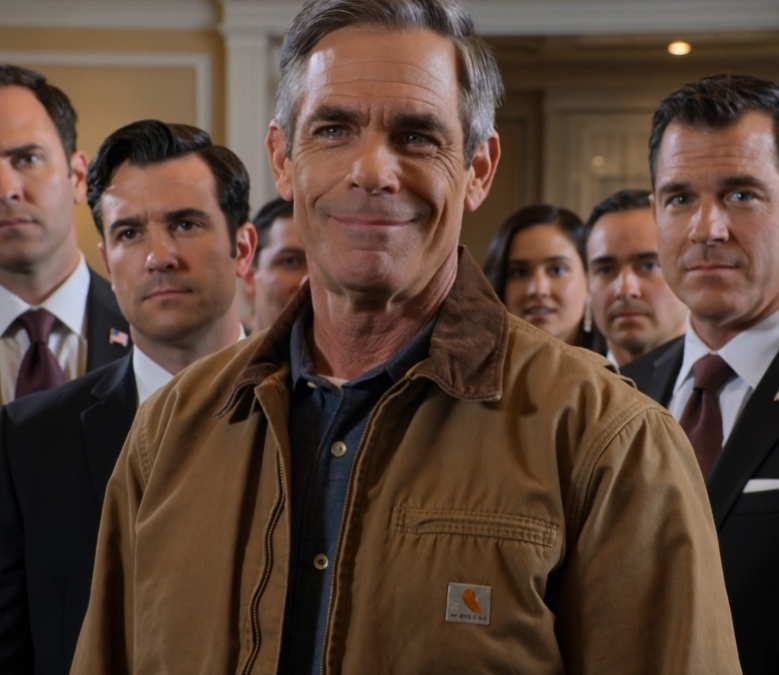
Brett grabbed his boss’s arm and pointed at me with disgust. “That’s just my wife’s father. Some worthless grease monkey who owns a failing auto shop.”
Three hundred and fifty wedding guests heard every word. I stood there in my Carhartt jacket, watching my daughter’s new husband humiliate me in front of Goldman Sachs executives. The ballroom at the Four Seasons Denver went quiet. Crystal chandeliers caught the light above us, and Brett’s $3,200 Armani tuxedo gleamed as he gestured dismissively in my direction.
I smiled. Brett had no idea who he was really talking about. He didn’t know that the worthless grease monkey he had just humiliated owned Miller Aerospace Systems, a $2.1 billion company—the same company that employed him. Little did Brett know, his career was about to take a very different trajectory.
The insults had started six months earlier, when Jessica announced her engagement.
“Dad, Brett thinks it might be better if you kept a low profile during the wedding planning,” she said over dinner at their downtown apartment. “You know, let him handle the business side of things.”
Brett emerged from the kitchen, straightening his tie. “Frank, no offense, but this is going to be a high-class affair. Lots of important people from the financial district. We want everything to look professional.”
Professional. That was his code word for not like you. I watched him pour wine into crystal glasses that cost more than most people’s monthly rent.
Brett worked as an investment banking associate at Goldman Sachs, pulling down a $185,000 base salary plus bonuses. He drove a leased 2024 BMW M5 with monthly payments of $1,240. To him, I was the embarrassing blue-collar father-in-law who drove a 2018 Ford F-150 with 127,000 miles on it and a toolbox in the bed.
“Whatever makes Jessica happy,” I said.
Over the next month, Brett systematically excluded me from every major decision. Venue selection was too complex for someone without business experience. Catering choices involved vendors who required sophisticated negotiations. As for the guest list, he insisted they needed to be strategic about networking opportunities.
Jessica tried to smooth things over. “Dad, Brett just wants everything perfect. You understand?”
I understood perfectly. Brett was ashamed of me.
What he didn’t understand was that I had quietly written a $50,000 check to cover cost overruns. The $23,500 premium bar service? My money. The $18,500 upgraded floral arrangements, with white orchids and roses throughout the ballroom? Also mine. The $12,000 photography package that would capture every moment of his humiliation? Paid for by the man he considered worthless.
Brett never asked where the extra money came from. He assumed his Goldman Sachs salary covered everything.
The week before the wedding, things escalated. Brett cornered me outside Jessica’s apartment, his expression carrying the impatient seriousness of a man who believed he was about to deliver an important lesson.
“Look, Frank, I need you to understand something. This wedding has people from very high levels of finance. Partners, VPs, people who matter in my industry. I can’t have them thinking I come from, well, your level.”
“My level?”
“You know what I mean. The whole blue-collar thing. It’s not the image I’m building.”
I nodded slowly. “What image are you building, Brett?”
“Success. Sophistication. Class.” He adjusted his $15,000 Rolex Submariner. “Things you wouldn’t understand.”
That night, I sat in my modest office at Miller Aerospace Systems, surrounded by a business that occupied 450,000 square feet of manufacturing space, employed 1,200 people, and held government contracts worth hundreds of millions of dollars annually.
Forbes had written about anonymous billionaires in Denver’s aerospace industry. They were describing me, but Brett saw work boots and flannel shirts. He saw calloused hands from my early years building engines in a garage. He couldn’t see the empire those hands had created.
The morning of the wedding, Brett sent Jessica to talk to me.
“Dad, could you maybe tone down the working-class thing tonight? Brett’s really nervous about making a good impression.”
“Tone down what, exactly?”
“You know, the truck, the clothes. Maybe rent something nicer to drive, and perhaps borrow a suit that doesn’t look like it came from Sears.”
I looked at my daughter. She was twenty-six years old, college-educated, and had been raised with every advantage my success could provide. She had no idea that the working-class thing she was asking me to hide had paid for her entire life.
“I’ll wear what I always wear to important occasions,” I said.
At the reception, Brett introduced me to various guests with barely concealed embarrassment.
“This is Jessica’s father. He works with his hands.”
Always that apologetic tone, as though I were some family secret he was obligated to acknowledge.
But the moment that changed everything came when Goldman Sachs senior vice president David Morrison approached our table. Brett saw his chance to impress someone important.
“Mr. Morrison, I’d like you to meet my father-in-law, Frank Miller. He runs a small auto repair business.”
Morrison extended his hand politely. That was when Brett delivered the killing blow.
“That’s just my wife’s father, some worthless grease monkey who owns a failing auto shop.”
Morrison looked uncomfortable. Other guests turned to stare, and Jessica’s face went red with embarrassment. Whether she was embarrassed for me or for her husband, I couldn’t tell.
But Brett kept talking, digging himself deeper.
“Some people never learn their place in the social hierarchy. You know, I can’t have my career associates thinking I come from that level.”
Three hundred and fifty people heard him call me worthless in front of my daughter on her wedding day.
I smiled and walked away.
Brett had no idea what he had just started.
The call came at 11:47 p.m. that same night.
“Frank, we need to talk.”
Brett’s voice carried that entitled edge I had grown to recognize.
“There’s something you need to understand before things go too far.”
I was sitting in my home office, still wearing the dress shirt from the wedding. My Carhartt jacket hung on the back of my chair.
“What things, Brett?”
“Look, I know you’re probably upset about tonight, but you need to realize something. I’m about to be promoted to vice president at Goldman Sachs. That comes with a $340,000 salary bump and serious responsibilities. I can’t have family members who don’t understand how this world works.”
“The world of finance?”
“The world of success, Frank. Real success. Not some small-time garage operation that barely breaks even.”
I leaned back in my chair. Through the window, I could see the lights of downtown Denver. Somewhere out there, Brett was talking to me from his high-rise apartment, completely unaware that I owned more of this city than he could imagine.
“Tell me about real success, Brett.”
“Money talks, and broke mechanics should listen. That’s the reality. I’ve worked my entire career to build something meaningful, and I can’t let anyone drag down what I’ve accomplished.”
“What have you accomplished?”
Brett’s voice turned condescending. “I manage a $126 million portfolio for Goldman Sachs. I close deals worth more money than you’ll see in your lifetime. I drive a BMW that costs more than your annual income. That’s accomplishment, Frank. That’s how you measure a man’s worth in the real world.”
I made notes on a pad beside my phone.
A $126 million portfolio. Interesting number.
“Anything else you’d like to tell me about worth, Brett?”
“Yeah, actually, there is.” His voice hardened. “Jessica needs to understand that she married up. Way up. She’s part of something bigger now, something important. And that means leaving certain elements of her past behind.”
“Elements like her father?”
“Elements like the kind of thinking that says everyone’s equal. We’re not equal, Frank. Some of us build empires. Others change oil. Some of us wear Armani. Others shop at Walmart. That’s not cruel. That’s just reality.”
I kept writing.
Armani. Walmart.
This conversation was providing excellent material.
“I see. What else should I understand about reality?”
“Here’s the bottom line. I’m going places you can’t even imagine. Goldman Sachs is opening doors for me that don’t exist in your world. Next month, I’m meeting with clients who manage more wealth than your entire neighborhood has ever seen combined. I can’t have them wondering why I’m connected to your situation.”
My situation.
Twenty-seven years building a company from nothing, and Brett called it my situation.
“Brett, can I ask you something?”
“Sure.”
“Do you know what Miller Aerospace Systems does?”
There was a pause. “Some kind of manufacturing, right? Why?”
“Just curious. You seem to know a lot about business. Thought you might be familiar with major defense contractors in the Denver area.”
“Frank, I don’t have time to discuss every little local business. I operate at a much higher level than that.”
A much higher level. I wrote that down, too.
“Of course. One more question. Do you know who Goldman Sachs’s biggest client is in the aerospace sector?”
Another pause. Longer this time.
“That’s not really information I’d share with—I mean, that’s confidential client data.”
“Naturally. I was just wondering if you’d heard of any major contracts recently. Big numbers, government work, the kind of deals that might affect a $126 million portfolio.”
“Frank, what’s this about? Why are you asking these questions?”
“Just trying to understand your world better, Brett. This realm of real success you described. It sounds fascinating.”
“Look, I don’t think you’d understand the complexities involved. These are sophisticated financial instruments, international markets, strategic partnerships with Fortune 500 companies. It’s not the kind of thing someone from your background could grasp.”
Someone from my background. I underlined that phrase twice.
“You’re probably right. Tell me, what happens if one of these Fortune 500 partnerships suddenly disappears? Hypothetically speaking.”
“That doesn’t happen, Frank. These relationships are rock solid, built on trust, performance, mutual benefit. You don’t just lose clients at this level.”
“But if it did happen? If a major client pulled out?”
“That would be catastrophic. Careers would end. People would be terminated immediately. But like I said, that doesn’t happen in the real world.”
The real world. I made a note of that, too.
“Brett, I want you to know something.”
“What?”
“I heard everything you said tonight. Every word about worthless grease monkeys, about failing businesses, about people not knowing their place.”
“Frank, if you’re offended—”
“I’m not offended, Brett. I’m educated. You’ve taught me exactly who you are.”
“What’s that supposed to mean?”
“It means I understand your world now. The world where respect is purchased instead of earned. Where someone’s worth gets measured by their address instead of their character. Where family members become embarrassments that need to be hidden.”
“I never said—”
“You said everything, Brett. Loud and clear, in front of 350 people.”
The line went quiet.
“Frank, if you’re thinking about causing problems—”
“Problems? Brett, I wouldn’t dream of causing problems. I’m just a worthless grease monkey, remember? What problems could I possibly cause for someone operating at your level?”
I hung up.
The next morning, I made three phone calls. The first was to my lawyer. The second was to Patricia Davis, my CFO. The third was to Goldman Sachs.
Brett had no idea what was about to happen to his carefully constructed world.
I didn’t sleep that night, not because I was angry. Anger is temporary, and what Brett had done required a permanent solution. I lay awake because I was planning.
For twenty-seven years, I had built Miller Aerospace Systems in the shadows. I started in a garage with $15,000 borrowed against my truck, working eighteen-hour days designing aircraft components that would later win contracts with Boeing, Lockheed Martin, and the Department of Defense.
By 2008, we had landed our first major government contract worth $12 million. By 2019, when I took the company private, we were generating $950 million annually.
The decision to remain anonymous had been strategic. I owned companies that owned companies that owned Miller Aerospace. Shell corporations, holding groups, legal structures so complex that even my own employees didn’t know who their ultimate boss was.
Forbes had written about me, calling me Denver’s anonymous aerospace pioneer, but they had never identified me by name.
I preferred it that way. Power without publicity. Influence without ego.
But Brett had forced my hand.
At 6:15 a.m., I called Patricia Davis. She had been my CFO for fifteen years and was the only executive who knew my true identity. Smart, discreet, completely trustworthy.
“Patricia, I need you to prepare something for me.”
“What kind of something?”
“A presentation. Full corporate structure, ownership documents, financial statements, everything.”
“Frank, what’s going on?”
I told her about the wedding, about Brett’s insults, and about the phone call afterward.
“My God. He has no idea.”
“None. He thinks I change oil for a living.”
“What are you planning?”
“Justice. Brett believes respect is something you buy with money and titles. I’m going to teach him that respect is something you earn through character.”
Patricia was quiet for a moment. “Frank, you could destroy him completely. One phone call to Goldman Sachs about their employee’s behavior toward their biggest client.”
“I don’t want to destroy him, Patricia. I want to educate him.”
But that wasn’t entirely true.
Part of me—the part that had watched my daughter’s face turn red with embarrassment, the part that had heard 350 wedding guests witness my humiliation—wanted Brett to understand exactly what he had done and exactly whom he had done it to.
At 7:30 a.m., I drove to Miller Aerospace. The manufacturing floor was already humming with activity. Twelve hundred employees were building components for aircraft that would defend our country. Men and women who respected hard work, who understood that success came from dedication, not from talking down to the people who built the very foundation you were standing on.
I walked through the facility wearing the same work boots Brett had mocked. I passed the precision machinery that manufactured parts for F-35 jets, the quality-control stations where every component was tested to tolerances measured in thousandths of an inch, and the shipping dock where trucks loaded products bound for air bases around the world.
This was my empire, built with these hands and grown through relationships based on reliability, not arrogance.
At 9:00 a.m., I placed the call to David Morrison’s office at Goldman Sachs.
“This is Jennifer.”
“Jennifer, this is Frank Miller from Miller Aerospace Systems. I need to speak with Mr. Morrison about our account.”
“One moment, please.”
Morrison came on the line immediately. Senior vice presidents always take calls from billion-dollar clients.
“Frank, good to hear from you. How can I help?”
“David, we met briefly last night at my daughter’s wedding reception.”
“Of course. Congratulations on Jessica’s marriage. Beautiful ceremony.”
“Thank you, David. I’m calling about Brett Anderson.”
“Brett? He’s one of our associates. Bright young man. Handles several accounts in our aerospace division, including yours.”
“Actually, yes. Brett manages the Miller Aerospace relationship.”
“Why?”
“David, I need you to listen very carefully to what I’m about to tell you.”
I recounted the wedding incident, Brett’s exact words, and the phone call afterward. Morrison’s responses went from professional concern to shocked silence to barely controlled outrage.
“Frank, I am so sorry. This is completely unacceptable. Brett will be terminated immediately.”
“David, wait. I have a different idea.”
I explained my plan. Morrison listened, asked clarifying questions, and finally agreed. By the end of our conversation, we both understood exactly what was going to happen to Brett Anderson’s career.
At 10:15 a.m., Patricia arrived with the documents I had requested.
There were articles of incorporation from 1994, corporate structure charts showing the maze of holdings that led to Miller Aerospace, financial statements proving $2.1 billion in assets, and government contracts dating back fifteen years.
“Everything you need to prove who you are,” Patricia said.
“No. Everything I need to prove who he isn’t.”
At 11:00 a.m., I made one final call to Jessica.
“Dad, I’m so sorry about last night. Brett feels terrible.”
“Does he?”
“He said he might have come across wrong. The stress of the wedding, all those important people there.”
“Jessica, your husband called me worthless in front of our family and friends on your wedding day.”
“I know, Dad, but you have to understand his world. The pressure he’s under.”
“I understand his world perfectly now. And I’m about to show him mine.”
The first move happened at 2:17 p.m. that Tuesday.
Brett was sitting in his Goldman Sachs office, probably still congratulating himself on his wedding performance, when his computer pinged with an internal message.
Urgent client portfolio adjustment. Immediate action required.
I knew this because Patricia had positioned herself perfectly. As CFO of Miller Aerospace, she had legitimate business with Goldman Sachs. She was in their conference room, three floors below Brett’s office, when the notification went out.
Brett’s portfolio had just lost its biggest account.
Miller Aerospace Systems had requested reassignment to senior management, effective immediately. No explanation, no warning, just a clean transfer that stripped Brett of his most valuable client relationship.
Nine hundred and fifty million dollars in annual business. Gone.
Patricia texted me.
He’s on the phone. Sounds panicked.
Twenty minutes later, Brett called.
“Frank, something weird happened at work today. One of our major aerospace clients requested a different account manager. It’s probably nothing, but did you maybe mention our conversation to anyone?”
“Why would I do that, Brett?”
“I don’t know. It’s just strange timing.”
“Strange how?”
“The client specifically asked that I be removed from their account immediately. No transition period, no explanation. In fifteen years at Goldman Sachs, I’ve never seen anything like it.”
I was sitting in my home office, reviewing the corporate documents Patricia had prepared.
“That does sound unusual. What was the client’s name?”
“I can’t really discuss specifics, but it’s a major defense contractor. One of our biggest relationships.”
“How big?”
Brett’s voice grew quiet. “Big enough that losing it could affect my promotion. Frank, are you sure you didn’t mention our conversation to anyone? Anyone at all?”
“Brett, I’m a grease monkey who owns a failing auto shop. Remember? Who would I possibly know in the defense contracting industry?”
Silence.
“Right. Of course. It’s probably just a coincidence.”
“Probably.”
But Brett’s day was just getting started.
At 3:45 p.m., his second-largest client, a private equity firm that invested heavily in aerospace, also requested reassignment. Different reason this time: Account manager lacks appropriate industry knowledge.
By 4:30 p.m., a third client had filed a formal complaint about unprofessional conduct by Brett Anderson. They didn’t specify details, just noted concerning behavior that reflected poorly on Goldman Sachs’s commitment to client service.
Patricia fed me updates throughout the afternoon. Brett was running between offices, trying to understand what was happening. His supervisor, James Wilson, had called him in for an emergency meeting.
“Mr. Anderson, we’ve received multiple requests to remove you from major accounts. This is highly unusual. Is there something you need to tell me about your client relationships?”
“No, sir. Everything has been professional. I don’t understand what’s happening.”
“Three clients in one day, Brett. Three of your biggest accounts. They can’t all be wrong.”
What Brett didn’t know was that all three clients were subsidiaries of holding companies that traced back to Miller Aerospace. I had spent fifteen years building a network of strategic partnerships and investments.
When Frank Miller expressed concerns about service quality, people listened.
At 5:15 p.m., Brett called me again.
“Frank, I need to ask you something directly. Do you know anyone in the aerospace industry?”
“Why would you ask that?”
“Because something is happening to my career, and the timing is too perfect to be coincidental. Three major clients dropped me today. All aerospace-related. All citing concerns about my professionalism.”
“Brett, you told me you operate at a much higher level than I could understand. How would a worthless grease monkey affect your sophisticated financial instruments?”
“Frank—”
“You said these relationships were rock solid, built on trust and performance. You said this kind of thing doesn’t happen in the real world.”
“Something is wrong here.”
“What’s wrong, Brett, is that you made assumptions. You assumed that someone who drives a Ford pickup and wears work boots couldn’t possibly understand your world. You assumed that calling someone worthless wouldn’t have consequences.”
“Are you threatening me?”
“Brett, I’m educating you. You wanted to teach me about the social hierarchy, remember? About how some people build empires while others change oil? About how money talks and broke mechanics should listen?”
“Frank, if you’re behind this—”
“Behind what? I thought these relationships were unbreakable. I thought careers don’t just end at your level. Are you telling me that a failing auto shop owner somehow caused problems for Goldman Sachs?”
Brett’s breathing grew heavy.
“What do you want?”
“I want you to understand something, Brett. You think respect comes from titles and bank accounts. You think someone’s worth gets measured by their ZIP code and their watch. But here’s what you missed. Real power doesn’t announce itself. Real success doesn’t need validation. Real respect gets earned through character, not purchased through arrogance.”
“Frank, please, if you can fix this—”
“Fix what? You said I wouldn’t understand the complexities of your world. You said I couldn’t grasp sophisticated financial instruments. How could someone from my background possibly fix problems at your level?”
“I was wrong, okay? I was wrong about things.”
“What things, specifically?”
Silence.
“Brett?”
“I was wrong about you.”
“What about me?”
“I was wrong to say what I said at the wedding. On the phone.”
“What did you say, Brett? Say it exactly.”
“Frank, please.”
“Say it.”
“I called you a worthless grease monkey. I said you owned a failing business. I said you didn’t know your place.”
“And?”
“And I was wrong.”
“You were wrong about what, specifically?”
“I was wrong about who you are.”
“Who am I, Brett?”
The line went quiet for almost thirty seconds.
“I don’t know,” he finally whispered.
“That,” I said, “is the first intelligent thing you’ve said since I met you.”
I hung up.
By 6:00 p.m., Brett had lost $126 million in client relationships. His promotion was officially under review, and his supervisor had scheduled a formal performance evaluation for the following week.
And this was just day one.
Patricia texted me at 6:30.
He’s still in the office. Looks like he’s been crying.
I felt no satisfaction, no joy, just the quiet certainty that actions have consequences.
Brett wanted to understand the social hierarchy. He was about to get a master class.
Brett showed up at my house Thursday evening. I was in my garage, actually working on a truck engine—the 1967 Ford F-100 I had been restoring for Jessica.
The irony wasn’t lost on me. Here was the grease monkey Brett had mocked, doing exactly what he had accused me of doing.
“Frank, we need to talk.”
I didn’t look up from the carburetor I was rebuilding.
“About what?”
“About what’s happening to my career.”
“What’s happening to your career?”
Brett stepped into the garage, his expensive shoes clicking against the concrete floor. He was still wearing his Goldman Sachs uniform: a $2,000 suit, silk tie, Italian leather briefcase. Everything about him was designed to project success and authority.
“You know what’s happening.”
I set down my wrench and faced him. “Tell me.”
“Seven clients have dropped me this week. Seven. My entire portfolio is being redistributed to other associates. My promotion has been indefinitely postponed. Human Resources wants to meet with me Monday morning about recent performance concerns.”
“That sounds serious.”
“Frank, stop playing games. I know you’re behind this.”
“How could I be behind anything? I’m just a worthless grease monkey, remember?”
Brett’s face flushed red.
“You’re not what you pretended to be.”
“I never pretended anything, Brett. You made assumptions.”
“What are you really?”
I picked up a socket wrench, testing its weight in my hand. The same hands Brett had dismissed as worthless.
“I’m exactly what I’ve always been. A man who started with nothing and built something through work. A father who loves his daughter. A person who believes respect is earned, not inherited.”
“That’s not an answer.”
“It’s the only answer that matters.”
Brett looked around the garage. Tools hung neatly on pegboards. Parts were organized in labeled bins. Everything was clean, organized, and purposeful.
“This doesn’t make sense. None of this makes sense.”
“What doesn’t make sense?”
“How does someone like you affect clients at Goldman Sachs? How does a mechanic cause problems for aerospace accounts?”
I smiled. “Maybe I know people.”
“What people?”
“People who matter.”
“Frank, please. My career is being destroyed. I don’t understand how, but I know you’re involved. What do you want? An apology? Money? What?”
“I want you to understand something, Brett.”
“What?”
“You spent six months treating me like I was beneath you. You excluded me from my own daughter’s wedding planning. You called me worthless in front of 350 people. You told me I didn’t know my place in the social hierarchy.”
“I was wrong.”
“You weren’t wrong about your facts, Brett. You were wrong about mine.”
“What do you mean?”
I opened my tool chest and pulled out a folder containing the same corporate documents Patricia had prepared.
“You want to know who I am?”
“Yes.”
I handed him the folder. “Look.”
Brett opened it. His eyes scanned the first page.
Articles of incorporation for Miller Aerospace Systems, dated March 15, 1994. Founder and CEO: Frank Miller.
His face went white.
“This can’t be real.”
“Keep reading.”
He flipped through the pages. Financial statements showing $2.1 billion in assets. Government contracts worth hundreds of millions of dollars. A Forbes article mentioning Denver’s anonymous aerospace pioneer.
“You own Miller Aerospace.”
“I founded it, built it, and grew it into one of the largest defense contractors in Colorado.”
Brett’s hands were shaking.
“But you’re just…”
“Just what?”
“You drive a pickup truck. You wear work clothes. You live in a regular house.”
“And that means what, exactly?”
“People with your money don’t live like this.”
“Some do. Some of us remember where we came from.”
Brett stared at the documents.
“Goldman Sachs. We manage your account. Nine hundred and fifty million annually. I managed your account.”
“Past tense.”
“Yes. Frank, I didn’t know.”
“That’s the point, Brett. You didn’t know, but you felt entitled to judge anyway. You felt qualified to determine my worth based on my appearance, my address, my truck.”
“I’m sorry.”
“For what, specifically?”
“For… for everything. For what I said, how I treated you.”
“Brett, do you understand what you’ve learned here?”
“That you’re rich?”
“No. That assumptions are dangerous. That respect isn’t optional. That someone’s value can’t be measured by their watch or their ZIP code.”
Brett closed the folder.
“What happens now?”
“That depends on you.”
“What do you mean?”
“You have a choice, Brett. You can learn from this experience and become a better person, or you can continue being the kind of man who calls his father-in-law worthless on his daughter’s wedding day.”
“Frank, if there’s anything I can do to fix this—”
“There is.”
“What?”
“Become someone my daughter deserves.”
I turned back to the engine.
“You can see yourself out.”
By Friday morning, Brett’s professional reputation was in free fall.
It started with a LinkedIn post from someone at Morrison Industries. No relation to David Morrison at Goldman Sachs, just an unfortunate coincidence for Brett.
The post was subtle, professional, and devastating.
Reminder: Character matters in business relationships. Had an interesting experience this week with a financial services professional who made assumptions about a client’s background. Sometimes the quiet ones control more than you think. #professionalism #respect #aerospace
The post received forty-seven comments in the first hour. People shared their own stories about arrogant financial advisers. Others speculated about which firm was involved. Someone mentioned Goldman Sachs specifically.
Patricia monitored the social media fallout from her office.
“Frank, this is spreading fast. The Goldman Sachs hashtag is trending in Denver business circles.”
I was reviewing quarterly reports when she called.
“What are people saying?”
“Mostly support for anonymous aerospace executives who’ve been disrespected by their financial advisers. Someone started a thread about investment bankers who look down on manufacturing executives.”
“Any mention of Brett specifically?”
“Not by name, but people are connecting the dots. Three different posts mentioned young associates who think they’re better than their clients.”
By noon, the Denver Business Journal had picked up the story. Not the personal details—professional journalism protects privacy—but the broader narrative.
Sources confirm that a major aerospace client recently terminated their relationship with Goldman Sachs over concerns about unprofessional conduct from an associate-level employee. The unnamed client, described as a significant player in Colorado’s defense contracting sector, reportedly felt disrespected during a social interaction with the financial adviser.
Brett called me at 12:47 p.m.
“Frank, there are articles about this online.”
“About what?”
“About what happened between us. The Business Journal, three different blogs. LinkedIn is exploding with comments.”
“What are they saying?”
“They’re not using names, but everyone knows it’s about Goldman Sachs. People are calling it an example of financial adviser arrogance and class discrimination in professional services.”
I had pulled up the articles on my computer. The comment sections were particularly illuminating. Business executives were sharing their own experiences with condescending financial advisers, while manufacturing leaders expressed solidarity with the anonymous aerospace client.
“Brett, what does this mean for your career?”
“It means I’m toxic. No one wants to be associated with the Goldman Sachs associate who insulted a major client. My supervisor pulled me into his office this morning. Human Resources is conducting a full investigation.”
“What kind of investigation?”
“They want to interview wedding guests. People who witnessed what happened. They’re treating this like a formal complaint case.”
“Is it?”
“Frank, did you file a complaint?”
“I made a phone call expressing concerns about service quality. Is that a complaint?”
“You know what I mean.”
“Brett, I’m trying to understand how a conversation about professionalism became an investigation. Can you explain that to me?”
“Because Goldman Sachs can’t afford to lose billion-dollar clients over associate-level mistakes.”
Billion-dollar clients. He was finally starting to understand the math.
“How much is your mistake worth, Brett?”
“What do you mean?”
“You said Goldman Sachs can’t afford to lose billion-dollar clients. How much of that billion are you personally responsible for?”
Silence.
“Brett?”
“The Miller Aerospace account generates approximately $950 million annually in managed assets and fee income.”
“And you called the owner of that account a worthless grease monkey.”
“Frank—”
“In front of witnesses at a family wedding. Then you doubled down with a phone call explaining how I didn’t understand your world.”
“I know what I did.”
“Do you? Because the Denver Business Journal seems to think this is a story about class discrimination. LinkedIn thinks it’s about financial adviser arrogance. Your employer thinks it’s about losing their biggest aerospace client. What do you think it’s about?”
“Consequences.”
“Brett, you wanted to teach me about the social hierarchy. About how some people matter and others don’t. About how respect gets purchased instead of earned.”
“I was wrong.”
“You were educated. There’s a difference.”
By 3:00 p.m., Goldman Sachs had issued an internal memo about maintaining professional courtesy with all clients, regardless of their personal presentation or background. The memo didn’t mention Brett by name, but everyone knew why it existed.
By 4:00 p.m., two other aerospace companies had called Patricia, asking about Miller Aerospace’s experience with Goldman Sachs. Word was spreading through industry networks.
By 5:00 p.m., Brett had been temporarily suspended pending the outcome of the HR investigation.
“Frank, they’re destroying my career.”
“Who’s they?”
“You, the company, the internet, everyone.”
“Brett, can I tell you something?”
“What?”
“I didn’t destroy your career. You did. When you decided that humiliating someone at their daughter’s wedding was acceptable behavior. When you assumed that appearances determine worth. When you forgot that respect is a choice, not an entitlement.”
“What do I do now?”
“Learn. Grow. Become better.”
“Will that fix this?”
“That depends on what you mean by fix.”
Over the weekend, I assembled the complete record.
Patricia arrived at my house Saturday morning with three boxes of documents. Financial records, corporate filings, government contracts, Forbes articles—everything needed to prove my identity beyond any doubt.
“Frank, are you sure about this? Once you go public, there’s no going back to anonymity.”
I was sitting at my kitchen table, sorting through twenty-seven years of careful documentation.
“Brett made this public when he humiliated me in front of 350 people.”
“But you could handle this privately. A quiet settlement, nondisclosure agreements, financial compensation for the disrespect.”
“Patricia, what lesson would that teach? That rich people can buy their way out of being insulted? That dignity has a price tag?”
She set down the third box.
“So what’s the endgame?”
“Truth on the record, in front of witnesses.”
The first piece of evidence was simple: my original business license from 1994.
Frank Miller, sole proprietor, Miller Auto Repair. Three employees, 2,400 square feet, $127,000 in first-year revenue.
The second piece showed evolution. Incorporation papers for Miller Engineering Solutions, 1998. Fifteen employees, government contract potential, $1.2 million in annual revenue.
The third piece revealed transformation. Miller Aerospace Systems, 2003. Defense contracting, seventy-eight employees, $12 million in contracts with Boeing and Lockheed Martin.
Each document told the story Brett had never bothered to learn. A man who started in a garage and built an empire through competence, not connections. A man who earned respect through performance, not publicity.
Patricia had also compiled the wedding evidence. Professional photographs showed Brett’s gesture as he pointed at me dismissively. Audio recordings from three different sources captured the moment, recorded by guests on their phones. There was also video footage from the wedding videographer, showing Brett’s face as he delivered his assessment of my worth.
“The videographer didn’t want to release this footage initially,” Patricia said. “Professional ethics about protecting client privacy. But when I explained the legal implications, he provided everything.”
I reviewed the audio files. Brett’s voice was clear and unmistakable.
“That’s just my wife’s father, some worthless grease monkey who owns a failing auto shop.”
The phone conversation from that night was also documented. Colorado is a one-party consent state for recording conversations, and every word of Brett’s condescending lecture about real success and social hierarchy had been preserved.
“Money talks, and broke mechanics should listen.”
“Some of us build empires. Others change oil.”
“I can’t have my career associates thinking I come from your level.”
Each quote demonstrated Brett’s mindset perfectly: his assumption that wealth determined worth and his belief that respect could be conditional based on appearance or occupation.
Sunday afternoon, I called David Morrison at Goldman Sachs.
“David, I want to arrange a meeting. Your entire senior management team, plus Brett Anderson.”
“Frank, I’m not sure that’s necessary. We’ve already addressed the situation internally.”
“Have you? Because from what I understand, Brett is suspended pending an investigation. That suggests the situation isn’t resolved.”
“What are you proposing?”
“A presentation. Monday morning, 10:00 a.m. Your main conference room. I’ll explain exactly who I am, what happened at my daughter’s wedding, and what it means for our business relationship going forward.”
“Will this be adversarial?”
“David, I’m not interested in destroying anyone. I’m interested in education. Brett believes success gives him permission to humiliate people. I want to correct that misunderstanding.”
“Will Brett be terminated?”
“That’s your decision. I’m simply providing information so you can make an informed choice.”
Monday morning arrived with clear skies and perfect visibility.
I dressed carefully in a dark blue suit, white shirt, and conservative tie. It was the same outfit I wore to board meetings and government contract negotiations—professional, authoritative, completely different from the Carhartt-wearing father-in-law Brett remembered.
I drove my truck to Goldman Sachs. Let them see the 2018 Ford F-150 with its toolbox and work boots in the cab. Let them understand that a person’s vehicle didn’t determine their value.
Patricia met me in the parking garage.
“Everything ready?”
“Twenty-seven years of documentation. Audio recordings, video evidence, financial statements proving net worth and company ownership.”
“What about Jessica?”
“She’ll be there.”
“Frank, are you sure? This could damage her marriage.”
“Patricia, Brett damaged their marriage when he called her father worthless in front of 350 people. I’m just providing context.”
We took the elevator to the forty-seventh floor.
Through floor-to-ceiling windows, I could see downtown Denver spread below us. The city where I had built my empire. The community where Brett thought I didn’t belong.
At 9:55 a.m., I walked into Goldman Sachs’s main conference room. There were thirty seats around a mahogany table and wall-mounted displays ready for my presentation. Senior management sat in expensive suits, checking phones and tablets.
Brett sat at the far end, looking like a man facing execution.
Jessica sat beside him, confused about why she had been invited to a business meeting.
David Morrison stood as I entered.
“Frank, thank you for coming.”
I set my presentation materials on the table.
“Thank you for the opportunity to clarify some misconceptions.”
It was time for Brett Anderson to learn whom he had really been talking to.
“Ladies and gentlemen, thank you for attending this morning’s presentation.”
I stood at the head of Goldman Sachs’s main conference room, facing twenty-three senior executives, three board members, Brett Anderson, and my daughter Jessica.
Through the windows behind me, downtown Denver stretched toward the mountains. This was the city where I had built everything Brett had dismissed as worthless.
“My name is Frank Miller. Most of you know me as the founder and CEO of Miller Aerospace Systems. Some of you may not realize we’ve met before.”
David Morrison sat forward.
“Frank, perhaps you could provide some context for those who—”
“Of course.”
I clicked to my first slide.
Miller Aerospace Systems: Corporate Overview.
The screen displayed $2.1 billion in assets, 1,200 employees, primary contractor for F-35 component manufacturing, founded in 1994.
Brett’s face had gone completely white.
Jessica looked confused, glancing between me and her husband.
“I requested this meeting to address a situation that occurred at my daughter’s wedding reception eight days ago. Before I continue, I want everyone to understand exactly who was involved in this incident.”
I clicked to the next slide.
A wedding photograph appeared, showing Brett, Jessica, and me. Professionally shot, perfectly composed, it captured what should have been a joyful family moment.
“The gentleman on the left is Brett Anderson, investment banking associate here at Goldman Sachs. The young woman in the center is my daughter, Jessica Miller Anderson. I’m the man on the right. The one Brett introduced to this room’s colleagues as ‘just my wife’s father, some worthless grease monkey who owns a failing auto shop.’”
Several executives shifted uncomfortably.
James Wilson, Brett’s supervisor, made notes on his legal pad.
“I want to share with you exactly what Mr. Anderson said about me in front of 350 wedding guests, including several of your employees and clients.”
I clicked again.
The audio began playing. Brett’s voice came through the conference room speakers, clear and unmistakable.
“That’s just my wife’s father, some worthless grease monkey who owns a failing auto shop.”
The conference room was completely silent.
“But that wasn’t the end of it. Mr. Anderson called me later that evening to elaborate on his assessment of my worth.”
I clicked to the next slide. A transcript of our phone conversation appeared on the screen, with the key quotes highlighted.
Money talks, and broke mechanics should listen.
Some of us build empires. Others change oil.
I can’t have my career associates thinking I come from your level.
Jessica’s mouth had fallen open. She was staring at Brett, who was studying his hands as though they contained the secrets of the universe.
“Now, I want to provide some context for Mr. Anderson’s evaluation of my professional capabilities.”
I clicked to a timeline slide.
1994: Founded Miller Auto Repair with a $15,000 loan. Three employees. 2,400-square-foot facility.
“Mr. Anderson was correct about one thing. I did start as a mechanic. I worked eighteen-hour days rebuilding engines in a garage, learning every aspect of mechanical engineering through practical application.”
I clicked again.
1998: Incorporated Miller Engineering Solutions. First aerospace contract with a Boeing subsidiary. Fifteen employees. $1.2 million in annual revenue.
“What Mr. Anderson didn’t understand was that working with your hands teaches you how things actually function. How parts fit together. How systems succeed or fail.”
The next slide appeared.
2003: Founded Miller Aerospace Systems. Defense contracting. Government security clearance. $12 million in initial contracts.
Brett finally looked up. His face showed the gradual realization of someone watching his entire worldview collapse in real time.
“By 2008, we had won our first major government contract, $95 million for F-22 component manufacturing.”
I displayed the government contract document, its official seals and signatures clearly visible.
“By 2012, we were the primary contractor for several critical defense systems. By 2019, when I restructured the company as a private corporation, we generated $950 million annually.”
Another click brought up a financial statement showing Miller Aerospace’s current valuation of $2.1 billion.
“David, this brings us to an interesting coincidence. Mr. Anderson manages Goldman Sachs’s relationship with Miller Aerospace Systems. Or rather, he did until Tuesday of last week.”
David Morrison nodded slowly.
“Frank, when you called about service concerns, I—”
“I called because your associate had demonstrated a fundamental misunderstanding of professional courtesy. Mr. Anderson had shown me that he evaluates people based on their appearance rather than their character. That he believes respect is optional for people he considers beneath his social level.”
I turned toward Brett.
“Mr. Anderson, you told me that real success means understanding the social hierarchy. You said some people build empires while others change oil. You wanted me to know my place.”
Brett’s voice came out as a whisper.
“Frank, I didn’t know.”
“That’s exactly right. You didn’t know, but you felt qualified to judge anyway.”
I clicked to the next slide.
The wedding video footage appeared, showing Brett’s dismissive gesture as he pointed at me and the smug expression on his face as he explained my worthlessness to David Morrison.
“Mr. Anderson, you said money talks and broke mechanics should listen. So let’s talk about money.”
I clicked again.
A financial comparison appeared on the screen.
Brett Anderson’s 2024 Goldman Sachs compensation: $235,000 base plus bonuses.
Frank Miller’s 2024 net worth: $2.1 billion.
“You said you manage a $126 million portfolio. Miller Aerospace Systems generates $950 million annually through Goldman Sachs.”
I displayed the account summary showing the exact figures. Account numbers had been redacted, but the totals were clearly visible.
“You told me you drive a BMW that costs more than my annual income. My annual income last year was $347 million.”
Jessica had started crying quietly. Not from sadness, but from the dawning realization of what her husband had done, what he had assumed, and how completely he had misunderstood her family.
“Mr. Anderson, you said I wouldn’t understand the complexities of your world. International markets, strategic partnerships, Fortune 500 relationships. So let me demonstrate my understanding.”
I clicked again.
A network diagram appeared, showing Miller Aerospace’s business relationships.
Boeing. Lockheed Martin. Raytheon. The Department of Defense. NASA.
“These are my strategic partnerships, built over twenty-seven years based on performance, reliability, and mutual respect.”
I paused, letting the room absorb the information.
“Mr. Anderson, you asked me what people like me could possibly know about the real world of success. Here’s my answer. I know that success without character is temporary. I know that respect earned through competence lasts longer than respect demanded through arrogance. I know that someone’s worth can’t be measured by their address, their vehicle, or their clothing.”
Brett’s supervisor, James Wilson, finally spoke.
“Mr. Miller, what outcome are you seeking from this presentation?”
“Education, Mr. Wilson. Your associate believes that wealth grants permission to humiliate people. That professional success justifies personal cruelty. That someone’s appearance determines their value.”
I clicked to my final slide.
Character Assessment.
“Mr. Anderson called me worthless because I drive a pickup truck and wear work boots. But I’ve built a company that employs 1,200 people. I’ve created products that protect American service members overseas. I’ve generated billions in economic value while maintaining relationships based on integrity rather than intimidation.”
I looked directly at Brett.
“You called me worthless because you couldn’t see past my appearance to my accomplishments. You assumed that someone in Carhartt jackets couldn’t understand your world of sophisticated finance.”
“Frank, please.”
“But here’s what you missed, Brett. I don’t need to prove my worth to anyone. My work speaks for itself. My relationships are built on mutual respect, not social climbing. My success comes from solving problems, not from looking down on people who’ve solved them before me.”
The room was absolutely silent.
“David, Goldman Sachs has managed Miller Aerospace’s accounts for eight years. We’ve had excellent relationships with every associate and vice president except one. This isn’t about terminating business relationships. It’s about ensuring that respect is reciprocal.”
“What are you proposing, Frank?”
“Professional development. Mr. Anderson needs to understand that his client’s worth can’t be evaluated through appearances. That humiliating someone’s father at a family wedding isn’t acceptable professional conduct. That character matters more than clothing.”
I began packing my presentation materials.
“The choice is yours, David. Goldman Sachs can decide whether Mr. Anderson’s behavior reflects your institutional values.”
Jessica finally spoke.
“Dad, I had no idea.”
“Jessica, your husband showed you exactly who he is at your wedding, in front of our family and friends. The question now is whether that’s the man you want to build a life with.”
Brett stood up suddenly.
“Frank, what can I do? How do I fix this?”
I looked at him for a long moment.
“Brett, you can’t fix this. You can only learn from it.”
I walked toward the door, then turned back.
“Oh, and Brett? You were right about one thing. Money does talk, but character speaks louder.”
Three weeks later, Jessica called.
“Dad, I’m staying at Mom’s for a while.”
I was in my home office, reviewing quarterly reports from Miller Aerospace. Business was good. Government contracts had been renewed, employee morale was strong, and the company I had built on respect was thriving.
“How are you doing?”
“Confused. Angry. Embarrassed.” She paused. “Proud.”
“Proud?”
“Of you. For standing up for yourself. For not letting him get away with treating you like that.”
Brett had been terminated from Goldman Sachs the day after my presentation. Violation of professional conduct standards was the official reason.
Unofficially, everyone understood. You don’t humiliate billion-dollar clients and keep your job.
“What about your marriage?” I asked.
“I don’t know yet. Brett’s been going to counseling. Says he wants to change, understand what he did wrong.”
“Do you believe him?”
“I want to. But Dad, the things he said about you, about our family… I can’t unhear them.”
The doorbell rang. Through my window, I could see a familiar BMW in the driveway.
“Jessica, I have to go. Someone’s here.”
Brett stood on my front porch holding a manila envelope. He looked different, smaller somehow. The arrogance had been replaced by something that might have been humility.
“Frank, thank you for seeing me.”
“What do you want, Brett?”
“To apologize properly this time.”
I let him inside.
We sat in my living room, in the regular house he had mocked, in the neighborhood he had dismissed.
“I was wrong about everything,” he said. “About you, about worth, about what matters. I let my insecurities turn me into someone I don’t recognize.”
“What’s in the envelope?”
“A letter to Jessica and to you, explaining what I’ve learned. Which is that respect isn’t earned through titles or bank accounts. That someone’s value can’t be measured by their appearance. That humiliating people doesn’t make you superior. It makes you small.”
I didn’t open the envelope.
“Brett, do you understand why I did what I did?”
“You defended yourself. You set boundaries. You showed me consequences.”
“I showed you truth. You spent months treating me like I was beneath you, and I let you. Until you did it publicly, in front of my daughter at her wedding.”
“I’m sorry.”
“Sorry isn’t enough, Brett. But it’s a start.”
He stood to leave, holding himself differently from the man who had once walked into my garage demanding answers.
“Frank, will you ever forgive me?”
“Brett, forgiveness isn’t about you. It’s about me refusing to carry your mistakes.”
Six months later, Jessica filed for divorce.
Brett moved back to New York, took a job with a smaller firm, and started over.
I returned to anonymity. The Forbes article still mentioned Denver’s anonymous aerospace pioneer, but my name stayed out of the papers.
Some lessons cost more than others.
Brett learned that respect isn’t optional. I learned that boundaries aren’t suggestions. And Jessica learned that her father had always been worth more than appearances suggested.
That was worth everything.








