At my daughter’s wedding, her fiancé introduced me to his boss as an “unemployed loser”; his boss looked at me, smiled, and said to the groom, “you’re fired!”
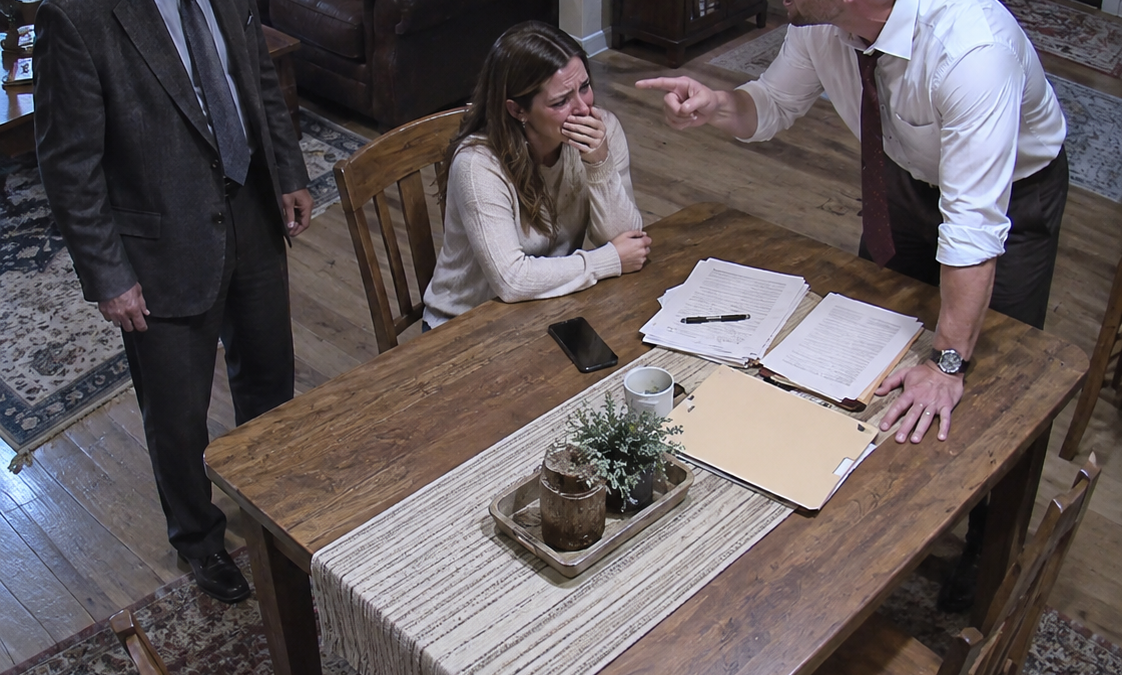
She was ashamed. I could feel it in the way she hesitated to bring her friends over to introduce them to her father. To her, and to everyone in that room, I was just Reggie—the old man who lived in a wooden cabin on the edge of town, drove a rusted Ford truck, and spent his days fishing.
Preston waved me over. His gesture wasn’t inviting; it was a summons. He was sitting at the VIP table, the table reserved for the most important people in his world. Seated there was a man I knew very well, though he hadn’t seen me in five years: Mr. Henderson, the current CEO of King Logistics. The man I had personally groomed to take over my empire when I decided to vanish into the background.
“Come here, Reggie!” Preston shouted, his voice booming over the jazz music. “I want you to meet someone.”
I walked over slowly. My knees ached, a reminder of forty years spent loading cargo trucks before I owned the fleet. As I approached the table, Preston stood up and wrapped a heavy arm around my shoulder. It felt like a yoke. He smelled of expensive Scotch and arrogance.
“Mr. Henderson,” Preston said, his voice dripping with a false, oily charm, “I want you to meet my father-in-law, Reginald. He is a bit of a character.”
Henderson looked up from his steak. His eyes narrowed slightly behind his gold-rimmed glasses. He was trying to place my face, but the beard I had grown and the twenty pounds I had lost since retirement were doing a good job of disguising me. Preston didn’t wait for a response. He continued, squeezing my shoulder hard enough to bruise.
“Reggie here is a simple man. He lives out in the sticks. Unemployed for years, actually. We try to help him out where we can, you know, throw him a bone. But honestly, he is a bit of a loser. I told Nia we had to invite him out of pity. Can you believe he drove a truck here that sounds like a lawn mower?”
A few people at the table chuckled nervously. Nia, who was standing a few feet away, dropped her gaze to the floor. She didn’t defend me. She didn’t say a word. She just let her husband reduce her father to a charity case to score points with his boss.
I felt a cold fire ignite in my chest. It wasn’t anger. It was clarity. For months, I had suspected Preston was not who he claimed to be. I knew he was a regional sales director at my company, but his lifestyle didn’t match his salary. The penthouse, the sports car, this wedding that cost two hundred thousand dollars—he claimed he was a top performer, a rainmaker. Standing there, listening to him mock me, I realized he wasn’t just a liar. He was a fool.
I looked at Henderson. The CEO was no longer eating. He was staring at me, his fork suspended halfway to his mouth. Recognition was dawning in his eyes. He looked at my old suit, then at my face, and finally at the class ring on my right hand, a ring identical to the one he wore. It was the ring I had given to the top five executives when we hit our first billion dollars.
“Reggie?” Henderson whispered, his voice trembling slightly. “Is that you?”
Preston laughed, oblivious to the shift in the atmosphere. “Yeah, that is Reggie. Don’t worry, he won’t ask you for a job. He is too busy watching paint dry on his porch.”
I didn’t say a word. I simply reached up and adjusted my tie, a specific knot I had taught Henderson to tie decades ago. I looked Henderson dead in the eye and gave him a barely perceptible nod. It was a command. It was the same look I used to give him across the boardroom table when it was time to cut a bad deal loose.
Henderson stood up. The chair scraped loudly against the floor, cutting through the chatter at the table. He didn’t look at Preston. He didn’t look at Nia. He looked only at me, and for a second, I saw the terror of a man who realizes he has allowed a hyena into the lion’s den.
“Mr. Sterling,” Henderson said, his voice icy and projecting loud enough for the surrounding tables to hear.
Preston smiled, thinking he was about to receive a compliment. “Yes, sir?”
“You just called this man an unemployed loser,” Henderson said.
“Yeah, just a joke, sir.” Preston waved his hand dismissively. “Just keeping it light.”
“It is not a joke to me,” Henderson replied. His face was pale. “This man is not unemployed, and he is certainly not a loser. He is the reason you have a job. Or rather, the reason you had a job.”
The smile slid off Preston’s face like grease. “What?”
“You are fired, Preston,” Henderson said, slicing the air with his hand. “Effective immediately. You are fired for gross misconduct, lack of judgment, and, quite frankly, for being an idiot.”
The music seemed to stop. The clinking of silverware ceased. Three hundred guests turned their heads toward the VIP table. Preston stood there, his mouth opening and closing like a fish pulled onto a dock.
“Fired?” Preston stammered. “You can’t fire me. It’s my wedding day. I’m your top salesman.”
“You are a liability,” Henderson spat. “And if you ever speak to this man with disrespect again, I will make sure you never work in this industry again. Get out of my sight.”
Henderson turned to me and bowed his head slightly. It was a gesture of deep respect, a soldier saluting his general. I kept my face impassive. I didn’t want to reveal my full identity yet. Not here. Not like this. I wanted Preston to suffer in the confusion.
Preston looked at Henderson, then at me, his face twisting into a mask of pure rage. He couldn’t process what was happening. In his mind, I was the cause. I was the bad luck. I was the stain on his perfect white tuxedo.
Nia let out a gasp, her hands flying to her mouth. The glass of champagne she was holding slipped from her fingers and shattered on the marble floor. The sound was sharp and violent, breaking the trance of the room.
I looked at Preston, whose face was turning a dangerous shade of purple. I reached out to a passing waiter, took a glass of red wine from his tray, and took a slow, deliberate sip.
“This wine is sour,” I said calmly, my voice carrying through the silence. “Just like your manners, Preston.”
Preston lunged toward me, his hands reaching for the lapels of my old suit. “You did this!” he screamed, spittle flying from his mouth. “You old senile fool! What did you say to him? You ruined everything!”
Security guards, whom Henderson must have signaled, stepped in immediately, restraining Preston before he could touch me. He thrashed in their grip, screaming obscenities, blaming me, blaming the world, blaming everyone but himself.
I turned my back on him. I walked over to the table, picked up a linen napkin, and wiped a speck of dust from my sleeve. The wedding was over. The war had just begun. And Preston Sterling had no idea that he had just declared battle against the man who owned the battlefield.
Preston didn’t just get angry. He shattered. The reality of what Henderson had said hit him like a physical blow, but instead of accepting it, his mind rejected it completely. It was easier for him to believe that the world had gone mad than to admit he had made a mistake.
He stood there, his chest heaving, his eyes darting back and forth between Henderson and me with a manic intensity.
“You are joking.” Preston laughed, but it was a dry, hysterical sound that made the guests closest to him step back. “This is a test, right, boss? You are testing my loyalty. You want to see if I can handle pressure. Well, I can handle it. Good one, sir. You really had me going there for a second.”
Henderson didn’t smile. He didn’t blink. He adjusted his glasses and looked at Preston with the cold detachment of a man watching a bug writhe on a pin.
“I am not joking, Mr. Sterling. You are fired. Leave the premises immediately before I have you escorted out by force.”
That was the spark that ignited the powder keg. Preston’s face twisted from confusion to pure, unadulterated violence. He roared, a sound that was less human and more animalistic, and lunged across the table. He wasn’t aiming for me this time. He was aiming for the man who had just taken away his future.
“You can’t do this to me!” Preston screamed, his hands clawing at the air inches from Henderson’s throat. “I made you millions! I am the star of this company!”
The security guards who had been hovering on the perimeter moved with professional speed. Two of them intercepted Preston in midair. One grabbed his arm, twisting it behind his back, while the other wrapped a thick arm around his chest. The momentum sent them crashing into a serving table loaded with shrimp cocktails and ice sculptures.
The sound of shattering glass and crashing metal echoed through the ballroom like a bomb going off. Ice cubes skittered across the polished floor. Shrimp and cocktail sauce splattered onto the silk dresses of the bridesmaids. The guests screamed. It wasn’t a wedding anymore. It was a brawl.
“Let me go!” Preston howled, thrashing against the guards. He managed to kick out, his expensive dress shoe connecting with a chair and sending it flying into the crowd. “Get your hands off me! Do you know who I am?”
Nia was frozen in the center of the room, her hands pressed over her mouth, watching the man she had just married turn into a monster. She looked at me, her eyes pleading for me to do something, to stop it. But I stood still. I took another sip of the sour wine. This was a lesson she needed to see. She needed to see the man behind the mask.
The guards finally managed to pin Preston to the floor. His white tuxedo was now stained with red cocktail sauce, looking like blood. His hair was a mess, hanging over his wild eyes. He was panting, spitting curses at the ceiling, his dignity completely stripped away.
“Get him up,” Henderson ordered, wiping a speck of sauce from his lapel. “And get him out of my sight.”
As the guards hauled Preston to his feet, the atmosphere in the room shifted from shock to judgment. The guests were whispering, pointing, recording everything on their phones. The illusion of the perfect power couple had dissolved, leaving only a violent, unemployed man and his terrified bride.
Preston shook the guards off as soon as he regained his footing, though they stayed close, ready to pounce again. He smoothed his jacket with trembling hands, his chest heaving. He looked around the room, seeing the cameras, the judgmental stares, the ruin of his big day. He needed a scapegoat. He needed someone to blame, because a narcissist can never look in the mirror.
His eyes locked on me. “This is your fault!” he screamed, pointing a shaking finger at my chest. “You did this! You and your bad luck! You walked in here looking like a beggar, and you poisoned everything!”
He turned to Nia, who was sobbing quietly now. “And you! You let him in! I told you not to invite him. I told you he was nothing but trouble. Look at what he did! He turned my boss against me. He probably lied to him. He probably told him some sob story to make me look bad.”
Nia shook her head, tears streaming down her face. “Preston, stop. He didn’t say anything. You were the one who insulted him.”
“Shut up!” Preston snapped, his voice cracking. “You are supposed to be on my side! I gave you everything. I gave you this wedding. I gave you this life. And you let your loser father ruin it all!”
He was unraveling, spewing venom in every direction. He called me a curse. He called me a parasite. He claimed I had been jealous of his success and had plotted this whole scene to humiliate him. It was delusional, but he believed it. He had to believe it to survive the weight of his own ego.
Suddenly, the heavy double doors of the ballroom swung open. A man in an impeccable black suit walked in, followed by two assistants carrying clipboards. It was the hotel manager. He didn’t look happy. He looked at the overturned table, the smashed ice sculpture, the sauce on the floor, and the guests cowering in the corners.
“Mr. Sterling,” the manager said, his voice cutting through Preston’s rant like a knife, “we have a problem.”
Preston spun around, his face red and sweaty. “What now? Can’t you see I am busy?”
“We have received multiple complaints from the other ballrooms about the noise,” the manager said calmly. “Furthermore, there has been significant damage to hotel property, and violent conduct is a direct violation of your contract. I am shutting this event down immediately.”
“Shutting it down?” Preston laughed, a manic, high-pitched sound. “You can’t shut it down. I paid a fortune for this.”
“Actually,” the manager corrected, checking the clipboard, “you paid a deposit. The remaining balance of thirty thousand dollars was due at the conclusion of the event. However, given the breach of contract and the damages I am seeing here, I am invoking the immediate-payment clause. I need the full balance settled right now, or I will be calling the police to press charges for property damage and theft of services.”
Thirty thousand dollars. The number hung in the air. The guests went silent again. The music had long stopped. The only sound was the hum of the air-conditioning and Nia’s soft crying.
“Thirty thousand,” Preston repeated. He looked at the manager, then at the guards, then at the exit. He realized he was cornered. He puffed out his chest, trying to regain some semblance of control. “Fine. Fine. I will pay your stupid bill, and then I am going to sue you for ruining my wedding.”
He reached into his inner pocket and pulled out a sleek metal wallet. He extracted a black credit card with a flourish, holding it up like a weapon.
“Here, take it. Put it all on this. And add a tip for yourself so you can buy a new personality.”
The manager took the card without a word. He signaled to one of his assistants, who brought over a portable card terminal. The manager inserted the card and typed in the amount: thirty thousand dollars. He handed the machine to Preston to enter his PIN.
Preston punched the numbers in aggressively, staring at me the whole time with a look of pure hatred. “Watch this, old man,” he sneered. “This is what money looks like.”
The machine beeped, a harsh, flat sound. Transaction declined.
The manager looked at the screen, then at Preston. “I am sorry, sir. The card was declined.”
“Try it again,” Preston snapped. “It’s a platinum card. It has no limit.”
The manager tried again. Beep. Declined. Preston’s face went pale. He snatched the wallet back and pulled out another card.
“Try this one.”
Beep. Declined. A third card. Beep. Declined. Preston was sweating profusely now. He was tapping the machine, shaking it as if he could force the money to appear.
“There must be a mistake. The system is down. Call the bank.”
“There is no mistake, sir,” the manager said, his voice dropping an octave. “The cards are maxed out or frozen. Do you have another form of payment?”
Preston looked at Nia. “Do you have your card?”
Nia shook her head. “You told me to leave my purse in the suite. I don’t have anything on me.”
Preston looked around the room. His friends were looking at the floor. His parents were nowhere to be seen. He was alone, completely and utterly alone, with a thirty-thousand-dollar debt hanging over his head and the threat of jail time closing in. Then his eyes landed on me again. He stared at me, and a twisted idea formed in his desperate mind.
He walked over to me, invading my personal space, his breath hot and smelling of desperation. “You,” he hissed. “You pay it.”
I looked at him calmly. “Excuse me?”
“You heard me!” Preston shouted, his voice echoing off the walls. “This is your fault. You got me fired. You caused this scene. You are the father of the bride. It is tradition for the father to pay. So pay it!”
He pointed at my old suit, at my worn shoes. “I know you have some savings tucked away in a mattress somewhere. Dig it out. Write a check. Do whatever you have to do. But you are not leaving this room until you fix the mess you created.”
He grabbed my lapel again, his eyes bloodshot and wild. “Pay the bill, old man, or I swear to God, I will make sure you never see your daughter again.”
I reached into the inner pocket of my frayed wool jacket. The movement was slow and deliberate, drawing the eyes of everyone in the room. Preston stopped breathing, his eyes locked onto my hand, his pupils dilated with a mixture of greed and relief. He thought he had won. He thought his intimidation tactics had worked and that the old man was about to pull out a checkbook to save the day.
I saw the tension leave Nia’s shoulders. She let out a shaky breath, believing that her father was going to fix the disaster she had married into. She looked at me with gratitude, but underneath that, I saw the expectation. She expected me to pay because I had always paid.
I withdrew a single cream-colored envelope. It was slightly bent at the corners. I held it out to Preston.
“Take it,” I said softly.
Preston snatched it from my hand like a starving dog grabbing a bone. He didn’t even say thank you. He tore the flap open, his fingers shaking, looking for the check that would clear his debt and restore his ego.
He pulled out the contents. It wasn’t a check. It wasn’t cash. It was a greeting card, a simple card with a picture of a sailboat on the front.
Preston stared at it. He flipped it over. He shook the envelope upside down, hoping something else would fall out. Nothing did. He opened the card and read the handwritten message inside. I had written it that morning while drinking my coffee.
“Independence is the greatest gift a father can give. Congratulations on your new life.”
Preston looked up at me, his face contorted in disbelief. “Is this a joke?” he spat, throwing the card onto the floor. “Is this some kind of sick joke? I need thirty thousand dollars, and you give me a Hallmark card?”
“It is not a joke,” I replied, my voice steady. “It is a lesson. You said you are a self-made man, Preston. You said I was a loser. A loser cannot help a winner. You are on your own.”
Nia rushed forward, grabbing my arm. Her nails dug into my sleeve. “Daddy, please. You can’t do this. The manager is going to call the police. They are going to arrest him. Please, just pay it. I know you have savings. I know you have the money from Mom’s life insurance. Just give it to him. Do it for me.”
I looked at my daughter. I looked at the woman I had raised to be strong, to be independent, to be kind. And all I saw was a stranger who was willing to bleed her father dry to protect a man who had just humiliated him.
“I have paid enough, Nia,” I said, my voice hardening.
She shook her head. “You haven’t paid anything. You just gave us a card.”
“I haven’t paid anything?” I repeated, a bitter laugh escaping my lips. “Let me refresh your memory, daughter. Who do you think paid off the loan on your red Audi last year, when Preston forgot to make the payments for four months? It wasn’t the bank being nice. It was me.”
Nia froze. Her eyes went wide.
“Who do you think put up the down payment for that condo in downtown Atlanta you two brag about owning?” I continued, my voice rising just enough to carry over the whispers of the crowd. “You told everyone it was Preston’s bonus. Preston told everyone he was a real estate genius. But I wrote that check. I sent it anonymously to the closing attorney so you wouldn’t lose the deal.”
Preston stepped back, looking like he had been slapped. He knew. He had always suspected, but he had never wanted to admit that his lifestyle was subsidized by the man he despised.
“And the credit card debt,” I added, looking directly at Preston. “The fifty thousand dollars you racked up on online gambling last Christmas. You told Nia you won a lottery scratch-off to pay it back. There was no lottery. I paid the bookie because I didn’t want men with baseball bats showing up at my daughter’s door.”
I stepped closer to them. “I have spent two hundred thousand dollars in the last two years cleaning up your messes. I did it from the shadows because I wanted you to have dignity. I wanted you to have a chance to stand on your own feet. But today, you showed me that you don’t want dignity. You want a servant. You want an ATM.”
Nia was crying openly now, her makeup running down her face. “Daddy, stop. Please stop. Everyone is listening. You are embarrassing us.”
“I am not embarrassing you,” I said coldly. “You embarrassed yourselves. You introduced me as a loser. You introduced me as a burden. Well, congratulations. The burden is gone, and so is the bank.”
Preston wiped the sweat from his face, his eyes darting around the room like a trapped animal. He saw the security guards moving closer. He saw the manager tapping his watch. He needed a lifeline, and he realized he had one card left to play.
“Nia,” he barked, “use the emergency card. The one your dad gave you for medical emergencies. It has a high limit. Use it.”
Nia looked at me, then at Preston. She hesitated.
“Do it!” Preston screamed. “Or I am going to jail!”
Nia reached into her purse. She pulled out a small silver credit card. It was a supplementary card linked to one of my private accounts. I had given it to her five years ago, telling her it was for life-or-death situations only. She had never used it until now.
She walked toward the manager, her hand trembling. “Here,” she said, her voice barely a whisper. “Try this.”
I didn’t move to stop her. I didn’t grab her hand. I simply reached into the pocket of my trousers and pulled out my phone. It wasn’t a smartphone. It was an old, rugged brick phone that I used for secure communications. It looked like a relic, something a construction worker would use in the early 2000s.
Preston saw the phone and let out a laugh. “Look at that. He is calling for help on a dinosaur.”
I didn’t look at him. I dialed a short code: star-nine. It was a direct command to my banking mainframe, a kill switch I had programmed for this specific account. I pressed Send.
The manager took Nia’s card. He swiped it. He waited. I watched the machine. I watched the red light blink.
“Declined,” the manager said.
Nia gasped. “That is impossible. Daddy said it had fifty thousand dollars on it. Try again.”
The manager swiped it again. Declined. Card invalid. Please confiscate.
The manager looked at Nia. “I am sorry, ma’am. This account has been frozen, and the bank has ordered me to keep the card.” He slipped the plastic rectangle into his pocket.
Nia turned to me, her face a mask of betrayal. “Daddy, what did you do?”
I put the brick phone back in my pocket. I patted the side of my leg. “I cut you off, Nia,” I said. “You chose him. You chose the man who mocks your father. You chose the man who spends money he doesn’t have. You chose the man who values appearance over character. So you can deal with the consequences together. That is what marriage is.”
Preston roared in frustration and tried to rush me again, but the security guards were ready. They slammed him against the wall, handcuffing him before he could take two steps.
“That is assault!” Preston screamed as they dragged him toward the door. “I will sue you! I will sue this hotel! I will sue everyone!”
The manager signaled to his staff. “Call the police, and get the invoice ready for the legal team.”
I adjusted my jacket. I looked at Henderson, who was watching the scene with a grim satisfaction. He nodded at me, a silent acknowledgment that justice had been served.
I walked past Nia. She tried to grab my hand, but I stepped out of reach.
“Daddy, wait,” she sobbed. “How are we going to get home? They took the car keys.”
“Take the bus,” I said without breaking stride. “It builds character.”
I walked out of the ballroom, the heavy doors swinging shut behind me, cutting off the sound of Preston screaming and my daughter crying. I walked through the lobby and out into the cool night air. My rusted Ford truck was waiting for me in the valet line, parked right next to the Bentleys and Mercedes.
The valet boy looked at me, holding my keys. “Ready to go, sir?” he asked.
I took the keys and climbed into the cab. The engine roared to life with a rough, sputtering sound that Preston hated. I smiled. It was the sound of freedom. I drove away from the hotel, leaving the chaos in my rearview mirror, knowing that the hardest part was yet to come. They would come for me. They would come for my land. And I would be ready.
Three days passed in a silence that felt heavy, like the air before a tornado touches down. I spent those days sitting on my porch, whittling a piece of cedar wood and watching the road. I knew Preston wasn’t done. A man like him, stripped of his ego and his income, doesn’t just fade away. He explodes. I just didn’t know when the shrapnel would fly.
It happened on Tuesday afternoon. A black SUV tore up my gravel driveway, kicking up a cloud of dust that settled over my freshly washed truck. They didn’t park. They skidded to a halt inches from my front steps.
Preston jumped out of the driver’s seat. He looked like a man who hadn’t slept in seventy-two hours. His expensive shirt was wrinkled, his eyes were bloodshot, and he moved with the jerky, frantic energy of an addict looking for a fix. Nia climbed out of the passenger side. She looked smaller than I had ever seen her, her shoulders hunched, her eyes fixed on the dirt.
Preston didn’t knock. He kicked the front door open. The old wood groaned and splintered near the lock, the sound echoing through the small cabin like a gunshot. He stormed into my living room, bringing the smell of stale sweat and desperation with him.
“You think you are smart, old man?” he screamed, his voice cracking. “You think you can ruin my life and just sit here playing with sticks?”
I stood up slowly from my armchair, my hand tightening around the handle of my pocketknife. “Get out of my house, Preston.”
“This isn’t a house,” he spat, spinning around. “It is a shack. It is a termite mound. I don’t know how Nia lived in this filth.”
He grabbed a ceramic vase from the mantel. It was a simple blue thing, imperfect and slightly lopsided. My wife, Beatrice, had made it with her own hands forty years ago in a pottery class we took together. It was the first thing she ever made.
“Don’t touch that,” I warned, my voice dropping to a dangerous growl.
Preston looked me in the eye and smashed the vase against the floor. The ceramic shattered into a hundred pieces. He kicked the shards across the room, grinding the memory of my wife into the dust.
“Oops,” he sneered.
He then grabbed a framed photo from the side table. It was the last picture taken of Beatrice before the cancer took her. She was smiling, sitting in the garden, wearing her favorite sun hat.
“And this garbage!” Preston yelled. “It belongs in the trash.”
He threw the photo out the open door. It landed facedown in the dirt of the front yard. My heart hammered against my ribs with a violence I hadn’t felt in years. I wanted to tackle him. I wanted to break him. But I stayed rooted to the spot. Violence was his language. If I fought him physically, he would win the narrative. I had to beat him my way.
Preston reached into his jacket and pulled out a thick legal envelope. He slammed it onto my small dining table with enough force to make the salt shakers jump.
“Read it,” he commanded.
I didn’t move. “Tell me what it is.”
“It is a lawsuit,” Preston announced, puffing out his chest. “Defamation of character, loss of income, emotional distress, malicious interference with a business contract. I am suing you, Reginald. I am suing you for five million dollars.”
I looked at the envelope, then at him. “Five million dollars,” I repeated calmly. “You don’t have five dollars, Preston.”
“I will when the court is done with you!” he shouted. “You told lies to Henderson. You slandered me. You destroyed my reputation in this town. I can’t get a job interview. No one will hire me. You took everything from me. So now I am going to take everything from you.”
I looked at Nia. She was standing by the door, refusing to look at the broken vase or the photo in the dirt. She was trembling.
“Nia,” I said softly, “is this what you want?”
She didn’t answer. She just wrapped her arms around herself as if she were cold.
“Don’t talk to her,” Preston barked, stepping between us. “She is on my side. We are a team. And we know you don’t have five million liquid. We know you are broke. But you have one thing.”
He pulled another document from his pocket. It was crumpled and stained with coffee. He smoothed it out on the table next to the lawsuit.
“This land,” he said, waving his hand around the room. “It is the only asset you have. I checked the county records. You own it free and clear. It is a dump, and the cabin should be condemned, but developers are buying up properties along the highway.”
He pointed a shaking finger at the paper. It was a quitclaim deed.
“Sign it,” he demanded. “Transfer the property to me. I can sell it quickly. It won’t cover the five million, but it will get me some cash. It will get the bookies off my back and pay for a lawyer to go after Henderson.”
I walked over to the table and looked down at the deed. He wanted my home. He wanted the place where I had raised my daughter, the place where I had nursed my wife, the place where I had found peace away from the noise of the corporate world.
“You want me to sell my home to pay for your gambling debts?” I asked.
“It is not a home!” Preston screamed, his face turning red. “It is a patch of dirt with a roof. Look at it. It is pathetic, just like you. Sign the paper, Reggie. It is probably worth fifty thousand if we are lucky. That is just enough to keep my kneecaps intact for another week.”
I let out a short, dry laugh. It rattled in my chest. “You think this land is worth fifty thousand dollars?” I asked.
“It is dirt and weeds,” he said dismissively. “What else could it be worth?”
I picked up the deed and looked at the legal description. He hadn’t even read it properly. He just saw a cabin and a driveway.
“Preston,” I said, my voice steady and cold, “you see a shack and a garden. You see what is in front of your face. But you didn’t look at the survey.”
I stepped closer to him, forcing him to look up at me. “This cabin sits on fifty hectares of land. I bought the surrounding parcels forty years ago, when everyone said the highway would never come this far out. I own the timber rights. I own the mineral rights. And last year, the city rezoned this entire sector for commercial development.”
Preston’s eyes bulged. His mouth fell open.
“This land isn’t worth fifty thousand dollars,” I said. “It is appraised at twelve million.”
The silence that followed was absolute. Even Nia looked up, her eyes wide with shock. Preston stared at me and then looked around the cabin with a new expression. The disgust was gone, replaced instantly by a ravenous, desperate greed. He looked like a starving wolf that had just stumbled upon a slaughterhouse.
“Twelve million?” he whispered. “You are sitting on twelve million, and you live like this? You drive that piece-of-junk truck and wear these rags when you have twelve million in the dirt?”
“I live like this because I choose to,” I said. “Because my memories are here. Because my wife is buried under the oak tree out back. You see a price tag, Preston. I see a sanctuary. And I am not selling a square inch of it to save a leech like you.”
Preston’s shock morphed back into rage, but this time it was fueled by envy. He snatched a pen from his pocket and shoved it into my chest.
“Sign it,” he hissed. “Sign it right now. You owe us. You have been hoarding this wealth while we struggle. It is selfish. It is evil. Sign the paper, old man, or I swear I will burn this place to the ground with you in it.”
“No,” I said.
Preston threw the pen across the room. It bounced off the wall and landed in the fireplace. He paced back and forth, running his hands through his hair, muttering to himself. He looked at the lawsuit, then at the deed, then at me. He realized he couldn’t force me physically, not without crossing a line he wasn’t ready for yet. But his eyes lit up with a malicious idea.
He pulled out his phone. “Fine. You want to play hardball? You want to keep your precious sanctuary? Let us see how much you love it when it is condemned.”
He dialed a number, putting it on speaker so I could hear the ringing tone.
“Building Department,” a voice answered.
“Yes, I want to report a severe code violation,” Preston said, his voice smoothing into a fake tone of concern. “I am at 404 Pine Road. The structure is unstable, the foundation is rotting, and there is exposed wiring throughout the house. It is a fire hazard. I am very worried it is going to collapse on the elderly occupant.”
He looked at me and winked. “Yes, I am a concerned relative,” he continued. “Please send an inspector immediately. It needs to be condemned. It needs to be demolished for safety reasons.”
He hung up the phone and smiled at me, a cruel, twisted grin that showed all his teeth.
“You won’t sell it? Fine. Then I will have the county tear it down. Let us see how much your twelve-million-dollar land is worth when your house is a pile of rubble. We are leaving, Nia.”
He grabbed my daughter by the arm and dragged her toward the door. “Enjoy your last night in your shack, old man,” he called out over his shoulder. “The bulldozers are coming.”
The heavy tires of the municipal truck crunched on the gravel, signaling the arrival of the executioner Preston had summoned. I watched from my rocking chair as the white pickup truck stopped next to Preston’s black SUV. The contrast was stark. The city vehicle was dusted with work and utility, while Preston’s car screamed of leased luxury and debt.
The building inspector stepped out. He was a man who carried his authority like a sledgehammer. He slammed the truck door shut and adjusted his belt, his eyes hidden behind dark aviator sunglasses. He marched toward the porch, ignoring the beautiful morning light filtering through the trees, focused entirely on the clipboard in his hand.
Preston stepped forward to greet him, his face lighting up with vindictive glee.
“Over here, officer. This is the property. As I told you on the phone, it is a hazard. The wiring is older than I am, and the foundation is basically mud. I am terrified it is going to collapse on my father-in-law.”
He pointed at me with a gesture that was half accusation, half mockery. “Look at him. He sits there because he is probably afraid to move in case the floor gives way. We need an emergency condemnation order. We need it bulldozed before someone gets hurt.”
The inspector stopped at the bottom of the steps. He looked at the siding of the cabin. He kicked a wooden support beam with his steel-toed boot. The wood held firm, solid as the day I placed it, but the inspector made a show of shaking his head and scribbling something ominous on his pink form.
“I am going to need to see the interior,” the inspector grunted, his voice rough. “But from the outside, I can already see three major code violations. We are likely looking at an immediate vacate order.”
Preston turned to me, his smile stretching so wide it looked painful. “Did you hear that, Reggie? An immediate vacate order. That means you get out now. The bulldozers are coming, just like I promised. You should have signed the deed when you had the chance. Now you lose the land and the house.”
Nia stood by the car, her hands covering her face. She was watching her childhood home being sentenced to death, and she didn’t say a word to stop it.
The inspector walked up the steps. He finally took off his sunglasses to get a better look at the doorframe. He looked at me. I didn’t move. I didn’t flinch. I just looked him dead in the eye.
“Name of owner?” the inspector barked, pen hovering over the paper.
“Reginald King,” I said.
The inspector’s hand froze. He looked up from the clipboard. He squinted, leaning in closer, studying my face. He looked at the scar above my eye. He looked at the way I held my hands. The aggression drained out of his posture like water from a cracked bucket. His jaw went slack.
“Mr. King?” he whispered. “Mr. Reggie King?”
“That is me,” I replied calmly.
The inspector lowered the clipboard slowly. A look of absolute recognition and deep respect washed over his face. He took a step back, almost stumbling.
“I didn’t know you lived here, sir,” he said, his voice changing completely. It was no longer the voice of a bully. It was the voice of a man speaking to a legend. “I haven’t seen you since the groundbreaking of Westside Park. My kids play on that playground every weekend.”
I nodded slowly. “That is good to hear, Marcus. I remember you. You were the foreman on the drainage crew. You kept the project under budget.”
Preston let out a sound of pure confusion. He stepped between us, waving his hands. “What is going on? Why are you talking to him like that? He is a code violator. He is living in a shack. Condemn it!”
Marcus turned on Preston. The look he gave my son-in-law was withering. He looked at Preston like he was something he had scraped off his boot.
“Who is this clown, Mr. King?” Marcus asked me.
“My son-in-law,” I said. “He seems to think he is an engineer today.”
Marcus laughed, a short, sharp bark. He looked at Preston. “Son, you have no idea who you are talking to. Mr. King didn’t just build this cabin. He built half the infrastructure in this county. He privately funded the new wing of the hospital. He paid for the library renovation. If he says this house is safe, then it is the safest building in the state.”
Preston’s face went purple. “That is a lie. He is broke. He is unemployed. He bribed you. I will report you.”
Marcus stepped into Preston’s personal space. He was a head taller and fifty pounds heavier.
“Excuse me? Are you accusing a city official of corruption? Because I can write you a ticket right now for filing a false report. It is a crime to waste municipal resources on a vendetta. Do you want me to call the sheriff?”
Preston backed away, his hands rising in surrender. “No, I just—I thought—”
“You thought wrong,” Marcus snapped.
He tore the pink citation sheet off his clipboard. He crumpled it into a ball and tossed it onto the ground at Preston’s feet.
“Get off this property. And if I see your name on my dispatch log again, I will have you arrested for harassment.”
Marcus turned back to me and tipped his imaginary hat. “Sorry for the disturbance, Mr. King. You have a good day.”
“Thank you, Marcus,” I said.
The inspector got back in his truck and drove away. Preston stood there, staring at the crumpled paper in the dirt. He was shaking. He had tried to use the law as a weapon, and it had turned in his hand. He looked at me, and for a second, I saw fear. But then the fear turned into something darker, something sharper.
He turned slowly toward Nia. She was staring at me with wide eyes, processing what the inspector had said. Hospital wings. Libraries. Infrastructure.
“Did you hear that, Nia?” Preston said, his voice soft and poisonous.
Nia blinked. “Hear what?”
“The inspector,” Preston said, walking over to her. “He said your dad funded the hospital. He said he paid for the library. Do you know how much that costs? That is millions of dollars, Nia. Millions.”
He grabbed her shoulders and spun her to face me. “He isn’t broke, Nia. He has been lying to you. He has been hoarding millions of dollars while we suffer. He watched us get evicted. He watched me lose my job. And he sat here on his piles of cash and did nothing.”
Nia looked at me. Her expression shifted. The confusion melted away, replaced by a deep, cold suspicion.
“Dad,” she whispered, “is it true? Do you have money?”
I didn’t answer.
“Answer me!” she screamed. “Do you have millions of dollars?”
“Yes,” I said.
Nia recoiled as if I had slapped her. “You have millions, and you let us live like this? You let us struggle?”
“I let you live your life,” I said.
“No, you lied to me!” she cried. “You are hiding money from your own family. Preston was right. You don’t love us. You just love your money.”
She grabbed Preston’s hand. “Let us go. I can’t stand to look at him.”
Preston smirked at me as he led her to the car. He hadn’t destroyed my house, but he had destroyed something far more important. He had turned my daughter against me. And as they drove away, I knew this wasn’t over. It was just the beginning of a much dirtier war.
The dust from their departure had barely settled when I began preparing for their return. I knew they wouldn’t stay away. Greed is a powerful magnet, and now that they knew the magnet was twelve million dollars strong, they would be back.
Sure enough, the next morning, the black SUV roared up the driveway again. This time, Nia didn’t wait for Preston to open her door. She stormed onto the porch, her face pale and drawn, her eyes red from crying. Preston followed close behind, looking like a vulture circling a wounded animal.
“Why did you do it?” Nia screamed, her voice raw. “Why did you let us struggle? Why did you let us get evicted? You have millions, Dad. Millions! And you watched me cry over unpaid bills. You watched me stress about the wedding budget. Do you hate me? Is that it? Do you hate me that much?”
I sat in my chair, my hands resting on my knees. I didn’t hate her. I loved her enough to let her fail, which is the hardest kind of love there is. But she wasn’t ready to hear that. She was hurting, and she was looking for a villain.
“I didn’t do it to hurt you, Nia,” I said calmly. “I did it to protect you.”
“Protect me?” She laughed, a bitter, broken sound. “By lying to me? By pretending to be poor? How does that protect me?”
“By keeping him away from the money,” I said, pointing a finger at Preston.
Preston stepped forward, his chest puffed out. “Don’t you dare blame this on me. You are the liar here, Reggie. You are the one sitting on a fortune while your daughter starves. You are a miser. A selfish old miser.”
I stood up. I reached under my chair and pulled out a thick manila folder. I had compiled it over the last six months with the help of a private investigator. It was heavy. It thudded when I dropped it onto the small wooden table between us.
“I am not the one starving her, Preston,” I said. “You are.”
Preston looked at the folder. “What is that? More lies?”
“It is the truth,” I said. “Something you seem to be allergic to.”
I opened the folder. Papers spilled out: bank statements, credit card bills, casino receipts, hotel invoices.
“Nia, look at this,” I commanded.
Nia hesitated. She looked at Preston, who was suddenly very still.
“Don’t look at it, babe,” Preston said quickly. “It is fake. He forged it, just like he lied about being broke.”
Nia looked at me, then at the papers. Curiosity won out. She picked up the top sheet. It was a credit card statement from three months ago.
“This is your card, Preston,” she said, frowning. “It says you spent five thousand dollars at the Diamond Club.” She looked up. “That is a strip club. You told me you were at a sales conference in Chicago.”
Preston’s face went white. “That is not mine. He stole my identity. Or he Photoshopped it. You know technology these days. He is trying to frame me.”
I handed her another paper. “This is a promissory note,” I said, “to a loan shark in Las Vegas. Two hundred thousand dollars, Preston. You owe two hundred thousand dollars in gambling debts. That is why you are desperate for my land. That is why you need cash now. Not for a house. Not for Nia. To save your own skin.”
Nia flipped through the pages. Her hands were shaking violently. There were receipts for jewelry she had never received. There were hotel bookings in town for nights he said he was working late. There were transfers to offshore betting sites totaling more than her annual salary.
“Oh my God,” she whispered. “A sapphire necklace. Four thousand dollars. Who is Candy?”
Preston snatched the paper from her hand. “Nobody. It is a typo. It is a business expense. Nia, listen to me. Look at him. Look at this old man. He hates me. He has hated me since day one. He went out and paid someone to make these fake documents to break us up. He wants to control you. He wants to buy you with his millions, but first he has to get rid of me.”
He turned to me, his eyes bulging. “You are sick, Reggie. You are a sick, manipulative old man. You think you can buy your daughter back? You think these lies will work?”
“They aren’t lies,” I said. “And you know it.”
Nia looked at Preston. She held up a photo from the pile. It was a picture of Preston entering a motel room with a woman who was definitely not Nia. The timestamp was from two weeks before the wedding.
“Is this Photoshopped too, Preston?” she asked, her voice trembling.
Preston stared at the photo. The evidence was irrefutable. The cornered-animal panic set in. He couldn’t deny it, so he attacked. He grabbed Nia by the shoulders and shook her hard.
“You are being stupid!” he shouted. “Can’t you see what he is doing? He is gaslighting you. He is the enemy here. He is the one with the secret fortune. I am your husband. You are supposed to trust me.”
“I don’t know, Preston,” Nia sobbed, trying to pull away. “There is so much. The dates match, the money—”
“Shut up!” Preston screamed.
He raised his hand, his face twisted in a snarl of pure aggression. He was going to hit her. He was going to strike my daughter to silence her doubts.
The air in the room changed instantly. I moved. I didn’t move like a seventy-year-old man. I moved like the dockworker I used to be. I caught Preston’s wrist in midair, inches from Nia’s face. My grip was iron. I squeezed, digging my thumb into the tender tendons of his wrist.
Preston gasped, his eyes snapping to mine. “Let go,” he grunted.
I twisted his arm, forcing him to step back, forcing him to release Nia. I stepped between them, a wall of gray wool and rage.
“If you ever,” I said, my voice low and vibrating with a deadly promise, “raise your hand to my daughter again, you will not walk out of this house. Do you understand me?”
I shoved him backward. He stumbled, tripping over his own feet and crashing into the doorframe. He rubbed his wrist, looking at me with a mixture of fear and hatred. He had underestimated the old man again.
Nia was crying, clutching the damning papers to her chest. She looked at Preston with horror, as if seeing him for the first time.
“Get out,” I told him. “Get off my property.”
Preston straightened his jacket. He looked at Nia, then at the papers, then at me. He regained a sliver of his bravado, the mask sliding back into place.
“Fine,” he spat. “I am leaving. But this isn’t over, old man. You think you have won because you have some money and some fake photos. But you don’t know who you are dealing with.”
He pointed a finger at me. “You are going to regret this. I am going to take everything. The land, the money, the girl. You are going to die alone in this shack, and I am going to piss on your grave.”
He turned to Nia. “Are you coming, or are you staying with the liar?”
Nia didn’t move. She just cried.
“Suit yourself,” Preston sneered. “You will come crawling back when you realize he is just trying to control you.”
He stormed out to the SUV, slammed the door, and peeled out of the driveway, leaving a cloud of dust and a silence that felt like a wound. I turned to my daughter. She was broken, but at least she was safe—for now.
“You are going to pay for this!” Preston yelled out the window as he drove off. “You are going to pay!”
Preston Sterling was a man drowning in the deep end of a pool he had dug himself. The two-hundred-thousand-dollar debt to the loan sharks in Las Vegas wasn’t just a number on a piece of paper anymore. It was a ticking bomb.
After I kicked him off my property, he didn’t go to a hotel. He couldn’t. His credit cards were frozen blocks of useless plastic. He parked his leased SUV, which was likely days away from repossession, in the back lot of a twenty-four-hour diner on the edge of town. He sat there in the dark, the engine idling, the air-conditioning fighting a losing battle against the sweat pouring down his face.
He opened his laptop. It was a sleek silver machine, company property he had failed to return after Henderson fired him at the wedding. He stared at the screen, his reflection looking back at him, ghostly and terrified. He knew he had one card left to play in the corporate world. He knew where the bodies were buried. Or rather, he knew where the money was buried.
King Logistics maintained a database known internally as the Gold Ledger. It was a list of our top five hundred clients, their private contact information, their shipping routes, and their contract renewal dates. It was data worth millions to a competitor. If Preston could download that file and sell it to our biggest rival across town, he could pay off the loan sharks and still have enough left over to fight me for the land.
He cracked his knuckles. He connected to the diner’s free Wi-Fi. He launched the secure VPN client. His hands were shaking so badly he mistyped his password twice. On the third try, the connection bar turned green.
Access granted.
He let out a breath he didn’t know he was holding. A twisted smile spread across his face. He thought we were stupid. He thought Henderson had forgotten to revoke his credentials in the chaos of the wedding aftermath.
He navigated through the server folders, his eyes scanning for the file. There it was: Gold Ledger Master.xlsx.
He clicked Download.
“I got you,” he whispered to the empty car. “I got you all.”
The progress bar appeared on his screen. Ten percent. Twenty percent. He was already calculating the payout. He was already imagining the look on Henderson’s face when the company lost its biggest accounts. He was salivating at the thought of buying a lawyer to destroy me.
Fifty percent.
At that exact moment, I was sitting on the porch of my cabin, watching the fireflies dance in the twilight. A mug of chamomile tea sat on the railing, steam rising into the cool air. The silence of the woods was absolute, a stark contrast to the chaos brewing in Preston’s life.
I felt a vibration in the pocket of my work trousers. It wasn’t a smartphone notification. It was a steady, rhythmic pulse from my old brick phone. I pulled it out. The small monochrome screen was glowing with a single line of text.
Intrusion detected. User ID: Sterling.
I didn’t panic. I didn’t rush to a computer. I took a sip of my tea. Preston thought he had found a security oversight. He thought he had found a back door. What he didn’t know was that I had built that back door myself twenty years ago.
When I designed the architecture for the company’s digital infrastructure, I built a honeypot. It was a trap designed specifically for disgruntled ex-employees who thought they could burn the house down on their way out. The file he was downloading wasn’t the client list. It was a digital executable file disguised as a spreadsheet. It was a program I called the Guillotine.
I looked at the phone. It gave me two options. One was to block the access. The other was to execute the countermeasure. I thought about the way he spoke to my daughter. I thought about the vase he smashed. I thought about the disrespect he showed to the people who built this company.
I pressed the button for option two. Execute.
In the parking lot of the diner, Preston’s laptop screen flickered. The download bar hit ninety-nine percent and stopped.
“Come on,” he hissed, tapping the Enter key. “Come on, you piece of junk.”
The screen didn’t finish the download. Instead, it turned a bright, angry crimson. A text box appeared in the center of the screen, black letters against the red background.
Unauthorized access detected. Countermeasures initiated. Smile. You are on camera.
Preston froze. The little green light next to his webcam turned on. Before he could cover it, the camera snapped a series of high-definition photos of his face, capturing the exact moment his arrogance turned to terror.
Then the laptop went haywire. The cooling fan spun up to maximum speed, creating a high-pitched whine that sounded like a jet engine taking off. The hard drive began to overwrite itself, scrubbing every piece of data Preston had ever saved. His personal emails, his banking passwords, his contacts, his evidence for his fake lawsuit against me—it was all being eaten by the code I had written two decades ago.
“No!” Preston screamed.
He tried to force the laptop shut, but the screen wouldn’t turn off. He held the power button down, but the machine ignored him. The speakers blasted a loud, oscillating siren, drawing the attention of everyone walking into the diner.
Preston panicked. He threw the laptop onto the passenger seat as if it were burning hot. The screen finally went black, but the damage was done. The device was a brick, and the signal had already been sent.
Five minutes later, Preston’s phone buzzed. It was an email notification. He checked it, his hands trembling. It was from the legal department of King Logistics.
Subject: Notice of Legal Action.
“Mr. Sterling, we have logged a verified attempt of corporate espionage originating from your personal device. We have photographic evidence and IP logs confirming your identity. We are filing immediate charges with the FBI for violation of the Economic Espionage Act. We are also suing you for ten million dollars in damages for attempted theft of trade secrets. Do not leave the jurisdiction.”
Preston dropped the phone. He screamed, a long, guttural sound of pure frustration and fear. He punched the steering wheel, tears of rage streaming down his face. He was trapped. He had tried to steal his way out of debt and had only succeeded in digging a hole so deep he could never climb out.
He looked at the darkened cabin of his car. He was broke. He was facing federal prison. He had enemies on all sides: the loan sharks, the company, me. He needed a way out. He needed a nuclear option.
His eyes narrowed as a new, dark thought entered his mind. He couldn’t beat me with money. He couldn’t beat me with the law. He couldn’t beat me with business. But there was one thing he could use, one weakness he thought I had: my age.
He picked up his phone again. He dialed Nia’s number. His voice changed instantly, shifting from the rage of a cornered animal to the smooth, manipulative tone of a concerned husband.
“Nia, baby, listen to me,” he said, his voice thick with fake emotion. “I just tried to log into my old work email to get some contacts to find a new job, and your dad blocked me. He hacked my computer. He is destroying my electronics remotely.”
He paused, letting the lie sink in. “Honey, I am really worried about him. This isn’t normal behavior. The paranoia, the aggression, the hoarding of money while living in squalor. I spoke to a specialist friend of mine. These are classic signs of advanced dementia. He is a danger to himself and to others.”
He took a deep breath, preparing to deliver the final blow. “We can’t let him live like this, Nia. We have to take control for his own good. We need to get him help. We need to get him committed. And once we are his legal guardians, we can stop him from hurting us anymore.”
He hung up the phone and started the car. A cruel smile played on his lips. If he couldn’t steal my money, he would simply take away my freedom. He would lock the old man away and take the keys to the kingdom. It was time for the final hand: the nursing home plot.
The seed of doubt Preston planted in my daughter’s mind bloomed into a poisonous tree within hours. He didn’t give her time to think. He didn’t give her time to come ask me for the truth. He isolated her in their cramped, temporary apartment and bombarded her with fear.
I wasn’t there to defend myself, but I know exactly what he said because Nia told me later, through tears of shame. He paced around her, waving his dead phone like a prop in a horror movie. He told her that I hadn’t just blocked him from a computer. He told her I was raving. He claimed I had called him, screaming about spies and assassins.
He told her that the millions of dollars I claimed to have were just a symptom of extreme delusion, a common fantasy for seniors losing their grip on reality. He leaned in close, whispering his darkest lie yet. He told her I was hoarding kerosene. He said I had threatened to burn the cabin down to keep the government away from my imaginary fortune.
“Do you want to get that call, Nia?” he asked her, his voice trembling with fake concern. “Do you want the sheriff to call you at three in the morning to tell you your father burned to death because we didn’t act? We are the only ones who can save him. He is sick, baby. He is so sick, he doesn’t even know who he is anymore. That is why he attacked me. That is why he humiliated us. It is the disease talking.”
Nia broke. She was exhausted, broke, and terrified. She loved me, and Preston used that love as a weapon against me. She agreed to sign the papers. She agreed to the emergency involuntary commitment.
It happened at two in the morning. I was awake, sitting in the dark, monitoring the security feeds on my old phone. I saw the headlights cut through the trees long before they reached the cabin. It wasn’t a police car. It wasn’t a standard ambulance. It was an unmarked white van with tinted windows.
Preston hadn’t called the county services. He had hired a private patient transport service, the kind that asks no questions as long as the check clears. I stood up and put on my jacket. I knew I couldn’t fight them off physically. If I pulled a gun or threw a punch, I would only prove Preston’s narrative that I was violent and unstable. I had to play this hand differently.
I reached into my safe and took out a small silver USB drive. I had prepared it days ago for a moment just like this. I slipped it into my palm, hiding it inside my sleeve.
The front door burst open. No knock. No warning. Two men in blue scrubs entered. They were the size of linebackers, their faces blank and professional. Preston walked in behind them, holding a clipboard. Nia trailed at the back, her face buried in her hands, sobbing.
“Mr. King,” the first orderly said, stepping toward me, “we are here to take you to a safe place.”
I didn’t move. I looked at Preston. “You are a coward, Preston. You can’t win a fair fight, so you have to lock me away.”
Preston didn’t look at me. He turned to Nia and held out the clipboard and a pen. “Sign it, honey. The doctor is waiting. We have to do this now, before he hurts himself.”
Nia looked at me. Her eyes were wide with terror and sorrow. “Daddy, please. It is for your own good. You are not well. We just want to help you.”
“I am perfectly sane, Nia,” I said calmly. “And he is lying to you.”
“See?” Preston shouted, pointing at me. “He is paranoid. He thinks everyone is lying. Sign the paper, Nia. Do it now.”
Nia’s hand trembled as she signed the involuntary commitment order. The scratch of the pen on the paper sounded like a sentence being passed. As soon as the ink was dry, the orderlies moved. They didn’t ask me to walk. They grabbed my arms.
I stiffened, planting my feet. “I can walk,” I said.
“He is resisting!” Preston yelled. “Sedate him!”
One of the men pulled a syringe from his pocket. It was already prepped. He didn’t hesitate. He jabbed it into my shoulder through the wool of my jacket. I felt the sting, then the cold rush of the chemical hitting my bloodstream.
“You didn’t have to do that,” I gritted out, my legs starting to feel heavy.
Preston smiled. It was a smile of pure victory. He walked over to me as the drug began to pull me down.
“It is better this way, Reggie,” he whispered so only I could hear. “You get a nice padded room. I get the power of attorney. I get the land. I get the money. And Nia gets to think she saved her daddy. Everyone wins.”
My vision blurred. The room tilted. The orderlies began to drag me toward the door. My feet dragged on the floorboards. I fought the darkness closing in on my mind. I had one last thing to do, one last move to make before I disappeared into the system.
Nia was standing by the doorframe, crying, unable to look at me. I slumped, making myself dead weight, forcing the orderlies to adjust their grip. This brought me inches from her. I reached out with my right hand, the one holding the USB drive. I grabbed the edge of her jacket.
She flinched, looking down at me. She expected me to scream. She expected me to beg. I didn’t. I used the last ounce of my dexterity to slip the silver drive into her open pocket. My fingers brushed against her hand. She froze, feeling the cold metal object slide in.
I looked up at her. My tongue felt thick. The world was spinning into a gray fog. But I forced my eyes to focus on hers one last time.
“Don’t cry,” I whispered, my voice slurring. “Watch it. Watch what I gave you. Then you can cry.”
Nia frowned, her hand going to her pocket. She felt the drive. She looked at me, confusion warring with her grief.
“Move him out,” Preston barked.
The orderlies hauled me through the door and into the night air. They threw me into the back of the van and strapped me to a gurney. The last thing I saw before the heavy metal doors slammed shut was Preston putting his arm around Nia, comforting her for the crime he had just forced her to commit.
The engine started. The van lurched forward. I closed my eyes, letting the sedative take me. I was going to a prison, but I had left the key behind. Preston thought he had buried me. He didn’t realize he had just handed the shovel to the only person who could dig me out.
I woke up to the smell of ammonia and stale urine. My head felt heavy, like it was stuffed with wet cotton, a lingering effect of the sedative they had forced into my veins. I tried to sit up, but my muscles were sluggish and unresponsive. I blinked, trying to clear the fog from my vision.
I was in a room that was barely larger than a closet. The walls were painted a peeling institutional green. There was a single metal cot bolted to the floor, a thin mattress, and a toilet in the corner that lacked a seat. There were no windows. The only light came from a fluorescent strip buzzing angrily on the ceiling behind a wire cage.
This wasn’t a hospital. It wasn’t a care facility. It was a warehouse for the unwanted. It was a place where families sent their elderly problems to be forgotten.
I dragged myself to the edge of the cot and placed my feet on the cold linoleum floor. I wasn’t afraid. Fear is a reaction to the unknown, and I knew exactly where I was and why I was here. I was here because I had allowed it. I was here because it was the only way to get the evidence into the only hands that mattered.
Miles away, in the living room of the cabin Preston had tried to condemn, my daughter was staring at the small silver object in her hand. The house was silent. Preston had dropped her off and left immediately to meet with his lawyer, eager to file the paperwork that would grant him power of attorney over my estate. He had left Nia alone with her guilt.
She sat on the sofa where I used to read the newspaper. She looked at the USB drive I had slipped into her pocket. Her fingers trembled. She remembered my last words: Watch it. Then you can cry.
She reached for her laptop. It was an old machine, one I had bought her for college years ago. She plugged the drive into the side port. A folder popped up on the screen. It contained a single video file titled simply The Truth.
She hesitated. Her heart was pounding a frantic rhythm against her ribs. Part of her wanted to pull the drive out and throw it into the fireplace. Part of her wanted to believe the lie that Preston was her savior and I was the villain. But the doubt I had planted had a deep root.
She moved the cursor and clicked Play. The video player opened. The footage was from a hidden camera, the angle high up and wide. It was the interior of Preston’s SUV. The timestamp was from three days ago, the afternoon he had come to threaten me with the lawsuit.
Nia leaned in. On the screen, Preston was driving. He wasn’t alone. In the passenger seat sat a woman Nia didn’t recognize. She was young, blonde, and laughing. She had her hand resting intimately on Preston’s thigh.
“So, he really has millions?” the woman asked, her voice tinny through the laptop speakers.
“Twelve million in land alone,” Preston replied, a smug grin plastered on his face. “Plus whatever cash he is hoarding. The old fool has been sitting on a gold mine while I have been dodging calls from collectors.”
“And what about the wife?” the woman asked. “The daughter? Does she know?”
Nia held her breath.
“She knows now.” Preston laughed. “But she is stupid. She is so desperate for love, she believes anything I tell her. I told her the old man is crazy, and she ate it up. She is weak. She is just like her father. Pathetic and soft.”
The woman in the video giggled. “So, what happens when you get the money?”
Preston took one hand off the wheel and squeezed the woman’s leg. “Once I get the power of attorney and sell that dirt, I am kicking Nia to the curb. I will give her a few thousand bucks to shut her up and file for divorce. She is annoying anyway. Always crying, always whining about her daddy. I am done with her. We take the cash, we buy a place in Miami, and we live like kings.”
Nia gasped. The air left her lungs. She watched as the Preston on the screen leaned over and kissed the woman, a long, passionate kiss, while driving the car her father had paid for.
“He is in a nursing home by the end of the week,” Preston bragged to his mistress. “And once he is locked up and medicated, nobody will ever listen to him again. He will rot in there, and we will be spending his fortune.”
Nia slammed the laptop shut. She couldn’t watch anymore. She couldn’t breathe. The scream that tore from her throat was raw and primal, a sound of pure agony. It wasn’t just heartbreak. It was the shattering of her entire reality.
I had been right. I had been right about everything: the gambling, the cheating, the theft. She had betrayed the only man who had ever truly loved her for a man who called her stupid and weak. She curled into a ball on the sofa, sobbing uncontrollably. She felt dirty. She felt used. She realized with a sickening clarity that she had signed the papers to imprison her own father based on the lies of a predator.
The front door opened. Nia froze. She wiped her eyes frantically, but it was too late. Preston walked in. He was whistling. He held a bottle of champagne in one hand and a stack of legal documents in the other. He looked victorious. He looked like a man who had just won the lottery.
“Honey, I am home,” he called out cheerfully. “And guess what? The lawyer says we can expedite the property transfer. We are going to be rich by Friday.”
He stopped when he saw her. He saw the red eyes. He saw the open laptop on the coffee table. He saw the silver USB drive sticking out of the side. His smile vanished. The bottle of champagne lowered slowly to his side. The air in the room turned electric with tension.
“What are you watching, Nia?” he asked, his voice dropping to a low, dangerous tone.
Nia stood up. Her legs were shaking, but she stood. She looked at him, and for the first time, she didn’t see her husband. She saw a monster.
“You are cheating on me,” she whispered.
Preston blinked. “Who told you that? Your crazy father?”
“I saw it!” she screamed, pointing at the computer. “I saw you with her. I heard you. You called me stupid. You said you were going to dump me as soon as you got the money. You are stealing my father’s land!”
Preston looked at the laptop. He didn’t try to deny it. He didn’t try to make up a lie. He dropped the champagne bottle. It didn’t break. It rolled across the rug with a dull thud. He dropped the papers.
He lunged forward. He grabbed the laptop with both hands and raised it above his head. With a roar of rage, he brought it down onto the corner of the heavy wooden table. The screen shattered. Plastic and glass flew across the room. He smashed it again and again until the device was nothing but twisted metal and wires.
He ripped the USB drive out of the port and crushed it under his heel, grinding it into the floorboards.
“There,” he panted, staring at the debris. “Now you haven’t seen anything. It is your word against mine. And who is going to believe a hysterical woman whose father is in the loony bin?”
“You are insane,” Nia cried, backing away toward the kitchen. “I am calling the police. I am going to get my dad out.”
Preston moved faster than she expected. He grabbed her arm and spun her around. He shoved her toward the bedroom.
“You aren’t calling anyone,” he snarled. “You are going to stay right here. You are going to sit in that room and shut your mouth until the sale goes through. If you try to leave, if you try to call anyone, I will tell the doctors you are just as crazy as your old man. I will have you committed right next to him.”
He threw her into the bedroom and slammed the door. Nia heard the lock click. She pounded on the wood, screaming for him to let her out, but he just laughed.
“Sit tight, wifey!” he shouted through the door. “We are almost at the finish line.”
Back in my cell, the heavy steel door opened. A large orderly walked in. He held a cordless phone in his hand. He looked at me with dead eyes.
“Call for you,” he grunted.
He held the phone to my ear. I couldn’t move my arms fast enough to take it.
“Hello?” I rasped, my throat dry.
“Hello, Reggie.” Preston’s voice chirped in my ear. “How is the vacation? Is the food good?”
“You won’t get away with this, Preston,” I said.
“I already have,” he replied. “I am at the cabin. I have the deed, and I have Nia. She found your little movie, by the way. She didn’t like it. But don’t worry, I took care of her. She is locked in her room for her own safety, just like you.”
My hand clenched into a fist. “If you hurt her—”
“What are you going to do, Reggie?” he interrupted. “You are locked in a box. You are powerless. You are nothing. I have the land. I have the girl. And you are going to rot in there until you die. Goodbye, old man.”
The line went dead. The orderly took the phone back and walked out, the lock engaging with a heavy clank behind him. I sat in the silence of my prison. Preston thought he had won. He thought the game was over. He didn’t know that I wasn’t trapped in there with him. He was trapped out there with me.
I looked at the door handle. It was a simple pin-tumbler lock. I reached into the hem of my trousers and pulled out a thin, stiff piece of wire I had concealed days ago. It was time to check out.
I waited until the heavy footsteps of the orderly faded down the hallway before I moved. I pulled the piece of stiff wire from the hem of my trousers. It was a simple thing, a scrap of metal I had scavenged days ago, anticipating a moment like this. But in the hands of a man who had spent forty years fixing engines and unjamming conveyor belts, it was a master key.
I knelt by the door. The lock was a standard commercial-grade deadbolt, strong against force but weak against finesse. I inserted the wire, feeling for the tumblers. I closed my eyes. I didn’t need to see. I needed to feel. I visualized the internal mechanism, the springs, the pins.
One click. Two clicks. I applied a slight torque with my thumb. The third pin resisted, gritty and stubborn, but I coaxed it upward. The cylinder turned with a soft metallic groan that sounded like freedom.
I pushed the door open just an inch. The hallway was dim, lit by flickering fluorescent tubes that hummed with the sound of neglect. The orderly was sitting at a station about twenty feet away, his back to me, scrolling through his phone with his feet propped up on the desk. He was big, a wall of muscle and fat, the kind of man hired for intimidation rather than care.
I slipped out of the room, my socks silent on the cold linoleum. I didn’t run. Running attracts attention. I walked with a predator’s stalk, closing the distance before he even knew the air in the room had shifted.
He must have sensed me at the last second. He spun his chair around, dropping his phone.
“Hey!” he shouted, starting to rise. “Get back in your room, old man!”
He reached for the Taser on his belt. He was slow. He was confident. He saw gray hair and wrinkles and assumed I was frail. He didn’t see the man who had built an empire with his bare hands. He didn’t see the man who had loaded cargo ships in the freezing rain until his muscles turned to steel cable.
I didn’t stop. I stepped inside his reach as he lunged for me. He tried to grab my throat. I slapped his hand away and drove my fist into his solar plexus. It wasn’t a wild swing. It was a short, piston-like strike fueled by seventy years of gravity and rage.
The air left his lungs in a wet wheeze. He doubled over. I didn’t give him time to recover. I grabbed the back of his neck with one hand and his belt with the other, using his own momentum to slam him face-first into the desk. His head bounced off the laminate surface with a sickening thud.
He slid to the floor, groaning, clutching his face.
“Stay down,” I growled, my breathing even and steady.
I grabbed his keys from his belt. I didn’t look back. I walked down the corridor, my stride lengthening. I passed other rooms, hearing the soft cries of the people trapped inside, and I promised myself I would burn this place to the ground, legally speaking, once I was done.
I reached the end of the hall and found the heavy oak door marked Administration. I didn’t knock. I used the master key I had taken from the orderly and threw the door open.
The office was plush, a stark contrast to the cells in the back. Persian rugs, mahogany furniture, the smell of expensive cigars. Sitting behind the desk was the director, a man named Dr. Aerys. He was counting a stack of cash, likely the bribe money Preston had paid him.
He jumped up, scattering the bills across the desk. “Who are you?” he demanded, his eyes wide. “How did you get out? Security!”
I slammed the door shut behind me and locked it. “Sit down,” I commanded.
Dr. Aerys looked at the phone on his desk.
“Don’t even think about it,” I said, walking toward him. “By the time you dial, I will be across this desk. And unlike your orderly, I won’t be gentle.”
He sat back down, his face pale. “Look, Mr. King, we can work this out. Your son—he paid for a premium package. We are just following protocol.”
“My son didn’t pay for anything,” I said, leaning over the desk. “He paid you with stolen money. But that is not your biggest problem right now. Your biggest problem is that you didn’t do your due diligence. You didn’t check who I was.”
“I know who you are,” Aerys stammered. “You are Reginald King, a retired mechanic with dementia.”
I reached into my pocket and pulled out my old brick phone. I placed it on the desk next to his pile of dirty money.
“Look at the wall behind you,” I said.
Aerys turned. On the wall, amid various diplomas and awards, was a large bronze plaque commemorating the founding donors of the facility.
“Read the top name,” I ordered.
Aerys squinted. “The Beatrice King Foundation.”
“Beatrice King was my wife,” I said, my voice dropping to a whisper that filled the room. “This facility exists because I wrote a check for three million dollars ten years ago to care for the elderly with dignity. I own the land this building sits on. I sit on the board of the trust that pays your salary.”
Aerys turned back to me. His mouth opened and closed, but no sound came out. The blood drained from his face so fast he looked like a corpse. He looked at my old suit, then at my face, and the realization hit him like a freight train.
He had imprisoned his own boss. He had taken a bribe to torture the man who owned the building.
“Oh my God,” he whispered. “Mr. King. Sir, I didn’t know. The paperwork said—”
“The paperwork was forged,” I snapped. “And you are finished. You are going to prison, Doctor, for kidnapping, for fraud, for elder abuse. And I am going to personally ensure you never practice medicine again.”
I picked up his desk phone. I dialed a number I knew by heart.
“Ms. Steinberg,” I said when the line clicked open. “It is time. Execute the protocol, and call the sheriff. I am at the nursing home.”
I looked at Aerys. He was shaking, tears forming in his eyes.
“Sir, please,” he begged. “I have a family.”
“So do I,” I said coldly. “And my family is currently being held hostage by a psychopath because you helped him. Get up.”
I marched him out of the office and through the front lobby. The receptionist stared in shock as I shoved the director through the automatic glass doors. We stepped out into the cool night air.
The scene outside was a symphony of power. The gravel driveway was filled with vehicles, but they weren’t police cars. Not yet. They were three black Rolls-Royce Phantoms, their engines idling with a low, menacing purr. The King Logistics logo was discreetly embossed on the doors.
Standing by the lead car was Ms. Steinberg, my chief legal counsel, a woman who could cut a man in half with a contract clause. Behind her were six men in dark suits. They weren’t just drivers. They were my personal security detail, men I had hired from special forces units to protect my shipments in war zones.
Ms. Steinberg stepped forward. She didn’t look at Aerys. She looked at me.
“Mr. King,” she said, handing me a fresh tablet and a clean jacket. “The sheriff is five minutes out. We have the warrants prepared.”
“Good,” I said.
I turned to Aerys, who was staring at the fleet of cars with his jaw on his chest. “Wait here for the police,” I told him. “If you move, my associates will detain you. And they are not as patient as I am.”
I walked to the lead Rolls-Royce. The driver, a man named Marcus, who had been with me for fifteen years, opened the rear door.
“Where to, sir?” Marcus asked.
I looked toward the horizon, toward the woods where my cabin stood, where my daughter was trapped, where Preston was celebrating a victory he hadn’t earned. I adjusted my new jacket. I felt the strength returning to my limbs. The old man was gone. The CEO was back.
“Go to my house, Marcus,” I said, stepping into the leather interior. “We have to take out the trash.”
The air inside the cabin was thick with the smell of stale sweat and impending violence. Preston Sterling had crossed the line from desperate to deranged. He paced the small living room, a serrated steak knife gripped tightly in his sweating hand. He had ripped the phone cord from the wall. He had locked the front door. He had trapped my daughter in the very sanctuary I had built to protect her.
Nia sat at the wooden dining table, her body trembling so violently the chair rattled against the floorboards. The quitclaim deed lay before her, smoothed out but stained with her tears.
Preston slammed his hand down on the table, making her jump. “Sign it!” he screamed, his voice cracking with hysteria. “Sign his name. You have his power of attorney now. You can sign for him. Do it!”
“I can’t,” Nia sobbed, her hands covering her face. “It is illegal. He didn’t agree to this. You had him committed.”
“He is gone, Nia!” Preston roared, leaning over her. “He is in a hole. He is never coming out. He is rotting in that cell, and he is going to die there. We are the only ones left. We need this money. The sharks are coming for me, Nia. Do you understand? They will break my legs. They will hurt you.”
He grabbed a handful of her hair and yanked her head back, forcing her to look at him. He brought the knife up, pressing the cold, jagged metal against the soft skin of her throat. A single drop of blood welled up under the blade.
“Sign the paper,” he hissed, his eyes wide and bloodshot. “Sign it, or I swear to God I will cut you. I have nothing left to lose. I will kill you and tell the police your crazy father broke out and did it. They will believe me. Everyone believes me.”
Nia whimpered, reaching for the pen with a shaking hand. She was going to do it. She was going to sign away her heritage to save her life. She touched the pen to the paper.
At that moment, the world outside the cabin exploded with light. High-intensity beams cut through the thin curtains, flooding the room with a blinding white glare. The gravel driveway crunched under the weight of heavy, precision-engineered tires. It wasn’t just one car. It was a fleet.
Preston froze, the knife still pressed against Nia’s throat.
“Who is that?” he whispered, squinting against the light. “Is it the police?”
He dragged Nia up from the chair, using her as a human shield, turning her toward the door. “Don’t move,” he warned her. “If they come in, you bleed.”
The front door didn’t just open. It disintegrated. A single thunderous crash shook the foundations of the cabin as the lock, the frame, and the wood shattered inward. Splinters flew through the air like shrapnel.
Two figures dressed in tactical black burst into the room. They moved with a speed and fluidity that the human eye struggled to follow. They weren’t police. They were my personal extraction team, men who had cleared rooms in war zones before they ever put on a suit for King Logistics.
Preston tried to scream, tried to tighten his grip on the knife, but he was fighting gravity and professionals. The first guard struck Preston’s wrist with a baton, a sickening crack echoing through the room. The knife clattered to the floor. The second guard swept Preston’s legs, driving him into the hardwood floor face-first.
Nia screamed and scrambled backward, crashing into the wall.
“Stay down,” the guard barked, pressing a knee into the center of Preston’s back.
Preston howled in pain and confusion. “Who are you? What is happening?”
Then silence fell over the room. The dust from the door settled. The guards stepped aside, creating a path. I stepped through the broken doorway.
I was no longer wearing the moth-eaten wool jacket or the stained work trousers. I was wearing a bespoke Italian suit, charcoal gray, cut to perfection. My shoes were polished to a mirror shine. A silk tie was knotted precisely at my throat. I didn’t walk with the stoop of an old man. I walked with the upright, imposing posture of a man who commands armies.
I held a gold-handled cane, not for support, but as a symbol of authority. I stepped into the light of the living room. I looked at the broken vase. I looked at my terrified daughter. I looked at the man pinned to the floor like a cockroach.
“Hello, Preston,” I said.
My voice was calm, deep, and resonated with absolute power. Preston twisted his head, trying to see me. His eyes widened until they were almost perfectly round. He blinked, trying to reconcile the image of the ragged old man he had thrown into a van with the titan standing before him.
“Reggie!” he gasped. “How? You were in the home. You are broke.”
I walked over to him. The sound of my expensive shoes on the wood was sharp and distinct. I stopped inches from his face. I looked down at him with cold indifference.
“I am not Reggie,” I said. “Reggie was a character. A test. And you failed.”
I signaled to the guards. They hauled Preston up to his knees, forcing him to look at me. He was shaking, sweat and snot running down his face. He looked at the suit. He looked at the guards. He looked at the line of Rolls-Royces visible through the shattered door.
“Who are you?” Preston screamed, his mind snapping under the strain of the reality shift. “You are a nobody. You are an unemployed loser.”
I leaned in close. I wanted him to hear every syllable.
“I am the man who signs the checks of the CEO who fired you,” I said. “I am the majority shareholder of the bank that holds your mortgage. I am the owner of the land you are kneeling on. And right now, I am the man who owns your life.”
Preston shook his head. “No. No, that is impossible. You are just a mechanic.”
“I was a mechanic forty years ago,” I corrected. “Now I am King Logistics. And you, Preston, are a trespasser. You are a kidnapper. You are a fraud.”
I looked at Nia. She was staring at me, her mouth open, tears drying on her cheeks. She saw the suit. She saw the power. And for the first time, she saw her father not as a victim, but as a force of nature.
“Daddy,” she whispered.
I turned back to Preston. “You wanted my money,” I said. “You wanted my power. Well, here it is. This is what power looks like, son. It doesn’t look like bullying a woman with a knife. It looks like ending a man’s entire existence without raising your voice.”
I motioned to Ms. Steinberg, who stepped into the room holding a tablet.
“Show him,” I ordered.
She held the screen in front of Preston’s face. It showed a live feed of his secret warehouse being raided by the FBI. It showed his bank accounts being seized. It showed his face on a breaking-news alert for corporate espionage.
“You are finished, Preston,” I said. “You have no money. You have no job. You have no wife. And as of this moment, you have no freedom. Take him out of my house,” I commanded the guards, “and make sure he hits every step on the way down.”
As they dragged him screaming out the door, I turned to my daughter. I held out my hand. She looked at it, then at me. She rushed forward and buried her face in my chest, sobbing. I held her tight, the expensive fabric of my suit absorbing her tears. The war was over, but the cleanup was just beginning.
Preston Sterling was a cockroach. You could step on him, you could spray him, but he always found a way to skitter back into the darkness. I thought the FBI raid on his digital life would be the end of it. But I underestimated the blindness of a mother’s love.
His parents, decent people who had no idea their son was a monster, mortgaged their retirement home to post his bail. He was out within forty-eight hours. And instead of running, instead of hiding, he did the only thing a narcissist knows how to do. He sought the spotlight.
I turned on the television in my living room. Every channel was broadcasting the same breaking-news alert. There he was. Preston sat in a studio chair, looking gaunt and bruised, wearing a cheap suit that was clearly borrowed. He was crying. It was a masterful performance.
“My father-in-law is not who he says he is,” Preston sobbed to the interviewer, a woman known for her sympathy pieces. “He claims to be a businessman, but he is a criminal mastermind. He has connections to the underworld. He kidnapped my wife. He is holding her hostage in that cabin right now. Those men in black suits aren’t security. They are his hit squad.”
The interviewer leaned in, her face a mask of concern. “And the charges against you, Preston? The corporate espionage?”
“Fabricated,” Preston insisted, wiping a tear. “He hacked my computer. He planted the evidence. He has billions of dollars. He can buy the police. He can buy the judges. I am just a regular guy who tried to protect his wife, and now he is trying to destroy me. Please, if anyone is listening, save Nia. Save my wife.”
The public ate it up. Social media exploded. Within an hour, there were hashtags trending: Justice for Preston. Free Nia. A crowd began to gather at the gate of my property. They held signs. They shouted threats. They called me a monster. They didn’t see a father protecting his daughter. They saw a rich villain crushing a poor boy.
I turned off the TV. I looked at Nia. She was sitting in the corner, shaking her head in disbelief.
“He is good,” she whispered. “He is so good at lying.”
“He is desperate,” I corrected. “And desperation makes men careless.”
I picked up my phone. “Ms. Steinberg,” I said, “set up the stage. We are going live in thirty minutes.”
I walked out onto the porch. The crowd at the gate was growing. News vans were pulling up, their satellite dishes extending like hungry necks. I didn’t hide. I didn’t retreat. I signaled to my security team. They opened the main gate.
“Let them in,” I ordered.
The reporters rushed up the driveway, cameras rolling, microphones extended. They expected a confrontation. They expected a fortress. What they found was a seventy-year-old man standing on the porch of a humble cabin, holding his daughter’s hand.
Behind me, my team had set up a massive LED screen. It looked out of place against the weathered wood of the cabin, a monolith of technology in the wilderness.
“Mr. King!” a reporter shouted. “Is it true you are holding your daughter hostage?”
I didn’t answer. I simply pointed to the screen. The image flickered to life. It wasn’t a prerecorded video. It was a live feed. The timestamp in the corner marked the seconds ticking by in real time. The location was a nondescript warehouse in the industrial district, a property Preston had rented under a shell company three years ago.
Everyone watched. The reporters fell silent. On the screen, heavily armed federal agents were cutting through a metal door with a blowtorch. Sparks flew. The door fell inward with a crash. The agents stormed inside, their flashlights cutting through the gloom.
The camera followed them. It swept across rows of metal shelving. But there were no legitimate goods on those shelves. There were stacks of counterfeit currency drying on racks. There were bags of white powder that tested positive for synthetic opioids. There were boxes of stolen electronics.
I stepped up to the microphone my team had placed on the stairs.
“Preston Sterling claims I am a criminal,” I said, my voice booming across the yard. “He claims I planted evidence. But what you are seeing right now is a federal raid on a warehouse leased in his name, paid for with his accounts, and accessed with his biometric key.”
The screen split. On one side was the raid. On the other was a document.
“This is the lease agreement,” I continued. “Signed by Preston Sterling. And this is the ledger we recovered from his encrypted cloud server. It details every transaction, every drug deal, every laundered dollar. He wasn’t selling logistics services. He was using my company’s shipping containers to move contraband.”
Nia stepped up beside me. She looked into the cameras. Her voice was shaky but clear.
“My husband isn’t a victim,” she said. “He is a predator. And my father didn’t kidnap me. He saved me.”
Miles away, in the living room of his parents’ modest house, Preston Sterling sat frozen. The remote control slipped from his hand and hit the floor. He watched the screen. He watched the raid. He watched his entire house of cards ignite and burn to ash in high definition.
He saw the reporters turning to their cameras, their faces changing from sympathy to shock. He heard the anchor on the news channel interrupt the broadcast.
“Breaking news,” the anchor said. “The FBI has just issued a nationwide manhunt for Preston Sterling. He is considered armed and dangerous. If you see this man, do not approach. Call 911 immediately.”
Preston scrambled backward, knocking over his mother’s coffee table. His parents stared at him, horror dawning in their eyes. They had mortgaged their home for a drug dealer.
“I have to go,” Preston stammered. “I have to leave.”
He grabbed his car keys and ran out the back door. He jumped into his mother’s old sedan. He turned the key. The engine sputtered. He looked at the house. He heard sirens in the distance. They were coming. Not just the police. The loan sharks would see this too. Everyone was coming for him.
He slammed his foot on the gas, screeching out of the driveway, a man running a race he had already lost. He was no longer a husband. He was no longer a victim. He was prey.
Preston Sterling drove his mother’s rusted sedan like a man possessed. He ran three red lights and sideswiped a parked delivery truck, but he didn’t stop. The sound of sirens wailed in the distance, a constant reminder that his world had shrunk to the size of a prison cell.
His phone sat in the cup holder, vibrating with calls from numbers he didn’t recognize. Probably the press. Probably the police. Probably the men who wanted to break his legs. He needed a way out. He needed cash. He needed a plane ticket.
His mind raced through his list of contacts, but everyone had abandoned him. His friends had blocked his number. His parents were broke because of his bail. There was only one person left. One person who might help him, not out of love, but out of fear.
He dialed Henderson. The phone rang once, twice. Preston gripped the steering wheel, his knuckles white.
“Pick up, you coward. Pick up.”
Henderson answered on the third ring. “Hello, Preston.”
Preston let out a sob of relief. “Henderson, listen to me. I know you fired me. I know you hate me, but you have to help me. I have copies of the internal emails. I have the offshore shipping manifest. If I go down, I am taking the company with me. I will leak everything to the IRS. I will tell them King Logistics is a fraud.”
He was bluffing. He had nothing. His laptop was fried, and his cloud access was revoked. But desperation makes men believe their own lies.
“I need fifty thousand dollars!” Preston shouted, his voice cracking. “Cash. And I need a boat. Get me out of the country, and you never hear from me again.”
There was a pause on the line, then a click. The sound quality changed.
“You are on speaker, Preston,” a deep, familiar voice rumbled.
Preston froze. He knew that voice. It was the voice of the man who had dismantled his life piece by piece.
“Reggie,” Preston whispered.
“It is Mr. King to you,” I corrected. “And you have nothing, Preston. The files you think you have were dummy logs I created to catch thieves like you. Go ahead. Call the IRS. They are already looking for you.”
Preston slammed his hand against the dashboard. “You ruined me. You took my wife. You took my life.”
“You took your own life when you decided to become a criminal,” I said calmly. “But I am feeling generous today. I will give you one last chance.”
Preston’s heart skipped a beat. “What?”
“I will give you a head start,” I said. “I know where you are. I am tracking your phone. The police are closing in on the north side, but the south bridge is clear.”
Preston looked at the GPS. He was ten minutes from the south bridge.
“If you can make it to the old shipyard in five minutes, there is a container ship leaving for Panama,” I said. “I have a contact there. If you are on that dock in five minutes, you might just disappear.”
“Why would you help me?” Preston asked, suspicious but desperate.
“Because I want you gone,” I replied. “I want you far away from my daughter. Five minutes, Preston. The clock starts now.”
The line went dead. Preston didn’t think. He didn’t question why his nemesis would offer him a lifeline. He just floored the gas pedal. The old sedan groaned in protest but surged forward.
He wove through traffic, cutting off cars, driving on the shoulder. He saw the shipyard in the distance, the cranes rising like steel giants against the night sky. He checked the time. Three minutes. He could make it. He was going to escape. He was going to survive. And one day, he would come back for revenge.
He crashed through the chain-link gate of the shipyard, tires screeching on the pavement. He drifted around a stack of shipping containers and screeched to a halt at the designated dock.
He jumped out of the car, his eyes scanning the water for the ship. There was no ship. The dock was empty. The water was black and still. There was no captain waiting to whisk him away to a tropical paradise. There was only the cold wind coming off the harbor and the smell of salt and rust.
Preston spun around, realizing too late that he had been led into a trap. But it wasn’t the police. It wasn’t Reginald.
Parked in the shadows of a container stack was a matte-black luxury sedan. The headlights flicked on, blinding Preston. Two men stepped out. They weren’t wearing uniforms. They wore expensive leather jackets and moved with the casual confidence of violence. One of them was holding a baseball bat.
Preston knew them. He knew them from the back rooms of the casinos. They were the collection agents for the loan sharks he owed two hundred thousand dollars to.
“Well, well, well,” the man with the bat said, smiling. “Look who decided to show up. We got a tip you might be coming here.”
Preston backed away, his hands rising in surrender. “No. No, please. I can pay. I just need time.”
“You are out of time, Preston,” the man said, slapping the bat against his palm. “You have been dodging us for months, and now we see on the news you were trying to leave town. That is bad for business.”
“Reggie set me up!” Preston screamed. “He sent me here!”
The man shrugged. “We don’t know who Reggie is. We just got an anonymous text with a location, and here you are.”
Preston turned to run, but he was slow and tired. The second man tackled him before he could reach the car. He hit the concrete hard, the breath leaving his lungs. He rolled over, trying to crawl away, but the man with the bat was already standing over him.
“This is going to hurt,” the man said simply.
The first blow broke his kneecap. Preston screamed, a sound that echoed across the empty shipyard. The second blow took the air from his ribs. He curled into a ball, trying to protect his head, sobbing, begging for mercy. But there was no mercy in the underworld. He had borrowed money he couldn’t pay, and now he was paying with his flesh.
He didn’t know how long it lasted. It felt like hours. It was probably only minutes. He lay in a pool of his own blood, his body broken, his expensive dreams reduced to a pulp. He looked up at the sky, his vision blurring. He thought he was going to die.
Then he saw the flashing lights. Red and blue strobes bounced off the shipping containers. Sirens wailed, drawing closer. The thugs heard them too. They looked at each other.
“Cops,” the man with the bat said. “Let us go.”
They dropped the bat and ran, disappearing into the shadows of the shipyard. They left Preston lying on the cold concrete, broken and alone.
Preston watched the police cruisers skid onto the dock. Officers jumped out, guns drawn, shouting commands.
“Freeze! Show me your hands!”
Preston couldn’t show his hands. One of his arms was shattered, but he tried. He tried to lift his head. He looked at the officers not with fear, but with absolute gratitude.
“Help me,” he wheezed, blood bubbling on his lips.
The officers approached cautiously. They saw the condition he was in. They lowered their weapons slightly but kept them trained on him.
“Preston Sterling, you are under arrest,” one officer announced, moving in to cuff him.
Preston started to laugh. It was a wet, gurgling sound. He was going to prison. He was going to lose his freedom. But prison had walls. Prison had guards. Prison was safe from the men with the bats.
“Thank you,” he whispered as the officer snapped the handcuffs onto his wrists. “Thank you. Please take me. Take me away. Lock me up. Just don’t let them come back.”
They dragged him to the squad car. He didn’t fight. He didn’t argue. His limp body was loaded into the back seat. As the car drove away, Preston looked out the window.
High up on a crane overlooking the dock, he thought he saw a silhouette. A man in a suit, watching. A man with a cane.
Reggie, he thought. You won.
He closed his eyes and let the darkness take him, terrified of what awaited him when he woke up, but grateful that, for tonight, the beating was over. He had wanted a life of luxury. Instead, he had earned a life of survival, and he knew deep down that he deserved every second of it.
The smell of antiseptic in the private hospital room was sharp and cold, a stark contrast to the warmth of the summer afternoon outside the window. Nia lay in the bed, looking small and fragile against the white sheets. Her face was pale, her eyes swollen shut from days of crying. She was recovering from severe dehydration and nervous exhaustion, the physical toll of having her life dismantled in front of the entire world.
I sat in the chair next to her bed, a paring knife in my hand, carefully peeling a red apple in one long, continuous strip. The rhythmic sound of the blade against the fruit was the only noise in the room. I didn’t speak. I didn’t lecture. I just sat there, being the father she had forgotten I could be.
Nia shifted, wincing as she pulled herself up. She looked at me, then quickly looked away, staring at her hands resting on the blanket. Her shame was a physical weight in the room, heavy and suffocating.
“You should hate me,” she whispered, her voice raspy.
I sliced a piece of apple and offered it to her. She shook her head.
“I don’t hate you, Nia,” I said softly.
“I signed the papers, Dad,” she choked out, tears leaking from her eyes. “I signed the papers to lock you away. I let them drag you out of your own home. I chose him. I chose a monster because he bought me nice things and told me I was pretty. I am so stupid. I am so sorry.”
She covered her face with her hands, her body shaking with sobs. It was the apology I had been waiting for, but it brought me no joy. Seeing my daughter broken wasn’t a victory. It was a tragedy I had failed to prevent.
“You are not stupid, Nia,” I said, placing the knife on the table. “You were blinded. Love does that. It puts a filter over the world. You saw what you wanted to see. You wanted a fairy tale. And Preston was a very good storyteller.”
“But you knew,” she cried. “You knew the whole time. Why didn’t you stop me sooner? Why did you let it go this far?”
I leaned forward, resting my elbows on my knees. “Because you wouldn’t have listened. If I had told you Preston was a thief six months ago, would you have believed me? Or would you have called me a jealous old man? If I had bailed you out every time you hit a wall, would you have learned to climb it? You had to see his true face, Nia. And unfortunately, monsters only show their true faces when they think they have won.”
Nia looked at me, her eyes searching mine for an answer to the question that had been haunting her since the wedding.
“Why did you hide it, Dad?” she asked. “The money, the company? Why did you live like that? If I had known you were a billionaire, none of this would have happened.”
“That is exactly why I hid it,” I replied firmly.
I stood up and walked to the window, looking out at the city skyline. “When your mother died, I realized something terrifying. I realized that I could buy anything in the world, but I couldn’t buy character. I couldn’t buy loyalty, and I certainly couldn’t buy love. I watched my friends, other wealthy men, raise children who became spoiled, entitled brats. They married people who loved their bank accounts, not their hearts. I didn’t want that for you.”
I turned back to her. “I wanted you to be loved for who you are, Nia, not for being the heiress to King Logistics. If I had flashed my money, Preston would have still married you. In fact, he would have married you faster. He would have been the perfect son-in-law. He would have smiled and nodded and waited patiently for me to die so he could inherit the empire. You never would have known he was a snake until it was too late.”
I looked at her. “By hiding who I was, I forced him to show who he was. He didn’t think you had a safety net, so he treated you like you were disposable. That is how you measure a man, Nia. You don’t look at how he treats a CEO. You look at how he treats a person who can do absolutely nothing for him.”
Nia absorbed my words. The realization washed over her. The poverty had been a filter, a test that Preston had failed spectacularly.
“He never loved me,” she whispered, the truth finally settling in her heart. “He just wanted a way in. And when he thought the door was closed, he tried to break it down.”
I walked back to the bed and took her hand. It was cold, but she squeezed mine back.
“He loved what you could give him,” I said. “But that is over now. He is gone. He is in a cage where he belongs, and you are still here. You are safe.”
Nia looked down at our joined hands. “I don’t know what to do now, Dad. I have nothing. I lost the apartment. I lost my job because of the scandal. I am twenty-eight years old, and I have nothing to show for it but a criminal record by association and a broken heart.”
“You have something very valuable,” I corrected. “You have a clean slate.”
I reached into the inner pocket of my jacket. I pulled out a small velvet pouch. Nia flinched, perhaps expecting jewelry, perhaps expecting another lesson. I opened the pouch and tipped the contents into her palm. It was a single silver key.
“It is not a mansion,” I said. “And it is not a handout. It is an apartment in New York City. It is small. It is a fourth-floor walk-up, but it is in a good neighborhood, and the rent is paid for one year.”
Nia looked at the key, confusion wrinkling her brow. “You are sending me away?”
“I am sending you to find yourself,” I said. “In this town, you will always be the girl who married the con artist. You will always be the billionaire’s daughter. In New York, you are just Nia. No one knows you. No one cares about your father.”
I reached into my pocket again and pulled out a business card. “This is the number of a friend of mine who runs a nonprofit art gallery in Brooklyn. I know you always loved painting before Preston told you it was a waste of time. She has an opening for an assistant. It pays minimum wage. You will have to budget. You will have to take the subway. You will have to work hard. But it will be your work. Your life.”
Nia closed her hand around the key. She looked at me, tears welling up again, but this time they were tears of relief.
“You aren’t going to give me millions?” she asked, a small, sad smile touching her lips.
I smiled back. “I will give you the same thing I gave Preston. Independence. But unlike him, I think you know what to do with it. The money will be there, Nia, when I am gone or when you have proven you don’t need it. Until then, go live. Go make mistakes that are your own. Go find a man who loves you when you are broke.”
She pulled me into a hug, burying her face in my shoulder. “Thank you, Daddy. Thank you for saving me.”
I kissed the top of her head. “I didn’t save you, Nia. I just opened the cage. You have to fly.”
I left her there, clutching the key to her future. I walked out of the hospital feeling lighter than I had in years. My daughter was safe. She was hurt, yes, but she was free. The hard part was over. Now there was only one thing left to do, one final loose end to tie up before I could truly retire again.
I walked to the waiting Rolls-Royce. “Take me to the state penitentiary, Marcus,” I said. “I have a visitation appointment.”
The heavy steel door of the maximum-security visitation room slid shut behind me with a finality that echoed in my bones. It had been exactly one year since the night at the hotel, three hundred sixty-five days since Preston Sterling had tried to destroy my life. The air inside the prison smelled of industrial cleaner and despair, a scent that clung to the clothes of everyone who entered.
I sat on the hard plastic stool on the free side of the Plexiglas barrier. I adjusted my cuff links, the gold catching the harsh fluorescent light. I waited.
When the guards brought him in, I almost didn’t recognize him. The man who shuffled toward the glass wasn’t the arrogant, chest-puffing executive in a white tuxedo. He was a ghost. His head was shaved, revealing a scalp scarred from fights he had undoubtedly lost. His skin was sallow, the color of old parchment, and he had lost at least thirty pounds. The orange jumpsuit hung off his frame like a sack.
He sat down slowly, wincing as if his body was a map of bruises. He didn’t look at me at first. He looked at his hands, which were calloused and shaking. He picked up the black receiver. I did the same.
“Hello, Preston,” I said.
He looked up then. His eyes were dull, stripped of the fire that had once fueled his greed. But when he saw my suit, the bespoke tailoring, the watch on my wrist, a spark of the old hatred flickered to life.
“You came,” he rasped, his voice rough from disuse.
“I told you I would,” I replied.
He let out a dry, hacking laugh. “You came to gloat. You came to see the animal in the cage. Does it make you feel big, Reggie? Does it make you feel like a man to see me like this?”
I looked at him with no emotion. I didn’t feel big. I didn’t feel small. I felt nothing. He was just a ledger entry that had been closed out, a bad investment written off.
“I didn’t come to gloat, Preston,” I said quietly. “I came to see if you had learned anything.”
“Learned anything?” he spat, leaning closer to the glass. “I learned that rich people can buy their way out of anything. I learned that the system is rigged. You set me up. You baited me.”
“You set yourself up,” I corrected. “You dug the hole, Preston. I just handed you the shovel. You had a good job. You had a beautiful wife who loved you. You had a future. But it wasn’t enough. You wanted what I had without earning it.”
He slammed his hand against the partition. It made a dull thud.
“I deserved it,” he hissed. “I worked hard. I was the best salesman you had, and you were hoarding millions in the dirt. Speaking of dirt, tell me, Reggie, how is the land? Did you sell it? Did you get your twelve million? Are you enjoying spending my money?”
I leaned back, crossing my legs. This was the moment. This was the final nail.
“I didn’t sell the land, Preston.”
He blinked, confused. “What?”
“I didn’t sell it,” I repeated. “And I didn’t keep it.”
His brow furrowed. “Then what did you do with it? It is prime real estate. You said it yourself.”
“I donated it,” I said.
Preston went still. He stopped breathing. “Donated it?”
“Every acre,” I continued. “I transferred the deed six months ago. The cabin was demolished last week. Construction has already started.”
“Construction on what?” he whispered, a look of horror dawning on his face.
“The Beatrice King Home for Children,” I said. “It will be the largest orphanage and foster care support center in the state. It will house two hundred children who have nowhere else to go. It will give them education, food, and a chance at a life you tried to throw away.”
“No,” Preston gasped. “No. You threw away twelve million dollars on orphans? You are lying. You are lying to hurt me.”
I reached into my jacket pocket and held up a folded piece of paper against the glass. It was a photocopy of the dedication plaque.
“Read it, Preston.”
He squinted. His eyes scanned the text.
“Dedicated to the memory of Beatrice King. Land donated by Reginald King. Valued at $12.5 million.”
He dropped the phone. It swung by its metal cord, banging against the wall. He stared at me, his mouth open in a silent scream of agony. To a man like Preston, losing money was bad. But knowing that money had been given away, burned on charity, wasted on people who couldn’t pay it back—that was torture.
It broke his brain. He couldn’t comprehend a world where character mattered more than cash. He scrambled to pick up the phone, his hands shaking violently.
“You are crazy!” he screamed into the receiver. “You are insane! That money could have saved me. That money could have bought me a new life. You gave it to trash!”
“Those children are not trash,” I said, my voice turning hard. “They are the future. You are the trash, Preston. You are the waste. You thought money would save you. You thought if you had enough zeros in your bank account, you would be a king. But you forgot the most important rule of business and of life.”
I leaned in, my eyes locking with his terrified stare.
“Your net worth is not your self-worth. You are in here because you are morally bankrupt, and no amount of money can bail you out of that.”
I hung up the phone. Preston started screaming. He slammed his fists against the glass. He cursed me. He cursed Nia. He cursed the world. The guards moved in, grabbing him by the shoulders. They dragged him away, his heels dragging on the floor, his screams fading as they hauled him back to his cell.
I watched him go. I didn’t smile. I didn’t frown. I simply stood up, buttoned my jacket, and turned my back on the man who had tried to break my family. He was gone. He was a memory.
I walked out of the visitation room and through the series of checkpoints. The heavy metal doors buzzed and clicked open one by one, releasing me back into the world. I stepped out of the prison entrance and into the blinding afternoon sun. The air tasted sweet. It tasted clean.
Waiting at the curb was the black Rolls-Royce. Henderson was standing by the rear door, checking his watch. He looked up as I approached, a small smile playing on his lips.
“How was the meeting, sir?” Henderson asked, opening the door for me.
“Productive,” I said. “The account is closed.”
Henderson nodded. “Good. The board is waiting, Mr. King. The merger with the European shipping line is on the table, and they won’t sign without your approval.”
I looked back at the prison one last time. It was a gray, ugly building, a monument to bad choices. I thought about the cabin in the woods. I thought about Nia in New York, painting her first collection. I thought about the orphanage rising from the dirt.
I turned away and stepped into the car. The leather seat was cool and comfortable.
“Let us go, Henderson,” I said. “We have work to do.”
The car pulled away, gliding silently down the highway. I took out my phone, the new smartphone Nia had insisted I buy so we could video chat. I opened the calendar. I had a board meeting at two, a charity gala at six, and a video call with my daughter at nine.
I was Reginald King. I was seventy years old, and I was just getting started.
In the end, this wasn’t just about saving my daughter from a bad marriage. It was about saving her from a life of superficiality. I learned that you can give your children everything, but if you don’t teach them to value character over currency, you have given them nothing.
Preston thought power was about intimidation and luxury. He learned too late that true power is quiet. It is the discipline to stand your ground when the world underestimates you. Don’t let the noise of status blind you to the quiet signal of integrity. Money comes and goes, but your name is the only thing that stays with you until the end. Keep it clean.
If you agree that respect must be earned and not bought, hit that Like button and subscribe to join our community of truth seekers.








