At my daughter’s wedding, after i handed her the envelope with the gift, she raised her glass, looked at me and said: “all my life i wanted to have a different father, and finally this dream has come true!” she hugged her father-in-law, and i turned around and simply left the wedding, but when she opened the envelope, her world fell apart
On my daughter’s wedding day, I handed her an envelope containing a gift, hoping for a little gratitude. Instead of smiling, she raised her champagne glass in front of everyone and announced that she had always dreamed of having a different father. Then she walked across the reception hall and embraced her father-in-law while I stood there, humiliated, before quietly leaving.
But when my daughter finally opened that envelope, the wedding she had spent months planning turned into a nightmare.
Before we continue, please subscribe to the channel and tell me in the comments what time it is where you are right now.
“Forty-five thousand dollars.”
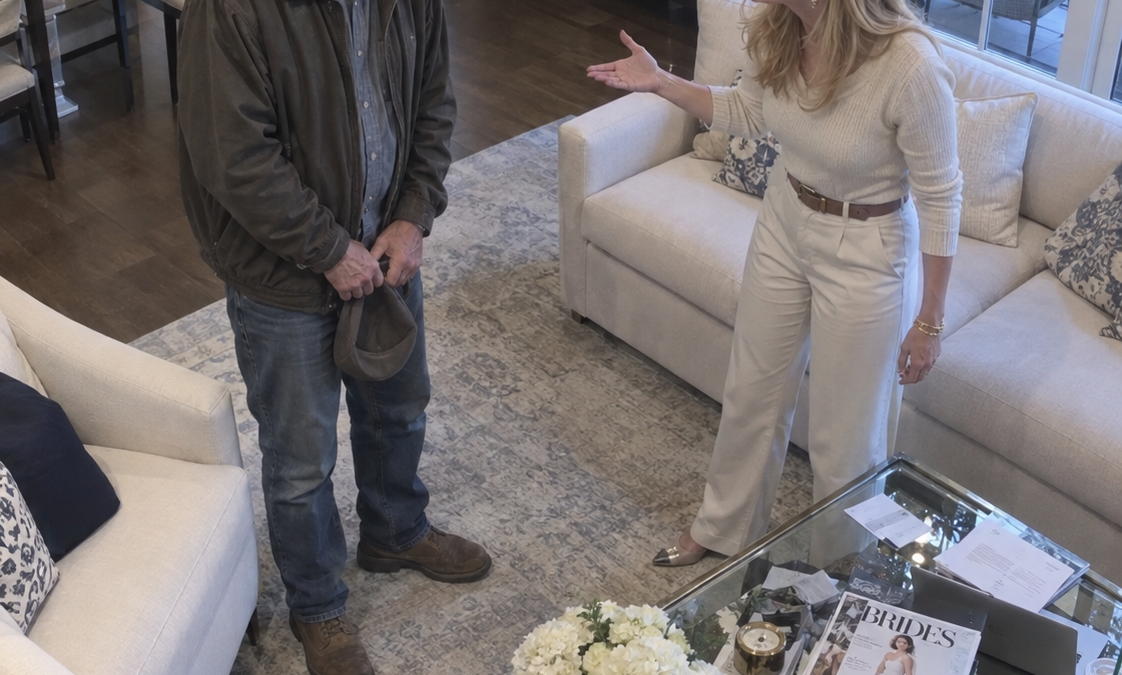
Leticia’s voice cut through the pristine air of her Bloomfield Hills townhouse like a blade through silk. I stood in her designer living room, my worn cap clutched between calloused hands, feeling like a stain against her perfect white furniture. Floor-to-ceiling windows overlooked manicured lawns that probably cost more to maintain than my monthly pension. Everything gleamed—the glass coffee table, the chrome fixtures, and the artwork that looked expensive enough to feed a family for months.
“Tia, sweetheart,” I began, but she was already spreading wedding magazines across that spotless table, each one as thick as a phone book and twice as glossy.
“Look at this venue, Dad.” She jabbed a perfectly manicured finger at a photograph of a grand mansion with towering columns. “The Townsend Hotel ballroom. This is where successful people have their weddings. This is where my friends are getting married.”
My throat went dry. I had brought my best hopes with me that evening. I’d dressed in my least faded button-down shirt and even polished my old work boots. During the drive over, I’d practiced what I might say about helping with her special day. I thought perhaps I could contribute a few thousand dollars, help set up tables, or do whatever else she needed.
But forty-five thousand dollars?
“The flowers alone are eight thousand,” she continued, flipping through the pages with aggressive enthusiasm. “The photographer is five thousand. The dress I want is thirty-five hundred, but it’s perfect. You should see it.”
I fumbled with my phone, trying to calculate figures that already felt impossible. My savings account held twelve thousand dollars. That was every penny I’d managed to scrape together after forty years working at the Ford plant. My Social Security checks barely covered the mortgage and groceries.
“I have twelve thousand in savings,” I said quietly. “That’s everything I can manage. But maybe, with a small loan—”
Leticia’s expression changed instantly. The excitement drained from her face, replaced by something cold and sharp.
“Twelve thousand? Seriously?”
She stood, her voice rising as she looked down at me.
“Other fathers take out loans, sell cars, remortgage houses. What are you willing to do for your own daughter?”
Her words struck like physical blows.
I’d raised this girl after Elena died. I’d worked double shifts so Leticia could have new clothes for school. I’d sacrificed everything I could so she could attend college and become the successful marketing professional she was today. Every aching muscle, every missed holiday, every exhausting shift had been worth it because I’d believed I was building a better life for her.
“Tia, I could try for a loan, but forty-five thousand…” I gestured helplessly around her expensive living room. “You’re doing well for yourself. Maybe we could find something more—”
“More what? Cheap?”
She threw a magazine onto the table so hard that the others scattered.
“Do you know what Marcus’s father is paying for his sister’s wedding? Sixty thousand dollars. And that’s considered modest in their family.”
Marcus was her fiancé, and his father owned what seemed like half the restaurants in downtown Detroit. Dennis Hargrave lived in a world where spending sixty thousand dollars on a celebration was apparently no more remarkable than buying groceries.
“I’m thirty-five years old, Dad. This is my one chance to have the wedding I deserve. My friends’ fathers would move heaven and earth for their daughters. But you?”
She looked me up and down, taking in my worn jacket, my nervous fidgeting, and the work boots I’d spent half an hour polishing.
“You’re just a failure.”
The word hung between us like smoke from a house fire.
“All my friends will have perfect weddings, and I have to settle for some backyard barbecue because my father can’t provide what every other parent manages. Do you know how embarrassing that is?”
I wanted to speak. I wanted to explain the Ford plant closing early, the medical bills from Elena’s cancer, and the countless sacrifices I’d made just to keep our lives together. I wanted to tell her that twelve thousand dollars represented years of doing without things most people took for granted.
But my voice wouldn’t come.
“You’ve had thirty-five years to figure out how to be successful,” she continued, “and this is what you have to show for it? Twelve thousand dollars?”
She walked toward the front door, her heels clicking against hardwood flooring that probably cost more than my old truck.
“Just leave, Dad. I can’t look at you right now.”
The door slammed with a sound that seemed to echo through my chest. I stood in her immaculate driveway for a moment, my keys heavy in my hand, staring at my beat-up Ford parked among her neighbors’ luxury vehicles. The evening air felt thick, pressing down on my shoulders like Elena’s disapproval from wherever she was watching.
By the time I reached home, the truck’s engine was ticking as it cooled, but I couldn’t bring myself to get out. Through the windshield, my house looked smaller than usual. It was a modest 1960s ranch, with paint that needed touching up and gutters that sagged slightly on the east side. Nothing about it resembled Leticia’s elegant showpiece.
When I finally went inside, the silence felt almost unbearable.
I switched on the lamp beside Elena’s old reading chair, the one I’d never moved from its place by the window. She used to sit there in the evenings, planning Leticia’s future, talking about college, careers, and the better life our daughter would someday have.
The photographs on the mantel showed happier times: Leticia’s high school graduation, her college commencement ceremony, and family dinners when Elena was still alive. In every picture, I looked proud.
Had I been fooling myself all these years?
“Elena, what would you do?” I asked the empty room. “Our girl deserves happiness. Maybe I really am a failure if I can’t give her what she wants.”
Forty years at the plant, and this was what I had to show for it: twelve thousand dollars in savings and a daughter who could look me straight in the face and call me a failure.
I walked to the kitchen table, where bills and bank statements sat in carefully organized piles. The mortgage payment book showed eighteen months remaining. I’d finally be debt-free at seventy. My pension statement confirmed what I already knew: eighteen hundred dollars a month, barely enough for necessities. Social Security added another eight hundred, but that money was already committed to living expenses.
Still, maybe there was a way.
I picked up my phone and dialed the bank’s twenty-four-hour loan line. The automated system walked me through several options before a human voice finally answered.
“This is Jennifer. How can I help you tonight?”
“Yes, I’m interested in a personal loan.” My voice sounded steadier than I felt. “Forty-five thousand dollars.”
“I can transfer you to someone who can discuss loan options. May I have your name and Social Security number?”
As I provided the information, I thought about how Elena would have reacted to such a financial risk. She had always been the careful one, the planner who checked every number twice. But she’d also believed that loving someone sometimes meant taking chances that frightened you.
The representative explained that I’d need to come into the bank for an appointment, bring documentation, and discuss the terms. Her words washed over me like background noise.
What mattered was the possibility.
Maybe I couldn’t be successful the way Dennis Hargrave was successful, but I could still be the father Leticia needed. She’d called me a failure, and perhaps she was right. But failures didn’t love their daughters enough to risk everything for their happiness.
At least, that was what I told myself.
I found Elena’s favorite tea in the kitchen cupboard. It was still there after three years, and the familiar scent brought back memories of her gentle voice.
“Dewey, that girl is our greatest achievement. Whatever it takes, we have to see her happy.”
Tomorrow, I’d go to the bank. Tonight, I’d figure out how to surprise Leticia with the full amount, plus my original savings. Maybe then she’d see that her old man wasn’t quite finished yet.
The alarm clock went off at six-thirty the following morning, but I’d already been awake for hours.
Chase Bank on Woodward Avenue looked more intimidating at ten o’clock in the morning than any bank had a right to look. Glass and steel reached toward the cloudy Detroit sky, while security cameras watched every movement. It was the kind of building where important financial decisions seemed to happen to important people.
I straightened my best button-down shirt and checked the folder containing my documents: pension statements, Social Security papers, and records showing forty years of steady employment.
Elena’s voice whispered through my memory.
Stand tall, Dewey. You’re as good as anyone.
The lobby bustled with activity. Young professionals in expensive suits handled transactions that probably involved more money than I’d ever see in my lifetime. I took my place in line behind a woman discussing investment portfolios with the casual confidence of someone who had never worried about paying an electric bill.
When my turn came, a loan officer around Leticia’s age gestured toward her desk. Her nameplate read Sandra Williams, Personal Banking.
“Mr. Gomez, please have a seat. I understand you’re interested in a personal loan.”
“Yes, ma’am. Forty-five thousand dollars. It’s for my daughter’s wedding.”
Sandra’s fingers moved across her keyboard as she pulled up my financial profile. Her expression remained neutral while numbers populated the screen.
“I see you’re retired from Ford Motor Company. Forty years of service. That’s impressive. Your pension and Social Security provide steady income.”
She paused, reviewing the details more carefully.
“However, given your age and income level, there are some limitations we need to discuss.”
My chest tightened.
“What kind of limitations?”
“The maximum we can approve is thirty-five thousand dollars. The interest rate would be eighteen percent annually, based on your age and fixed-income situation.”
She turned her monitor toward me, displaying calculations that made my head spin.
“Are you certain about this commitment, Mr. Gomez?”
Eighteen percent.
I tried to calculate what that would mean for my monthly payments, but the numbers felt overwhelming. I thought of Leticia’s face, the expensive wedding magazines, and the disappointment in her voice when she’d called me a failure.
“Yes,” I said. “I understand the risks. This is for my daughter.”
Sandra pulled out several forms, her voice becoming even more careful and professional.
“The total repayment amount will be approximately fifty-two thousand dollars over five years. Your monthly payment would be around eight hundred seventy dollars.”
Eight hundred seventy dollars.
More than half my pension.
I swallowed hard and looked at the paperwork.
“She’s worth every penny. Where do I sign?”
The process took an hour. There were credit checks, identity verification, and explanations of terms and conditions that sounded more like warnings than routine information. Other customers came and went, handling everyday transactions while I made a decision that would change my entire financial future.
Sandra explained how the loan would affect my budget with the kind of gentle concern reserved for older people making questionable financial decisions. But she processed the application anyway because, at least on paper, the numbers barely worked.
The approval came through faster than I expected.
She printed the documents, had me initial each page, and reviewed the payment schedule and late-fee policies. Under the fluorescent lights, everything felt clinical and serious, as though I were signing away more than money.
“The funds will be available immediately as a cashier’s check,” Sandra explained, sliding the document across her desk. “Mr. Gomez, I want to make absolutely sure you understand. This loan will significantly affect your monthly budget.”
I looked at the check.
Thirty-five thousand dollars.
Combined with the twelve thousand I’d saved, that gave me forty-seven thousand dollars, two thousand more than Leticia had demanded.
“Thank you,” I said, carefully tucking the check into my jacket pocket. “My daughter is going to be so surprised.”
Walking back to my truck, I felt something I hadn’t experienced in years: the pride of solving what had seemed like an impossible problem through sheer determination.
Maybe I was only a retired factory worker, but I could still provide for my girl.
The banking system had nearly stopped me with age restrictions and income limitations, but somehow love had found a way.
I drove toward Bloomfield Hills with the cashier’s check burning like hope inside my pocket, already imagining Leticia’s face when I handed her more money than she’d even asked for.
The envelope felt heavier than it should have when I rang Leticia’s doorbell two hours later. Through the glass panels, I could see her approaching in comfortable clothes—yoga pants and an oversized sweater that probably cost more than my monthly grocery budget.
“Dad?” She opened the door with mild surprise. “What are you doing here?”
I stepped inside, practically bouncing with nervous excitement.
Her living room looked different somehow. More wedding magazines were scattered across every available surface, and expensive-looking vendor cards lay arranged like playing cards on the coffee table. She had clearly continued planning since our argument.
“Tia, sweetheart.”
I pulled the envelope from my jacket with almost ceremonial care.
“I took out a loan. Here’s forty-seven thousand dollars for your dream wedding.”
Her reaction wasn’t what I’d imagined.
There was no gasp of joy, no grateful tears, and certainly no excited embrace. Instead, she stared at the envelope as though it were an unpleasant piece of homework she’d forgotten to complete.
“Oh, Dad.” Her voice carried a strange mixture of pity and annoyance. “That’s not needed anymore. Dennis is paying for the whole wedding. He said I deserve the best.”
The words hit me like a bucket of cold water.
I stood there with my arm extended, holding money that had cost me everything.
“But I took out a loan at eighteen percent.”
“Well, just return it, then.”
She waved her hand dismissively and turned back toward her magazines.
“Dennis is doing this out of love for Marcus. Finally, someone understands that I’m worth better than bargain shopping.”
Worth better.
The phrase echoed through my head as I watched her flip through pages of expensive venues and designer dresses, all paid for by someone else’s generosity.
“When did Dennis offer?” I finally managed to ask.
“Yesterday afternoon. He called right after—”
She stopped, apparently realizing what she was about to say.
“Right after we talked. He said no daughter-in-law of his would settle for anything less than perfection.”
Yesterday afternoon.
While I’d been sitting alone at home, blaming myself for being a failure and planning to sacrifice my financial future, Dennis Hargrave had swooped in with his effortless wealth and made me irrelevant.
“Look at this venue,” Leticia said, holding up another glossy photograph as her enthusiasm returned. “The Townsend Hotel grand ballroom. Dennis booked it for the whole weekend. And this photographer? She did the governor’s daughter’s wedding last year.”
I slowly drew the envelope back against my chest.
How foolish I’d been to believe forty-seven thousand dollars would seem impressive to people who lived in her world.
“The flowers alone will be twelve thousand,” she continued, barely noticing my silence. “Dennis said cost shouldn’t matter when it comes to making me happy. Isn’t that wonderful?”
Wonderful.
Yes, apparently it was wonderful that someone finally understood her worth. Someone who wasn’t a retired factory worker surviving on a pension.
“Dad, are you okay? You look pale.”
“Just tired,” I lied, slipping the envelope back into my jacket. “I should go return this to the bank.”
“Good idea. No point paying interest on money you don’t need.”
She was already looking through her magazines again, planning a wedding funded by someone else’s love.
I walked toward the front door, my footsteps echoing through the immaculate hallway. Behind me, I could hear her humming as she turned another page, completely absorbed in dreams that no longer required my sacrifice.
“Thanks for thinking of me, though,” she called as I reached for the handle. “It’s sweet that you tried.”
Sweet that I tried.
She said it the way an adult might praise a small child for offering to help with something important. It was as though my attempt to give her everything I had amounted to nothing more than a charming but meaningless gesture.
I sat in my truck for ten minutes before starting the engine, staring at her beautiful house through windows that reflected nothing but my own confused face.
Three miles from her neighborhood, I had to pull over.
My hands were shaking too badly to steer safely, and the envelope inside my jacket felt as though it were burning through the fabric.
Forty years.
I’d given her everything, and to her, I was just a backup plan, someone who could be replaced the moment a richer man stepped forward.
The parking lot of a closed auto-parts store seemed strangely appropriate. It was empty and forgotten, much like everything I’d believed I meant to my daughter.
I turned off the engine and let the silence settle around me.
“Elena, what would you say about our girl now?” I whispered. “Would you still call her our greatest achievement if you saw how easily she dismissed forty years of love?”
The drive back through Detroit felt longer than usual. Industrial landscapes rolled past my windows: vacant lots where factories had once stood, boarded-up houses, and the remains of neighborhoods built by people who had worked hard all their lives only to be left behind.
People like me.
But before going home, I had one more thing to do.
Sandra looked surprised when I walked back into Chase Bank thirty minutes before closing.
“Mr. Gomez, is everything all right?”
“I need to cancel the loan. Early repayment penalty, whatever it costs.”
Her professional smile flickered with concern.
“Are you sure? We only processed this today. The penalty for early repayment is five hundred dollars.”
“I’ll pay it. I don’t need this loan.”
The paperwork took another fifteen minutes.
Sandra kept glancing at me as though she wanted to ask what had happened, but banking professionals understood when to mind their own business. I signed the forms, watched her process the cancellation, and handed back the cashier’s check that had briefly represented my great sacrifice.
“Your checking account will be debited for the penalty fee by tomorrow,” she explained, sliding a receipt across her desk.
Five hundred dollars for the privilege of being humiliated.
Money well spent.
When I returned home, the silence felt different. It wasn’t heavy the way it had been the previous evening. Somehow, it felt clean.
I made a cup of Elena’s favorite tea and settled into her reading chair, studying the photographs on the mantel with new eyes.
There was Leticia’s high school graduation. In the picture, she was hugging me tightly, her face bright with excitement.
“Thank you for everything, Dad,” she’d whispered that day. “I couldn’t have done this without you.”
Then there was her college graduation.
“You made this possible. I’ll never forget what you sacrificed for me.”
I remembered those words as clearly as if she’d spoken them yesterday.
When had gratitude turned into entitlement? When had my love become something she merely managed rather than treasured?
Maybe it was time I stopped begging for crumbs of appreciation from my own daughter.
Her wedding invitation lay on the kitchen table, printed on elegant cream-colored cardstock with gold lettering.
The honor of your presence is requested.
Honor.
What an interesting choice of words.
I picked up my phone to call Leticia, then set it down again. Tomorrow would be soon enough. That evening, I needed to think about the kind of father I wanted to be and what sort of relationship we could possibly have left.
The tea was Elena’s favorite blend, chamomile and mint. She used to say it helped her think clearly.
I sipped it slowly, watching the evening light fade through windows that needed cleaning. The house needed repairs I couldn’t afford, and the thought of having almost given away my entire savings made me realize just how precarious my future could have become.
Yet somehow, for the first time in months, I felt as though I could breathe.
The following morning arrived with an unusual sense of clarity.
Instead of calling Leticia immediately, as I usually would, I made coffee and read the newspaper from beginning to end. When my phone rang at eight-thirty, I let it go to voicemail.
“Dad, call me back. We need to discuss your outfit for the engagement party.”
Engagement party?
That was the first I’d heard of it.
I called her back three hours later.
“Where have you been?” she demanded. “I’ve been trying to reach you.”
“Reading. What’s this about an engagement party?”
“Saturday night at Dennis’s club. Nothing too formal, but…”
Her voice shifted into that careful tone I’d started recognizing.
“Actually, maybe it’s better if you sit this one out. Dennis’s friends will be there, and you understand, they’re used to a certain level.”
Level.
As though I were a step on a staircase she was climbing past.
“What level is that, Tia?”
“Well, you know. Professional people. Business owners. They might not relate to…”
She let the sentence trail off, leaving me to fill in the blank.
A retired factory worker.
“Don’t be like that, Dad,” she added. “It’s just easier this way.”
Easier.
Everything about our relationship had become a question of what was easier for her.
Three weeks into April, the pattern was impossible to ignore. There were wedding-planning meetings I wasn’t invited to, vendor consultations conveniently scheduled when she assumed I would be busy, and an ever-growing list of events where my presence might make things awkward for people she considered more important.
By early May, our phone conversations had settled into a familiar routine. Leticia would call with demands disguised as requests. I’d offer whatever help I could, only to discover it wasn’t sophisticated enough. Then she’d find some polite way to exclude me from anything that actually mattered.
The invitation to her dress fitting came with conditions.
“You can come, but please don’t talk too much, and wear something nice. Actually, do you even have anything appropriate?”
I wore my best shirt and tie to the bridal salon in downtown Birmingham.
The place resembled a luxury jewelry store, all polished marble and sparkling crystal, with wedding gowns displayed like precious artifacts. Leticia’s friends were already there, three women in designer clothes discussing their own upcoming weddings. They mentioned photographers whose fees exceeded what I earned in an entire year, speaking about those sums as casually as I discussed grocery prices.
“Ladies, this is my father,” Leticia announced when I arrived.
There was an apologetic undertone in her voice.
“He’s very simple, but he means well.”
Simple.
The word lingered in the perfumed air like a judgment.
I spent most of the appointment standing in a corner while they discussed dress alterations, reception details, and the finer points of expensive wedding arrangements. I felt like a security guard in a museum, present but invisible, allowed to observe but never truly participate.
“Your father’s sweet,” one of her friends whispered to Leticia, loudly enough for me to hear. “It’s nice that you include him.”
Include him.
As though allowing me to attend my own daughter’s wedding preparations were an act of charity.
That evening, I drove to Woodlawn Cemetery for the first time since Elena’s birthday.
Her grave was simple, just a modest headstone bearing her name and dates, surrounded by daisies I’d planted three years earlier. Traffic from Eight Mile Road murmured in the distance, but otherwise the cemetery was quiet.
I’d always found peace there.
That night, however, something felt different. The visit no longer felt like another attempt to seek comfort. It felt like the beginning of a decision.
“Elena, I can’t live like this anymore,” I said, kneeling beside her headstone and pulling weeds from around the flowers. “She needs to know the truth.”
I brushed dirt from the edge of the stone.
“You remember what the social worker said? Someday she might want to know about her real parents.”
I paused, looking at the name carved into the granite.
“Well, maybe someday is now.”
I drove home slowly, stopping at a drugstore to buy writing supplies.
The letter took six attempts. I wrote each draft by hand, only to tear it apart and throw it away when the words didn’t feel right. I didn’t want to sound angry, and I didn’t want to sound desperate. I wanted to tell the truth in a way that could no longer be dismissed or misunderstood.
The final version was simple, direct, and honest.
When I sealed it in an envelope two days later, my hands were steady.
Leticia’s wedding invitation lay beside it on the kitchen table. As I reached to move it, something caught my eye and made my chest tighten.
The ceremony time printed on the invitation was different from the time Leticia had told me. There was a discrepancy of two hours.
I stared at the invitation until the numbers began to blur, slowly understanding exactly how little my daughter wanted me involved in her special day.
By the afternoon of the wedding, St. Paul Church looked magnificent beneath the May sunshine. Its Gothic stone towers rose toward a cloudless sky, and the grounds had been prepared for the arrival of hundreds of elegantly dressed guests.
I pulled into the parking lot at twelve fifty-five and checked my invitation one last time.
One o’clock ceremony.
I’d timed everything perfectly.
Organ music drifted through the heavy wooden doors as I approached the church steps. It seemed strange that the music was already so prominent, but I assumed the musicians were playing an extended prelude.
I straightened my tie, the same black one I’d worn to Elena’s funeral, and started up the steps.
“Excuse me, are you going in?”
A woman wearing an expensive navy-blue dress hurried past me.
“We’re so late.”
Late?
I checked my watch.
Twelve fifty-eight.
More guests streamed toward the entrance, their faces showing the mild panic of people who realized something had already started without them.
Through the thick oak doors, I could hear more than organ music. Voices rose and fell in the ritual call and response of a wedding ceremony already underway.
“Oh, you’re late too?”
An older gentleman in a charcoal suit paused beside me, wiping his forehead with a handkerchief.
“The ceremony started at noon. Traffic on the Lodge was terrible.”
My hand froze on the church door handle.
“Noon? Mine says one o’clock.”
He reached into his jacket and pulled out his invitation.
It was printed on the same cream cardstock as mine, with identical gold lettering and the same elegant design. But one crucial detail was different.
His invitation said twelve o’clock.
He read the time aloud, then looked at my card with genuine confusion.
“That’s strange. Are you family?”
The word stuck in my throat.
“I’m… I’m the bride’s father.”
His eyebrows rose, and his expression changed from curiosity to sympathy and embarrassment.
“Oh. I thought that distinguished gentleman with the gray hair was her father. The one who walked her down the aisle.”
The distinguished gentleman with gray hair.
Dennis Hargrave.
I compared the invitations again, holding them side by side. His clearly stated 12:00 p.m. Mine stated 1:00 p.m. Both were professionally printed. Both appeared authentic.
Except mine had been deliberately altered to ensure that I would miss the most important moment of my daughter’s life.
“Probably just a printing error,” the man offered kindly, though his eyes suggested he understood what had happened.
Through the stained-glass windows, I could see the ceremony in progress.
Leticia stood at the altar in white, radiant and beautiful, with Marcus beside her in his tuxedo. And there, in the front pew where I should have been sitting, was Dennis Hargrave, occupying the place of honor reserved for the father of the bride.
He had walked her down the aisle.
He had given her away.
He had taken the role I’d spent thirty-five years believing would one day be mine.
I stood on those stone steps, the invitation trembling in my hand, and understood that thirty-five years of fatherhood had been erased with a simple printing change.
I’d gone from the man who should have proudly escorted his daughter down the aisle to an unwanted afterthought, someone deliberately arranged to arrive too late to matter.
The other guests had already gone inside, leaving me alone beneath the afternoon sun with the full weight of what had happened.
It wasn’t simply that I’d been excluded from the ceremony.
I’d been deceived to guarantee my absence.
My daughter had made certain that I would not be there for the moment I’d spent a lifetime imagining.
I folded the invitation carefully and walked back toward my truck. But before I reached it, I noticed the small park across the street and stopped.
The sealed envelope inside my jacket pocket suddenly felt heavier.
What I’d once considered a last resort now seemed necessary.
Some truths could no longer wait for a convenient moment.
The park bench offered a clear view of St. Paul Church. From where I sat, I could see late-arriving guests hurrying through the entrance, hoping to catch whatever remained of the ceremony. Expensive cars continued pulling into the parking lot, their polished surfaces flashing in the sunlight.
I sat with the envelope resting between my hands and watched the celebration unfold across the street.
For the first time, I understood that I had never really belonged in Leticia’s new world. Not because I wasn’t wealthy, not because my hands were rough or my clothes were old, but because my daughter had decided that those things were reasons to be ashamed of me.
“Thirty-five years of lies is enough,” I whispered. “It’s time for her to learn the truth.”
I opened the original envelope I’d brought as her wedding gift, the same one that had briefly held the promise of forty-seven thousand dollars in desperate sacrifice. There was no money inside now, only the letter I’d written during those long, sleepless nights in May, when Elena’s memory had reminded me that some secrets could eventually become crueler than the truth.
The handwritten pages felt substantial in my hands.
Four sheets of careful cursive contained the story Leticia had never heard. They told of the phone call that had changed everything, of a sixteen-year-old girl who couldn’t keep her baby, and of Elena and me, unable to have children of our own, being offered a miracle we’d never expected.
My dear Tia, the letter began.
There are things you must know before you begin your new life. Things about who you really are, and what you’ve lost today by choosing strangers over the man who raised you as his own.
I read those opening words again, feeling the weight of every year behind them.
Then I folded the pages carefully, placed them back inside the wedding envelope along with the adoption documents, and sealed it with a finality that couldn’t be undone.
The money I’d originally planned to give her would remain mine. I was finished being treated as a financial resource whose only value could be measured by the size of a check.
This gift would cost her something far more valuable than money.
“Elena, forgive me,” I whispered, looking toward the church. “But she needs to understand what she really lost today.”
The church bells began ringing, announcing that the ceremony was ending. Through the stained-glass windows, I could see movement as the wedding party prepared for its triumphant exit.
Soon everyone would gather at the reception, where guests would offer congratulations, exchange gifts, and celebrate the newlyweds. I would join them like any other guest, carrying my envelope with patience and purpose.
I stood from the bench and brushed the dust from my suit.
It was the same dark suit I’d worn to Elena’s funeral, Leticia’s college graduation, and nearly every important event in our lives. Today, it would serve one final purpose.
I caught my reflection in my phone’s camera and hardly recognized the man staring back.
He wasn’t the desperate father who had spent months begging for scraps of appreciation. He was someone who had finally begun to understand his own worth, someone who would no longer allow himself to be diminished simply because his daughter had forgotten the value of his love.
The envelope felt strangely light as I crossed the street toward the church.
Behind me, the park bench sat empty, marking the place where Dewey Gomez, the man who had always accepted being a victim of his daughter’s disappointment, had finally decided to become someone else.
The church doors opened as I approached, and the first wedding guests began emerging into the sunshine, their faces glowing with celebration. I joined the stream of well-wishers and moved calmly toward the reception area.
It was time to give my daughter the wedding gift she truly deserved.
The reception hall hummed with conversation and celebration when I entered. Guests gathered around linen-covered tables, their champagne glasses catching the afternoon sunlight pouring through tall windows. The scent of expensive flowers filled the air, roses and lilies arranged in displays that probably cost more than my monthly pension.
Leticia stood in the receiving line, resplendent in her wedding gown, greeting guests with the radiant smile I remembered from her childhood.
Marcus stood beside her, handsome and confident in his tuxedo. Dennis hovered nearby like a proud patriarch, accepting congratulations for his extraordinary generosity and looking entirely comfortable in the role he’d taken.
I moved through the crowd with quiet purpose.
A few guests stepped aside respectfully when they realized I was approaching the bride. Perhaps they recognized me as her father, finally arriving to offer my blessing. Perhaps they simply saw an older man holding a wedding gift.
Either way, I kept walking.
“Dad?”
Leticia’s face showed genuine relief mixed with nervous energy.
“You came? I was worried when you weren’t in the church.”
She hesitated, then added quickly, “Sorry about the time confusion. Probably just a printing error.”
Her voice carried the practiced lightness she used whenever she needed to manage an embarrassing situation. She spoke as though my exclusion from walking her down the aisle had been an unfortunate administrative mistake rather than a carefully arranged humiliation.
“Of course,” I replied smoothly. “Just an error.”
I stepped forward and held out the envelope.
“Congratulations to you and Marcus.”
I presented it with both hands, my voice taking on an unusual gravity.
“Tia, I want you to have this gift. It’s very important.”
Something in my tone made her stop and look at me.
Really look at me.
For the first time in months, I had her full attention.
The envelope appeared ordinary enough, cream-colored and no different from the dozens of other wedding cards she’d already received. But my expression must have told her that its contents mattered.
“Thank you, Dad,” she said. “That’s so sweet of you.”
Sweet.
There was that word again.
The same dismissive word she’d used when I had nearly destroyed my financial future trying to give her the wedding she wanted.
“Dewey!”
Dennis approached with his arms extended, playing the part of the gracious host.
“Finally, we meet properly. Leticia has told me so much about you.”
I turned toward the man who had replaced me and offered my hand with steady composure.
“I’m sure she has. You’ve been very generous to our family.”
“Nothing’s too good for my new daughter,” Dennis replied with a broad smile.
He slipped an arm around Leticia’s shoulders with the casual confidence of someone who believed his place in her life was beyond question.
“She deserves the very best.”
The very best.
Which apparently didn’t include the man who had raised her.
“Dad, let me introduce you to some friends,” Leticia said, already turning toward another group of guests.
She took the envelope from me and handed it absently to Marcus.
“Put this with the other gifts, honey.”
I watched it disappear into Marcus’s hands before he placed it on the gift table among dozens of beautifully wrapped presents.
Somewhere in that pile of ribbons, cards, and expensive gifts sat the truth that would change everything.
“Such a beautiful ceremony,” a guest commented as she approached me. “You must be so proud.”
“Yes,” I replied, watching Leticia move through the reception, accepting congratulations and admiration from everyone around her. “Very proud of how everything turned out.”
The photographer moved through the crowd, capturing smiles, embraces, and champagne toasts. I wondered whether he’d photographed the moment I handed Leticia the envelope. Perhaps somewhere among the hundreds of wedding photographs, there would be a permanent record of the instant when justice had disguised itself as love.
I accepted a glass of champagne from a passing server and found a quiet place among the other guests.
Then I waited.
Leticia was thoroughly absorbed in her role as bride. She greeted relatives and friends, laughed at compliments, and basked in the attention she’d spent months preparing to receive.
The envelope remained unopened on the gift table, patient as a ticking clock.
Soon enough, she would understand what it meant to lose a father who had truly loved her. She would learn the difference between a man who had chosen to raise her and a stranger who had simply written a check.
I sipped my champagne and smiled politely at the guests around me, playing the part of the proud father one final time.
As the afternoon wore on, crystal glasses began chiming, calling everyone to attention.
Guests gathered in a loose semicircle around the newlyweds. The Renaissance Center’s floor-to-ceiling windows framed Detroit’s skyline in warm golden light, creating a magnificent backdrop for what Leticia clearly intended to be her moment of triumph.
“Everyone, please!”
She raised her champagne flute, her voice carrying across the reception hall with practiced confidence.
“I want to thank everyone who made this day possible.”
The photographer moved into position, ready to capture her radiant smile. Her designer wedding gown shimmered beneath the lights like spun silk, and the guests turned toward her with expectant, affectionate expressions.
“Especially Dennis,” Leticia continued, searching the crowd until her eyes found him.
She smiled more brightly.
“You’ve shown me what it means to have a father who truly cares. I’ve always wanted a different father, and finally that dream has come true.”
The words struck the room like a physical blow.
Conversations stopped in the middle of sentences. Champagne glasses froze halfway to people’s lips. The comfortable murmur of celebration collapsed into a silence so complete that I could hear the faint click of the photographer’s camera.
Every eye in the room seemed to turn toward me before quickly looking away.
Some guests stared down at their shoes. Others suddenly became interested in the floral arrangements. A few shifted uncomfortably, unsure whether to smile, applaud, or pretend they hadn’t heard what the bride had just said.
I stood perfectly still.
“Dennis, you’re the father I never had.”
Leticia stepped toward him with her arms outstretched.
“Thank you for showing me what real generosity looks like.”
Dennis embraced her with obvious pleasure, accepting the role she’d publicly given him.
His smile was almost triumphant as he held his new daughter, entirely comfortable with replacing a man who had devoted thirty-five years of his life to raising her.
“Leticia, you’re the daughter I never had,” he replied, loudly enough for everyone to hear.
The silence around us stretched unbearably.
A few guests attempted polite applause, but it died almost immediately as the cruelty of what they’d just witnessed became impossible to ignore.
Others whispered behind their hands, their expressions showing the kind of secondhand embarrassment that comes from watching someone humiliate another person so completely.
I remained where I was, my champagne glass steady in my hand.
I watched my daughter embrace the man she had chosen as her replacement father, dismissing three and a half decades of love as though those years had meant nothing.
I thought of every double shift, every school morning, every hospital visit, every scraped knee, every birthday, and every graduation. I remembered the little girl who used to reach for my hand when she was frightened, who had once believed I could fix anything.
And now, in a room filled with people she’d worked so hard to impress, she had announced that she’d always wished I were someone else.
No anger showed on my face. No tears, no visible hurt, and no trembling hands.
Only the calm understanding that I had finally stopped pretending things were different from what they were.
Across the room, the gift table stood about twenty feet away. My envelope was buried among expensive presents from Dennis’s wealthy friends.
Soon enough, Leticia would discover what her words had cost her.
I set my champagne glass on a nearby table and walked quietly toward the exit.
There was no confrontation, no raised voice, and no dramatic scene.
I was simply a man removing himself from a place where his presence was clearly unwanted.
Behind me, the reception gradually resumed its celebration. Guests returned to their conversations, pretending they hadn’t just witnessed a daughter publicly disown the man who had raised her.
The photographer continued capturing happy moments, though I heard that several guests asked him to delete the photographs taken during Leticia’s toast.
I pushed through the heavy doors and entered the parking garage, my footsteps echoing across the concrete.
The envelope containing the adoption papers remained on the gift table, ready to teach Leticia the difference between wishing for another father and discovering that the man she had always known wasn’t her biological father at all.
My truck started on the first try, reliable as ever.
I drove through Detroit’s late-afternoon traffic with an unfamiliar sense of peace, watching the neighborhoods I’d known for decades slide past my windows.
Thirty-five years of fatherhood were coming to an end, not with tears or anger, but with the quiet satisfaction of knowing I had finally done everything I could.
When I reached home, I moved through the rooms with a new sense of purpose, choosing the things that mattered for whatever life came next.
Elena’s wedding ring went into my shirt pocket.
Our photograph from Leticia’s college graduation, taken when gratitude still shone in her eyes, found a place in my travel bag.
My work tools, earned and maintained through decades of honest labor, deserved better than gathering dust while I spent the rest of my life begging for scraps of appreciation.
I began packing.
The phone started ringing at four-thirty.
“Dad, we’re opening gifts now.”
Leticia’s voice bubbled with the excitement of champagne and celebration.
“Some of these presents are incredible. Marcus’s aunt gave us crystal from Ireland.”
I let the call go to voicemail and continued folding my clothes.
The second call came ten minutes later.
“Dad, are you there? We found your envelope. What kind of gift needs to be opened privately?”
I said nothing.
I simply kept packing, moving carefully through the belongings that represented nearly seven decades of my life.
The third call arrived as I folded my best shirt, the one I’d worn to her wedding believing that somehow, against all odds, I might still be the man who walked her down the aisle.
Her voice had changed.
The excitement was gone, replaced by uncertainty.
“Dad, I read your letter. This isn’t funny. Call me back immediately.”
I stood beside my open travel bag and listened to the message without moving.
By the fourth call, panic had replaced confusion.
“Dad, this can’t be true. You’re lying. Call me right now!”
I unplugged the house phone and continued sorting through thirty-five years of memories, keeping only what I believed would serve the future.
The house already felt different, lighter somehow, as though removing the weight of obligation had allowed the walls themselves to stand a little straighter.
My cell phone buzzed constantly against the kitchen counter.
Twenty missed calls became thirty.
Then forty-four.
Through the voicemails, I listened to Leticia’s voice crack as she struggled to comprehend the truth she’d never suspected.
She had been adopted at three years old after her biological parents died in a car accident.
The adoption records contained the names of the people who had brought her into the world, details of the tragedy that had left her orphaned, and the legal documents recording the day Elena and I had become her parents.
The letter told her what those documents alone could never explain.
We had been strangers once, people who desperately wanted a child but had been unable to have one of our own. When social services called about a little girl who needed a family, we’d been offered a chance to give her the love and security she’d lost.
We had chosen her.
And from the moment we brought her home, we’d loved her as completely as any parents could love a child.
For thirty-five years, we’d kept the truth from her, not out of malice, but because we’d believed we were protecting her from pain she might not yet be able to understand.
Maybe we’d been wrong to wait so long. Maybe Elena and I should have listened more carefully when the social worker warned us that Leticia might someday want to know where she came from.
But none of that changed what we’d given her.
One voicemail began with her voice trembling.
“You’re not my real father? Then who am I? Where do I come from?”
I closed my eyes.
Real father.
Even in the middle of her crisis, she couldn’t seem to understand the difference between biology and choice, between conceiving a child and raising one with unconditional love.
She had learned that I wasn’t related to her by blood, yet the truth of everything I’d done for her seemed harder to grasp.
Another message followed.
“Dad, please. I didn’t mean what I said at the reception. Come back.”
But she had meant it.
That was the problem.
She had said exactly what she’d wanted to say, in front of everyone whose admiration mattered to her.
And she’d expected me to stand there and accept it.
I continued packing as the afternoon slipped toward evening.
Through the windows, the setting sun painted the sky orange and pink, Elena’s favorite colors. I could almost imagine her sitting in her old reading chair, watching me prepare to leave the house where we’d built our life together.
There were memories in every corner.
The kitchen table where Leticia had done her homework. The hallway where she’d practiced walking in her first pair of high heels. The living room where we’d celebrated birthdays and Christmas mornings, where Elena had once wrapped presents late into the night because she loved seeing the excitement on our daughter’s face.
There had been so much happiness in that little house.
And for years, I’d believed it was enough.
By the time I finished loading my truck, the missed-call count had reached fifty-one.
I stood in the driveway for a moment, taking one last look at the modest ranch house where Elena and I had raised someone else’s daughter as our own.
The adoption papers in that envelope told the whole story: the names of the birth parents who had died too young, the details of the accident that had orphaned their little girl, and the joy Elena and I had felt when social services called to say there was a child who needed love.
I remembered that phone call as though it had happened yesterday.
We had been offered something we’d almost stopped believing was possible.
A family.
We hadn’t asked whether Leticia would grow up rich or successful. We hadn’t wondered whether she’d one day be grateful for the sacrifices we’d make. We hadn’t calculated the cost of school clothes, medical appointments, college tuition, or the thousands of small expenses that came with raising a child.
We had simply wanted her to be safe.
We had wanted her to be loved.
And we’d spent the next thirty-five years giving her exactly that.
On her wedding day, Leticia had chosen money over loyalty and status over sacrifice.
Now she would have to live with the consequences of preferring the approval of wealthy strangers to the devotion of the man who had chosen to become her father when she had no one else.
I climbed into the truck and started the engine.
As I backed out of the driveway, I looked at the house one final time. I thought of Elena’s laughter, Leticia’s childhood, the years of hard work, and the countless times I’d told myself that everything was worth it as long as our little girl was happy.
Then I turned toward the highway.
Interstate 75 stretched south ahead of me like a ribbon of possibilities.
Detroit’s skyline gradually shrank in my rearview mirror until it disappeared altogether. The radio played Frank Sinatra’s “My Way,” while evening sunlight painted the Michigan farmland in warm shades of gold.
By the time I reached the Ohio border, Leticia had called fifty-three times.
I turned my phone off completely.
For the first time in longer than I could remember, I didn’t feel obligated to answer.
“Elena,” I said, glancing at her photograph on the dashboard, “I finally did what needed to be done.”
The truck hummed steadily beneath me as I continued south.
“Thirty-five years, I gave everything I had to a child who couldn’t appreciate it. Now it’s time to live for myself.”
The highway opened ahead, mile after mile, carrying me toward whatever came next.
Cincinnati, perhaps. Or Louisville. Somewhere warmer, where winter wouldn’t ache so deeply in my old bones. Somewhere nobody knew my story or expected me to justify the choices I’d made.
I imagined small towns where people still understood the value of honest work and kindness returned in equal measure. Places where a sixty-eight-year-old retired mechanic could begin again without apologizing for his limitations or begging anyone for respect.
My thermos held Elena’s favorite coffee blend, bitter but comforting.
A road atlas lay open on the passenger seat, marked with possible destinations I’d circled in red ink. Planning felt good after so many years of merely reacting to Leticia’s demands, her disappointments, and her carefully worded criticisms.
For the first time in decades, I was making decisions based on what I wanted.
Not what my daughter needed.
Not what someone else expected.
Just what might make the years ahead worth living.
“Leticia, you wanted a different father,” I said quietly to the darkening highway. “Now you have one. I hope Dennis is everything you dreamed he’d be.”
I knew the adoption revelation would destroy the perfect story she’d built around her wedding.
No more effortless bragging about the generous new father figure who had paid for everything. No more casual cruelty toward the man who’d changed her diapers, taught her to ride a bicycle, worked double shifts to pay for her education, and stood proudly in the audience when she graduated.
Instead, she’d have questions about identity and belonging that no amount of money could answer.
Who was she really?
Where had she come from?
What had she lost by choosing wealth over love?
Dennis Hargrave could buy her an expensive wedding, a designer gown, and a ballroom filled with flowers. He could pay for the finest photographers and spend more on a single afternoon than I’d managed to save in a lifetime.
But he couldn’t give her thirty-five years of genuine devotion.
He couldn’t recreate the bedtime stories I’d read when she was small or the nights I’d stayed awake beside her bed when she was sick.
He couldn’t replace the hours spent helping with homework, the pride I’d felt watching her receive her diplomas, or the thousands of ordinary moments that had made us a family.
Most importantly, he couldn’t replace the foundation of unconditional love she’d just discovered had been built through choice rather than biological obligation.
Elena and I hadn’t been required to love Leticia.
We’d chosen to.
We had taken a little girl who had lost everything and made her the center of our world.
And somewhere along the way, she’d come to believe that the measure of a father was not what he sacrificed but what he could afford to spend.
Highway signs counted down the miles toward places I’d never seriously considered calling home.
Toledo. Dayton. Cincinnati.
Names that had once meant nothing more than destinations on road signs now seemed to hold the promise of something new.
Somewhere ahead, I could simply be Dewey Gomez.
Not the disappointing father of an ungrateful daughter. Not the retired factory worker whose clothes embarrassed her. Not the old man who’d nearly taken out a ruinous loan because he was desperate to prove his love.
Just Dewey.
A man who had worked hard, loved deeply, lost his wife, raised a daughter, and finally reached a point where he understood that his life still belonged to him.
The truck’s headlights cut through the gathering darkness as I drove toward whatever tomorrow might bring.
Behind me, Detroit held almost nothing I needed anymore.
Ahead lay a kind of freedom I’d forgotten was possible.
My phone remained silent in my pocket. Fifty-three unanswered calls were becoming ancient history with every mile that passed beneath my tires.
Leticia had made her choice long before her wedding day.
The adoption letter had simply forced her to understand the full cost of choosing strangers over the man who had chosen to love her when the world left her orphaned and alone.
I was sixty-eight years old.
Maybe I had twenty good years left. Maybe more.
Whatever time remained, I wanted it to mean something beyond waiting for a phone call from a daughter who remembered me only when she needed something.
I wanted mornings when I could drink my coffee without wondering whether I’d disappointed someone. I wanted to work with my hands because I enjoyed it, not because another person demanded more money than I could earn.
I wanted to sit on a porch somewhere and remember Elena without feeling that I’d failed her.
And I wanted to believe there might still be people in the world who valued a man for his character rather than his bank account.
Those years belonged to me now.
The radio continued playing late-night classics as I drove deeper into my new beginning.
Elena’s photograph rested on the dashboard, catching the occasional glow of passing headlights. For a moment, the light settled across her smiling face so gently that it almost felt like a blessing.
I thought of the life we’d shared, the sacrifices we’d made, and the love we’d poured into a child we’d believed would always understand what family meant.
I didn’t regret loving Leticia.
I didn’t regret the years I’d spent raising her.
But I was finally ready to stop sacrificing the rest of my life for someone who had made it clear that my love was never going to be enough.
Behind me lay three decades of sacrifice.
Ahead stretched a road filled with possibility and peace.
I tightened my hands around the steering wheel, took a slow breath, and kept driving.
For the first time in thirty-five years, I wasn’t trying to prove that I was a good father.
I was simply allowing myself to be a man who deserved happiness, too.
And as the highway disappeared into the darkness ahead, I finally understood something Elena had tried to teach me all those years ago.
Love could require sacrifice, but it should never require surrendering every last piece of yourself.
I had given my daughter everything I could.
Now, at last, I was giving myself a chance to live.
Finally, I was free.
If you enjoyed this story, please like the video, subscribe to the channel, and share your thoughts in the comments. I’d love to know what you think about Dewey’s decision and whether you believe Leticia deserved to learn the truth the way she did. To hear the next story, click the box on the left. Thank you for watching.








