At dinner, my son said loudly: “you are a loser, but my mom’s new husband is not.” i didn’t say anything. a week later, he was without a car, money, and a roof over his head. and in the evening, my ex called me in a panic
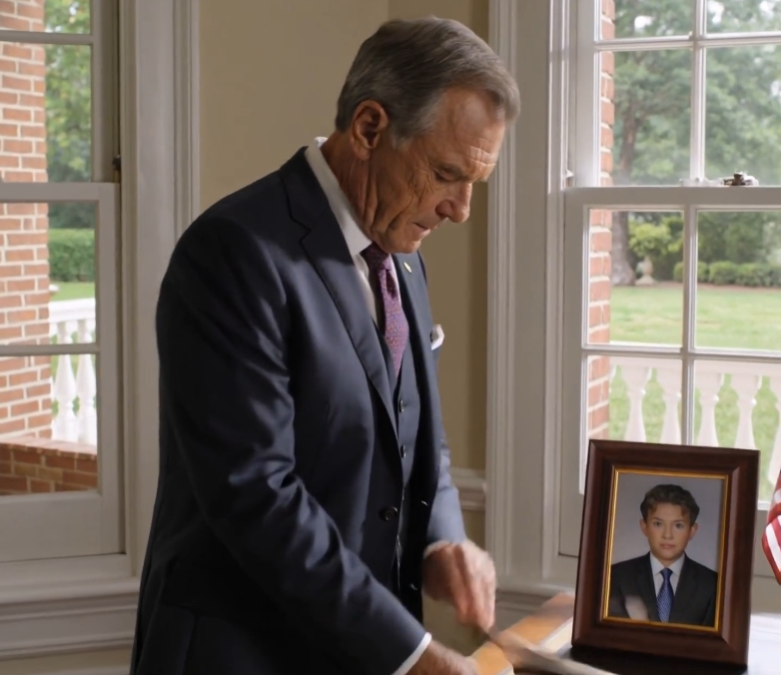
“The company is exploding, Richard,” Andre announced, his voice loud enough to make people at the next table glance over. “We just closed our second round of funding. Investors are lining up. Brittany’s right. It’s probably time I upgrade the 5 Series to a 7 Series.”
Brittany let out a little glassy laugh. “You deserve it, honey. You’ve worked so hard.”
I remained silent. I knew all about that second round of funding. I knew exactly where every single dollar had come from, and it certainly wasn’t from the line of investors Andre was imagining.
Brenda, my ex-wife, sat there with a tight smile plastered across her face. She had changed. Five years with Richard had worn away the practical woman I once knew, replacing her with a pale imitation who worried about whether her handbag was from last season. She looked at Richard with an adoring gaze, as if he had personally invented success.
“Our son is brilliant, isn’t he, Reggie?” she asked, turning toward me.
But it wasn’t really a question. It was a statement, a silent comparison. Our son is brilliant, unlike you.
I gave a slight nod and brought a piece of steak to my mouth. It was cooked perfectly, but I tasted nothing. All my senses were focused on the performance unfolding before me.
Richard, having allowed Andre his monologue, finally spoke in his deep, patronizing tone. “Ambition is everything, Andre. Your father, Reggie, is a good man, a fine engineer, but he lacks that spark. He builds things for other people, never an empire for himself. In this world, if you’re not building, you’re being buried.”
It was an insult wrapped in a backhanded compliment, a technique men like Richard had perfected. Andre nodded eagerly, like a devoted follower hearing a sermon.
“Exactly. I’ve tried to explain that to Dad so many times—the importance of taking risks, of building a personal brand. But he just talks about savings and safe investments. It’s so dated.”
Dated. That was the word he used that night. The last time, it had been cautious. Before that, traditional. The words changed, but the contempt never did.
Dinner continued with a steady stream of boasts. Andre talked about their penthouse apartment with its spectacular city views, their upcoming vacation to Bali, and the new watch Brittany had bought him. Every story was another stone thrown against my silence. I was the wall they bounced their achievements off just to hear the sound they made.
Finally, dessert was served—a seven-layer chocolate cake that probably cost more than my monthly utility bill—and Richard signaled the waiter.
“The check, please. On my account.”
He said it casually, but his eyes flickered toward me. Another performance of power.
That was the breaking point.
Andre, perhaps emboldened by the wine or simply intoxicated by his own arrogance, suddenly stood up. His chair scraped harshly against the floor, and several diners at nearby tables turned to look.
“See?” Andre said, his voice ringing through the opulent dining room. He gestured from Richard to me. “That’s the difference. Dad, you’re a loser. You’ve spent your whole life in that dusty old house, on those dirty construction sites.”
Then he turned toward Richard, his voice filled with admiration.
“Richard is not. He’s a winner.”
The air seemed to thicken around us. Brittany nodded smugly, as though her husband had just spoken some profound truth. Brenda stared down at her plate, her silence a final act of betrayal. Even the people at the next table quickly looked away, their feigned ignorance only deepening my public humiliation.
I looked directly into Andre’s eyes. For a split second, I saw a flicker of the little boy I’d taught to ride a bicycle, perhaps even a hint of regret. But it was buried too deeply beneath layers of designer clothes and entitlement.
I said nothing.
The rage I expected to feel never came. In its place was a cold, sharp clarity, a terrifying certainty. It was over. The final thread had snapped.
Slowly, I placed my white linen napkin on the table beside my untouched cake and stood. My chair made no noise. Every movement was deliberate and measured. I glanced at Brenda, then Richard, and finally Andre. Without another word, I turned and walked out of the restaurant.
The heavy wooden door closed behind me, cutting off the noise and leaving them to their hollow victory. I didn’t have to say anything. My actions were about to speak for me.
The air outside was cold, but it cleared my head. I didn’t hail a cab. I walked.
The wealthy Atlanta neighborhood gradually gave way to the quieter, more familiar streets of my own. My house stood beneath the shadow of an old oak tree, a solid two-story brick home I had designed and helped build myself thirty years earlier. It wasn’t flashy. It was durable, like me.
Inside, everything was in order. The smell of old mahogany and the paper from the books lining my shelves filled the air. This was my sanctuary, a world away from the phoniness I’d just left behind.
I didn’t turn on the television or pour myself a drink. Anger clouds judgment, and that night I needed to be colder than ice.
I went into my study. It was a small room, but everything in it had a purpose. Blueprints of bridges and buildings I’d helped create covered the walls. Real things. Things that lasted.
On one corner of my desk stood a silver-framed photograph of Andre at five years old, wearing an oversized plastic construction helmet and grinning from my shoulders at a job site. His eyes back then had been filled with pure pride and love.
Where did I lose that boy?
The question struck me not as a sharp pain but as a dull, weary ache that had been building for years. I had been too quiet. I had hoped my unconditional love would be enough.
I was wrong.
Unconditional love does not mean unconditional sacrifice. That night, the sacrificing ended.
I sat in my worn leather chair and switched on my old Dell desktop computer. It was slightly slow but reliable. The screen glowed, illuminating my impassive face.
I didn’t browse the internet or check my personal emails. My fingers moved with practiced ease, opening an encryption program I’d installed years before. I typed a long password, a string of letters, numbers, and symbols that no one else on Earth knew.
A simple interface appeared, displaying a list of folders. Their names meant nothing unless you understood what they really represented.
Covington Holdings LLC.
Oakwood Properties LLC.
AC Tech Solutions.
Seed Funding Agreement.
Project BMW 7 Series.
Lease Contract.
Richard Lawson Consulting.
Payment Schedule.
Each name was a thread, an invisible strand I had used to weave the world my son now inhabited, the world he believed he’d created himself.
It was like engineering a bridge. You couldn’t see the steel reinforcement buried deep inside the concrete, but without it, the entire structure would collapse.
That night, I was going to begin a structural integrity test.
I opened a secure email client. The recipient was already saved: Alicia Warren, a brilliant attorney and a friend I trusted with my life.
Alicia wasn’t just my lawyer. She was the architect of the financial fortress I’d quietly built. She knew every brick, every number.
The email I wrote was short. No pleasantries. No long explanations. She would understand.
The subject line read, “Initiate Sunset Protocol.”
The message was equally direct: “Alicia, we need to meet tomorrow morning. Your office, 8:00 a.m. Begin the dissolution process for all assets related to AC and associated parties. Priority one: the vehicle. Reggie.”
Sunset Protocol was the name we’d given it years earlier, a contingency plan for a day just like this. A day when the sun would set on an empire built on a lie.
I hit send. A soft whoosh echoed through the silent room.
It was done.
The first domino was now perched at the edge of the table. I felt no satisfaction, no glee. Only a strange, quiet calm, the calm of an engineer who knows his design is about to undergo its final, definitive test.
I had built Andre’s life. Now it was time to find out whether he could stand on his own once I took the scaffolding away.
Alicia Warren’s office occupied the forty-fifth floor of a glass tower overlooking Centennial Park. It was the kind of place that smelled of success, a mixture of expensive leather and freshly brewed coffee. But it had never intimidated me. In many ways, I had helped build it.
Alicia greeted me not with a handshake, but with a familiar, weary smile and a heavy ceramic mug.
“Morning, Reggie,” she said, her voice calm and steady. “I made the coffee the second I got your email. Black, no sugar. The way you drink it when you mean business.”
She was right.
For twenty years, Alicia had been more than my attorney. She was my strategist, my confidante, the keeper of my secrets. She was the only person on Earth who knew the full extent of the financial fortress I had built.
I took the mug, allowing its heat to warm my cold hands. “Thank you, Alicia.”
She gestured toward one of the plush leather chairs opposite her enormous oak desk. Instead of sitting behind it in her customary position of authority, she took the chair beside mine, making us equals.
“I’ll be honest, Reggie,” she said, her sharp eyes studying my face. “When I saw the subject line, Sunset Protocol, my heart sank. I always hoped it was a plan we’d never have to use. I hoped he’d figure it out.”
I took a slow sip of the dark, bitter coffee. It tasted like resolve. Then I looked through the window at the sprawling city below, a city I had helped shape with steel and concrete.
“So did I, Alicia,” I replied, my voice low and even. “But the sun has officially set. It’s time to turn off the lights.”
Alicia nodded slowly, her expression changing from concern to the focused, calculating look of a master chess player who could suddenly see the entire board.
“All right, Reggie. Walk me through it. I know the legal structures we built, but I need to hear the human part. What was the final straw?”
I stared into my coffee mug, seeing the reflection of the man my son had called a loser.
“He said the word, Alicia. He said it out loud, in public. He called me a loser and called Richard, Brenda’s new husband, a winner. And Brenda… Brenda just sat there and let him.”
I looked up from the mug and met her eyes.
“He believes it. He honestly believes the world he lives in is one he created. Today, we begin the process of showing him the truth about the foundations he’s standing on.”
Alicia leaned forward, all business now. “Then let’s review the assets. Let’s start with the heart of his so-called empire, AC Tech Solutions.”
I let out a long, slow breath.
“Andre always had ambition,” I began, my voice a low rumble. “I’ll give him that. He had big ideas, big dreams. He wanted to be the next Steve Jobs, the next tech mogul from Atlanta. But he had no discipline, no patience, and no money.”
I thought back to the day he’d first approached me.
“He came to me about six years ago with a half-baked proposal for a software company. It was full of buzzwords and projections that had no basis in reality. I knew that if I gave him the money directly, he’d burn through it in a year and learn nothing.”
I paused, remembering the hopeful, greedy look in his eyes that day. He hadn’t wanted a father’s guidance. He’d wanted a bank.
“So I decided to give him one, just not in the way he expected. I told him I couldn’t help because my money was tied up in safe, boring retirement funds. He was so disappointed that he called me old-fashioned.”
Alicia picked up the narrative, her legal mind filling in the details.
“And that’s when you came to me. We set up the silent trust, funded with two million dollars and based in Delaware for maximum anonymity. Then we created a shell venture capital firm, Innovate Future Group, based in California. We hired a front man, a retired professor, to be the face of it.”
She looked at me meaningfully.
“As far as Andre knows, he was discovered by a group of forward-thinking West Coast investors who recognized his genius.”
I nodded.
“He was so proud. He flew to San Francisco, pitched his idea, and walked out with a check. He never once questioned why it had been so easy. He thought it was his destiny. He never stopped to wonder who truly owned Innovate Future Group.”
“And the ownership structure of AC Tech Solutions reflects that,” Alicia continued, bringing up a file on her tablet. “Sixty percent of the shares are held by Innovate Future Group, which is wholly owned by your anonymous trust. Twenty percent are held by Andre as CEO, and the remaining twenty percent are reserved for future employees.”
She let the numbers settle between us.
“You have complete controlling interest, Reggie. He isn’t the owner of that company. He’s its highest-paid employee, and his board of directors is, for all intents and purposes, you.”
She swiped to the next document.
“Now we move to the symbols of his success.”
“The car,” I said, the words tasting like ash. “The BMW 7 Series. He had to have it. He said it was essential for projecting success to clients and investors.”
My boy, who had once been perfectly happy with a well-maintained Ford, had somehow convinced himself that the German engineering of his car was a reflection of his own worth.
“Another easy one,” Alicia said, swiping across her screen. “He tried to get a lease in his own name, but his personal credit history was too thin. So he had the company lease it for him. Or so he thinks.”
“Explain,” I said, though I already knew the answer.
“The lease isn’t with AC Tech Solutions. It’s with a separate entity we created for asset management, Covington Holdings LLC. We presented it to Andre as a third-party fleet management company that AC Tech Solutions would contract with for executive vehicles. He signed the paperwork without a second thought, happy to get his shiny new toy.”
She brought up the relevant contract.
“It explicitly states that the vehicle is provided for the use of a designated employee of AC Tech Solutions.”
“The moment he’s no longer an employee, the car is no longer his to use,” I finished.
The irony was corrosive. My holding company, a name he wouldn’t even recognize, had been providing the chariot for my entitled son. He was driving my car, paid for with my money, while calling me a failure.
Finally, we came to the biggest piece, the foundation of it all.
“The penthouse,” I said softly.
Alicia’s expression softened for a moment. “This one always felt different, Reggie.”
“It was,” I admitted. “This was about Brenda as much as it was about Andre. After she left me for Richard, she became obsessed with appearances. She filled Andre’s head with the idea that where you live defines who you are.”
I remembered the excitement in his voice when he first told me about the apartment.
“He and Brittany searched for months for the perfect place, something that would make their friends jealous. They found the penthouse at the Oakwood.”
The Oakwood was a beautiful prewar building that had recently been renovated, a perfect blend of classic architecture and modern luxury. Andre had fallen in love with it.
“He told me about it and complained that it was just out of his price range. He asked if I could help with the security deposit. I told him no,” I said to Alicia. “I told him it was reckless to live beyond his means.”
Alicia smiled faintly.
“And what you didn’t tell him was that you’d bought the entire building three years earlier.”
“It was an undervalued asset in a neighborhood that was about to gentrify,” I explained, the old engineer in me taking over. “The numbers made sense. I purchased it through another LLC, Oakwood Properties. It was a good, solid investment.”
“It was brilliant,” Alicia corrected. “When Andre applied for the penthouse, the landlord, a property management firm we hired, contacted him with a special offer. They said they were looking for a high-profile tenant, someone like a tech CEO, to add prestige to the building. They were willing to offer him an employee incentive lease.”
She studied the documents again.
“His rent is virtually zero. He only pays the building fees. He signed it and bragged for weeks that the landlord was so impressed with him that he’d gotten the deal of a lifetime.”
“He never read the fine print,” I said.
“No one ever does,” Alicia replied. “The fine print, of course, states that the incentive lease is contingent on his continued employment with AC Tech Solutions. It also says the property management firm can terminate the lease with seventy-two hours’ notice for any breach of contract. And the contract defines a breach as anything that might bring the building’s name into disrepute.”
There it was.
The entire house of cards lay spread across Alicia’s expensive oak desk. His company, his car, his home. Every pillar of his life was a carefully constructed illusion, designed, funded, and owned by the father he had called a loser.
He wasn’t a self-made man. He was a trust-fund baby who had never been told the truth.
“He has nothing, Alicia,” I said, feeling the weight of those words settle over the room. “Everything he thinks is his is actually mine.”
Alicia leaned back, her work done for the moment.
“So, Reggie, what’s your first move? According to the protocol, the first step is always symbolic.”
I thought about the arrogant look on my son’s face, about the way he’d gestured with the hand wearing a watch I’d paid for, while driving a car I owned to return home to an apartment I’d provided.
“The car,” I said without hesitation. “We start with the car. A winner shouldn’t have to ride the bus.”
Alicia made a note on her tablet, her fingers moving quickly across the screen.
“The car it is,” she confirmed, her voice now devoid of emotion except for professional focus. “A tow truck can be dispatched to his residence by nine o’clock Monday morning, citing the termination of the corporate lease agreement. It’ll be swift and entirely legal.”
Then she looked up at me.
“But what’s the larger strategy, Reggie? What’s the timeline? Do we hit him with everything at once—the car, the corporate accounts, the eviction notice? We can have it all done by noon on Monday if you want a full-scale blitz.”
I shook my head slowly, looking past her at the skyline I knew so well.
“No. That’s not the way. That’s destruction. That’s revenge. And this isn’t about revenge.”
“Then what is it about?” she asked gently.
I turned my gaze back to her, searching for the right words. I thought about my life’s work, about the physics of structures and the integrity of foundations.
“When you need to bring down a building, Alicia, you don’t just set off dynamite at the base. That’s messy and unpredictable. It sends shrapnel everywhere and hurts innocent people. It’s an act of pure destruction.”
I leaned forward, clasping my hands in front of me.
“A true engineer, a builder, does it differently. You perform a controlled demolition. You dismantle it piece by piece. You remove the fixtures first, the shiny things that catch the eye. Then you take out the windows, his view of the world. Then you carefully remove the floors, one by one, until all that’s left is the empty frame and the bare foundation.”
I paused, making sure she understood.
“I don’t want to destroy my son, Alicia. I want to dismantle the false life he’s living. I want him to stand on the cold, hard foundation of reality and finally understand what it takes to build something real for himself.”
Alicia listened without taking her eyes off mine. She understood. She wasn’t just my lawyer. She was the daughter of a carpenter. She knew the language of building and breaking.
“A controlled demolition,” she repeated, a new understanding dawning across her face. “It’s legally cleaner, too. Each action is a separate, justifiable corporate or property management decision. No single action can be construed as a coordinated personal attack. It’s airtight.”
“Exactly. So we start with the car on Monday, the symbol of his status. We give him a day to feel that loss, to feel the inconvenience. Then, on Tuesday, you freeze the corporate accounts. You cut off his power. Let him feel what it’s like when the well runs dry.”
I glanced at the documents on her desk.
“And Richard Lawson’s consulting payments along with it. Let the winner feel the pinch, too.”
I took a deep breath before giving her the final instruction.
“Then, on Wednesday, when he’s confused and powerless, you deliver the eviction notice. You take away his security one piece at a time. Let him feel each wall come down. Let him understand the value of each thing as he loses it.”
A heavy silence settled over the room.
This wasn’t a plan born of anger. It was a curriculum, a harsh and painful curriculum.
Alicia simply nodded.
“I understand the lesson plan, Reggie. I’ll prepare the necessary documents immediately.”
I stood, my old bones aching with a weariness that had nothing to do with age. I’d made the decision. Now I had to live with it.
“Thank you, Alicia.”
I walked toward the door, then paused with my hand on the handle.
“Let it begin,” I said, my voice barely above a whisper. “Let the lesson commence.”
The rest of that week was perhaps the quietest of my life. After leaving Alicia’s office, I felt a strange sense of peace settle over me. The decision had been made. The plan was in motion. There was nothing left to do but wait for the gears to turn.
I spent Friday and Saturday in my garden. My rosebushes needed pruning, a task I usually enjoyed but now approached with a new, solemn purpose. My hands, calloused from a lifetime of work, moved with practiced precision. Snip. A dead branch fell away. Snip. An overgrown shoot that had been stealing nutrients from the main stem dropped to the ground.
I thought about what I was doing. Gardening is an exercise in ruthless compassion. You can’t be sentimental about the parts of a plant that are weak or diseased. If you allow them to grow unchecked, they will eventually poison the entire bush. You have to cut them back, sometimes almost to the stalk, to give the plant a chance to grow stronger and healthier.
You do it not out of anger, but out of a desire for the plant to reach its full potential. My son was a magnificent plant that had become overgrown with the weeds of entitlement and arrogance. I was merely the gardener doing the hard, necessary work.
On Saturday afternoon, my phone buzzed on the small wooden bench beside me. I picked it up. Andre’s name glowed on the screen.
A week earlier, my heart would have leaped. I would have answered immediately, ready to absorb whatever casual disrespect he threw my way just to hear his voice. Now I simply looked at his name. I watched it flash again and again, a desperate digital cry. Then I placed the phone facedown on the bench and went back to my roses.
An hour later, it buzzed again. This time, it was Brenda. I didn’t even bother to look. Her silence at the dinner table had been her answer. My silence was now mine.
That evening, I sat in my worn leather armchair, a place where I had spent countless hours reading. I wasn’t reading a thriller or a mystery. I was rereading a biography of Ulysses S. Grant. Not the general, but the president, a man who was quiet, underestimated, and constantly battling the corruption of those around him.
I came across a passage about his steadfastness, his ability to absorb blows and criticism without flinching while remaining focused on the larger strategic goal. He wasn’t flashy. He was solid. He dealt not in opinions, but in outcomes.
I closed the book and thought about the word Andre had used.
Loser.
He saw my quiet life, my modest home, my old car, and he saw a man who had lost at the game of life. He never saw the foundations. He never understood that the loudest person in the room is often the weakest.
He, Brenda, and Richard were playing checkers, making loud, obvious moves. They never realized I was playing chess, quietly positioning my pieces for a checkmate that had been decided ten moves earlier.
Sunday was even quieter. I attended church, the same one I’d been going to for forty years. I listened to the sermon on accountability and consequences. I felt a sense of clarity, not guilt. I was holding my son accountable. I was delivering the consequences he had earned.
After the service, I spent the afternoon in my workshop, sanding down a piece of old oak. The rhythmic motion calmed my soul. My phone remained on the kitchen counter, silent now. They had likely given up, assuming I was sulking.
They had no idea.
As dusk fell, I sat on my back porch, watching the sun dip below the horizon and paint the Atlanta sky in shades of orange and purple. The air grew cool. The weekend was over. It was my final quiet weekend before the storm.
I thought about the name Alicia and I had given the plan: Sunset Protocol. It was fitting. The sun was setting on my son’s life as he knew it, and tomorrow morning, with the dawn, his harsh but necessary education would begin.
I felt no joy, only a profound, heavy certainty.
The lesson was coming.
I had spent my weekend in quiet contemplation. My son, as I would later piece together from a series of frantic voicemails and tearful confessions, had spent his in a cacophony of self-congratulation.
While I was pruning my roses, he was on the phone with one of his friends, laughing as he drove his BMW down the highway, the city skyline blurring past his window.
“Dude, you should have seen his face,” Andre had said, his voice booming through the car’s Bluetooth speakers. “I finally just told him the truth. Called him a loser right to his face. Yeah, he just got up and walked out. Total drama queen. What’s he going to do? You know he’ll get over it. He always does. He’ll call in a week acting like nothing happened.”
He saw my lifetime of patience not as a gift, but as a weakness. He saw my silence not as a warning, but as surrender.
That evening, while I was reading about President Grant, Andre and Brittany were in their penthouse, scrolling through a luxury watch website on Brittany’s tablet. She pointed to a gold watch with a diamond bezel.
“Should I get it, babe? It’s a little extravagant.”
Andre, I was told, had scoffed.
“Of course you should. We deserve it. Especially after the way my dad acted at dinner. Honestly, I think we need to treat ourselves after that embarrassment.”
In his mind, he was the victim. My quiet departure had been an act of aggression against him, a social faux pas that required retail therapy to overcome. He had no capacity to recognize his own cruelty. His world was a mirror, and all it showed was his own reflection.
He had even called Richard, seeking praise for his brave performance. Richard, ever the opportunist, had supplied it in abundance.
“You did the right thing, Andre,” Richard had told him, his voice smooth as oil. “Sometimes you have to set firm boundaries with people from a different generation, people who don’t understand the mindset of a winner.”
“Thanks, Richard,” Andre had replied, his voice filled with a warmth he hadn’t used with me in years. “It’s just good to finally have a real role model to look up to.”
A real role model. A man whose entire consulting business consisted of a single inflated contract with a company I owned.
The irony was a bitter pill.
Andre had finished that weekend gazing through the enormous windows of his apartment, the city lights spread beneath him like a carpet of jewels. He was on top of the world he believed he had built.
He likely thought of me, the old man in his dusty house, and felt a pang of what he probably mistook for pity.
He’ll come around. He has to. He’s got nothing else.
But he was wrong.
I did have something else.
I had a plan, and the time for waiting was over.
By ten o’clock Sunday night, my house was dark except for the single lamp casting a warm glow across the oak desk in my study. The quiet was different now. It was no longer the calm that follows a decision, but the tense, electric silence before a storm.
The fuse had been lit on Friday, and it had burned slowly and silently all weekend. Now it was nearing the powder keg.
I wasn’t pacing. I was sitting in my leather armchair, the biography of Grant resting in my lap, my eyes closed. I was listening and waiting.
At precisely 10:01 p.m., a soft chime came from my old Dell computer. An email notification.
I didn’t rush. I took a deep breath, carefully placed my book on the side table, and rose from my chair. I walked to the desk, the wooden floorboards creaking softly beneath my weight.
The screen was bright in the dark room. A single new message sat in my inbox. The sender was Alicia Warren, and the subject line was simply, “Update.”
I moved the mouse and opened it. The body of the email was stark white, containing only six words standing alone in the center of the screen like a military command.
I leaned closer, the reflection of the glowing text visible in my glasses.
“The first domino has been pushed.”
Monday morning dawned bright, with obnoxious sunlight streaming through the floor-to-ceiling windows of the penthouse and glinting off the polished chrome of the espresso machine.
For Andre, the world felt perfect. The weekend had been a triumph. He had finally put his father in his place, asserting his own status as the family’s new alpha. He felt powerful, a feeling amplified by the expensive Italian suit he was putting on and the sleek black BMW 7 Series waiting in his reserved parking space in the garage below.
Brittany was humming as she applied her makeup, a small, satisfied smile on her face.
“Are you sure you don’t want me to drive you today, honey?” she asked, looking at his reflection in the mirror. “We could take the Benz. I have that spa appointment at eleven.”
Andre chuckled as he adjusted his tie.
“Nah, I’ve got a lunch meeting with some new potential clients. I need to roll up in the Beamer. You know how it is. Image is everything.”
He leaned in and kissed her on the cheek, the scent of her expensive perfume filling his senses.
“Besides,” he added, lowering his voice to a conspiratorial whisper, “I think we’ve earned the right to show off a little. We’re winners, remember?”
She giggled and swatted him playfully.
“Go on, get out of here, you big shot.”
Feeling on top of the world, Andre grabbed his leather briefcase and headed toward the private elevator that led directly to the residents’ garage.
The ride down was smooth and silent. The doors opened onto a pristine, well-lit space, and there it was: his car.
It wasn’t just a car. It was a statement. Long, low, and gleaming beneath the fluorescent lights, it was the physical embodiment of his success.
He clicked the key fob, and the car chirped, its distinctive headlights flashing in welcome.
But as he approached, he noticed something was wrong.
A large, grimy-looking tow truck was parked directly behind his BMW. Its yellow hazard lights flashed rhythmically, casting an ugly, pulsating glow across the polished concrete floor. A man in greasy blue overalls was kneeling beside the rear tire.
Andre’s good mood evaporated instantly, replaced by a surge of irritation.
“Hey!” he barked, his voice echoing through the garage. “What the hell do you think you’re doing? This is a private garage. You can’t park here.”
The man in overalls stood slowly, wiping his hands on a rag. He was a big man with a weathered face and a completely neutral expression. He didn’t look impressed. He didn’t look intimidated. He just looked tired.
“You Andre Covington?” he asked, his voice a gravelly monotone.
“I am,” Andre snapped. “And you’re about to get that rust bucket towed if you don’t move it in the next ten seconds. You’re blocking my car.”
The man didn’t move. Instead, he simply gestured with his thumb toward the back of the BMW.
“No, sir. I’m not blocking your car. I’m here to repossess it.”
The words didn’t register at first. They were so absurd, so out of place in Andre’s perfect world, that his brain refused to process them.
He actually laughed, a short, incredulous bark.
“Repossess it? You must be joking. This car is paid for. It’s a corporate lease. You’ve obviously got the wrong car, pal.”
The driver sighed as though he’d already had this exact conversation a thousand times. He pulled a clipboard from the cab of his truck and held it out.
“Work order says black BMW 7 Series, license plate 8 Kilo Victor 391, belonging to a Mr. Andre Covington. That you?”
Andre’s face flushed with anger. This was humiliating.
“Yes, that’s me. But there’s been a mistake. A stupid mistake. Who sent you? AC Tech Solutions? Because I own that company, and I can assure you we haven’t missed a payment.”
The driver pointed a greasy finger toward a line on the work order.
“The order isn’t from AC Tech, sir. It’s from the titleholder, a company called Covington Holdings LLC.”
Andre stared at the name.
Covington Holdings. It meant nothing to him. A surge of relief washed over him, followed immediately by renewed fury.
“See? I told you. I’ve never heard of that company. It’s a clerical error. Now get your truck out of here before I call security and have you arrested for trespassing.”
The driver shook his head, a flicker of something resembling pity appearing in his eyes.
“Sir, I’ve got a legally executed repossession order. If you have a problem with it, you need to call the leasing company.”
He turned his back on Andre and began attaching a heavy chain to the undercarriage of the BMW. The sound of metal clanking against metal struck Andre like a physical blow.
“Hey! Get your hands off my car!” he shouted, his voice cracking with rage.
He pulled out his phone, his hands trembling so badly that he could barely unlock it. He found the number for the leasing company and jabbed the screen.
Brittany was going to be late for her spa day. He was going to be late for his meeting. This was a disaster.
After an excruciatingly long series of automated menus, a calm female voice finally answered.
“Premier Executive Leasing, this is Sarah speaking. How can I help you?”
“My name is Andre Covington,” he said through gritted teeth. “You’ve made a massive mistake. You sent a tow truck to repossess my car, a BMW 7 Series. I need you to call it off right now.”
There was a moment of silence, filled only by the sound of rapid typing.
“I see your account, Mr. Covington,” Sarah said, her voice perfectly polite and completely unhelpful. “Yes, the BMW 7 Series. It looks like the repossession order was issued this morning at 8:05 a.m.”
“I know it was issued! I’m telling you it’s a mistake!”
Andre was practically shouting into the phone. The tow truck driver was now lowering the lift, preparing to hoist the front wheels of his beautiful car off the ground.
“I’m not seeing any mistake in the system, sir,” Sarah continued, her tone unchanged. “The lease agreement was terminated by the owner of the vehicle, Covington Holdings LLC.”
“I’ve never heard of Covington Holdings!” he yelled. “The lease is through my company, AC Tech Solutions.”
“I can see that AC Tech Solutions was the authorized user, sir,” she said calmly. “But Covington Holdings LLC is the legal owner and lessor of the vehicle. As the owner, they have the right to terminate the lease at any time, per Section Four, Paragraph B of your agreement. We are simply the administrators.”
His mind reeled. None of it made sense. A wave of dizziness swept over him.
“This is insane. Put me through to someone at Covington Holdings. Then I’ll clear this up.”
“I’m sorry, sir,” Sarah replied.
For the first time, he detected a note of finality in her voice.
“We don’t have a public contact number for that entity. All communications are handled through their legal representatives. We’ve fulfilled our legal obligation by acting on their request. This matter is now closed on our end.”
“Closed? It’s not closed!”
The front wheels of the BMW were now off the ground. The car, his symbol of power and success, hung there helplessly, almost pathetically.
“Is there anything else I can help you with today, Mr. Covington?” Sarah asked, as casually as though she were asking if he wanted fries with his order.
Andre was speechless. The injustice of it all seemed to choke him.
He heard a click, and the line went dead.
She had hung up on him.
He looked up from his phone, his face a mask of disbelief and impotent rage. The tow truck driver was already in his cab, starting the engine. The powerful diesel roared to life, drowning out every other sound.
Andre stood there in his thousand-dollar suit and shiny Italian shoes, utterly powerless.
He watched as the truck slowly and carefully pulled his car out of its parking space. He watched it being dragged backward up the ramp, its rear wheels scraping meekly against the concrete. He watched as the symbol of his entire identity was hauled out of his private garage and into the harsh light of day, disappearing from his life forever.
The yellow lights flashed one last time before the truck turned the corner.
Then there was only silence.
Andre was left alone in the garage with an empty parking space and the faint smell of diesel fumes.
The first pillar of his world had just been violently ripped away.
If the loss of his car on Monday was the first tremor, the main earthquake was scheduled for Tuesday morning.
The second domino wasn’t about status. It was about power. It was about money.
I spent my morning peacefully reading a book on my porch, but I knew that across town, my son’s world was being systematically dismantled, beginning with the most public of humiliations.
Andre arrived at the gleaming glass tower that housed his office nearly an hour late. He was flustered and furious, having been forced to take a hundred-dollar Uber ride across town during rush hour. He was determined to project an air of calm control, to show his employees that nothing was wrong.
His first stop was the artisan coffee shop in the lobby of his building, a place where he was a well-known regular. He always made a performance of buying coffee and pastries for his executive team, like a king dispensing favors to his court.
He strode to the counter, cutting in front of the line with a dismissive wave.
“Morning, Chloe,” he said to the young barista. “The usual for the team. Six large lattes, four cappuccinos, and a box of your best pastries. Put it on the AC Tech account.”
He handed her the sleek black corporate credit card. It was a card with no spending limit, a symbol of his absolute authority.
The barista smiled and ran it. A moment later, her smile faltered. An awkward beep echoed from the machine.
“I’m sorry, Mr. Covington,” she said, her voice a little too loud in the suddenly quiet café. “It’s been declined.”
Andre stared at her as though she’d spoken in a foreign language.
“What? That’s impossible. Run it again. Your machine is probably acting up.”
She ran it again.
The same beep. The same apologetic expression.
“Declined,” she repeated.
People in line behind him were beginning to stare, their morning routines interrupted by this small, delicious drama. He could feel their eyes on him.
He, Andre Covington, the tech wunderkind, couldn’t buy a round of coffee.
His face turned a deep, blotchy red.
“This is ridiculous,” he hissed, snatching the card back. “There must be an issue with the bank’s network.”
He fumbled for his personal wallet in a desperate attempt to save face. Pulling out a handful of cash, everything he had on him, he slammed it onto the counter.
“Here. Keep the change.”
He turned on his heel and stormed out of the coffee shop, leaving the box of pastries and the tray of unmade coffees behind. He didn’t want them anymore. The gesture of generosity had become a badge of shame.
He rode the elevator to his office on the thirtieth floor, his jaw clenched so tightly it ached.
His office was a corner suite with glass walls, a fishbowl for the whole company to see their leader at work. He sank heavily into his ergonomic chair, his anger giving way to a cold knot of anxiety in his stomach.
He needed to fix this immediately.
He opened his laptop and navigated to the company’s internal financial portal. This was his dashboard, his control panel. From there, he could see everything: cash flow, payroll, expenditures.
He typed in his username and password.
A red line of text appeared on the screen.
“Access denied.”
He blinked. He must have mistyped something. He entered his credentials again, slowly this time, making sure every keystroke was perfect.
“Access denied.”
Cold sweat broke out across his forehead.
This wasn’t a glitch. This was a lockout.
He, the CEO, the founder, was being barred from his own company’s finances. He frantically clicked the “Forgot Password” link, but the system returned another error.
“User profile not found. Please contact your system administrator.”
He was the system administrator.
Panic, cold and sharp, began rising in his chest. His breathing grew shallow. He was trapped on the outside of his own creation.
Just then, a notification appeared in the corner of his screen. A new email.
The sender was an address he didn’t recognize: director\@actechsolutions.
The subject line read, “Urgent Notice of Financial Restructuring.”
With a trembling hand, he clicked it open.
The email was a masterpiece of cold corporate jargon. It was impersonal, emotionless, and utterly terrifying.
“To whom it may concern,” it began. “Please be advised that as of 9:00 a.m. Eastern Standard Time, the majority shareholders of AC Tech Solutions have initiated a comprehensive corporate restructuring.
“Under this directive, all executive-level access to financial accounts, corporate credit lines, and expenditure authorizations has been temporarily suspended pending a full audit and review.
“All nonessential spending, including vendor contracts and consulting fees, is hereby frozen effective immediately. Further instructions will be provided in due course.”
It was signed simply, “Office of the Directorate, Majority Shareholders.”
The phrase echoed through his head.
Majority shareholders.
Who were they?
He had always thought of the California venture capital firm as silent partners, happy to let him run the show as long as the numbers looked good.
He had been wrong.
They were not silent, and they had just stripped him of all his power without so much as a phone call.
As he sat staring at the screen, his world shrinking to the four glass walls of his office, his phone rang.
Richard’s name appeared on the display.
For a second, Andre considered ignoring it, but his habit of seeking his mentor’s approval was too deeply ingrained.
He answered, trying to keep his voice steady.
“Richard. Hey.”
The voice on the other end wasn’t the smooth, confident purr of the winner he knew. It was high-pitched, strained, and filled with raw panic.
“Andre, what in God’s name is going on? My monthly consulting fee—it didn’t deposit. It’s never late. I have payments due, Andre. The mortgage on the lake house, the payment on Brenda’s new car. It’s all automated.”
Andre felt as though the floor had dropped out from beneath him.
The consulting fees. The email.
It was all connected.
“I… I don’t know, Richard,” he stammered, the lie tasting like acid. “There seem to be some technical issues with the banking system here.”
“Technical issues?” Richard shrieked, his voice cracking. “My entire business, my only business, is my contract with you! You told me this was a long-term, secure partnership. You told me you were in control. You need to fix this, Andre. You need to fix this right now!”
The man he had called a winner, the role model he had praised just days earlier, sounded like a terrified child.
Andre, who was accustomed to receiving guidance from this man, was now being screamed at for answers he didn’t have.
“I’m trying, Richard,” he said weakly. “I’m looking into it.”
“Looking into it isn’t good enough!” Richard yelled. “My reputation is on the line! Brenda is asking me questions. What am I supposed to tell her? That her brilliant son can’t even manage his own company’s payroll?”
The call ended with Richard hanging up in a rage, leaving Andre surrounded by a ringing silence.
He was a king who had just discovered that his castle was made of sand. He had no status, no power, and the one man he looked up to had just been exposed as a fragile dependent.
He leaned forward and buried his head in his hands.
The gleaming city of Atlanta remained visible through his glass walls, but it suddenly felt a million miles away.
The second pillar hadn’t merely been removed.
It had been pulverized, and he was standing in the dust.
Wednesday was the day the final foundation would be pulled out from under him.
While I spent the day quietly sketching a new design for a community library, the third and final act of my son’s education was being set in motion.
The first blow had taken his status. The second had taken his power. This one was designed to take his sanctuary.
Andre came home that evening a broken man. He had spent the day in his glass-walled office, a prisoner on display. He’d been forced to cancel meetings, dodge calls from vendors, and endure the pitying, curious stares of his own employees.
He had no car, no money, and no answers.
The penthouse, once his triumphant fortress in the sky, was the only thing he had left. He walked through the door hoping to find comfort, some refuge from the nightmare his life had become.
Instead, he found Brittany.
She was not the bubbly, supportive wife he had left that morning. She was a storm cloud of anxiety and terror, pacing the vast living room like a caged animal. Her face was pale, her eyes red-rimmed from crying.
She had clearly been on the phone all day, hearing the whispers and rumors. The news of his public humiliation at the coffee shop had spread like wildfire through their social circle. Her spa day had become a parade of concerned friends asking questions she couldn’t answer.
“Andre, what is happening?” she cried the moment he walked in, her voice shrill. “My credit card was declined at the salon. My personal card, the one you pay for. They said the account was frozen. I had to use my emergency debit card. I’ve never been so embarrassed in my entire life!”
Andre didn’t have the energy to fight.
He dropped his briefcase by the door, the sound echoing through the cavernous, silent apartment.
“I don’t know, Brittany,” he said, his voice hollow. “There’s some kind of hostile takeover happening. The investors, they’ve locked me out of everything. I’m trying to fix it.”
“Trying to fix it?” she shrieked, her voice rising toward hysteria. “Our friends are calling me, Andre. They’re asking what’s wrong! Jessica heard from someone at your office that you’re being forced out. Is that true? Are you losing your own company?”
Before he could answer, there was a sharp, authoritative knock at the door.
It wasn’t the gentle tap of a neighbor or the familiar buzz of a delivery. It was a sound that demanded an answer.
Brittany froze, her eyes widening with fear.
Andre, his heart pounding, walked to the door and looked through the peephole. A man stood outside in a crisp gray suit. Andre didn’t recognize him. He looked like a lawyer or a banker.
He looked like bad news.
Reluctantly, Andre opened the door.
“Good evening,” the man said, his voice polite but devoid of warmth. “Are you Andre Covington?”
“Yes,” Andre replied, his own voice sounding weak in his ears. “Who are you?”
“My name is Mr. Harrison. I’m the new senior property manager for the Oakwood.”
The man offered no handshake. He held a large manila envelope in one hand.
“The new property manager?” Andre asked, confused. “What happened to Frank?”
“Mr. Albright is no longer with the property management firm,” Harrison said smoothly. “There has been a change in ownership. May I come in for a moment?”
He didn’t wait for an answer. He stepped past Andre into the marble entryway as though he owned the place.
And in a way, he did.
Brittany stood near the window, wrapping her arms around herself as she watched the scene unfold with a look of pure dread.
Mr. Harrison’s eyes swept across the apartment, taking in the designer furniture, the expensive artwork, and the sweeping views of the city. He seemed completely unimpressed.
“This is a lovely apartment, Mr. Covington,” he said, his tone suggesting the exact opposite. “A premium unit. Which is why it’s so unfortunate that we have to discuss the matter of your tenancy.”
He opened the manila envelope and withdrew a sheaf of papers.
“I’m here to serve you with this,” he said, holding out the document. “It’s a formal notice of lease termination.”
Andre stared at the paper, then at the man’s impassive face.
He felt a strange floating sensation, as though this were happening to someone else.
“Lease termination? What are you talking about? Our lease is paid up for the year. We have a special arrangement.”
“Ah, yes. The employee incentive lease,” Mr. Harrison said, a slight, condescending smile touching his lips. “I have a copy of it right here. A very generous arrangement indeed. Zero dollars in monthly rent for a high-value executive tenant.”
He opened the agreement.
“However, the lease is quite specific. I’ll direct you to Section Seven, Clause C.”
He tapped a highlighted paragraph on the document.
“The lease is explicitly contingent upon your continued employment with an affiliated company, in this case, AC Tech Solutions. It has come to our attention, as the property owners, that you are no longer employed there in a capacity that qualifies you for this incentive program.”
“I haven’t been fired!” Andre insisted, his voice rising with desperation. “My access has been suspended. It’s a temporary situation.”
“Our legal department disagrees,” Mr. Harrison said, his voice like ice. “They’ve received official notification from the directorate of AC Tech Solutions that your employment status has been fundamentally altered. As such, your lease is in breach of contract. The property owners are exercising their right to terminate the agreement.”
He finally handed the papers to Andre.
“You have seventy-two hours to vacate the premises. That is, by five o’clock Friday afternoon.”
Seventy-two hours.
The words hung in the air, deadly and absolute.
Andre looked down at the document. It was cold, official, and filled with legal language he didn’t understand, but he understood the conclusion perfectly.
They were being kicked out.
That was when Brittany finally broke.
A choked, guttural sob escaped her lips.
“No,” she whispered. “No, no, no.”
The whisper grew into a wail.
“Vacate? Where are we supposed to go? All our things are here! My clothes, my shoes! This is our home!”
She turned on Andre, her face twisted with fear and pure rage.
“You did this!” she screamed, pointing a trembling finger at him. “You did this with your arrogance, your stupid fight with your father! You ruined everything!”
“Brittany, stop it,” Andre pleaded.
But his words were drowned out by her hysteria.
“Stop it? I will not stop it! I gave up my career for you! I moved into this apartment for you! I built my entire life around your success, and you’ve thrown it all away because you couldn’t just be a decent son!”
Her voice cracked.
“What are my parents going to say? What am I going to tell my friends? That we’re homeless?”
Mr. Harrison watched the domestic drama unfold with the detached interest of a scientist observing insects.
“My work here is done,” he said, turning to leave. “A moving crew can be recommended if you require one. Please ensure all personal belongings are removed by the deadline. Any items left behind will be considered abandoned and disposed of. Good evening.”
He walked out, softly closing the door behind him and leaving them standing in the ruins of their beautiful, empty life.
The silence that followed Brittany’s sobs was more terrifying than the shouting.
Andre stood there, clutching the eviction notice. His eyes scanned the document, searching for a loophole, a mistake, anything.
And then he saw it.
At the bottom of the page, beneath Mr. Harrison’s signature, was a line of small print.
“This notice is served on behalf of the legal property owners, Oakwood Properties LLC.”
Oakwood Properties.
Another name he didn’t recognize. Another invisible force controlling his life.
A car repossessed by Covington Holdings. A company seized by anonymous shareholders. A home taken by Oakwood Properties.
It was a coordinated attack.
This wasn’t bad luck.
This wasn’t a hostile takeover.
This was personal.
And in that moment of absolute despair, as he stood inside the home he no longer owned, with a wife who now hated him, stripped of his car and his money, a lifetime of resentment and denial finally coalesced into a single, burning point of rage.
There was only one person who could be behind it.
One person quiet enough, clever enough, and, he now realized, ruthless enough to orchestrate such complete and total destruction.
The person he’d dismissed as a failure.
His hands shook as he pulled his phone from his pocket. He didn’t think about what he would say. He was past thinking. He was a cornered animal, and he was going to lash out at his tormentor.
He found the number he hadn’t called in over a week and pressed dial.
It rang once.
Twice.
Then he heard the calm, familiar voice on the other end.
“Hello.”
The sound of his father’s voice, so steady and untroubled, broke the last of Andre’s restraint.
“You!” Andre snarled into the phone, his voice a venomous whisper. “You did this. All of it. The car, the company, the apartment. This was you, wasn’t it?”
He wasn’t asking a question. He was making an accusation.
He heard a long silence on the other end of the line. It was the same silence from the restaurant, the same silence from the weekend. But now, it wasn’t the silence of weakness. It was the silence of absolute power.
When my voice finally came, it was quiet, but it carried the weight of an anvil.
“Andre,” I said, “I think it’s time we had a talk.”
He arrived less than thirty minutes later.
I heard the sound of a cheap Uber pulling up outside, the kind with a rattling engine and a driver who was talking too loudly on his phone. It was a far cry from the silent, electric purr of his BMW.
I didn’t go to the door. I simply waited in my study, the same room where I had launched the protocol that had systematically erased his life.
I heard the doorbell ring, a frantic, impatient jab. I let it ring again before using the intercom on my desk.
“The door is open, Andre. Come to the study.”
He stormed in, not with the confidence of a CEO, but with the blustering rage of a cornered child.
His expensive suit was wrinkled, his tie loosened, and his face pale and slick with desperate sweat. He stood in the doorway of my small study, his chest heaving, his eyes scanning the room as though searching for the hidden levers of his destruction.
He looked at the old oak desk, the shelves overflowing with books on engineering and history, and the framed blueprints covering the walls.
For the first time in his life, he was seeing this room not as his father’s dusty, boring hobby space, but as it truly was.
The command center.
I was sitting in my worn leather chair behind the desk. I didn’t stand. I didn’t raise my voice. I simply watched him, my hands folded calmly on the desk’s surface.
In this room, on my territory, I was the one with the power.
The silence stretched, thick and heavy. I let it hang in the air, forcing him to be the one to break it.
“How could you?” he finally burst out, his voice a ragged mixture of anger and disbelief. “How could you do this to me? To your own son? To your family? You’ve destroyed everything! Everything I’ve ever worked for!”
Worked for.
The phrase was so absurd, so completely detached from reality, that I almost laughed.
But this wasn’t a time for laughter. This was a time for cold, hard lessons.
I looked at the man standing before me, this man-child who had built his entire identity on a foundation of my money and his own lies.
He wasn’t a supplicant, not yet. He was still too proud, too angry. He hadn’t come here to apologize. He had come here to demand that I fix the world he had broken.
I let his words echo and die in the quiet room.
I didn’t respond to his accusations or engage with his drama. I simply gestured toward the plain wooden chair opposite my desk.
“Sit down, Andre,” I said, my voice quiet but carrying an authority he’d never heard from me before. “The yelling is over. You’ve had your say. Now it’s time for you to listen.”
He sat.
The anger hadn’t left his face, but it was now mixed with confused, fearful apprehension. It was the expression of a man who sensed that the ground was about to give way beneath him but didn’t understand why.
I didn’t give him time to gather his thoughts or formulate another accusation.
Instead, I swiveled the large monitor on my desk to face him.
The screen was blank except for a single folder in the center, labeled simply, “The Foundation.”
“You said you worked for everything you have,” I began, my voice as calm and steady as a surveyor’s hand. “That’s a commendable sentiment. So let’s review your work. Let’s start with your greatest achievement, AC Tech Solutions.”
I clicked open the folder.
A series of legal documents appeared, neatly organized.
“Do you remember six years ago, when you pitched your idea to those venture capitalists in California? Innovate Future Group?”
He nodded slowly, a flicker of his old pride appearing in his eyes.
“They saw my potential. They believed in my vision.”
“They did,” I agreed. “Because I instructed them to.”
I clicked on a document titled “Innovate Future Group Incorporation.”
The articles of incorporation were clearly displayed. I pointed to the section listing the primary shareholder.
“Innovate Future Group is a shell corporation, Andre. It was created by my lawyer, Alicia Warren, for the sole purpose of funding your company. And as you can see, it’s wholly owned by an anonymous trust based in Delaware.”
His eyes narrowed as he struggled to understand.
“A trust? What trust?”
I opened the next file.
“Covington Family Trust Declaration.”
My name was listed as the sole grantor and trustee. His name was listed as a potential beneficiary, but with no controlling rights.
“This trust,” I said quietly. “My trust.”
I watched his face carefully.
“I didn’t want to just give you the money. I wanted you to feel like you’d earned it. So I created a stage for you, complete with actors and props. But you seem to have mistaken the stage for reality.”
I then opened the final document in that section, the AC Tech Solutions shareholder agreement.
My finger traced the line showing Innovate Future Group’s sixty-percent controlling stake.
“You don’t own your company, Andre,” I said, my voice cutting through the silence like a scalpel. “You are its chief employee. You have a twenty-percent stake, a generous gift, but one that leaves you with no actual power.”
I let him look at the numbers.
“The majority shareholders, the board of directors you’ve never met—that’s me. You’re not building a company, Andre. You’re playing in a sandbox I built for you.”
He shook his head, a gesture of pure denial.
“No. No, that’s not possible. I… I built it.”
I didn’t argue.
I simply moved on to the next exhibit.
“Let’s talk about your car. Or rather, my car.”
I closed the company folder and opened another labeled “Assets.” The lease agreement for the BMW 7 Series filled the screen.
“You told me you needed it to project success. A noble goal. But your personal credit wasn’t strong enough, was it? So the company leased it for you.”
“It was a corporate expense,” he said weakly, grasping at straws.
“Not exactly,” I corrected him. “Your company didn’t have the credit for a vehicle like that, either. The lease, as you can see, isn’t with AC Tech. It’s with a different company.”
I highlighted the name at the top of the contract.
“Covington Holdings LLC. Another one of my companies. You were listed as an authorized user, an employee perk. You didn’t earn that car, Andre. You were permitted to drive it. And when your behavior no longer merited that perk, the permission was revoked. It’s that simple.”
He looked as though he’d been physically struck.
The symbol of his status, the very machine that announced his arrival as a winner, had been nothing more than a hand-me-down from the father he’d scorned.
He opened his mouth to speak, but no words came out.
I was relentless.
I moved to the next folder.
“And then there’s the penthouse. Your castle in the sky.”
I opened a file containing the deed to the Oakwood building. The owner was clearly listed as Oakwood Properties LLC. I then brought up the incorporation papers for that company.
Again, my name was the only one on them.
“You told me about that apartment,” I said, allowing my voice to soften slightly, a calculated move to make the next blow land harder. “You said it was perfect, but just out of your price range. You were right. It was. You couldn’t afford it.”
I paused.
“In fact, no one can rent that particular unit.”
“But the lease,” he stammered. “The employee incentive lease.”
“There is no such thing,” I said flatly. “That was a fiction, a story created by the property management firm that works for me to make you feel special.”
His eyes moved desperately between my face and the screen.
“The truth is much simpler. I bought that entire building three years ago as an investment. You weren’t a high-profile tenant. You were my son, living rent-free in my house.”
I looked directly into his eyes.
“You weren’t a resident, Andre. You were a guest. And your behavior was no longer welcome.”
The blood drained from his face.
He stared at the screen, at the irrefutable black-and-white proof of his entire fraudulent life.
Every pillar he’d used to define himself—his company, his car, his home—was an illusion I had created.
He looked up at me, his eyes wide with dawning horror.
The anger had finally been extinguished, replaced by something much worse.
Utter humiliation.
But I wasn’t finished.
There was one more piece, the keystone that held the entire rotten arch together.
“You called me a loser,” I said, my voice dropping to a near whisper. “And you called Richard Lawson a winner. You looked up to him. You called him a role model.”
I watched him swallow.
“Let’s talk about your role model.”
I opened the final folder. It was labeled simply, “Consulting.”
Inside was a single document, a contract between AC Tech Solutions and Richard Lawson Consulting.
I scrolled down to the payment schedule.
A recurring monthly payment of fifty thousand dollars.
“Richard is a business consultant,” I explained. “And a consultant needs clients. Did you ever wonder why he never talked about his other clients? Why his only business seemed to be giving you advice?”
Andre stared at the numbers on the screen.
He knew them well. He was the one who had authorized the payments.
“That fifty-thousand-dollar monthly fee? That’s his only income, Andre. Your company is his only client. And since your company is funded entirely by my money…”
I let the sentence hang in the air, allowing him to connect the final, devastating dots himself.
His eyes widened.
The realization hit him like a physical blow. He actually recoiled in his chair.
“The winner you admire so much,” I continued, my voice calm and precise. “The man your mother left me for. The man who lives in a big house, drives a fancy car, and lectures me on ambition.”
I leaned forward slightly.
“His entire lifestyle is funded by me. I pay his mortgage. I pay for your mother’s new car. The money flows from my trust, through your company, and directly into his pocket.”
Andre stared at me, unable to speak.
“The winner your mother chose is on the payroll of the loser she left behind.”
That was it.
That was the final blow.
He made a small choking sound.
The entire structure of his life—his success, his heroes and villains, his identity—came crashing down in the silence of that small, dusty room.
He finally understood.
He wasn’t a player in the game. He wasn’t even a piece on the board. He was just the ball being passed between hands, and he’d never even known it.
I leaned back in my chair and closed the laptop.
The presentation was over.
“I didn’t take anything from you, Andre,” I said, my voice gentle now that the lesson had been delivered. “I simply took back what was mine. A loser has to manage his assets carefully, you see.”
I let those words settle.
“Now, for the first time in your adult life, you have the opportunity to become a real winner, all on your own.”
I stood and began to walk away, leaving him alone with the wreckage.
Then I looked at my son, truly looked at him, for the first time in what felt like a decade.
The arrogant CEO was gone. The resentful child was gone.
All that remained was a broken man sitting in a plain wooden chair in a dusty old study, stripped bare of all his illusions.
There was no victory for me in that moment. Only a deep, profound sorrow for the years we had lost, for the boy who had become so lost inside the man.
This final act wasn’t about punishment. It was about purpose.
He needed to understand why.
“I know this is hard to understand right now, Andre,” I began, my voice softer now, the sharp edges of the lawyer and strategist falling away, leaving only the father.
“And I know you hate me. You have every right to. But I need you to listen very carefully.”
He looked toward me, his expression empty.
“This was never about destroying you. It was about destroying the lie you were living in. The man at that dinner table? That wasn’t my son. That was a hollow shell, a puppet built from my money, Richard’s empty words, and your mother’s obsession with appearances.”
I gestured around the room, toward the evidence of a life built with hands, not merely with money.
“You’ve been living on a stage, Andre, playing the part of a successful man. All I did was take down the set. What you’re feeling right now—this fear, this humiliation, this gut-wrenching emptiness—it’s the first real thing you’ve felt in a very long time.”
I allowed him a moment to absorb my words.
“This is the foundation. This is ground zero. This is where a man begins to build a life, not just pretend to have one.”
He looked up at me, his eyes pleading, perhaps expecting me to offer him a lifeline, to tell him this was all just a temporary lesson.
I offered him none.
“The trust I created for you still exists,” I told him. “Your name is still in it. But you will not see another dime of my money until you’ve proven you can build something of your own.”
My voice remained steady.
“Go get a job, Andre. A real job, not a title. It doesn’t matter if it’s waiting tables or working construction. Pay rent on an apartment you can actually afford, not one you can show off. Learn the value of a dollar you’ve earned with sweat and exhaustion.”
I watched him in silence before continuing.
“Learn humility. Learn respect. And most importantly, learn who you are when you have nothing.”
I stood, the old leather of my chair groaning in protest.
“Maybe one day, years from now, you’ll become the man I always hoped you’d be. Not a winner by Richard’s definition, but a man of substance. A builder. A man who understands that his worth isn’t in what he owns, but in who he is.”
I drew a slow breath.
“Until that day, you’re on your own.”
With that, I slowly and deliberately closed the lid of my laptop.
The soft click echoed through the silent room. It was the sound of a door closing, a chapter ending.
The presentation was over.
The lesson had been delivered.
I turned and walked out of the study, leaving my son alone with the truth.
I didn’t look back.
There was nothing more to say.
I left Andre in the study, a ghost haunting the ruins of his own life. I didn’t know where he went after that. I didn’t ask.
My part in that chapter of his life was over. The lesson had been delivered. Whether he learned from it was now entirely up to him.
The days that followed were the quietest I had known in thirty years.
The house felt lighter, as though a great oppressive weight had been lifted from its very foundations. There were no frantic phone calls, no passive-aggressive text messages, no manufactured family dramas requiring my silent financial intervention.
There was only peace.
A week later, I was sitting on my back porch as evening settled over the neighborhood. The Georgia air was warm and thick with the scent of jasmine from the vine climbing the trellis beside me.
I held a cool glass of iced tea, condensation dripping onto the worn wooden armrest of my rocking chair. The chair moved back and forth in a slow, steady rhythm, a cadence of contentment.
I wasn’t waiting for anything. I wasn’t anticipating a call or worrying about a problem.
I was simply present.
For the first time in years, my mind wasn’t occupied with my son’s manufactured crises or my ex-wife’s insatiable desire for more.
I was alone, but I was not lonely.
The silence wasn’t the silence of absence. It was the silence of serenity.
I thought about the word Andre had used at that dinner, the word that had set all of this in motion.
Loser.
For years, I’d allowed that unspoken accusation to define the terms of my existence.
I’d poured my life’s work, my intelligence, and my fortune into a bottomless pit of his and his mother’s egos, all in a desperate, misguided attempt to prove I wasn’t what they thought I was.
I had sacrificed my own peace to fund their chaotic lives.
But sitting there, listening to the crickets begin their nightly chorus, I finally realized the truth.
I had never been the loser.
I had been the host for a parasite.
And now I was finally free.
I had completed my final project. It wasn’t a bridge of steel or a building of concrete. It was the careful, painful demolition of a toxic family structure.
And now, in its place, there was room for something new to grow.
I didn’t know what the future held for my relationship with my son, but I knew that my own future was finally mine.
The sudden, jarring ring of my cell phone on the small table beside me felt like a violation of that newfound peace.
I looked at the screen.
It was Brenda.
I almost didn’t answer.
I had nothing left to say to her, but some part of me, a lingering curiosity perhaps, wanted to see the final act of this play.
I let it ring a few more times, a small assertion of my new boundaries, before I picked it up.
I pressed the button and held the phone to my ear, but said nothing.
For a moment, all I heard was ragged, frantic breathing.
Then her voice came through, a torrent of raw, unfiltered panic.
It wasn’t the voice of the poised, condescending woman from the restaurant. It was the desperate shriek of someone whose world was on fire.
“Reggie! Reggie, thank God! You have to do something. You have to help us!”
I remained silent, letting her words rush into the void.
“It’s Richard,” she cried, her voice cracking with a sob that held no sadness, only terror. “He’s ruined. It’s all gone. The consulting contract with Andre’s company—it was everything. They terminated it!”
Her breathing became ragged.
“We got a notice from the bank this morning. They’re foreclosing on the house. The lake house, Reggie! They’re taking our house!”
I listened, my expression unchanged.
I took a slow sip of my iced tea.
“And the car! My Mercedes! Richard leased it, and the payments were tied to his business account. They’re going to take it back!”
Her voice rose.
“I have nothing, Reggie! Do you hear me? Nothing! I went to the country club today, and my membership was suspended. I can’t live like this! This is not my life!”
Then her desperation turned into accusation.
“This is your fault! All of it! This is because of what you did! You were jealous of Richard, jealous of Andre’s success, so you decided to destroy all of us!”
She was practically screaming now.
“How could you be so cruel after everything we had? After all our years together? I am the mother of your son!”
It was a stunning performance.
In her version of reality, she was the victim. Richard was the victim. Their extravagant, debt-fueled lifestyle was something they were entitled to, and I was the villain for turning off the faucet that had supplied it all.
There was no apology for what had been said at dinner.
There was no concern for Andre’s well-being.
There was only a desperate, selfish demand that I put her world back together.
She hadn’t changed.
She never would.
And in that moment, I felt the last lingering chain of obligation to her turn to dust and blow away in the evening breeze.
She was still ranting, her words blurring into a meaningless stream of accusations and pleas.
“You have to fix this, Reggie! You have to call those people, the ones who own Andre’s company. You have to tell them to reinstate the contract. You have the money! You always have the money!”
Her voice cracked again.
“You owe us that much. You owe me!”
I let her finally run out of steam.
The silence that followed was heavy with her expectant, desperate breathing.
She was waiting for me to give in, to do what I had always done: quietly clean up the mess.
I allowed the silence to stretch, long and uncomfortable.
I listened to the crickets. I watched a firefly blink in the growing darkness. I savored the feeling of my own unshakable peace.
When I finally spoke, my voice was quiet, calm, and utterly final.
It held no anger, no satisfaction, no emotion at all.
It was simply a statement of a new and permanent truth.
“Brenda,” I said, “that is no longer my problem.”
I didn’t wait for a reply.
I didn’t need to hear her shock, her rage, or her pleas.
The conversation was over.
A conversation that had been going on for thirty years was finally, mercifully over.
I pressed the end-call button on the screen and placed the phone facedown on the table.
Then I leaned back in my rocking chair.
The slow, steady rhythm returned. The scent of jasmine filled the air. The stars were beginning to appear in the deep purple sky, distant and beautiful and indifferent.
I had reclaimed my dignity.
I had reclaimed my peace.
I had reclaimed my life.
And in the profound, perfect silence of that Georgia evening, I finally felt like a winner.
This painful chapter taught me a lesson that took seventy-two years to fully understand.
For too long, I had confused financial support with fatherly love. In doing so, I had allowed my patience to be mistaken for weakness.
I thought that by providing a safety net, I was helping my son. But I was only enabling a boy to live in a man’s world without accepting any of the responsibility.
I have learned that true strength isn’t found in endless giving, but in the courage to set firm boundaries.
And sometimes, the most profound act of love is to take everything away, forcing someone to stand on the cold, hard foundation of reality so they can finally learn to build a life for themselves.
I’m truly curious to hear your thoughts.
So tell me in the comments: What would you have done in my place?








