At christmas dinner, my mom smirked: “we finally sold grandma’s house – you were never in the will anyway.” my sister laughed, “good, he’d just waste it.” i took a sip of wine and said, “cool. hope you enjoy the cash… since i’m the one who bought it.” the table went silent.
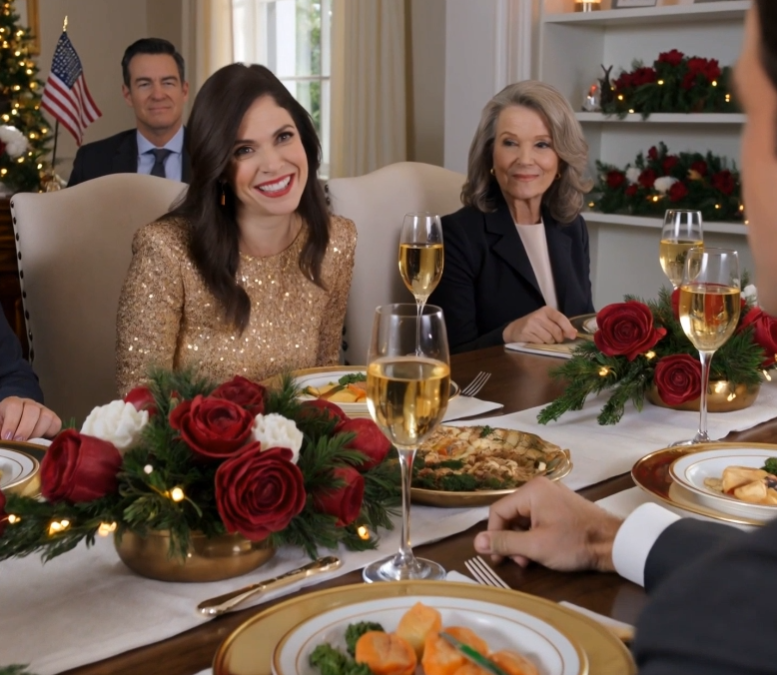
My name is Noah. I’m 32 years old, and I’ve always been the odd one out in my family. Not in the quirky, lovable sitcom kind of way, but more like the last piece of a puzzle that doesn’t belong in the box. For as long as I can remember, I was an afterthought, the middle child caught between my older sister, Jenna, the golden girl, and my younger brother, Tyler, the baby everyone felt obligated to protect, even from his own choices. Meanwhile, I was just there. Quiet, responsible, never really needing anything. And because I never demanded attention, I got exactly none.
Growing up, holidays at my grandma’s old house were the only times I ever felt something close to normal. Her place was a creaky two-story house on a quiet street lined with maple trees that turned gold every fall. There was a big front porch where she would sit in her old wicker chair, humming Sinatra and calling me her favorite listener. She never said it outright, but I think she saw what my parents didn’t. She saw that I was trying. She understood that I noticed things, like the way Mom would roll her eyes behind my back whenever I talked about school, or how Dad only seemed interested in asking Tyler about sports and Jenna about her grades, while all I ever got was a distracted, “How’s life?”
My grandma Lorraine was the one person who made me feel seen. She taught me how to garden, how to balance a checkbook, and how to cook the perfect pot roast. She would save the last scoop of mashed potatoes for me, even when Jenna complained that she hadn’t gotten enough. Those little gestures meant more to me than Grandma probably realized. In a family where I had learned to make myself small, she was the one person who always made room for me.
When she died, I was 21, still in college, and couldn’t afford the flight home. My parents didn’t offer to help. They didn’t even tell me the funeral had been moved up until the morning it happened. By the time I got their voicemail, she had already been buried. They told me it had been a small family thing, that everyone was grieving, and that it wasn’t about me. But it felt the way everything in my family always felt, as though I was nothing more than a footnote in my own story.
Years passed, and I built a life that didn’t require them. I moved out west, landed a decent job in software development, and slowly climbed the ladder. I kept my distance, not out of anger, but in the quiet, self-preserving way you learn when you’ve grown tired of fighting to be loved. I still received the occasional group text, a “Happy birthday, Noah” message six hours late, or an invitation to a family reunion that only arrived after Jenna realized she couldn’t book the Airbnb without my share of the payment. I rarely went, and when I did, I stayed quiet, smiled through the side comments, and left early.
But there was one thing that still tied me to them: Grandma’s house.
After she passed away, my parents took control of the property. They told the three of us—me, Jenna, and Tyler—that Grandma had left it to them for simplicity’s sake. I didn’t push back. I didn’t ask to see the will. At the time, I simply assumed they were telling the truth. Besides, what did I know about inheritance law? I was a broke college student trying to juggle student loans and part-time jobs. I had enough trouble keeping my own life together without questioning the legal details of my grandmother’s estate.
The house sat mostly empty for years afterward, except for the occasional visit when Tyler needed somewhere quiet to get his head straight or Jenna wanted some “me time” away from the city. I visited once, maybe two years after the funeral. It still smelled faintly of lavender and cinnamon. Grandma’s rocking chair was still there, and her old piano remained untouched. Yet something about the place felt different. Hollow, almost, as though the house itself knew it was simply waiting to be gutted.
I asked my parents what they planned to do with it. They said it was complicated, that they were considering their options, and that there were tax implications to think about. I nodded and let the matter drop. But some part of me, maybe the part Grandma had spent so many years nurturing, never truly let it go.
Then, last year, I heard that the house was being prepared for sale.
Of course, I didn’t hear it from my parents. I found out through an old high school friend back home who happened to drive past the property. He sent me a text that read, “Hey, saw a For Sale sign on your grandma’s old place. That sucks. Thought you guys were keeping it.”
That message hit like a punch I hadn’t been prepared for. I called my mother that night, and she answered as though nothing unusual was happening.
“Oh, hi, honey. Everything okay?”
“You’re selling Grandma’s house?”
There was a pause, just long enough to feel deliberate. “Well, yes. We were meaning to tell you. It’s just that you’re so busy out there in California, and we didn’t think you’d be interested.”
“Interested?” I repeated. “It’s Grandma’s house.”
“Yes, and we’ve kept it up for years, Noah. It’s become a financial burden. The market’s good right now.”
I didn’t argue. I didn’t scream or plead. I simply went quiet and said, “Okay. Thanks for letting me know.”
The call ended awkwardly, and I sat in the dark for a long time, staring at the ceiling fan turning lazily above me. Something shifted inside me that night. It wasn’t exactly anger. It was clarity, the sudden realization that I had spent far too much of my life allowing this family to decide what I did and didn’t deserve. Maybe it was finally time for me to take the wheel.
The following week, I started making calls. Quiet ones.
I contacted the realtor whose number was listed on the sign and introduced myself using a different last name: Bennett, my middle name. I requested a tour, pretending to be a remote investor interested in the property. Then I got on a plane, put on a blazer, and walked through my grandmother’s house as though I were a complete stranger.
My heart cracked in places I hadn’t even realized were still vulnerable. The garden was overgrown, the wallpaper was peeling, and the place clearly needed work. But the bones were still there. I could feel her spirit lingering in the corners, in the rooms where I had once been allowed to exist without having to prove I deserved the space.
When the realtor asked whether I was serious about submitting an offer, I smiled and said, “Very.”
I didn’t overbid, and I didn’t allow my emotions to dictate the transaction. Instead, I used a shell company I had quietly established six months earlier for another real estate project. The paperwork was clean, and the sale went through quickly. Just like that, I owned the house.
But I didn’t tell anyone. Not yet.
Because Christmas was coming.
Like clockwork, Jenna sent out the family group text in early December.
“Christmas dinner at Mom and Dad’s. 7:00 p.m. Formal attire this year. Big news to share. RSVP.”
I responded yes, booked my flight, and showed up at my parents’ doorstep wearing a charcoal suit and carrying a bottle of wine.
Tyler opened the door, already tipsy, and greeted me with, “Well, well, if it isn’t the ghost of Christmas past.”
Inside, the decorations were as over-the-top as ever. Garlands hung everywhere, lights blinked in every corner, and mechanical reindeer whirred and clacked whenever they moved. Jenna was already there in a gold sequin dress, sipping champagne while scrolling through her phone. My parents were completely in their element, Mom bustling around the kitchen while Dad held court in the living room like a man ten years younger.
Dinner began normally enough. Ham, green beans, mashed potatoes. Jenna talked endlessly about her new job title, while Tyler cracked crude jokes about cryptocurrency. I stayed quiet and polite, smiling when expected and contributing just enough to avoid drawing attention.
Then, somewhere between the second glass of wine and dessert, Mom looked up from her plate and announced, almost gleefully, “Oh, we finally sold Grandma’s house. Just last week. The buyers were eager. Thank God.”
Jenna laughed, twirling her fork. “About time. That place was such a waste of space. And Noah? Well, he was never in the will anyway.”
I slowly set down my glass and let the moment stretch.
Tyler chuckled. “Good. He’d probably have turned it into a tech bunker or some weird startup compound.”
I looked around the table at the people who had always assumed I would stay quiet, the people who thought I would swallow whatever they said and eventually let it go. Then I picked up my wine, took a sip, and said, “Cool. Hope you enjoy the cash, since I’m the one who bought it.”
The table fell silent.
Mom’s face froze in the middle of a smile. Jenna blinked, confused. Tyler furrowed his brow as though he were trying to solve a math problem. And I just sat there, calm as ever, watching the curtain finally lift.
For a moment, nobody said a word. The hum of the heater and the soft clink of Jenna’s fork slipping from her plate were the only sounds in the room. I didn’t rush to fill the silence. I wanted it to hang there, thick and uncomfortable and undeniable. It was the kind of silence that made people shift in their chairs and reevaluate everything they thought they knew.
Finally, Jenna let out a breathy laugh, as though I had just told some elaborate joke she didn’t quite understand.
“Wait. What do you mean, you bought it?”
“I mean,” I said, gently setting my glass down, “I’m the one who bought Grandma’s house. Through a company I own.”
Dad spoke next. “Noah, don’t be ridiculous. The buyers were from out of state. Some real estate group or something.”
“Bennett Holdings,” I said. “That’s me.”
Mom blinked. “That’s not you. That’s not your name.”
“Bennett’s my middle name. I used it for the LLC. It’s legal, clean, and quiet.”
Jenna’s face was turning red now, not from embarrassment but from something much closer to fury.
“Why would you do that behind our backs?”
That word, our, rang in my ears. The way she said it made it sound as though I had trespassed on something sacred, even though I had spent my entire life knowing I was never truly part of their inner circle.
I shrugged. “It was for sale. I made an offer. It was accepted. Nothing happened behind anyone’s back.”
“But we would have gotten so much more if we’d known it was you!” Mom blurted out.
That told me everything I needed to know. It wasn’t about preserving a family legacy. It wasn’t about Grandma. It was about money. Of course it was.
Dad leaned forward, crossing his arms. “So what? You just bought it to be petty? You planning to rub it in our faces?”
“No,” I said evenly. “I bought it because it meant something to me, and because none of you seemed to care what happened to it.”
Tyler chuckled under his breath. “So let me get this straight. You overpaid for that old dump just to feel something?”
“Funny,” I replied without bothering to look at him. “I actually got it below asking. Your realtor wasn’t great at vetting offers.”
The tension at the table was thick enough to slice with a butter knife. But instead of backing down or trying to make peace the way I always had, I simply sat with it. I let them stew. I let them realize that, for once, they weren’t in control of the story.
The rest of dinner was painfully tight-lipped. Jenna went quiet, stabbing at her food with unnecessary force. Tyler kept checking his phone as though he might somehow escape through the screen. Mom excused herself to check on dessert and didn’t come back for fifteen minutes. Dad just kept sipping his scotch, his jaw clenched and his eyes distant.
Afterward, I helped clear the table, mostly because I needed something to do. As I reached for Jenna’s plate, she grabbed my wrist.
“Why didn’t you tell us?” she hissed. “You think this makes you better than us or something?”
I paused and looked her directly in the eye. “No. I think it means I stopped waiting for permission to do what felt right.”
She dropped my wrist as though it had burned her. “You’re unbelievable.”
“You’re welcome to come by sometime,” I added. “Maybe I’ll show you the garden. I’m thinking of planting sunflowers.”
She stormed off.
After dessert—store-bought tiramisu that Mom pretended was homemade—I made my excuses. I told them I had an early flight, thanked them for dinner, and prepared to leave. Everyone avoided hugs, except Dad, who gave me a halfhearted embrace that was as stiff as a plank.
But as I turned toward the door, Mom followed me.
“You blindsided us,” she said, her voice low but sharp. “This family has always made decisions together. You know that.”
I stopped with my hand on the doorknob. “You mean you and Dad make the decisions. Jenna cheers, Tyler coasts, and I’m just supposed to go along with it.”
“That’s not fair.”
“No,” I said, turning to face her. “What’s not fair is you telling me I wasn’t in Grandma’s will. Like that was something to laugh about. Like I didn’t matter to her.”
She flinched, only slightly, but I saw it.
I opened the door. “I’ll see you around.”
Then I walked out into the cold. The night air bit at my face, but it felt clean. Freeing.
Back at my hotel, I lay on the bed fully dressed, staring at the ceiling. I had expected to feel triumphant, but instead I felt unsettled, as though I had finally pulled back the curtain and seen my family for who they really were. And part of me hated that I wasn’t even surprised.
The next morning, the fallout began.
Tyler was the first to text me. “Bro, Mom’s losing it. She thinks you manipulated them.”
Then came Jenna. “Real classy, Noah. Can’t believe you’d lie just to spite us.”
Finally, Mom sent her own message. Hers was more passive-aggressive than either of theirs.
“We’re disappointed, but not surprised. Your actions have consequences. Don’t expect us to support you if things go south.”
I stared at that one the longest.
Support.
I had never asked them for anything. Not when I couldn’t afford to attend Grandma’s funeral. Not when I struggled to pay rent. Not even when I got my first promotion and nobody bothered to respond to the group text I had sent. They had done nothing but withhold their support, and now they were acting as though I had betrayed them.
Over the next few weeks, things escalated. First, they started dropping little bombs in the extended family group chats. Subtle jabs disguised as innocent observations.
“So grateful Jenna helped us through all the estate stuff.”
“Some people just care about the money.”
“Can’t believe how people twist things to make themselves look like heroes.”
Then came the phone calls from my aunt and uncle and cousins I barely spoke to anymore. Most were polite but probing.
“Noah, I heard you bought the house. Why didn’t you say anything sooner?”
“I thought it was a family decision.”
“Aren’t your parents upset?”
I didn’t feed the fire. I just told them it was complicated and allowed them to draw their own conclusions. But behind the scenes, I had already begun preparing for something more.
I wasn’t finished. Not yet.
Because while they were busy trying to rewrite the story, I was quietly digging into the one thing they had never expected me to examine.
Grandma’s actual will.
And what I found changed everything.
The will was never supposed to be complicated. At least, that was what Mom had always claimed. Whenever the house came up in conversation over the years, rare as those occasions were, she would casually dismiss any questions.
“It was left to us. Simple and clean. Grandma didn’t want to cause drama.”
Because I had grown so accustomed to being excluded, I believed her. Or perhaps I simply hadn’t had the energy to question it back then.
But after that Christmas dinner, I couldn’t shake the feeling that something wasn’t right. The way Mom had smirked when the subject of my exclusion from the will came up. The way Jenna laughed as though it were a punch line. The speed with which they had sold the house once I started asking questions. None of it sat right with me.
So, one quiet evening, curled up on my worn couch with a laptop and a stiff drink, I started digging. I didn’t expect to find much, but curiosity is a strange thing. It pulls you forward even when you aren’t entirely sure what you’re looking for.
I started with public records.
The deed transferring Grandma’s house to my parents was easy enough to find. Nothing about it seemed especially surprising at first, except for the date. The property had been transferred three weeks after Grandma’s funeral, not as part of her will, but through a quitclaim deed.
That was my first red flag.
Why would they use a quitclaim deed instead of allowing the property to pass through probate? And why would Grandma have wanted that when I knew for a fact that she had written a will?
The following day, I called the county records office and asked about the will. The woman who answered sounded helpful, if a little bored, but she pointed me toward the probate filings from the year Grandma died.
And there it was, plain as day.
Lorraine Davis. Deceased. Will filed.
I requested a copy. It arrived in the mail five days later.
I opened the envelope with trembling hands, sitting alone at my kitchen table. My eyes moved across the page, and my heart thudded as I read the opening lines.
“I, Lorraine Davis, being of sound mind and memory, do hereby declare this to be my last will and testament.”
I could hear her voice in my head as I read. I could almost picture her sitting at that old oak desk in her study, the one with the tiny brass lamp that glowed like candlelight.
Then I reached the section that shattered me.
“To my beloved grandson, Noah James Davis, I leave my home and all its contents, as he has always valued the history and heart of our family. I trust he will preserve what matters.”
I had to read it three times before I could believe it.
Not Mom. Not Dad. Not Jenna or Tyler.
Me.
She had left the house to me, and somehow, I had never been told. I had never seen the document, never even heard a whisper of what she had intended.
The rest of the will distributed her other belongings. Jewelry to Jenna, my grandfather’s old watch to Tyler, and some savings to a local animal shelter. But the house was different. That wasn’t an oversight or some simple transfer made for convenience. Her decision had been deliberate. Specific.
And my parents had lied.
They hadn’t merely omitted the truth. They had looked me in the eye and told me I was never in the will. They had mocked me at Christmas dinner, made me feel like a fool, all while knowing they had taken something that was meant for me.
I felt something rupture deep inside me. It wasn’t ordinary anger, and it wasn’t exactly sadness. It was something deeper, the kind of betrayal that coils in your gut and hollows you out from the inside.
For a long time, I sat there without moving. The paper lay on the table in front of me, real and solid and damning. My hands trembled. My teeth clenched.
She had trusted me.
And they had taken it anyway.
The longer I thought about it, the more things began to make sense. Why they had rushed the sale. Why they had never shown me the paperwork. Why Mom always said the house was too much responsibility for me.
They hadn’t simply assumed I didn’t care.
They had assumed I would never look.
They expected me to stay quiet, the way I always had, to shrug my shoulders and disappear into the background.
But not this time.
The next day, I contacted a lawyer.
I laid everything out for him: what I had discovered, how the house had been transferred, the will, and the dates. He remained calm as he reviewed the documents, but I could tell he was intrigued.
“Let me guess,” he said, flipping through the pages. “Your parents never submitted this version to probate.”
“Looks like it,” I replied, my voice tight.
He nodded slowly. “There might have been an older version that left everything to your mother. They could have filed that one instead. But this version here is newer, dated a month before your grandmother passed, and that makes it legally binding. If we can prove this was her last will and that the quitclaim deed was executed under false pretenses, then yes, you have a case.”
A case.
The word echoed in my head.
I wasn’t even sure I wanted a legal battle. It wasn’t about clawing back every cent. It was about what the house represented, and how easily my family had erased me from the story of my own inheritance. How comfortably they had sat around a holiday table, smug and secure, laughing at the very idea that I might matter.
After that, I stopped responding to the family group texts. I didn’t return Jenna’s passive-aggressive calls. Tyler tried to play peacemaker, sending messages like, “You guys just need to talk this out,” and “Mom’s stressed. Don’t make it worse.”
I ignored them all.
Instead, I went back to the house.
My house.
It was early spring, and the yard was still thawing from winter. The paint was chipping, and the porch creaked beneath my feet, but the house was mine. As I stepped onto the property, I felt something inside me settle. A calm resolve, as steady and undeniable as gravity.
I unlocked the front door, walked through the hallway, and found myself in Grandma’s study. The same desk where she had probably written that will was still there, along with her little lamp, dusty but intact. I sat down, opened my laptop, and began writing a letter. Not to my family, but to the estate attorney’s office, because there were still things I needed to know.
If they had forged paperwork once, who was to say the house was the only thing they had taken?
The thing about betrayal is that it doesn’t hit you all at once. It trickles in, a little more each day, like a leak in the ceiling. Silent, steady, rotting everything beneath the surface before you even realize how much damage has been done.
That was what the weeks following my discovery felt like.
Quiet rot.
I didn’t tell anyone. Not even my closest friends. Not the woman I had been casually seeing. Not the guy at work who had once named me as his emergency contact after a bad bicycle accident. I simply didn’t know how to talk about it.
How do you explain that your family stole your inheritance, lied to your face, and then mocked you for not being included in something that had belonged to you all along?
I didn’t cry. At first, I couldn’t.
But something inside me began withdrawing from everything around me. It was as though my emotional reflexes had shut down to protect whatever small amount of trust I still had left in the world.
I went to work, answered emails, and attended meetings, but I wasn’t really there. I skipped lunches with coworkers and let phone calls go to voicemail. I moved through each day with a numb kind of precision, like a shadow of myself, doing everything I was supposed to do without feeling connected to any of it.
Then came another phone call.
It was Mom again.
I don’t know why I answered. Maybe I was curious to hear what lie she would try next.
“Hi, sweetheart,” she began, her voice soft and almost painfully performative.
I said nothing.
“We’ve been thinking a lot about that night at Christmas. Things got a little out of hand.”
I remained silent.
“I just…” She sighed, long and deep, in a way that sounded almost rehearsed. “We didn’t know how much that house meant to you. You never said anything.”
I nearly laughed.
I never said anything.
What exactly had I been supposed to do? Write a heartfelt letter begging to be considered for the bare minimum of fairness?
She continued before I could answer.
“We understand you’re upset, but you have to see this from our side. We were trying to make things simpler, less messy. You’ve always had your own life out there, and, well, your sister and Tyler have had a rough few years.”
There it was. The justification I should have expected.
Jenna’s failed engagement and mountain of debt had somehow become my problem. Tyler’s inability to hold down a job was suddenly relevant to whether I deserved what Grandma had left me. Meanwhile, I had quietly built something stable and functional for myself, and apparently that made me less deserving of consideration.
“I found Grandma’s will,” I said coldly.
Silence.
Then, “What?”
“The most recent version. The one that names me as the sole heir to the house.”
Another pause. I heard a slight hitch in her breathing.
“That… that can’t be right. There was an earlier one. There was—”
“But this one is dated a month before she passed,” I interrupted. “Which makes it the valid one. You didn’t probate it. You filed the old one, transferred the house through a quitclaim deed, and hoped I’d never check.”
Her tone sharpened immediately.
“That’s a serious accusation, Noah.”
“No,” I said, finally raising my voice. “What you did was serious. I’m just tired of pretending it didn’t happen.”
She went quiet again.
Then she hung up.
No goodbye. No apology. Just silence.
And that silence became the defining sound of the next month.
I expected a storm. More angry messages, perhaps even some kind of legal response. Instead, my family went completely dark. It was as though they had all disappeared behind the scenes to figure out how they were going to spin the situation.
Meanwhile, I began to spiral.
I would like to say that I rose above it, that I held my head high and kept moving forward. But I didn’t. Not right away.
I stopped showing up for work for a few days, telling everyone I had food poisoning. I drank too much, ate too little, and wandered around the house late at night with a flashlight, trying to feel close to Grandma again. Trying to feel anything at all.
One night, I found her old journals in a dusty box beneath the staircase.
For hours, I sat on the wooden floor, turning the pages. Her handwriting was loopy, elegant, and patient, and something about seeing it again calmed me. Each page felt like another small piece of her that time and distance hadn’t managed to erase.
Then I came across an entry dated just one week before she died.
“I’ve finalized the new will. It’s what feels right. I love all my grandchildren, but only one of them ever sat with me without needing anything. Noah will care for this home. I know he will.”
That was the moment I broke.
Not from anger, but from grief.
I sat in that old, hollow house and wept quietly. I cried for her, for the child I had once been, and for the version of myself that had continued clinging to the hope that my family might one day truly see me.
I stayed the night on the old couch. There was no heat, just a blanket and the lingering smell of aged wood and memory. But for the first time in weeks, I slept deeply, without waking.
The following morning, I made a decision.
I wasn’t going to fight them yet. I wasn’t going to launch a public family war, not while they were still pretending nothing had happened. That was what they expected from me: drama, noise, desperation, and accusations thrown around wildly.
No. I was going to plan quietly and strategically.
I started meeting with my lawyer more regularly. Together, we built a timeline and collected every text message, voicemail, and signed document we could find. We mapped out the entire shell game, from the probate filing to the deed transfer to the recent sale of the property.
Then we filed for a full investigation into the mishandling of Grandma’s estate.
I told no one.
Not even when Jenna reached out a week later with what felt like a fake olive branch.
“Hey, just thinking about you. Hope you’re okay. Let’s talk.”
I left the message on read.
Not because I didn’t want to respond, but because, for once, the silence belonged to me.
In the meantime, I went back to work, cleaned up my apartment, and started cooking again. Little steps. I wasn’t okay, not completely, but I was moving again, and that mattered.
One weekend, while I was back at the house, I noticed something strange.
There was a car parked farther down the street. The same car had been there three days in a row. At first, I assumed it belonged to a neighbor’s guest. But on the fourth day, I recognized the driver.
Dad.
He didn’t approach the house. He didn’t get out of the car. He just sat there, watching.
He probably thought I hadn’t noticed him.
But I had.
And in that moment, I realized something important. They weren’t afraid of losing money. They were afraid of losing control.
Which meant that, for the first time in my life, I had leverage.
And I wasn’t finished using it.
For most of my life, my family’s attention—or lack of it—had dictated how I moved through the world. I had been shaped by their indifference, their favoritism, and their constant need to remind me that I was the quiet one, the forgettable one, the child who always had enough and never needed help.
It wasn’t until they took something sacred from me, Grandma’s house, that I finally understood how much I had allowed them to get away with.
And once I saw it clearly, there was no going back.
I had hit bottom, certainly. But there’s something about rock bottom that gives you a perfect view of everything above you.
And I was ready to climb.
The first step was reclaiming space. Not just the physical house, but the mental room my family had occupied in my life for so many years.
I deleted the family group chat, blocked Jenna and Tyler on social media, and quietly established new boundaries with extended relatives. When my aunt Carol sent me a halfhearted message saying, “Hope you’re doing okay. Your mom’s very upset,” I didn’t respond.
I didn’t owe anyone an explanation.
Let them talk. Let them guess.
I was finished performing for them.
The second step was restoring the house.
It became a project, something tangible I could pour myself into. I took a few weeks off work, not specifically for my mental health, although I probably needed that too, but because I wanted to roll up my sleeves and do something real.
I hired a contractor to repair the cracks in the foundation and address the water damage. I consulted an interior designer who specialized in historic homes, and I found one of Grandma’s old photo albums tucked away in a hallway closet.
Every detail mattered. Every fixture, every color scheme, every piece of the house that held some trace of its past. I brought it all back to life with purpose.
The neighbors began to notice.
Some of them still remembered Grandma and came by to share stories about her. One woman, Mrs. Valente, who lived across the street, brought over a loaf of banana bread.
“Your grandmother would be proud of what you’re doing here,” she told me. “She talked about you all the time.”
For the first time in a long while, I felt proud of myself, too.
The house was no longer just a home. It had become a symbol, a quiet declaration that I could build something meaningful. I wasn’t the forgotten middle child anymore, the background character whose presence everyone took for granted.
I was the protagonist now, the architect of this chapter of my own life.
Meanwhile, my lawyer continued digging, and what he uncovered only made the betrayal worse.
Apparently, Grandma had updated her will not once, but twice during her final year.
The first change had removed Jenna as a secondary executor. The second, dated just ten days before Grandma’s passing, had formally stripped both of my parents of any control over her estate. Instead, she had named an independent executor from her church congregation.
But that man had died a month before Grandma, and my parents had seized on the resulting confusion.
They had never told anyone about the newest version of the will.
Instead, they submitted the oldest version they could find, forged Grandma’s signature on a quitclaim deed, and made sure the estate passed quietly into their own hands.
It was fraud, plain as day.
Armed with that information, my lawyer began preparing something bigger: a civil case. Not simply to reclaim what had been stolen, but to expose what my parents had done. To show the court that this had not been a misunderstanding or some unfortunate mistake made in the confusion following a death.
It had been calculated.
It was theft disguised as caretaking.
But I wasn’t thinking only about courtrooms anymore. I had started thinking about legacy, about what I could create from something that had caused so much pain.
So I founded a nonprofit organization.
It began as a simple idea: the Lorraine Foundation.
Its mission was to restore and preserve the homes of elderly people who had passed away, especially when there was nobody left to protect their wishes. I wanted to help other families keep their histories alive, and I wanted my grandmother’s name to mean something again.
I put my own money into launching it. I had savings, and I cashed out a few investments to get things started.
Then the website went live, and something unexpected happened.
People noticed.
A local journalist reached out, intrigued by the foundation’s mission. She came by the house, took pictures, and asked questions. She was polite and professional, and the interview was straightforward until she asked, “Do you mind if I ask what inspired this?”
I hesitated before answering.
“Let’s just say it was a gift that was almost lost, and now I’m making sure it never is.”
The article appeared the following week.
Grandson Honors Grandmother’s Legacy With Home Restoration Project.
It was simple, heartfelt, and oddly powerful.
Donations began trickling in. Emails started arriving from people who had lived through similar experiences. Families who had fought over wills. Houses that had been lost. Memories that had been erased.
I realized I wasn’t alone.
Then, finally, the silence from my family broke.
Jenna sent me an email with a subject line that contained only four words: “We Need to Talk.”
I didn’t open it.
Two days later, Tyler called from an unknown number. I answered out of curiosity.
“Noah, man. Come on. This is getting out of hand.”
“Is it?” I asked coolly.
“You’re dragging the family through the mud. Everyone’s talking about that article.”
“I didn’t name anyone. If people are making assumptions, maybe that’s on them.”
“You’re seriously going to sue Mom and Dad after everything?”
I almost laughed.
“After everything? You mean after they stole my inheritance and tried to gaslight me into thinking it never existed?”
He went quiet.
I added, “You all made your choices. Now I’m making mine.”
Then I hung up.
Something about that moment felt final, like a door closing behind me that I had no intention of walking through again.
And just when I thought everything had begun to settle, the final piece dropped into place.
My lawyer forwarded me an email from a bank in town.
Apparently, Grandma had established a small trust fund. It wasn’t a massive amount, just under $40,000, and it was intended for whoever inherited her house. The money could be used for repairs, upkeep, or personal development.
The fund had never been claimed.
Nobody had told me it existed, because they had assumed I would never look.
But I had.
And now it was mine.
With that money, I completed the final phase of the house’s restoration. I transformed the upstairs bedroom into a community reading room and installed a small plaque beside the door.
For Lorraine, who listened when no one else did.
And people came.
Neighbors, old friends of Grandma’s, curious visitors who had read the article. The house began to feel alive again, not merely because the furniture had been restored or the wallpaper replaced, but because it had a purpose.
Through all of it, I remained silent.
I didn’t confront my parents. I didn’t gloat. I let them stew from a distance, trying to explain to everyone else why I had vanished from their lives. Why the quiet kid they had ignored for so many years had suddenly become the one thing they couldn’t control.
But behind the scenes, my lawyer officially filed the lawsuit.
And what we included in that filing would change everything.
By the time we filed the civil suit, I wasn’t doing it solely for myself anymore.
Yes, my parents had stolen something from me. Yes, they had lied, manipulated the situation, and covered their tracks. But this was no longer just about a house, or even Grandma’s will.
It was about the pattern.
It was about the system they had created within our family, where control flowed in only one direction and disagreement was treated as betrayal. Where silence was expected, and questioning the status quo was met with thin smiles and quiet punishment.
I wasn’t going to remain silent anymore.
My lawyer, James, was brilliant. Sharp without being flashy, methodical without being cold. He understood the stakes immediately.
“We’re not just proving fraud,” he said, sliding a stack of paperwork across his desk toward me. “We’re showing a long-standing pattern of intentional misrepresentation. This isn’t a clerical error. It’s a cover-up.”
The lawsuit outlined three main claims: fraudulent concealment of the valid will, unlawful transfer of property through a forged quitclaim deed, and misappropriation of estate assets, including the trust Grandma had established for me.
We were seeking restitution and damages, but most importantly, a formal judgment invalidating the fraudulent property transfer and restoring my legal rights as the rightful heir.
James had one more idea, though. A big one.
“If we want this to stick, and if you want to make a point,” he said, “they need to be caught doing what they always do. Hiding things. Pretending. Pressuring.”
I frowned. “You want to bait them?”
“Not directly. But if we let just enough information reach certain people, the pressure will do the work for us. People like your cousin Ethan, or that neighbor who still talks to your mom. Let news of the lawsuit trickle out. Give them time to panic. And when they panic, they’ll make mistakes.”
It felt risky, but it also felt right.
So we did it.
We didn’t go public. Not yet. There were no press conferences or dramatic announcements. Just a quiet ripple moving through familiar waters.
A distant cousin received a heads-up email. One of Jenna’s old friends became curious and started asking questions in the family group chat. The attorney who had originally helped Grandma draft her last will, now retired but still in contact with the firm, reached out to confirm that he would be willing to testify.
And just like that, the web began to vibrate.
Three days later, Tyler texted me.
“Bro, I heard about the legal stuff. What are you doing? This is getting ugly.”
I ignored him.
Then Jenna sent an email.
“So this is how you want to handle things? Through lawyers? You couldn’t even talk to us like adults? You think you’re some victim? Grandma loved all of us.”
I replied, “If that were true, you wouldn’t have hidden her last will. I’m done pretending, Jenna. See you in court.”
An hour later, I received a call from a blocked number.
It was Dad.
“I’m only going to say this once,” he began, his voice low and sharp. “Drop this. You have no idea the damage you’re doing.”
“No,” I said calmly. “I think I do. For the first time, I actually understand it.”
There was a pause.
Then he dropped the mask.
“You think this makes you look noble? It makes you look weak. Bitter. Petty. Do you really want the whole family to know you’re trying to bleed us dry?”
“I’m not trying,” I said. “I’m succeeding.”
Then I hung up.
The next step was strengthening the case.
I reached out to Grandma’s church and spoke with a woman named Martha, who had once led the Sunday volunteer crew. She remembered me, and she remembered Grandma. More importantly, she remembered a conversation in which Grandma had specifically said she had updated her will to make sure Noah got the house.
“He’s the only one who won’t turn it into an Airbnb,” Grandma had told her.
Martha agreed to provide a written statement.
Then we contacted Grandma’s accountant.
It turned out that during the months before her death, she had begun keeping her financial records more meticulously than ever. Her CPA, an older gentleman named Wallace, was shocked when he learned how quickly the house had been transferred after she passed.
“I remember her being very specific about the will,” he said. “She wanted everything to go through the proper channels.”
He provided a copy of an email Grandma had sent him just one week before her death. In it, she summarized the key points of her estate plan.
“The house goes to Noah. I’ve told the family this. I hope they honor it. But just in case, I’ve made the legal documents airtight.”
That final sentence made my stomach twist.
She knew.
Some part of her had known they might try something.
I gave the email to James, and he added it to our evidence.
We also subpoenaed the notary who had supposedly witnessed the quitclaim deed. That was when things became especially interesting.
The notary, a woman named Diana, denied ever signing anything related to my grandmother’s property. She even produced a log showing that she hadn’t been working on the day the document was allegedly notarized.
Forgery.
Plain and simple.
James smiled when he saw the evidence.
“This alone could end it,” he said. “But let’s make sure it doesn’t just end. Let’s make it echo.”
So we added one more piece to the puzzle: a formal petition to reopen the probate case, invalidate the fraudulent deed, and transfer legal ownership retroactively to me, along with a request for sanctions.
But I wasn’t stopping there.
I began drafting a public statement, not to release immediately, but to have ready for the moment the case became public and my family inevitably tried to twist the story.
I wrote about what the house meant to me, about Grandma, and about what it felt like to be erased by the very people who were supposed to love you most. I wrote about how I had allowed that to happen for too long, and why I was never going to let it happen again.
Then, just to twist the knife a little deeper, I made one final move.
I announced the Lorraine Foundation’s first major initiative: the Davis Grant for Ethical Estate Planning. It was a $10,000 award for families who committed to transparent, fair estate processes and were willing to document their experiences for public education.
I launched the initiative quietly and professionally on the foundation’s website, but I made sure Jenna would see it.
The digital flyer appeared in a local Facebook group she still followed. Her profile picture was still a wedding photo from the newspaper six years earlier. She liked the post, then unliked it five minutes later.
I couldn’t help smiling.
The chessboard was set.
They could lash out, smear my name, and try to spin the story however they wanted. But the documents had been filed, the evidence had been gathered, and for the first time, the narrative belonged to me.
They were about to learn what it felt like to play defense.
Court dates have a strange way of making time stretch and fold. The day we finally walked into that courtroom felt both long overdue and far too soon.
I remember sitting there in pressed slacks and a clean-cut suit, James beside me, our paperwork meticulously organized on the table in front of us. Part of me felt as though I were watching a movie, as though none of it could possibly be real.
And yet, this was the most real thing that had ever happened to me.
My parents entered together. Jenna followed a few paces behind them, her heels striking the polished floor with a little too much force. Tyler didn’t show up. I couldn’t say I was surprised.
They avoided my gaze, and I made no attempt to catch theirs. I let them sit with their discomfort, let them feel, if only for one day, what it was like to be weighed and measured.
The judge was a calm, middle-aged woman who wore her glasses near the tip of her nose and seemed to have absolutely no tolerance for drama.
Perfect.
The proceedings began with the usual procedural formalities, followed by opening statements.
James went first.
He laid everything out succinctly and methodically, without embellishment or unnecessary emotion.
“We will show, Your Honor, that Noah Davis was not only named as the sole beneficiary of his grandmother’s property, but that this fact was knowingly concealed by his parents, who instead filed an outdated will and executed a forged quitclaim deed to transfer the house into their possession. This is not a misunderstanding. It is deliberate fraud.”
I could feel the atmosphere in the room change.
Then my parents’ attorney stood up. He was a man I recognized from a cheesy local television commercial I had seen years earlier, and he immediately tried to downplay everything.
“There was no malice here,” he argued. “Only confusion. The family did their best during a very difficult time.”
James let him speak.
Then we began presenting our evidence.
First came the will, followed by the trust documents and the email from Grandma’s accountant. Then came the notarization log that contradicted the validity of the deed, along with testimony from Martha, Grandma’s friend from church.
Martha recounted the conversation in which Grandma had specifically expressed her intention to leave the house to me. She remembered the words, the certainty behind them, and how clear Grandma had been about what she wanted.
Next, Wallace, her CPA, walked the court through the email Grandma had sent him only days before she passed away. The message had been sitting in his inbox all that time, documenting her wishes in her own words.
Then came the bombshell.
Diana, the subpoenaed notary, took the stand.
Under oath, she clearly stated that she had never witnessed or signed the deed my parents had submitted. Her records confirmed that she had not even been working on the date when the document was supposedly notarized.
James turned toward the judge.
“Your Honor, we’re not just talking about deception. We’re talking about a coordinated effort to erase my client’s legal rights and take what was rightfully his. A house he now owns only because he repurchased it on the open market after it was stolen from him.”
My mother looked as though she had aged ten years in that courtroom. Her hair was pulled too tightly back, and her lipstick had begun cracking slightly at the edges. She wouldn’t look at me.
Dad sat with his arms crossed, his jaw clenched, as though he could somehow glare the truth away.
Jenna kept blinking, almost as if her contact lenses had suddenly decided to betray her, too.
Their attorney continued trying to argue that everything had been an oversight. That my parents hadn’t fully understood the legal process. That they were simply doing what they believed Grandma would have wanted.
That was when James stood again and asked permission to submit a copy of a handwritten letter found among Grandma’s journals.
A letter addressed to me.
Part of it read:
“Noah, if you’re reading this, I hope everything went the way I planned. But if it didn’t, if they tried to take this from you, remember: the world doesn’t give power. You take it back quietly, calmly, like a Davis.”
After those words were read, the courtroom fell completely silent.
You could have heard a pin drop.
The judge called a recess.
When we returned, she didn’t waste time.
She ruled in our favor on all counts.
Grandma’s valid will was reinstated. The original deed was declared fraudulent. The sale to my shell company was deemed valid, but restitution was awarded in the full amount of the property’s market value, plus damages.
My parents were ordered to pay a sizable sum back to the estate.
Apparently, forging legal documents didn’t sit particularly well with the judge.
And in a rare, beautiful twist of irony, the trust Grandma had established for repairs and restoration was not merely protected. Its value was effectively increased by the judgment.
The court also awarded additional compensation to the Lorraine Foundation as part of the ruling, citing ethical preservation and restitution of legacy.
That was the moment everything became real.
My parents had lost more than the house or the money. They had lost control of the narrative, the ability to decide what everyone else believed, and the power they had spent so many years using against me.
That was the part that hurt them most.
And I had done it without raising my voice or publicly humiliating them. I had simply let the facts do what their excuses never could.
Stand on their own.
As court adjourned, I packed my papers slowly.
My parents didn’t approach me. Jenna gave me one long look, a mixture of anger and disbelief burning behind her eyes, before following them out.
They left in silence.
I remained seated for a few more minutes, letting everything sink in.
James clapped me on the shoulder.
“Hell of a statement, Noah.”
I nodded.
“She made it easy,” I said. “All I had to do was follow the map she left behind.”
That night, I returned to the house.
The house they had told me I was never meant to have.
I walked through every room again, running my fingers along the railing Grandma used to grip. I stood on the porch where she had spent so many hours rocking gently in her wicker chair, a glass of lemonade beside her and a crossword puzzle in her lap.
As the sun began to set, I turned on the porch light and unlocked the front door.
Not for my parents. Not for reconciliation.
For the community.
Because her home, my home, had become something greater than a place to live. It was a quiet monument to the truth.
In the weeks following the verdict, the fallout hit my family like a slow-motion train wreck. It was painful, inevitable, and entirely self-inflicted.
Word spread quickly.
Maybe it started with the local journalist, who published a follow-up article titled Grandmother’s Last Wish: A Legal Battle for Legacy. Or maybe it was my family’s own frantic attempts at damage control, repeating the same excuses until people started noticing the contradictions.
Either way, the truth had left the courtroom.
It was now being discussed in living rooms, church pews, and around weekend brunch tables across town.
Extended relatives began reaching out, not so much with sympathy as with a sudden desire to distance themselves from what had happened.
My cousin Ethan called one afternoon.
“I always figured something was weird with how fast they sold the place,” he admitted. “I’m sorry, man. I wish I’d asked more questions.”
Aunt Carol sent a long-winded apology that seemed mostly designed to shift the blame onto my parents.
“You know how your mother gets when she’s stressed,” she wrote.
I didn’t reply.
I wasn’t looking for apologies. I was watching the web they had spent years building unravel, thread by thread.
My mother was forced to resign from the community council she had proudly chaired for years. Apparently, the other members were uncomfortable being associated with someone who now had a public court judgment against her involving estate fraud.
For a woman who had always cared so deeply about appearances, I could only imagine how humiliating that must have been.
Jenna’s luxury wedding-planning business took a hit, too.
One of her clients backed out after reading the article. Another requested a refund. Jenna responded by posting a vague Instagram story about cancel culture and family betrayal, but it only stirred up more questions.
Her follower count dropped.
So did her credibility.
Dad kept a much lower profile, but I heard from a reliable source, one of his old golfing buddies, that a local investor had backed out of a property deal with him.
“Didn’t like the idea of working with someone who forges signatures,” the man had reportedly said.
And Tyler, who had spent so much of his life drifting along while everyone else protected him from the consequences of his choices, finally reached out with a message that was different from his earlier ones.
“I didn’t know everything, but I should have. I’m sorry.”
I thought about replying.
I really did.
But in the end, I didn’t.
By then, it wasn’t about whether any of them could bring themselves to say they were sorry. It was about what they had done when they believed I was powerless to stop them.
I didn’t need revenge in the form of screaming matches or public humiliation. That had never been my style.
I had already won where it mattered, quietly, with dignity and a steady hand.
Just like Grandma would have wanted.
Meanwhile, the Lorraine Foundation continued to grow.
We partnered with a law firm that offered free estate-planning clinics for elderly people. The goal was simple: help people put their wishes in writing, understand their rights, and avoid leaving their families vulnerable to the kind of confusion and manipulation that had nearly destroyed Grandma’s legacy.
A few months later, a small nonprofit in another state contacted us and asked whether they could replicate our model.
I said yes.
I even visited their first restored property, a little blue house with chipped paint and a rose garden out back. While I was there, I helped plant a new tree in the yard.
Back home, Grandma’s house was thriving.
The community reading room hosted monthly book clubs and evenings devoted to sharing memories. Local residents stopped by to leave letters, flowers, and sometimes old photographs of my grandmother taken at neighborhood events.
Every time someone brought something new, I learned another small piece of who she had been to the people around her.
Her legacy was no longer trapped in the past.
It was living, growing, and finding its way into other people’s lives.
And as for me, I finally felt free.
Not just from my family’s lies, but from the weight of being the invisible child, the family scapegoat, the one everyone had underestimated for far too long.
I no longer needed them to recognize my worth. I no longer needed to sit quietly at their table, hoping that one day someone would notice I belonged there.
I had a place of my own now, one filled with the things that mattered to me.
On the one-year anniversary of the verdict, I hosted a small gathering on the porch.
Nothing extravagant. Just a few close friends, some volunteers from the foundation, and a quiet playlist of Frank Sinatra drifting through an old record player I had found in the attic.
As the sun dipped below the maple trees, I settled into the same wicker chair Grandma had once claimed as her throne.
I looked out across the street, listening to the music and the soft sounds of conversation around me.
Then I noticed a familiar car moving slowly down the road.
My father was behind the wheel.
My mother sat in the passenger seat.
They drove past the house without stopping. Neither of them waved, and neither even turned their head.
I simply watched them go, peaceful and unmoved.
Then I stood, walked to the front steps, and flipped on the porch light.
Let them drive into the dark.
This house stays lit.








