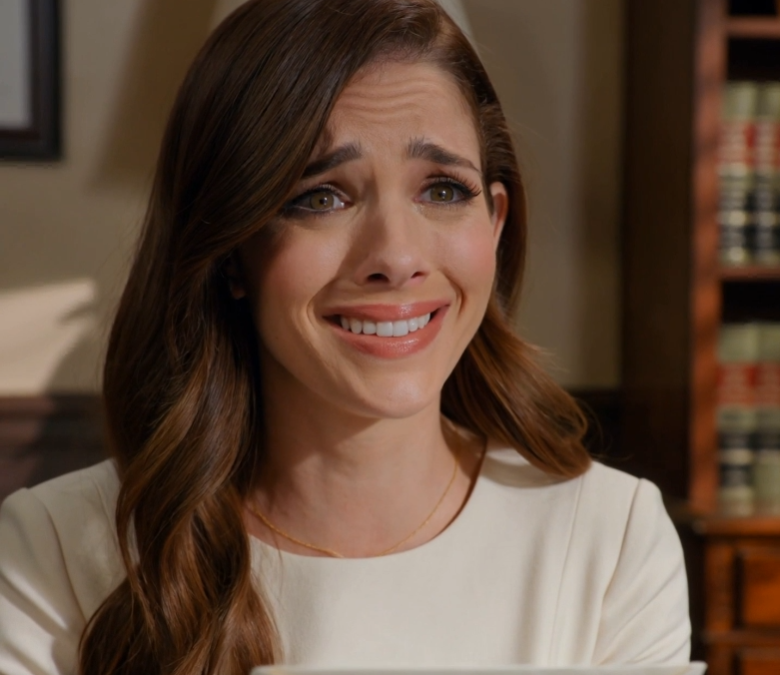
After abandoning me, my daughter got a summons from the lawyer about her $2.8m inheritance. she walked into his office smiling, but then he handed her an envelope… her smile disappeared.
My daughter left me for dead on Highway 95, at mile marker 127, in the middle of the Nevada desert. The temperature was ninety-seven degrees. There was no phone signal, my iPhone had only two percent battery remaining, and Jenny was driving away toward her boyfriend’s BMW without looking back.
I should have been angry. I should have been begging her to stay, calling her name, doing anything to make her turn around. Instead, I smiled and started walking.
You see, Jenny had no idea what I was carrying in that old Ford pickup. She knew nothing about the envelope my wife, Linda, had made me promise to keep sealed until our daughter’s thirtieth birthday. She had no idea that the father she found so embarrassing was holding something worth more than her boyfriend’s entire trust fund.
But she was about to learn what happens when you abandon the one person who would never have abandoned you. And the justice that followed was something even I could never have imagined.
To understand how I ended up on that highway, I have to go back three hours, to Jenny’s apartment in Henderson.
She lived on the twenty-seventh floor of a luxury building, in a place with floor-to-ceiling windows overlooking the Las Vegas Strip. The rent was $4,200 a month. I knew the exact amount because I’d been helping her pay it for six months, ever since she moved in with Brad.
Bradley Wellington Thompson III. Yes, that was his real name.
He was an investment banker who wore suits that cost more than I made in a month and drove a BMW M8 Competition, an $80,000 car, in case you’re wondering. He came from the sort of world where people judged one another by their last names, their bank accounts, and the schools printed on their diplomas.
I’d gone to Jenny’s apartment that Sunday to take her to lunch. It was something we’d done every other Sunday for three years, ever since Linda died. Those lunches meant more to me than Jenny probably realized. They were a way of keeping our little family together, of holding on to something familiar after losing the woman who had been the center of both our lives.
But Jenny was different that day. Colder. More distant.
She wore a designer dress that must have cost $1,200, judging by the tag I’d glimpsed, and stood beside Brad as though the two of them had rehearsed whatever they were about to say.
“Dad, we need to talk.”
I looked at her and smiled. “I’m listening, sweetheart.”
“We’re flying to New York tomorrow. Brad’s being considered for a position at Goldman Sachs.”
“That’s wonderful news. I’m proud of—”
“I need you to stop coming around.”
The words landed like a punch to the stomach, but somehow I kept my voice steady.
“What do you mean?”
Brad stepped forward before Jenny could answer.
“Look, Mike—”
“Mr. Johnson,” I corrected him.
He paused, clearly irritated. “Right. Mr. Johnson. The thing is, I’m going to be working with some very important people. People who matter in my industry. And, well…”
His eyes traveled down to my clothes.
I was wearing steel-toed boots, Carhartt jeans, and a company shirt with my name embroidered above the pocket. I’d come straight from work, and there was still a little grease beneath my fingernails.
“Jenny’s told me about your situation,” Brad continued, “and we think it’s best if you maintain some distance.”
My situation.
Three years earlier, when Linda was dying, I’d worked double shifts to pay for her treatment. Chemotherapy, radiation, surgery, everything the doctors could offer. The medical bills had totaled $125,847. Insurance covered some of it. I covered the rest.
I sold my motorcycle, took out a second mortgage, and borrowed against my pension. I did whatever I could to give Linda every possible chance of beating the cancer.
It hadn’t been enough.
Jenny knew all of this. She had watched me sell nearly everything I owned to save her mother. She had watched me sit beside Linda through eighteen months of treatments, setbacks, pain, and hope that kept slipping through our fingers. She had watched me hold her mother’s hand until the very end.
And when the time came, she’d watched me bury the love of my life with dignity, even though I was practically broke.
Apparently, all of that had made me an embarrassment.
“Jenny,” I said quietly, “is this what you want?”
She looked away.
“Dad, you have to understand. I’ve worked really hard to get where I am. An MBA from UNLV, an internship at Merrill Lynch. I’m finally making something of myself.”
“You’re making $110,000 a year,” I said. “I’m proud of you.”
“And you’re an electrician.”
It was the way she said it that hurt. Not as a statement of fact, but as though she’d just named some terrible disease.
“I am,” I answered.
“Brad’s friends are different, Dad. They went to Yale, Harvard. Their families have money. Real money. And when they ask about my background…”
“You’re ashamed of me.”
“I’m being practical.”
Brad nodded approvingly, like she’d just passed some important test.
I looked at my daughter and thought about Linda. I remembered how proud she’d been when Jenny graduated from college, how she’d cried with happiness when our daughter received her diploma. I remembered the promise she’d made me give her before she died, that I would always take care of Jenny, no matter what happened.
And I remembered the letter.
Linda had spent her last coherent day writing it, struggling to hold a pen as the cancer drained the strength from her body. She’d made me swear I wouldn’t open it until Jenny’s thirtieth birthday, unless circumstances required me to read the separate instructions she’d left for me.
That letter was sitting in my truck, along with bank statements, trust documents, and proof that Linda had left our daughter more money than Brad would probably ever see in his privileged life.
Two point eight million dollars.
Jenny knew nothing about it.
She had no idea that her mother’s family came from old money. Railroad money. Mining money. The kind of Nevada wealth that had been passed quietly from one generation to the next.
Linda had almost never discussed it because she’d been raised to believe that character mattered more than cash. She wanted Jenny to learn the value of earning something for herself before discovering that an inheritance was waiting.
The money had been sitting in a trust fund, accumulating interest, intended for Jenny when she turned thirty, eighteen months from then.
And here was my daughter, telling me I wasn’t good enough to be seen with her.
“Okay,” I said at last.
Jenny blinked. “Okay?”
“If that’s what you want, I’ll respect it.”
Relief spread across her face. Brad looked smug.
“But I’d like to take you to lunch one more time,” I continued. “Just us, like we used to do with your mom.”
Jenny glanced at Brad. He shrugged.
“One lunch,” she agreed. “But make it quick. We have a flight to catch.”
That was how we ended up on Highway 95, heading toward a little diner called the Desert Rose, about forty miles outside Las Vegas. Linda and I used to love that place. It wasn’t fancy, and that was exactly what made it special to us.
Jenny complained throughout the drive.
She complained about my truck, about the cracked windshield, the engine noise, and the possibility that someone she knew might see her riding in it. Every word seemed designed to remind me that the life I’d spent building was something she now wanted to escape.
Halfway to the diner, my truck overheated.
Steam poured from beneath the hood, and red warning lights flashed across the dashboard. I eased onto the shoulder at mile marker 127, right in the middle of nowhere.
“This is perfect,” Jenny snapped. “Just perfect.”
I opened the hood and found the problem almost immediately. A radiator hose had burst. It was a simple fix for someone who knew his way around an engine, but I didn’t have the replacement part. We’d need a tow truck.
I pulled out my phone.
Two percent battery. No signal.
“We’ll have to wait for someone to stop,” I told her.
Jenny’s face went pale. “Wait? Dad, I have to be at the airport in three hours.”
“I’m sorry, sweetheart. Sometimes these things happen.”
She checked her own phone. The same problem. No signal.
For twenty minutes, we stood beside that broken Ford while the desert heat pressed down around us. No cars passed. Jenny grew more agitated by the minute, checking her watch, staring at her phone, and looking up and down the empty highway as though she could force someone to appear.
Then Brad called on her satellite communicator, some expensive device his company had provided.
“Jenny, where are you?” he demanded. “The jet’s waiting.”
“My dad’s truck broke down. We’re stuck in the desert.”
“What? You’ve got to be kidding me. Do you know how much this flight costs?”
Jenny looked at me, then at the broken truck, then back at me.
And I saw something change in her eyes.
It felt as though the last trace of the little girl I’d known had disappeared. The girl who used to help me fix engines in our garage. The girl who made me Father’s Day cards every year. The girl who had sobbed in my arms the night her mother died.
“Brad,” she said into the communicator, “send me your location. I’m coming to you.”
“Jenny, what are you doing?” I asked.
She was already walking toward the highway, sticking out her thumb, trying to hitchhike.
“I’m getting out of here. This is insane, Dad. I can’t miss this opportunity because of your piece-of-junk truck.”
“Sweetheart, just wait. Someone will come.”
“When? An hour? Two hours? My whole future is on that plane.”
A delivery truck appeared in the distance.
Jenny began waving both arms frantically, and the driver slowed down.
“Where are you headed?” he called.
“Henderson Airport,” Jenny answered. “It’s an emergency.”
The driver looked past her at me, standing beside my broken Ford in my oil-stained work clothes, grease beneath my fingernails. Everything about me seemed to represent the life Jenny was so desperate to leave behind.
“I can take you, miss,” the driver said, “but I don’t have room for two.”
Jenny didn’t hesitate.
“That’s fine. He can wait for a tow truck.”
I stared at her.
“Jenny?”
She was already climbing into the passenger seat.
“I’ll call you when I get to New York,” she said through the window.
Then the truck pulled away.
I stood on that empty stretch of highway and watched my daughter choose her new life over everything we’d built together. The desert stretched in every direction, the heat shimmering above the asphalt. I could hardly believe that the child I’d spent twenty-seven years raising had just left me there without a second thought.
And then my phone rang.
Two percent battery, but somehow a call had managed to get through.
Jenny’s number appeared on the screen.
“Hello?”
“Dad, it’s me. I made it to Brad’s jet.”
“Good,” I said. “I’m glad you’re safe.”
“Listen, I need to say something before we take off.”
Her voice sounded different. Harder. Almost rehearsed.
“I’m listening.”
“I can’t keep pretending anymore. This thing we do, these lunches, this fake relationship where I pretend you’re not holding me back. It has to stop.”
I leaned against the side of my truck and felt the hot metal burning through my shirt.
“What are you saying, Jenny?”
“I’m saying I’m done. Done with your blue-collar life. Done with your rusty truck and your work boots and your… your poverty.”
“Poverty?”
“Yes, poverty. Do you know what it’s like for me to explain why my father drives a twenty-year-old Ford? Why he lives in a one-bedroom apartment in the worst part of town? Why he can’t even afford to fix his own truck?”
My apartment cost $730 a month. I’d moved there after selling our house to pay Linda’s medical bills.
Jenny knew that.
She’d helped me pack.
“Jenny, you know why—”
“I know you made choices, Dad. Bad choices. You could’ve invested in yourself, gone to college, made something of your life. Instead, you settled for mediocrity.”
“I raised you.”
“You held me back.”
Those words cut deeper than anything she’d said that morning. Still, I kept my voice steady.
“Is that really how you feel?”
“It’s how I’ve always felt. I was just too nice to say it. Too guilty about Mom to be honest. But Brad helped me see the truth.”
“What truth?”
“That you’re an anchor. A weight dragging me down. And if I want to succeed, really succeed, I need to cut that weight loose.”
In the background, I could hear Brad laughing. Champagne glasses clinked together.
“So that’s it?” I asked.
“That’s it. Don’t call me. Don’t text me. Don’t show up at my apartment. I’m starting fresh, and that fresh start doesn’t include you and your mother.”
There was a long silence.
“Jenny, what about your mother’s memory?”
“Mom’s dead, Dad. She’s been dead for three years. And I’m tired of pretending your grief is my responsibility.”
The line began to crackle. My battery was dying.
“Jenny, before you hang up—”
“Goodbye, Dad.”
The call ended.
I stood beside my broken truck with a dead phone in my hand and my daughter gone. Thirty years of love, sacrifice, and family memories had been reduced to a five-minute conversation.
But the strangest thing happened.
I felt relief.
For the first time, Jenny had shown me exactly who she had become. There was no longer any need to make excuses for her behavior, to pretend her cruelty was temporary, or to convince myself that she didn’t mean the things she said.
And Linda’s letter, the one hidden in my glove compartment, contained very specific instructions about character.
Instructions about what to do if our daughter ever proved she didn’t deserve the gift Linda had prepared for her.
Instructions I’d prayed I would never have to follow.
I opened the glove compartment and took out the sealed envelope.
Linda’s handwriting was on the front.
For Michael, if Jenny ever forgets who she really is.
My hands trembled as I broke the seal. The paper inside carried words Linda had written from her hospital bed three days before she died.
My dearest Michael,
If you’re reading this, it means Jenny has chosen status over substance, wealth over character, pride over family.
The trust fund contains $2.8 million, money from my grandmother’s estate. Money I never told Jenny about because I wanted her to earn her own way first.
But money means nothing without character. If Jenny has proven she lacks that character, then the money should go to someone who embodies the values we raised her with. Someone who sacrifices for others. Someone who gives without expecting anything in return.
You know what to do.
All my love,
Linda
P.S. The hospital has been good to us. Dr. Williams, the cancer ward, the volunteers who held our hands when we couldn’t hold each other’s. Maybe they could use Linda’s gift more than our selfish daughter.
P.P.S. In the safety deposit box, you’ll find documentation proving the money came from my family. Jenny has no legal claim to it until her thirtieth birthday, and even then, only if she’s proven worthy. The choice is yours, my love.
I read the letter twice before folding it carefully and slipping it back into the envelope.
Twenty minutes later, a state trooper found me on the highway. He gave me a ride into town and arranged for a tow truck to collect my Ford.
That night, I sat alone in my $700 apartment with Linda’s letter and a bottle of bourbon. I thought about the woman I’d loved, the daughter we’d raised, and the promises I’d made to both of them.
And I made a choice that would change everything.
The next morning, I called Tom Anderson.
Tom had been our family attorney for fifteen years. He’d handled Linda’s will, established the trust fund, and helped us through the legal matters that came with her death. He was a good man who understood what real values looked like.
“Michael,” he said when he answered. “Good to hear from you. How are you holding up?”
“I need to see you, Tom. About Linda’s trust.”
“Of course. Is everything all right?”
“Jenny’s made her position clear. I think it’s time to honor Linda’s real wishes.”
There was silence on the other end of the line.
Tom knew about the letter. He’d helped Linda write the contingency clauses.
“Are you sure about this, Michael? Once we make these changes—”
“I’m sure.”
“Come in this afternoon. We’ll need to review everything.”
Tom’s office was downtown, the kind of place furnished with real mahogany and leather, where even the silence seemed expensive. I arrived wearing my best clothes, the same black suit I’d worn to Linda’s funeral.
Tom read Linda’s letter carefully, then looked at me over his glasses.
“Let me get this straight. Jenny abandoned you on a highway, told you she was done with your blue-collar life, and called you an anchor?”
“Her exact words.”
He shook his head.
“Linda feared this might happen. That’s why she included the character clause.”
He opened a thick folder containing trust documents, bank statements, and investment reports.
“The current balance,” he said, “is $2,847,832.15. It’s earning roughly $12,000 a month in interest.”
I let out a low whistle.
Even I hadn’t realized how much the money had grown.
“Linda’s instructions are clear,” Tom continued. “If Jenny proves unworthy before her thirtieth birthday, the funds can be redirected to a charitable cause of your choosing. Specifically, she mentioned the hospital.”
“Presbyterian Hospital?”
“Yes. The cancer ward.”
I closed my eyes for a moment.
That was where Linda had received her treatment. Where Dr. Williams had spent eighteen months fighting to save her life. Where nurses had worked overtime to keep her comfortable and volunteers had brought us coffee in the middle of the night, holding our hands when we could barely hold each other’s.
Tom took out a fresh stack of paperwork.
“I’ll need your signature in twelve places. This will establish the Linda Johnson Memorial Cancer Research Fund.”
“The full amount?”
“The full amount. No takebacks.”
“And Jenny?”
“Jenny gets nothing. The trust dissolves on her thirtieth birthday. The money goes to the hospital permanently.”
I thought about my daughter somewhere over Kansas, probably sipping champagne beside Brad, celebrating her escape from her embarrassing father’s existence.
She had no idea she’d just walked away from generational wealth.
“What happens when she finds out?” I asked.
“She won’t know unless you tell her. The trust is private. Bank statements go to you as trustee, and she has no legal right to information until her thirtieth birthday.”
“And then?”
“Then she learns what her choices cost her.”
I picked up the pen Tom had placed in front of me. It was heavy, gold, the kind of pen people used to sign documents that mattered.
“Tom, what kind of impact would this money have at the hospital?”
“Two point eight million dollars could fund cancer research for years. New equipment, better treatments, maybe even help other families avoid what you and Linda went through.”
I signed the first page, then the second.
Each signature felt like justice.
When I finished the last document, Tom remained seated, watching me carefully.
“There’s something else,” he said. “Linda requested that when the fund is established, there be a public dedication ceremony. She wanted recognition for the medical staff who cared for her.”
“How public?”
“Hospital board members, major donors, medical staff, community leaders. She estimated maybe two or three hundred people.”
Jenny would only know if someone told her.
I signed the final page and dated it August 19, 2024.
“It’s done,” Tom said. “The Linda Johnson Memorial Cancer Research Fund is now the legal recipient of the entire trust.”
He closed the folder.
“Congratulations, Michael. You’ve just made the largest charitable donation in Presbyterian Hospital’s history.”
For the first time in three years, since the day Linda died, I felt something I thought I might never experience again.
Peace.
“When’s the ceremony?” I asked.
“Linda requested that it be held on the anniversary of her diagnosis. September first, two weeks away.”
“Will there be media coverage?”
“Local news, the hospital newsletter, probably some social media coverage from the medical community.”
I smiled.
“Perfect.”
That night, I sat at the small table in my apartment and wrote a letter of my own.
Not to Jenny. She’d made it perfectly clear she didn’t want to hear from me.
I wrote to Linda.
Dear Linda,
I honored your wishes today. The money will save lives instead of funding champagne flights. It will help families who fight like we fought, instead of enabling someone who throws away love like garbage.
Jenny chose her path. Now she gets to walk it.
I love you. I miss you. And I promise you this: The dedication ceremony will be everything you dreamed of.
Your husband,
Michael
I sealed the letter in an envelope and placed it in the box where I kept Linda’s jewelry, her wedding ring, and her hospital bracelet.
Then I began preparing for September first.
That was the day Jenny would learn what her betrayal had really cost her, assuming she bothered to pay attention.
Three days later, Jenny called.
I was replacing a circuit breaker in a downtown office building when my phone buzzed. The number was unfamiliar, but the area code was from New York.
“Hello?”
“Dad. It’s me.”
Jenny’s voice sounded strained, as though she’d been crying.
“Jenny. How’s New York?”
“It’s… it’s fine. Listen, I need to ask you something.”
I set down my tools and sat on a stepladder in the electrical closet.
“I’m listening.”
“I tried to use my emergency credit card yesterday. The one you gave me for college. It was declined.”
I knew exactly which card she meant. It had a $5,000 limit, and I’d been making the minimum payments for two years, ever since Jenny maxed it out buying clothes for job interviews.
“Oh, that,” I said. “I canceled it.”
There was silence.
“You canceled it?”
“Yesterday morning. I also canceled your car insurance, took you off my cell phone plan, and closed the joint savings account we opened when you turned eighteen.”
“Dad, what the hell?”
“You said you were done with my blue-collar life. I figured that included my blue-collar money.”
“That’s different. Those are necessities.”
“Are they?”
“Dad, I need that card. New York is expensive. My first paycheck doesn’t come for two weeks.”
“Ask Brad.”
“I can’t ask Brad for money. We just started dating.”
“Seriously? Then get a job.”
“I have a job!”
“Get a second job. Waiting tables, retail, something to tide you over until that Wall Street paycheck arrives.”
I thought about all the second jobs I’d worked to put her through college. I thought about Linda doing the same kind of work during her own college years. There was nothing shameful about honest work. There never had been.
“Dad, you’re being ridiculous. I said some things I didn’t mean.”
“Did you?”
“What?”
“Did you mean them? When you called me an anchor? When you said I was holding you back? When you told me my poverty embarrassed you?”
Another pause.
“I was upset.”
“That’s not an answer.”
“Fine. Maybe I meant some of it. But that doesn’t mean you should cut me off financially.”
“Actually, that’s exactly what it means.”
I heard Brad in the background telling her to hang up. He said she didn’t need her loser father anyway.
“Jenny, let me ask you something. Do you remember your mother’s last words to you?”
“Dad, don’t.”
“She said, ‘Take care of your father. He’s given everything for this family.’ Do you remember that?”
“Yes.”
“And what did you promise her?”
“Dad, please stop.”
“You promised you’d always be there for me, just like I’d always been there for you. You held her hand and made that promise.”
She said nothing.
“I kept my promise,” I continued. “I took care of you. I paid for your college, helped with your rent, bought your clothes, fixed your car. For twenty-seven years, I kept every promise I ever made to you.”
“And I’m grateful.”
“Are you?”
“Yes.”
“Then come home.”
“What?”
“Come home. Apologize. Not for your ambitions, but for abandoning me on that highway. For calling me an embarrassment. For choosing status over family.”
“Dad, I can’t just leave New York. This is my career.”
“Then make a choice. Your career or your family. But understand this: You can’t have both without respecting both.”
“You’re giving me an ultimatum.”
“I’m setting a boundary. The same way your mother would have.”
Brad’s voice grew louder in the background. I could make out something about not letting a blue-collar nobody dictate terms.
“I have to go,” Jenny said.
“I love you, sweetheart. But love doesn’t mean enabling disrespect.”
She hung up without saying goodbye.
That afternoon, I did something I should have done years earlier. I changed the locks on my apartment. Not because I was angry, but because I was finally thinking clearly.
For three years after Linda’s death, I’d been terrified of losing Jenny, too. I was afraid of being alone, of waking up with nobody left in the world who shared my memories of the woman I’d loved. That fear had made me tolerate disrespect, ignore warning signs, and enable behavior Linda never would have accepted.
But standing in that desert and reading Linda’s letter had forced me to confront something I’d spent years avoiding. My daughter had chosen pride over love, and I’d been so afraid of losing her that I’d forgotten I deserved respect, too.
I’d rather be alone than be someone’s source of shame.
The locksmith was a man named Pete. We’d worked together on a few commercial jobs, and he knew enough about my life to understand that changing the locks wasn’t a decision I would make lightly.
“You sure about this, Mike?” he asked as he examined the door. “This is pretty final.”
“I’m sure.”
“She’ll try to come back eventually. They always do.”
“Maybe. But when she does, she’ll need to knock.”
Pete installed new deadbolts. After he left, I called the apartment office and changed my emergency contact from Jenny to Tom Anderson. I updated my medical proxy and my insurance beneficiary as well.
I wasn’t doing it out of spite. I was doing it out of self-respect.
That evening, I sat down at my computer and wrote Jenny an email. I kept it short and simple because I’d already said everything that needed saying.
Jenny,
I’ve changed the locks. Your key no longer works.
This isn’t punishment. It’s protection. Protection for both of us.
When you’re ready to have an adult relationship based on mutual respect, call me. We’ll talk. Until then, I wish you success in your new life.
Love, Dad.
P.S. Your mother’s jewelry is in a safety deposit box. When you’re ready to honor her memory instead of running from it, I’ll give you the key.
I hit Send before I could change my mind.
Five minutes later, my phone rang.
Jenny.
I let it go to voicemail.
She called six more times and left three messages, each angrier than the last. She demanded that I stop being childish. She threatened never to speak to me again if I didn’t fix everything immediately.
The last message sounded different.
“Dad, I’m sorry. Okay? I’m sorry I left you on the highway. I’m sorry I said those things. But this is crazy. You can’t just cut me off. I’m your daughter, your only family. And like it or not, you need me as much as I need you.”
I listened to the message twice.
She was wrong about one thing.
For the first time in three years, I wasn’t afraid of being alone. I no longer needed to give away my love out of fear that nobody would stay if I demanded respect.
I could finally choose who deserved a place in my life.
September first was two weeks away. I wondered whether Jenny would use that time to reconsider what she’d done, whether she would try to earn back the relationship she’d thrown away, or whether she’d learned nothing at all.
She chose a third option.
On August twenty-eighth, Jenny flew back to Las Vegas.
She didn’t call ahead or ask permission. She simply appeared at my apartment at eleven o’clock that night with two suitcases and an attitude that made it clear she still expected things to go her way.
I heard her key turning in the lock. Then came the frustrated rattling when it failed to open the door, followed by pounding.
“Dad! Open this door right now!”
I was sitting at my table, reading Linda’s medical files. They were part of my preparation for the dedication ceremony. I’d been going through the records, reviewing everything Linda had endured and everything the hospital staff had done for us.
“Dad, I know you’re in there! Your truck’s in the parking lot!”
She pounded again.
I got up, walked to the door, and opened it with the security chain still attached.
“Jenny.”
She looked terrible. Her face was exhausted, her makeup smeared, and her expensive designer clothes were wrinkled as though she’d been sleeping in them.
“Let me in.”
“Why are you here?”
“Because you’re being insane. Because this has gone too far. Because I’m your daughter, and you can’t just lock me out of your life.”
“I can, actually.”
“Dad, please. I flew all the way from New York. Brad’s furious. This is costing me everything.”
“What do you want, Jenny?”
“I want you to stop acting like a child. I want my credit card reinstated. I want my key back. I want things to go back to normal.”
“Normal?”
“Yes!”
“Normal was you being ashamed of me? Normal was you calling me an anchor? Normal was you leaving me stranded in the desert while you flew off with your boyfriend?”
“I apologized for that.”
“Did you?”
She blinked. “Yes. In my voicemail.”
“You said you were sorry I got upset. That’s not the same thing as being sorry for what you did.”
“Fine. I’m sorry for what I did. Happy now?”
“Are you?”
“Am I what?”
“Sorry for what you did. Not sorry you got caught. Not sorry there were consequences. Sorry for abandoning your father on a highway because his truck embarrassed you.”
Jenny lowered her eyes.
For a moment, I saw a glimpse of the little girl I’d raised, the one who’d burst into tears after accidentally breaking her mother’s favorite mug. That girl had always cared deeply when she hurt someone.
“I was scared,” Jenny whispered.
“Of what?”
“Of being poor again. Of struggling like you and Mom struggled. Of watching you work two jobs and still not have enough money to fix your truck.”
“So you decided to fix that by cutting me out of your life?”
“I thought… I thought if I could just get established first, then I could help you later. Buy you a new truck. Get you a better apartment. Make your life easier.”
“By making you ashamed of me?”
“By making me successful enough that your background wouldn’t matter anymore.”
I almost believed her.
Almost.
Then Brad’s voice carried up from the parking lot.
“Jenny! What’s taking so long? Just get your stuff and let’s go!”
I looked past her toward the street. Brad was leaning against a rental Mercedes, checking his Rolex and staring at my apartment complex as though simply being near it might contaminate him.
“He’s waiting,” I said.
“Dad, please. Just give me the key. Let me get my clothes. I promise we’ll talk more when I get back to New York.”
“No.”
“What?”
“No key. No clothes. No going back to the way things were.”
“You can’t be serious.”
“Jenny, three years ago, when your mother was dying, you sat by her bedside every night. You held her hand. You promised her you’d take care of me.”
“I was eighteen years old!”
“You were old enough to make a promise. Old enough to mean it.”
“People change, Dad.”
“Yes, they do. But character doesn’t. Either you have it or you don’t.”
Brad honked the horn twice.
Jenny looked toward the parking lot, then back at me.
“I have to go,” she said.
“I know.”
“This isn’t over.”
“Yes, it is.”
I closed the door, turned the deadbolt, and stood listening as Jenny began crying in the hallway. I heard Brad yelling at her to hurry up, then the sound of their rental car pulling out of the parking lot and disappearing into the night.
After a while, I returned to Linda’s medical files.
Three days.
Three days until Jenny learned what her choices had really cost her, assuming she bothered to pay attention.
The next morning, she launched her counterattack.
Social media.
At six o’clock, my phone began buzzing with notifications from Facebook, Instagram, and LinkedIn. Jenny had posted the same story on all three platforms.
It wasn’t exactly a lie.
But it wasn’t exactly the truth, either.
My heart is breaking today. My father, who I love dearly, is going through a difficult time since my mother’s death three years ago. In his grief, he’s pushing away everyone who cares about him, including me.
I flew home from New York to surprise him, hoping to rebuild our relationship. Instead, I found he’d changed his locks and refused to let me into the apartment where I grew up.
I’m sharing this because I know grief affects everyone differently. If you have an elderly parent or relative struggling with loss, please reach out to them. Don’t let pride or stubbornness destroy your family like it’s destroying mine.
My father is a good man who’s lost his way. I’m praying he finds it again before it’s too late.
\#Family #Grief #Love #NeverGiveUp
Within an hour, the post had 347 likes.
Comments poured in from people who had never met me, never spoken to me, and had no idea what had happened on Highway 95.
So sorry, Jenny. Your father is lucky to have such a caring daughter.
Grief makes people do crazy things.
Don’t give up on him.
You’re such a strong person. Your mother would be proud.
I stared at that last comment for a long time.
Then my phone rang.
An unknown number.
“Mr. Johnson, this is Sarah Mitchell from Channel 8 News. We saw your daughter’s social media post and wondered if you’d like to comment on the family situation she described.”
I hung up.
The phone rang again almost immediately.
“Michael Johnson? This is the Las Vegas Review-Journal. We’re doing a story about families torn apart by grief. Your daughter gave us your number.”
I hung up again.
By noon, three news outlets had called. Two neighbors had knocked on my door, offering to help mediate what they called our family crisis. My supervisor at work pulled me aside and asked whether I needed time off to deal with personal issues.
Jenny was good at this. I had to give her that.
She’d taken a story about abandoning her father in the desert and turned it into a public appeal for sympathy. In her version, she was the devoted daughter desperately trying to save a grieving, stubborn old man from himself.
But she’d made one crucial mistake.
She’d brought Linda into it.
Someone had commented that my wife would be proud of Jenny. And the more I thought about that, the more certain I became that Linda’s memory deserved better than being used to justify our daughter’s behavior.
Linda had always been proud of honest work, loyalty, sacrifice, and the promises a person kept when keeping them became difficult.
That afternoon, I called Dr. Patricia Williams, the oncologist who had treated Linda. During those eighteen months of treatment, she’d become almost like family to us.
“Michael,” she said warmly. “How are you holding up?”
“I’m fine, Dr. Williams. But I need to ask you something.”
“Of course.”
“Have you seen Jenny’s social media posts?”
There was a pause.
“I have.”
“What do you think?”
“I think Jenny’s painting a very incomplete picture.”
“Would you be willing to set the record straight?”
“What do you mean?”
“The dedication ceremony is tomorrow. There will be media there. If someone asks you about the Johnson family, about Linda’s wishes, about what really happened during her treatment, would you tell the truth?”
Another pause, longer this time.
“Michael, Linda was my patient for eighteen months. I watched you sacrifice everything for her care. I watched you sleep in hospital chairs. I watched you sell your possessions to pay bills insurance wouldn’t cover. I watched you hold her hand while she died.”
Her voice softened.
“And Jenny… Jenny visited on weekends when it was convenient. She left when treatment got ugly. She missed the last week entirely because she had final exams.”
“Dr. Williams, I’m not asking you to attack my daughter. I’m asking you to honor my wife’s memory.”
“Linda’s memory deserves better than social media manipulation.”
“Yes,” I said. “It does.”
“I’ll be at the ceremony tomorrow. And if I’m asked, I’ll tell the truth about the family that fought cancer together and the family member who chose to walk away when things got difficult.”
That evening, three more people called me, but these calls were different.
The first was Pete, the locksmith.
“Mike, I saw that garbage your daughter posted. Anyone who knows you knows she’s full of it. You need anything, you call me.”
The second was my supervisor, Danny.
“Johnson, I don’t know what’s going on with your family drama, but I know you. You’re solid. Don’t let social media get to you.”
The third call came from Tom Anderson.
“Michael, I saw Jenny’s posts. Interesting strategy.”
“That’s one way to put it.”
“Public sympathy to pressure you into backing down. Will it work?”
“Not with anyone who matters.”
“Good. Because the hospital board knows your real story. They know what you and Linda went through. They know who you really are.”
He paused.
“And tomorrow, the truth comes out. All of it.”
I spent that night reading Linda’s letter again and again. My wife had known. Somehow, even in those last painful days of her life, she’d sensed that our daughter might one day choose pride over principle, status over substance, and public appearances over genuine remorse.
That was why she’d included the character clause.
That was why she’d insisted on a public ceremony.
Linda understood that some lessons could only be learned in front of witnesses, with consequences that couldn’t be undone or explained away afterward.
The next day, Jenny would learn what her social media campaign had really cost her, whether she bothered to show up or not.
September first arrived.
Dedication day.
I woke at five in the morning and began gathering everything I needed.
First came Linda’s letter, the original, handwritten on hospital stationery. Every word was in her careful script, written despite the morphine and the trembling hands that had made even the simplest movements difficult for her in those final days.
Then I collected the bank statements.
The trust fund balance was $2,847,832.15, with monthly interest of $11,899.43. Since Linda’s death, it had grown by $347,892.
I placed the investment reports beside the letter.
Next came the medical bills, a stack of papers two inches thick.
Presbyterian Hospital. Dr. Williams. Oncology specialists. Chemotherapy treatments. Radiation therapy. Surgery. Home hospice care.
Total: $125,847.
I arranged the records carefully, remembering that every amount represented a treatment, a difficult decision, or another attempt to give Linda more time.
Then came Jenny’s college receipts.
Tuition payments of $39,000 a year for four years, including housing and meal plans. A total of $156,000, paid by me through double shifts, overtime, and the sale of nearly everything I owned.
I added the insurance policies.
Linda’s life insurance had paid out $50,000, money I’d used to pay off the house while keeping Jenny’s college fund intact.
Next were my work records.
Twenty-five years at Henderson Electric. Perfect attendance except for Linda’s medical appointments. Overtime hours, holiday shifts, extra jobs, every record showing what it had taken to keep our family afloat.
Finally, I gathered Jenny’s financial history.
The credit card I’d been paying for six years had a balance of $8,234, with monthly payments of $247. Her car insurance cost $189 a month. Her cell phone bill was $85 a month.
I’d also deposited $200 a month into her emergency fund for eight years.
The total investment in Jenny’s future, not counting the trust fund, came to $298,000.
Two hundred ninety-eight thousand dollars.
And Jenny’s contribution to family expenses since turning eighteen?
Zero.
I stared at the papers spread across my table. Twenty-seven years of documented sacrifice sat in front of me, represented by receipts, statements, canceled checks, and records of money earned and spent.
The evidence was overwhelming.
At noon, I called Presbyterian Hospital.
“Presbyterian Hospital. How may I direct your call?”
“The Linda Johnson Memorial Fund dedication ceremony. I need to speak with the event coordinator.”
“One moment, please.”
A woman answered a few seconds later.
“This is Margaret Chen, director of development.”
“Ms. Chen, this is Michael Johnson.”
“Mr. Johnson! We’re so honored to have you here today. The ceremony begins at two o’clock. We have nearly three hundred attendees confirmed, including media from Channel 3, Channel 8, the Review-Journal, and several medical publications.”
She sounded genuinely excited.
“This is the largest single donation in our hospital’s history.”
“Ms. Chen, I need to ask you something.”
“Of course.”
“If my daughter attends today, and if she makes any public statements, how would you handle that?”
There was a brief silence.
“Mr. Johnson, we’ve seen the social media posts. Dr. Williams briefed us on the family situation. We understand this is complex.”
“What does that mean?”
“It means we know the real story. We know who Linda Johnson was. We know what you sacrificed for her care, and we know why she created this memorial fund.”
“You know about the letter?”
“Dr. Williams shared Linda’s wishes with our board. Not the details, but the spirit. This fund represents her values. Character over status. Service over self. We won’t allow those values to be distorted.”
“Thank you.”
“Mr. Johnson, would you like to say a few words at the ceremony about Linda? About what this fund means?”
I thought about Jenny’s social media posts, about the way she’d manipulated a deeply personal family tragedy to make herself appear innocent. I thought about Linda’s final letter, the money, the hospital staff, and all the other families who might benefit from her gift.
“Yes,” I said. “I’d like that very much.”
At one-thirty that afternoon, I arrived at the hospital.
The parking lot was full. News vans lined the street, their equipment already set up. A banner hung across the main entrance announcing the dedication ceremony for the Linda Johnson Memorial Cancer Research Fund.
Inside, the main conference room was packed with people.
Hospital staff, board members, major donors, community leaders, cancer survivors, and families who had lost loved ones to the same disease that had taken my wife.
Dr. Williams found me almost immediately.
“Michael, how are you feeling?”
“Ready.”
“Good, because Jenny’s here.”
I looked across the room.
And there she was.
My daughter sat in the back row, still wearing her New York clothes. She was still beautiful, still the girl Linda and I had brought into this world, still my daughter despite everything that had happened.
Brad wasn’t with her.
“She came alone,” Dr. Williams observed. “Smart move.”
“Has she said anything?”
“She’s been asking people about the memorial fund. She seems confused about something.”
“She doesn’t know.”
“About the money?”
“About any of it. The trust fund, the inheritance, the fact that her mother left her a fortune that’s now going to save other people’s lives instead.”
Dr. Williams gave me a grim smile.
“She’s about to learn.”
Margaret Chen approached us with a folder in her hands.
“Mr. Johnson, we’re ready to begin. You’ll speak after the fund announcement. Keep it brief, but feel free to share whatever you think is appropriate about Linda’s vision.”
“I will.”
“And Mr. Johnson, whatever happens today, know that you’re honoring your wife’s memory in the most beautiful way possible.”
The ceremony began a few minutes later.
The hospital president spoke first. He thanked the mysterious donor, praised Linda’s vision, and explained how the memorial fund would change cancer treatment at Presbyterian Hospital. He described the research that could be supported, the equipment that could be purchased, and the families whose lives might be changed.
I listened from my seat, remembering how much hope Linda and I had placed in every new treatment option the doctors offered.
Then Margaret Chen stepped up to the podium.
“Ladies and gentlemen,” she began, “it’s my honor to introduce the man who made this miracle possible. The husband of Linda Johnson, the sole trustee of her estate, the man who chose to honor his wife’s legacy by giving her entire inheritance to cancer research.”
She paused and looked toward me.
“Michael Johnson.”
I rose from my seat and walked toward the podium.
As I turned to face the audience, I found Jenny’s face in the back row.
Her expression had changed.
The easy confidence I’d seen in her apartment was gone. There was confusion in her eyes now, followed by fear, and then the first unmistakable signs of understanding.
I placed Linda’s letter on the podium and unfolded it carefully.
“Three years ago,” I began, “my wife wrote me a letter. She was dying. Cancer had taken everything from her except her voice, her clarity, and her love for our family.”
I held up the envelope, making sure the cameras could see Linda’s handwriting.
“She wrote this letter because she understood something about human nature. Something about character. Something about the difference between earning love and demanding it.”
From the back of the room, I saw Jenny rise from her chair.
She began moving toward the front, her face growing pale.
“Linda came from a wealthy family,” I continued. “Railroad money. Mining money. Old Nevada money that most people never knew about, because Linda chose to live by her values instead of her bank account.”
Murmurs rippled through the audience. Several cameras zoomed in on the envelope I was holding.
“When Linda died, she left behind a trust fund worth $2.8 million. Money her grandmother had left her. Money she’d never touched because she believed in earning your own way.”
Jenny was halfway to the front of the room now.
I could see recognition dawning in her eyes, followed by something that looked very much like horror.
“That money was meant for our daughter on her thirtieth birthday, with one condition.”
I looked down at Linda’s handwriting and read directly from the letter.
“The money should only go to someone who embodies the values we raised her with. Someone who sacrifices for others. Someone who gives without expecting anything in return.”
Jenny stopped walking.
She stood frozen in the middle aisle, staring at me.
“Linda wrote this letter because she feared our daughter might choose a different path. That she might choose status over family, wealth over character, pride over love.”
Dr. Williams stood up.
“Linda shared those fears with me,” she said.
The room turned toward her.
“During her treatment, she watched her daughter become distant, more concerned with social status than family loyalty.”
The audience looked from Dr. Williams back to me.
I placed the letter on the podium.
“On August twelfth, my daughter abandoned me on Highway 95. She left me stranded in the Nevada desert with a broken truck and no phone signal. She chose to catch a private jet to New York instead of waiting for help.”
There were audible gasps.
Cameras swung toward Jenny, catching her standing alone in the aisle.
“She called me from that jet,” I continued. “She told me she was done with my blue-collar life. She called me an anchor dragging her down. She said my poverty embarrassed her.”
Jenny opened her mouth.
Nothing came out.
I looked across the crowd and thought of all the nights Linda and I had spent at that hospital, all the moments when the future had seemed to depend on one more treatment, one more test, one more chance.
“I spent eighteen months watching my wife die. I sold everything I owned to pay for her treatment. More than $125,000 in medical bills, most of it paid right here at Presbyterian Hospital.”
I took the medical records from my folder and held them up.
“Dr. Williams treated Linda with dignity. The nursing staff worked overtime to keep her comfortable. Volunteers brought us coffee at three in the morning. They held our hands when we couldn’t hold each other’s.”
Dr. Williams nodded.
“Linda received the best care we could provide,” she said. “But Michael’s sacrifice made that care possible. He slept in our waiting rooms, worked double shifts to pay bills, and never missed a treatment.”
I looked directly at Jenny.
“And Jenny? Jenny visited when it was convenient. She left when the treatments became difficult. She missed Linda’s final week because she had final exams.”
My daughter’s face crumpled.
She tried to speak, but once again, no words came.
“So when Jenny abandoned me on that highway, she made a choice. Character or status. Family or finance. Love or lies.”
I reached into the folder and took out the trust documents.
“This morning, I transferred the entire Linda Johnson trust fund to Presbyterian Hospital.”
I paused long enough for the room to fall quiet.
“The full amount. $2,847,832.15.”
For a moment, nobody moved.
Then the room erupted.
Applause thundered from every direction. People gasped, stood, and turned toward one another in disbelief. Cameras flashed, and the sound of clapping filled the conference room.
Then Jenny screamed.
“No!”
The applause faltered.
Within seconds, the entire room was silent.
Every eye turned toward my daughter.
“You can’t do that!” she shouted. “That money was mine! Mom left it for me!”
I looked at her calmly.
“Did she?”
“Yes! It was my inheritance!”
“Read the letter, Jenny.”
Security guards had appeared near the aisle. They weren’t there to remove her. They were there to protect her from the hostility beginning to build among some members of the crowd.
“I don’t need to read anything!” Jenny insisted. “That money belongs to me!”
Margaret Chen stood.
“Actually, Miss Johnson, the trust fund belonged to your mother, with clear instructions about distribution based on character assessment.”
“Character assessment?” Jenny repeated, as though the words were impossible to understand.
Dr. Williams moved beside Margaret.
“Your mother was very specific. The money should go to someone who embodies family values, someone who sacrifices for others.”
“I’m her daughter!”
“Yes,” I said quietly. “You are. And you chose to throw that away.”
Jenny looked around the room.
Nearly three hundred faces were staring at her. Cameras were recording every movement, every trembling breath, every attempt she made to regain control of a situation that had slipped completely out of her hands.
For days, she’d used social media to control the story of our family. Now the story was unfolding in front of witnesses, and there was nothing she could do to edit or delete what was happening.
“Dad, please,” she said, her voice cracking. “I made a mistake. I was scared. I was stupid. But you can’t take away my mother’s money.”
“I didn’t take it away, Jenny. You threw it away on Highway 95, when you decided status mattered more than family.”
“I’ll fight this in court!”
Tom Anderson stood up from his seat in the audience.
“Miss Johnson, I drafted your mother’s will. The character clause is ironclad. You have no legal standing.”
“This is insane,” Jenny whispered.
Then she raised her voice again.
“You’re all insane!”
She turned back toward me, tears streaming down her cheeks, her makeup ruined.
“Dad, I’m sorry. I’m so sorry. I was wrong about everything. Please don’t do this.”
For a moment, I saw my little girl again.
The child who used to help me change the oil in our garage. The girl who made Father’s Day cards decorated with crayon flowers. The daughter who would run to the door when I came home from work, throw her arms around me, and tell me about everything that had happened during her day.
I remembered her laughter, the way she used to ask Linda to tell her stories before bed, and the pride I’d felt every time she accomplished something new.
But then I remembered the contempt in her voice.
I remembered how she’d looked at my work clothes, how she’d described my life as something shameful, and how easily she’d left me beside that broken truck.
I remembered her telling me that I was an anchor, that my existence was holding her back.
And I remembered Linda’s letter.
“Jenny,” I said, “your mother wrote something else.”
I lifted the page again and read Linda’s final paragraph aloud.
“If Jenny ever forgets who she really is, maybe losing everything will help her remember. Character isn’t inherited. It’s earned every day, with every choice. I pray our daughter chooses wisely.”
Jenny sank into a chair.
She covered her face with her hands and began sobbing openly.
The entire room remained silent except for the occasional click of a camera and the sound of my daughter’s crying.
Margaret Chen stepped forward and gently reclaimed the audience’s attention.
“The Linda Johnson Memorial Cancer Research Fund will save lives, fund breakthrough treatments, and help families facing the same battle Linda and Michael fought together.”
Applause began slowly.
Then it grew louder.
One by one, people stood until nearly three hundred guests were on their feet, honoring Linda’s memory and the sacrifices that had made her gift possible.
Jenny remained seated.
She was alone in the middle of a room filled with witnesses to her public humiliation. Her attempt to manipulate the story through social media had been exposed, and the choices she’d made were now known to people she’d never imagined would hear about them.
I stepped away from the podium and walked toward her.
When I reached her chair, I knelt so I could speak without making the conversation another public spectacle.
“Jenny,” I said quietly, “your mother’s jewelry is still in the safety deposit box. Her wedding ring. The necklace her grandmother gave her. Things that matter more than money.”
She raised her head.
Her eyes were red and swollen, her cheeks wet with tears.
“When you’re ready to earn them back, call me. But understand this: Earning means proving character, not demanding forgiveness.”
“Dad…”
“I love you, Jenny. I’ll always love you. But I’ll never again enable disrespect.”
I stood and returned to the podium.
For a moment, I looked out over the faces of the people who had gathered to honor my wife. I recognized nurses who had cared for her, hospital workers who had offered us kindness when we had little strength left, and families who understood exactly what cancer could take from a home.
“Ladies and gentlemen,” I said, “Linda’s gift will fund research into treatments that might have saved her life. Treatments that might save other wives, mothers, and daughters facing this terrible disease.”
More applause filled the room.
“Thank you for honoring her memory. Thank you for understanding that some things matter more than money.”
When the ceremony ended, people came forward to shake my hand.
They praised Linda’s vision, spoke about their own families, and told me what the memorial fund meant to them. Some had lost people they loved. Others were still fighting the same battle Linda had fought.
Through it all, Jenny remained seated alone.
Eventually, security helped her out to the parking lot.
She drove away in her rental car, headed back toward New York, back toward Brad, back toward the new life she’d chosen.
But this time, she understood the true cost of her decisions.
Two point eight million dollars.
And counting.
That was six months ago.
Since then, the Linda Johnson Memorial Cancer Research Fund has supported three breakthrough studies. New treatment protocols, improved pain management, and research offering hope to families facing the same terrible choices Linda and I once faced.
Every time I receive an update from the hospital, I think about what Linda would have said.
She would have been proud.
As for Jenny, she never returned to the life she’d imagined in New York.
Brad broke up with her the day the dedication ceremony aired on local news. Apparently, dating someone who had publicly lost a nearly three-million-dollar inheritance didn’t fit the Goldman Sachs image he’d been so concerned about protecting.
It was almost ironic.
The man who had encouraged her to be ashamed of her working-class father was now ashamed to be associated with her.
Jenny ended up back in Henderson.
She’s working at a Starbucks now, sharing a studio apartment with a roommate and learning what everyday life costs when you can no longer depend on someone else’s sacrifices.
No luxury apartment overlooking the Strip. No private jets waiting to take her across the country. No emergency credit card quietly paid by a father she considered beneath her.
She’s discovering what it means to earn a paycheck and make it last.
She calls every few weeks.
Not to apologize, not really.
She asks about Linda’s jewelry, about the safety deposit box, and about what it would take to earn back the things she threw away.
I give her the same answer every time.
“Character isn’t words, Jenny. It’s actions. Prove you understand what you lost, and we’ll talk.”
Sometimes she gets frustrated. Sometimes she grows quiet. But I no longer rush to fill the silence or make everything comfortable for her.
For most of her life, I’d tried to protect her from hardship. I’d paid bills before she knew they existed, solved problems before she understood how they started, and convinced myself that every sacrifice was simply what a father was supposed to make.
Now I understand that protecting someone from every consequence can keep them from learning what those consequences mean.
Dr. Williams still sends me updates about the memorial fund.
Research progress. Lives saved. Families helped.
I read every report.
Tom Anderson handles the legal side of things. The fund is permanent and irrevocable. There are no loopholes, no second chances to reclaim the money, and no future decision that can reverse what Linda wanted done with it.
Jenny’s thirtieth birthday came and went in March.
There was no inheritance, no trust fund, no financial safety net waiting to appear.
Only the consequences of her own choices.
My life hasn’t changed much on the surface.
I still live in a small apartment. My truck still has that cracked windshield. I still get up early, put on my work boots, and spend my days working as an electrician.
My name is still embroidered above the pocket of my company shirt. There is still grease beneath my fingernails when I come home after a long day.
I still work for a living, just as I have for most of my adult life.
But I sleep better now.
For the first time since Linda died, I understand what she meant when she talked about character.
It isn’t what you inherit. It isn’t the school you attend, the car you drive, or the names of the people willing to invite you into their expensive homes.
It’s what you choose to do when nobody is watching.
It’s the decision you make when convenience conflicts with integrity, when doing the right thing costs you something, and when love requires sacrifice instead of offering a reward.
Jenny chose poorly.
The fund served a better purpose.
And Linda’s memory lives on in every life that might be saved because of her gift.
I know some people would say I was too harsh.
They would argue that family forgiveness should be unconditional, that blood should matter more than money, and that a father should never close the door on his only child, no matter how badly she behaves.
They might say I should have forgiven Jenny immediately, restored her financial support, and pretended the things she said on Highway 95 never happened.
But those people weren’t standing beside my broken truck that day.
They didn’t hear my daughter tell me that my work, my sacrifices, and the life I’d built for our family were things she needed to escape.
They didn’t hear her say that I was an anchor dragging her down, or that the grief I carried for my wife was no longer her concern.
And they didn’t spend years watching someone they loved become ashamed of the very sacrifices that had given them their opportunities.
Some people believe love means accepting anything.
I no longer agree.
Love that enables disrespect isn’t love.
It’s fear.
Fear of being alone. Fear of standing up for yourself. Fear of demanding the respect you deserve from the people who claim to love you.
For three years after Linda died, I’d let that fear determine how I treated Jenny. I gave her money, overlooked her behavior, and made excuses because I couldn’t bear the thought of losing the last person who connected me to the life I’d shared with my wife.
Linda’s letter forced me to see that love and self-respect weren’t supposed to be enemies.
Sometimes the greatest gift you can give someone is the natural consequence of their own choices.
That doesn’t mean I stopped loving my daughter.
I didn’t.
She’s still the little girl who rode on my shoulders, helped me fix engines, and made cards for me every Father’s Day. She’s still the daughter Linda and I raised, and a part of me will always hope she finds her way back to the values we tried to teach her.
But loving Jenny doesn’t mean pretending she did nothing wrong.
It doesn’t mean rebuilding a relationship on the same terms that allowed her to treat me with contempt.
And it certainly doesn’t mean using Linda’s inheritance to reward the very behavior my wife feared most.
Jenny abandoned me on Highway 95.
So, in a way, I returned the favor.
It turns out abandonment is a two-way street, and some roads, once traveled, change you forever.
The question isn’t whether Jenny will ever earn back my respect.
The question is whether she’ll ever earn back her own.
Time will tell.








